Koh Samui temples, mapped as a wheel
Thirty places to be still, set at their true bearing from the island's centre and numbered clockwise, the way a pilgrim walks around a sacred place.
| # | Place | Kind | Bearing |
|---|---|---|---|
| 1 | Wat Phu Khao Thong | Hilltop temple | 2° |
| 2 | Chinese Temple of Maenam | Chinese shrine | 3° |
| 3 | Wat Bo Phuttharam | Wat | 36° |
| 4 | Samui International Meditation Center | Meditation centre | 40° |
| 5 | Wat Phra Yai | Wat | 45° |
| 6 | Guam Im Shrine | Chinese shrine | 46° |
| 7 | Wat Plai Laem | Wat | 47° |
| 8 | Wat Sawang Arom | Wat | 62° |
| 9 | Pagoda Khao Hua Jook | Hilltop temple | 63° |
| 10 | Wat Teepangkorn, Koh Samui | Hilltop temple | 105° |
| 11 | Wat Lamai | Wat | 123° |
| 12 | Dipabhavan Meditation Center | Meditation centre | 145° |
| 13 | Wat Sila Ngu | Wat | 145° |
| 14 | Guan Yu Shrine | Chinese shrine | 153° |
| 15 | Wat Samret | Wat | 165° |
| 16 | Kamalaya Monk Cave | Garden, cave, footprint, pagoda | 171° |
| 17 | Buddha's Footprint Shrine | Garden, cave, footprint, pagoda | 172° |
| 18 | Wat Khunaram | Wat | 173° |
| 19 | Secret Buddha Garden | Garden, cave, footprint, pagoda | 179° |
| 20 | Wat Pradoem | Wat | 182° |
| 21 | Laem Sor Pagoda | Garden, cave, footprint, pagoda | 195° |
| 22 | Wat Laem Sor | Wat | 195° |
| 23 | Wat Khao Chedi | Hilltop temple | 197° |
| 24 | Wat Khiri Mat | Wat | 213° |
| 25 | Wat Kiri Wongkaram | Wat | 230° |
| 26 | Wat Nara Charoen Suk | Wat | 259° |
| 27 | Wat Namtok Hin Lad | Wat | 294° |
| 28 | Wat Chaeng | Wat | 294° |
| 29 | Nathon Hainan Shrine | Chinese shrine | 298° |
| 30 | Wat Na Phra Lan | Wat | 353° |
- 30 Places
- 20 Wats
- 4 Chinese shrines
- 6 Places to sit
- 12 Viewpoints
- 2569 This year in BE
Which Buddha is yours
A Buddha for every day of the week
Ask a Thai friend which day they were born and they can usually name their Buddha image on sight. Each day carries its own posture, colour and planet, a tradition older than any temple on this island.
- Today
Sunday
Standing in contemplation
Pang Thawai Net
Sun
For seven days after his enlightenment the Buddha stood gazing at the Bodhi tree without blinking, out of gratitude for its shade.
-
Monday
Calming the ocean
Pang Ham Samut
Moon
The Buddha raised both palms to calm a storm at sea, or in another telling to stop his own kinsmen fighting over irrigation water.
-
Tuesday
Reclining
Pang Sai Yat
Mars
The reclining figure shows the Buddha's final hours, passing peacefully into parinirvana after a long life of teaching.
-
Wednesday
Holding the alms bowl
Pang Umbaat
Mercury
This posture marks the Buddha's first morning as a teacher, walking into town to collect alms like any other monk.
-
Wednesday night
Retreat into the forest
Pang Pa Lelai
Rahu
When his monks quarrelled, the Buddha withdrew alone into the forest, where an elephant and a monkey brought him food each day.
-
Thursday
Seated in meditation
Pang Samadhi
Jupiter
Half-lotus and still, this is the posture of the moment itself, the Buddha's enlightenment under the Bodhi tree.
-
Friday
Hands crossed at the chest
Pang Ram Pueng
Venus
Newly enlightened, the Buddha sits in quiet thought, weighing whether the truth he has found can be taught to anyone.
-
Saturday
Shielded by the naga
Pang Nak Prok
Saturn
A seven-headed naga king raised his hood over the meditating Buddha for a week, sheltering him from a storm without a word.
The year in merit
The island's other calendar
Twelve dated observances decide when the island is dry, when temples fill with candlelight, and when the Chinese shrines light incense for the new year.
- Wan Phra
- Wan Phra, the Buddhist holy day, falls on the new moon, the first-quarter moon, the full moon and the last-quarter moon, roughly every seven to eight days, never on a fixed weekday.
- Buddhist Era
- Thailand counts years from the Buddha's passing, not Christ's birth. Add five hundred and forty-three to the Western year, so 2026 CE is 2569 BE on every temple calendar.
- Jan
- -
- Feb
- Chinese New Year Feb 17
- Mar
- Makha Bucha Mar 3
- Apr
- Songkran Apr 13
- May
- Visakha Bucha May 31
- Jun
- -
- Jul
- Asalha Bucha Jul 29
- Khao Phansa Jul 30
- Aug
- Ghost Day Aug 27
- Sep
- -
- Oct
- Vegetarian Festival Oct 10
- Ok Phansa Oct 26
- Chak Phra Oct 27
- Kathina Oct 27
- Nov
- Loy Krathong Nov 25
- Dec
- -
Next up
- Oct 10 Vegetarian Festival Nine days of meat-free eating and yellow flags at Chinese shrines, rooted in Hokkien tradition and best known from Phuket's version of the same festival.
- Oct 26 Ok Phansa The rains retreat ends. Some temples send off illuminated boats after dark, and merit-making resumes at the pace it kept before Vassa began. Alcohol sales banned
- Oct 27 Chak Phra A Surat Thani tradition on the day after Ok Phansa: a Buddha image is paraded by boat and by land, a custom Wat Nara Charoen Suk still keeps alive.
| Date | Observance | Alcohol sales banned |
|---|---|---|
| 2026-02-17 | Chinese New Year | no |
| 2026-03-03 | Makha Bucha | yes |
| 2026-04-13 | Songkran | no |
| 2026-05-31 | Visakha Bucha | yes |
| 2026-07-29 | Asalha Bucha | yes |
| 2026-07-30 | Khao Phansa | yes |
| 2026-08-27 | Ghost Day | no |
| 2026-10-10 | Vegetarian Festival | no |
| 2026-10-26 | Ok Phansa | yes |
| 2026-10-27 | Chak Phra | no |
| 2026-10-27 | Kathina | no |
| 2026-11-25 | Loy Krathong | no |
Faces of the island
Thirty places, five kinds
Every temple on this hub in one procession, grouped by what it is rather than when we wrote about it, from working village wats to a monk's cave.
Wats 16
Sixteen working monasteries, from village wats where monks still chant at dawn to the Big Buddha's flight-path landmark on its own islet.
-
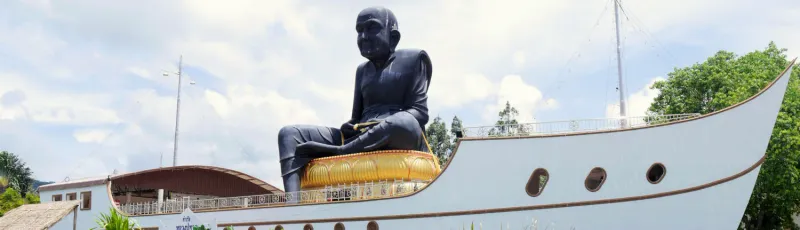 3. Wats Wat Bo Phuttharam 1934
 -
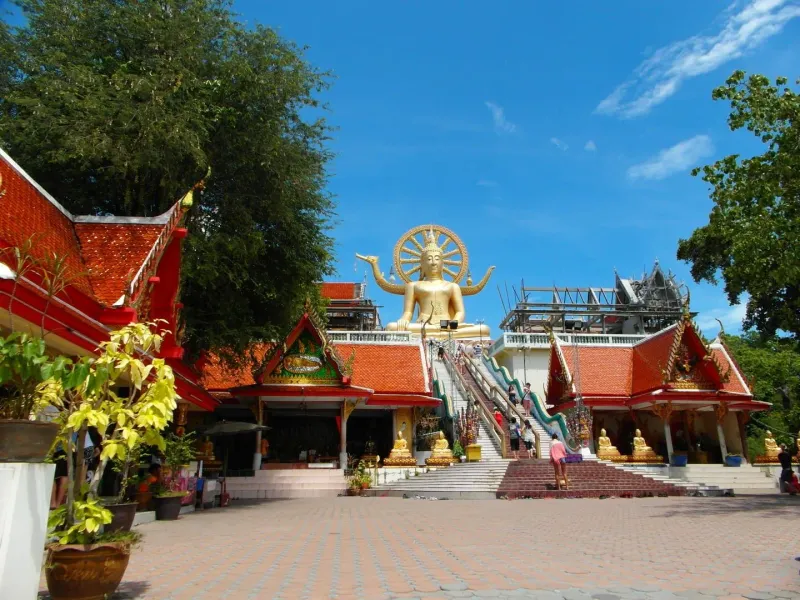 5. Wats Wat Phra Yai 1972
 -
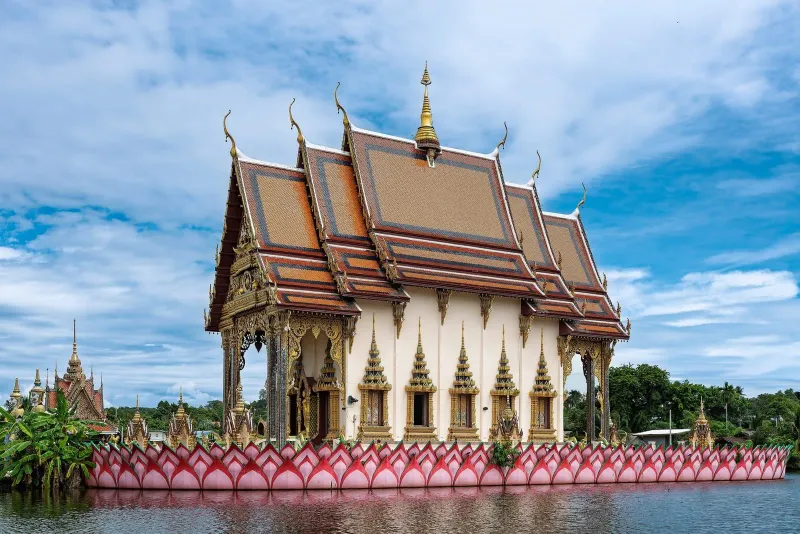 7. Wats Wat Plai Laem 2004
 -
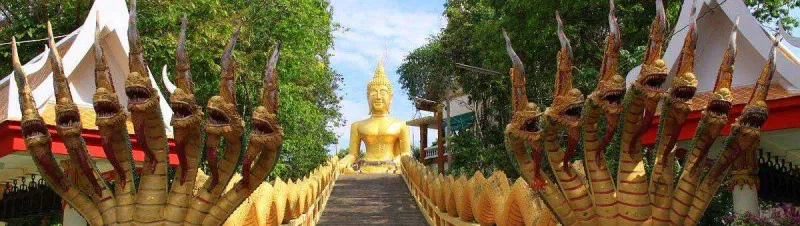 8. Wats Wat Sawang Arom 1794
 -
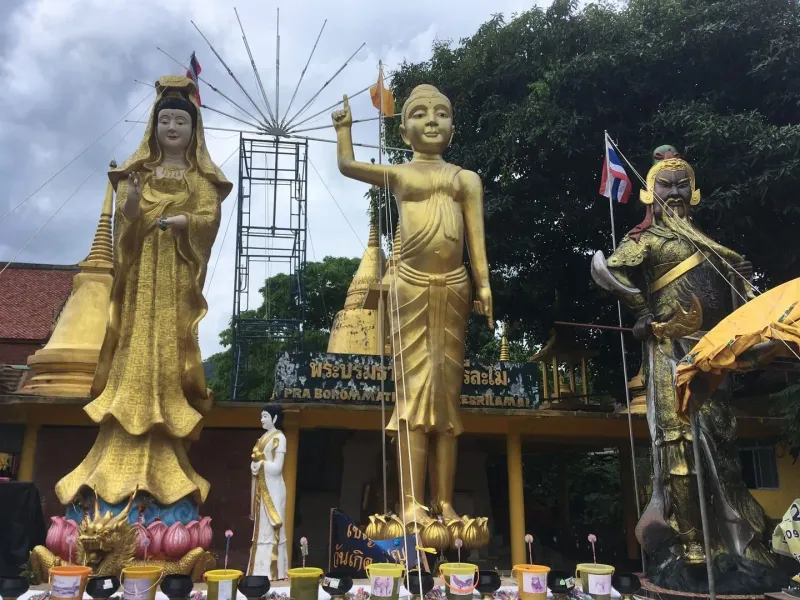 11. Wats Wat Lamai over a century old
 -
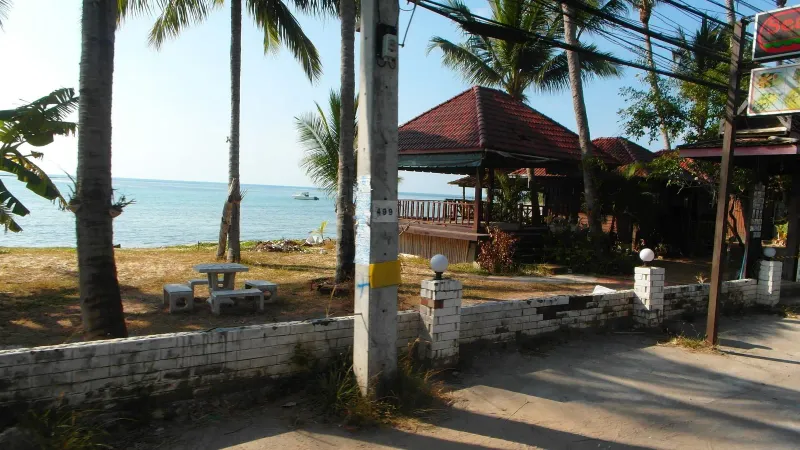 13. Wats Wat Sila Ngu 20th century
 -
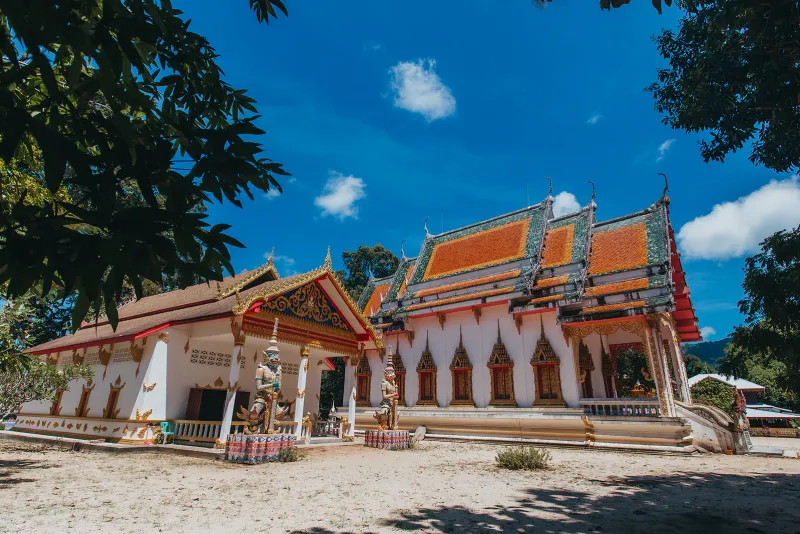 15. Wats Wat Samret over 100 years ago
 -
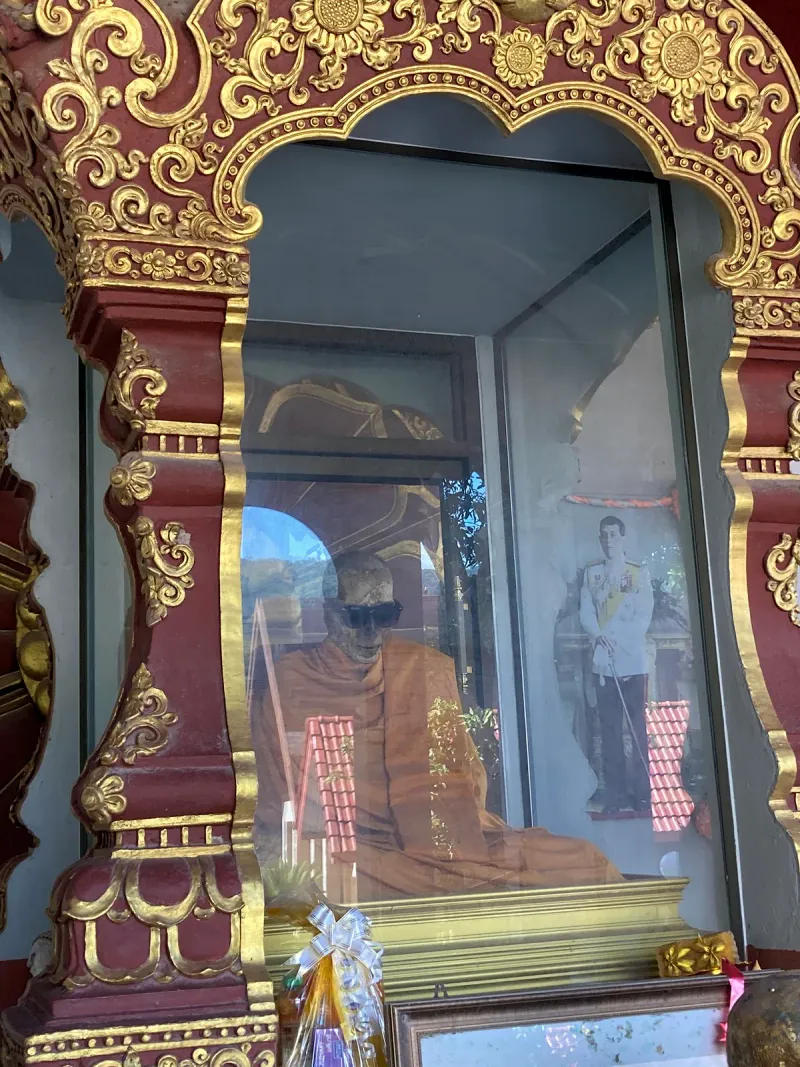 18. Wats Wat Khunaram Founded date unknown
 -
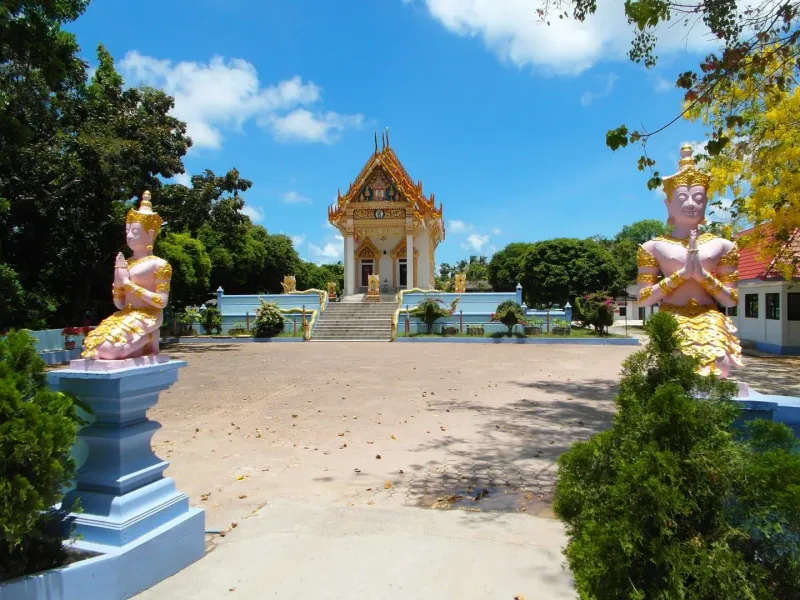 20. Wats Wat Pradoem 1682
 -
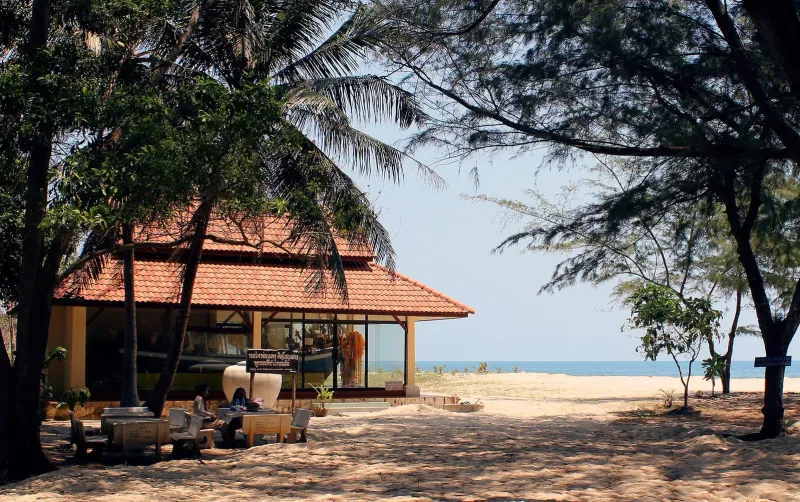 22. Wats Wat Laem Sor 1907
 -
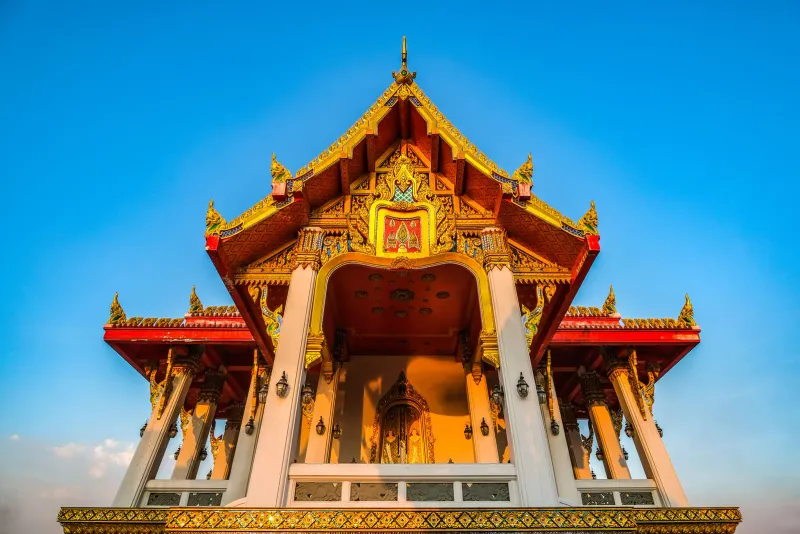 24. Wats Wat Khiri Mat Founded date unknown
 -
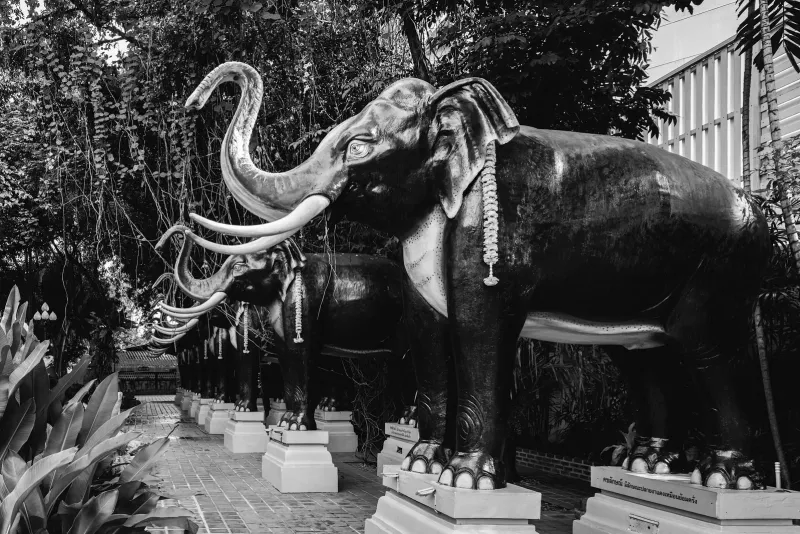 25. Wats Wat Kiri Wongkaram 1879
 -
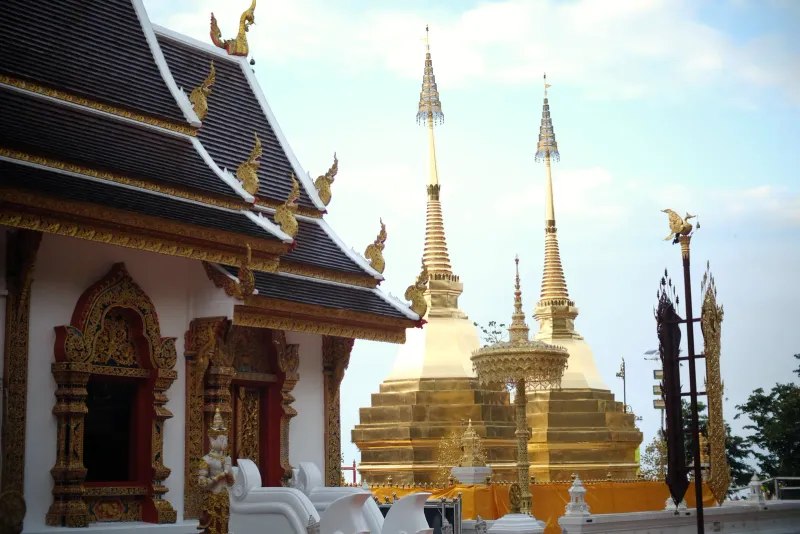 26. Wats Wat Nara Charoen Suk Founded date unknown
 -
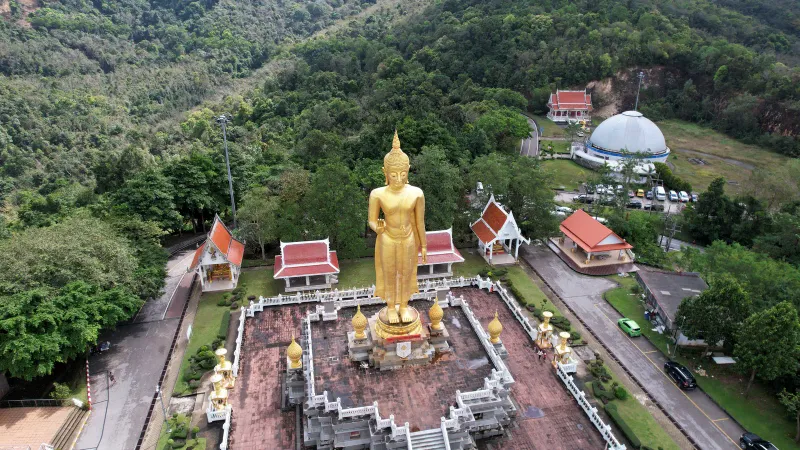 27. Wats Wat Namtok Hin Lad Founded date unknown
 -
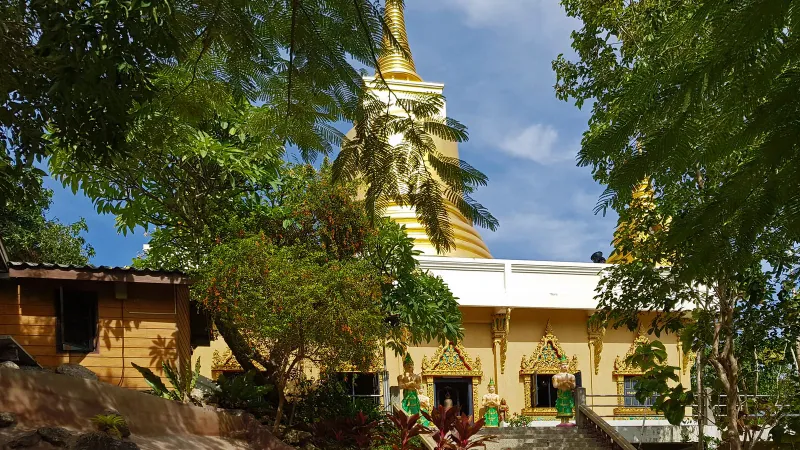 28. Wats Wat Chaeng Founded date unknown
 -
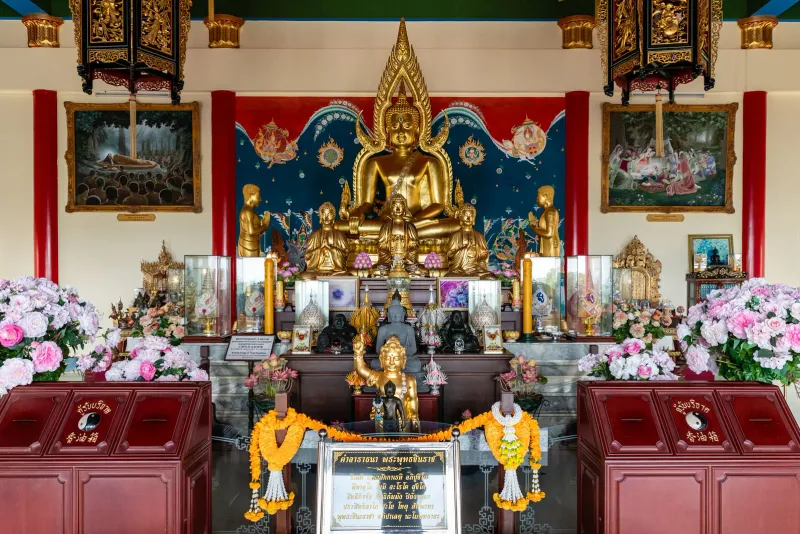 30. Wats Wat Na Phra Lan Founded date unknown
By looking at the monk, followers are encouraged to reflect on the transient nature of their own bodies and the importance of focusing on spiritual growth rather than material attachment.
Hilltop temples 4
Four temples set above the coast for the view as much as the merit, each asking for a climb before the Gulf of Thailand opens out below.
-
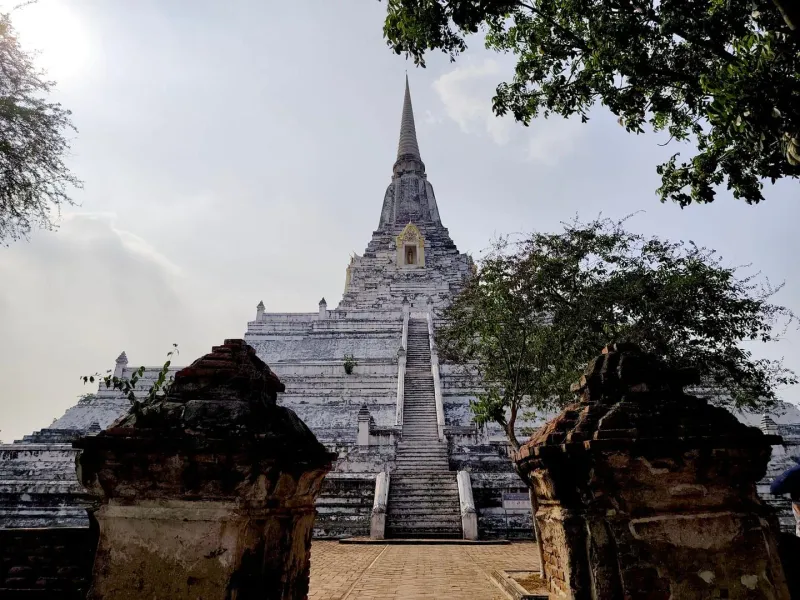 1. Hilltop temples Wat Phu Khao Thong Founded date unknown
 -
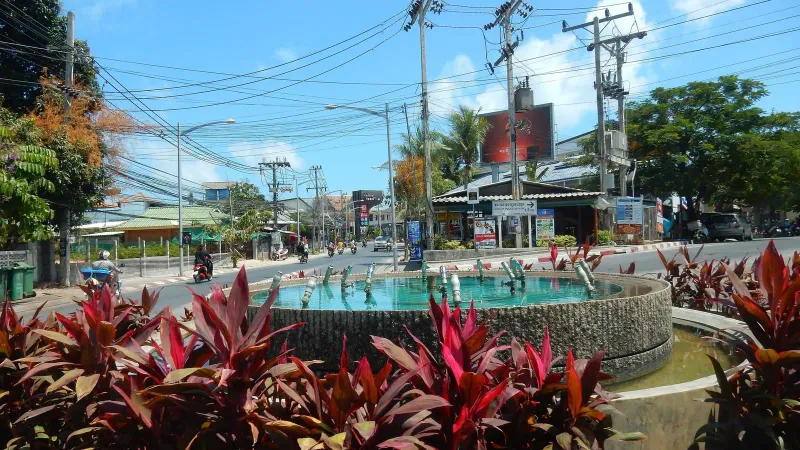 9. Hilltop temples Pagoda Khao Hua Jook Founded date unknown
 -
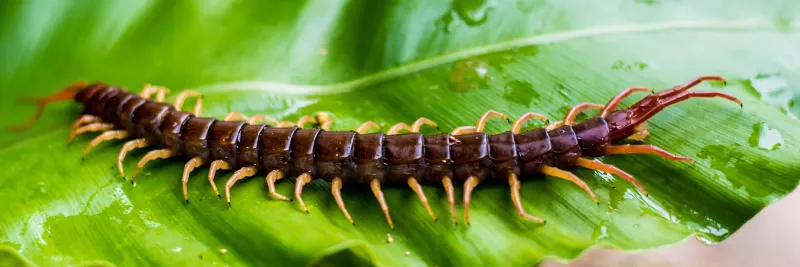 10. Hilltop temples Wat Teepangkorn, Koh Samui Founded date unknown
 -
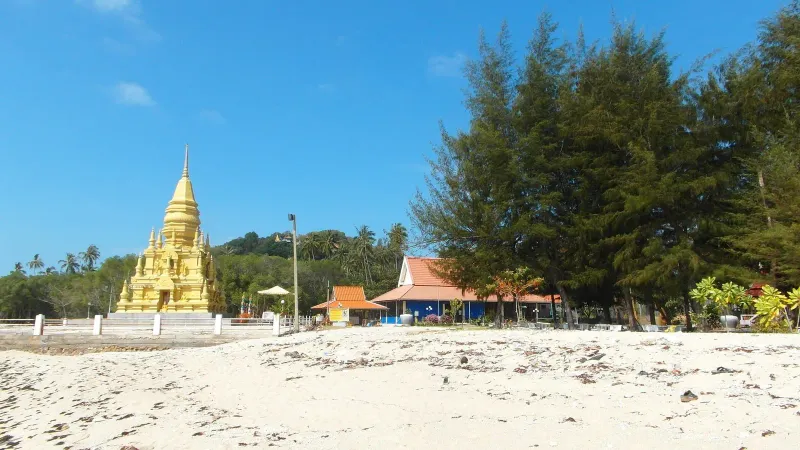 23. Hilltop temples Wat Khao Chedi Founded date unknown
Chinese shrines 4
Four shrines built by the island's Hainanese community, honouring Guan Yu, Mazu and other deities rather than the Buddha directly.
-
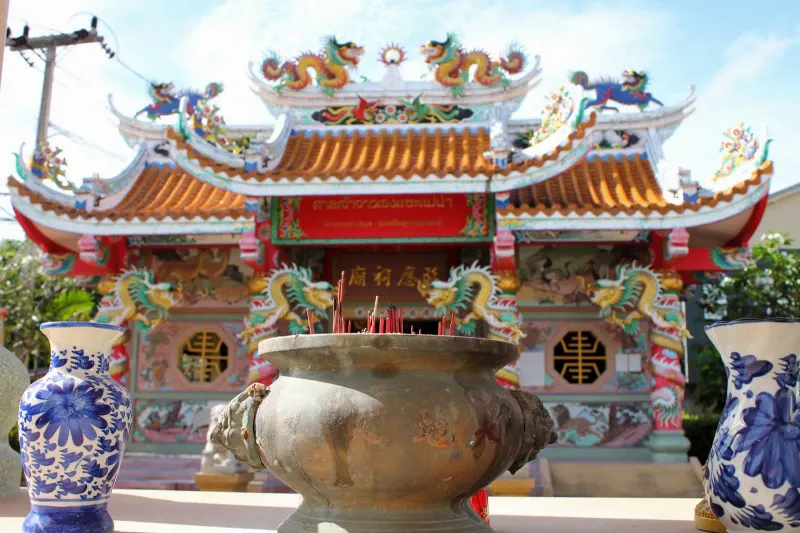 2. Chinese shrines Chinese Temple of Maenam 20th century
 -
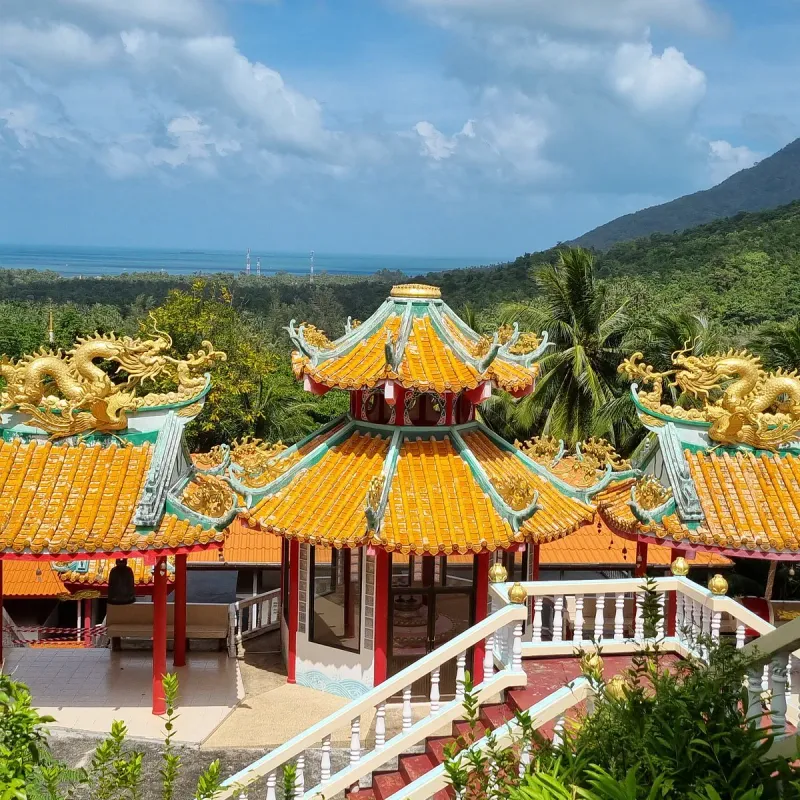 6. Chinese shrines Guam Im Shrine Founded date unknown
 -
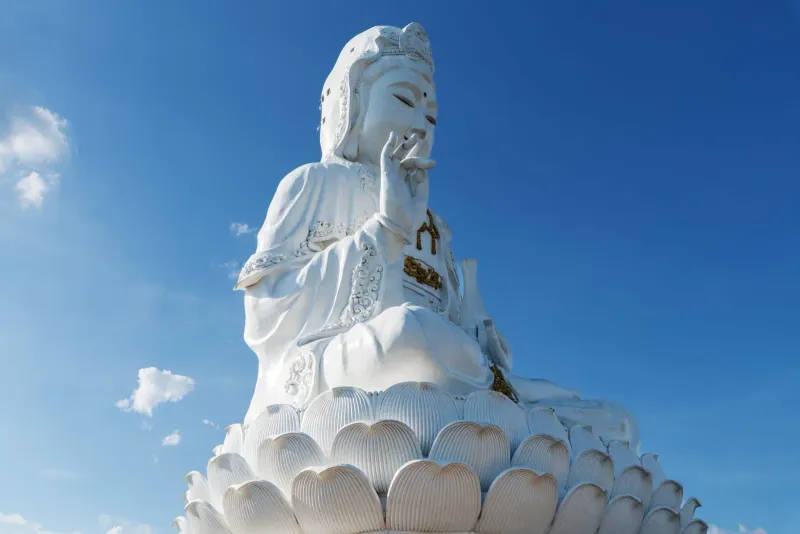 14. Chinese shrines Guan Yu Shrine 1872
 -
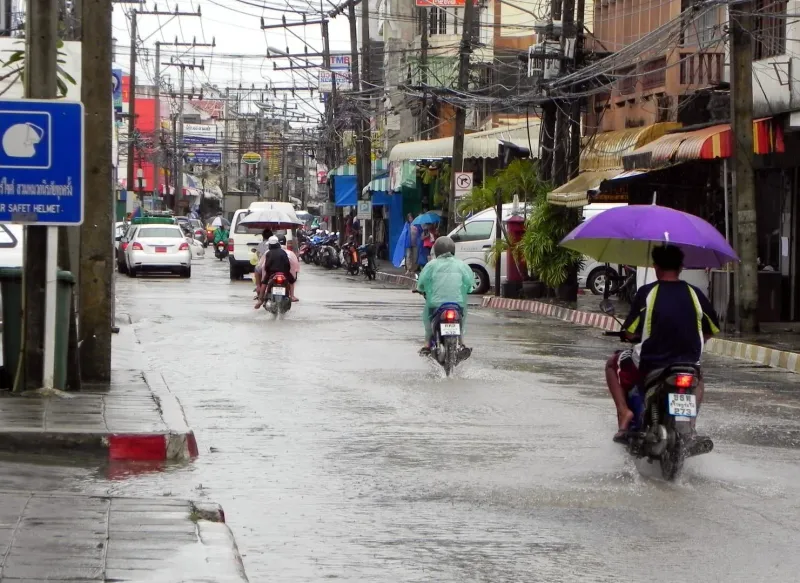 29. Chinese shrines Nathon Hainan Shrine late 19th-early 20th century
While the island is famous for its grand, ornate temples, this ancient cave offers a completely different experience: one of raw, unadorned simplicity and natural power.
Places to sit 2
Two dedicated meditation centres, a donation-based retreat above Lamai and a free evening session in Bophut, open to any visitor who wants to sit down.
-
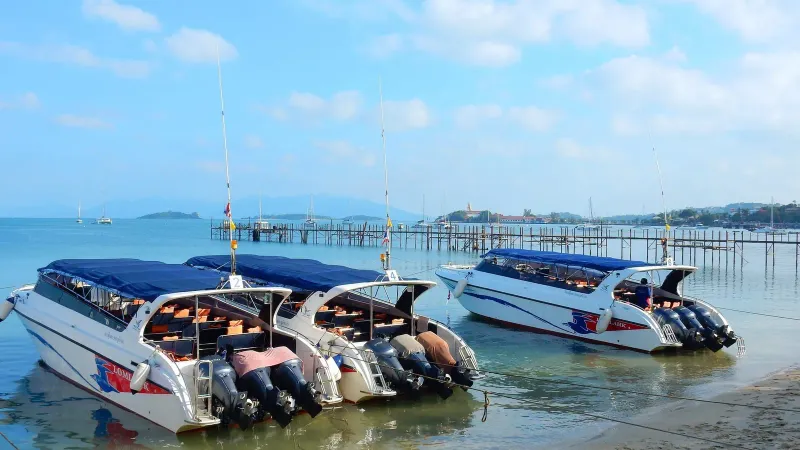 4. Places to sit Samui International Meditation Center 2017
 -
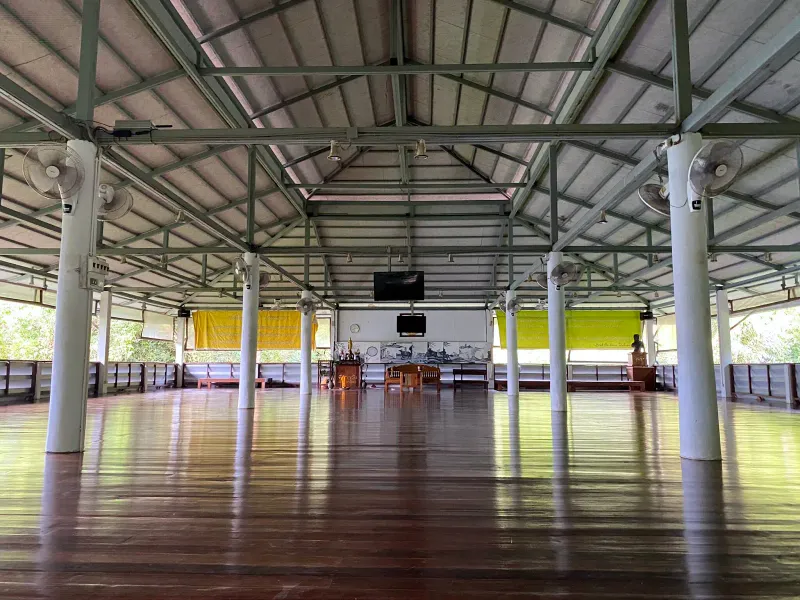 12. Places to sit Dipabhavan Meditation Center 2005
Garden, cave, footprint, pagoda 4
Four places that don't fit the usual pattern: a durian farmer's stone garden, a monk's cave, a carved footprint shrine and a beachfront pagoda.
-
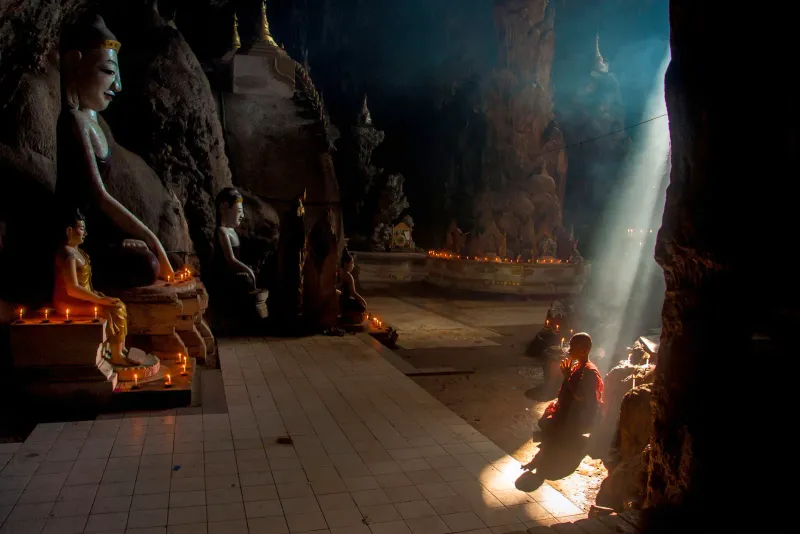 16. Cave Kamalaya Monk Cave 300+ years of monastic use (resort opened 2005)
 -
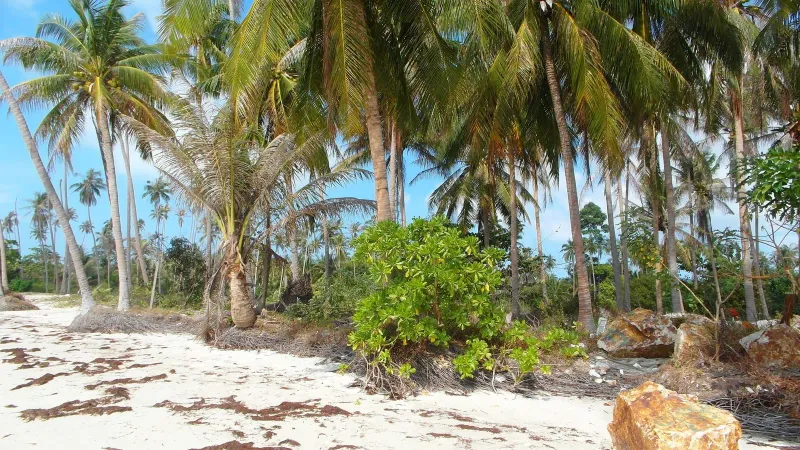 17. Footprint shrine Buddha's Footprint Shrine estimated 300+ years old
 - 19. Garden Secret Buddha Garden 1976
- 21. Pagoda Laem Sor Pagoda 1907
With its panoramic views of the Gulf of Thailand and its atmosphere of absolute "Noble Silence," Dipabhavan provides the perfect environment for true spiritual transformation.
Guardians and symbols
How to read a temple
Twelve recurring figures and symbols carry specific, sourced meanings across Samui's temples and shrines, a key to read them by, not decoration.
-
Naga
Phaya Nak
A serpent king who shelters the meditating Buddha from a storm with his raised hoods; naga balustrades line the staircases at several Samui temples.
Seen at Wat Phu Khao Thong, Wat Phra Yai, Wat Sila Ngu, Wat Kiri Wongkaram +1
-
Dragon
Long
A Chinese emblem of rain and prosperity, carved into pillars and roof ridges at the island's Hainanese-community shrines.
Seen at Wat Phu Khao Thong, Chinese Temple of Maenam, Guam Im Shrine, Wat Sila Ngu +2
-
Yak guardian
Yak
An armoured giant standing guard at temple gates, fending off evil spirits before a visitor ever reaches the Buddha image inside.
Seen at Wat Lamai, Laem Sor Pagoda, Wat Chaeng
-
Lotus
Dok Bua
The pedestal under almost every Buddha image on the island, its petals rising clean from mud as a picture of purity and enlightenment.
Seen at Wat Plai Laem, Wat Lamai
-
Dharma wheel
Dharmachakra
An eight-spoke wheel standing for the Noble Eightfold Path, cut into temple gates and signage across the island.
Seen at Wat Plai Laem, Buddha's Footprint Shrine, Wat Chaeng
-
Guanyin
Guanshiyin
The bodhisattva of compassion, shown with eighteen arms at Wat Plai Laem so she can act on suffering everywhere at once.
Seen at Guam Im Shrine, Wat Plai Laem
-
Ganesha
Ganapati
The elephant-headed remover of obstacles, a Hindu figure carved into the grounds of two mixed-tradition Samui temples.
Seen at Wat Plai Laem, Wat Sila Ngu
-
Guan Yu
Guan Gong
A third-century Chinese general honoured as a god of loyalty and protection; a sixteen-metre bronze of him rises over Hua Thanon.
Seen at Guan Yu Shrine
-
Phoenix
Fenghuang
A Chinese symbol of renewal, carved along shrine roof ridges as the counterpart to the dragon.
Seen at Nathon Hainan Shrine
-
Singha lion
Singh
A lion-like guardian standing watch at temple entrances, strength posted at the gate before you ever cross it.
Seen at Nathon Hainan Shrine
-
Garuda
Khrut
Half bird, half man, the mount of Vishnu and the natural enemy of the naga; its form tops temple roof finials island-wide.
-
Buddha's footprint
Buddhapada
A carved impression of the Buddha's foot, a reminder that he walked as a man and left a path others could follow.
Five stories
Five stories behind the statues
-
The monk who did not decay
In 1973 the monk Luang Pho Daeng sat down to meditate at Wat Khunaram and did not rise again. His body has shown almost no decay since, and today it sits upright in a glass case, sunglasses added later to cover eyes long since sunken. He asked, before he died, that his body be kept on display exactly like this, not as a curiosity, but as a lesson in impermanence, the same teaching he gave in life now given in stillness.
Wat Khunaram -
Why the stairs are serpents
A seven-headed naga king named Mucalinda once shielded the meditating Buddha from a week-long storm, raising his hoods overhead like a roof. Temple staircases carved as naga balustrades, like the one climbing to the Big Buddha, repeat the same gesture in stone. Climb the steps and the serpent is doing what it has always done: carrying a visitor from the ordinary ground below up into the sacred space at the top, one coil at a time.
Wat Phra Yai -
A thousand arms, eighteen of them here
Avalokiteshvara tried to save every suffering being at once and her body shattered from the strain. The Buddha Amitabha gathered the pieces back together with many arms and many eyes, so she could reach everywhere suffering exists without ever needing to choose. Wat Plai Laem's lake-bound statue shows eighteen of those arms, rising fifteen metres over the water. Stand at the shore and count them; each one is doing something different, and none of it is decoration.
Wat Plai Laem -
The earth as a witness
Before his enlightenment, the demon-king Mara challenged the Buddha's right to sit beneath the Bodhi tree at all. The Buddha touched the ground with his right hand instead of arguing, calling the earth itself to witness his years of past good deeds. The goddess Phra Mae Thorani rose and wrung a flood from her hair, sweeping Mara's army away without a word spoken. The Big Buddha here sits in that same earth-touching gesture, one hand still resting on the ground.
Wat Phra Yai -
A thousand hands up the hill
In 1907, with no road and no machinery, close to a thousand people formed a human chain up the hillside at Samui's southern tip, passing coral-block bricks hand to hand for six months until the pagoda stood. Sri Lankan relics were installed inside it the following year. The chedi was later rebuilt closer to the shore after lightning damage, but the story of the chain, ordinary hands moving stone for a temple none of them would live to see finished, is the one still told.
Laem Sor Pagoda
Places to sit
Where to meditate, on and off the island
Seven places on Samui offer a formal place to sit, from a donation-based retreat above Lamai to a free evening session in Bophut, plus three verified options a half-day away.
- Samui International Meditation Center
- What
- Middle Way Meditation (focus on the body's center); free daily drop-in evening session, plus 3-day, 7-day, and flexible-date residential retreats
- When
- -
- Cost
- free / donation for evening sessions
- Booking
- register via official website samui-meditation.com for retreats; evening sessions are drop-in
- Dipabhavan Meditation Center
- What
- 7-day silent Vipassana + Anapanasati retreat under Noble Silence (also shorter/flexible options mentioned in FAQ)
- When
- -
- Cost
- free / donation-based
- Booking
- register in advance via the official Dipabhavan website; participants meet at the Dipabhavan Foundation office near Wat Sila Ngu, then get a free truck up the mountain
- Kamalaya Monk Cave
- What
- silent solo meditation inside the ancient monk cave (Tham Phra)
- When
- -
- Cost
- -
- Booking
- call ahead if not a staying guest
- Wat Laem Sor
- What
- Anapanasati mindfulness of breathing in the dedicated Meditation Forest
- When
- -
- Cost
- -
- Booking
- -
- Wat Khao Chedi
- What
- 20-minute silent meditation session
- When
- -
- Cost
- -
- Booking
- -
- Wat Namtok Hin Lad
- What
- occasional guided multi-day silent Vipassana retreats
- When
- -
- Cost
- -
- Booking
- -
- Wat Suan Mokkh International Dharma Hermitage
- What
- Ten-day silent retreat, 1st to 11th of every month, mindfulness of breathing
- When
- off island Chaiya, Surat Thani (mainland)
- Cost
- 2,000 THB donation, paid on arrival
- Booking
- No reservations: register in person by 15:00 on the last day of the previous month
- Vikasa Yoga Retreat
- What
- Daily hatha and flow classes, pranayama and meditation, multi-day retreats
- When
- off island Above Chaweng Noi, east coast
- Cost
- Drop-in classes and weekly or monthly passes; retreat packages priced separately
- Booking
- Online, walk-ins welcome for classes
- Samahita Retreat
- What
- Two daily classes (07:30 and 16:30) of yoga, breathwork and meditation, plus themed retreats
- When
- off island Laem Sor, south coast
- Cost
- Retreat packages with accommodation
- Booking
- Online
Five steps to make merit
- 01 Dress modestly Cover your shoulders and knees before you reach the gate; sarongs and wraps are usually for rent or loan at the busier temples if you arrive without.
- 02 Take off your shoes Shoes come off before any hall with a Buddha image inside, left in a pile or on a rack by the door alongside everyone else's.
- 03 Wai when it's offered Press your palms together and bow your head slightly to greet a monk or return a blessing; let the other person's gesture set the height of yours.
- 04 Make a small offering A few coins in the donation box, incense at the altar, or food into a monk's alms bowl are all ways of making merit, not paying an entry fee.
- 05 Receive a blessing quietly If a monk offers a blessing with water or a string, sit or kneel below his level, stay quiet, and let it finish before you move on.
Find them
The full directory, by tambon
All thirty places, grouped by tambon the way the road signs and the map group them, with hours, fees and how many steps stand between the gate and the shrine.
Loading the map
Maenam แม่น้ำ
- 1 Wat Phu Khao Thong Unknown
- Kind
- Hilltop temple, Theravada
- Hours
- 06:00-18:00
- Fee
- Free
- Shoes off
- Unknown
- Steps
- 175 steps, Viewpoint
- Quiet
- 3/3
- 2 Chinese Temple of Maenam 20th century
- Kind
- Chinese shrine, Taoist folk
- Hours
- -
- Fee
- Free
- Shoes off
- Yes
- Steps
- -
- Quiet
- 1/3
- 30 Wat Na Phra Lan Unknown
- Kind
- Wat, Theravada
- Hours
- 06:00-18:00
- Fee
- Free
- Shoes off
- Yes
- Steps
- -
- Quiet
- 3/3
Bo Phut บ่อผุด
- 3 Wat Bo Phuttharam 1934
- Kind
- Wat, Theravada
- Hours
- 06:00-18:00
- Fee
- Free
- Shoes off
- Yes
- Steps
- -
- Quiet
- 2/3
- 4 Samui International Meditation Center 2017
- Kind
- Meditation centre, Theravada
- Hours
- 19:00-20:15
- Fee
- Free
- Shoes off
- Unknown
- Steps
- Viewpoint
- Quiet
- 2/3
- 5 Wat Phra Yai 1972
- Kind
- Wat, Theravada
- Hours
- 07:00-18:00
- Fee
- Free
- Shoes off
- Yes
- Steps
- 73 steps, Viewpoint
- Quiet
- 0/3
- 6 Guam Im Shrine Unknown
- Kind
- Chinese shrine, Mahayana
- Hours
- 06:00-18:00
- Fee
- Free
- Shoes off
- Yes
- Steps
- Viewpoint
- Quiet
- 3/3
- 7 Wat Plai Laem 2004
- Kind
- Wat, Mixed
- Hours
- 06:00-18:00
- Fee
- Free
- Shoes off
- Yes
- Steps
- -
- Quiet
- 1/3
- 8 Wat Sawang Arom 1794
- Kind
- Wat, Theravada
- Hours
- -
- Fee
- Free
- Shoes off
- Yes
- Steps
- -
- Quiet
- 2/3
- 9 Pagoda Khao Hua Jook Unknown
- Kind
- Hilltop temple, Theravada
- Hours
- 08:00-17:30
- Fee
- ~20 THB
- Shoes off
- Unknown
- Steps
- 60 steps, Viewpoint
- Quiet
- 1/3
Maret มะเร็ต
- 11 Wat Lamai over a century old
- Kind
- Wat, Theravada
- Hours
- -
- Fee
- Free
- Shoes off
- Yes
- Steps
- -
- Quiet
- 2/3
- 12 Dipabhavan Meditation Center 2005
- Kind
- Meditation centre, Theravada
- Hours
- -
- Fee
- Donation
- Shoes off
- Unknown
- Steps
- Viewpoint
- Quiet
- 3/3
- 13 Wat Sila Ngu 20th century
- Kind
- Wat, Theravada
- Hours
- 08:00-18:00
- Fee
- Free
- Shoes off
- Yes
- Steps
- Viewpoint
- Quiet
- 2/3
- 14 Guan Yu Shrine 1872
- Kind
- Chinese shrine, Taoist folk
- Hours
- 08:00-18:00
- Fee
- Free
- Shoes off
- Unknown
- Steps
- -
- Quiet
- 0/3
- 15 Wat Samret over 100 years ago
- Kind
- Wat, Theravada
- Hours
- 06:00-18:00
- Fee
- Free
- Shoes off
- Yes
- Steps
- -
- Quiet
- 3/3
- 17 Buddha's Footprint Shrine estimated 300+ years old
- Kind
- Footprint shrine, Theravada
- Hours
- -
- Fee
- Free
- Shoes off
- Unknown
- Steps
- 150 steps, Viewpoint
- Quiet
- 3/3
Na Mueang หน้าเมือง
- 10 Wat Teepangkorn, Koh Samui Unknown
- Kind
- Hilltop temple, Theravada
- Hours
- -
- Fee
- ~20 THB
- Shoes off
- Unknown
- Steps
- Viewpoint
- Quiet
- 1/3
- 16 Kamalaya Monk Cave 300+ years of monastic use (resort opened 2005)
- Kind
- Cave, Theravada
- Hours
- -
- Fee
- free for resort guests; restricted for non-guests
- Shoes off
- Yes
- Steps
- -
- Quiet
- 3/3
- 18 Wat Khunaram Unknown
- Kind
- Wat, Theravada
- Hours
- 08:00-17:00
- Fee
- Free
- Shoes off
- Yes
- Steps
- -
- Quiet
- 2/3
- 19 Secret Buddha Garden 1976
- Kind
- Garden, Mixed
- Hours
- 09:00-17:00
- Fee
- ~80 THB
- Shoes off
- Unknown
- Steps
- -
- Quiet
- 2/3
- 20 Wat Pradoem 1682
- Kind
- Wat, Theravada
- Hours
- 06:00-18:00
- Fee
- Free
- Shoes off
- Yes
- Steps
- -
- Quiet
- 3/3
Taling Ngam ตลิ่งงาม
- 21 Laem Sor Pagoda 1907
- Kind
- Pagoda, Theravada
- Hours
- -
- Fee
- Free
- Shoes off
- Yes
- Steps
- Viewpoint
- Quiet
- 3/3
- 22 Wat Laem Sor 1907
- Kind
- Wat, Theravada
- Hours
- 08:00-18:00
- Fee
- Free
- Shoes off
- Yes
- Steps
- -
- Quiet
- 2/3
- 23 Wat Khao Chedi Unknown
- Kind
- Hilltop temple, Theravada
- Hours
- -
- Fee
- Free
- Shoes off
- Yes
- Steps
- Viewpoint
- Quiet
- 3/3
- 24 Wat Khiri Mat Unknown
- Kind
- Wat, Theravada
- Hours
- -
- Fee
- Free
- Shoes off
- Yes
- Steps
- Viewpoint
- Quiet
- 3/3
- 25 Wat Kiri Wongkaram 1879
- Kind
- Wat, Theravada
- Hours
- -
- Fee
- Free
- Shoes off
- Yes
- Steps
- -
- Quiet
- 3/3
Lipa Noi ลิปะน้อย
- 26 Wat Nara Charoen Suk Unknown
- Kind
- Wat, Theravada
- Hours
- 06:00-18:00
- Fee
- Free
- Shoes off
- Yes
- Steps
- -
- Quiet
- 3/3
Ang Thong อ่างทอง
- 27 Wat Namtok Hin Lad Unknown
- Kind
- Wat, Theravada
- Hours
- -
- Fee
- Free
- Shoes off
- Unknown
- Steps
- -
- Quiet
- 2/3
- 28 Wat Chaeng Unknown
- Kind
- Wat, Mixed
- Hours
- -
- Fee
- Free
- Shoes off
- Yes
- Steps
- -
- Quiet
- 1/3
- 29 Nathon Hainan Shrine late 19th-early 20th century
- Kind
- Chinese shrine, Taoist folk
- Hours
- -
- Fee
- Free
- Shoes off
- Yes
- Steps
- -
- Quiet
- 1/3
Before you go
Eight rules that cover every temple
-
Cover shoulders and knees
Shoulders and knees stay covered inside every temple, no matter how hot the day, for women and men alike.
-
Take off your shoes
Shoes and sandals come off before stepping into any hall with a Buddha image, no exceptions.
-
Mind your feet
Never point your feet at a Buddha image or a monk; tuck them behind you if you sit on the floor.
-
Nothing above the Buddha
Never touch a monk's head, and don't reach for anything above a seated Buddha image either.
-
Women and monks
Women never touch a monk or hand him anything directly; use a cloth or set the item down instead.
-
Ask before photographing
Ask before photographing a monk up close, and skip the flash and the selfie stick inside a prayer hall.
-
Keep your voice down
Keep your voice low and your phone silent inside any hall where people are praying or meditating.
-
A small donation, not a fee
A few coins in the box or a stick of incense at the altar is a small offering, not an entry fee.
Beyond the gate
What's nearby
Every temple sits near a beach, a waterfall or a trail worth the same trip. Here is the closest of each, and the guides that tie the island's spiritual and physical geography together.
Nearest beach
- Wat Na Phra Lan from Na Phra Lan Beach 0.2 km
- Kamalaya Monk Cave from Laem Set Beach 0.2 km
- Wat Laem Sor from Laem Sor Beach 0.2 km
- Chinese Temple of Maenam from Maenam Beach 0.2 km
- Nathon Hainan Shrine from Nathon Beach, Koh Samui 0.4 km
Nearest waterfall
- Wat Sila Ngu from Sivatara Waterfall 0.9 km
- Wat Namtok Hin Lad from Hin Lad Waterfall 1.2 km
- Wat Khunaram from Wang Sao Thong Waterfall 1.6 km
- Wat Khunaram from Khao Yai Waterfall 1.9 km
- Secret Buddha Garden from Na Muang Waterfalls 2.2 km
Nearest hike
- Wat Nara Charoen Suk from Lardwanorn Waterfall Loop 0.5 km
- Wat Na Phra Lan from Maenam to Magic Garden Traverse 0.6 km
- Wat Sila Ngu from Lamai Viewpoint 0.9 km
- Guan Yu Shrine from Overlap Stone Samui Viewpoint 1 km
- Wat Pradoem from Secret Buddha Garden Trail 1.1 km
Read more
- The full temples guide
All the island's must-see temples in one list, with fees, hours and directions to each.
- Temple etiquette and dress code
What to wear, what to do, and where to rent a sarong before you reach the gate.
- Buddhism on Koh Samui
How a wat is built, four traditions on one island, and five stories behind the statues.
- Where to meditate on Koh Samui
Every place to sit, from a free evening drop-in to a ten-day silent retreat on the mainland.
- Koh Samui's Chinese shrines
Guan Yu, Guanyin, Mazu and the Hainanese story behind the island's four shrines.
- Buddhist holidays and alcohol-ban days
Every 2026 to 2027 date, and the five days a year alcohol sales stop nationwide.
Before you ask
Questions people ask before visiting
How many temples are on Koh Samui?
This hub tracks thirty places to visit: sixteen wats, four hilltop temples, four Chinese shrines, two meditation centres and four sites that don't fit the usual pattern, from a stone garden to a beachfront pagoda.
What should I wear to a Samui temple?
Cover your shoulders and knees and take your shoes off before entering any hall with a Buddha image. Sarongs are usually available to rent or borrow at the busier temples if you arrive without one.
Which Samui temple matches my birthday?
Thai tradition gives each day of the week its own Buddha posture, colour and planet. Check the table above against your birth weekday, or use the date picker to find your image directly.
When does Thailand ban alcohol sales for Buddhist holidays?
Five days a year: Makha Bucha, Visakha Bucha, Asalha Bucha, Khao Phansa and Ok Phansa. Asalha Bucha and Khao Phansa fall back to back, making a forty-eight-hour ban each July.
Can I meditate on Koh Samui without booking ahead?
Yes. The meditation center in Bophut runs a free evening drop-in with no booking. Dipabhavan and the mainland's Suan Mokkh retreat both require advance registration.
What does BE mean on a Thai temple calendar?
Buddhist Era, counted from the Buddha's passing rather than Christ's birth. Add five hundred and forty-three to the Western year, so 2026 CE is 2569 BE.