Overview
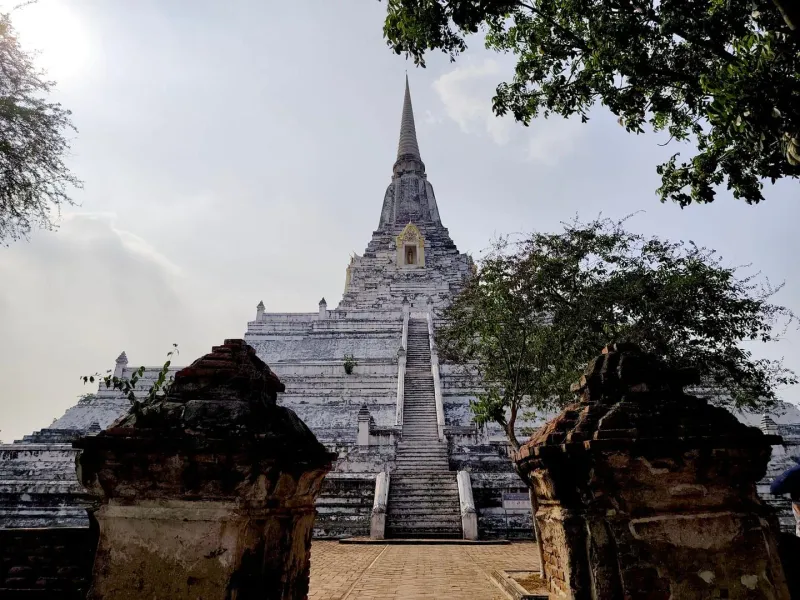
Wat Phu Khao Thong (วัดภูเขาทอง), known as the Golden Mount Temple, is one of Koh Samui’s most atmospheric and visually striking spiritual sites. Perched on a lush hillside in the Maenam region, it offers a dramatic departure from the island’s flat coastal temples. Its name pays homage to the famous Golden Mount of Ayutthaya, and like its namesake, it provides visitors with a physical and spiritual ascent.
While it has long been a local favorite for its peaceful environment, Wat Phu Khao Thong has recently gained international fame as a filming location for The White Lotus Season 3. Despite this new spotlight, the temple remains a sanctuary of calm, defined by its magnificent dragon-lined staircase and the sweeping views of the Gulf of Thailand from its summit.
The Naga Stairway: Ascending the Dragon
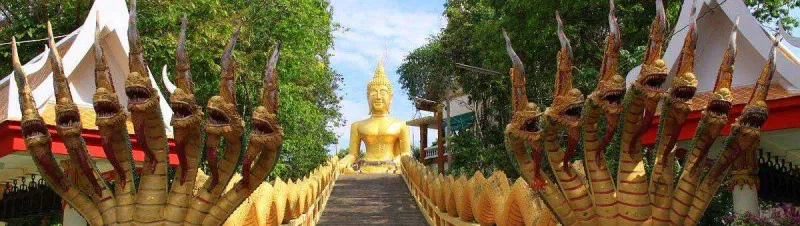
The most iconic feature of Wat Phu Khao Thong is the glittering Naga stairway. A long flight of concrete steps leads from the lower parking area up to the main temple pavilion. Flanking the stairs are two magnificent green dragons (Nagas), their bodies covered in shimmering scales that catch the morning sun.
In Buddhist mythology, the Naga is a protector of the Buddha and a symbol of water and fertility. Climbing the stairs is seen as a symbolic journey from the earthly realm toward enlightenment. While the climb is somewhat steep, the intricate craftsmanship of the dragons provides plenty of reasons to stop and admire the detail along the way.
The Golden Pavilion: Center of Devotion
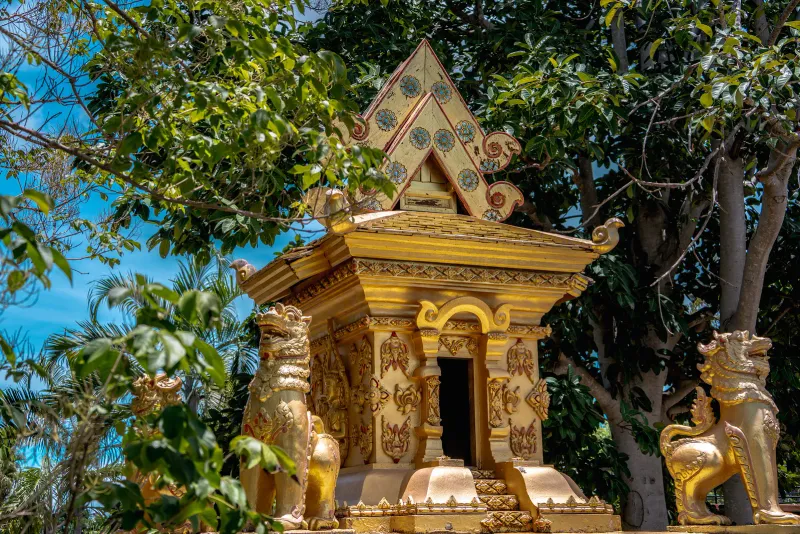
At the top of the Naga staircase sits the Golden Pavilion. This open-sided structure houses the temple’s primary Buddha image: a striking, dark-finished statue seated in the bhumisparsha (earth-touching) mudra.
The pavilion is often filled with the scent of jasmine and incense, as local devotees come here to offer prayers and lotus flowers. The architecture of the pavilion itself is refined, with gilded columns and a traditional red-tiled roof that stands out sharply against the deep green of the surrounding jungle.
Architecture: Traditional Thai Adornments
The entire temple complex is a beautiful example of traditional southern Thai temple architecture.
Color and Symbolism
The buildings feature a classic palette of red, gold, and green. The red represents the earth and human life, the gold symbolizes the divine and enlightenment, and the green reflects the natural world and peace.
Intricate Details
From the chofah (bird-like finials) on the roof peaks to the detailed wood carvings on the doors, every inch of the temple is designed to inspire awe and respect. The grounds are also home to various smaller stupas and shrines, each meticulously maintained by the resident monks.
Panoramic Views: The Best of North Samui
One of the greatest rewards for climbing the Golden Mount is the panoramic view. From the upper terrace, you can see across the dense coconut groves of Maenam all the way to the turquoise waters of the Gulf of Thailand. On clear days, the neighboring island of Koh Phangan is visible on the horizon.
This elevated perspective makes Wat Phu Khao Thong one of the best spots on the north coast for photography, especially during the early morning or late afternoon when the light is soft.
Activities: Meditation and Merit-Making
A visit to Wat Phu Khao Thong is a slow-paced experience.
- Meditation: The upper terrace is exceptionally quiet, making it a popular spot for informal meditation. The sound of distant temple bells and the rustle of leaves create a perfect sonic backdrop for reflection.
- Making Merit: Visitors are welcome to light candles, offer incense, and place small pieces of gold leaf on the smaller statues as a sign of respect and to “make merit” (Tham Bun).
- Photography: Between the dragon staircase, the golden architecture, and the island views, this is a top-tier location for travel photography.
Where to Eat: Maenam Hillside Dining
The road leading to Wat Phu Khao Thong has several hidden gems that are perfect for a post-temple meal.
| Restaurant | Style | Recommendation | Distance |
|---|---|---|---|
| Tree Bridge Cafe | Cafe / Viewpoint | Coffee & Cake | 3 min drive |
| Wild Samui | Fusion / Local | Thai Curry | 5 min drive |
| Fisherman’s Village | Variety | Seafood | 12 min drive |
| Maenam Street Food | Local Thai | Pad Thai | 5 min drive |
Nearby Attractions
Combine your visit to the Golden Mount with these other Maenam highlights:
- Maenam Waterfall (5 min drive): A secluded jungle waterfall that is especially beautiful during the rainy season.
- Tree Bridge Cafe (3 min drive): A famous cafe where you can walk across a suspension bridge between giant trees.
- Maenam Beach (10 min drive): Head down to the coast for a swim after your hillside exploration.
Getting There: The Maenam Hill Climb
Wat Phu Khao Thong is located in the hills of Maenam.
- By Motorbike: This is the most popular way to visit. From the Ring Road in Maenam, turn inland at the sign for the Maenam Waterfall or Tree Bridge Cafe. Follow the winding road uphill for about 2-3 kilometers.
- By Taxi: A taxi from Bophut or Maenam center will cost approximately 300-500 THB (~8.50-14 USD). Be sure to arrange a return trip as taxis are hard to find at the temple site.
- The Drive: The road is paved but can be steep in sections. Ensure your motorbike has good brakes and you are comfortable with hillside driving.
Best Time to Visit: Golden Hour Lighting
The temple is open from sunrise to sunset.
| Time | Rating | Notes |
|---|---|---|
| 7:00 AM - 9:00 AM | ★★★★★ | Best for photography; cool air; soft light. |
| 10:00 AM - 3:00 PM | ★★★ | The climb can be very hot; minimal shade on the stairs. |
| 4:00 PM - 6:00 PM | ★★★★ | Beautiful sunset hues over the Gulf; very peaceful. |
Practical Tips for Visitors
- Wear Comfortable Shoes: The Naga staircase is long and can be slippery if wet.
- Dress Respectfully: Even though it’s in the hills, the standard temple dress code applies. No tank tops or short shorts.
- Bring Water: There are no vendors at the top of the hill, and the climb will make you thirsty.
- Be Mindful of Wildlife: You may encounter local cats, dogs, or even the occasional monkey. They are generally harmless but should be given space.
- Silence is Golden: Keep your voice low to respect the monks and those who have come to meditate.
Who Is Wat Phu Khao Thong Best For?
| Traveler Type | Rating | Why? |
|---|---|---|
| Photographers | ★★★★★ | Unique staircase and incredible panoramic views. |
| Quiet Seekers | ★★★★★ | Far enough from the main road to be truly silent. |
| Hikers | ★★★★ | The climb provides a nice little workout. |
| Fans of Film | ★★★★ | Explore a key location from The White Lotus. |
FAQ
Why is it called the Golden Mount? The name “Phu Khao Thong” translates to “Golden Mountain.” It is a traditional name for hillside temples in Thailand, inspired by the historic Golden Mount (Wat Saket) in Bangkok and the ancient ruins of Ayutthaya.
Is it difficult to climb the stairs? There are approximately 150-200 steps. While it’s not a mountain trek, it can be strenuous for those with limited mobility or in the midday heat. Most people can complete the climb in 5-10 minutes.
Is Wat Phu Khao Thong free to visit? Yes, there is no entry fee. Like most local temples on Koh Samui, it relies on donations from visitors and the local community for maintenance.
Was it really in The White Lotus? Yes, the temple served as a prominent filming location for the third season of the HBO series The White Lotus, showcasing the beautiful Naga staircase and the serene atmosphere to a global audience.
Can I visit the Maenam Waterfall from here? Yes, the waterfall is located further up the same road. It makes for a perfect combined trip: visit the temple first for the views and culture, then cool off at the waterfall.
About the author

Mike Brochlowski
Travel photographer & writer
Travel photographer and island explorer. Mike has spent years documenting Southeast Asia's hidden gems, from secluded beaches to jungle waterfalls.
Articles by Mike →