Contents
Quick Answer — Best and Worst Time to Visit
The best time to visit Koh Samui is February and March, when rainfall drops to 65-115 mm a month, seas stay calm, and daytime highs sit at a comfortable 29-30 degrees Celsius before the April heat spike. The worst time is November, the island’s wettest month with roughly 445 mm of rain spread across 16 days and a real chance of tropical storms rolling in off the South China Sea. December and early January bring the best all-round weather but the highest prices and busiest beaches of the year. This guide breaks the whole year down month by month, with the numbers behind each season and what they mean for beaches, boat trips, waterfalls and hikes.
Key takeaways
- Best months: February, March (driest, warm, moderate crowds and prices)
- Worst month: November (wettest — ~445 mm rain, 16 rain days)
- Peak season: December-February (best weather, highest prices)
- Green season: June-August (Gulf side stays mostly dry while Phuket gets wet)
- Sea temperature never drops below 28 degrees Celsius — swimmable year-round
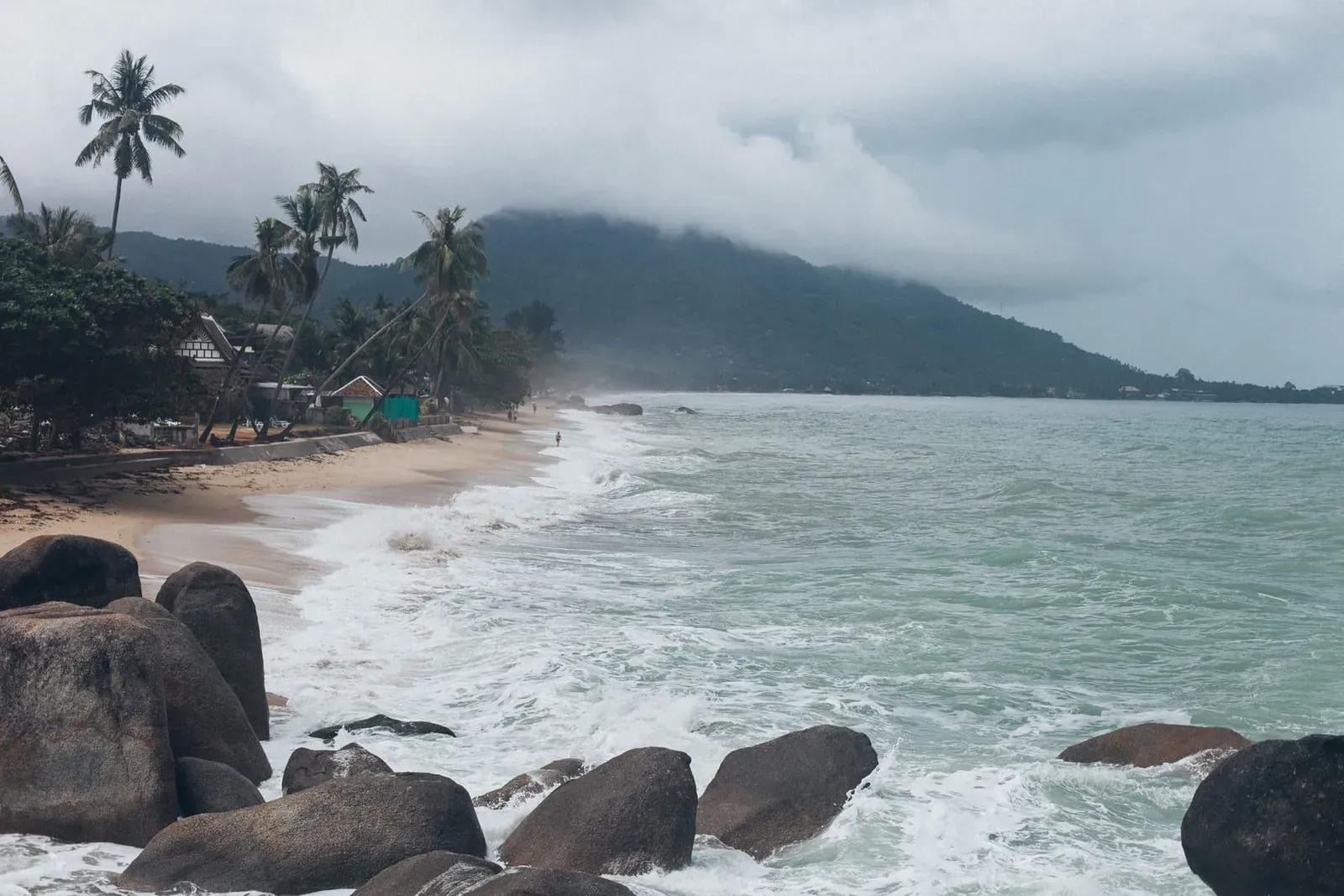
Koh Samui Climate at a Glance — 12-Month Table
Koh Samui runs a tropical monsoon climate with two rainy peaks (May and October-November) separated by a short dry window from January to April. The table below combines Koh Samui climate normals published by Climates to Travel, cross-checked against Weather2Travel’s Koh Samui averages; both aggregate the same long-run station data used by the Thai Meteorological Department. Crowd and price levels are editorial estimates based on general Gulf-of-Thailand tourism seasonality, not an official index.
| Month | Avg high | Avg low | Rainfall | Rain days | Sea temp | Crowd level | Price level |
|---|---|---|---|---|---|---|---|
| January | 29.0°C | 24.2°C | 125 mm | 8 | 28.0°C | Very high | Very high |
| February | 29.4°C | 24.9°C | 65 mm | 4 | 28.5°C | Very high | High |
| March | 30.4°C | 25.4°C | 115 mm | 5 | 29.0°C | High | High |
| April | 31.8°C | 26.0°C | 85 mm | 6 | 30.0°C | High | High |
| May | 32.9°C | 25.7°C | 130 mm | 11 | 30.0°C | Medium | Medium |
| June | 32.7°C | 25.3°C | 135 mm | 10 | 30.0°C | Medium | Medium |
| July | 32.3°C | 25.1°C | 115 mm | 11 | 29.5°C | Medium-high | Medium-high |
| August | 32.4°C | 25.1°C | 100 mm | 10 | 29.5°C | Medium-high | Medium-high |
| September | 31.9°C | 24.8°C | 120 mm | 11 | 29.0°C | Low | Low |
| October | 30.6°C | 24.3°C | 295 mm | 16 | 29.0°C | Low | Low |
| November | 29.7°C | 24.1°C | 445 mm | 16 | 29.0°C | Low-medium | Low-medium |
| December | 29.3°C | 24.0°C | 265 mm | 12 | 28.5°C | Very high | Very high |
November’s 445 mm makes it roughly 3.5 times wetter than February. Even so, “rain days” on Koh Samui usually means a heavy one- to two-hour downpour rather than an all-day washout — plan around it rather than avoiding the island entirely.
Month by Month
Every month has its own dedicated weather page with the full numbers, best beaches and packing notes:
- January — dry-season peak pricing, 125 mm of rain, still one of the sunnier months.
- February — the driest, sunniest month of the year at 65 mm and 4 rain days.
- March — hot season begins, 115 mm of rain, calm seas.
- April — Songkran (13-15 Apr) and rising heat, 85 mm of rain.
- May — humidity and rain build, 130 mm, the Samui Regatta closes out the month.
- June — green season opens, warmest sea of the year at 30.0°C, 135 mm of rain.
- July — most rain days of summer (11) but only 115 mm of total rainfall.
- August — driest of the summer months at 100 mm, busiest with European school holidays.
- September — transitional month, rain climbs to 120 mm, prices at their lowest.
- October — rain jumps to 295 mm across 16 days as the northeast monsoon builds.
- November — the wettest month of the year at roughly 445 mm and 16 rain days.
- December — 265 mm of rain tapering off into the dry-season peak.
Every month above links to its own dedicated weather page with the full breakdown.
Why Koh Samui’s Weather Is Different — Gulf vs Andaman Monsoon
Koh Samui sits in the Gulf of Thailand on the island’s east side, which puts it out of sync with the more famous Andaman coast beaches like Phuket, Krabi and Koh Phi Phi. Thailand’s weather is shaped by two seasonal monsoons: the southwest monsoon (roughly May to October) and the northeast monsoon (roughly October to February). The southwest monsoon pushes moisture-laden clouds off the Indian Ocean directly onto the Andaman coast, so Phuket’s rainy season peaks from May through October. That same system passes over Thailand’s mainland spine before it reaches Koh Samui, leaving the Gulf side comparatively dry through June, July and August.
The pattern flips in the second half of the year. The northeast monsoon picks up cold, dry air over China and Vietnam, sweeps it south across the South China Sea, and picks up huge amounts of moisture before dumping it on Thailand’s Gulf coast — including Koh Samui, Koh Phangan and Koh Tao — from October through December. This is why Samui’s rainiest months (October and November) are exactly when the Andaman coast is drying out and entering its own high season.
The practical upshot: if you’re weighing Koh Samui against Phuket for a June, July or August trip, Samui is usually the drier, calmer choice. If you’re deciding between the two for November or December, Phuket and Krabi are generally the safer bet for guaranteed sun, while Samui is still finishing its wettest stretch. Koh Phangan and Koh Tao, Samui’s Gulf neighbors, follow the same rhythm almost exactly, which is why ferry operators and dive schools across all three islands quote near-identical seasonal advice.
Dry Season — December to February
Koh Samui’s dry season, from December through February, delivers the island’s most reliable weather — daytime highs of 29-29.4 degrees Celsius, rainfall as low as 65 mm in February, and calm seas ideal for boat trips to Ang Thong National Marine Park. It is also the most expensive and crowded stretch of the year, driven by Christmas, New Year, and European winter escapes.
December opens with the tail end of the northeast monsoon still lingering (265 mm of rain), but skies clear fast after the first week. January and February are the driest, sunniest months on Samui, with humidity noticeably lower than the rest of the year and average rain days dropping to just 4-8 per month. Hotel rates across Chaweng Beach and Lamai Beach typically run 30-50% above shoulder-season pricing in this window, and popular beachfront resorts book out weeks in advance for the Christmas-New Year fortnight.
Dry-season conditions also mean the calmest seas of the year for snorkeling and diving trips, with visibility around Koh Tao and Ang Thong at its best. Anyone planning a wedding, dive certification, or multi-day boat charter should book both the activity and accommodation as early as possible for December and January, since availability tightens well before the season starts.
Hot Season — March to May
March through May is Koh Samui’s hot season, when daytime highs climb from 30.4 degrees Celsius in March to a peak of 32.9 degrees Celsius in May. Humidity builds steadily and afternoon thunderstorms become more frequent by late April, though rainfall stays moderate (85-130 mm a month) compared to the October-November peak.
March and early April are still excellent for beach time — seas are calm, sea temperature reaches a warm 29-30 degrees Celsius, and rainfall remains low. Songkran, Thailand’s water festival and new year celebration, runs nationwide from 13-15 April and turns Chaweng and Lamai’s main roads into open-air water fights. By May, heat and humidity peak, short but intense storms become common in the late afternoon, and many travelers prefer early mornings and evenings for outdoor activity. The Samui Regatta, the island’s biggest sailing event, closes out the season in late May.
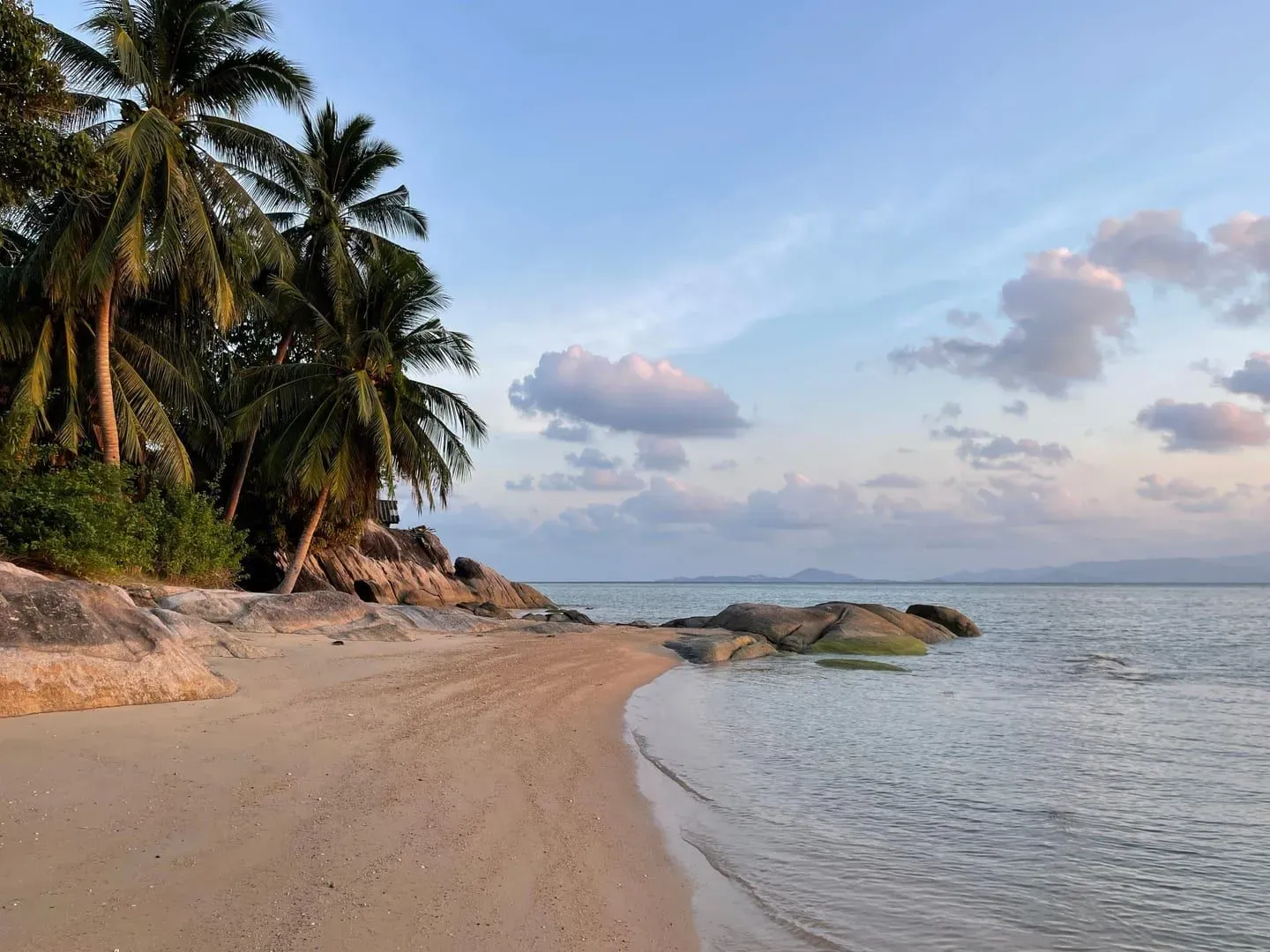
Green Season — June to August
June through August is Koh Samui’s green season — the Gulf-side window when the island stays comparatively dry while Thailand’s Andaman coast is deep into its own southwest monsoon. Rainfall holds fairly steady at 100-135 mm a month, roughly the same as the hot season, and daytime highs ease slightly from 32.7 degrees Celsius in June to 32.4 degrees Celsius in August.
This is the season most useful for the Gulf-vs-Andaman comparison above: while Phuket, Krabi and Koh Lanta see their heaviest rain, Koh Samui, Koh Phangan and Koh Tao remain reasonably dry, making the Gulf islands the smarter pick for a June-August Thailand beach trip. Prices creep up in July and August specifically because European school-summer travelers fill this gap, not because of weather — expect medium-to-high demand at family-friendly beaches like Choeng Mon Beach and Bophut Beach.
Sea temperature during the green season stays at its warmest of the year, 29.5-30 degrees Celsius, and morning conditions are usually the calmest window for kayaking, paddleboarding, and snorkeling before any afternoon showers build. Because this stretch falls between the two official monsoon peaks, it is often the best-value period for travelers who want dry-season-quality weather without dry-season prices.
Monsoon Season — September to November
Koh Samui’s monsoon season runs September through November, driven by the northeast monsoon pulling moisture off the South China Sea onto the Gulf coast. Rainfall roughly doubles from September’s 120 mm to October’s 295 mm, then peaks at 445 mm in November — the wettest month anywhere on the annual calendar and the closest thing Koh Samui has to a genuine “worst month.”
September is a transitional month: rain increases but afternoons are often still clear enough for the beach. October brings longer, heavier downpours and choppier seas, which can delay or cancel Ang Thong boat trips and speedboat transfers to Koh Phangan and Koh Tao. November is the peak of the wet season — expect several days of sustained rain, stronger onshore wind on the east coast, and the highest flood risk of the year in low-lying areas like Nathon and the Chaweng canal system. The upside of this stretch is the steepest discount on hotels and villas anywhere on the calendar, and fewer crowds at every beach and viewpoint on the island.
Travelers who must visit during September-November can still have a good trip by staying flexible: build in a buffer day before any flight home, choose accommodation away from low-lying canal areas, and check the marine forecast before booking day trips rather than relying on a fixed pre-paid itinerary. Rain typically clears by mid-morning even during the wettest weeks, leaving usable afternoons more often than the monthly totals suggest. See our rainy day guide for indoor options to fall back on when a downpour does hit.
Best Time for Beaches, Boat Trips, Waterfalls and Hikes
Koh Samui’s best conditions vary by activity: beaches and boat trips peak in the December-April dry window, while the island’s waterfalls and jungle trails are actually at their best from October through January, right after the monsoon has recharged them.
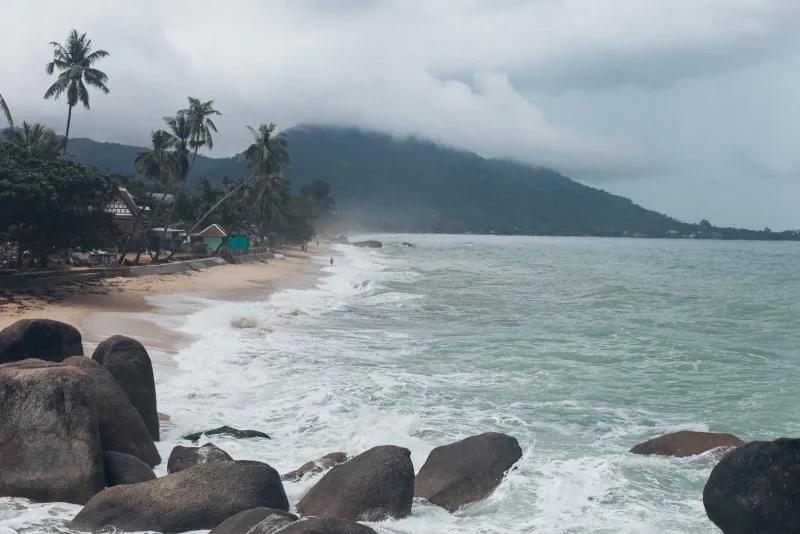
Beaches and swimming. East-coast beaches — Chaweng, Lamai and Choeng Mon — take the brunt of monsoon swell from September to November, with rougher water and occasional red-flag days. North-coast beaches like Maenam and Bophut sit more sheltered from the worst of the northeast monsoon and often stay swimmable when the east coast is rough. See our sea conditions by month guide for the full coast-by-coast wave and tide breakdown.
Boat trips. Ang Thong National Marine Park and day trips to Koh Tao run most reliably from December to April, when seas are calmest. Operators frequently cancel or reroute in October-November if swell exceeds safe limits — always confirm the day before departure during monsoon months.
Waterfalls. Counterintuitively, Koh Samui’s waterfalls are driest and least impressive during the dry season itself, since they depend on monsoon rain to run at full volume. The best time to see Na Muang Waterfalls, Hin Lad Waterfall, Wang Sao Thong Waterfall and Khun Si Waterfall at their fullest is October through January, once the monsoon has saturated the interior but before the dry season drains it back down. By March-April, many of the smaller falls slow to a trickle.
Hiking and trails. The same October-January window suits jungle hikes like the Na Muang Waterfalls Trail, Hin Lad Waterfall Trail and the Khao Pom Summit Trek — trails are green and waterfalls are flowing, though paths can be muddy and slippery straight after heavy rain. Viewpoint trails with less tree cover, like the Monkey Trail and Overlap Stone Viewpoint, are more comfortable in the cooler, drier air of December-February and best avoided at midday during the March-May heat.
Whichever season you hike in, start before 9am to avoid both the worst heat and the highest chance of an afternoon downpour. A local guide is required on several of Samui’s longer routes regardless of month, and guides can also advise same-day on trail conditions after recent rain — often more reliable than a forecast checked the night before.
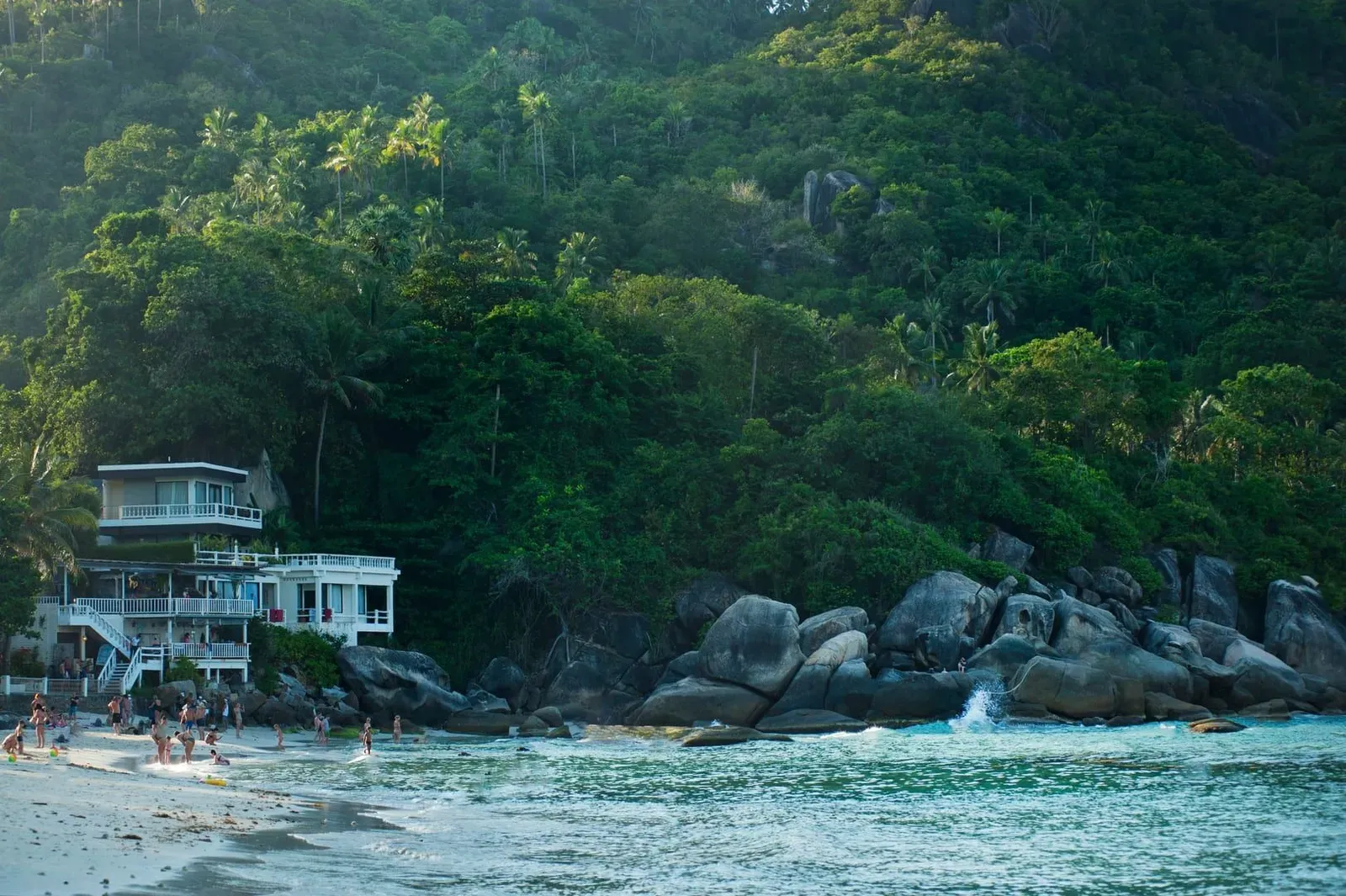
Events in Koh Samui by Month
Several fixed and recurring events shape when to visit Koh Samui, from Thailand’s national new year festival to Koh Phangan’s monthly beach parties, which most Samui visitors reach by a short ferry.
| Month | Event | Notes |
|---|---|---|
| April | Songkran (13-15 Apr) | Nationwide water festival; Chaweng and Lamai’s main streets turn into water fights |
| May | Samui Regatta (23-30 May 2026) | Multi-day sailing regatta based at Chaweng Beach with racing, parties and a closing awards night |
| September | Full Moon Party (26 Sep 2026) | Monthly beach party on Koh Phangan, reachable by ferry/speedboat from Samui |
| October | Full Moon Party (27 Oct 2026) | Monthly party; overlaps with Samui’s rainiest stretch, so book flexible transfers |
| November | Loy Krathong (25 Nov 2026) | Thailand’s festival of lights; floating krathong offerings on beaches and canals island-wide |
| November | Full Moon Party (24 Nov 2026) | Falls close to Loy Krathong — expect a busy week on Koh Phangan |
| December | Full Moon Party (24 Dec 2026, “Christmas Eve party”) | Monthly party timed with the holiday crowd |
| December | Chaweng Countdown (31 Dec) | New Year’s Eve beach parties and fireworks along Chaweng Beach |
Dates for the Full Moon Party can shift by a day around major Thai holidays — always confirm on the official Full Moon Party schedule before booking transfers. Also check our 2026 Buddhist holidays guide for Makha Bucha, Loy Krathong and the days alcohol sales are banned island-wide.
Crowds and Prices by Month
Koh Samui’s crowd and price cycle tracks its weather closely: the driest months are also the busiest and most expensive, while the wettest months bring the steepest discounts. December and January carry the year’s highest hotel rates and flight prices, driven by Christmas, New Year and the peak dry-season window. February and March stay busy but ease slightly once the holiday crowd disperses. April sees a short spike around Songkran, then May through August settle into a medium, mostly European-summer-driven demand. September and October are the quietest, cheapest months to book a Koh Samui trip, with November building back up slightly as Loy Krathong and the holiday season approach.
Budget travelers chasing the lowest prices should target late September to mid-October, accepting a higher chance of rain in exchange for savings that can reach 30-40% off peak-season room rates. Travelers who prioritize sunshine over savings should book February, which combines low rainfall with prices that have already dropped from the January peak.

Flight prices into Samui International Airport follow the same curve as hotel rates, spiking hardest around Christmas, New Year and Songkran. Booking flights 2-3 months ahead of the December-January peak typically saves more than waiting for a last-minute deal, since seat availability on Samui’s limited direct routes tightens quickly once the dry season begins.
What to Pack for Koh Samui
Pack light, breathable clothing year-round — Koh Samui rarely drops below 24 degrees Celsius even at night. A lightweight rain jacket or packable poncho is worth carrying from May through December, when short but heavy downpours are common even outside the official monsoon months. Reef-safe sunscreen, a hat and sunglasses matter every month, since UV stays strong even on cloudy days. For October-November trips specifically, add a dry bag for electronics, quick-dry sandals, and build a buffer day or two into ferry and flight bookings in case rough seas delay transfers to Koh Phangan or Koh Tao. Mosquito repellent is useful year-round but especially after rain, when standing water increases mosquito activity inland.
For the December-February dry season, prioritize a light layer for breezy evenings and boat trips, since wind chill on an open-deck ferry or speedboat can feel cooler than the air temperature suggests. Swimwear, water shoes for rocky shore entries, and a dry bag for day-trip cameras are useful in every season, while a compact travel umbrella covers both sudden rain and strong midday sun.
Once you’ve picked your dates, our Koh Samui itinerary guide helps plan the days. Getting around by scooter or other options is covered in our getting around guide, and it’s worth confirming Thailand visa rules before booking flights. Comparing dates with a second island? See Koh Samui vs Koh Phangan and check the night market schedule for evenings out.


FAQ
What is the best month to visit Koh Samui?
February and March are the best months to visit Koh Samui. Rainfall drops to 65-115 mm, seas stay calm for boat trips, and daytime highs of 29-30.4 degrees Celsius are comfortable without the heavy humidity that builds by May. Both months keep the driest conditions of the year while avoiding the extreme demand and prices of the December-January holiday peak.
What is the worst month to visit Koh Samui?
November is the worst month to visit Koh Samui. It is the wettest month of the year, with roughly 445 mm of rain across 16 rain days and the highest chance of sustained storms and rough seas. Boat trips to Ang Thong Marine Park and ferries to Koh Phangan and Koh Tao are most likely to face delays or cancellations during this stretch.
Is Koh Samui rainy in October?
Yes, October is a wet month on Koh Samui, averaging 295 mm of rain across roughly 16 rain days as the northeast monsoon builds. Downpours are usually heavy but short rather than all-day, so mornings often stay clear. October is also one of the cheapest and quietest months to visit if you can work around the rain.
Does Koh Samui have a monsoon season?
Yes. Koh Samui’s monsoon season runs from roughly September to November, peaking in November with about 445 mm of rain. Unlike Thailand’s Andaman coast, which is wettest from May to October, Koh Samui sits on the Gulf side and gets its heaviest rain from the northeast monsoon later in the year, from October through December.
Why is Koh Samui dry when Phuket is wet in July and August?
Koh Samui sits on Thailand’s Gulf coast, while Phuket sits on the Andaman coast. The southwest monsoon (May-October) dumps most of its rain on the Andaman side before reaching the Gulf, leaving Koh Samui comparatively dry from June through August. The pattern reverses from October to December, when the northeast monsoon brings Koh Samui’s heaviest rain instead.
Is Koh Samui good to visit in July or August?
Yes. July and August are part of Koh Samui’s green season, with rainfall around 100-115 mm a month — similar to the March-May hot season and far below the October-November peak. Seas stay warm at 29.5 degrees Celsius, and this window avoids both the December-January crowds and the worst of the late-year rain.
In this guide



Published on
About the author

Mike Brochlowski
Travel photographer & writer
Travel photographer and island explorer. Mike has spent years documenting Southeast Asia's hidden gems, from secluded beaches to jungle waterfalls.
Articles by Mike →More in Travel Guides
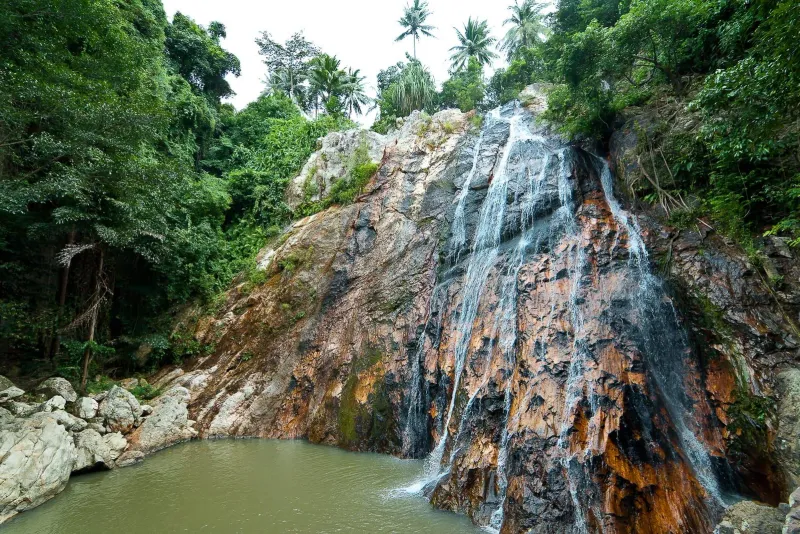
Na Muang Waterfalls — Samui's Purple Cascades and Jungle Pools
Explore Na Muang Waterfalls on Koh Samui — the accessible 18m Purple Waterfall with its swimming pool and the 80m jungle trek to the isla…
Wat Phra Yai — Big Buddha Temple on Koh Samui
Visit Wat Phra Yai (Big Buddha) on Koh Samui: a 12-meter golden Buddha, naga staircase, panoramic views, and market stalls.
Apirom Viewpoint — Koh Samui's Closed Hillside Lookout Above Ban Tai
Apirom Viewpoint: a ~304m hilltop lookout inland of Ban Tai, Koh Samui, its restaurant closed since the pandemic but the hillside track s…