Contents
Is Koh Samui Worth Visiting in August?
Yes, with one honest trade-off: August is Koh Samui’s driest month of the May-September wet-season stretch at 100 mm of rain over 10 days, but it is also the island’s busiest month of the middle of the year because European school summer holidays land squarely on top of it. Highs run 32.4°C, the sea holds at a warm 29.5°C, and most days still deliver a sunny morning before any afternoon shower arrives. The real question isn’t the weather — it’s whether decent-but-not-peak conditions are worth peak-season crowds and prices.
Key takeaways
- August: 100 mm rain, 10 rain days — the lowest rainfall of May, June, July, August or September
- Sun sits at 5.0 hours/day, the year’s floor alongside June, July and September
- Highs 32.4°C, lows 25.1°C, sea 29.5°C — swimming weather every day, rain or not
- European summer holidays make August one of the busiest and most expensive months, independent of the weather
- East coast (Chaweng, Lamai, Bophut) is the calmer swim in August; the west coast picks up afternoon chop
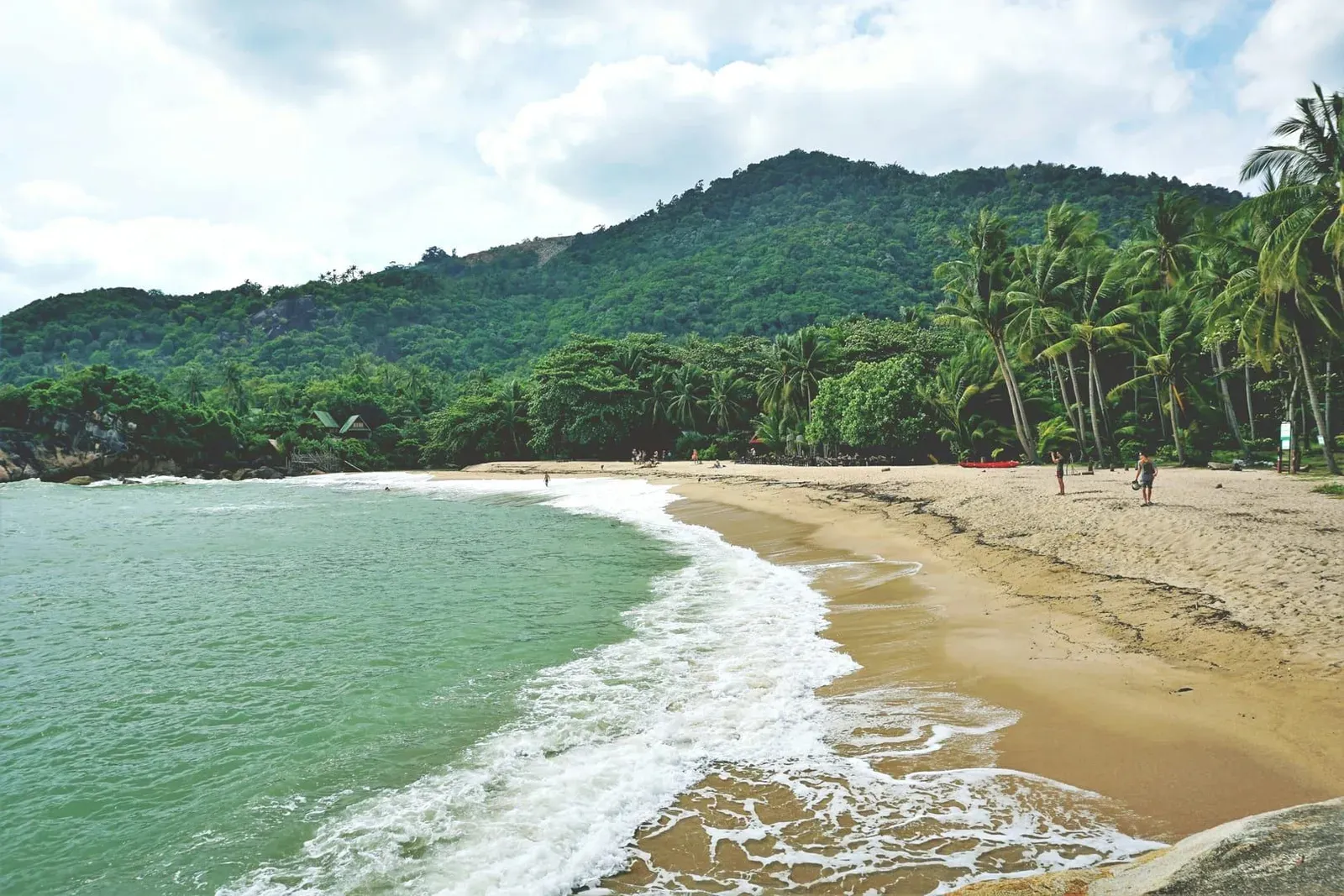
Koh Samui August Weather — The Driest Month of the Wet-Season Stretch
August is the driest of the five months that make up Koh Samui’s southwest-monsoon stretch, which is the single most useful fact for planning around it. May through September all sit in the same general weather pattern, but August’s 100 mm of rain is noticeably lower than July’s 115 mm or September’s 120 mm, and well below May and June either side of it.
| Month | Rain (mm) | Rain days | Sun hours/day | Sea temp |
|---|---|---|---|---|
| July | 115 | 11 | 5.0 | 29.5°C |
| August | 100 | 10 | 5.0 | 29.5°C |
| September | 120 | 11 | 5.0 | 29.0°C |
| February (driest overall, for contrast) | 65 | 4 | 7.5 | 28.5°C |
August is not the island’s driest month outright — that title belongs to February, with less than half the rain and almost double the sunshine hours. What August offers instead is the best rainfall number inside the wet-season window itself, plus warm, swimmable seas every single day. Numbers are 1991-2020 climate normals from Climates to Travel, cross-checked against the Thai Meteorological Department (checked Sep 2026); see the full 12-month climate table for how August compares to the rest of the year.
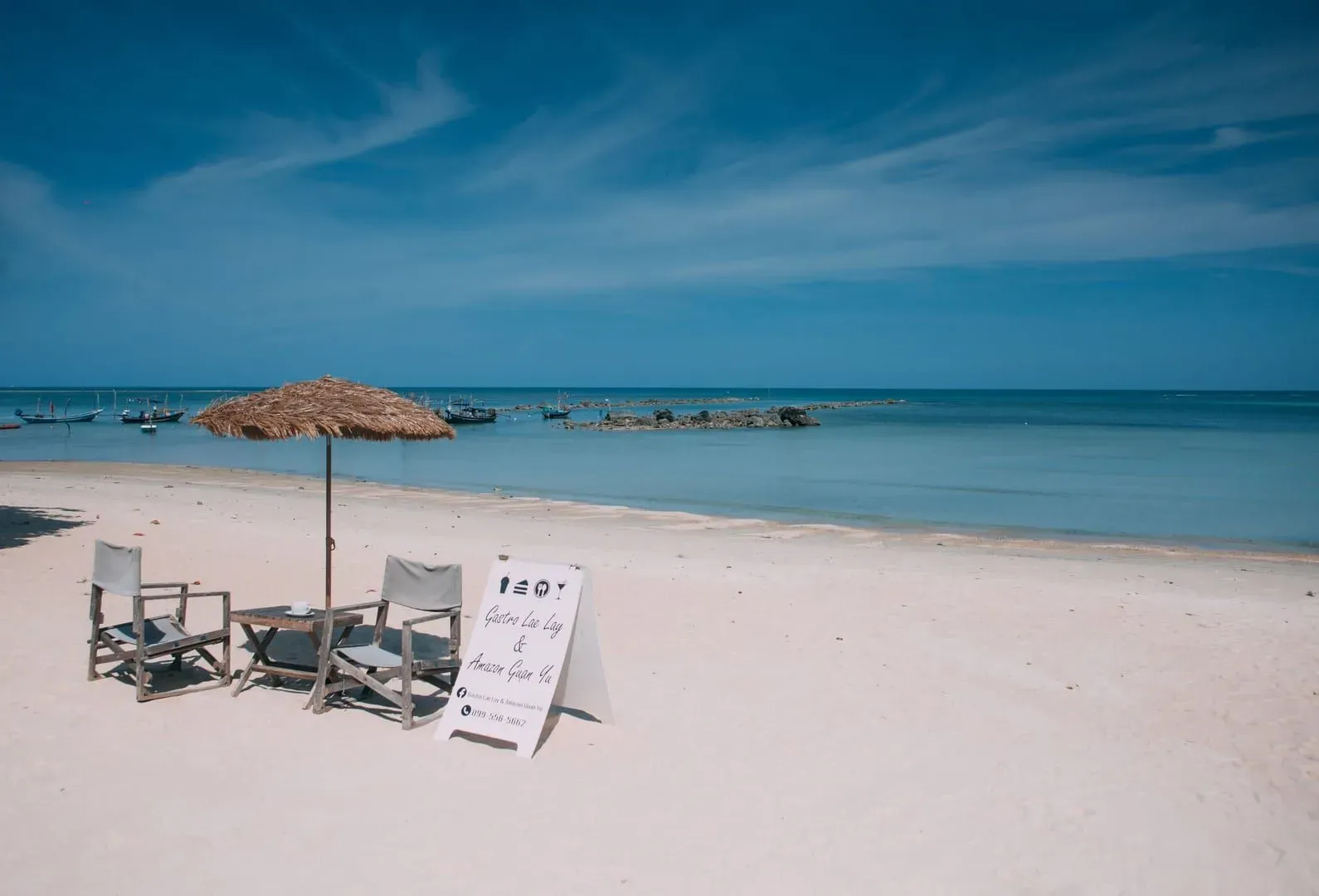
What an August Rain Day Actually Looks Like
August’s rain arrives as short, convective afternoon squalls rather than sustained drizzle, so a rained-out day is rare even with 10 rain days on the calendar. The typical pattern is a clear or partly cloudy morning, building cloud through midday, and a heavy 20-40 minute downpour sometime in the afternoon before skies clear again by evening. This is the same short-burst pattern described in the rainy season guide for the October-December wet months, just at a lower volume and frequency.
The practical takeaway is to front-load the day: book boat trips, beach time and outdoor activities for the morning, and treat the early-to-mid afternoon as the window most likely to lose an hour to rain. Genuine all-day washouts are uncommon in August and far less likely than in the true wet-season peak later in the year.
European Summer Meets Low Season — the Real Trade-Off
August’s honest trade-off is that it delivers the wet-season stretch’s best rainfall number while also being one of the busiest months of the year, because European school summer holidays overlap with it almost exactly. This pushes hotel rates, villa prices and flight costs up noticeably, and Chaweng and Bophut run at their busiest of the mid-year window — a step above July, per the shoulder season guide’s crowd-and-price framing of the calendar.
The trade-off is genuinely two-sided rather than a reason to avoid the month. Weather-wise, August is a better bet than the true low season (September-November) that follows it, with less rain and calmer seas on most coasts. Price-wise, it runs well above the June low point and the September-October lull, without reaching the December-January peak. Travelers who want the best weather-to-price ratio in the wet-season window should look at May or June instead; travelers locked into European summer dates get decent weather in August, just not the cheapest version of it. The best time to visit hub covers the full year’s crowd and price index if comparing August against every other month.
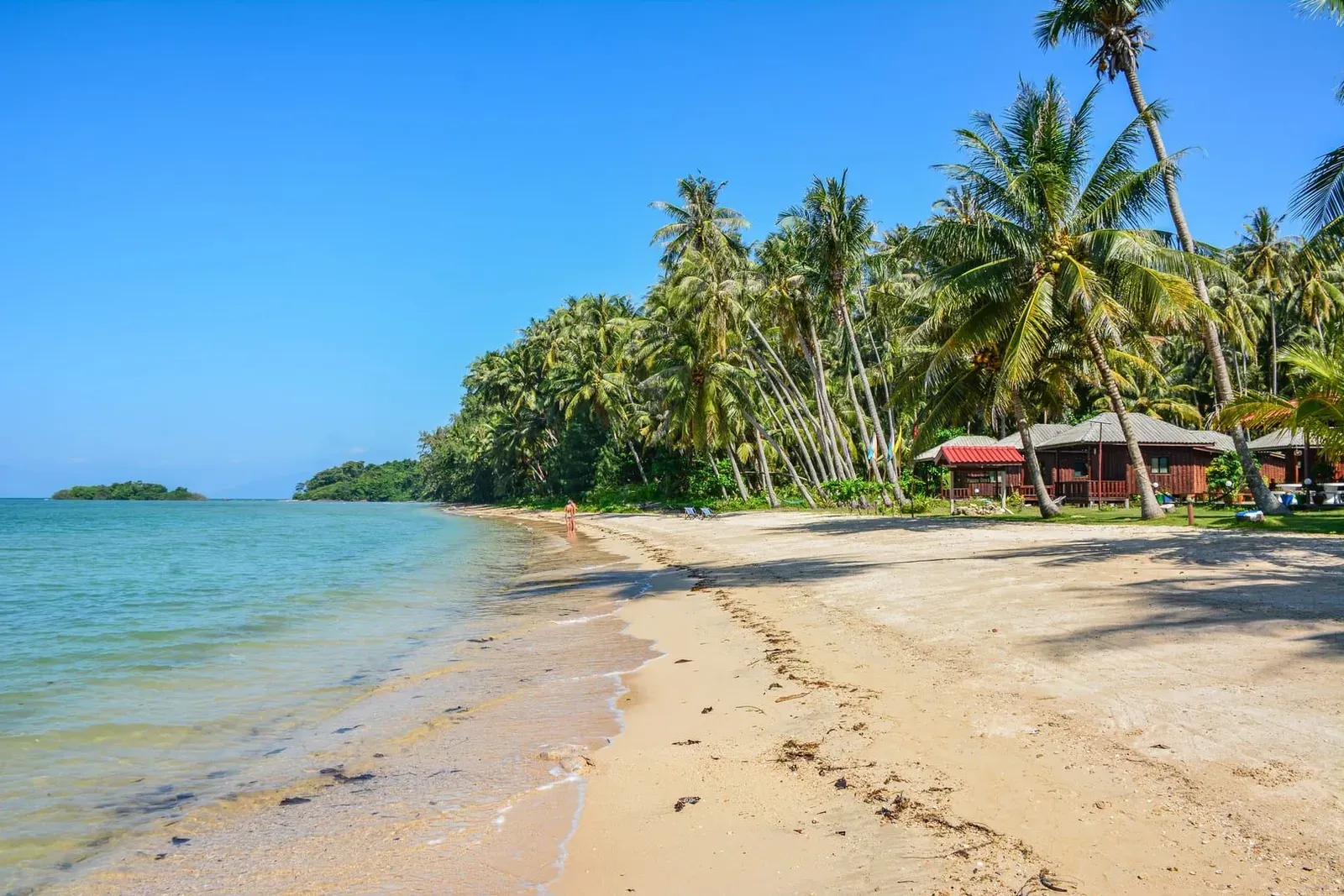
Which Coast to Choose — East Stays Calmer, West Picks Up Chop
Pick the east coast for the calmer, cleaner swim in August: the southwest monsoon blows onshore against the west coast, so Chaweng, Lamai and Bophut generally stay the flatter option while Lipa Noi and Taling Ngam pick up afternoon wind and chop. This is the same seasonal pattern the sea conditions by month guide and the east vs west coast comparison both describe for the May-September window — sea temperature never drops below 29°C on any coast, so the choice is about wave and wind comfort, not water temperature.
The west coast isn’t unswimmable in August, and its sunset views are still the best on the island — the trade-off is a choppier afternoon swim and a 25-45 minute drive from the airport, per the east-vs-west breakdown. A traveler prioritizing calm, easy swimming in August is better served booking Chaweng, Lamai or Bophut; one prioritizing quiet evenings and sunsets over flat water can still make the west coast work, just with lower expectations for afternoon swim conditions.
Waterfalls Run Strong After the Wet Months
August is a genuinely good month to see Koh Samui’s waterfalls, since several weeks of May-through-August rain keep both main falls running well before the driest part of the year sets in. Na Muang Waterfall and Hin Lad Waterfall both carry solid flow into their pools in August, without the harder, trail-flooding rain of the October-November peak that can make footing and photography difficult. This is one of the month’s clearest upsides against the driest months of the year, when both falls thin out considerably.
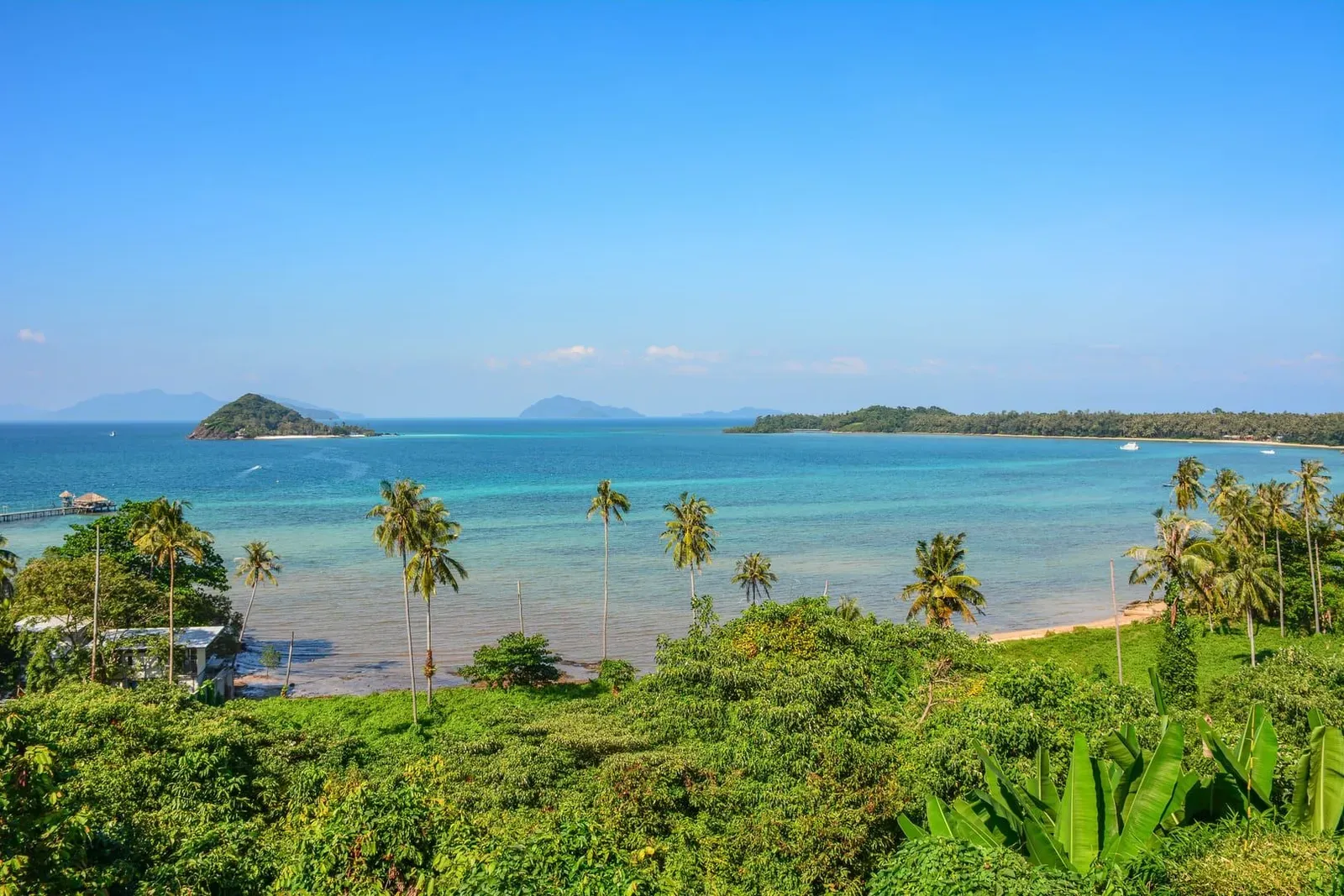
Hiking in August — Humid, Slippery, Start Early
Trails are green and humid in August, and the same rain that keeps the waterfalls flowing also leaves roots, rocks and packed earth slick underfoot, especially on shaded jungle routes like the Na Muang Waterfalls Trail and Hin Lad Waterfall Trail. Start before 9 am: mornings are usually dry and noticeably cooler, while afternoon humidity and the chance of a squall both build fast. Exposed viewpoint trails with less canopy dry out faster after a shower than jungle routes, so they hold up a little better if you’re stuck starting later than planned.
What to Pack for August
Pack for heat and short rain rather than sustained downpours: lightweight, quick-dry clothing, reef-safe sunscreen, and a compact umbrella or packable rain jacket cover most August days. A dry bag is worth carrying on any boat day trip or scooter ride, since afternoon squalls can arrive with little warning even on an otherwise clear day — see the day trips guide for which tours run most reliably in August. Box jellyfish risk stays elevated through August per the jellyfish guide, so check posted flags before swimming at any beach. For the full year-round packing rundown, see the Koh Samui packing list; for a budget breakdown across August’s higher prices, see the trip cost guide.

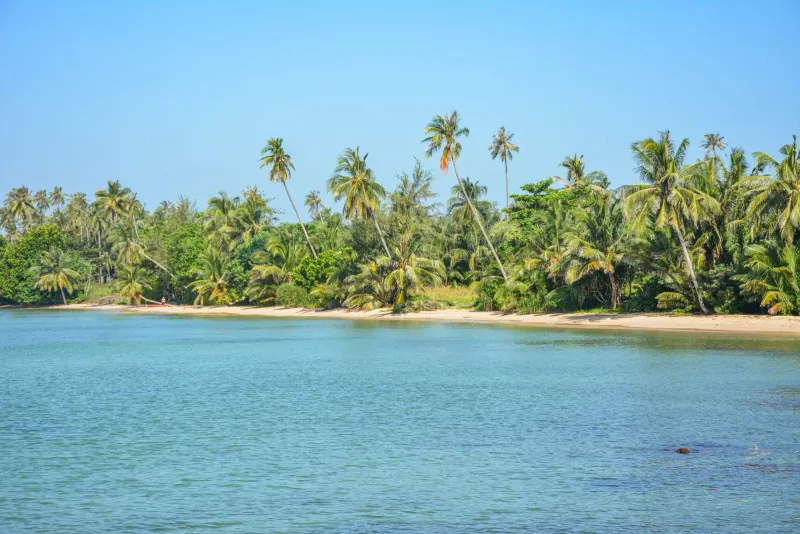
FAQ
Is August a good time to visit Koh Samui?
Yes. August is the driest month of Koh Samui’s May-September wet-season stretch, at 100 mm of rain over 10 days, with highs of 32.4°C and sea temperature at 29.5°C. The main trade-off is crowds and prices: European school summer holidays make August one of the busier, pricier months, independent of the decent weather.
Does it rain a lot in Koh Samui in August?
Less than the months around it. August’s 100 mm across 10 rain days beats July’s 115 mm/11 days and September’s 120 mm/11 days, though it’s still well above February’s 65 mm/4 days. Most August rain falls as short afternoon squalls rather than all-day rain, so mornings are usually the reliable window.
Why is Koh Samui so busy in August if it’s not the driest month?
Because European school summer holidays land on top of it, not because of the weather. Chaweng and Bophut run at their busiest of the mid-year window, and hotel and flight prices rise to match, even though February and the shoulder weeks around it actually have better rainfall numbers.
Which beach is calmest in Koh Samui in August?
The east coast — Chaweng, Lamai and Bophut — since the southwest monsoon blows onshore against the west coast in August, leaving Lipa Noi and Taling Ngam choppier in the afternoons. Sea temperature holds at 29.5°C on every coast, so the choice is about wave comfort, not water temperature.
Are Koh Samui’s waterfalls running in August?
Yes, and August is a good window for them. Na Muang and Hin Lad waterfalls both carry solid flow after several weeks of May-through-August rain, without the harder, trail-flooding downpours of the October-November peak. Trails leading to them are humid and can be slippery, so start hikes before 9 am.
Published on
About the author

Mike Brochlowski
Travel photographer & writer
Travel photographer and island explorer. Mike has spent years documenting Southeast Asia's hidden gems, from secluded beaches to jungle waterfalls.
Articles by Mike →More in Weather
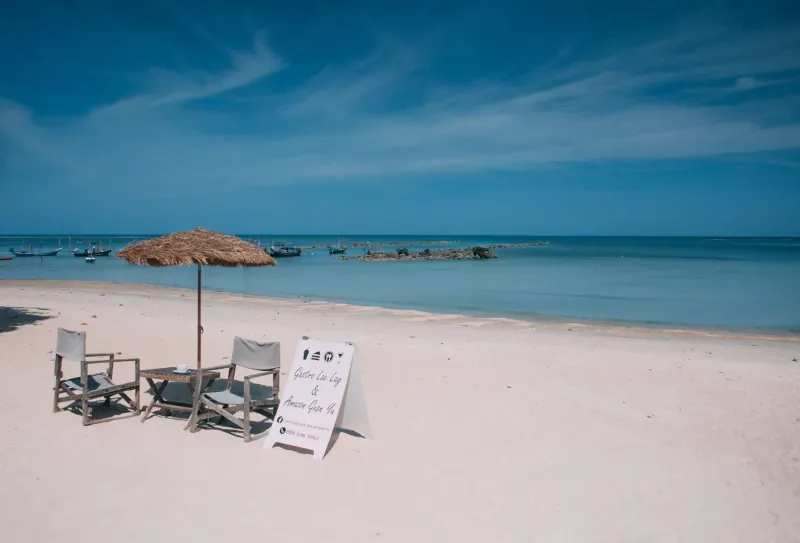
Also in Best Time to Visit Koh Samui
Koh Samui in July — Weather, Sea, Crowds & Is It Worth It?
Koh Samui in July: 32.3°C highs, 29.5°C sea, 115mm rain over 11 days, and peak European summer crowds.
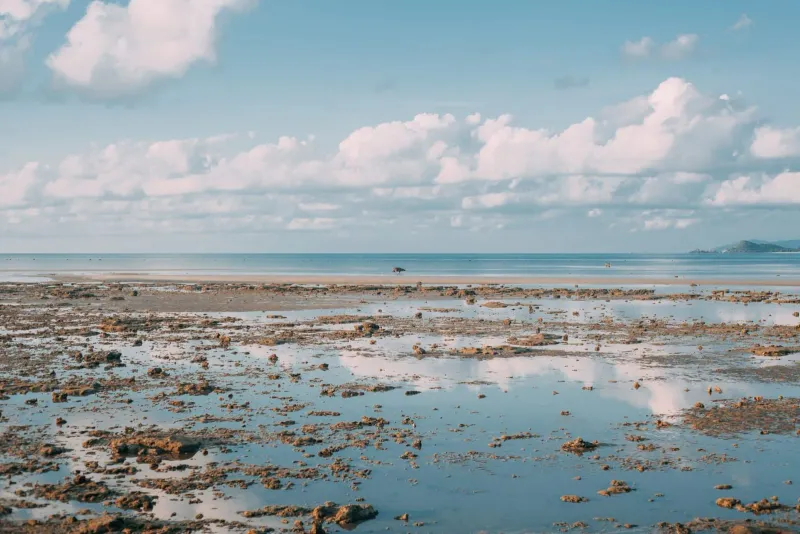
Also in Best Time to Visit Koh Samui
Koh Samui in June — Weather, Sea, Crowds & Is It Worth It?
Koh Samui in June: 32.7°C highs, the year's warmest 30.0°C sea, 135mm rain over 10 days, and low-season prices while Phuket gets soaked.
Also in Best Time to Visit Koh Samui
Koh Samui in March — Weather, Sea, Crowds & Is It Worth It?
Koh Samui in March: 115mm of rain over just 5 days, 30.4°C highs, 7.5 sun hours and a 29°C sea — the last comfortable month before April'…