Contents
Koh Samui’s Two Shoulder Weeks — Quick Answer
Koh Samui’s low season isn’t the rainy season — it’s two narrow windows either side of it, roughly 20 January to 28 February and 1 May to 10 June, when the dry-season weather is basically still intact but the peak-season prices have already broken. Villa and hotel rates in these windows typically run 20-60% below the December-January and July-August peaks, beaches empty out, and boat trips still run on schedule. This page is for travelers who want good weather without paying peak prices or gambling on the true rainy season (September-November).
Key takeaways
- Shoulder window 1: late January to February, after Christmas-New Year demand clears
- Shoulder window 2: May to early June, before the July-August European summer bump
- Rates ease from a peak of +50-80% above baseline (January) to +40-60% (February), then drop further to -10-25% below baseline by May-June
- Rain stays moderate in both windows (65-130 mm/month); the real rainy season (October-November, 295-445 mm) is a different trade-off entirely
- Both windows carry one date-specific caveat each: Chinese New Year (17 Feb 2026) and the Samui Regatta (23-30 May 2026) can spike prices for a few days inside them

Why These Weeks Exist — The Weather Numbers
Koh Samui’s shoulder weeks exist because the island’s rain and its tourist demand don’t move in lockstep — demand peaks around the December-January holidays and again in July-August school summer, while rainfall bottoms out in February and stays moderate through May-June. According to climate normals published by climatestotravel.com (1991-2020 data, cross-checked against Thai Meteorological Department records), February averages just 65 mm of rain across 4 rain days with 7.5 hours of sunshine a day — the driest, sunniest month of the year. May and June sit a little wetter at 130 mm/11 days and 135 mm/10 days, but both are still far short of November’s 445 mm across 16 days.
| Month | Rainfall | Rain days | Sun hours/day | Sea temp |
|---|---|---|---|---|
| January | 125 mm | 8 | 6.5 h | 28.0°C |
| February | 65 mm | 4 | 7.5 h | 28.5°C |
| May | 130 mm | 11 | 6.0 h | 30.0°C |
| June | 135 mm | 10 | 5.0 h | 30.0°C |
| November (for contrast) | 445 mm | 16 | ~6.0 h | 29.0°C |
Sea temperature never drops below 28°C in either window, so swimming is never the issue — rain and demand are. The gap between “still dry enough” and “actually cheap” is what makes these two stretches worth naming on their own, rather than lumping them into the generic dry-season or green-season labels most guides use.
Late January to February — After the Peak Breaks
Late January through February is Koh Samui’s first shoulder window, opening once the mid-December-to-mid-January peak crowd flies home and closing before hot-season heat and Songkran crowds arrive in March-April. Rainfall drops to a yearly low of 65 mm in February with only 4 rain days, and daytime highs sit at a comfortable 29-29.4 degrees Celsius — arguably the best weather-to-price ratio of any two-week stretch on the island.
The catch is timing around Chinese New Year, which falls on 17 February 2026. Chinese, Hong Kong and Singaporean travelers book heavily around this week, and villa demand can spike for 5-7 days even while the rest of February stays quiet. Booking either side of that week — say, 20 January to 10 February, or 24 February onward — gets the fullest benefit of the price drop. A handful of seasonal beach bars and pop-up restaurants that run only through the December-February peak also start winding down by late February, so a spot that was open in early January isn’t guaranteed to still be open in week four.
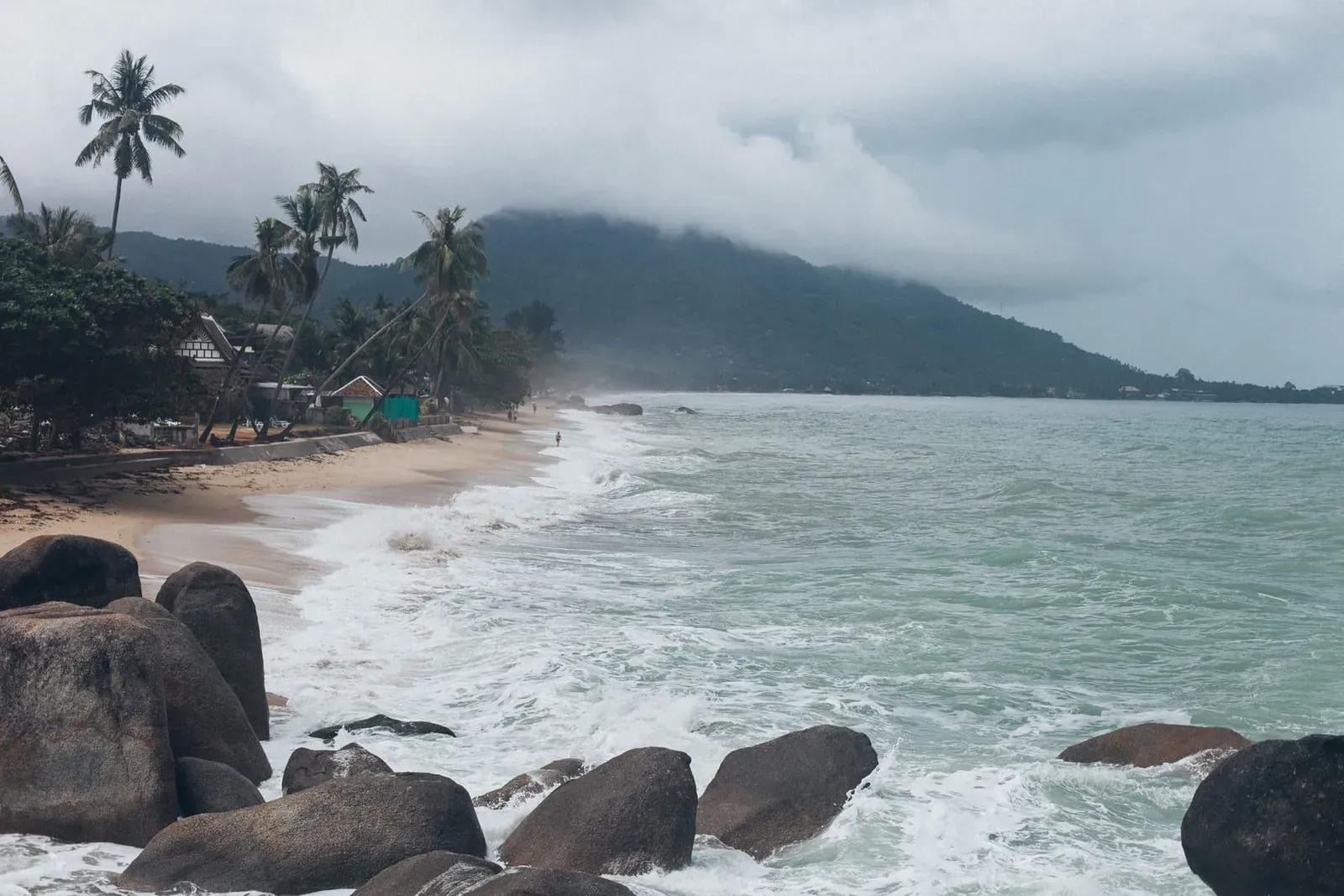
May to Early June — Before the Mid-Year Bump
May through early June is the second shoulder window, sitting between the March-April hot season and the July-August bump in European school-summer bookings. Rainfall climbs slightly to 130 mm (May) and 135 mm (June), but per climatestotravel.com normals, most of it falls as short, concentrated afternoon downpours rather than the sustained rain that defines October-November — mornings are typically clear and usable for beach time or boat trips.
Songkran (13-15 April) sits just before this window and briefly spikes both prices and crowds; by the last week of April demand has usually settled back down. The one exception inside the window itself is the Samui Regatta, a multi-day sailing event based at Chaweng Beach running 23-30 May 2026, which pushes Chaweng-area rates up for that week specifically — booking elsewhere on the island, or outside that date range, avoids it entirely. Sea temperature is at its warmest of the year in this window, 30 degrees Celsius, and the west and south coasts start picking up afternoon chop as the southwest monsoon builds — worth knowing before booking a west-facing beach for flat-calm swimming (see the trade-offs below).
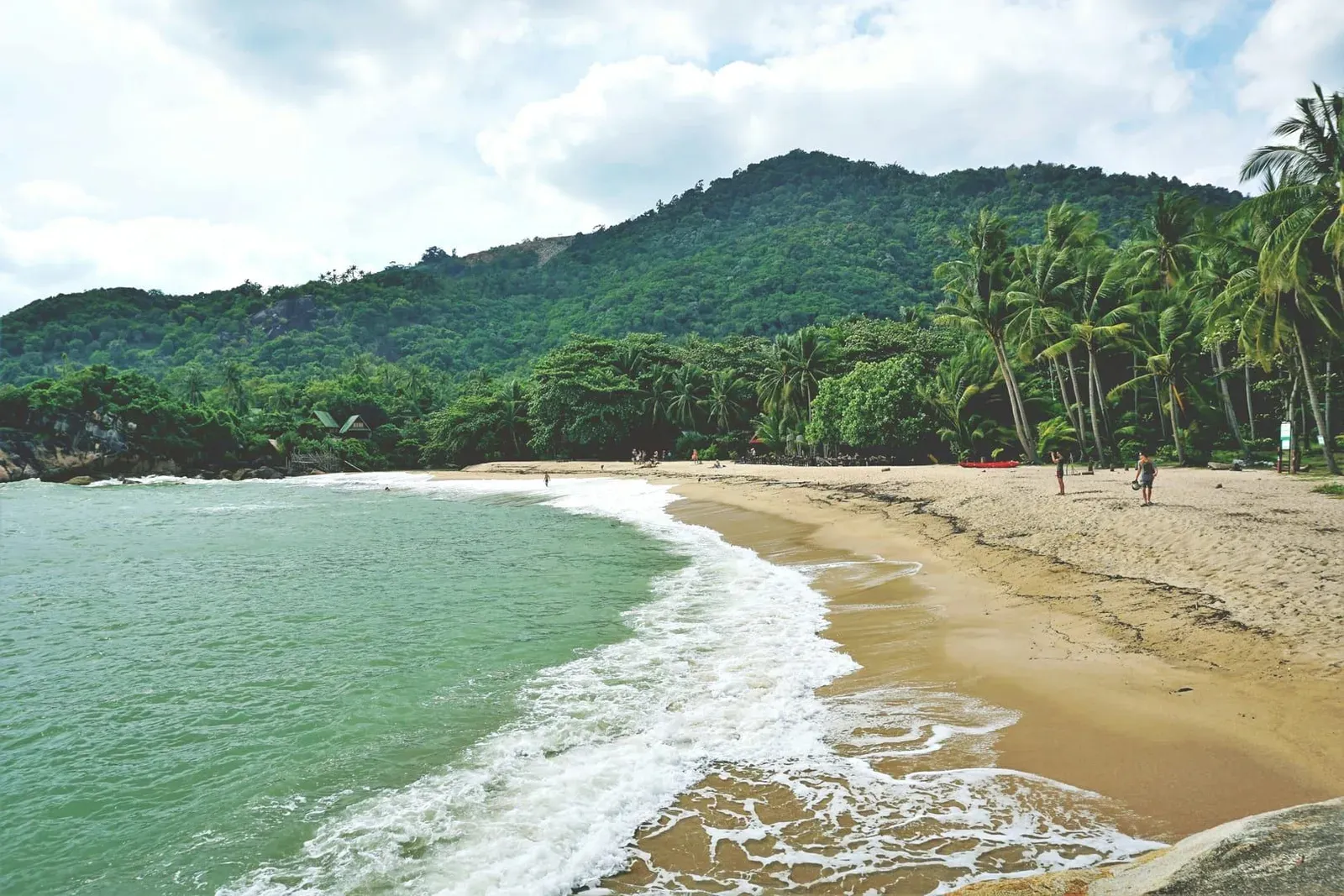
The Price Gap — How Much Cheaper Is It?
Villa and hotel rates on Koh Samui swing hard by season, and the shoulder weeks sit in the middle of that swing rather than at either extreme. According to a 2026 Koh Samui villa-rental rate guide from Horizon Homes, a mid-range 3-bedroom villa that commands 18,000-30,000 THB (~514-857 USD) a night during the mid-December-to-mid-January peak drops to roughly 6,000-10,000 THB (~171-286 USD) in true low season — a 20-40% discount off high-season rates. Percentage-based tracking from Inside Samui’s 2026 seasonal rate guide narrows that down by month specifically:
| Period | Months | Rate vs. baseline |
|---|---|---|
| Peak | mid-Dec – mid-Jan | +50-80% |
| Shoulder 1 | late Jan – Feb | +40-60%, easing through the month |
| Hot season | Mar – Apr | Near baseline, Songkran spike |
| Shoulder 2 | May – early Jun | -10-25% below baseline |
| Low season | Jun – Sep, Oct – Nov | -20-40% below high season |
The honest reading: if the lowest number on the receipt is the only goal, September-October beats both shoulder windows on price alone — but that trades away the dry weather this page is about. For budget planning beyond accommodation, a mid-range day on Koh Samui runs roughly 4,000 THB (~114 USD) even in peak season; the savings from a shoulder-week trip land almost entirely on the hotel or villa line, not food and transport.
What You Give Up — The Honest Trade-Offs
Shoulder weeks aren’t a free lunch. Three trade-offs are worth knowing before booking either window. First, some seasonal businesses scale back: pop-up beach bars and short-run restaurants that open specifically for the December-February peak start closing through late February, and a few independent tour operators trim sailing frequency once June demand thins out — confirm a specific venue is open rather than assuming peak-season listings still apply. Second, sea state isn’t uniform across the island in the May-June window: per this site’s own sea conditions by month breakdown, the west coast (Lipa Noi, Taling Ngam) and south coast turn from calm to choppy starting in May as the southwest monsoon builds, while the north and east coasts stay calm through August. Third, two fixed dates sit inside these windows — Chinese New Year (17 Feb 2026) and the Samui Regatta (23-30 May 2026) — and both can undo part of the price advantage for travelers who land on exactly those days.
None of these are dealbreakers. They’re the reason this page names specific weeks rather than just pointing at “February” or “May” and calling it done.

Where to Base Yourself
For the late January-February window, any coast works — this is the calmest stretch of the year island-wide, so Chaweng, Lamai and Maenam are all swimmable and uncrowded relative to January. For May-early June, lean toward the north coast or east coast rather than Lipa Noi or the south, since those west- and south-facing beaches are the first to pick up afternoon chop as the southwest monsoon builds. Either window is also a good time to add a waterfall day: Na Muang Waterfalls and Hin Lad Waterfall are past their October-January peak flow by May but still running, and far less crowded at the viewing platforms than during the dry-season rush. For a full area-by-area comparison, see where to stay in Koh Samui; for boat and island-hopping options while the seas are calm, day trips from Koh Samui covers Ang Thong, Koh Tao and Koh Phangan departures.
Shoulder vs Low vs Peak — Which Is Which?
Koh Samui’s calendar splits into four practical bands rather than a simple wet/dry split, and mixing up “shoulder” and “low” season leads to the wrong booking decision.
| Band | Months | Rain | Prices | Best for |
|---|---|---|---|---|
| Peak | Mid-Dec – mid-Jan | Low | Highest of the year | Guaranteed sun, no price sensitivity |
| Shoulder | Late Jan – Feb, May – early Jun | Low-moderate | Mid, easing toward low | Best weather-to-price ratio |
| Hot/green season | Mar – Apr, Jun – Aug | Moderate | Mid-high (Jun-Aug bump) | Heat-tolerant travelers, warm seas |
| Low/monsoon | Sep – Nov | High (Oct-Nov peak) | Lowest of the year | Maximum savings, rain-tolerant |
See the best time to visit Koh Samui hub for the full month-by-month weather breakdown this table is drawn from, including events, crowds and packing advice for every month of the year — not just the two covered here.



FAQ
What is the cheapest time to visit Koh Samui?
For rock-bottom prices alone, September-October is cheapest, with rates 20-40% below high season, but rainfall runs 120-295 mm a month with real risk of multi-day downpours. The two shoulder weeks — late January-February and May-early June — cost more than that but far less than peak, while keeping rainfall to a moderate 65-135 mm a month.
Is Koh Samui quiet in February?
Yes, relative to January. Chinese New Year (17 Feb 2026) brings a short demand spike, but outside that week, February is the driest month of the year (65 mm rain, 4 rain days) with noticeably thinner crowds than the December-January peak, while rates ease from +50-80% above baseline in January to +40-60% in February.
Is May a good time to visit Koh Samui?
Yes. May sits 10-20% below baseline pricing, sea temperature peaks at 30 degrees Celsius, and rainfall (130 mm) stays well below the October-November wet-season peak. The main caveat is the Samui Regatta (23-30 May 2026) around Chaweng, and afternoon chop building on the west and south coasts as the southwest monsoon starts.
Does Koh Samui have a true low season?
Yes — September through November, when rain climbs to 120-445 mm a month and hotel rates drop the most of the year (20-40% below high season). It’s different from the shoulder weeks covered here, which keep dry-season-quality weather while still discounting off peak prices.
Do any businesses close during Koh Samui’s shoulder weeks?
Some do. A handful of seasonal beach bars and pop-up restaurants that run only through the December-February peak begin closing by late February, and a few independent boat operators trim sailings once June demand thins. Confirm opening hours for any specific venue rather than assuming peak-season listings still apply.
Published on
About the author

Mike Brochlowski
Travel photographer & writer
Travel photographer and island explorer. Mike has spent years documenting Southeast Asia's hidden gems, from secluded beaches to jungle waterfalls.
Articles by Mike →More in Travel Guides
Also in Best Time to Visit Koh Samui
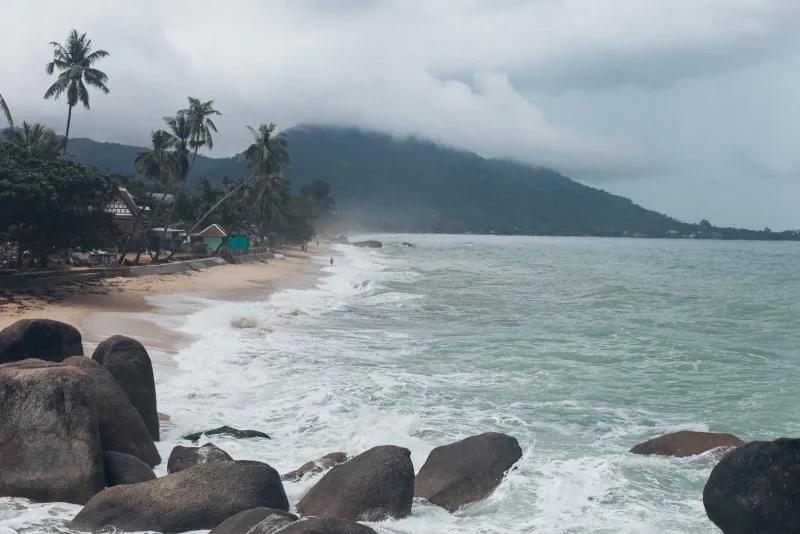
Koh Samui in January — Weather, Rain & Is It Worth It?
Koh Samui in January: 125 mm of rain over 8 days, 29.0°C highs, the coolest sea of the year at 28.0°C, and where prices fall once New Yea…
Also in Best Time to Visit Koh Samui
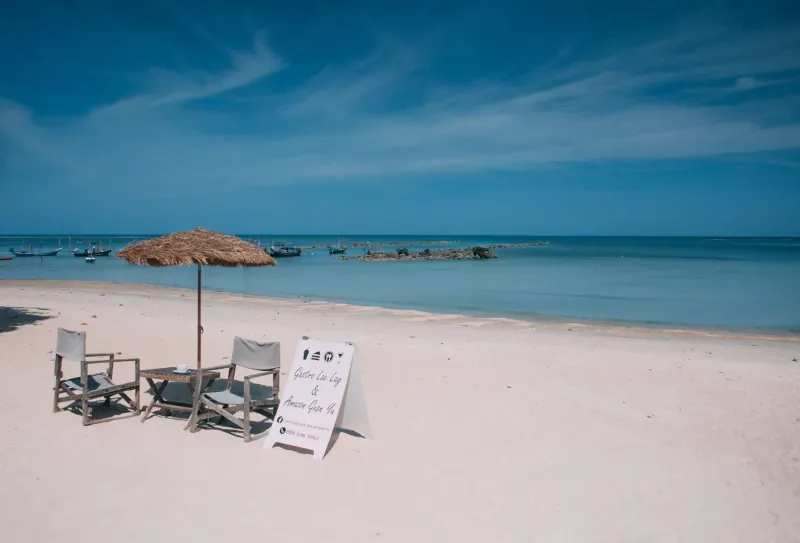
Koh Samui in July — Weather, Sea, Crowds & Is It Worth It?
Koh Samui in July: 32.3°C highs, 29.5°C sea, 115mm rain over 11 days, and peak European summer crowds.

Also in Best Time to Visit Koh Samui
Koh Samui in June — Weather, Sea, Crowds & Is It Worth It?
Koh Samui in June: 32.7°C highs, the year's warmest 30.0°C sea, 135mm rain over 10 days, and low-season prices while Phuket gets soaked.