Contents
Overview
Chinese New Year on Koh Samui is a Chinese-Thai island story rather than a Phuket- or Bangkok-scale street spectacle: lion dances outside four small Hainanese shrines, family reunion dinners behind Nathon’s teak shophouse doors, and a week when hotel and villa rates quietly climb. The date moves every year with the lunar calendar; in 2026 it falls on 17 February, opening the Year of the Horse. Anyone expecting Chinatown-style parades will be underwhelmed — anyone chasing the Hainanese heritage angle finds one of Samui’s more overlooked cultural weeks.
Key takeaways
- Chinese New Year is set by the lunar calendar and always falls between 21 January and 20 February; in 2026 it lands on 17 February.
- It is not a Thai public holiday — ferries, flights, government offices and most tourist businesses run on a normal schedule.
- Samui’s Hainanese-Chinese heritage sites — the Nathon Hainan Shrine, Chinese Temple of Maenam, Guan Yu Shrine and Guam Im Shrine — host the island’s lion dances and shrine ceremonies.
- Villa and hotel demand spikes for roughly 5-7 days around the date as mainland Chinese, Hong Kong and Singaporean travelers book heavily.
- Nathon’s old town, built by the same 19th-century Hainanese traders, is the best single place to see the celebration up close.
When Is Chinese New Year on Koh Samui?
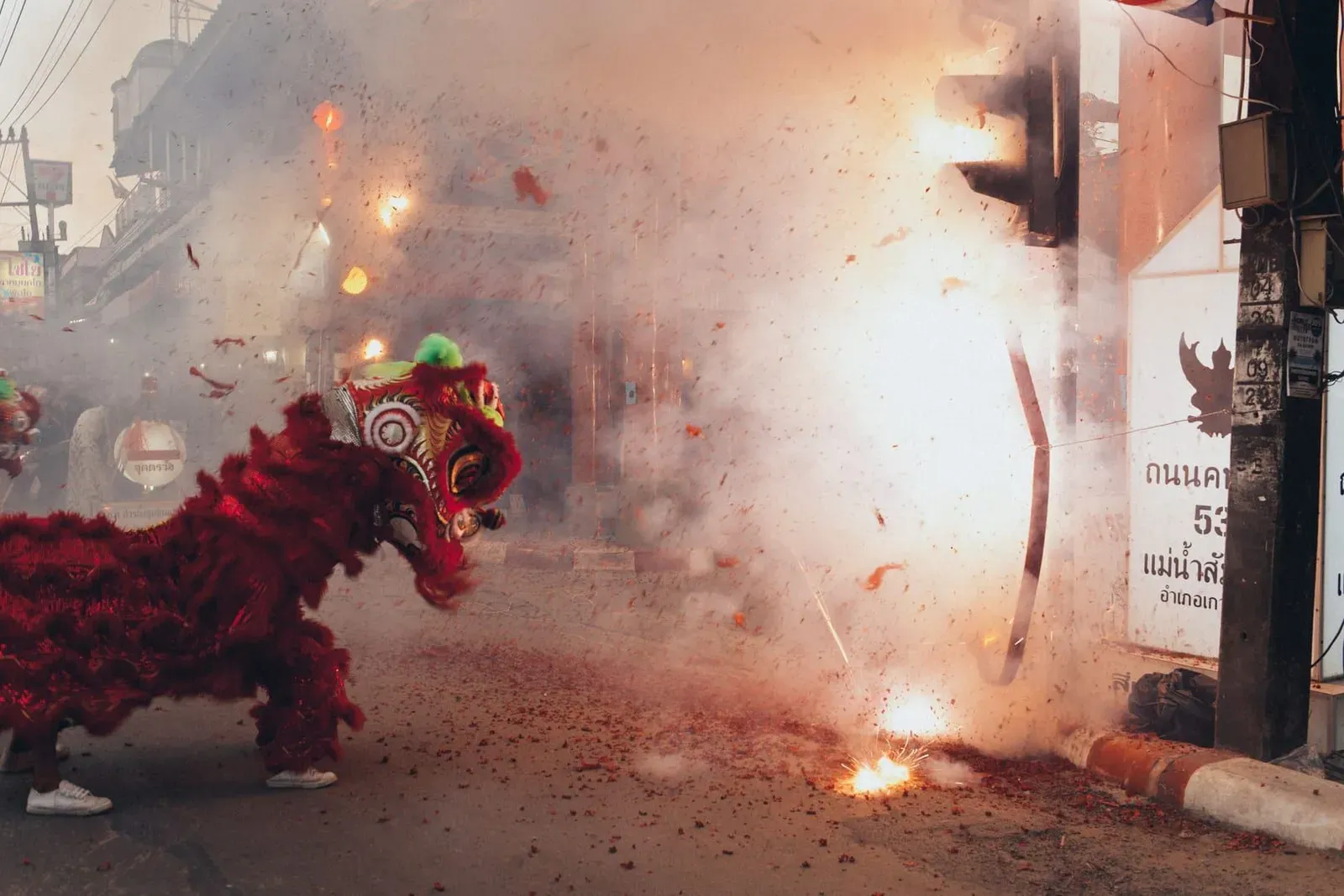
Chinese New Year falls on the second new moon after the winter solstice, which pins the date somewhere between 21 January and 20 February on the Western calendar rather than on a fixed day (Wikipedia). In 2026 that lands on 17 February, marking the Year of the Horse — the same date this site’s shoulder season and February weather guides already track for pricing purposes. Because the date shifts every year, always check it against a current-year source before booking rather than assuming last year’s date repeats.
Unlike Songkran (Thai New Year in April), Chinese New Year is not a Thai national public holiday. Government offices, banks, ferries and the airport all run on a normal schedule, and the celebration’s visibility on Samui depends entirely on which neighborhoods have a Chinese-Thai community — mainly Nathon and Hua Thanon, with a smaller presence in Maenam.
The Hainanese Heritage Behind the Celebration
Every Chinese New Year event on Samui traces back to the same 19th-century migration. Traders from Hainan Island began settling the island roughly 150 years ago, and it was these families who built Samui’s coconut and cotton plantations, shipping the harvest to the mainland on boats known as panuk lang si (Wikipedia). The Guan Yu Shrine’s own history narrows the story to a date: the first wave of Hainanese arrivals settled at Ban Nakai, near Hua Thanon, around 1872, carrying a small Guan Yu statue across the sea for protection. Nathon developed in parallel into the island’s administrative and trading capital because of its deep-water harbor — the same advantage that drew Hainanese merchants there in the first place, according to the Nathon guide.
Coconuts remained Samui’s economic backbone for close to a century before tourism took over in the 1970s and 1980s. The four Hainanese shrines these trading families built — plus the shophouses that lined Nathon’s Middle Road — are the clearest physical record left of that earlier economy, and Chinese New Year is the one week a year when their descendants still gather at them in numbers. For the fuller rundown of all five Chinese and Chinese-style sites on Samui, see the Chinese shrines guide.
Shrine Ceremonies and Lion Dances Around the Island
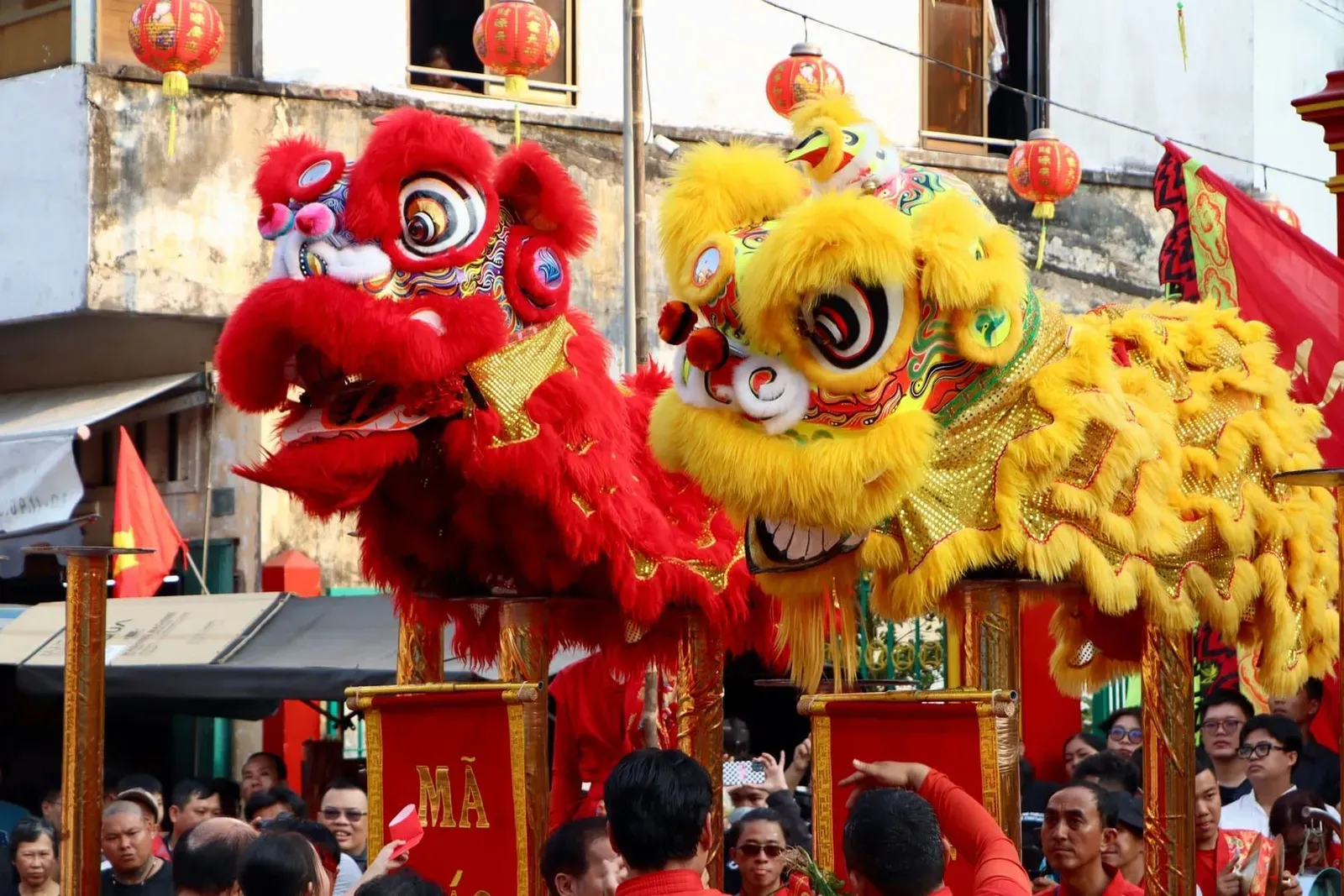
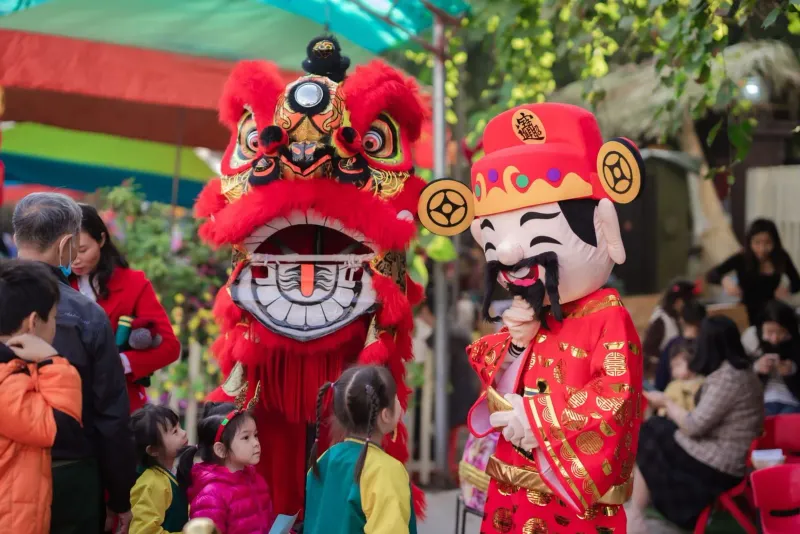
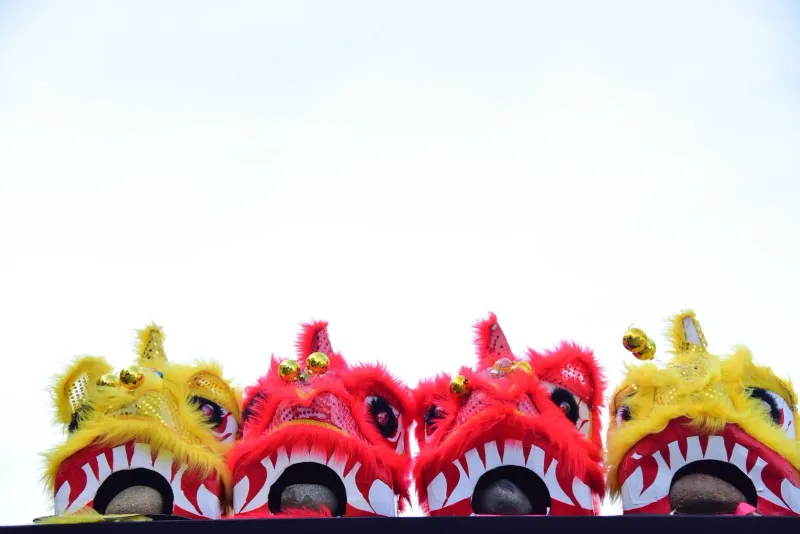
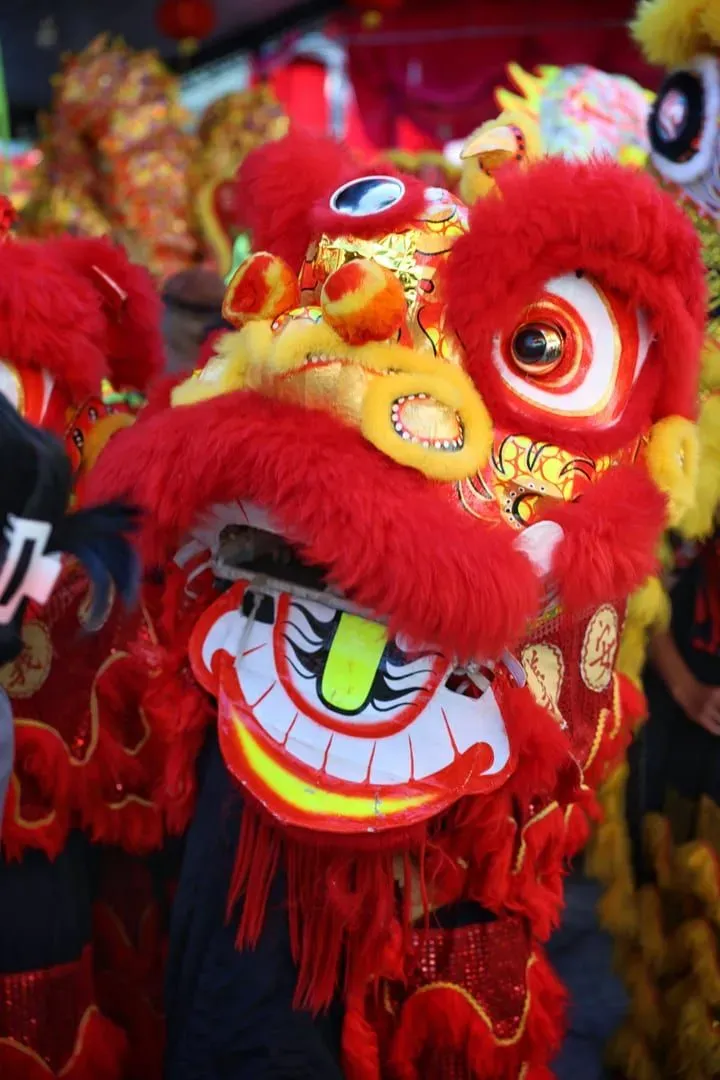
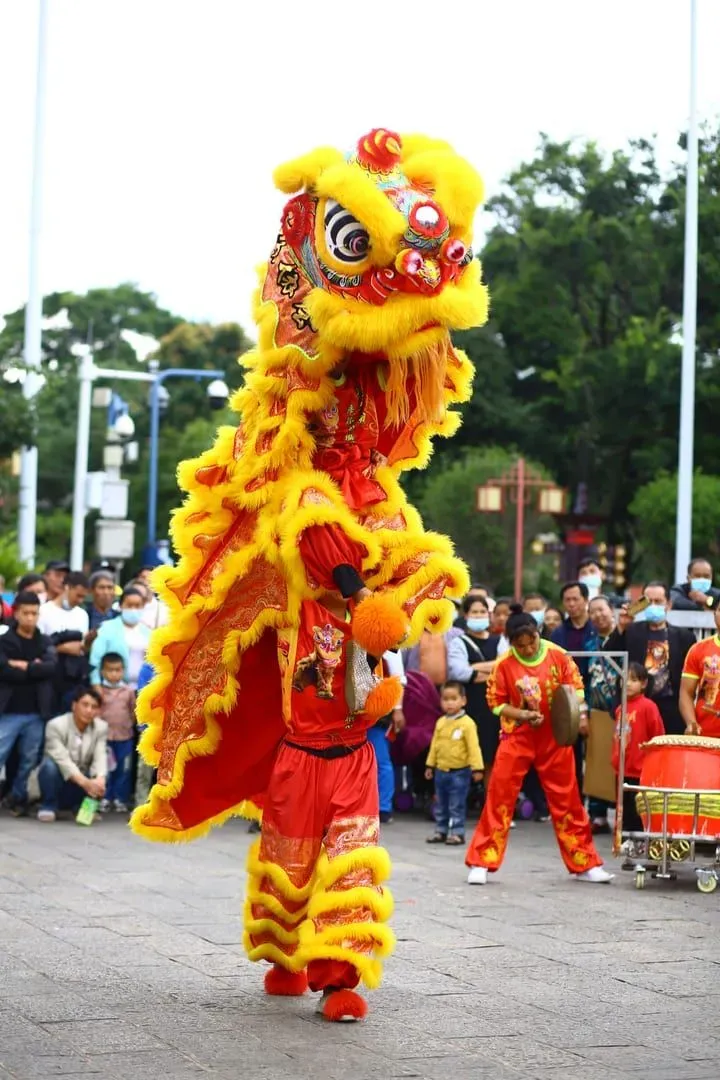
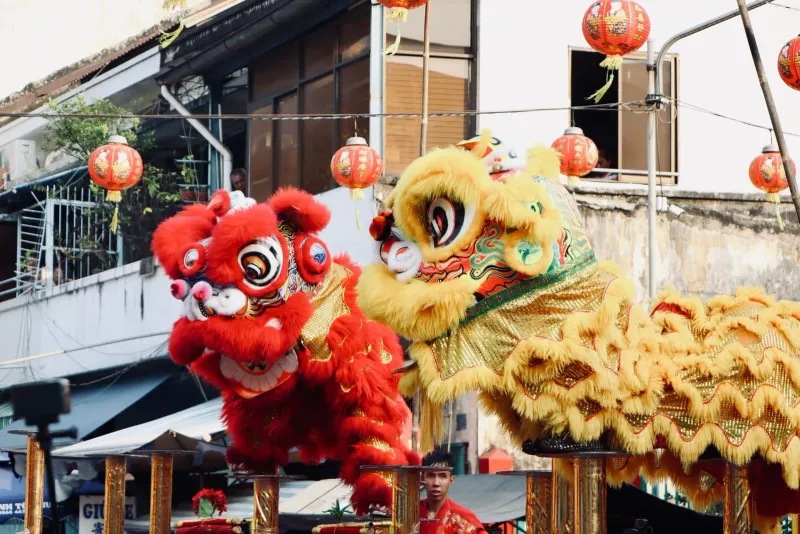
Samui’s Chinese New Year activity concentrates at its four Hainanese shrines rather than spreading across the whole island. At the Nathon Hainan Shrine — instantly recognizable by its golden guardian lions and dedicated to Jao Mae Tubtim, the sea goddess also known as Mazu — the shrine becomes the center of Samui’s Chinese New Year celebrations, with lion dances, firecrackers and community feasts drawing the old town’s Chinese-Thai families. The Chinese Temple of Maenam, officially the Chao Eng Sae Shrine and known for the four dragons coiled around its pillars, hosts its own lion and dragon dances alongside firecrackers meant to ward off evil spirits, with hundreds of red lanterns decorating the surrounding village streets. In Hua Thanon, the Guan Yu Shrine and its 16-meter bronze statue of the deified general anchor a quieter but still active local observance, since Guan Yu is honored specifically as a guardian of loyalty and business success. The smaller, clifftop Guam Im Shrine near Choeng Mon tends to stay the calmest of the four, drawing families for quiet prayer rather than a public performance.
None of this runs to a published island-wide schedule — timings are set shrine by shrine and year by year, so confirming with a caretaker close to the date is the only reliable way to catch a specific lion dance.
Nathon’s Old Town During the Festival
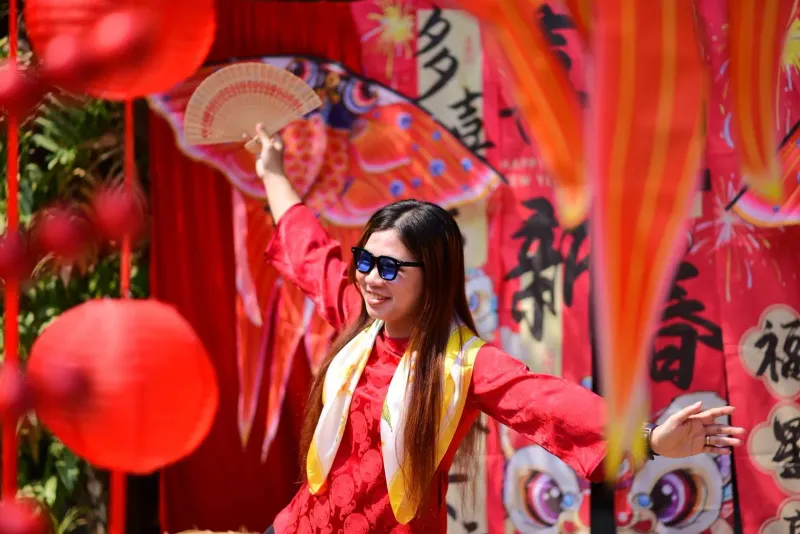
Nathon is the single best place to feel Chinese New Year on Samui, because it is also the island’s original Hainanese settlement. The town’s teak shophouses along Ang Thong Road — Nathon’s “Middle Road” — were built by Hainanese-Chinese traders from the mid-19th century onward, and many have stayed in the same families for generations. During the festival week, expect red lanterns strung along the storefronts, family reunion dinners happening behind closed shophouse doors rather than in public, and the Nathon Hainan Shrine itself busier than at any other point in the year. The shrine sits a five-minute walk from the ferry pier, so it pairs easily with a normal transit stop rather than requiring a special trip — see the full Nathon guide for the rest of the old town, including its Saturday walking street and daily night market, both of which run on their usual schedule regardless of the lunar date.
Why Hotel Prices Spike and Mainland Chinese Arrivals Peak
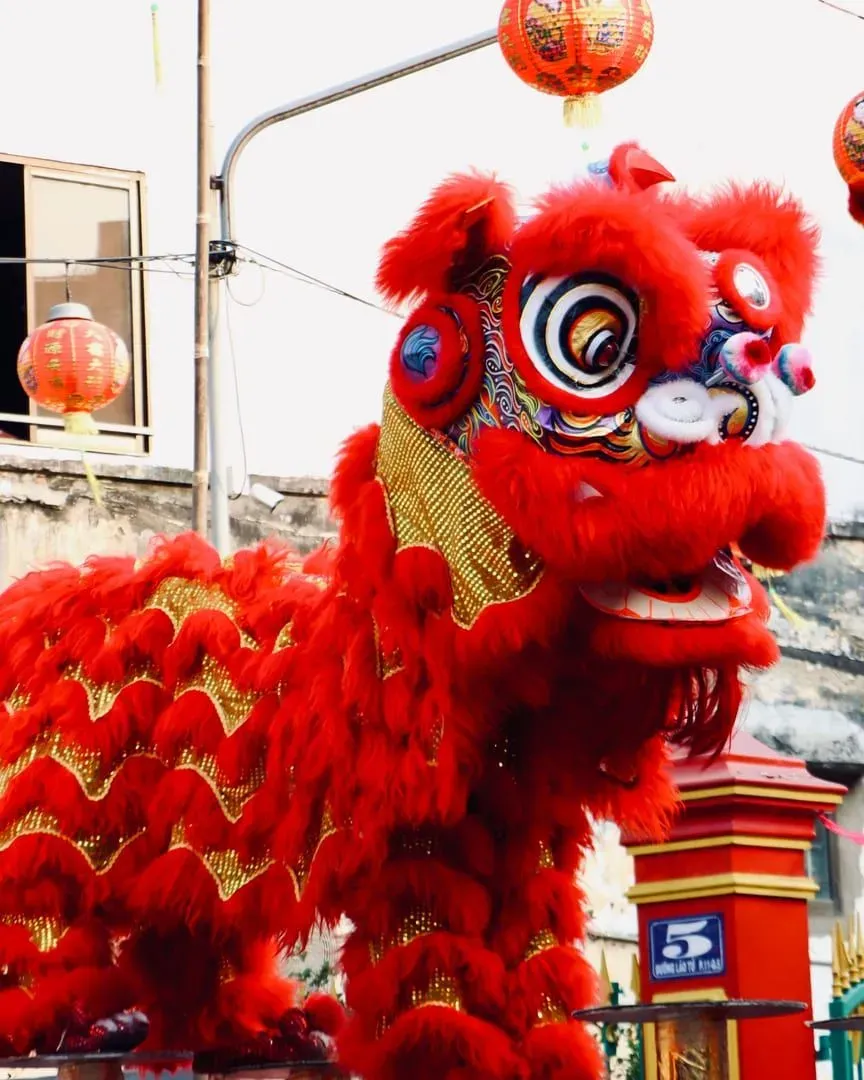
Chinese New Year sits inside Samui’s driest, sunniest shoulder window, but it comes with its own pricing spike layered on top. According to this site’s shoulder season guide, rates that already run 40-60% above baseline in February climb further for roughly 5-7 days around the date, as Chinese, Hong Kong and Singaporean travelers book villas and hotel rooms heavily for the week — a pattern also flagged in the February weather guide. The spike is sharper for villas than for standard hotel rooms, since multi-generational families traveling together tend to book whole properties rather than single rooms.
Travelers who want February’s dry, sunny weather without the price bump should book either side of the date — roughly 20 January to 10 February, or from 24 February onward — which captures the same climate at the lower shoulder-season rate. See when to book for how far ahead that timing actually requires.
What Stays Open and What Doesn’t
Because Chinese New Year is not a Thai national holiday, the island’s tourist infrastructure runs normally: flights and ferries keep their regular timetables, government offices and banks stay open, and beaches, dive shops and restaurants across Chaweng, Lamai and Bophut see no disruption at all. The exceptions are narrow and local — some Chinese-Thai family-run shops and eateries near the shrines in Nathon and Hua Thanon may close for a day or two around the date for private reunion dinners, a pattern typical of Chinese-Thai communities generally rather than something specific to Samui. There is no independently published list of which businesses close in which years, so if a particular old-town shop or noodle stall matters to your plans, it is worth checking locally a day or two ahead rather than assuming it will be open.
How to Behave at a Shrine Ceremony
Visiting a Hainanese shrine during Chinese New Year overlaps with everyday shrine etiquette but carries a little more weight with a ceremony underway. Buy a bundle of incense at the entrance, light it, and bow three times holding it at chest height before placing it in the urn — the standard gesture at all four shrines. Dress modestly (shoulders and knees covered), and expect to remove your shoes at the enclosed inner sanctums of the Nathon Hainan Shrine, the Chinese Temple of Maenam and the Guam Im Shrine, though the open-air Guan Yu Shrine doesn’t require it. Keep a respectful distance from anyone actively praying or making an offering, avoid flash photography pointed at the altar, and leave a small donation of 20-100 THB (~0.50-3 USD) in the collection box if you can. For the fuller etiquette rundown covering Buddhist wats as well, see the temple etiquette guide; for the site’s full account of all five Chinese and Chinese-style sites, see the Chinese shrines guide.
FAQ
When is Chinese New Year 2026 on Koh Samui?
Chinese New Year 2026 falls on 17 February, marking the Year of the Horse. The date moves every year with the lunar calendar, always landing between 21 January and 20 February, so it is worth confirming against a current-year source before booking travel around it.
Is Chinese New Year a public holiday in Thailand?
No. Chinese New Year is not a Thai national public holiday, so government offices, banks, ferries and flights on Koh Samui run their normal schedules. Its visibility depends on the local Chinese-Thai community, which on Samui is concentrated in Nathon and Hua Thanon.
Where can I see Chinese New Year celebrations on Koh Samui?
The Nathon Hainan Shrine and Nathon’s old town see the most activity, followed by the Chinese Temple of Maenam and the Guan Yu Shrine in Hua Thanon. All three host lion dances, firecrackers and family gatherings, though exact timings vary by year and aren’t published in advance.
Do hotel prices go up during Chinese New Year on Koh Samui?
Yes. Rates that already sit 40-60% above baseline in February climb further for roughly 5-7 days around the date, driven by mainland Chinese, Hong Kong and Singaporean travelers booking villas and hotels for the week. Booking outside that window, per the shoulder season guide, captures the same dry-season weather at a lower price.
What should I do at a Chinese shrine during Chinese New Year?
Buy incense at the entrance, light it, and bow three times before placing it in the urn. Dress modestly, remove your shoes where the inner sanctum asks for it, keep a respectful distance from anyone actively praying, and leave a small donation of 20-100 THB (~0.50-3 USD) if you can. See the temple etiquette guide for the fuller rundown.
Published on
About the author

Mike Brochlowski
Travel photographer & writer
Travel photographer and island explorer. Mike has spent years documenting Southeast Asia's hidden gems, from secluded beaches to jungle waterfalls.
Articles by Mike →More in Travel Guides

Also in 25 Best Things to Do in Koh Samui (2026)
18 Free Things to Do in Koh Samui (2026)
18 free things to do in Koh Samui — temples, beaches, waterfalls and viewpoints — plus the real costs some 'free' spots hide.
Also in 25 Best Things to Do in Koh Samui (2026)
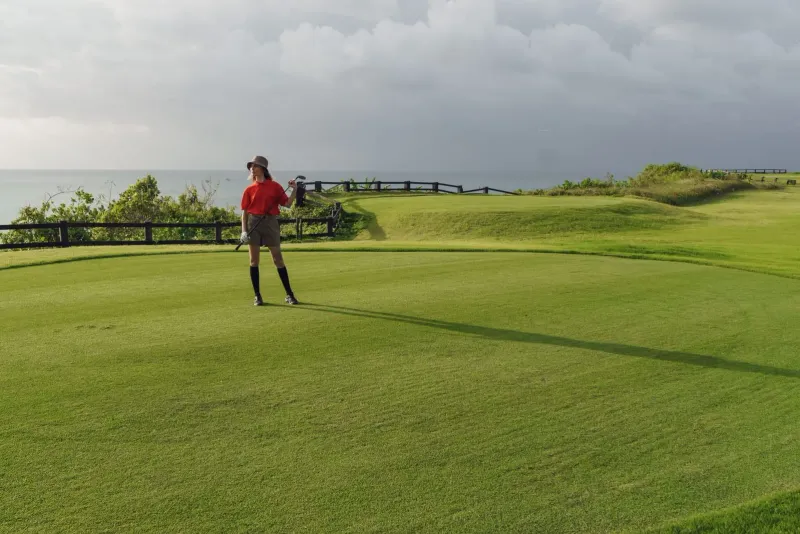
Golf in Koh Samui — Santiburi Green Fees, Football Golf & Mini Golf
Golf in Koh Samui: Santiburi's hillside 18-hole course (3,550-5,800 THB green fee), Football Golf near Big Buddha, and what's confirmed f…
Also in 25 Best Things to Do in Koh Samui (2026)
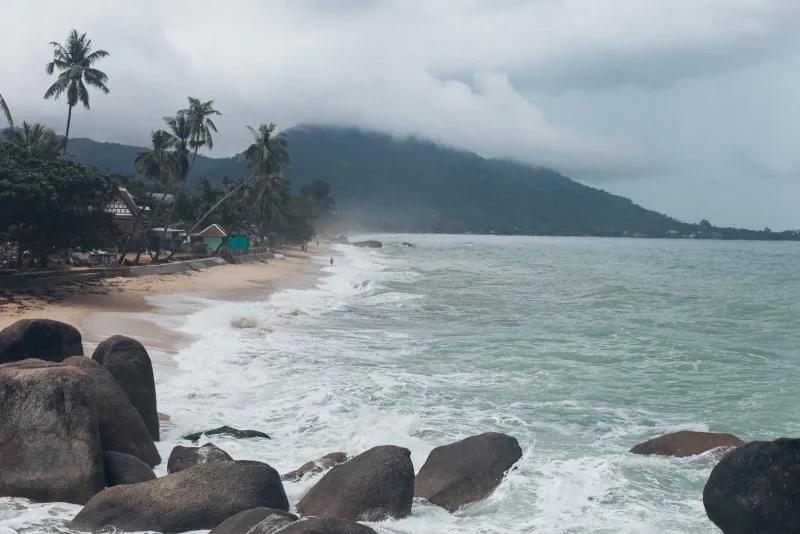
Koh Samui Hidden Gems — 15 Places Most Tourists Miss
Koh Samui hidden gems: 15 quiet beaches, waterfalls, temples and viewpoints most tourists miss, with how to reach each one and the honest…