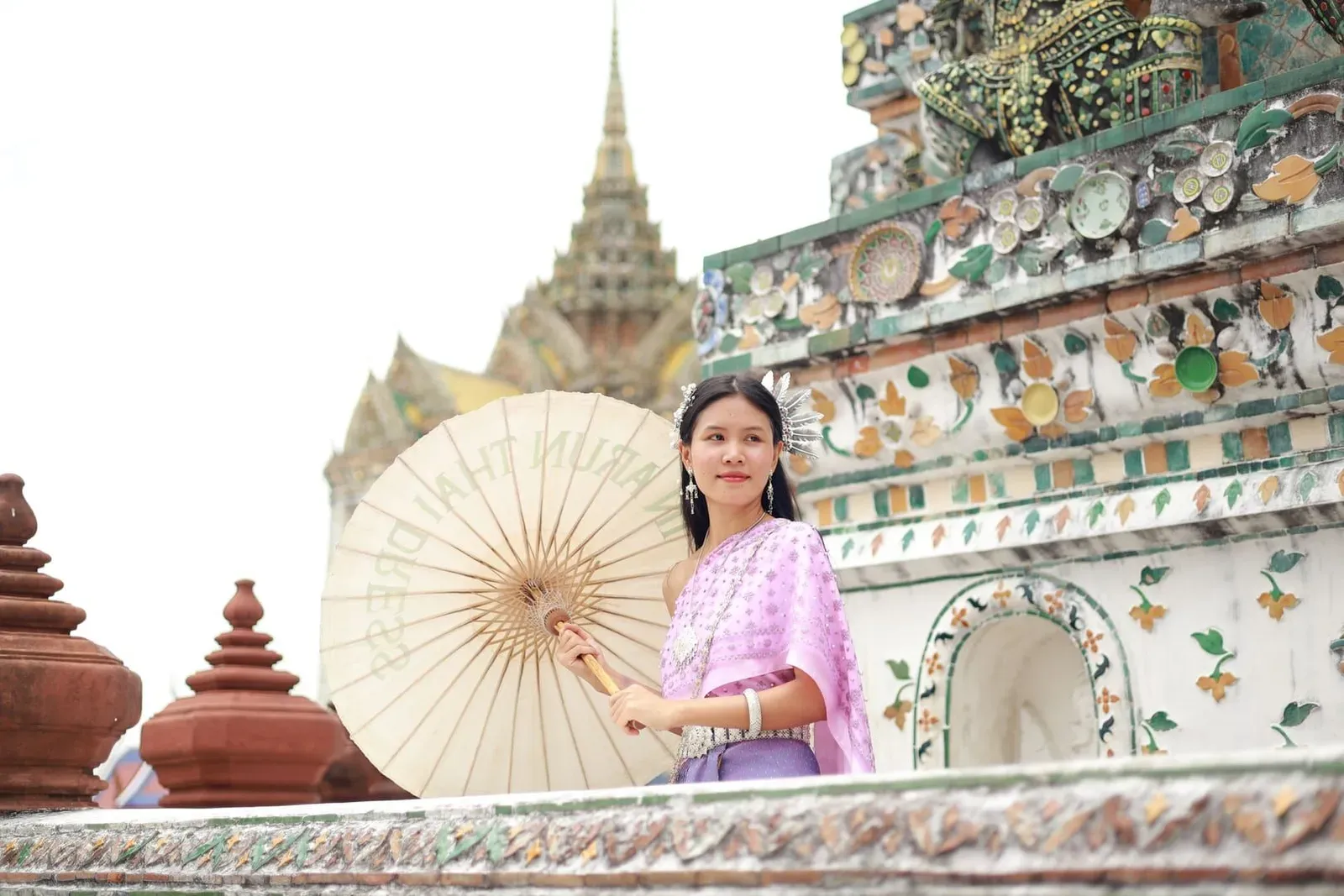
Contents
Overview
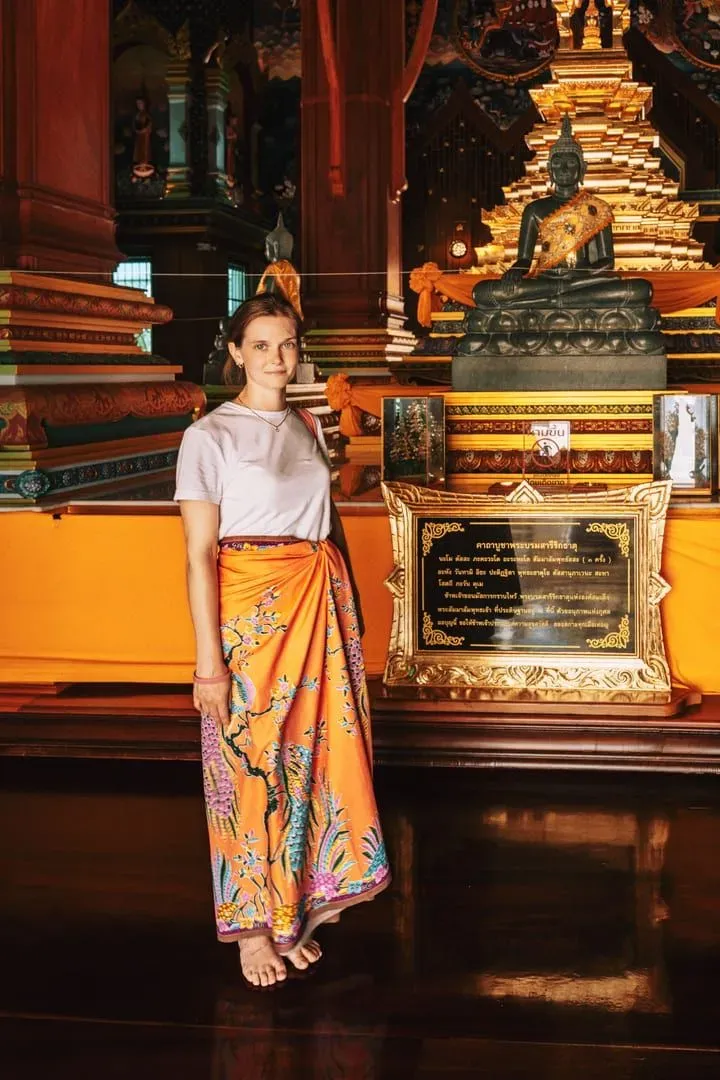
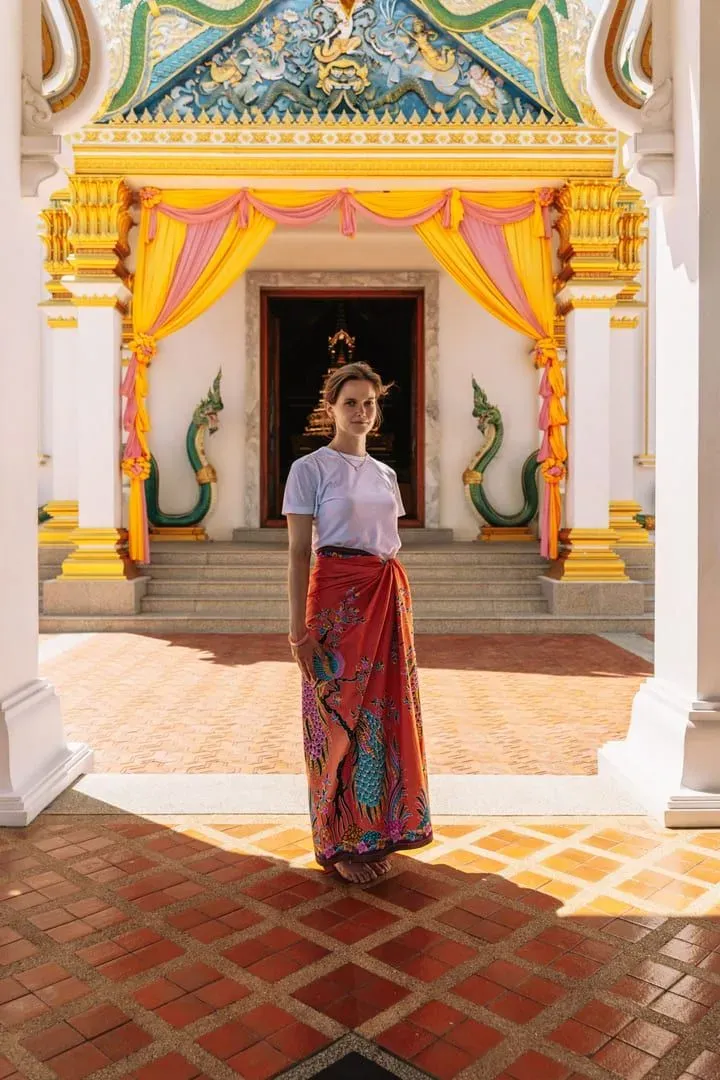
Koh Samui’s temple dress code is the same everywhere on the island: cover your shoulders and knees, take your shoes off before entering any hall, keep hats off indoors, and speak quietly. At Wat Phra Yai (Big Buddha) and most other active temples, staff turn away visitors in tank tops or short shorts, but sarongs and wraps are lent or rented cheaply right at the entrance, so being underdressed is rarely a real problem. This guide covers what counts as “covered,” how to behave once inside, how much to donate, and the handful of temples — like the mummified monk at Wat Khunaram — with their own extra rules.
This page is for anyone visiting a working Buddhist temple, Chinese shrine, or meditation centre on Koh Samui for the first time and unsure what’s expected. Pair it with the full Koh Samui temples guide for a list of which temples to visit, or the broader Koh Samui travel tips for everything else to know before you go. For the meaning behind the gestures and symbols you’ll see once inside, see our guide to Buddhism on Koh Samui.
Key takeaways
- Shoulders and knees covered, shoes off in any building housing a Buddha image, hats off, phones on silent.
- Sarongs are lent free or rented for roughly 20-50 THB (~0.50-1.50 USD) at the busiest temples if you arrive underdressed.
- Feet point away from Buddha images and people at all times — never straight-leg toward a statue or a monk.
- Women never touch a monk or hand him anything directly; place items on a cloth or table instead.
- A donation of 20-100 THB is welcome but never demanded — no temple on Samui charges a formal entry fee.
Dress Code — What Covers Shoulders and Knees
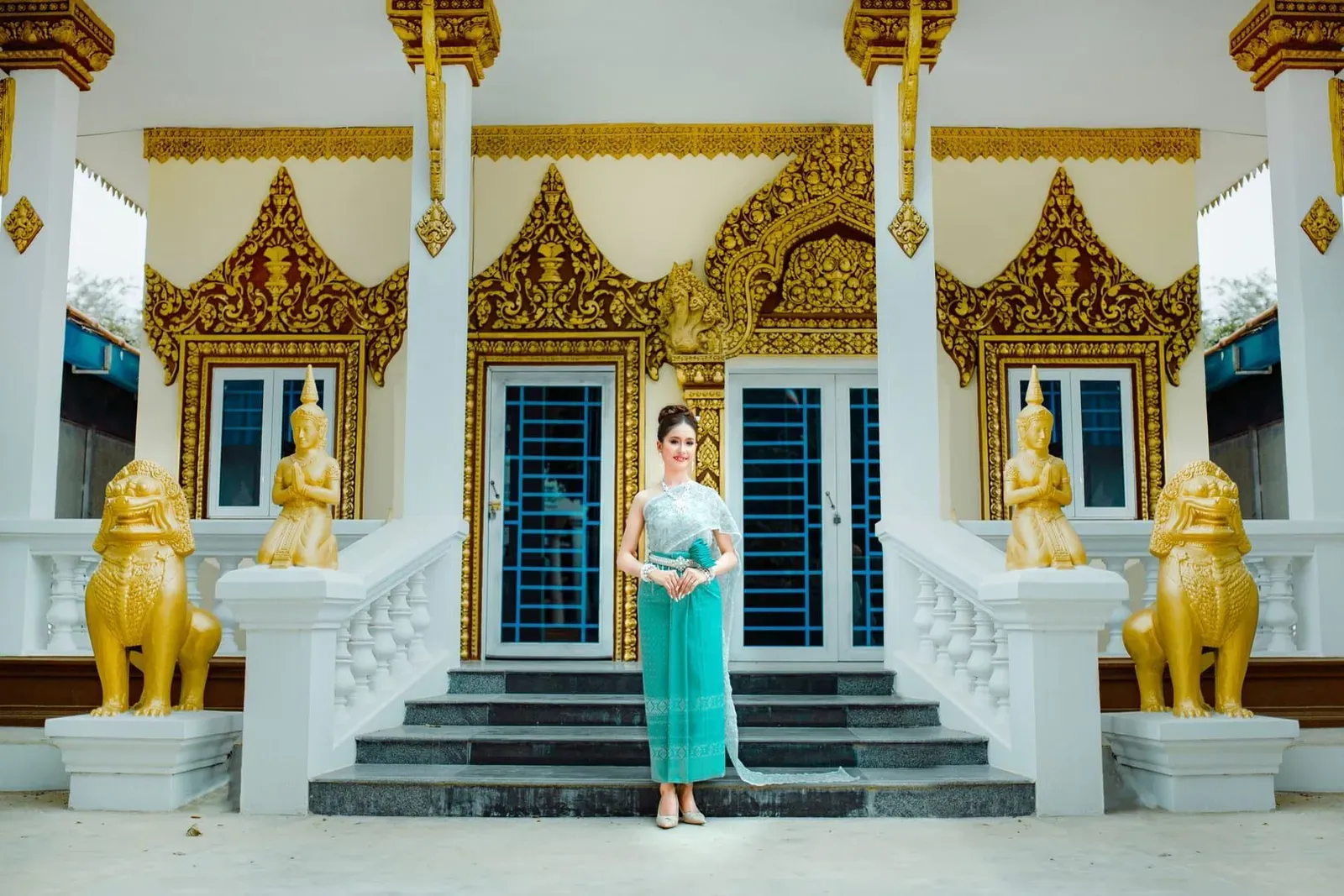
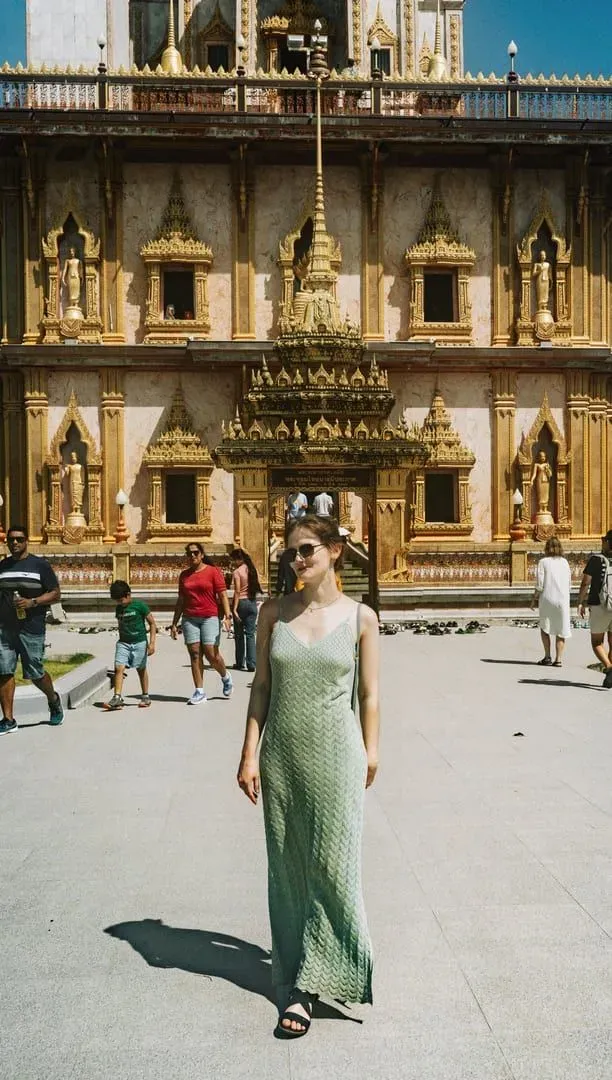
The core rule is simple: no bare shoulders, no hemlines above the knee, and no see-through fabric, for men or women, in any temple building. Beachwear, vests, crop tops, and short shorts are refused at the door of an active wat, though outdoor courtyards and market areas around a temple (like the causeway at Big Buddha) are more relaxed.
| Who | Must Wear | Not Allowed | If Underdressed |
|---|---|---|---|
| Men | T-shirt or shirt with sleeves, trousers or shorts to the knee | Tank tops, vests, swim trunks, torn or see-through fabric | Rent or borrow a sarong at the entrance (~20-50 THB) |
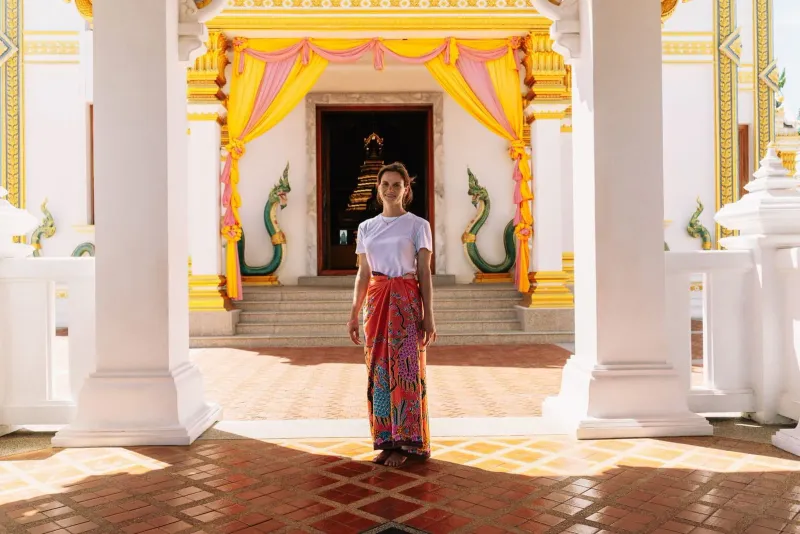
| Women | Shoulders covered, hemline at or below the knee, no low necklines | Crop tops, short shorts, tight leggings alone, sheer clothing | Wrap a sarong over shorts/leggings, or rent one on site |
Long, loose trousers or a maxi skirt work for both sexes without renting anything. A light scarf doubles as a shoulder cover if you’re caught out mid-island-hop. At Wat Phra Yai, the market stalls lining the causeway sell inexpensive sarongs and elephant-print trousers if you’d rather buy than rent — useful since you’ll likely visit more than one temple that day. Shoes always come off before stepping into any hall containing a Buddha image; sandals are easiest to slip on and off at the dozens of steps most temples have.
Behaviour Rules — Feet, Pointing and Photos
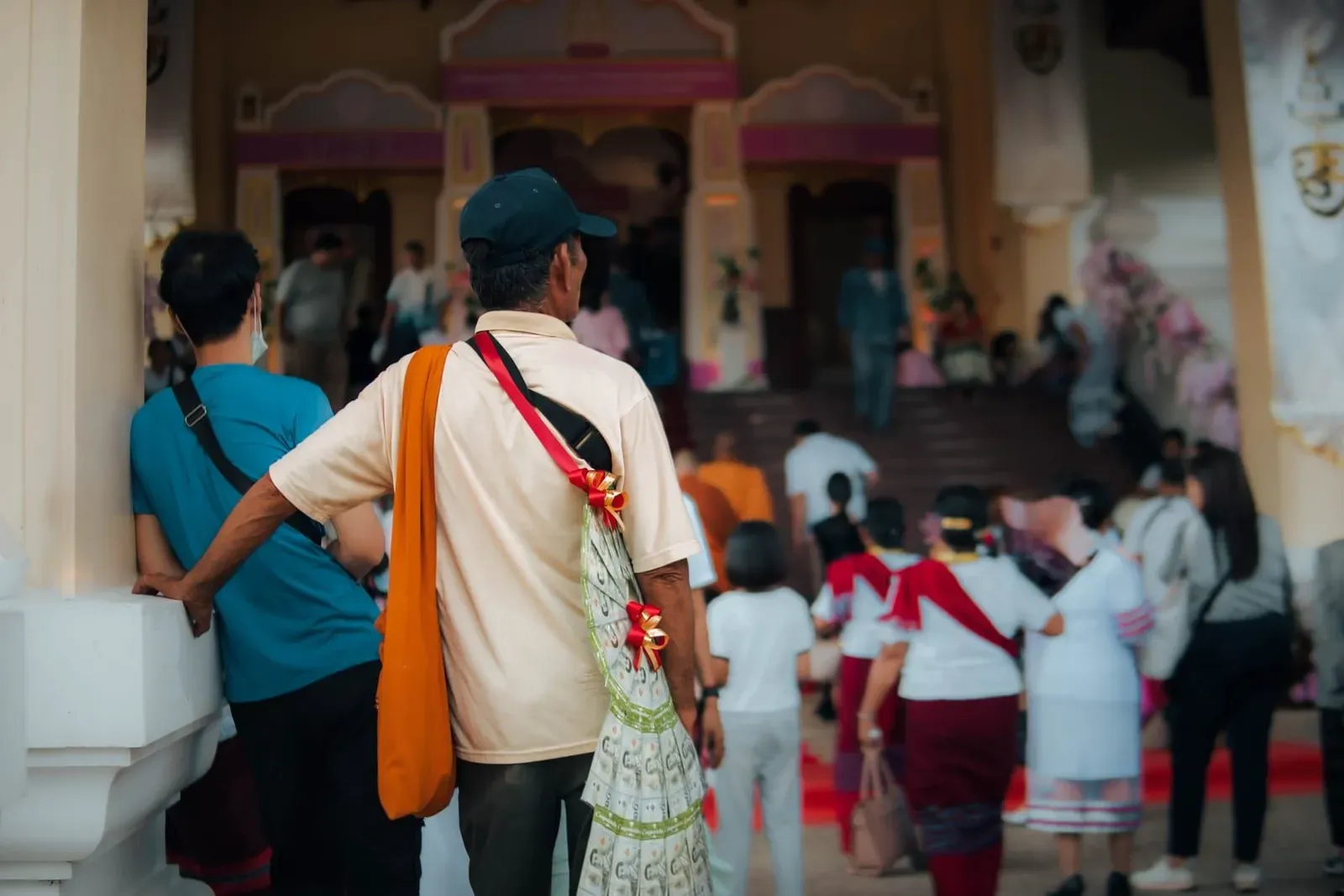
Feet are considered the lowest, least respectful part of the body in Thai culture, so never point them at a Buddha image, a monk, or another person — sit with legs tucked to the side, not cross-legged facing forward. Never touch, climb on, or point directly at a Buddha statue with your finger; gesture with an open hand instead. Head is the opposite — the most sacred part of the body — so avoid patting anyone’s head, including children’s.
Photography is generally allowed, but skip disrespectful poses (mimicking the Buddha’s posture, sitting on statues) and check for signs banning photos inside specific halls, which some temples post during ceremonies. Women should never touch a monk or pass him anything hand-to-hand; place the item on a cloth, table, or in a monk’s alms bowl instead, and a monk will typically step back if a woman approaches too closely — this isn’t rudeness, it’s a monastic vow (Vinaya) monks in the Theravada tradition follow strictly. Alcohol and smoking are not permitted inside temple grounds at any time, not just on the holiday dates covered below. Keep voices low; a temple hall is a place of active prayer, not just a photo stop, and locals are often kneeling in worship a few metres away. The Tourism Authority of Thailand publishes the same core guidance for every temple nationwide — modest dress, shoes off, quiet respect — so these rules apply well beyond Koh Samui.
Donations, Incense & Blessings
No temple on Koh Samui charges a mandatory entry fee — Wat Phra Yai and Wat Plai Laem are both free — but donation boxes are placed throughout the grounds, and 20-100 THB (~0.50-3 USD) per stop is a reasonable, appreciated contribution toward upkeep. Buy incense sticks, a small candle, or a lotus flower from stalls near the entrance (typically 20-40 THB) to offer at the main altar; light the incense, bow three times, and place it in the sand-filled urn provided.
If a monk is seated and available, you can kneel before him to receive a traditional water blessing and a sai sin (white cotton wristlet) believed to offer protection — a small donation afterward is customary but not required. Striking the large bells and gongs found at several temples, including Big Buddha, is itself considered an act of merit-making and is open to any respectful visitor for a small donation.
Special Cases — Wat Khunaram, Meditation Centres and Chinese Shrines
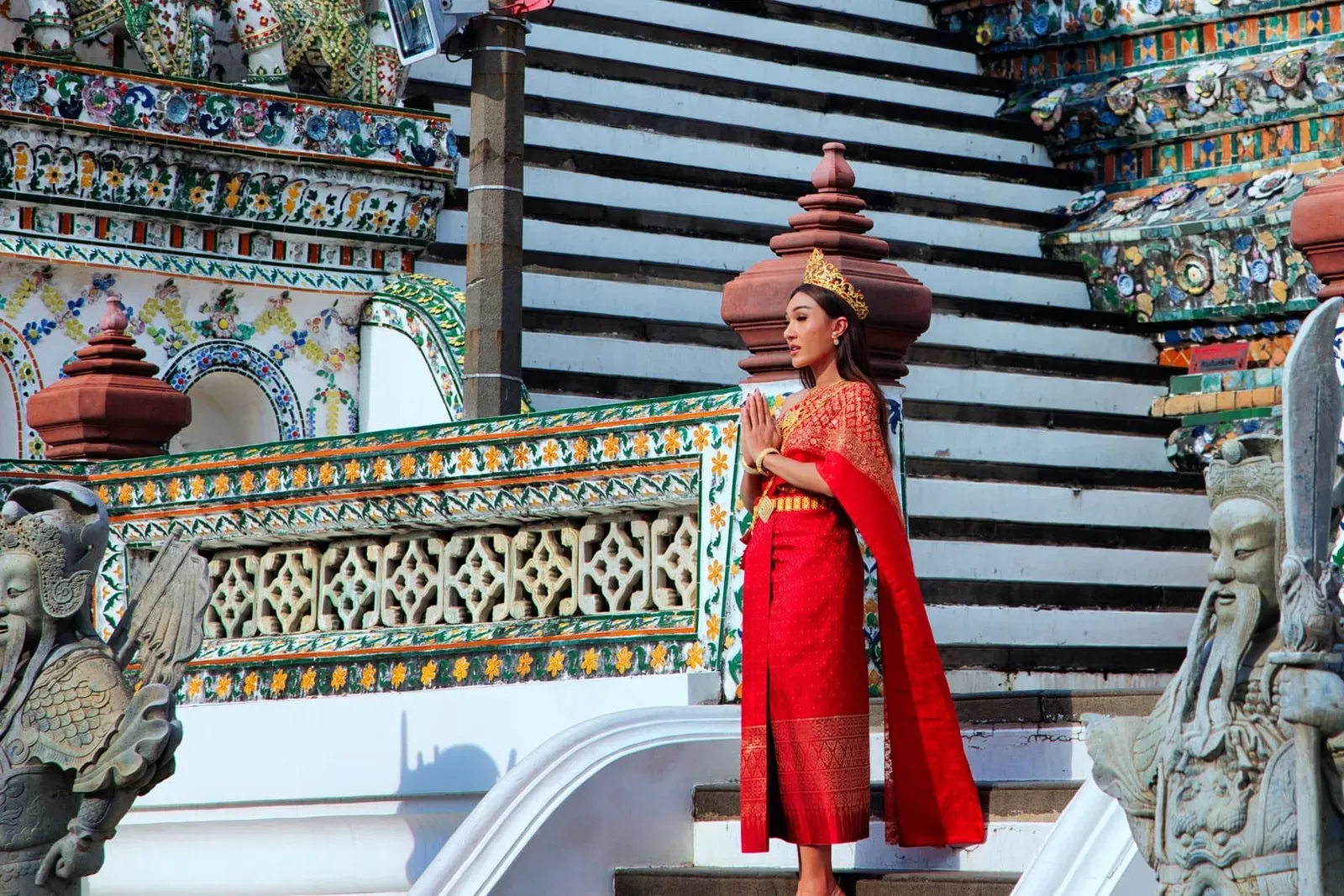
Wat Khunaram, home to the mummified monk Luang Pho Daeng, enforces the standard shoulders-and-knees rule strictly and asks visitors to whisper — many Thai devotees come specifically to pray before the glass casket, and it functions as a working shrine, not a curiosity stop. Read the full Wat Khunaram guide for background on the monk and the temple’s opening hours.
Meditation centres add rules on top of the dress code. Dipabhavan asks retreat participants for modest clothing (white preferred, not mandatory for day visitors) and enforces Noble Silence — no talking or eye contact — for the full duration of its 7-day retreats. Samui International Meditation Center (SIMC) welcomes drop-in visitors to its free 7:00-8:15 PM evening session but expects phones off before entering the hall and total silence once meditation begins.
Chinese shrines like the Guan Yu Shrine in Hua Thanon are generally more relaxed than Buddhist wats — bright red lanterns, a livelier atmosphere, and less formality — but shoulders-and-knees modesty is still appreciated, and it’s customary to bow three times when offering incense at the altar, the same gesture used at the island’s Buddhist temples.
Buddhist Holidays and Alcohol-Ban Days
Thailand bans the retail sale of alcohol on a handful of major Buddhist holy days each year, including Makha Bucha, Visakha Bucha, Asalha Bucha, and the start of Buddhist Lent (Khao Phansa) — dates that shift annually with the lunar calendar, so a fixed calendar date doesn’t repeat year to year. Shops, supermarkets, and 7-Elevens stop selling beer and spirits for the full day; most restaurants and hotel bars on Samui still serve alcohol to guests already dining, though enforcement varies by venue. Buddhist Lent itself runs roughly three months, from around July to October, when many Thai Buddhists (and some tourist-facing restaurant staff) abstain from alcohol voluntarily even outside the official ban days.
As of September 2026, confirm the current year’s specific dates locally — hotel front desks and 7-Eleven staff always know — since this guide can’t predict a shifting lunar calendar this far out. It’s a good idea to check before planning a big night out around these dates. See our 2026 Buddhist holidays and alcohol-ban guide for the full calendar.
FAQ
Can you wear shorts in Thai temples?
Only knee-length or longer shorts, and only if the shoulders are also covered by a sleeved top. Short shorts and skirts above the knee are refused at the entrance of any active Koh Samui wat, including Big Buddha and Wat Plai Laem. If you’re caught in beach shorts, rent or buy a sarong to wrap over them — it takes seconds and solves the problem.
Do you have to remove your shoes at every temple?
Yes, before entering any building that houses a Buddha image or a monk’s living quarters. Outdoor courtyards, causeways, and market areas — like the approach to Wat Phra Yai — don’t require bare feet. Slip-on sandals are far more practical than lace-up shoes given how often you’ll be removing them across a multi-temple day.
What are the rules for women and monks?
Women should never touch a monk or hand him an object directly — place it on a cloth, table, or in his alms bowl instead, and a monk will typically step aside if approached too closely. This is a monastic vow (Vinaya), not a judgment of the visitor, and it applies at every Theravada temple on Koh Samui, from Big Buddha to the smallest village wat.
How much should you donate at a Koh Samui temple?
There’s no fixed amount — Samui’s temples don’t charge entry fees. A donation of 20-100 THB (~0.50-3 USD) per temple is typical and appreciated, dropped into the wooden boxes placed near the main altar. Incense, candles, or a lotus flower from nearby stalls (20-40 THB) make a small additional offering if you want one.
Is the dress code stricter at Wat Khunaram’s mummified monk?
It’s the same shoulders-and-knees rule as elsewhere, but enforced with less tolerance because Thai devotees actively pray before Luang Pho Daeng’s casket — this is a living shrine, not a tourist curiosity. Whisper inside the hall, remove your shoes, and avoid pointing your phone camera at prayerful visitors nearby.
When can’t you buy alcohol in Thailand?
On several major Buddhist holy days each year — Makha Bucha, Visakha Bucha, Asalha Bucha, and the first day of Buddhist Lent — plus on national election days. Dates shift annually with the lunar calendar, so confirm the current dates locally rather than relying on a fixed calendar; most hotels and 7-Eleven staff know them.
Published on
About the author
Mike Brochlowski
Travel photographer & writer
Travel photographer and island explorer. Mike has spent years documenting Southeast Asia's hidden gems, from secluded beaches to jungle waterfalls.
Articles by Mike →More in Travel Guides
Also in Travel Tips
Koh Samui Digital Nomad Guide 2026 — Areas, Coworking, Internet, Visa
Koh Samui digital nomad guide 2026: best areas, coworking spaces from ~600 THB/day, fibre and SIM speeds, DTV visa rules, and monthly cos…

Also in Travel Tips
Hospitals & Clinics in Koh Samui — Costs & Insurance (2026)
Koh Samui hospital guide: Bangkok Hospital Samui vs government care, ER and scooter-injury costs, insurance direct billing, pharmacies an…
Also in Travel Tips
Is Koh Samui Safe? Scooters, Scams, Sea & Health (2026)
Is Koh Samui safe?