Overview
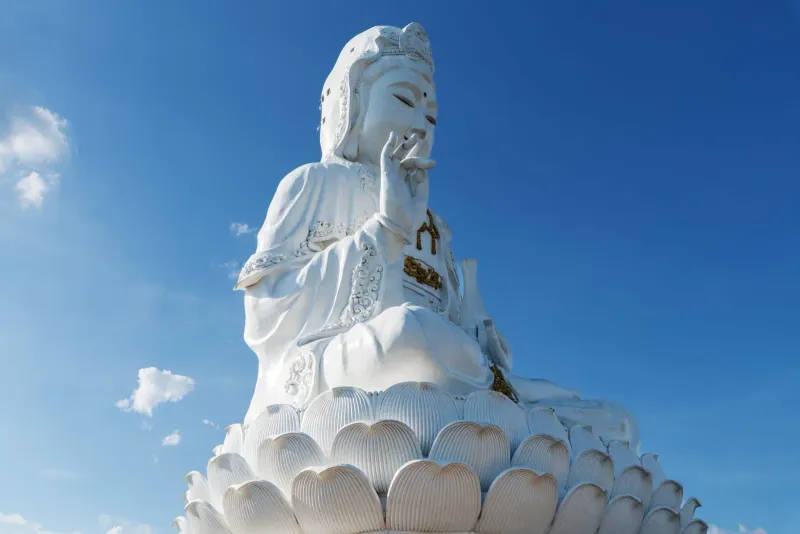
The Guan Yu Shrine (ศาลเจ้ากวนอู) is one of Koh Samui’s most visually explosive and culturally significant landmarks. Located in the historic Hua Thanon area, it stands as a towering tribute to the island’s deep-rooted Chinese-Thai community. While most religious sites on Samui are Buddhist temples, this vibrant shrine celebrates the legendary Chinese warrior general Guan Yu and the Hainanese immigrants who helped build the island’s economy.
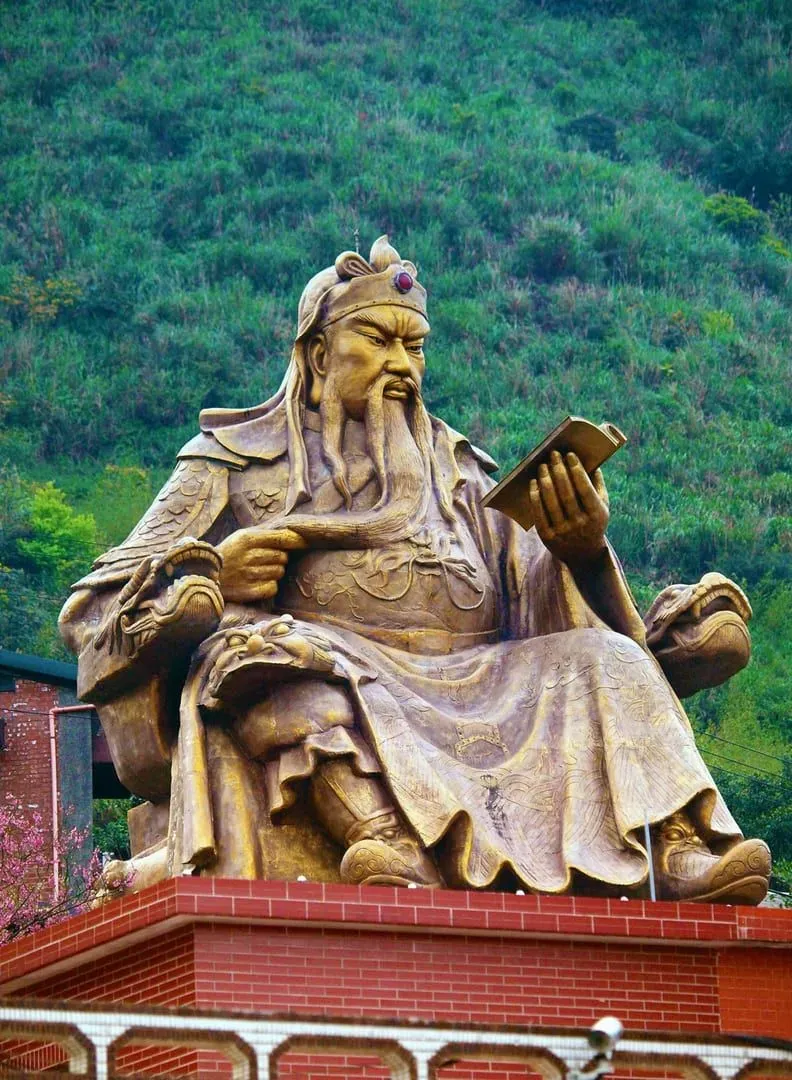
The shrine’s most famous feature is a massive bronze statue of Guan Yu that dominates the southern skyline. At 16 meters tall, it is the largest of its kind in Thailand, even surpassing the height of the iconic Big Buddha in the north. With its brilliant red facade, intricate dragon murals, and bustling atmosphere, the Guan Yu Shrine offers a colorful and fascinating break from Samui’s traditional beach and temple trail.
Who is Guan Yu?: The God of War and Loyalty
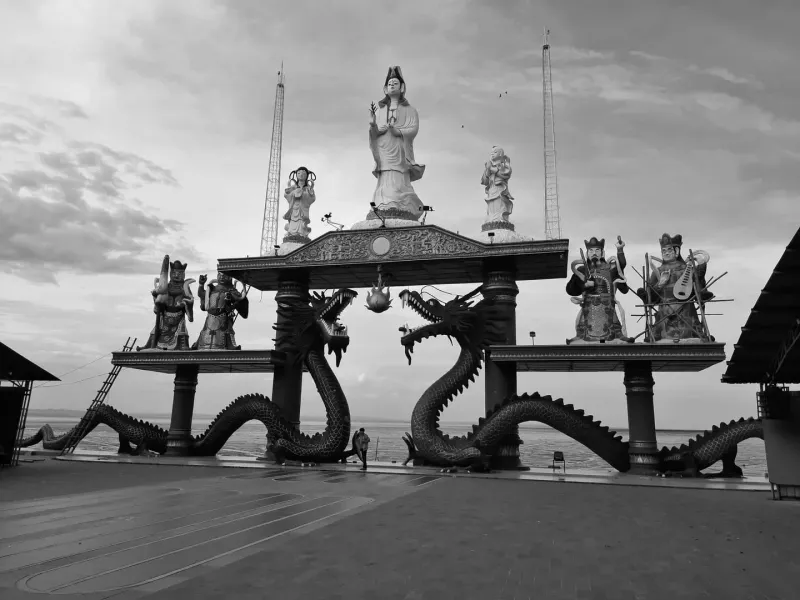
Guan Yu was a legendary general during China’s Three Kingdoms period (approx. 220-280 AD). Over the centuries, he was deified and became one of the most popular figures in Chinese folk religion. He is easily recognized by his bright red face, long black beard, and his formidable weapon, the Green Dragon Crescent Blade.
In Thai-Chinese culture, Guan Yu is worshipped not just as a “God of War,” but as a guardian of loyalty, integrity, and business ethics. Many local shopkeepers and entrepreneurs visit the shrine to pray for success and to vow that they will conduct their business with honesty and honor.
The Bronze Giant: A Record-Breaking Statue
The centerpiece of the modern shrine complex is the colossal bronze statue.
- Scale: Standing at 16 meters (including the base), the statue was designed to be a permanent landmark for the south of the island.
- The Red Face: The statue’s face is finished in a brilliant, glowing red lacquer, representing Guan Yu’s famous courage and his “blood-loyalty” to his brothers-in-arms.
- Details: Look closely at the armor; the bronze work is exceptionally detailed, featuring coiling dragons and traditional Chinese motifs that catch the sunlight beautifully.
History: Celebrating Hainan Heritage
The history of the shrine dates back to 1872, when the first wave of immigrants from Hainan Island, China, arrived on Koh Samui. They settled in Hua Thanon and established a small wooden shrine to house a small Guan Yu statue they had brought across the sea for protection.
For over 140 years, that small shrine served as the community’s heart. In 2008, the local community began a massive fundraising effort to build the current grand complex, which was officially opened in January 2016. The site now stands as a symbol of the community’s success and their pride in their ancestral roots.
Architecture: Dragons, Gold, and Red Lanterns
The shrine is a masterclass in Sino-Portuguese and traditional Chinese architecture.
The Courtyard
The entrance is marked by a wide courtyard decorated with dozens of traditional red lanterns. These lanterns are believed to guide good fortune into the shrine and ward off negative energy.
Murals and Calligraphy
The walls of the main hall are covered in vibrant murals depicting the life and battles of Guan Yu. Intricate golden calligraphy adorns the pillars, telling stories of ancient Chinese virtues. The overall effect is one of intense color and energy, providing a stark contrast to the minimalist aesthetic of many modern Samui resorts.
Activities: Photography and Culture
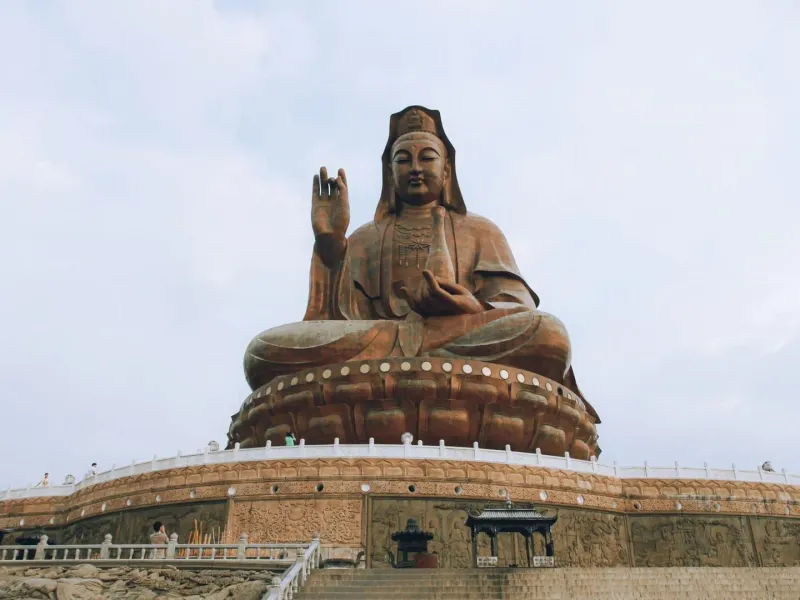
- Instagram-Worthy Photos: The massive scale of the statue and the vivid red and gold background make this one of the most photographed spots on the island.
- Memorial Hall: Visit the small hall inside that displays photographs and artifacts from the original Chinese families who settled in Hua Thanon.
- Pay Your Respects: You can purchase incense and candles to offer at the altar. It is traditional to bow three times as a sign of respect.
- Wedding Watching: Because Guan Yu symbolizes loyalty, the shrine is a very popular place for local couples to hold their wedding ceremonies or take their wedding photos.
Where to Eat: Hua Thanon Chinatown Flavors
The area surrounding the shrine is essentially Samui’s “Chinatown,” offering some of the best Hainanese-influenced food on the island.
| Restaurant | Style | Price Range (THB) | Distance |
|---|---|---|---|
| Hainanese Chicken Rice | Traditional | 50 - 80 | Outside gates |
| Guan Yu Coffee Shop | Local Cafe | 40 - 100 | 1 min walk |
| Hua Thanon Market | Fresh / Street Food | 20 - 150 | 3 min walk |
| Sweet Sisters | Organic / Healthy | 250 - 500 | 5 min drive |
Be sure to try the Hainanese-style sweets and the slow-cooked chicken rice stalls located directly opposite the shrine entrance.
Nearby Attractions
Guan Yu Shrine is a perfect anchor for a South Samui day trip:
- Hua Thanon Fishing Village (2 min drive): See the traditional colorful longtail boats and old teak houses.
- Wat Sila Ngu (Red Temple) (2 min drive): Another stunning terracotta-colored temple nearby.
- Hin Ta Hin Yai (5 min drive): The famous Grandmother and Grandfather rocks.
- Na Muang Waterfalls (10 min drive): Samui’s most famous natural waterfalls.
Getting There: Hua Thanon Ring Road
The shrine is impossible to miss, located directly on the Main Ring Road (Route 4169) in the village of Hua Thanon.
- By Motorbike/Car: It is about 3km south of Lamai. Look for the massive bronze head rising above the trees.
- By Songthaew: Take any songthaew heading south from Lamai or east from Nathon. Just ask for the “Guan Yu Shrine” or “Chinese Temple.”
- Parking: There is a dedicated parking area for both cars and motorbikes right in front of the shrine entrance.
Best Time to Visit
The shrine is open daily from 8:00 AM to 6:00 PM.
| Time | Experience | Rating |
|---|---|---|
| 9:00 AM - 11:00 AM | Best for lighting on the statue’s face; cool air. | ★★★★★ |
| 12:00 PM - 3:00 PM | Can be very bright and hot; good for indoor halls. | ★★★ |
| 4:00 PM - 6:00 PM | Beautiful soft light; local market across the road opens. | ★★★★ |
Practical Tips for Visitors
- Respect the Altar: While the atmosphere is lively, it is still a place of worship. Avoid blocking the path of those who are offering incense.
- Dress Code: Standard temple modesty is appreciated (shoulders and knees covered), though it is generally less strict here than at Buddhist wats.
- Explore the Back Streets: Take a few minutes to walk into the village behind the shrine to see authentic local life.
- Small Change: Bring 20 THB notes if you wish to buy incense or leave a small donation.
- Ask for History: The staff and volunteers at the shrine are often happy to share stories about the original settlers if they are not too busy.
Who Is the Guan Yu Shrine Best For?
| Traveler Type | Rating | Why? |
|---|---|---|
| Photographers | ★★★★★ | Incredible color, scale, and unique architectural details. |
| History Seekers | ★★★★★ | A rare look at the island’s immigrant and commercial history. |
| Foodies | ★★★★ | Surrounded by the island’s best Thai-Chinese local eats. |
| Families | ★★★★ | Kids are often fascinated by the “Giant Red Man” statue. |
FAQ
Is there an entry fee? No, entry to the Guan Yu Shrine is completely free. Small donations are encouraged to help with the maintenance of the bronze statue and the shrine buildings.
Is it taller than the Big Buddha? Yes. The Guan Yu statue stands at 16 meters, which is approximately 4 meters taller than the 12-meter Big Buddha statue at Bang Rak.
What is the significance of the red face? In Chinese culture and opera, a red face on a character symbolizes courage, loyalty, and uprightness. It is the traditional way Guan Yu has been depicted for nearly two thousand years.
Can I visit if I am not Chinese? Absolutely. The shrine is open to everyone regardless of their background. It is a welcoming place that takes pride in sharing its heritage with all visitors.
How much time should I spend there? Most visitors spend about 30 to 45 minutes exploring the statue, the murals, and the memorial hall. If you stay for a local meal nearby, plan for about 90 minutes.
About the author

Mike Brochlowski
Travel photographer & writer
Travel photographer and island explorer. Mike has spent years documenting Southeast Asia's hidden gems, from secluded beaches to jungle waterfalls.
Articles by Mike →