Overview
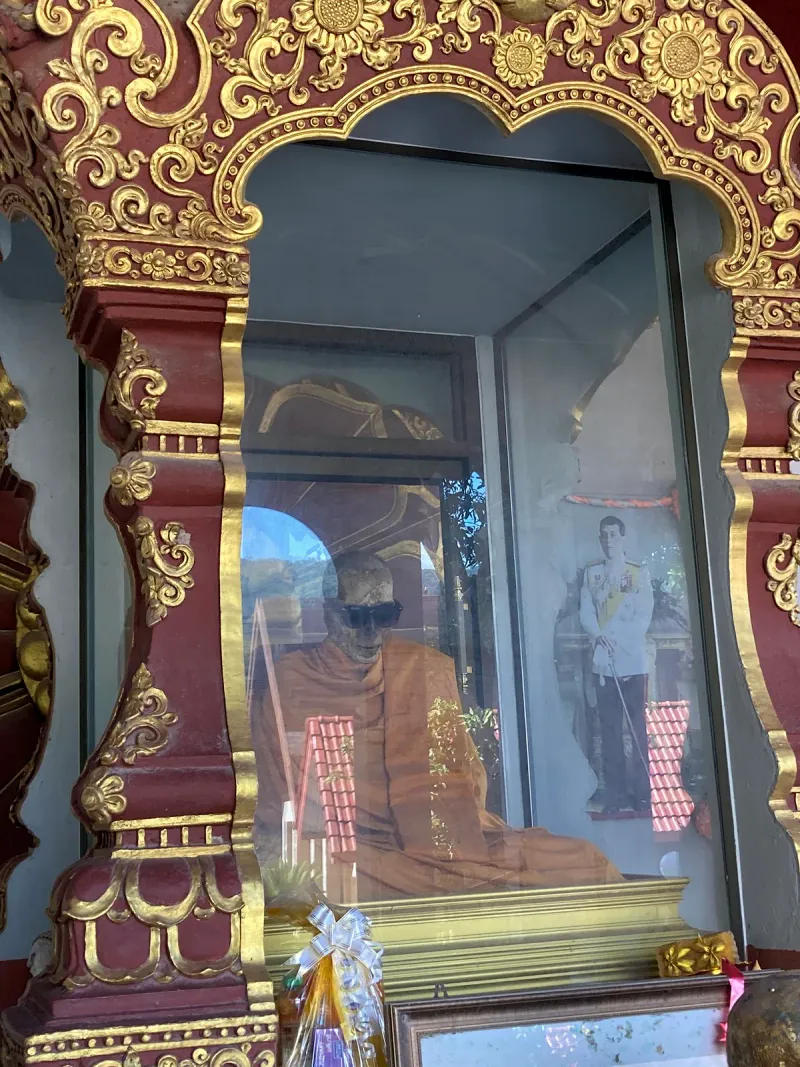
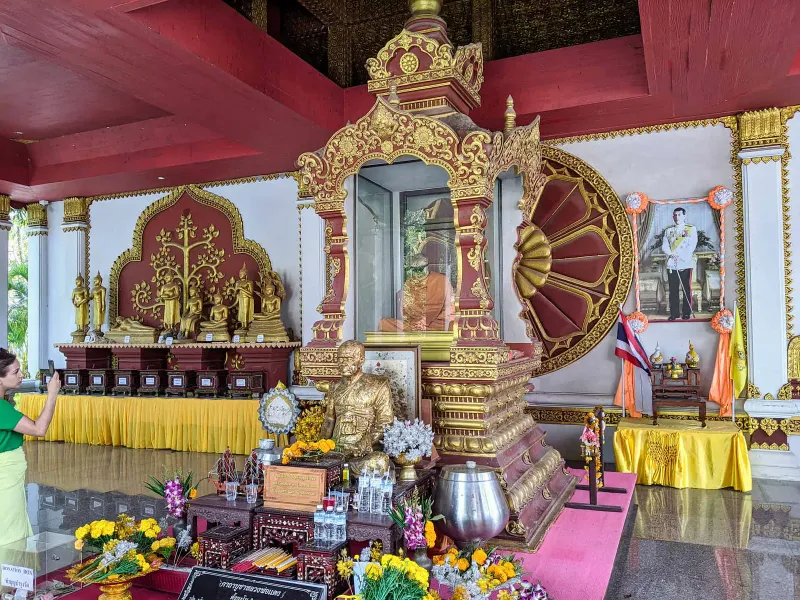
Wat Khunaram (วัดคุณาราม) is perhaps the most unique and talked-about spiritual site on Koh Samui. While the island is home to dozens of stunning temples, none capture the imagination quite like this one. Its fame comes from housing the remarkably preserved body of Luang Pho Daeng, a former abbot who died while in a meditative state over 50 years ago.
For many Western visitors, the sight of a mummified body displayed in a glass casket is initially jarring. However, for Thai Buddhists, Luang Pho Daeng is a figure of profound respect. His presence at Wat Khunaram serves as a powerful, physical reminder of the core Buddhist tenet of impermanence. Located on the main ring road in the southern part of the island, it is a place where deep spirituality meets the harsh reality of the human cycle of life and death.
The Story of Luang Pho Daeng: A Life of Devotion
Luang Pho Daeng was born on Koh Samui in 1894. For the first fifty years of his life, he followed a typical secular path: he married, raised six children, and was a respected member of the local community. However, his heart was always drawn to spiritual matters.
At age 50, once his children were grown, he decided to dedicate the rest of his life to the Buddhist monkhood. He became a master of meditation and spent years studying the Dhamma (Buddhist teachings). He was eventually appointed abbot of Wat Khunaram, where he was known for his wisdom, his simple lifestyle, and his ability to predict the future.
The Mummified Monk: A Meditative Legacy
As he approached the age of 79, Luang Pho Daeng predicted the exact time of his own death. He instructed his followers that if his body were to decay after his passing, he should be cremated. However, if his body remained intact, he wished to be displayed at the temple as an inspiration for future generations.
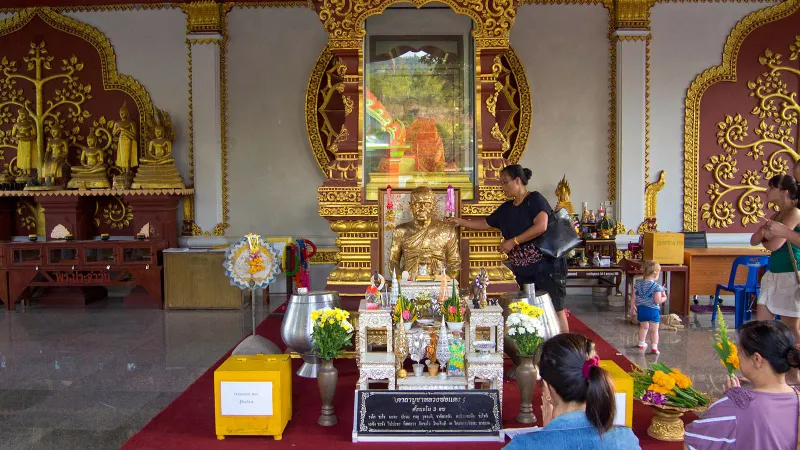
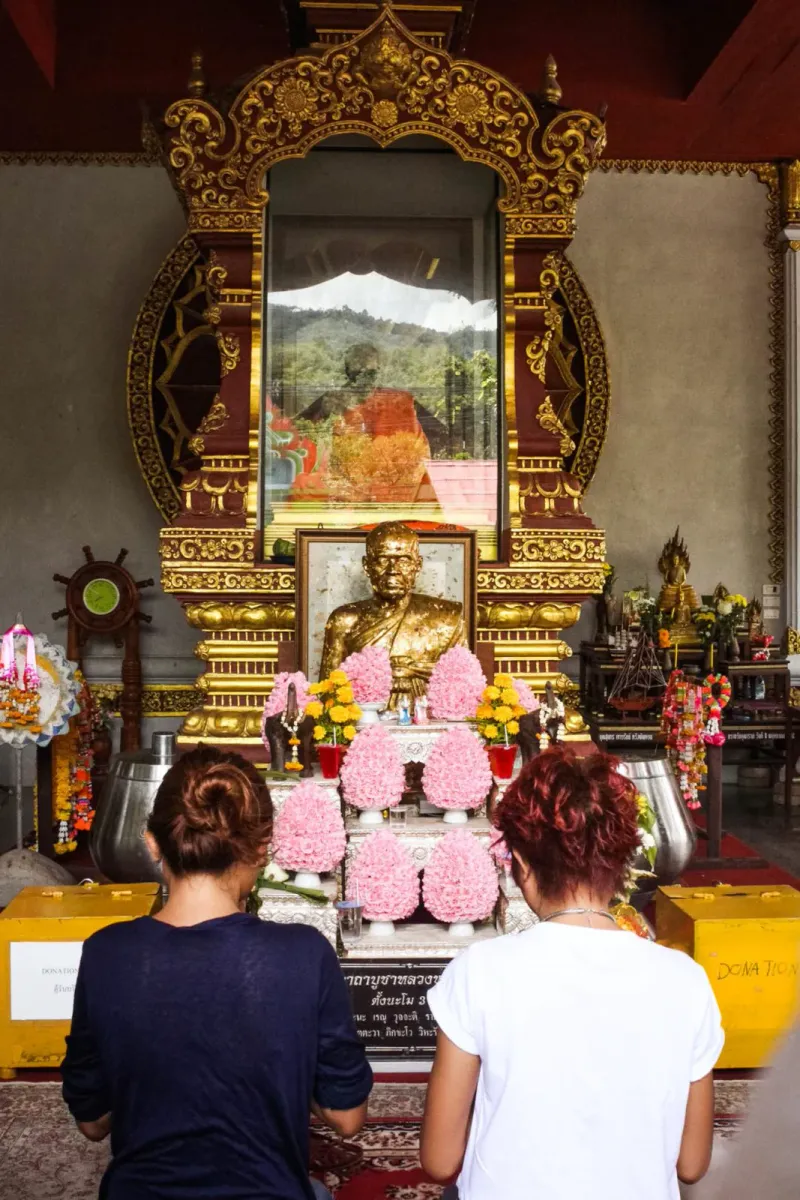
In 1973, while seated in the lotus position during meditation, Luang Pho Daeng passed away. To the amazement of the community, his body did not decompose. Today, he remains in that same meditative posture, housed in a glass casket.
The Sunglasses
One detail that often puzzles visitors is the pair of Ray-Ban sunglasses the monk wears. These were added by the temple caretakers years ago to cover his decomposed eye sockets, making the sight more respectful and less frightening for children and sensitive visitors.
Understanding Impermanence: Anicca
The display of Luang Pho Daeng’s body is not a spectacle of the macabre; it is a profound lesson in Anicca, the Buddhist concept of impermanence. The teaching states that everything in the physical world is in a constant state of change and decay.
By looking at the monk, followers are encouraged to reflect on the transient nature of their own bodies and the importance of focusing on spiritual growth rather than material attachment. It is a stark, honest confrontation with death that is meant to lead to a more meaningful life.
Temple Features: Shrines and Fortunes
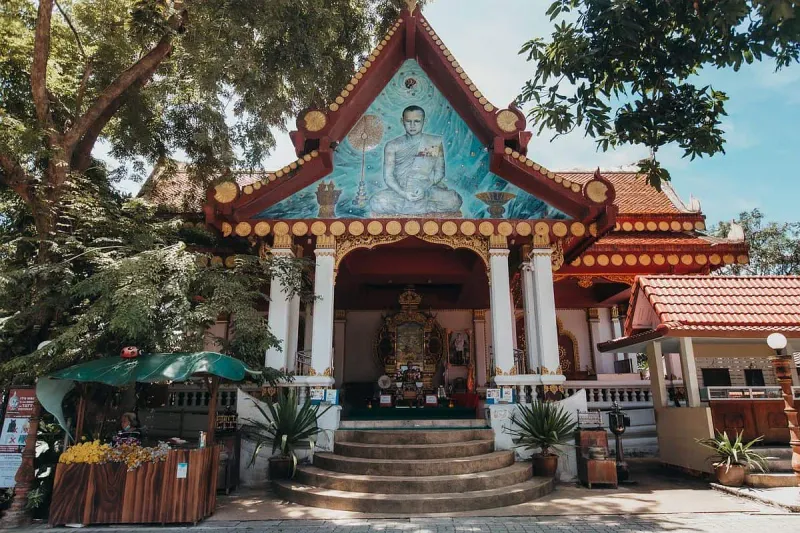
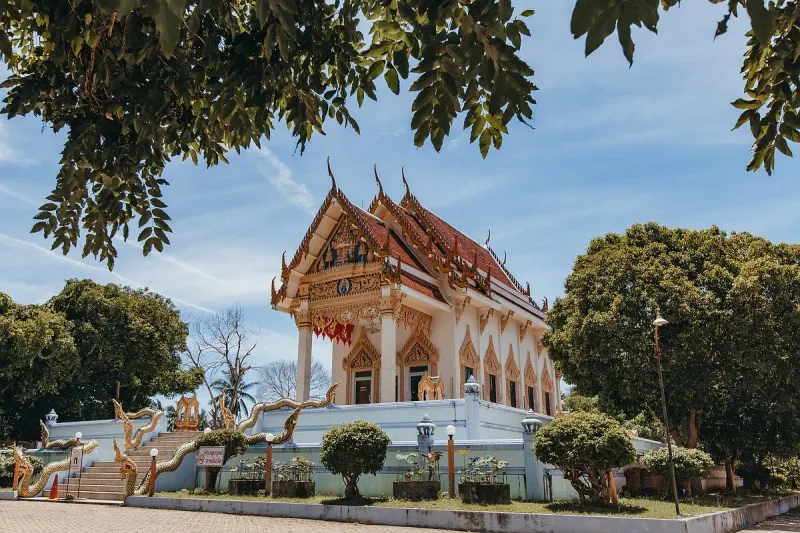
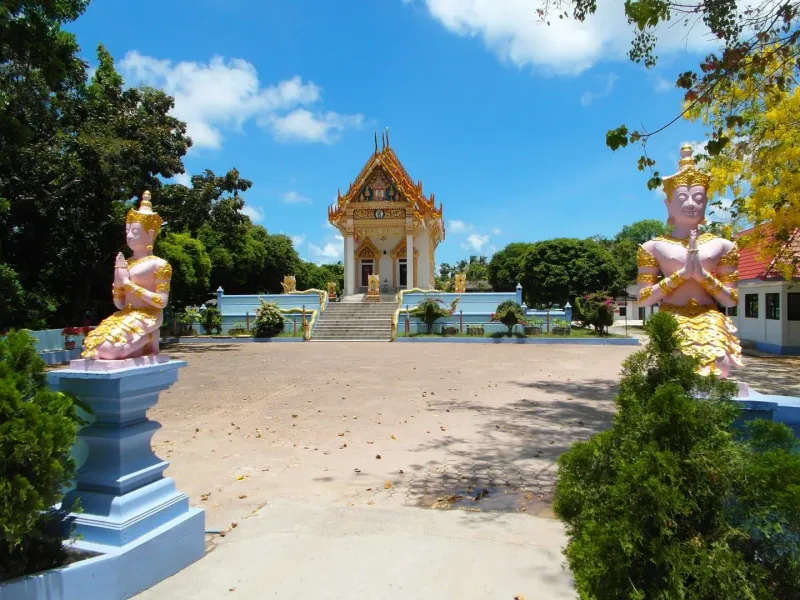
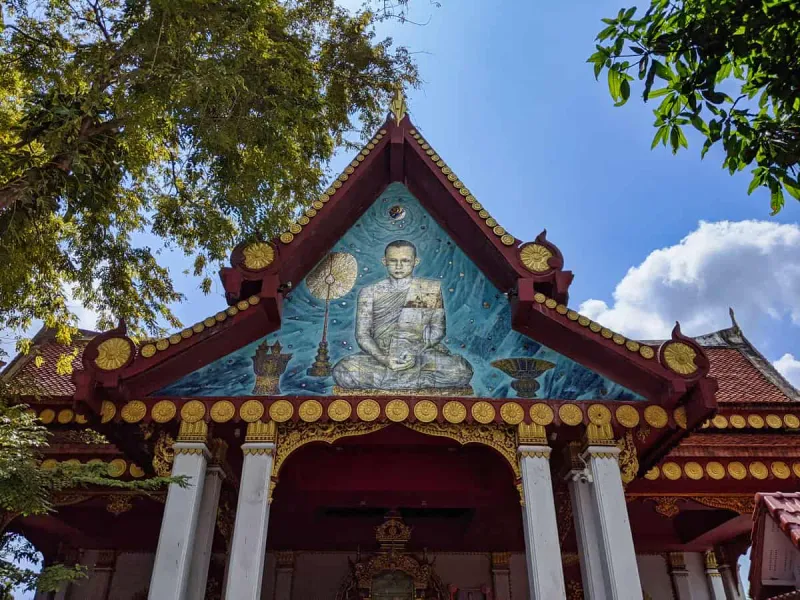
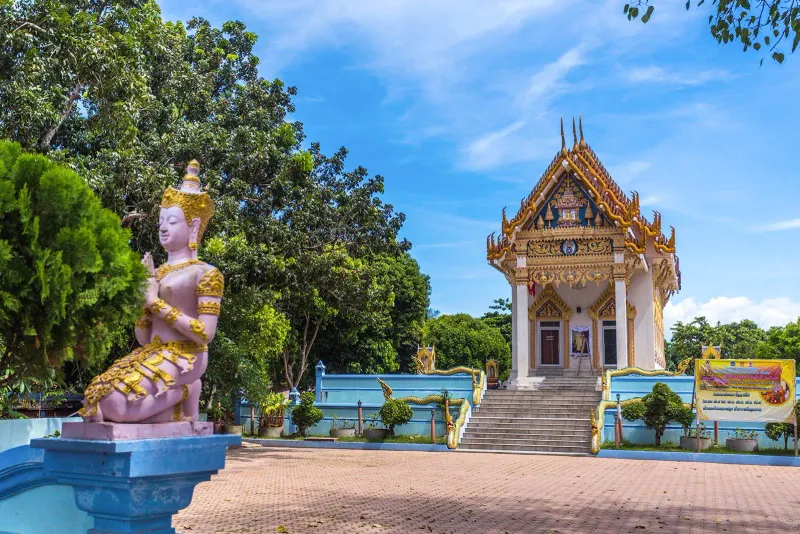
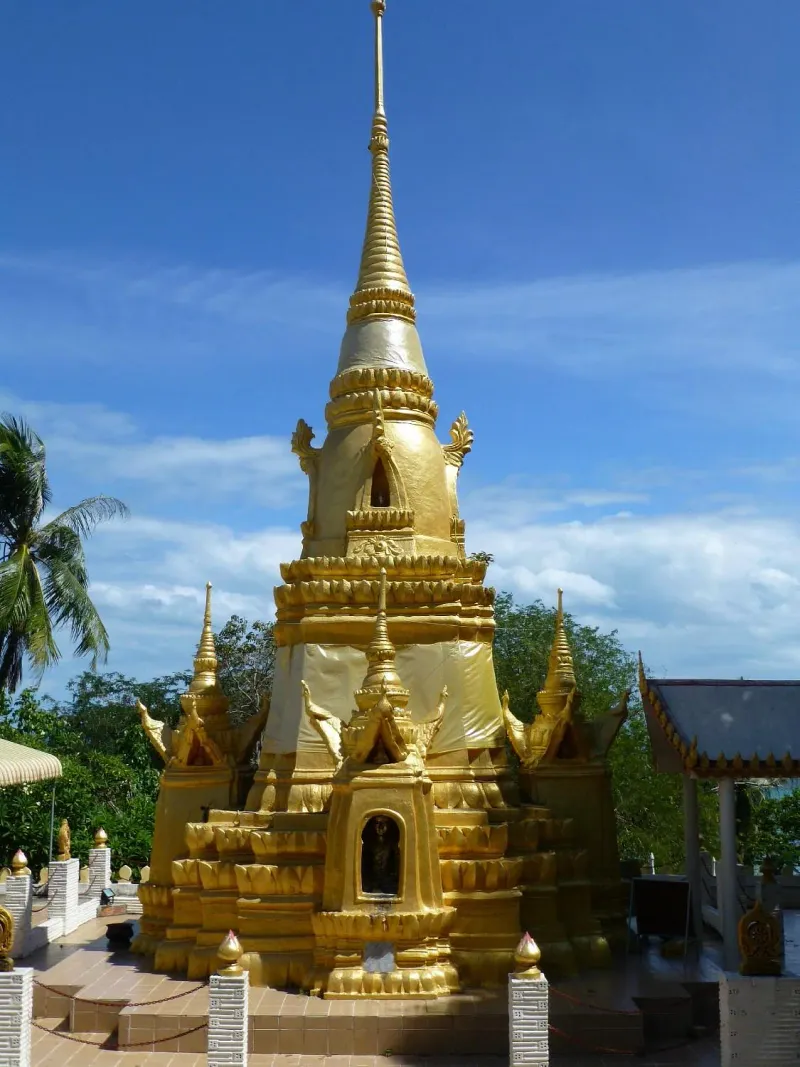
Beyond the mummified monk, Wat Khunaram is a beautiful example of a traditional southern Thai temple.
- Ornate Carvings: The main hall features intricate gold-leaf carvings and vibrant red accents typical of Samui’s wats.
- Fortune Telling (Siam Si): You will see bamboo containers filled with numbered sticks. By shaking the container until one stick falls out, you can receive a printed fortune (available in Thai and English) corresponding to that number.
- Buddha Images: The complex contains several beautiful Buddha statues in various postures, each representing a different day of the week or a specific event in the Buddha’s life.
Activities: Merit-Making and Reflection
A visit to Wat Khunaram is typically quiet and contemplative.
- Make Merit: You can purchase lotus flowers, candles, and incense at the entrance to offer at the altar.
- Receive a Blessing: If a monk is available, you can sit before them to receive a traditional water blessing and a string wristlet (Sae-Sin) for protection.
- Silent Reflection: Many visitors find that the presence of Luang Pho Daeng naturally leads to a moment of silence and personal reflection.
Where to Eat: Southern Samui Flavors
Being located on the ring road between the island’s major waterfalls, there are several excellent local dining options nearby.
| Restaurant | Style | Price Range (THB) | Distance |
|---|---|---|---|
| Local Food Stalls | Thai BBQ / Snacks | 40 - 100 | Outside gates |
| The Jungle Club | Fusion / Viewpoint | 300 - 800 | 15 min drive |
| Sabienglae | Seafood | 200 - 600 | 8 min drive |
| Mum-Aroi | Traditional Thai | 150 - 400 | 5 min drive |
Nearby Attractions
Wat Khunaram is ideally located for a southern island tour:
- Na Muang Waterfalls (5 min drive): Samui’s most famous waterfalls, located just a few kilometers west.
- Guan Yu Shrine (5 min drive east): A massive bronze-faced Chinese shrine in Hua Thanon.
- Samui Aquarium & Tiger Zoo (10 min drive): A popular family attraction further south.
- Hua Thanon Fishing Village (5 min drive east): Discover authentic Samui fishing culture.
Getting There: The Southern Ring Road
The temple is located directly on Route 4169, the main road that circles Koh Samui.
- By Motorbike/Car: It is about 6km west of Lamai Beach and 15km south of Nathon. The temple is clearly marked with signs in both Thai and English.
- By Songthaew: Any songthaew traveling along the southern coast will pass the temple entrance.
- Parking: Ample free parking is available inside the temple grounds for all types of vehicles.
Best Time to Visit
The temple is open daily from 8:00 AM to 5:00 PM.
| Time | Experience | Rating |
|---|---|---|
| 8:00 AM - 10:00 AM | Quietest time; cooler temperatures; best for photos. | ★★★★★ |
| 11:00 AM - 2:00 PM | Can be very hot and busy with large tour groups. | ★★★ |
| 3:30 PM - 5:00 PM | Soft afternoon light; local devotees arrive for prayers. | ★★★★ |
Practical Tips for Visitors
- Strict Dress Code: This is a highly revered site. Ensure your shoulders and knees are covered. Avoid beachwear or sleeveless tops.
- Remove Shoes: You must take off your shoes before entering the building where the monk is enshrined.
- Stay Quiet: Many people come here to pray and meditate. Keep your voice to a whisper and ensure your phone is on silent.
- Point No Feet: In Thai culture, feet are considered disrespectful. Never point your feet toward the mummified monk or any Buddha images.
- Donations: While there is no entry fee, small donations go toward the maintenance of the temple and the preservation of Luang Pho Daeng’s remains.
Who Is Wat Khunaram Best For?
| Traveler Type | Rating | Why? |
|---|---|---|
| Cultural Seekers | ★★★★★ | A uniquely Thai spiritual experience found nowhere else. |
| Spiritual Travelers | ★★★★★ | A physical manifestation of the core Buddhist teaching of impermanence. |
| History Buffs | ★★★★ | Learn the life story of one of Samui’s most famous residents. |
| Curiosity Seekers | ★★★★ | The “monk in sunglasses” is one of the island’s most iconic sights. |
FAQ
Who was the mummified monk? The monk was Luang Pho Daeng, a highly respected former abbot of Wat Khunaram. He was a master of meditation who predicted his own death and died in 1973 while in a meditative pose.
Is it scary for children? Most children are curious rather than afraid. The addition of the sunglasses and the peaceful atmosphere of the temple help make it a respectful rather than frightening experience.
Why did his body not decompose? Devotees believe it is a result of his advanced meditative state and spiritual purity. Scientists often attribute it to a combination of his extremely low-calorie diet, his dehydrated state at the time of death, and the natural ventilation of the temple environment.
Is there an entrance fee? No, entry to Wat Khunaram is entirely free. However, small donations are encouraged to help with the upkeep of the temple grounds and buildings.
How long should I spend at the temple? Most visitors spend about 20-30 minutes at the temple: enough time to see the mummified monk, explore the shrines, and perhaps receive a blessing or try the fortune telling.
About the author

Mike Brochlowski
Travel photographer & writer
Travel photographer and island explorer. Mike has spent years documenting Southeast Asia's hidden gems, from secluded beaches to jungle waterfalls.
Articles by Mike →