Contents
Overview
Getting around Koh Samui means choosing between a shared songthaew (30-100 THB per hop), a Grab ride, a metered or negotiated taxi (250-400 THB Chaweng to Lamai), or your own wheels — a rental scooter from 150 THB a day or a car from 800 THB a day. Most visitors mix two of these: a songthaew or Grab for short daily hops, plus a rented scooter or a day of private-driver hire for exploring the interior and the Route 4169 ring road. There is no public bus network and no train — every option here is a form of shared or private road transport.
Which one fits depends on how much you’re moving and how comfortable you are riding a bike on Thai roads. Families and first-time visitors usually stick to Grab and taxis. Longer-stay travelers and anyone wanting to reach waterfalls and viewpoints or temples off the ring road typically rent a scooter or car. For getting to Koh Samui in the first place, or on to Koh Phangan by boat, see our how to get to Koh Samui and Koh Samui to Koh Phangan ferry guides.
Key takeaways
- Songthaews (shared pickup trucks) run the ring road for 30-100 THB per ride — the cheapest way to move between beach towns.
- Grab works island-wide but costs more than in Bangkok and cannot pick up inside the airport terminal.
- A prepaid airport taxi to Chaweng runs about 500 THB (~14 USD); to Lamai about 700 THB (~20 USD).
- Scooter rental starts around 150 THB/day (~4.50 USD), but Thai law requires a motorcycle-endorsed license plus an International Driving Permit for non-ASEAN riders.
- The Route 4169 ring road circles the island in about 51 km — 1.5-2 hours non-stop, 4-6 hours with photo stops.
Transport Options Compared
Eight ways to move around Koh Samui, ranked by typical cost, convenience, and how much local know-how they demand.
| Option | Typical Cost | Convenience | Safety | Best For |
|---|---|---|---|---|
| Songthaew | 30-100 THB/ride | Medium — flag down, no fixed schedule | Low speed, open sides | Budget short hops along the ring road |
| Grab / Bolt | 150-400 THB/ride | High — app-booked, fixed fare shown upfront | Car with seatbelts | Airport-adjacent trips, night rides, no haggling |
| Metered/negotiated taxi | 150-1,000 THB/ride | High — door to door | Car with seatbelts | Late night, luggage, groups of 3-4 |
| Scooter rental | 150-450 THB/day | High — total freedom, no waiting | Lowest — leading cause of tourist injury | Confident riders, short island stays |
| Car rental | 800-1,500 THB/day | High — AC, storage, no rain problem | High relative to scooter | Families, rainy season, long day trips |
| Private driver | 500-800 THB/hour or 3,000-5,000 THB/day | High — no driving required | High | Multi-stop touring days, non-drivers |
| Hotel shuttle | Often free-300 THB | Low — fixed schedule, limited stops | High | Guests staying at resorts with a shuttle |
| Bicycle rental | ~150-250 THB/day | Low — slow, heat, no shoulder on Route 4169 | Low on the ring road | Short local rides in flat beach villages |
Songthaew (Shared Taxi)
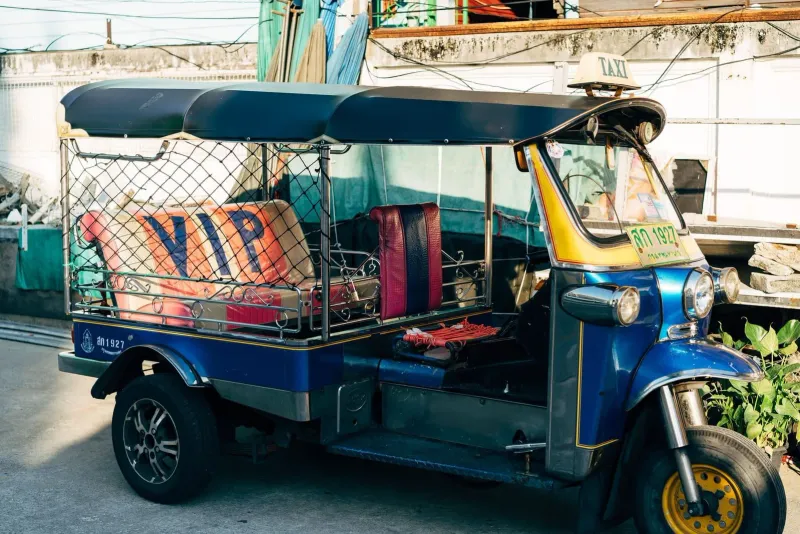
A songthaew is a converted pickup truck with two bench seats in the covered bed, running loops along Route 4169 for 30-100 THB per person depending on distance. Flag one down anywhere along the ring road by waving — there’s no fixed stop or timetable, and the truck simply pulls over if it has room.
Fares are not metered or posted, so agree the price with the driver (or another passenger) before boarding. Short in-town hops typically run 30-60 THB, while longer legs — such as from the airport road out to a beach town — run 50-100 THB. Songthaews thin out after 8 PM and mostly stop running after 10 PM, so this is a daytime option.
Songthaews are the closest thing Koh Samui has to public transport, but they are not run by a government authority — routes and prices are informal and driver-set, which is why island guides describe fares as ranges rather than a fixed table.
Grab and Bolt (Ride-Hailing Apps)
Grab is the dominant ride-hailing app on Koh Samui, showing a fixed fare before you book so there’s no negotiation. It works island-wide but is priced noticeably higher than in Bangkok or Chiang Mai, because far fewer drivers operate here relative to demand. Bolt has a smaller presence and is worth checking as a second option for price comparison.
The one hard limitation: Grab and Bolt cannot pick up passengers inside Samui Airport (USM) — the airport enforces an exclusive taxi-counter monopoly on-site. You can, however, order a Grab for the return trip from your hotel to the airport, or from anywhere else on the island. Expect occasional driver scarcity near the airport and pier areas, and surge pricing during rain or peak evening hours. See our Grab, Bolt & taxi fares guide for the full price breakdown between every beach town.
Metered and Negotiated Taxis
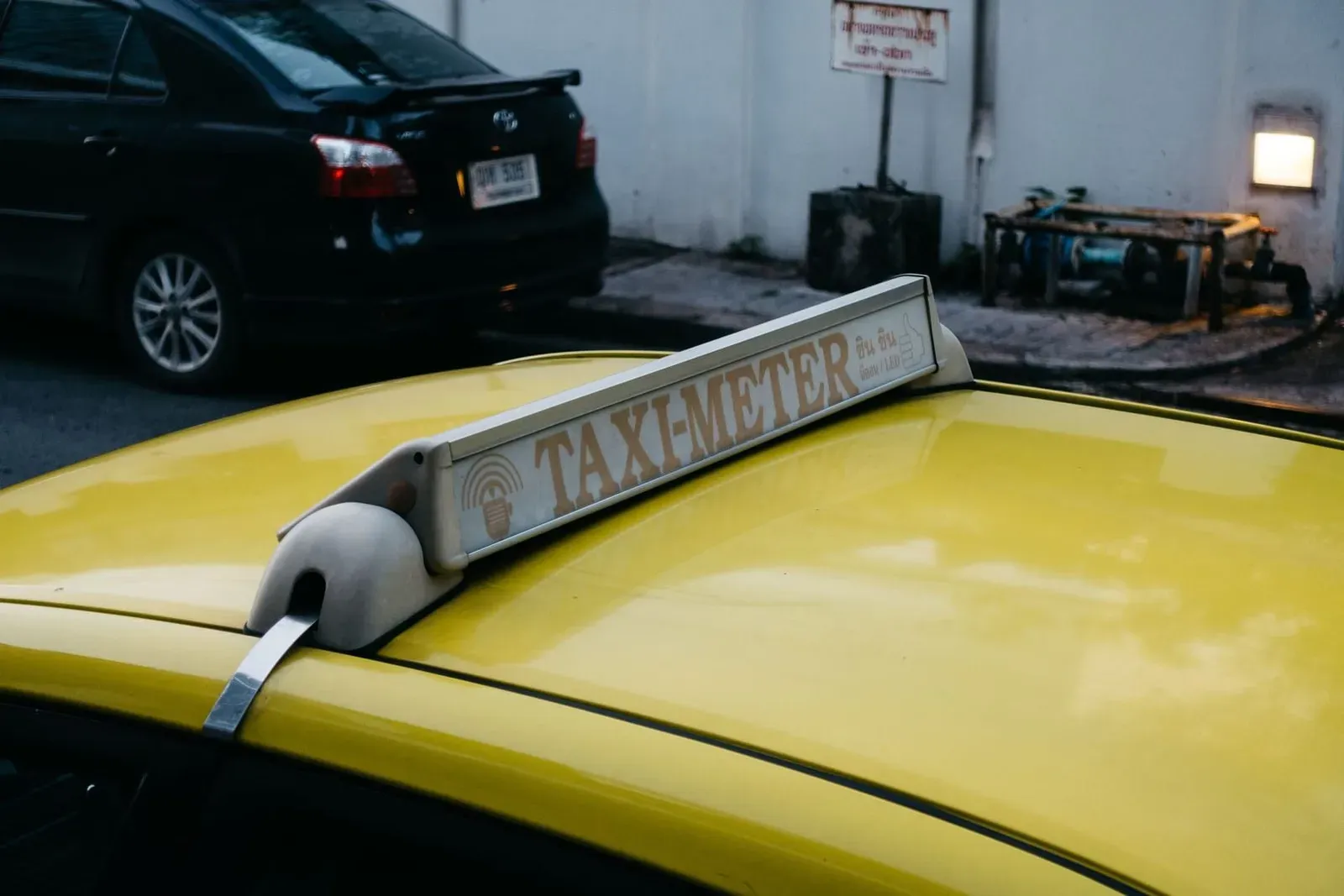
Most Koh Samui taxis quote a flat negotiated fare rather than running the meter, despite having a working meter installed. Expect to agree the price before getting in, especially for airport and pier transfers, where prepaid taxi counters set the rate for you.
Airport taxi fares vary by destination: roughly 300-500 THB (~8.50-14 USD) to Chaweng, Bophut, or Choeng Mon, 400-700 THB (~11-20 USD) to Lamai, 400-800 THB (~11-23 USD) to Maenam, and 500-1,000 THB (~14-29 USD) to Nathon — the prepaid counter sits at the high end of each range, with Grab or an independent taxi at the low end. Off-airport, Chaweng to Lamai typically runs 250-400 THB (~7-11 USD). Taxis are the most reliable option late at night when songthaews have stopped.
Scooter Rental
Scooter rental is the most flexible and most common way independent travelers explore Koh Samui, with daily rates from about 150 THB (~4.50 USD) for a basic Honda Wave or Scoopy, 250-350 THB (~7-10 USD) for a Honda Click 125, and 250-450 THB (~7-13 USD) for a larger Honda PCX 160 or Yamaha NMAX. Weekly rentals run roughly 900-1,800 THB and monthly rentals about 2,000-4,000 THB — both meaningfully cheaper per day than a single-day rate.
Thailand legally requires a motorcycle-endorsed driving license plus an International Driving Permit (IDP) for visitors from outside ASEAN countries — the UK Foreign Office’s Thailand travel advice specifically flags motorbike accidents as a leading cause of injury for visiting nationals; police checkpoints on Samui do check for both documents, and rental shops rarely enforce this themselves. Riders from ASEAN member states can use their home motorcycle license under the ASEAN Driving Licence Agreement without an IDP. A helmet is legally mandatory for rider and passenger. For the full walkthrough on shops, deposits, insurance add-ons, and what to inspect before riding off, see our scooter rental guide.
Car Rental
Self-drive car rental on Koh Samui runs about 800-1,500 THB/day (~23-43 USD) for a compact car or small SUV from local operators, usually with insurance included. International rental chains at the airport typically charge 30-60% more for a comparable vehicle. A car makes sense for families, for monsoon-season days when rain makes scooter riding unpleasant, and for anyone planning a full loop of Route 4169 with multiple stops.
A Thai driving license or an International Driving Permit covering car categories is required, same as for scooters. Parking is generally free and easy to find outside the busiest stretches of Chaweng. For rental classes, insurance excess, and where to rent, see our car rental guide.
Private Driver
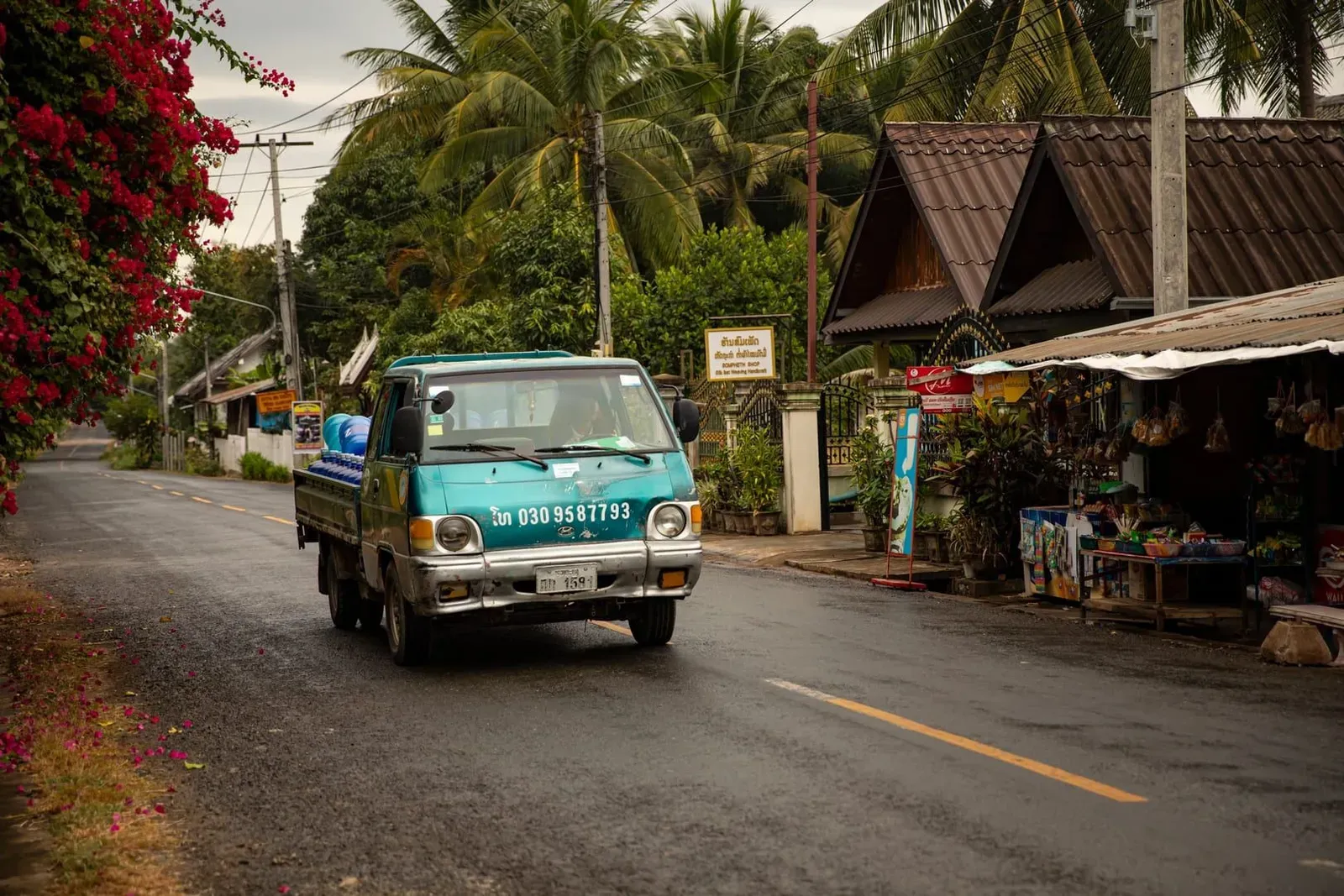
Hiring a private driver with a car or minivan costs about 500-800 THB/hour (~14-23 USD), or 3,000-5,000 THB (~86-143 USD) for a full 8-10 hour day, fuel and air conditioning included. This is the least effort option for non-drivers or families with young kids who want to see several temples, waterfalls, and viewpoints in one day without navigating themselves. Airport transfers with a private driver run roughly 400-800 THB depending on the destination zone. Book through your hotel concierge, WhatsApp-based local operators, or platforms like Klook and Viator, ideally a few days ahead in peak season (December-February).
Hotel Shuttle
Many resorts, particularly larger properties in Chaweng, Bophut, and Choeng Mon, run a scheduled shuttle to the airport or to a nearby town center — sometimes included free for guests, sometimes charged as a small surcharge. Shuttle schedules are fixed and infrequent compared to Grab or taxi, so they suit guests with flexible plans rather than anyone needing to be somewhere at a specific time. Confirm shuttle availability and cost directly with your hotel before booking a separate transfer.
Bicycle Rental
Bicycle rental is available in most beach towns for roughly 150-250 THB per day, mainly useful for short trips within a flat village like Bophut, Maenam, or Nathon rather than for circling the island. Route 4169 has narrow or nonexistent shoulders in several stretches, heavy scooter and truck traffic, and tropical heat that makes long-distance cycling impractical for most visitors — treat a rental bike as a way to get to the beach and the market, not as ring-road transport.
Sample Fares Between Areas
One-way taxi and Grab fares between the island’s main hubs — read the grid in either direction, from your row to your destination’s column.
| From / to | Airport | Chaweng | Lamai | Bophut | Maenam | Nathon | Choeng Mon |
|---|---|---|---|---|---|---|---|
| Airport | 300-500 THB | 400-700 THB | 350-500 THB | 400-800 THB | 500-1,000 THB | 300-500 THB | |
| Chaweng | 300-500 THB | 250-400 THB | 200-400 THB | 400-550 THB | 400-500 THB | 150-350 THB | |
| Lamai | 400-700 THB | 250-400 THB | 400-500 THB | 500-600 THB | 600-800 THB | 650-850 THB | |
| Bophut | 350-500 THB | 200-400 THB | 400-500 THB | 300-400 THB | 550-800 THB | 300-500 THB | |
| Maenam | 400-800 THB | 400-550 THB | 500-600 THB | 300-400 THB | 400-650 THB | no published fare | |
| Nathon | 500-1,000 THB | 400-500 THB | 600-800 THB | 550-800 THB | 400-650 THB | no published fare | |
| Choeng Mon | 300-500 THB | 150-350 THB | 650-850 THB | 300-500 THB | no published fare | no published fare |
Shared songthaews charge about 30-60 THB for a short hop and 50-100 THB from the airport road to the beaches.

The Ring Road — Route 4169
Route 4169 is Koh Samui’s coastal ring road, a roughly 51 km loop of paved two-lane highway connecting every major beach town: Nathon, Lipa Noi, Taling Ngam, Lamai, Chaweng, Choeng Mon, Bophut, Maenam, and back to Nathon. Nearly all songthaew, taxi, and self-drive routes run along this single road, with smaller side roads branching inland toward temples, waterfalls, and viewpoints such as Wat Phra Yai.
Driving the full loop non-stop takes about 1.5-2 hours by car or scooter. Most visitors take 4-6 hours to complete it with stops for beaches, food, and photos — the road passes close to Chaweng, Lamai, Bophut, Maenam, and Nathon, making a ring-road day trip an easy way to see several beach towns in one outing. Traffic is heaviest through central Chaweng and Lamai during evening hours; the northern stretch past Bophut and Maenam is generally quieter and better paved.
Safety on the Road
Road safety is the single biggest practical risk on Koh Samui, and it centers almost entirely on scooters. Thailand’s motorcycle fatality rate is among the highest in the world — the World Health Organization’s Thailand road safety data attributes roughly 80 percent of the country’s road deaths to motorcyclists and their passengers. Koh Samui itself records more than 3,000 road accidents a year, the large majority involving motorcycles, with roughly 50 deaths annually — about 30 percent of them tourists (roughly 15 tourist deaths per year). Most serious incidents involve visitors unfamiliar with riding on the left, wet or gravel-covered corners, and riding without a helmet or proper license.
Practical precautions: always wear a helmet (legally required and the single biggest factor in survivable crashes), check your travel insurance explicitly covers motorbike use (many policies exclude it or require a valid license plus IDP), avoid riding at night or after drinking, and inspect brakes and tires before accepting a rental scooter. Choeng Mon Hospital, Bandon International Hospital, and Bangkok Hospital Samui in Chaweng all handle traffic injuries; keep a hospital’s number saved before setting out on a rental bike. See our scooter rental guide for the full safety and legal checklist.



FAQ
What is the best way to get around Koh Samui?
For most visitors, a mix works best: Grab or taxis for airport transfers and night trips, songthaews for cheap daytime hops along the ring road, and a rented scooter or car for a day or two of independent exploring. There is no public bus system, so all options are shared or private road transport, typically costing 30-1,000 THB per trip depending on distance and choice.
Is there public transport in Koh Samui?
Koh Samui has no government-run bus or rail network. The closest equivalent is the songthaew — a shared pickup-truck taxi that runs informal loops along Route 4169 for 30-100 THB per ride. Songthaews have no fixed timetable and mostly stop running after 10 PM, so taxis or Grab cover late-night and off-route trips.
How much is a taxi from Koh Samui airport to Chaweng?
A prepaid taxi from Samui Airport (USM) to Chaweng costs about 500 THB (~14 USD), paid at the airport taxi counter before boarding. Grab cannot pick up inside the airport terminal, so most arriving visitors either use the taxi counter or arrange a hotel pickup in advance.
Does Grab work on Koh Samui?
Yes, Grab operates island-wide on Koh Samui and shows a fixed fare before booking, but prices run higher than in Bangkok due to fewer active drivers. It cannot collect passengers inside Samui Airport or, at times, directly at ferry piers — for those pickups, use the taxi counter or walk a short distance to a public road.
Do I need an international driving permit to rent a scooter on Koh Samui?
Visitors from outside ASEAN countries need a motorcycle-endorsed home driving license plus an International Driving Permit (IDP) to legally ride a rental scooter on Koh Samui. Police checkpoints do check for both documents, and riding without them can void travel insurance in the event of an accident. ASEAN nationals can ride on their home license alone.
How long does it take to drive around Koh Samui?
The Route 4169 ring road covers about 51 km and takes roughly 1.5-2 hours to drive non-stop by car or scooter. Most visitors spend 4-6 hours completing the loop with stops at beaches, viewpoints, and temples along the way, since the road passes directly through or near every major beach town on the island.
Published on
About the author

Mike Brochlowski
Travel photographer & writer
Travel photographer and island explorer. Mike has spent years documenting Southeast Asia's hidden gems, from secluded beaches to jungle waterfalls.
Articles by Mike →More in Travel Guides
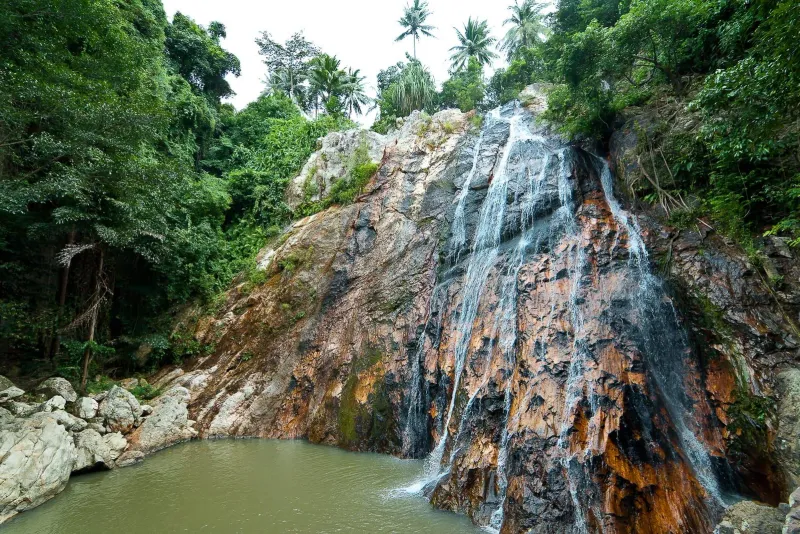
Na Muang Waterfalls — Samui's Purple Cascades and Jungle Pools
Explore Na Muang Waterfalls on Koh Samui — the accessible 18m Purple Waterfall with its swimming pool and the 80m jungle trek to the isla…
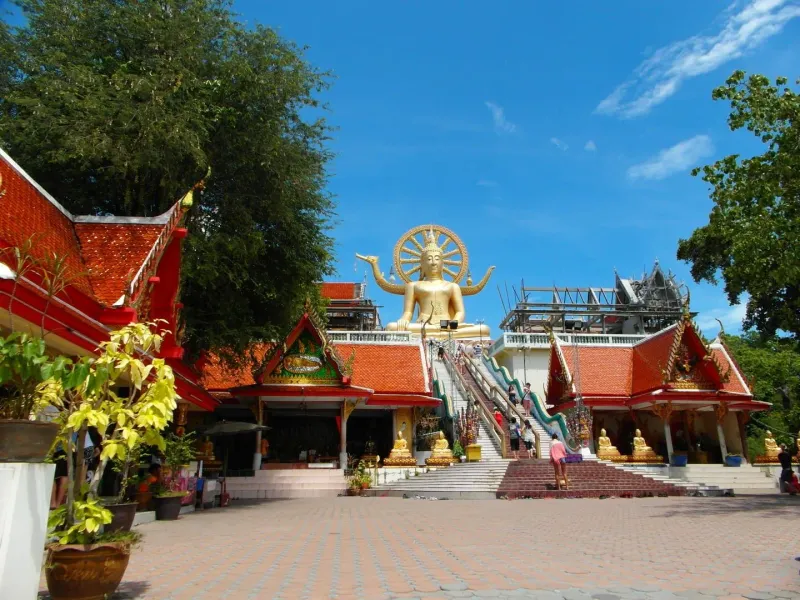
Wat Phra Yai — Big Buddha Temple on Koh Samui
Visit Wat Phra Yai (Big Buddha) on Koh Samui: a 12-meter golden Buddha, naga staircase, panoramic views, and market stalls.
Apirom Viewpoint — Koh Samui's Closed Hillside Lookout Above Ban Tai
Apirom Viewpoint: a ~304m hilltop lookout inland of Ban Tai, Koh Samui, its restaurant closed since the pandemic but the hillside track s…