Overview
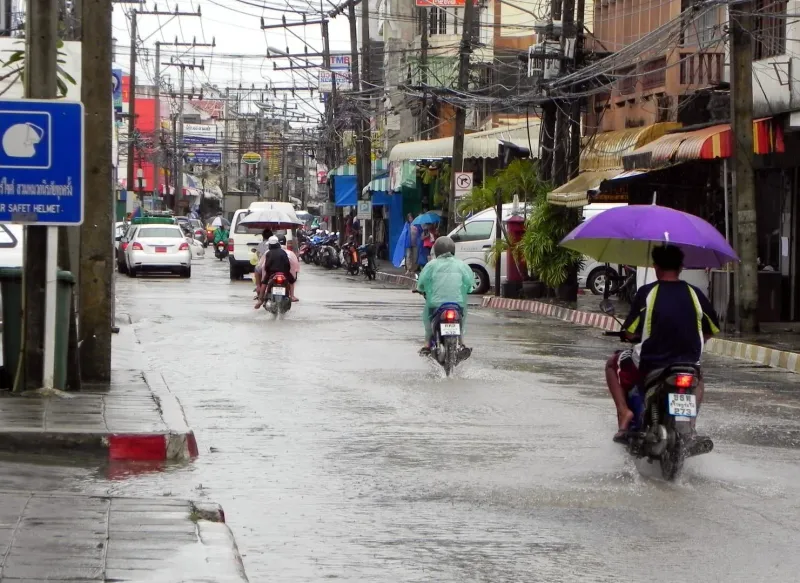
Nathon Beach (also written Na Thon) sits on the west coast of Koh Samui, Thailand, fronting the island’s capital and main port town of the same name. This is not a swimming beach: it is a working waterfront where ferries dock, fishing boats unload, and the whole island’s traffic to the mainland funnels through one strip of piers. Is Nathon worth visiting? Yes for a half day: old Chinese shophouses, a Saturday walking street, local-priced seafood and, by near-universal agreement among locals, the best sunsets on the island. Skip it if you want sand and sunbeds.
Nathon Town developed in the mid-19th century as a fishing settlement founded by Hainanese Chinese migrants and grew into Koh Samui’s administrative and commercial capital. Tourism development later shifted the island’s center of gravity east to Chaweng and Lamai, but Nathon kept the government offices, the main ferry terminal, and a genuinely local atmosphere that the resort beaches lost decades ago. Visitors come here to catch a ferry, buy souvenirs at local prices, eat where Samui residents eat, and watch the sun drop into the Gulf of Thailand over the water.
Samui International Airport is roughly 23.5 km northeast of Nathon, about 35-45 minutes by taxi. Chaweng, the island’s main resort strip, is a similar drive across the interior. Lipa Noi Beach lies about 6 km south along the coastal road, and Maenam Beach is roughly 15 minutes north.
History: From Hainanese Fishing Village to Capital
Nathon’s story begins with Chinese migrants from Hainan Island, the first wave of whom settled along the Nathon River in the 1850s, drawn by rich fishing grounds and land suited to coconut cultivation. Coconuts, not tourism, built Samui’s early economy, and Nathon’s natural harbor made it the obvious hub for loading copra and dried coconut onto boats bound for the mainland.
By the mid-19th century, Nathon had become the island’s administrative and commercial capital, a role it held for well over a century. Government offices, the courthouse, and the main hospital were established here, and the town grew a proper grid of streets lined with two- and three-story Chinese shophouses: a mix of homes, warehouses, and shops that still defines the old town today.
Decline of the center, survival of the character
When Samui International Airport opened on the northeast coast in the 1980s and mass tourism took hold, the island’s commercial energy shifted toward Chaweng and Lamai. Nathon lost its position as Samui’s busiest town but kept its administrative functions and its port. The result is a town that feels frozen somewhere between the 1970s and today: faded shophouse facades, family-run shops that have operated for generations, and none of the high-rise development that reshaped the east coast.
The Hainanese legacy today
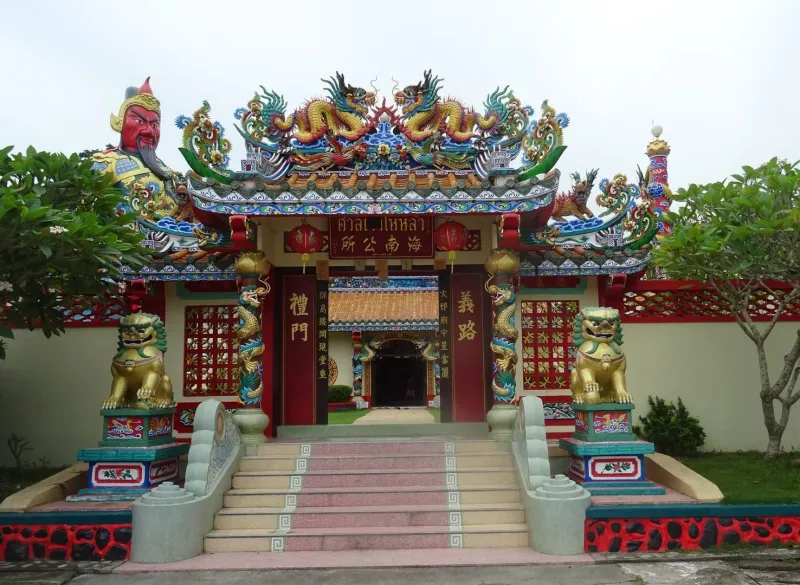
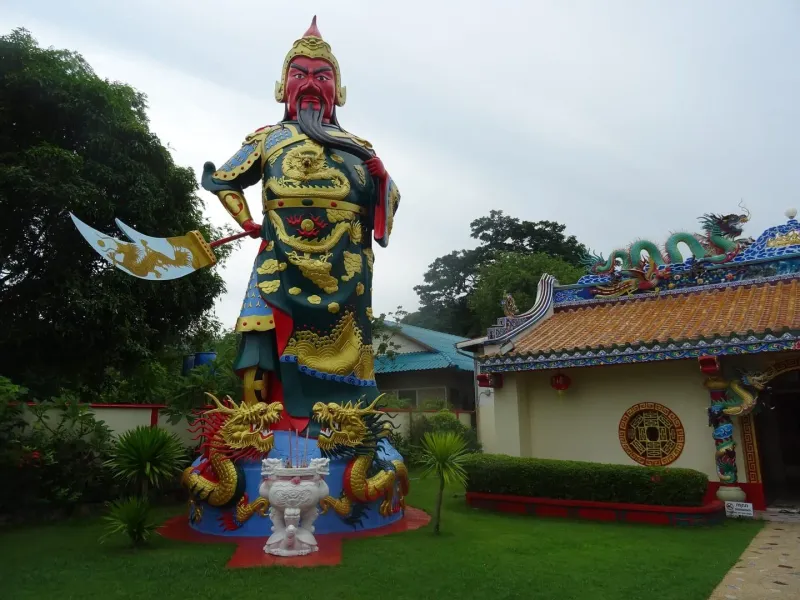
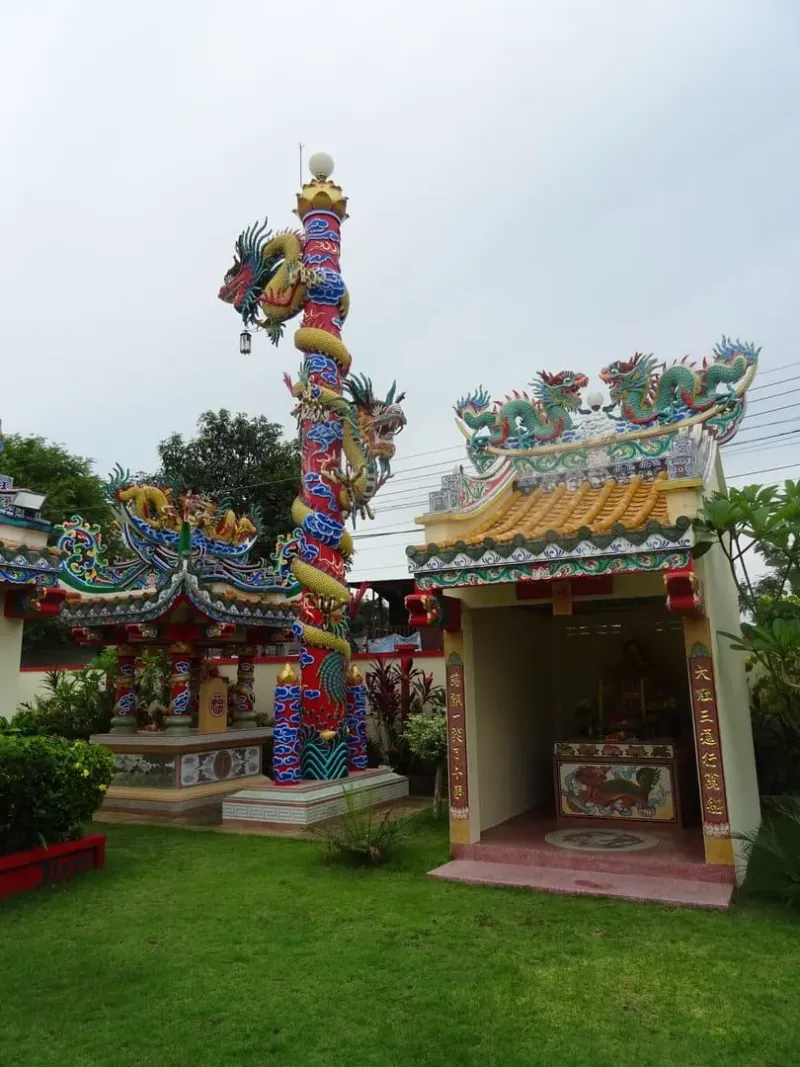
The clearest surviving marker of Nathon’s Hainanese roots is the Nathon Hainan Shrine, a Chinese temple in the old town with ornate architecture and golden lion statues, still the center of community life during Chinese New Year and the Vegetarian Festival. Walking the shrine’s surrounding streets is the closest thing on Koh Samui to stepping into the island’s pre-tourism history.
Is Nathon Beach Good for Swimming?
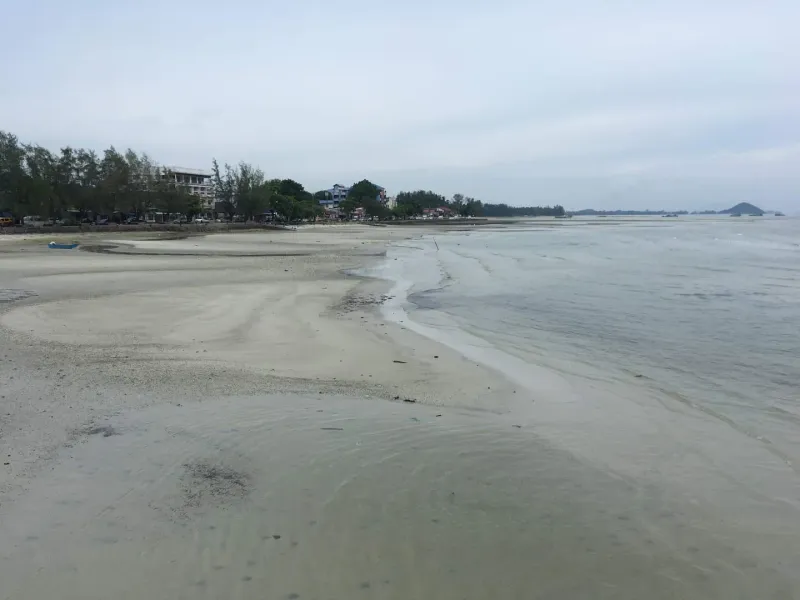
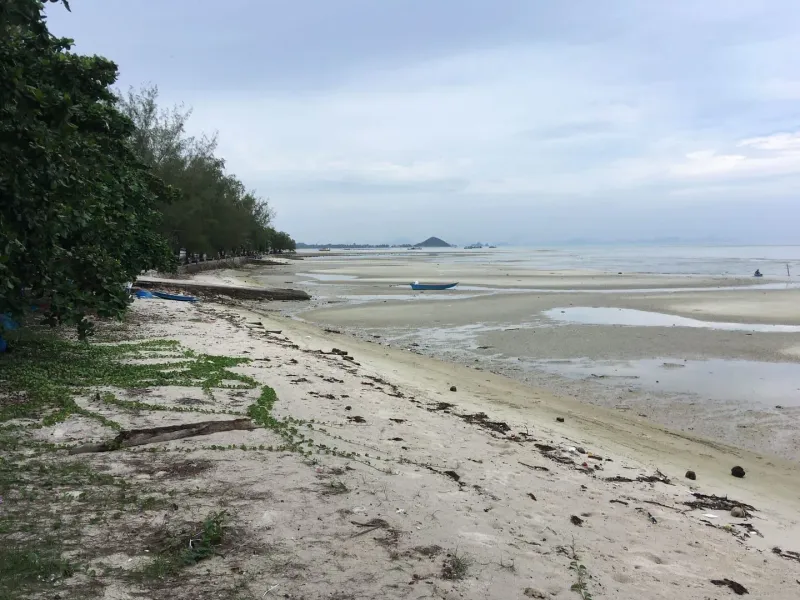
No. Nathon Beach itself is a narrow strip of sand running along the town’s waterfront, more promenade than resort beach. The seabed here is typically murky from ferry traffic, boat fuel, and the natural silt of a working harbor, and there is no meaningful swimming infrastructure: no loungers, no beach bars serving cocktails in the sand, no lifeguards. Locals and guidebooks alike are consistent on this point: Nathon is not where you come to swim.
What the beach does offer is a genuinely pleasant waterfront walk. A paved promenade runs along the sea wall for a stretch of the town, giving views out toward the piers, the fishing fleet, and, on clear days, the silhouette of the mainland’s hills across the Gulf of Thailand. Benches and a handful of small pavilions make it an easy place to sit with a coffee or a bag of street food and watch boats come and go.
Why visitors still come to the water’s edge
- Sunset viewing: The single biggest draw. The west-facing orientation gives Nathon a clear, unobstructed sunset that most other Samui beaches, which face north or east, simply cannot match.
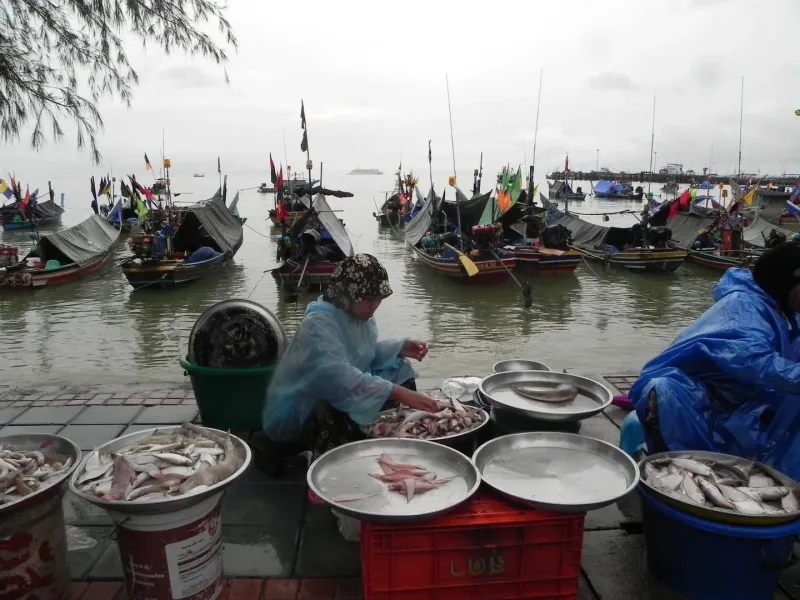
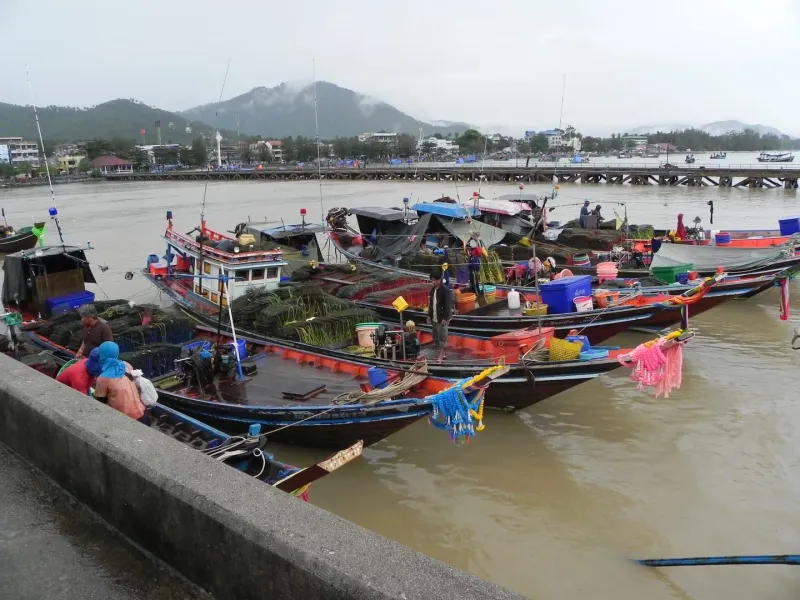
- Boat-watching: Ferries, fishing boats, and longtails move in and out constantly, giving the waterfront a working-harbor atmosphere rather than a resort one.
- A quiet walk: Outside of ferry arrival times, the promenade is calm and largely free of tourists, offering a different pace than Chaweng or Lamai.
If swimming is the priority, Lipa Noi Beach, about 6 km south, offers calmer, cleaner water with a genuine swimming beach and similarly excellent sunsets.
Things to Do in Nathon Town: Shophouses and Shopping
Nathon Town sits directly behind the beach and is arguably the more interesting half of a visit here. Two main parallel streets running along and just behind the waterfront form the commercial spine of the town, lined with old two-story Chinese shophouses: some restored as cafes and boutiques, many still operating as their original grocery stores, tailors, hardware shops, and gold traders.
What to shop for
- Clothing and shoes: Multiple shops sell everyday Thai clothing, beachwear, and footwear at local prices, generally 30-50% cheaper than equivalent items in Chaweng’s tourist shops.
- Silk and textiles: A handful of long-running silk and fabric shops cater to both locals and visitors looking for tailored clothing.
- Souvenirs and handicrafts: Wood carvings, coconut-shell products, and Thai handicrafts, priced closer to what residents pay than what beach-resort souvenir stalls charge.
- Herbal medicine and traditional goods: Old-style apothecary shops sell Thai herbal remedies, dried spices, and traditional snacks.
- Gold shops: Several gold and jewelry traders operate along the main street, a common feature of Thai provincial capitals.
Practical shopping notes
Shops generally open from around 9 AM to 6-7 PM, though hours vary by owner and many close for an afternoon lull. Most accept cash only; bring baht, as card machines are far less common here than in resort areas. Bargaining is possible in some shops but far less aggressive than at tourist night markets: prices here are largely aimed at locals, not visitors.
Saturday Walking Street
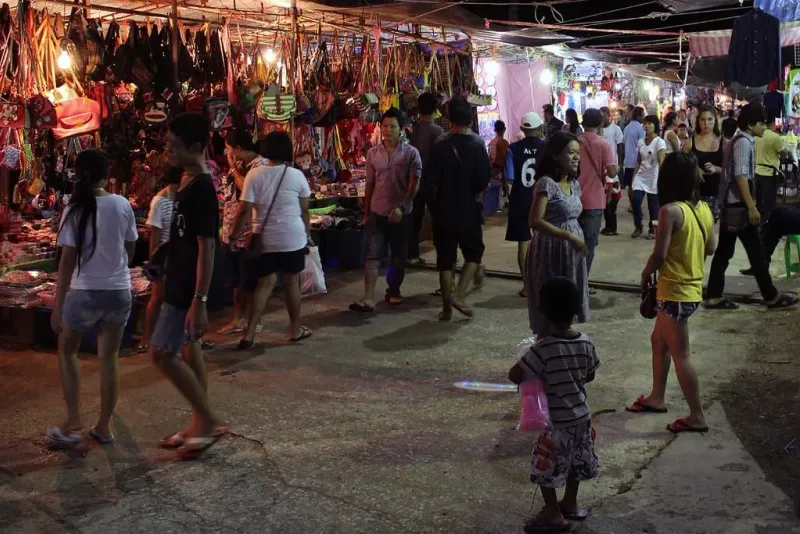
Every Saturday evening, a stretch of Nathon’s main road closes to traffic and becomes a walking street market, smaller and more local in character than the well-known Friday market in Bophut’s Fisherman’s Village or the Thursday market in Maenam. Stalls typically open from around 4-5 PM into the evening.
What’s on offer
- Street food: Grilled seafood, pad thai, som tam, satay, and Thai desserts, generally priced 40-100 THB (~1-3 USD) per dish: noticeably cheaper than markets in the tourist zones.
- Local produce: Fresh fruit, coconuts, and vegetables sold by farmers and vendors from around the island.
- Handicrafts and clothing: A smaller selection than Bophut or Maenam, but with fewer mass-produced souvenirs and more genuinely local goods.
- Coconut products: Fresh coconut water, coconut ice cream, and coconut-based snacks, reflecting the town’s agricultural roots.
Tips for visiting
- Arrive by early evening for the best food selection before popular stalls sell out.
- Bring small bills: vendors rarely have change for large notes.
- The market is smaller than Bophut’s or Maenam’s, so budget 45-60 minutes rather than a full evening.
- Combine the visit with sunset viewing on the waterfront just before the market gets busy.
Where to Eat
Nathon’s food scene trades style for value. This is where Samui residents, not tour groups, eat, and prices reflect that.
| Type | Price Range | Known For |
|---|---|---|
| Waterfront seafood restaurants | $-$$ | Fresh catch, grilled fish and prawns, harbor views |
| Old-town noodle and rice shops | $ | Pad thai, khao man gai, boat noodles, quick lunches |
| Bakeries and coffee shops | $ | Thai-Chinese bakeries in converted shophouses |
| Saturday market stalls | $ | Street food, grilled skewers, desserts |
What to order
- Grilled seafood: Whole fish and prawns from harborside restaurants, typically 150-350 THB (~4.50-10 USD) depending on catch and size.
- Khao man gai and khao mok gai: Hainanese-style chicken rice dishes, a direct legacy of the town’s Hainanese founders, usually 50-70 THB (~1.50-2 USD).
- Noodle soups and pad thai: Widely available for 40-60 THB (~1-1.50 USD), often better value than equivalent dishes on the east coast.
- Thai-Chinese pastries: Old bakeries near the shrine sell traditional Chinese-Thai pastries and moon cakes during festivals.
Price guide
- Budget: Noodle shops and street food from 40 THB (~1 USD)
- Mid-range: Waterfront seafood meals 150-400 THB (~4.50-11 USD)
- Note: Nathon has few upscale restaurants: for fine dining, most visitors head to Chaweng, Bophut, or Maenam.
Sunsets over the Gulf of Thailand
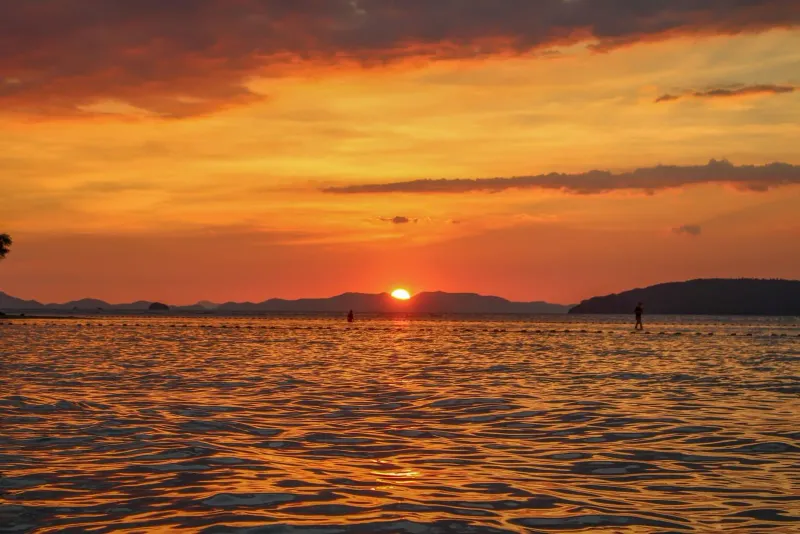
Because most of Koh Samui’s popular beaches face north or east toward Koh Phangan and the open Gulf, few offer a genuine sea-level sunset. Nathon’s west-facing waterfront is the exception, and its sunsets are regularly described by locals and long-term residents as the best on the island: a “fiery burnt orange” that colors the sky over the pier and the anchored fishing boats.
Best spots to watch
- The sea wall promenade: Directly in front of the town, unobstructed views over the water and the pier silhouettes.
- Nathon Pier itself: Walking partway out onto the pier area (where permitted) gives an even clearer horizon view.
- Rooftop cafes: A few cafes in the old town have upper-floor seating with sunset views over the rooftops toward the sea.
Sunset falls at roughly 6-6:30 PM year-round on Samui, with minor seasonal shifts. Arriving 20-30 minutes early secures a spot on the promenade before the after-work crowd of locals gathers for the same view.
Nathon Pier: Ferries and Ang Thong Tours
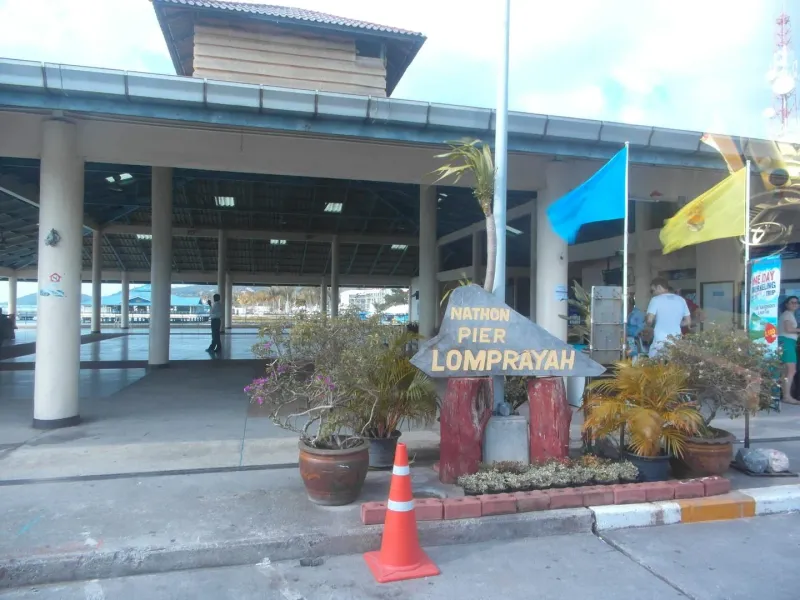
Nathon Pier is Koh Samui’s principal ferry terminal and the busiest transport hub on the island, comprising three separate jetties used by different ferry operators.
To the mainland
- Nathon to Donsak Pier (Surat Thani mainland): The busiest route, with departures roughly every hour between 5 AM and 7 PM. The crossing takes about 1.5 hours and costs approximately 200-250 THB (~5.50-7 USD) one-way on the standard car ferry.
- Bus and train combination tickets: Combined ferry-and-bus tickets to Bangkok, Surat Thani, and other mainland cities are sold at agencies around the pier.
To Koh Phangan and Koh Tao
- Nathon to Koh Phangan (Thong Sala Pier): Around 52 minutes by fast ferry, roughly 20 sailings per week, with fares averaging ~35 USD (~1,200 THB) depending on operator and class.
- Nathon to Koh Tao (Mae Haad Pier): About 2 hours 50 minutes, with fares averaging ~78 USD (~2,700 THB) for the longer crossing.
Ang Thong National Marine Park tours
Most Ang Thong Marine Park day-trip boats depart from or near Nathon Pier, with hotel pickup around 7-8 AM bringing visitors to the pier before boarding. A typical full-day itinerary includes stops at Ko Wua Talap, Bua Bok Cave, Ko Mae Ko’s Emerald Lake viewpoint, plus snorkeling, kayaking, and beach time, before returning to Nathon Pier around 4-4:30 PM. Tour prices run roughly 1,500-2,500 THB (~43-71 USD), with the national park entrance fee (~300 THB / ~8.50 USD for foreign adults) usually charged separately, per the Department of National Parks. Read more about the marine park’s landscape on our guide to the Ang Thong Emerald Lake hike.
Nearby Attractions
Nathon’s west-coast position puts a mix of cultural and natural sites within a short drive.
Under 10 minutes
- Nathon Hainan Shrine: A short walk from the pier in the old town, this Chinese shrine is the clearest physical link to Nathon’s Hainanese founders. Free entry.
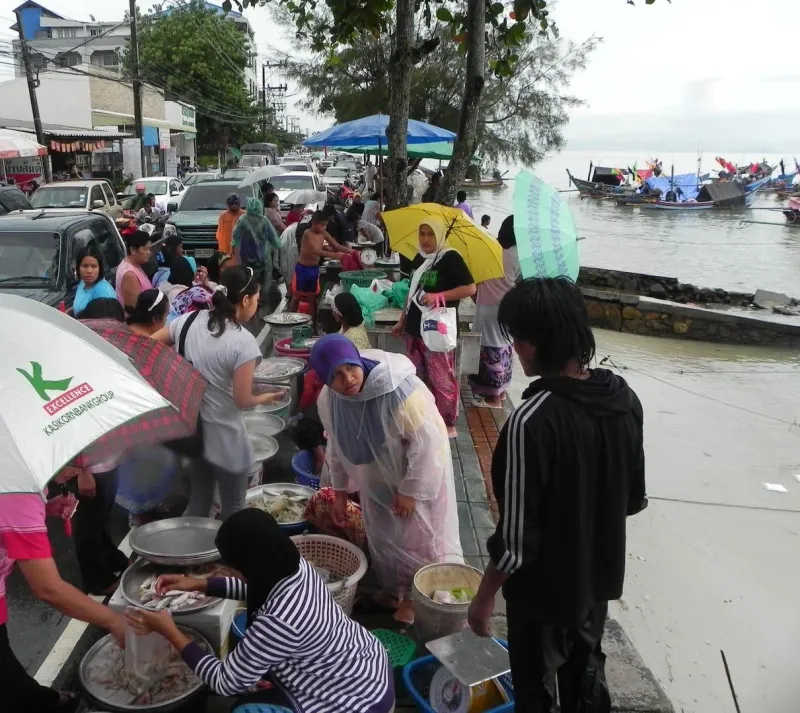
- Nathon Municipal Market: The town’s daily fresh market for produce, seafood, and household goods: a working market rather than a tourist attraction, open mornings.
Under 30 minutes
- Lipa Noi Beach: About 6 km / 10-15 min south, a genuine swimming beach with calm water and its own excellent sunsets.
- Nathon Mountain Ridge Trek: An 8-13.5 km ridge hike into the hills behind town, reaching around 450 m elevation with views over both the west coast and the island’s interior, for visitors wanting a more active day.
- Taling Ngam Beach: About 20 minutes south, known for sweeping sunset views over the Five Islands and Ang Thong Marine Park.
- Maenam Beach: About 15 minutes north along the coastal road, one of Samui’s best swimming beaches with a Thursday night market of its own.
Where to Stay
Nathon itself has limited accommodation aimed at tourists: most visitors passing through stay elsewhere on the island and treat Nathon as a day visit or transit point. A handful of budget guesthouses and small hotels in the old town serve travelers catching early ferries or those who specifically want to experience local Samui life.
| Category | Average Price | Notes |
|---|---|---|
| Budget guesthouses (Nathon town) | 525-1,225 THB (~15-35 USD)/night | Simple rooms, convenient for early ferry departures |
| Mid-range (nearby Lipa Noi) | 1,750-3,500 THB (~50-100 USD)/night | Beachfront bungalows and small resorts, 10-15 min away |
| Upscale (nearby Taling Ngam / Lipa Noi) | 5,250-10,500+ THB (~150-300+ USD)/night | Sunset-facing resorts along the southwest coast |
Most travelers base themselves in Chaweng, Bophut, Maenam, or Lipa Noi and visit Nathon for the day (for the market, the ferry, or the sunset) rather than sleeping in the town itself.
Getting There
From Samui Airport (USM)
Nathon is about 23.5 km from the airport, a drive of roughly 35-45 minutes depending on traffic, crossing the island from the northeast corner to the west coast.
- Airport taxi: Approximately 500-650 THB (~14-19 USD), higher than shorter airport transfers due to the distance.
- Shared minivan: Cheaper alternatives are available through transfer booking sites, generally 300-400 THB (~8.50-11 USD) with multiple stops.
From other beaches
- From Maenam: About 15 minutes via the coastal road (Route 4169 ring road).
- From Lipa Noi: About 10-15 minutes south along the coast.
- From Chaweng: Roughly 30-40 minutes across the island.
- From Lamai: Roughly 30 minutes via the southern ring road.
Songthaew (shared taxi)
Songthaews on the island’s ring road routes pass through Nathon regularly, including the route connecting the airport, Bang Rak, Bophut, Maenam, and Nathon along the north coast. Fares typically run 50-100 THB depending on distance; flag one down along Route 4169.
Getting around Nathon
The old town is small enough to explore entirely on foot: most shops, the shrine, and the piers sit within a 10-15 minute walk of each other. For onward travel around the island, scooters rent for around 200-300 THB/day (~5.50-8.50 USD) and cars for 1,200-1,800 THB/day (~34-51 USD).
Best Time to Visit
Season breakdown
| Season | Months | Conditions | Rating |
|---|---|---|---|
| Peak / Dry | Dec - Feb | Sunny, calm seas, best ferry conditions | ★★★★★ |
| Hot | Mar - May | Hot (35 degrees Celsius+), generally dry | ★★★★ |
| Inter-monsoon | Jun - Aug | Mixed weather, generally pleasant | ★★★★ |
| Monsoon | Sep - mid-Nov | Rain and rough seas possible, occasional ferry delays | ★★★ |
Nathon-specific notes
- Because ferries are Nathon’s reason for being, weather here matters most for sea conditions, not beach comfort. Rough seas during the monsoon (September-November) can delay or cancel sailings to the mainland and outer islands: build in buffer time if catching a flight after a ferry.
- The Saturday walking street and sunset views are enjoyable year-round, rain permitting.
- December to February brings the calmest seas and most reliable ferry schedules, alongside the island’s overall peak tourist season.
Practical Tips
Essentials
- ATMs and banks: Nathon has one of the highest concentrations of banks and ATMs on the island, useful for travelers who need cash before a ferry.
- Immigration and government offices: As the former capital, Nathon retains several government offices; check current locations before visiting for official business, as some services have moved toward the airport area.
- Ferry tickets: Buy tickets at pier counters or through agencies in town; during peak season, booking a day ahead for mainland ferries is a sensible precaution.
- Parking: Free street parking is available around the old town, though it can fill up during Saturday market hours.
For ferry travelers
Arrive at the pier at least 30-45 minutes before departure, especially for mainland-bound ferries during peak season. Luggage storage is limited, so plan transfers accordingly. Toilets and small cafes are available at the pier waiting areas.
For day-trippers
Nathon rewards a half-day visit rather than a full one: browse the old-town shops in the late afternoon, eat an early dinner at a waterfront seafood restaurant, watch the sunset from the sea wall, and (if it’s a Saturday) finish at the walking street market.
Who Is Nathon Best For?
| Traveler Type | Fit | Why |
|---|---|---|
| Ferry travelers | ★★★★★ | The island’s main port: essential stop for mainland, Koh Phangan, or Koh Tao connections |
| Culture seekers | ★★★★ | Old Chinese shophouses, the Hainan Shrine, and genuine local life |
| Budget shoppers | ★★★★★ | Local prices well below tourist-zone markups |
| Sunset chasers | ★★★★★ | The clearest west-facing sunset views on Koh Samui |
| Swimmers and sunbathers | ★ | Not a swimming beach: head to Lipa Noi or Maenam instead |
| Nightlife seekers | ★ | Quiet after dark outside the Saturday market |
| Day-trippers from other beaches | ★★★★ | Easy half-day addition combining shopping, food, and sunset |
FAQ
Is Nathon Beach good for swimming?
No. Nathon Beach is a working port waterfront, not a swimming beach: the water is affected by ferry and fishing boat traffic and there is no beach infrastructure for sunbathing or swimming. For swimming, head to Lipa Noi Beach about 6 km south or Maenam Beach roughly 15 minutes north, both of which offer calm, clean water.
Is Nathon worth visiting?
Yes, as a half-day stop. Nathon offers old Chinese shophouses, the Hainan Shrine, local-priced shopping and seafood, a Saturday evening walking street and west-facing sunsets. It is not a beach destination, so combine it with a swim at Lipa Noi or Maenam.
What is there to do at Nathon Pier?
Nathon Pier is Koh Samui’s main ferry terminal, with three jetties, ticket agencies, small cafes and toilets in the waiting areas. Most visitors come to catch a ferry to Donsak, Koh Phangan or Koh Tao, or to join an Ang Thong Marine Park tour, then stay for the waterfront and old town.
Why is Nathon important on Koh Samui?
Nathon is Koh Samui’s capital and main port town, home to the island’s principal ferry terminal, several government offices, and its oldest commercial district. Nearly all ferry traffic to the Thai mainland, Koh Phangan, and Koh Tao passes through Nathon Pier, making it the island’s key transport hub.
What day is the Nathon walking street market?
Every Saturday evening, typically from around 4-5 PM into the night. It is smaller and more local than Bophut’s Friday market or Maenam’s Thursday market, with street food, local produce, and handicrafts aimed more at residents than tourists.
How do I get from Nathon to the Thai mainland?
Ferries run from Nathon Pier to Donsak Pier near Surat Thani roughly every hour between 5 AM and 7 PM. The crossing takes about 1.5 hours and costs approximately 200-250 THB (~5.50-7 USD) one-way. Combined ferry-and-bus tickets to Bangkok and other mainland cities are sold at agencies near the pier.
Do Ang Thong Marine Park tours leave from Nathon?
Most Ang Thong National Marine Park day tours depart from or pick up near Nathon Pier, typically between 7-8 AM, and return around 4-4:30 PM. Full-day tours cost roughly 1,500-2,500 THB (~43-71 USD), with the park’s ~300 THB entrance fee usually charged separately.
How far is Nathon from Samui Airport?
About 23.5 km, roughly 35-45 minutes by car depending on traffic. A taxi costs approximately 500-650 THB (~14-19 USD). This is a longer transfer than most airport-to-beach routes on Samui, since Nathon sits on the opposite side of the island from the airport.
About the author

Mike Brochlowski
Travel photographer & writer
Travel photographer and island explorer. Mike has spent years documenting Southeast Asia's hidden gems, from secluded beaches to jungle waterfalls.
Articles by Mike →Mentioned in Island Life
Wake, Cable and Foil: Samui's Flat-Water Board Scene
Cable wakeboarding barely exists on Koh Samui, but wing foiling and e-foiling do: riding the kite crew's calm mornings and seasonal beaches.
Who Builds and Runs Samui: the Island's Migrant Workforce
Koh Samui's resorts and boats run on Isaan, southern Thai and Myanmar migrant labour: documented legal status, wages and daily life, Sep…
Sunset for Two on Koh Samui: Where Locals Actually Go
Where two people on Koh Samui actually watch the sun go down: west-coast beaches, viewpoint bars, free sand and a longtail back, prices c…