Overview
Na Thian Beach (หาดนาเทียน, also spelled Na Thien or Natien) is a ~500 metre stretch of fine sand tucked into the isolated, jungle-covered southeast coast of Koh Samui, Thailand, just south of the fishing village of Hua Thanon. Unlike Chaweng or Lamai a few kilometres north, Na Thian has almost no commercial development: no rows of sun loungers, no beach bars competing for space, just palm shade, a scattering of boulders, and long views across the Gulf of Thailand. It is one of the last stretches of genuinely wild coastline on the island’s populated side.
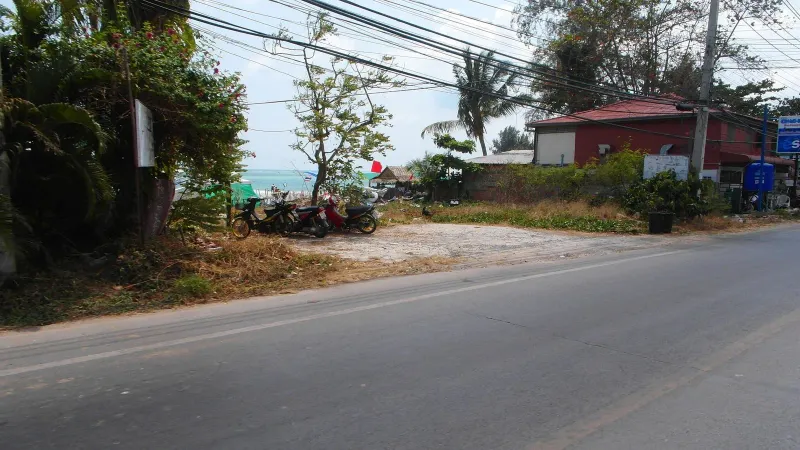
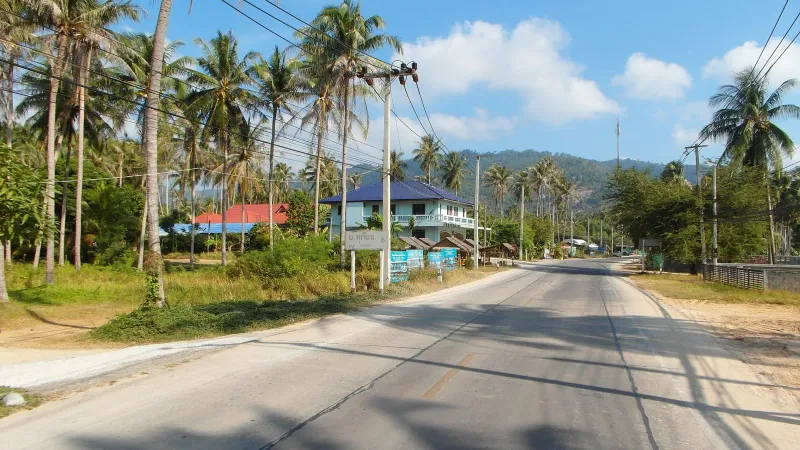
The beach sits on a steep, forested hillside section of coast that has historically been too difficult to build on at scale, which is exactly why it still looks the way it does. Centara Villas Samui is the only hotel with direct beachfront here, and the sole free public access is a dirt track off Route 4170 near the Samui Butterfly Garden. Samui International Airport is roughly 26-28 km north: about 35-40 minutes by car, similar to the drive time to Lamai plus a few extra minutes south.
Geography: The Boulder That Splits the Bay
Na Thian Beach runs from a large rock formation near Laem Set in the south to a small headland known locally as Na Thian islet in the north, tracing the base of a mountainous, densely forested stretch of the southeast coast between Hua Thanon and Laem Set. The terrain behind the beach is steep enough that large-scale resort construction has never really taken hold: the road access alone required cutting a dirt track through the jungle.
Roughly at the midpoint, a pile of boulders and smaller rocks extends about 20 metres out into the sea, physically dividing the beach into two shorter crescents. This formation is the beach’s most recognisable landmark and its best-known photo subject: weathered granite boulders against turquoise water, with almost no other visitors in frame.
Administratively, Na Thian falls within the Bo Put/Maret area of Koh Samui’s southeast coast, close to the boundary between Hua Thanon and the Laem Set headland. It is often grouped with neighbouring Nahai Beach (known for kitesurfing) and Laem Set Beach when travel guides describe this quieter southeastern pocket of the island. Koh Samui itself is Thailand’s second-largest island, and its southeast coast remains among the least built-up sections of the shoreline.
The Beach: Sand, Tide, and Swimming
Na Thian’s sand is fine in texture with a greyish tone mixed with coarser yellow grains: a slightly different palette than the bright white sand of Chaweng, and part of what gives Na Thian’s photos their distinctive, moody tone. Shade is abundant: unlike many exposed Samui beaches, tall trees line much of Na Thian’s length, so a beach walk here rarely means direct midday sun the whole way.
Water entry and swimming
Swimming at Na Thian requires some patience. Water entry along nearly the entire beach is hindered by stones and small rocks underfoot, and at low tide visitors may need to wade out 20 metres or more before reaching swimmable depth. A natural boat channel running parallel to the shore does offer a clearer stretch of water for swimming, and because the bay is shallow, there is essentially no wave action: the water stays calm even when the open Gulf beyond is choppier.
This is not a beach for barefoot sprints into the surf. Water shoes make a real difference, and families with very young children may prefer a sandier, gentler option like Maenam or Choeng Mon instead.
Tide behaviour
Koh Samui’s tidal range runs roughly 1.0-2.1 metres depending on the lunar cycle. At low tide, the rocky shallows at Na Thian become more pronounced and some sections are better suited to walking and photography than swimming; at higher tide, the water reaches closer to the tree line and the central boulder pile becomes partly submerged, creating dramatic reflections.
Photography: Why Na Thian Stands Out
Na Thian has quietly built a reputation among photographers and Instagram scouts as one of Koh Samui’s best “undiscovered” backdrops, and the reasons come down to three things most working beaches on the island have lost: emptiness, texture, and light.
- Emptiness: With only one hotel on the shorefront and no public infrastructure beyond a single dirt-road access point, it is common to have long sections of Na Thian entirely to yourself, even at sunrise or sunset: a rarity on an island where Chaweng and Lamai can feel crowded by 9 am in high season.
- Texture: The mid-beach boulder field, the tree-lined shore, and the mixed grey-yellow sand give photos more visual contrast than a flat white-sand beach.
- Low-tide mirrors: When the tide recedes, thin sheets of water sitting over the sand create natural mirror effects, especially in the hour after sunrise or before sunset.
Bring a wide-angle lens for the boulder field and a polarising filter for the water; the shallow bay throws a lot of glare at midday, so early morning or late afternoon light produces noticeably better results.
Activities
Na Thian is not built for an activity checklist: it is built for slowing down. Even so, there is enough to fill a half-day visit.
- Swimming: Best in the boat channel or at higher tide; bring water shoes for the rocky sections.
- Beachcombing and rock scrambling: The central boulder pile invites careful climbing and exploring at low tide (watch for slippery surfaces).
- Photography and sunrise walks: The beach faces east-southeast across the Gulf of Thailand, making early morning the best window for soft light and long shadows off the boulders.
- Reading and hammock time: Cool Bar & Restaurant, the one small operator near the access track, has bamboo seating in the shade: one of the few places on the beach to simply sit.
- Kitesurfing (nearby): Neighbouring Nahai Beach, a short walk or drive south, runs a kitesurfing school and is known for open, wind-exposed sand better suited to the sport than Na Thian’s sheltered bay.
There are no water sports rental stands, jet ski operators, or lounger-and-umbrella setups directly on Na Thian itself: a deliberate trade-off for the quiet.
Where to Eat
Dining options directly on Na Thian Beach are limited by design, which is part of its appeal.
| Option | Type | Price Range | Known For |
|---|---|---|---|
| Cool Bar & Restaurant | Thai, drinks, snacks | $ | Bamboo seating near the beach access track, cold drinks |
| Centara Villas Samui restaurants | Thai, international | $$-$$$ | On-site dining for hotel guests, beachfront views |
| Hua Thanon fish market & food stalls | Thai, seafood | $ | Fresh catch, authentic local prices, ~5-10 min away |
For a wider selection, Lamai’s restaurant strip is about a 10-15 minute drive north, with everything from beachfront seafood shacks to international menus. See Tourism Authority of Thailand’s Koh Samui guide for wider island dining and travel listings.
Price guide
- Budget: Hua Thanon street food and market stalls from 50-100 THB (~1.50-3 USD)
- Mid-range: Cool Bar snacks and drinks 100-300 THB (~3-8.50 USD)
- Upscale: Centara Villas Samui dining 500-1,500 THB (~14-43 USD)
Nearby Attractions
Under 10 minutes
- Hua Thanon village: A traditional Muslim fishing community with old two-storey wooden shophouses, a working fish market, and the island’s only mosque standing near a Chinese shrine and Buddhist statuary. Roughly 5-10 minutes north by car.
- Samui Butterfly Garden: A small tropical butterfly and insect park just off the Route 4170 turnoff that also marks the way to Na Thian’s beach access.
- Nahai Beach: A wider, wind-exposed beach immediately south, popular for kitesurfing lessons.
Under 20 minutes
- Lamai Beach: Samui’s second-largest beach, with the famous Hin Ta Hin Yai “Grandfather and Grandmother” rock formations, restaurants, and nightlife. About 10-15 minutes north.
- Wat Lamai: A working temple complex and small folk museum documenting traditional southern Thai island life, on the edge of Lamai. About 10-12 minutes away.
- Overlap Stone Viewpoint: A short hike up to a giant balanced boulder with panoramic views over the southeast coast, inland from the Lamai-Hua Thanon area. About 15 minutes by car plus the walk.
- Laem Sor Pagoda: A striking golden chedi on the south coast shoreline, roughly 15-20 minutes south via the ring road.
- Laem Set Beach: A quieter southeastern beach immediately adjoining Na Thian to the south, known for its own boulder-strewn shoreline.
Where to Stay
Accommodation choices near Na Thian are deliberately limited, which keeps the beach itself uncrowded.
| Category | Average Price | Examples |
|---|---|---|
| On the beach | 2,800-6,300 THB (~80-180 USD)/night | Centara Villas Samui (direct beach access) |
| Nearby (Hua Thanon/Laem Set) | 1,400-4,200 THB (~40-120 USD)/night | Small guesthouses and villa rentals in Hua Thanon and Laem Set |
| 10-15 min away (Lamai) | 875-5,250 THB (~25-150 USD)/night | Wide range from backpacker guesthouses to mid-range resorts |
Travellers who want to wake up steps from Na Thian’s sand have essentially one direct option (Centara Villas Samui), while everyone else stays in Hua Thanon, Laem Set, or Lamai and drives or walks in.
Getting There
From Samui Airport (USM)
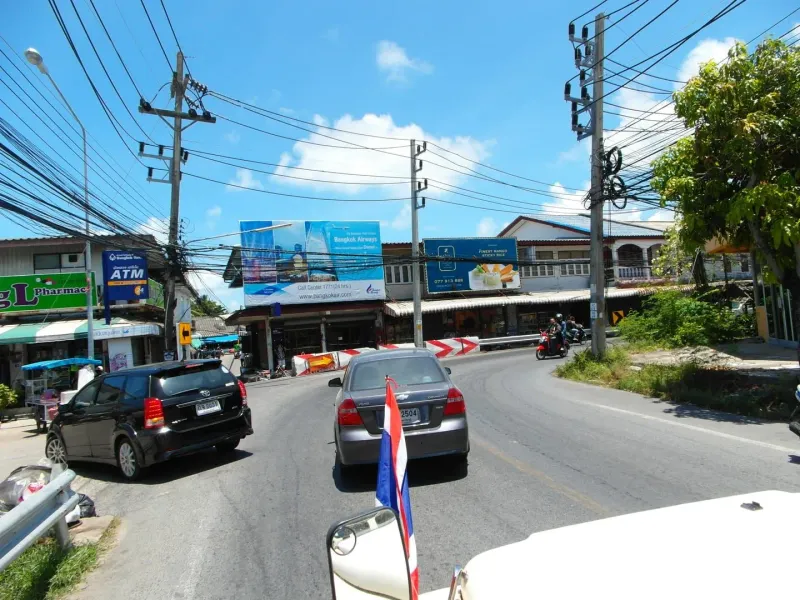
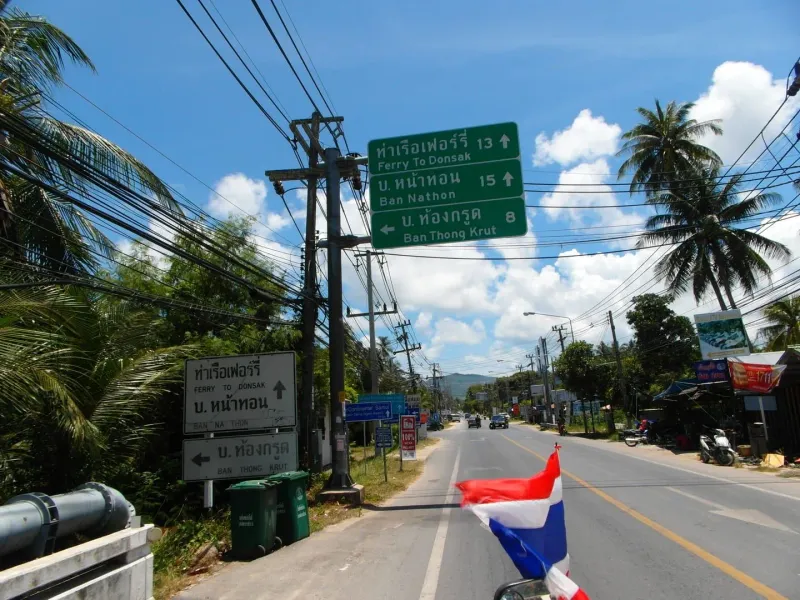
Na Thian is roughly 26-28 km south of the airport, about 35-40 minutes by car via the ring road (Route 4169) and the Route 4170 turnoff near Hua Thanon.
- Airport taxi: Approximately 500-700 THB (~14-20 USD), prepaid at the airport counter.
- Grab (ride-hailing): Works for point-to-point trips once you are off airport grounds; cannot pick up passengers directly inside the terminal.
From other beaches
- From Lamai: 10-15 min by taxi or scooter (~150-200 THB)
- From Chaweng: 25-30 min by taxi (~350-450 THB)
- From Nathon (ferry port): 35-40 min via the ring road
Finding the access road
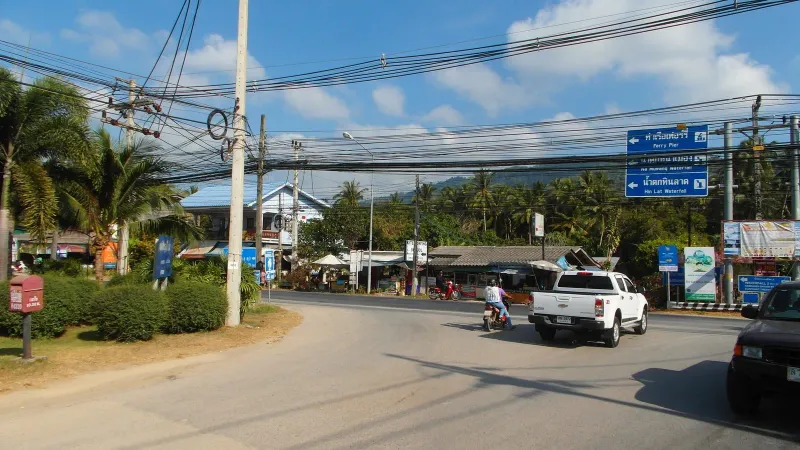
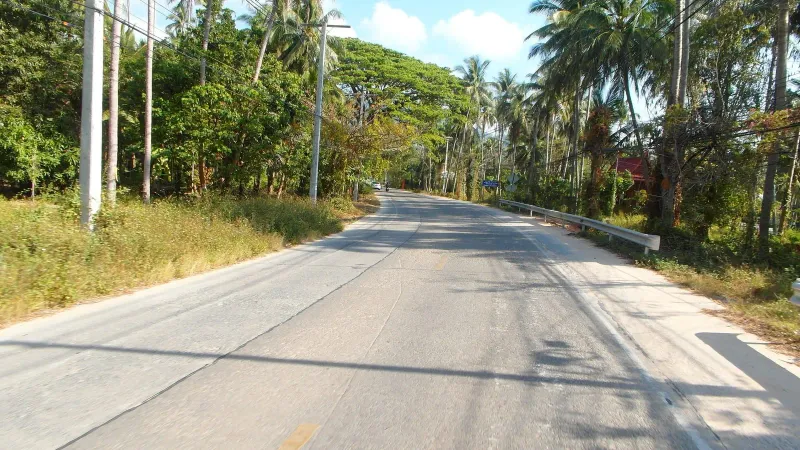
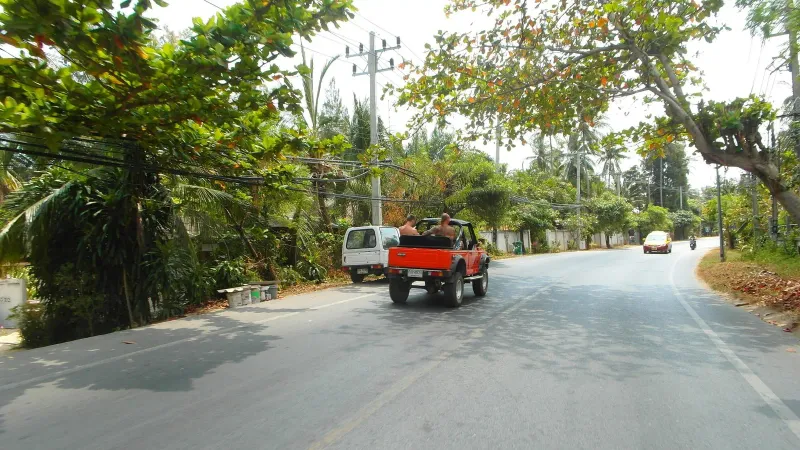
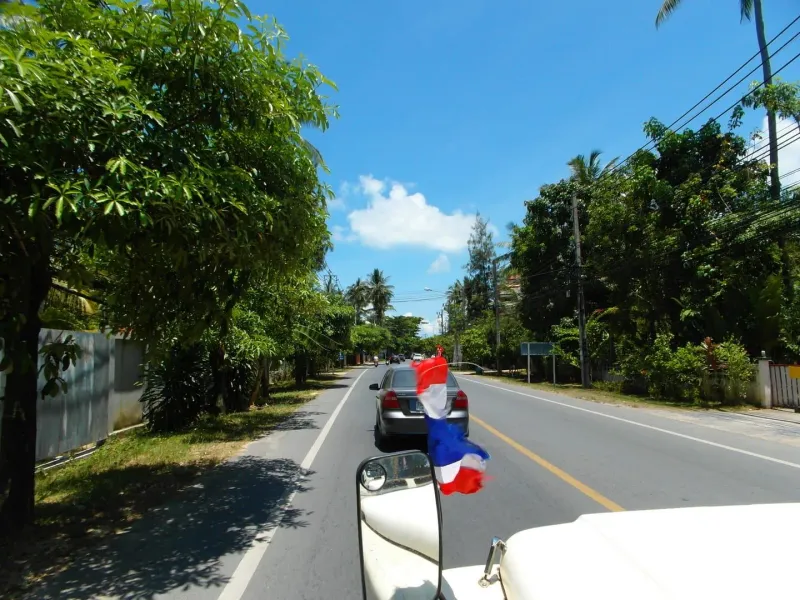
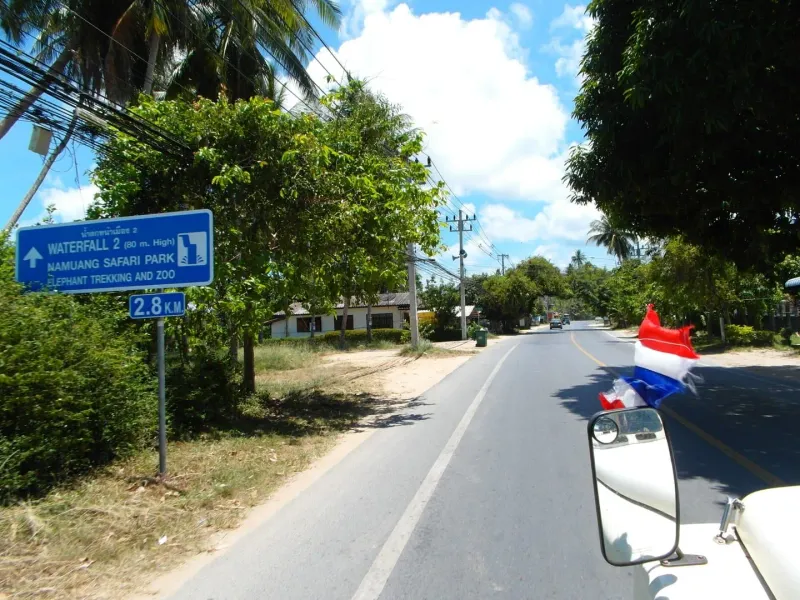
Turn off the ring road onto Route 4170 near Hua Thanon, following signs toward the Samui Butterfly Garden. Before reaching the garden, look for a dirt-road turnoff marked by a hand-painted Cool Bar & Restaurant sign: this is the only free public access point to Na Thian Beach. A scooter or car with decent clearance handles the unpaved section without trouble in dry weather.
Getting around
There is no organised parking lot; visitors typically leave scooters or cars along the dirt track near the Cool Bar sign. A scooter (200-300 THB/day, ~6-9 USD) is the most practical way to combine a visit with nearby Hua Thanon and Lamai; confirm your travel insurance covers scooter use before renting.
Best Time to Visit
Season breakdown
| Season | Months | Conditions | Rating |
|---|---|---|---|
| Peak / Dry | Dec-Feb | Sunny, calmer seas, best photography light | ★★★★★ |
| Hot | Mar-May | Hot (35+ degrees Celsius), generally dry | ★★★★ |
| Inter-monsoon | Jun-Aug | Mixed weather, still mostly pleasant | ★★★★ |
| Monsoon | Sep-mid Nov | Heavier rain, choppier open-water conditions | ★★★ |
Na Thian-specific notes
- Because the bay is naturally sheltered and shallow, Na Thian’s water usually stays calmer than exposed east-coast beaches even during shoulder-season winds.
- Early morning (sunrise) and late afternoon (golden hour) are the best windows for photography, both for softer light and for avoiding the midday glare that bounces hard off the shallow water.
- Low tide reveals the boulder field and reflective sand pools most dramatically; check a tide chart before a dedicated photography trip.
- Monsoon season (September-November) brings the fewest visitors and the moodiest skies for photography, but also the highest chance of rain interrupting a shoot.
Practical Tips
Essentials
- Parking: Informal roadside parking near the dirt-track access point; no paid lots or attendants.
- Shops: Nearest mini-marts are in Hua Thanon village, about 5-10 minutes away; the nearest hypermarket is roughly 10 km away.
- Footwear: Water shoes are genuinely useful here given the rocky water entry along most of the beach.
- Shade: Unlike many Samui beaches, Na Thian has natural tree shade along much of its length, still bring sun protection for open sections.
- Facilities: No public restrooms, showers, or lifeguards. Bring water and snacks; the only nearby option is Cool Bar & Restaurant near the access road.
For photographers
Arrive within an hour of sunrise for the best combination of empty beach, soft light, and low-tide reflections. A polarising filter helps cut glare off the shallow water at other times of day.
For families
Na Thian’s rocky water entry and lack of facilities make it a better fit for older children and adults than toddlers. Families wanting calm, sandy swimming closer to amenities are better served by Lamai Beach or the island’s north-coast beaches.
Who Is Na Thian Best For?
| Traveler Type | Fit | Why |
|---|---|---|
| Photographers | ★★★★★ | Boulder field, low-tide reflections, near-total solitude |
| Couples seeking quiet | ★★★★★ | Almost no crowds, minimal development, long empty walks |
| Nature lovers | ★★★★ | Jungle backdrop, natural shade, wild coastline feel |
| Swimmers/families with young kids | ★★ | Rocky water entry, no facilities, better options nearby |
| Party seekers | ★ | No bars, no nightlife: Lamai or Chaweng are a short drive north |
| Budget backpackers | ★★★ | Free access, but very limited food/lodging directly on-site |
FAQ
Is Na Thian Beach good for swimming?
Swimming at Na Thian Beach is possible but not ideal for everyone. Water entry along most of the shoreline is hindered by stones and small rocks, and at low tide you may need to wade 20 metres or more before reaching depth. A natural boat channel offers a clearer patch for swimming, and the shallow bay means calm, wave-free water, but water shoes are recommended.
How do I get to Na Thian Beach?
Turn off the ring road onto Route 4170 near Hua Thanon, following signs toward the Samui Butterfly Garden. Before the garden, take the dirt-road turnoff marked by a hand-painted Cool Bar & Restaurant sign: this is the only free public access. It is about 35-40 minutes (~26-28 km) by car from Samui Airport.
Why is Na Thian Beach so undeveloped compared to Chaweng or Lamai?
Na Thian sits on a steep, mountainous stretch of Koh Samui’s southeast coast that has historically been difficult to build on at scale. Only one hotel, Centara Villas Samui, occupies the beachfront, and access requires a dirt track off Route 4170: factors that have kept large-scale resort development away and preserved the beach’s wild character.
Is Na Thian Beach good for photography?
Yes: Na Thian is increasingly known among photographers for its mid-beach boulder pile, tree-lined shore, and low-tide reflections, combined with near-total solitude compared to busier Samui beaches. Sunrise and late afternoon offer the softest light; a polarising filter helps with midday glare off the shallow water.
Are there restaurants or facilities at Na Thian Beach?
Facilities are minimal. Cool Bar & Restaurant near the beach access track offers drinks and simple food, and Centara Villas Samui has on-site dining for guests. There are no public restrooms, showers, or rental shops directly on the beach; the nearest mini-marts are in Hua Thanon village, about 5-10 minutes away.
How does Na Thian Beach compare to Lamai Beach?
Na Thian is quiet, undeveloped, and rocky, with almost no infrastructure beyond one hotel and a small drinks stall: ideal for photography and solitude. Lamai, about 10-15 minutes north, is Samui’s second-largest beach with restaurants, nightlife, sandier swimming, and the famous Hin Ta Hin Yai rock formations. Choose Na Thian for quiet and photos, Lamai for amenities and activity.
About the author

Migues Ferfumoz
Writer, Koh Samui resident since 2019
Freelance writer and Koh Samui resident since 2019. Migues covers local culture, food, and the best off-the-beaten-path destinations on the island.
Articles by Migues →