
Overview
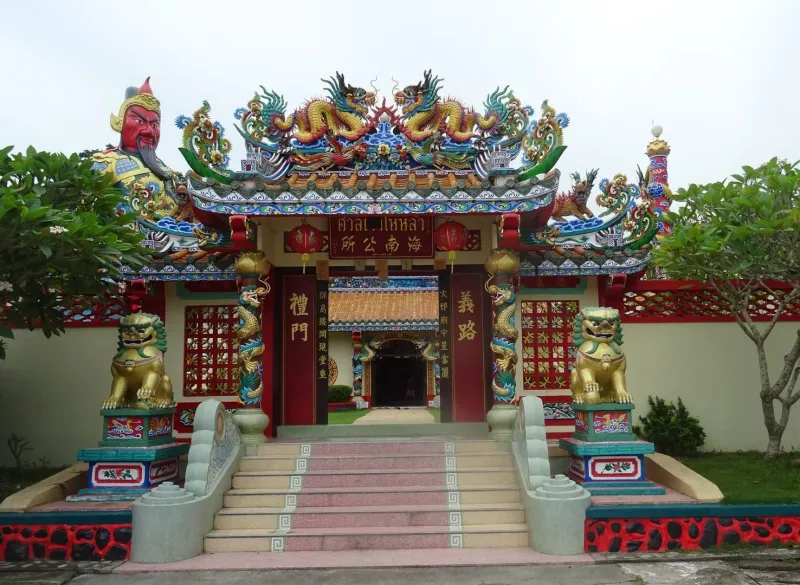
The Nathon Hainan Shrine (ศาลเจ้าไหหลำ หน้าทอน), also known as the Hainan Temple, is a vibrant cultural landmark that anchors the historic “Old Town” district of Nathon. While the rest of Koh Samui has transformed into a global tourism hub, this shrine remains a steadfast symbol of the island’s original identity: a place built on trade, maritime courage, and the deep-rooted traditions of the Chinese-Thai community.
Located just a short walk from the ferry piers, the shrine is instantly recognizable by its iconic golden lions and its brilliantly red and gold facade. It serves as the spiritual home for the descendants of the original Hainanese immigrants who settled here in the 19th century. For travelers, the Nathon Hainan Shrine offers a fascinating departure from traditional Thai temples, providing a window into the “Old Samui” that existed long before the first resort was built.
History: The Hainanese Anchor of Nathon
In the late 1800s and early 1900s, Koh Samui was a major center for the coconut and rubber trade. Immigrants from Hainan Island, China, arrived in Nathon because of its deep-water harbor, which allowed large trading vessels to dock.
These pioneers established Nathon as the island’s first administrative and economic capital. The Hainan Shrine was built as a communal effort to provide a spiritual sanctuary for these settlers. It was a place where they could honor their ancestors and pray for protection before embarking on the dangerous sea voyage back to the mainland or to China. Today, the shrine continues to be the heart of Nathon’s social fabric, especially during major festivals.
The Golden Lions: Guardians of the Gate
The most famous feature of the shrine is the pair of brightly painted golden lions that flank the main entrance. In Chinese culture, these lions (Shi) are traditional guardians believed to possess powerful protective qualities.
- The Male Lion: Located on the right (as you face the shrine), the male lion rests his paw on a globe, representing dominion over the world and the protection of the home.
- The Female Lion: On the left, the female lion protects a cub, symbolizing the nurturing of the community and the cycle of life. These lions are a favorite subject for photographers and are often adorned with red ribbons and fresh flower garlands by local devotees.
Architecture: Dragons, Gold, and Incense
The architecture of the shrine is a classic representation of Southern Chinese temple design, characterized by its exuberant use of color and intricate details.
Ornate Rooflines
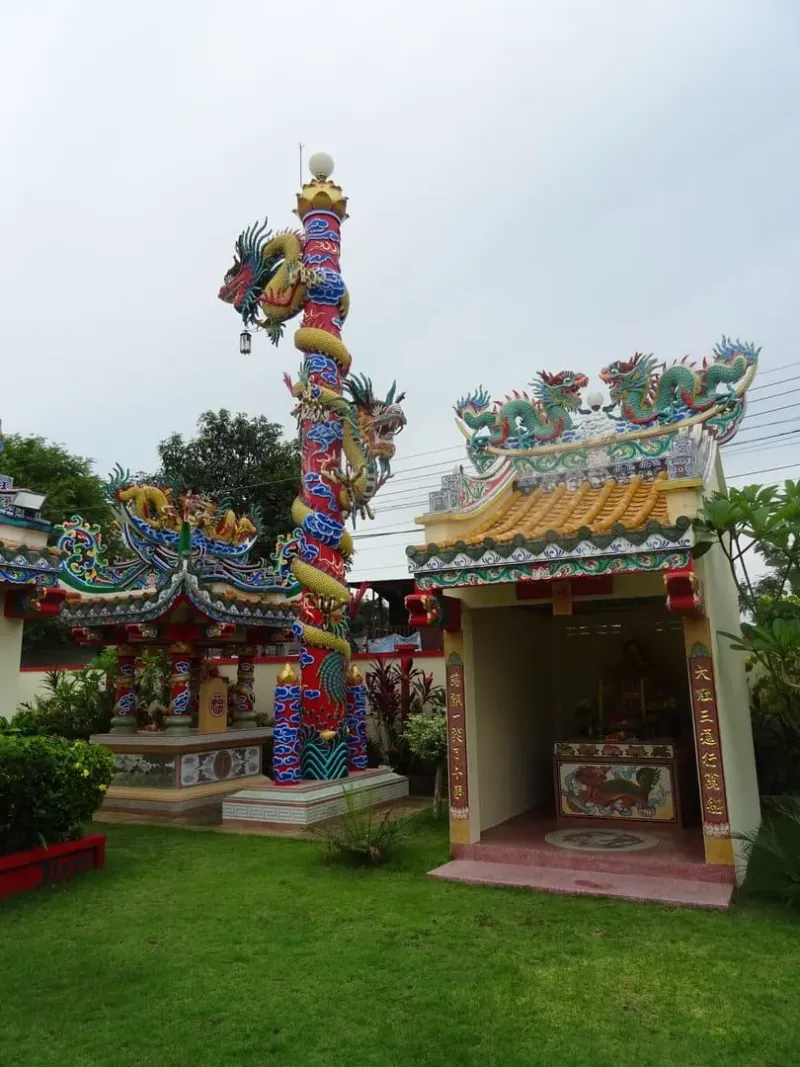
The roof ridges are decorated with vibrant porcelain mosaics and figurines of dragons and phoenixes. These mythical creatures represent the balance of male and female energy (Yin and Yang) and are believed to bring good fortune to the town.
The Interior Sanctuary
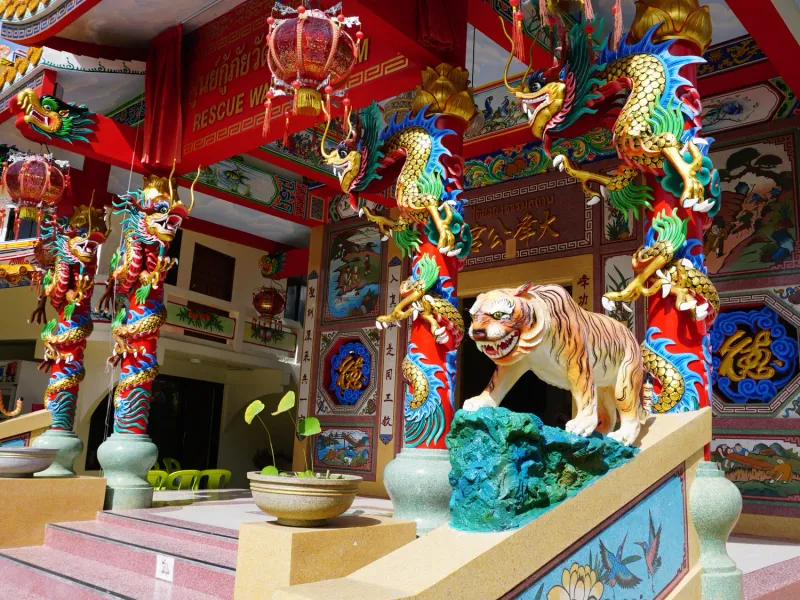
Step inside, and you are greeted by an atmosphere thick with the sweet scent of burning incense. The walls feature hand-carved wood panels and gilded calligraphy telling the stories of Chinese folk heroes. Dozens of traditional red and gold lanterns hang from the ceiling, casting a warm, celebratory glow over the altar area.
Jao Mae Tubtim: Protector of Sailors
While many deities are honored here, the primary shrine is dedicated to Jao Mae Tubtim (also known as Mazu or the Goddess of the Sea).
As a maritime community, the people of Nathon have a deep reverence for the goddess who protects those on the water. Local fishermen and ferry captains still visit the shrine to offer prayers for safe passage and calm seas. The altar is often filled with offerings of oranges, tea, and red candles: a testament to the ongoing faith of the community.
Activities: Photography and Old Town Walks
- Explore Old Nathon: After visiting the shrine, take a walk through the surrounding streets to see the traditional teak shophouses. Many of these buildings have been in the same families for over a hundred years.
- Photography: The high-contrast colors of the shrine make it one of the best spots on the island for street and cultural photography.
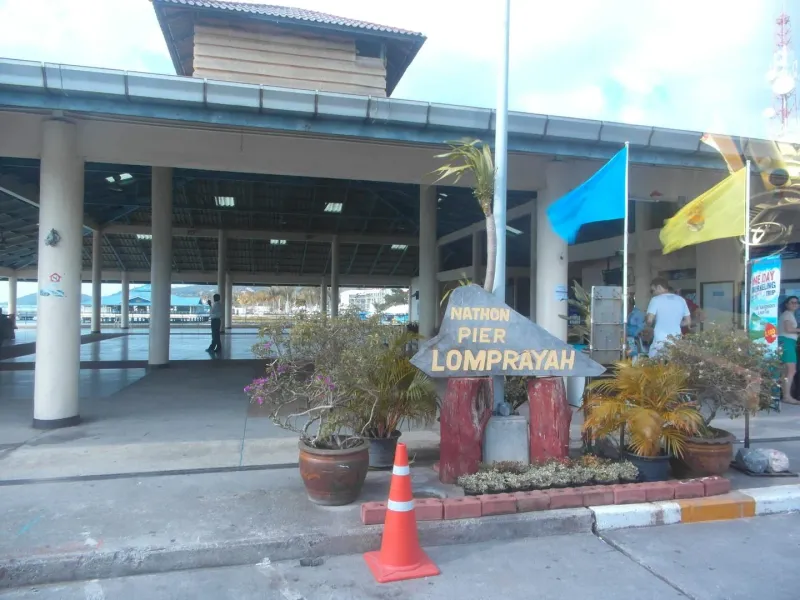
- Sunset Walk: The shrine is just a five-minute walk from the Nathon Pier. Visit the shrine in the late afternoon, then head to the pier to watch the sun set over the Gulf of Thailand.
- Street Art Hunting: Keep an eye out for murals in the nearby alleys that depict Nathon’s history as a bustling port town.
Where to Eat: Nathon Shophouse Flavors
Nathon is famous for having Samui’s most authentic Thai-Chinese cuisine at prices much lower than the resort beaches.
| Restaurant | Style | Recommendation | Distance |
|---|---|---|---|
| Nathon Night Food Market | Street Food | Hainanese Chicken Rice | 5 min walk |
| Lucky Restaurant | Thai-Chinese | Seafood Stir-fry | 2 min walk |
| About Cafe | Artisanal | Local Coffee | 3 min walk |
| Sea Corner | Waterfront | Red Snapper | 6 min walk |
Nearby Attractions
The West Coast offers a quieter, more local experience:
- Wat Chaeng (2 min drive): The large Buddhist temple at the southern exit of Nathon.
- Nathon Walking Street (Sat): The island’s most authentic Saturday night market.
- Hin Lad Waterfall (10 min drive): A beautiful jungle waterfall near Nathon.
- Lipa Noi Beach (15 min drive): A quiet, white-sand beach perfect for families.
Getting There: The Nathon Middle Road
The Nathon Hainan Shrine is located on Ang Thong Road, often called the “Middle Road” of Nathon.
- Location: It is situated directly behind the main seaside road, near the central traffic lights and the ferry terminals.
- By Motorbike/Car: Follow the signs for Nathon. Once in the town center, turn onto the road one block back from the water. The shrine is impossible to miss with its bright red facade.
- By Songthaew: Any songthaew traveling between the north and south coasts will pass through Nathon. Just ask to be dropped at the “Hainan Temple.”
- Parking: Street parking is available but can be busy. There is a larger parking area near the ferry piers.
Best Time to Visit
| Time | Experience | Rating |
|---|---|---|
| 9:00 AM - 11:00 AM | Quietest time; best light for interior photos. | ★★★★★ |
| 12:00 PM - 3:00 PM | Can be very hot; good for a quick indoor break. | ★★★ |
| 4:30 PM - 5:30 PM | Perfect light; visit before heading to the pier for sunset. | ★★★★★ |
Practical Tips for Visitors
- Remove Shoes: Before entering the inner prayer hall, you must remove your shoes and leave them at the entrance.
- Modest Attire: While generally more relaxed than a Buddhist Wat, covering your shoulders and knees is appreciated out of respect for the local community.
- Silence is Golden: People often come here for quiet prayer. Keep your voice low and ensure your phone is on silent.
- Donations: Look for the small donation boxes. The shrine is maintained entirely by the local community and contributions from visitors.
- Saturday Visit: If you visit on a Saturday, stay for the Nathon Walking Street which begins around 5:00 PM.
Who Is the Hainan Shrine Best For?
| Traveler Type | Rating | Why? |
|---|---|---|
| History Buffs | ★★★★★ | The best place to learn about Samui’s commercial and immigrant roots. |
| Photographers | ★★★★★ | Stunning color saturation and unique architectural details. |
| Slow Travelers | ★★★★★ | A peaceful escape in the heart of the island’s capital. |
| Foodies | ★★★★ | Perfectly located for a tour of Nathon’s best local eateries. |



FAQ
Is there a cost to visit the shrine? No, entry is completely free for everyone. Small donations help the local community maintain the intricate artwork and structure.
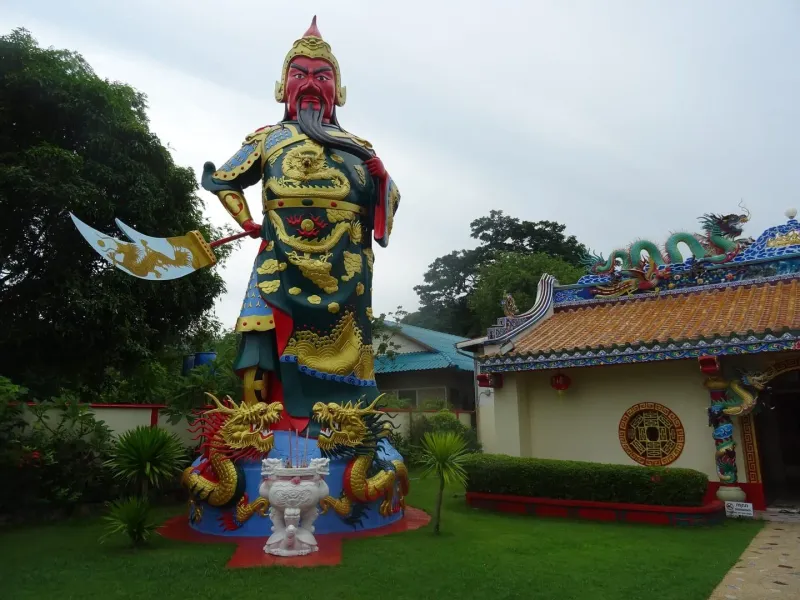
Is this the same as the Guan Yu Shrine? No. The Guan Yu Shrine is in Hua Thanon (south of Lamai) and features a massive 16-meter bronze statue. The Nathon Hainan Shrine is smaller, older, and located in the island’s capital, Nathon.
Can I visit during Chinese New Year? Yes! In fact, this is the most exciting time to visit. The shrine becomes the center of Samui’s Chinese New Year celebrations, featuring lion dances, firecrackers, and community feasts.
How do I find it from the ferry pier? Walk directly away from the pier into the town. Cross the main seaside road and walk one block further. Turn right, and you will see the bright red shrine on your left.
Who is the deity Jao Mae Tubtim? She is the Goddess of the Sea, also known as Mazu. She is the protector of sailors and travelers and is the most important deity for the seafaring Hainanese community.
About the author

Mike Brochlowski
Travel photographer & writer
Travel photographer and island explorer. Mike has spent years documenting Southeast Asia's hidden gems, from secluded beaches to jungle waterfalls.
Articles by Mike →