Overview
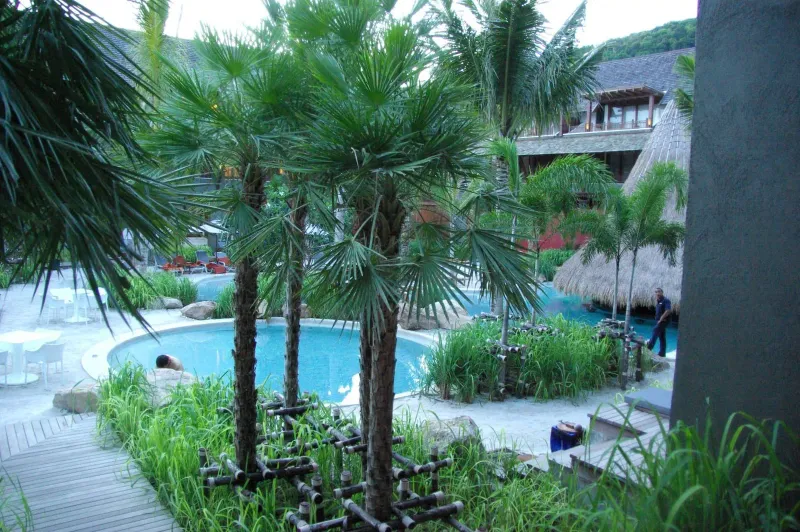
Laem Yai Beach (หาดแหลมใหญ่) is a secluded cove of roughly ~200 m of sand tucked into the very northwest tip of Koh Samui, Thailand. Unlike the long, hotel-lined stretches of Chaweng or Maenam, Laem Yai is a small, sheltered bay carved between two low, jungle-covered headlands, and it stays that way because almost nothing has been built on it. The whole shoreline is shared by a handful of resorts, most famously Four Seasons Resort Koh Samui, whose hillside villas overlook the bay from above.
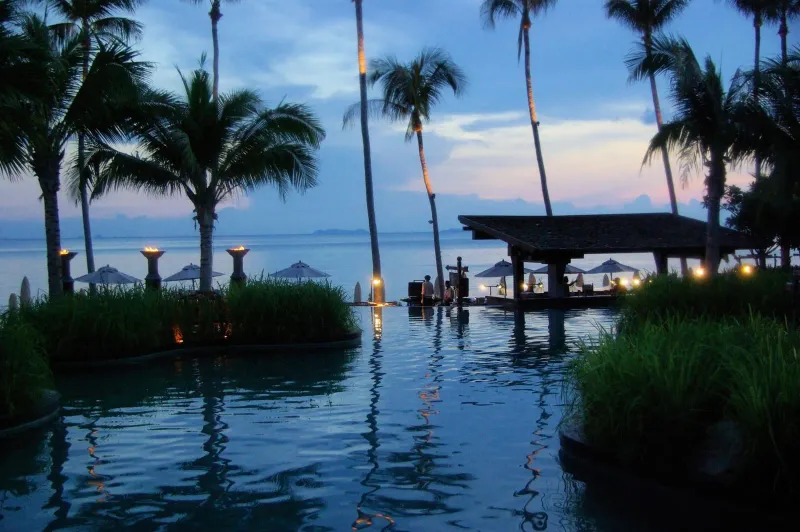
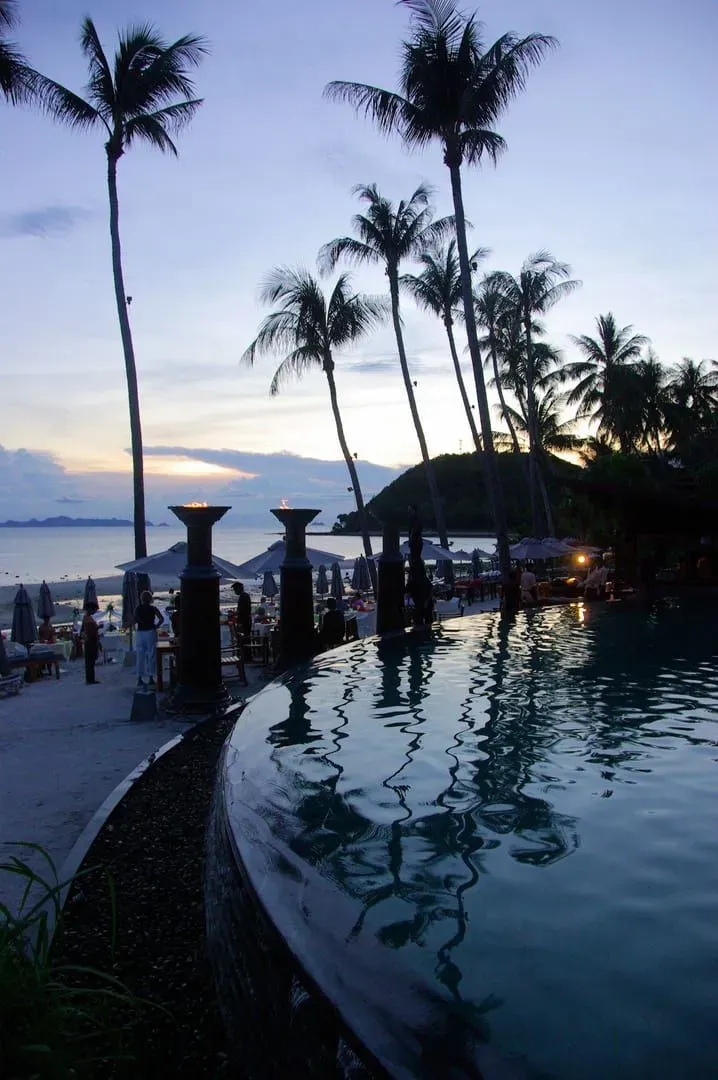
The name “Laem Yai” translates roughly to “big cape” or “big point,” a reference to the headland (laem in Thai means cape or point) that shelters the cove from open water. The bay faces west across the Gulf of Thailand toward the limestone islands of Ang Thong Marine Park, which makes it one of the better sunset viewpoints on Samui: the sun drops directly behind the archipelago rather than into open sea.
Laem Yai sits administratively within Tambon Angthong, on the Bang Po-Ban Tai stretch of the island’s northwest coast, roughly ~5 km north of the ferry town of Nathon and beyond Bang Po and Maenam beaches to the west. Because the coast road climbs steeply over a headland just past the cove, Laem Yai is bypassed by most day-trippers driving the 51 km ring road around the island, which is exactly why the water here has stayed clear and the beach has stayed quiet.
History: A Point Named on Old Maps
Laem Yai never had a fishing-village history the way Bophut or Maenam did. Old Thai coastal charts marked the headland simply as a point (“laem”), a navigation reference for boats working the northwest coast rather than a settlement. The bay’s isolation (steep hills behind it, a narrow access road, and no natural harbor for larger fishing fleets) kept it undeveloped well into the era when Chaweng and Lamai had already become backpacker strips in the 1970s and 1980s.
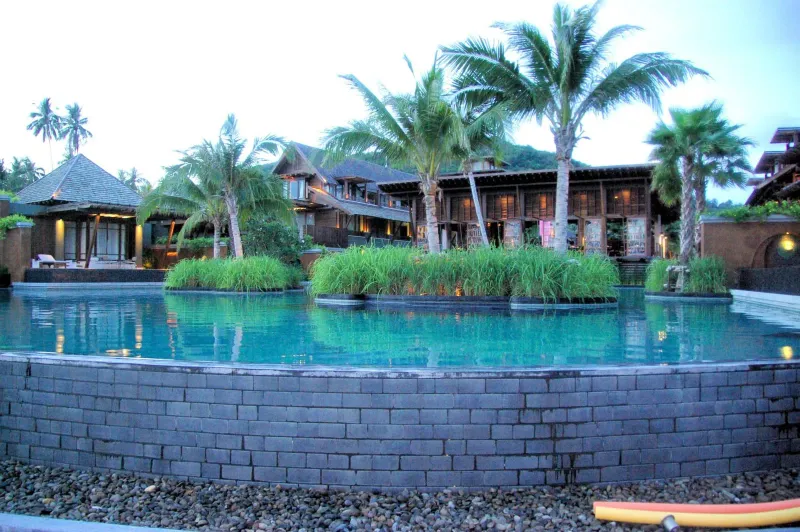
That began to change in the late 1990s and early 2000s, when Koh Samui’s luxury hotel sector started looking for private, view-oriented sites away from the crowded east coast. Laem Yai’s hillside terrain, unsuitable for a big beachfront resort footprint, turned out to be ideal for villa-style properties built into the slope with sea-facing infinity pools. Four Seasons Resort Koh Samui opened here in 2007, built as 60 free-standing hillside villas rather than a conventional low-rise hotel block, and its arrival effectively defined what Laem Yai would become: a small cluster of upscale, spread-out properties rather than a commercial beach strip.
Because the site constraints that kept early developers away are the same constraints that limit how many rooms can ever be built here, Laem Yai has stayed one of the least developed beach areas on Koh Samui even as the rest of the island’s coastline filled in.
The Cove: Sand, Water and Swimming
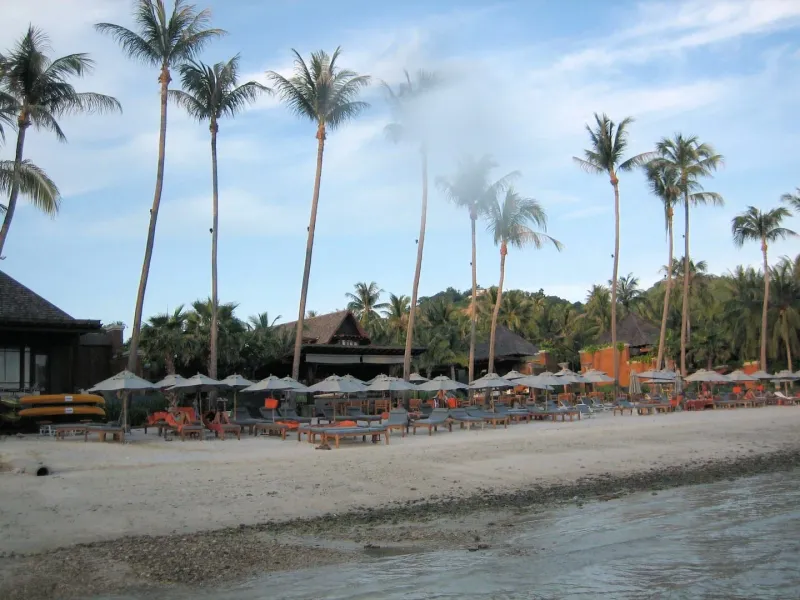
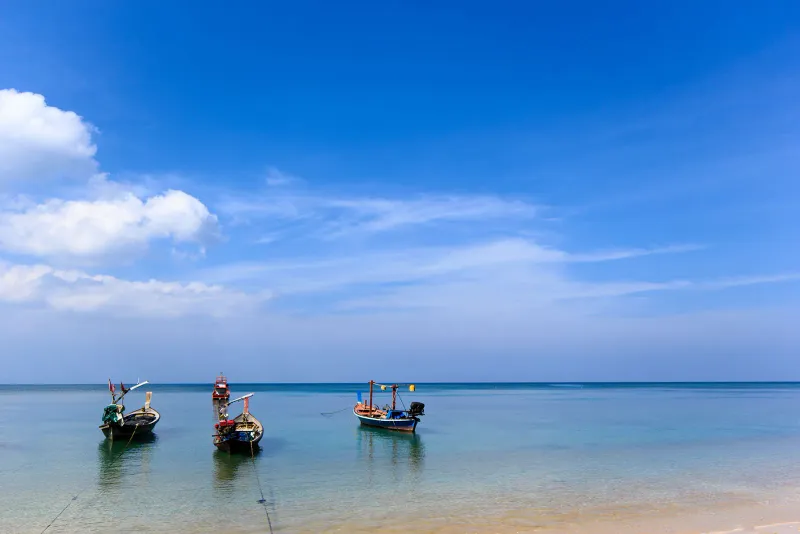
Laem Yai’s beach is short, around ~200 m of pale, coconut palm-backed sand, and shaped like a shallow crescent between two rocky headlands. The bay is naturally sheltered from the prevailing swell that hits Samui’s east coast, which keeps the water calm for most of the year.
Water conditions
The seabed shelves gently and the water is shallow for a good distance from shore, making it comfortable for wading and casual swimming rather than serious ocean swimming. Visibility is generally good, clearer than the more built-up beaches further east, since there is minimal runoff and almost no boat traffic beyond the resorts’ own small craft. Granite boulders sit at both ends of the cove, similar to the rock formations found at Silver Beach and Coral Cove further along the coast, and create small shallow rock pools worth a look at low tide.
Tides and access
Like most of Samui’s coast, Laem Yai experiences a tidal range of roughly 1.0-2.1 m. At low tide, some sections of the rocky edges become exposed and the swimmable strip narrows; at high tide the beach is at its most photogenic, with water reaching close to the tree line. Public beach access is limited by the resorts occupying most of the shoreline: the small public stretch is best reached via the access road that drops down from the ring road before it climbs the headland toward Bang Po.
Four Seasons and the Resorts of Laem Yai Bay
The single biggest reason Laem Yai has stayed undeveloped is that its shoreline is almost entirely occupied by a small number of large, low-density resorts rather than dozens of independent guesthouses.
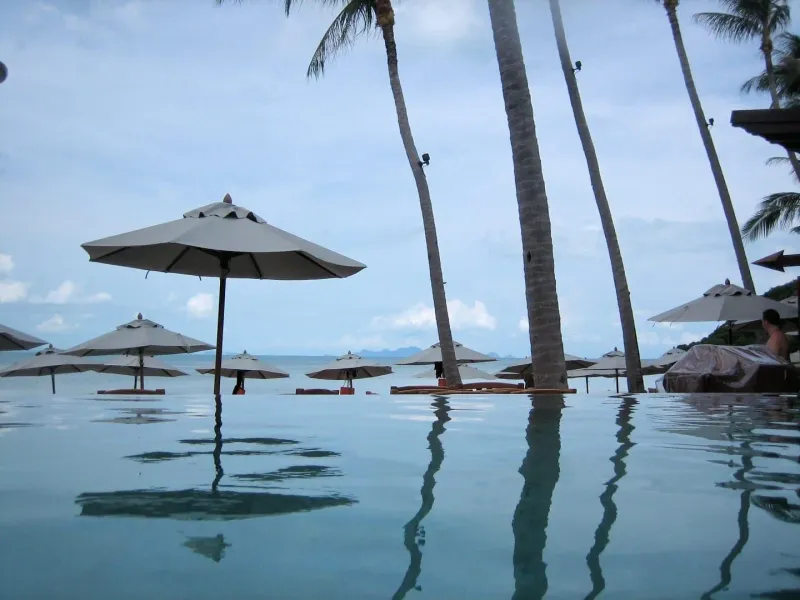
Four Seasons Resort Koh Samui is the bay’s landmark property: 60 free-standing villas built into the hillside above a private cove beach, each with its own plunge or infinity pool and a view over Laem Yai Bay toward Ang Thong. The resort runs its own cruising boat for guest excursions to Ang Thong Marine Park and keeps a stretch of the cove effectively private.
Mai Samui Beach Resort & Spa, with 97 rooms and villas, sits directly on Laem Yai Beach itself (its address is listed simply as “Laem Yai Beach, Angthong”) and is the most accessible mid-to-upper-range option actually on the sand. The Passage Samui Villas & Resort (marketed under TUI Blue as TUI Blue The Passage) adds roughly 30 villas along the same stretch, and Green Heaven Bungalows offers a rare budget-tier option in an area otherwise dominated by four- and five-star properties.
Because the terrain is steep and the buildable coastal strip is narrow, there is effectively no room left for new large-scale development, which is the main reason Laem Yai has kept its secluded character while the rest of Samui’s coastline has filled in over the past two decades.
Activities and Ang Thong Marine Park
Laem Yai is not an activity hub: swimming, walking the cove, and watching the sunset over Ang Thong cover most of what independent visitors do here. Its real draw for active travelers is what it faces.
On the beach
- Swimming: Calm, shallow, and clear for most of the tide cycle, best in the two to three hours around high tide.
- Kayaking: Available through the beachfront resorts; the sheltered bay is ideal for a calm morning paddle around the headland.
- Sunset viewing: The bay’s west-facing orientation toward Ang Thong’s silhouetted islands makes this one of the better sunset spots on Samui’s north coast, away from the crowds at Bang Po or Maenam.
- Snorkeling: Modest around the cove’s own rocks; serious snorkelers should book a boat trip further out.
Ang Thong Marine Park day trips
Ang Thong National Marine Park is a cluster of 42 limestone islands roughly ~28 km off Samui’s west coast, covering about 102 km² of which most is water. It is best known for Emerald Lake (Thale Nai), an inland saltwater lagoon on Ko Mae Ko ringed by limestone cliffs, and Ko Wua Talap, the park’s administrative island with a ranger station, bungalows, and a steep viewpoint trail. Full-day boat trips typically run 1,500-2,500 THB (~43-71 USD) per person including snorkeling gear and lunch, and depart mainly from Nathon or Bophut piers. Four Seasons guests can also book the resort’s own SIAMSEAS charter directly from Laem Yai. For a self-guided sense of what’s on the islands before booking, see the detail on the Ang Thong Emerald Lake and Ko Wua Talap hiking pages.
Where to Eat
Dining options directly at Laem Yai are limited by design: there is no village strip or night market here, only resort restaurants and a couple of independent spots along the access road.
| Restaurant | Type | Price Range | Known For |
|---|---|---|---|
| The Terrace | International, Thai | $$-$$$ | Sea-view dinners, open 18:00-23:00, mains from ~400 THB (~11 USD) |
| Four Seasons restaurants | Fine dining, Thai | $$$$ | Resort dining with Ang Thong views, tasting menus from ~2,500 THB (~71 USD) |
| Mai Samui in-house dining | Thai, international | $$-$$$ | Multiple venues including a beachfront bar |
| Small roadside eateries | Thai | $ | Basic noodle and rice dishes, 60-100 THB (~1.50-3 USD), along the ring road |
For a wider choice of independent restaurants and night markets, most visitors drive the ~10-15 minutes to Maenam or Bophut, both of which have far larger dining scenes than Laem Yai itself. See Wikitravel’s Laem Yai guide for a rundown of the small eateries along the ring road.
Nearby Attractions
Under 15 minutes
- Maenam Beach: The nearest named beach along the north coast, with a Thursday night market and a much longer, more populated shoreline. See the full Maenam Beach guide.
- Bang Po Beach: A quieter beach between Laem Yai and Maenam, popular for its sunset views toward Koh Phangan.
- Nathon: The island’s administrative town and main ferry pier, about ~5 km south, with banks, markets, and the ferry connection to Surat Thani.
Under 30 minutes
- Wat Na Phra Lan: A hillside temple on the island’s northwest coast with sweeping sea views; see the Wat Na Phra Lan guide.
- Ang Thong Marine Park: ~28 km offshore, reachable by day-trip boat from Nathon, Bophut, or via Four Seasons’ private charter.
- Big Buddha Temple (Wat Phra Yai): On the island’s north coast, roughly 25-30 minutes by car via the ring road.
Where to Stay
Because the shoreline itself is occupied almost entirely by a handful of resorts, “staying at Laem Yai” effectively means staying at one of these properties rather than choosing between dozens of independent guesthouses.
| Category | Approx. Price | Examples |
|---|---|---|
| Budget | 700-1,400 THB (~20-40 USD)/night | Green Heaven Bungalows |
| Mid-range | 2,800-5,250 THB (~80-150 USD)/night | Mai Samui Beach Resort & Spa (standard rooms) |
| Upscale | 5,250-10,500 THB (~150-300 USD)/night | The Passage Samui Villas & Resort / TUI Blue The Passage |
| Luxury | 21,000+ THB (~600+ USD)/night | Four Seasons Resort Koh Samui (hillside pool villas) |
Guests staying elsewhere on Samui can still visit Laem Yai for a few hours via the small public access point, though the best stretches of sand and the calmest water sit in front of the resorts themselves.
Getting There
From Samui Airport (USM)
Laem Yai sits on the opposite side of the island from the airport. Expect roughly ~20 km and about 30-35 minutes by car via the north coast ring road through Bophut and Maenam.
- Airport taxi: Around 500-600 THB (~14-17 USD), prepaid at the airport counter.
- Private transfer: Most resorts, including Four Seasons, offer a paid or complimentary airport pickup. Confirm when booking.
From other points on the island
- From Nathon (ferry pier): About ~5 km, roughly 10-15 minutes by car via the coast road.
- From Maenam: Around 10 minutes by car past Bang Po.
- From Chaweng: Approximately ~12 km via the north ring road; a taxi from Chaweng typically costs around 600 THB (~17 USD).
Getting around
A rental scooter (200-300 THB/day, ~6-9 USD) or car (1,200-1,800 THB/day, ~36-54 USD) is the practical way to reach Laem Yai independently, since songthaews on this stretch of the ring road are infrequent. Watch for the steep, winding section of road just past the cove where it climbs the headland toward Bang Po: take it slowly on a scooter, especially after rain.
Best Time to Visit
| Season | Months | Conditions | Rating |
|---|---|---|---|
| Peak / Dry | Dec - Feb | Sunny, calm seas, clearest water | ★★★★★ |
| Hot | Mar - May | Hot (~35°C+), generally dry, good for swimming | ★★★★ |
| Inter-monsoon | Jun - Aug | Mixed weather, still mostly swimmable | ★★★★ |
| Monsoon | Sep - mid-Nov | Rain and wind more frequent | ★★★ |
Because Laem Yai’s cove faces west and is sheltered by its own headlands, it tends to stay calmer than exposed east-coast beaches during the southwest monsoon, though heavy rain can still cloud the water for a day or two after a storm. December through February offers the clearest water and the best sunset visibility toward Ang Thong; this is also when the Four Seasons and Mai Samui resorts run at their highest occupancy, so book ahead if staying on-site.
Practical Tips
- Public access: The beach is not fenced off, but most of the shoreline fronts private resorts. Be respectful of resort guest areas and use the small public access point near the road.
- Bring supplies: There is no 7-Eleven or mini-mart directly at Laem Yai; stock up in Maenam or Bang Po before heading over.
- No lifeguards: As with most Samui beaches outside the main tourist strips, there is no lifeguard cover. Swim within your ability, especially with children.
- Shade: The cove has good natural palm shade at both ends, useful given how little built infrastructure (umbrellas, loungers) exists outside the resorts.
- Phone signal: Coverage is generally fine, but WiFi outside the resorts is essentially nonexistent. This is not a spot for remote work.
Who Is Laem Yai Best For?
| Traveler Type | Fit | Why |
|---|---|---|
| Honeymooners / couples | ★★★★★ | Four Seasons and The Passage cater specifically to romantic, private stays |
| Luxury travelers | ★★★★★ | Among the most exclusive resort settings on Koh Samui |
| Families | ★★★ | Calm, shallow water is safe, but little public infrastructure or activities for kids |
| Budget backpackers | ★★ | Very few cheap options; Green Heaven Bungalows is the exception |
| Day-trippers wanting quiet sand | ★★★★ | Short cove, easy to reach, but limited public parking and no facilities |
| Photographers | ★★★★★ | Sunset over Ang Thong is one of the best on Samui’s north coast |
| Nightlife seekers | ★ | Nothing here: head to Chaweng or Bophut instead |
FAQ
Is Laem Yai Beach open to the public?
Yes. Laem Yai Beach is not privately owned, but most of its ~200 m shoreline fronts resorts including Four Seasons and Mai Samui. Non-guests can reach a small public stretch via the access road off the ring road. There are no public facilities, so bring your own water and shade if visiting for the day.
Is Laem Yai Beach good for swimming?
Yes, generally. The cove is sheltered by headlands on both sides, so the water is usually calm and shallow near shore. Visibility is good outside the monsoon season. There are no lifeguards, so swim within your ability, and note that some rocky patches near the headlands are more exposed at low tide.
How do I get to Laem Yai Beach from the airport?
Laem Yai is on the opposite, northwest side of Koh Samui from the airport, about ~20 km and 30-35 minutes by car via the north coast ring road through Bophut and Maenam. A prepaid airport taxi typically costs 500-600 THB (~14-17 USD). Most resorts here also arrange private transfers.
Can I visit Ang Thong Marine Park from Laem Yai?
Yes. Ang Thong Marine Park sits roughly ~28 km offshore and is visible from Laem Yai on a clear day. Day-trip boats depart mainly from Nathon and Bophut piers (1,500-2,500 THB / ~43-71 USD), and Four Seasons guests can also book the resort’s own private boat charter directly from the bay.
Why is Laem Yai Beach so undeveloped compared to other Samui beaches?
Steep hillside terrain and a narrow buildable coastal strip left little room for large-scale hotel development, unlike the flatter land behind Chaweng or Lamai. That same terrain made the site attractive for hillside villa resorts like Four Seasons, which now occupy most of the shoreline and keep the beach quiet by default.
About the author
Samui69 Editorial Team
Editorial team
Guides researched and fact-checked by the Samui69 editorial team: residents and frequent visitors who verify opening hours, prices and directions on the ground.
About the author →