Overview
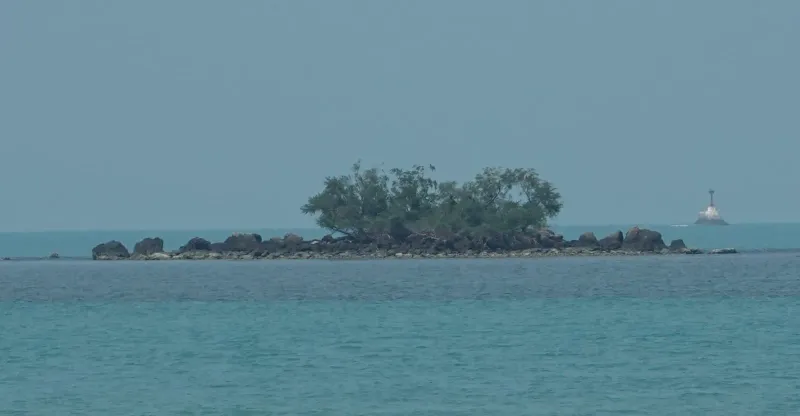
W Koh Samui beach, known locally as W Beach, is a small, private-feeling stretch of sand on a narrow cape where Koh Samui’s north coast bends from Maenam into Bophut. It belongs to the grounds of the W Koh Samui resort, and its shape (often described as an “A” when seen from above) means Maenam opens up to one side and Bophut to the other. At low tide the sandy spit widens noticeably, exposing far more beach than the high-tide line suggests. The sand is open to non-guests (details below), but the beach is short, steeper than its neighbors and best for a scenic visit rather than a full beach day.
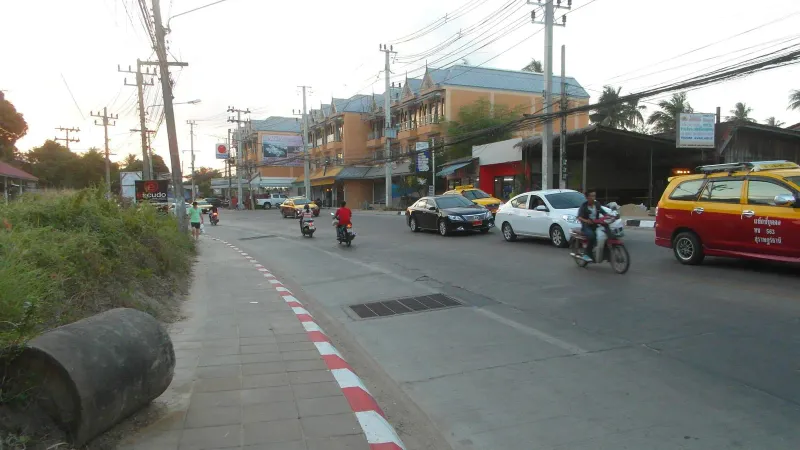
This is not a beach you stumble onto by accident. It sits about 650 meters off Route 4169, the ring road that circles the island, tucked behind resort landscaping and a security checkpoint. Thailand’s beach-access law keeps the shoreline itself open to the public, but the approach, parking, and amenities are effectively run by the resort.
Samui International Airport is roughly 5 km away (about 15 minutes by car). Maenam village and its Thursday market are a short walk or drive west; Bophut’s Fisherman’s Village is about 5 minutes east.
History: From Coconut Cape to Design Hotel
Long before it carried a hotel brand’s initial in giant letters, this cape was unremarkable coconut-farming land, much like the rest of Koh Samui’s north coast. Maenam and Bophut on either side developed as fishing settlements with Chinese-Hainanese roots, but the narrow spit between them stayed largely undeveloped into the 2000s: too exposed and awkwardly shaped for the bungalow rows that filled in neighboring beaches.
That changed when the W Koh Samui resort opened on the cape in 2010, designed with input from architect Karl Almeida. The property arranged 74 villas around the natural contours of the peninsula rather than flattening it, and the beach itself became the resort’s signature image, anchored by a large freestanding “W” sign that has since turned up in countless guest photos. Locally, the strip of sand became known simply as W Beach, a name that stuck even though it never had an official Thai name of its own before the resort arrived.
Unlike Chaweng or even Bophut, W Beach’s identity is inseparable from the hotel that built it. There’s no old fishing pier, temple, or market square here, just a cape that a design-led resort turned into one of the more photographed private beaches on the island.
W Koh Samui Beach: Shape, Sand, and Tides
W Beach is short (a few hundred meters of shoreline rather than the multi-kilometer sweep of Maenam or Chaweng) and its “A” shape is its defining feature. Standing near the resort’s beach signage, Maenam’s long curve runs away to the left and Bophut’s headland to the right, giving unusually wide sightlines for such a compact stretch of sand.
Sand and water
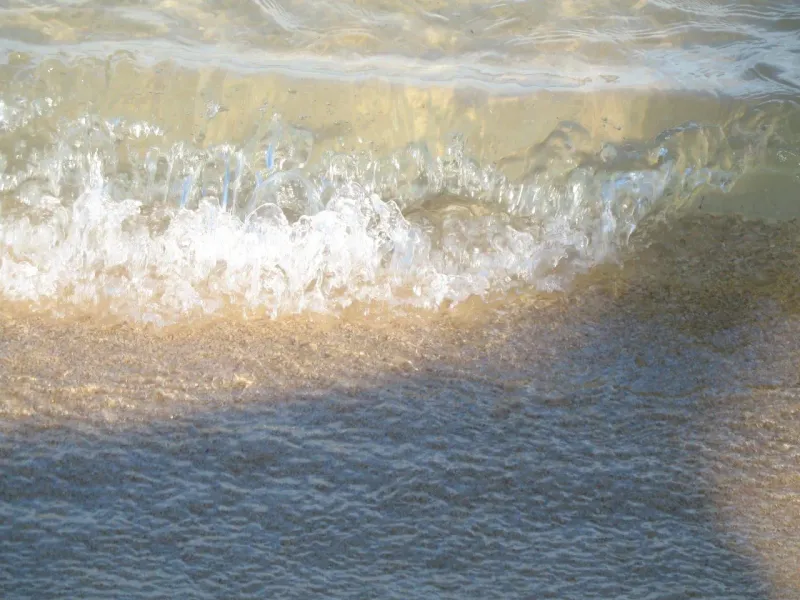
The sand is coarse and pale yellow rather than the powder-fine white of Chaweng, and the seabed drops away more sharply than at neighboring beaches: swimmers reach depth faster here. Water clarity varies with conditions: on calm, sunny days it reads turquoise close to shore, but wind and current can stir up sediment and leave it looking noticeably murkier than the postcard shots suggest. Treat any “crystal clear” description as a best-case scenario, not a guarantee.
Low-tide sandbar
The most distinctive feature is how much the beach changes with the tide. Koh Samui’s tidal range runs roughly 1.0-2.1 meters, and on this cape that swing exposes a much broader sandy spit at low tide than what’s visible at high water: a detail worth timing a visit around if wide, walkable sand is the goal.
Waves and currents
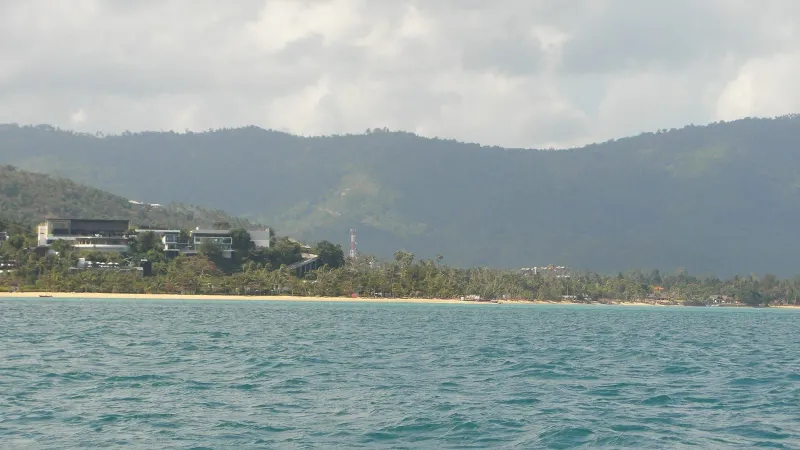
Being on a cape rather than a sheltered bay, W Beach catches more wind and wave action than the calmer central stretches of Maenam or Bophut, particularly during the winter monsoon shoulder months. It’s rarely dangerous, but it’s not the flat-calm lagoon some north-coast beaches offer.
Can You Visit W Koh Samui Beach Without Staying There?
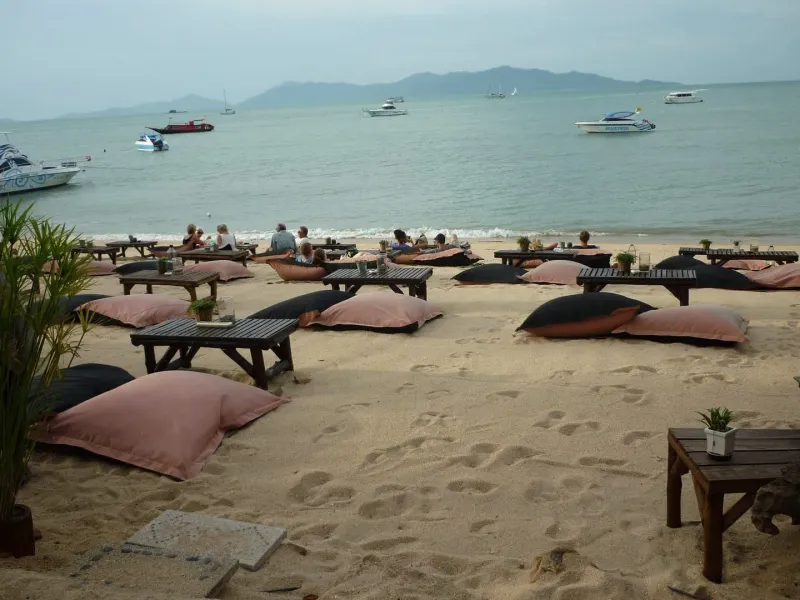
Yes. Thai law keeps the shoreline public, so you can walk onto the sand without a booking. The entrance is about 650 meters off Route 4169, and a security checkpoint usually asks visitors to state their purpose: say you are visiting the beach. Parking near the entrance is very limited (about five public spaces), so a taxi or scooter is easier. Loungers, the bar and most facilities belong to the resort and are aimed at guests. Free alternatives with more space and cheaper food are Maenam and Bophut.
W Koh Samui Resort
The beach cannot really be separated from the resort that occupies most of the cape. W Koh Samui is a 5-star, adults-skewing property with 74 villas, each built with its own private plunge pool and deck: a signature of the brand across its Southeast Asia properties. The design leans into sharp, modern lines and mood lighting rather than the traditional Thai teak-and-tile look used at nearby Santiburi or Belmond Napasai.
On-property dining runs through Namu, the resort’s main restaurant serving modern Thai plates with sunset views, and The Kitchen Table for more casual meals. AWAY Spa handles treatments, while FIT (gym) and WET (pool deck) cover fitness and lounging. A tennis court and watersports desk round out the amenities available to guests, and some (like beach loungers, the bar, and kayak rental) are accessible to beach visitors as well, though the best facilities are reserved for hotel guests.
Public beach access is legally protected in Thailand: no resort can fence off the sand itself, but reaching W Beach means walking through or past resort grounds, and a security checkpoint at the entrance typically asks visitors to state their purpose. Expect a five-space public parking allowance near the entrance; arriving outside that and you may be turned toward Maenam or Bophut’s public access points instead.
Activities at W Beach
W Beach isn’t a watersports hub in its own right, but the basics are covered, mostly through the resort.
- Swimming: Doable, but the sharper drop-off and occasional chop make it better suited to confident swimmers than to toddlers wading at the shoreline.
- Kayaking and paddleboarding: Rental gear is available through the resort’s watersports desk; expect resort-level pricing rather than the 300-500 THB (~8.50-14 USD) hourly rates common on public beaches nearby.
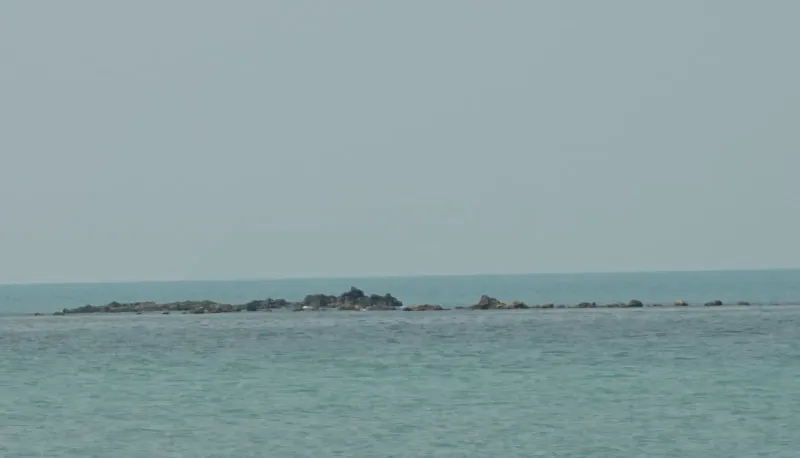
- Snorkeling: Some rocky patches near the point hold small fish and coral fragments, best explored at low tide when the water is shallower and calmer.
- Volleyball: A net is set up on the sand for guests.
- Massage: Beachfront massage pavilions offer treatments in the open air, weather permitting.
- Sunset viewing: Because the cape faces open water on two sides, sunset light wraps around the beach in a way that’s harder to find on straighter shorelines.
For anything more active (jet skiing, longtail boat charters, day trips to Ang Thong National Marine Park or Koh Phangan), head a few minutes down the road to the public sections of Maenam or Bophut, both of which have far more independent operators.
Where to Eat
Dining directly on W Beach means resort pricing, but there are budget-friendly alternatives within a short walk or drive.
| Option | Type | Price Range | Notes |
|---|---|---|---|
| Namu (W Koh Samui) | Modern Thai fine dining | $$$$ | Tasting menus from ~2,500 THB (~71 USD), sunset views |
| The Kitchen Table (W Koh Samui) | International, casual | $$$ | All-day dining, breakfast buffet for guests |
| Woobar (W Koh Samui) | Cocktails, light bites | $$$ | Poolside DJ sets some evenings |
| Maenam village restaurants | Thai, seafood | $-$$ | 5-10 min drive; pad thai and curries from ~60-100 THB (~1.50-3 USD) |
| Bophut / Fisherman’s Village | Thai, international, seafood | $$-$$$ | 5 min drive; boutique cafes and waterfront seafood shacks |
Budget travelers staying near W Beach should plan on driving or grabbing a songthaew to either Maenam or Bophut for anything below resort prices: there’s little independent food directly on this stretch of sand.
Nearby Attractions
Under 10 minutes
- Bophut Fisherman’s Village: ~5 min drive. Restored teak shophouses, boutique shops, and the Friday Night Market.
- Maenam village and Thursday Walking Street: ~5-10 min drive. Local food stalls, handicrafts, and a quieter market than Bophut’s.
- Santiburi Golf Course: In the hills above Maenam, roughly 10 min away, an 18-hole championship course with north coast views.
Under 20 minutes
- Wat Phra Yai (Big Buddha Temple): ~15 min drive east. Samui’s most photographed landmark, a 12-meter golden Buddha on a causeway-linked islet.
- Wat Plai Laem: Just past Big Buddha, known for its multi-armed Guanyin statue and lakeside setting.
- Bang Po Beach: West past Maenam, a quieter shoreline good for sunset walks.
Where to Stay
Staying directly on W Beach means booking the resort itself; nearby Maenam and Bophut cover every other budget tier within a short drive.
| Category | Average Price | Examples |
|---|---|---|
| Luxury (on the beach) | 12,250-24,500+ THB (~350-700+ USD)/night | W Koh Samui (private pool villas, from ~12,250 THB (~350 USD)/night) |
| Luxury (nearby) | 8,750-14,000 THB (~250-400 USD)/night | Santiburi Koh Samui, Belmond Napasai (both in Maenam) |
| Mid-range (3-star) | 2,100-3,500 THB (~60-100 USD)/night | Boutique hotels in Maenam or Bophut village |
| Budget | 525-1,400 THB (~15-40 USD)/night | Bungalows and guesthouses in Maenam, a 5-10 min drive away |
Guests who want the cape’s private beach and resort amenities book W Koh Samui directly. Everyone else is better served by Maenam’s mixed budget-to-luxury strip or Bophut’s boutique hotel cluster, both close enough for an easy day visit to the beach itself.
Getting There
From Samui Airport (USM)
W Beach is about 5 km from the airport (roughly 15 minutes by car).
- Airport taxi: 250-350 THB (~7-10 USD), prepaid at the airport counter.
- Hotel transfer: W Koh Samui guests can arrange a resort car; non-guests should use a metered taxi or Grab.
- Scooter/car rental: 200-300 THB/day (~5.50-8.50 USD) for a scooter, 1,200-1,800 THB/day (~34-51 USD) for a car.
From other beaches
- From Bophut: ~5 min by taxi (~100 THB) or a short scooter ride along Route 4169.
- From Maenam: ~5-10 min by taxi or a walkable stretch along the shore at low tide.
- From Chaweng: ~25 min by taxi (~300-400 THB).
- From Nathon (ferry port): ~16 km, ~20 minutes via the coastal road.
Getting in
The beach entrance sits about 650 meters off Route 4169. Public access is legal, but expect to pass a resort security point and state that you’re heading to the beach; parking directly at the resort is limited to a handful of spaces, so arriving by taxi or scooter avoids the issue entirely.
Best Time to Visit
| Season | Months | Conditions | Rating |
|---|---|---|---|
| Peak / Dry | Dec - Feb | Sunny, calmer seas, best sand exposure at low tide | ★★★★★ |
| Hot | Mar - May | Hot (~35°C+), generally dry with brief showers | ★★★★ |
| Inter-monsoon | Jun - Aug | Mixed weather, still mostly swimmable | ★★★★ |
| Monsoon | Sep - mid-Nov | Stronger wind and chop on this exposed cape | ★★★ |
Because W Beach sits on an exposed cape rather than a sheltered bay, it feels the north coast’s monsoon-season wind and wave action more than the calmer middle stretches of Maenam or Bophut. Checking the tide table before a visit matters more here than at most Samui beaches: arriving near low tide is the difference between a narrow strip of sand and a wide, walkable one.
Practical Tips
- Check the tide: The beach’s width changes dramatically between high and low tide, plan around low tide for the most sand.
- Expect resort-adjacent pricing: Food, drinks, and rentals directly at W Beach cost more than at public beaches nearby; bring cash or budget for a short drive to Maenam or Bophut instead.
- Footwear at low tide: Exposed rocky patches near the point can be sharp; water shoes help.
- Sun exposure: Palm cover is limited compared to Maenam’s long tree-lined stretch, bring your own shade if not staying at the resort.
- Respect the checkpoint: State clearly that you’re visiting the public beach; resort security is generally accommodating but the entrance is not obviously public from the road.
- Jellyfish caution: As elsewhere on Samui’s north coast, occasional box jellyfish sightings occur in the monsoon shoulder months (Oct-Dec), heed any posted warnings.
Who Is W Beach Best For?
| Traveler Type | Fit | Why |
|---|---|---|
| Couples / honeymooners | ★★★★★ | Private-feeling cape, sunset views, resort-level polish |
| Design and architecture fans | ★★★★ | W Koh Samui’s landscape-integrated villas are a draw in themselves |
| Families with young kids | ★★ | Sharper drop-off and less shelter than Maenam’s calmer sections |
| Budget travelers | ★★ | Little independent food or lodging directly on the beach |
| Photographers | ★★★★★ | The “A”-shaped cape and low-tide sandbar make for distinctive shots |
| Day-trippers from Maenam/Bophut | ★★★★ | Close enough for an easy visit without a hotel stay |
FAQ
Is W Beach on Koh Samui open to the public?
Yes. W Beach is on the grounds of the W Koh Samui resort, but Thai law keeps all beaches publicly accessible. Visitors can walk in past a security checkpoint near the entrance on Route 4169. Amenities like loungers, the bar, and watersports gear are generally reserved for hotel guests, though the sand itself is open to everyone.
Is W Beach good for swimming?
It’s swimmable but not the calmest option on this stretch of coast. The seabed drops off more sharply than at nearby Maenam, and being on an exposed cape means more wind and chop, especially in the monsoon shoulder months. Confident swimmers do fine; families with small children may prefer Maenam’s gentler central section instead.
How far is W Beach from the airport?
About 5 km, roughly 15 minutes by car. A prepaid taxi from Samui International Airport costs approximately 250-350 THB (~7-10 USD). Grab ride-hailing works for the return trip but cannot pick up passengers inside the airport terminal itself.
Why does W Beach get wider at low tide?
Koh Samui’s tidal range runs roughly 1.0-2.1 meters, and the cape’s gentle sandy spit is much more exposed when the water recedes. At high tide the beach narrows considerably, while low tide reveals a wider stretch of sand and some rock pools near the point: worth timing a visit around.
Can non-guests eat or drink at W Koh Samui’s beach restaurants?
Generally yes, though it comes at resort pricing: think ~2,500 THB (~71 USD) for a tasting menu at Namu. Budget travelers are better served driving 5-10 minutes to Maenam village or Bophut’s Fisherman’s Village, both of which have far cheaper Thai food and seafood right on the water.
How does W Beach compare to Maenam and Bophut?
W Beach is smaller and more private-feeling than either neighbor, shaped by the resort that occupies most of the cape. Maenam offers a longer, calmer, more budget-friendly stretch of sand, while Bophut brings historic Fisherman’s Village charm and a lively Friday market. W Beach suits a short, scenic visit or a resort stay rather than a full day of independent beach-hopping.
About the author
Samui69 Editorial Team
Editorial team
Guides researched and fact-checked by the Samui69 editorial team: residents and frequent visitors who verify opening hours, prices and directions on the ground.
About the author →