Overview
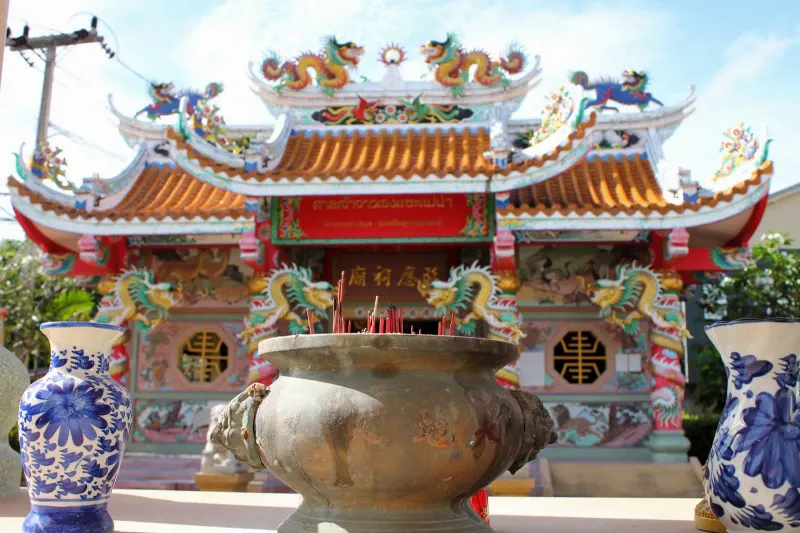
The Chinese Temple of Maenam (ศาลเจ้าแม่กวนอิม แม่น้ำ), officially known as the Chao Eng Sae Shrine, is a vibrant cultural landmark nestled in the heart of Maenam’s historic “Chinatown” district. While Koh Samui is dominated by Thai Buddhist Wats, this shrine offers a fascinating look at the island’s deep-rooted Chinese-Thai heritage.
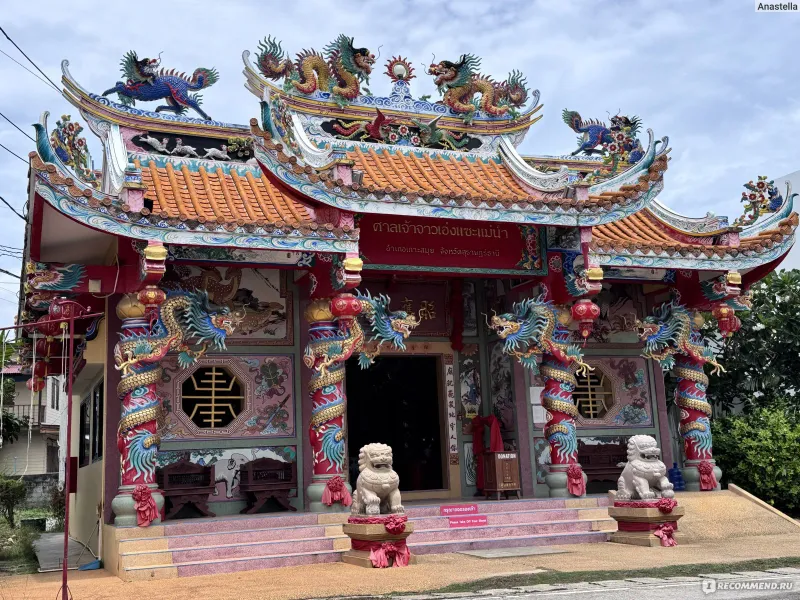
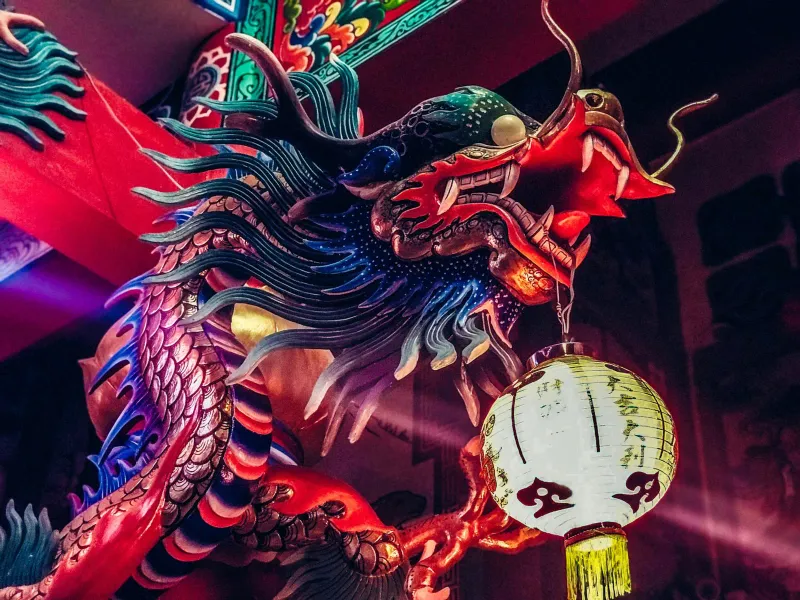
Located just steps from the sand of Maenam Beach, the temple stands out with its intricate dragon sculptures, bold red facades, and traditional lanterns. It serves as the spiritual heart of the local Hainanese community and is a focal point for Maenam’s famous weekly night market. Whether you’re a history buff or a photographer looking for pops of color, this shrine is a must-visit on the north coast.
History: The Hainanese Roots of Maenam
The story of the Chinese Temple of Maenam is the story of Koh Samui’s early settlers. During the late 19th and early 20th centuries, many immigrants from Hainan Island, China, arrived on Samui. These pioneers were instrumental in establishing the island’s coconut trade and retail commerce.
Maenam became a primary hub for these settlers, and the Chao Eng Sae Shrine was built as a spiritual home where they could honor their ancestors and local deities. Unlike the royal Thai temples, this shrine was funded and built entirely by local families, reflecting the community’s success and devotion. Inside, you can still find old black-and-white photographs that document the village’s transformation from a remote outpost to a thriving travel destination.
Architecture: Dragons and Gold
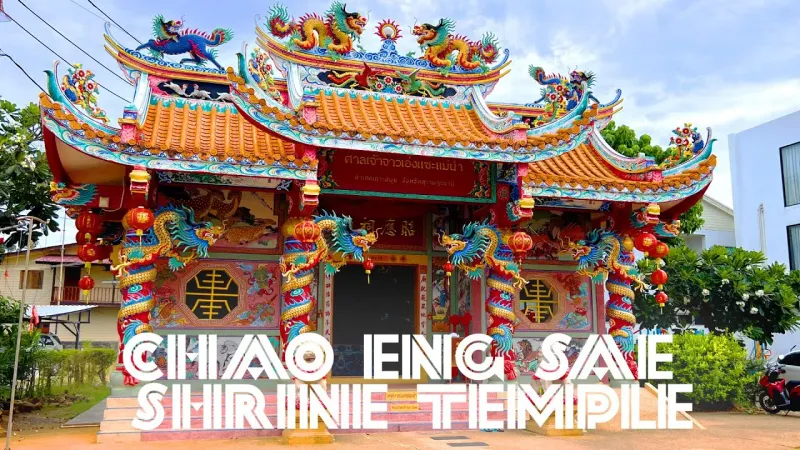
The architecture of the shrine is a classic representation of Southern Chinese temple design, characterized by its exuberant use of color and complex symbolism.
The Dragon Pillars
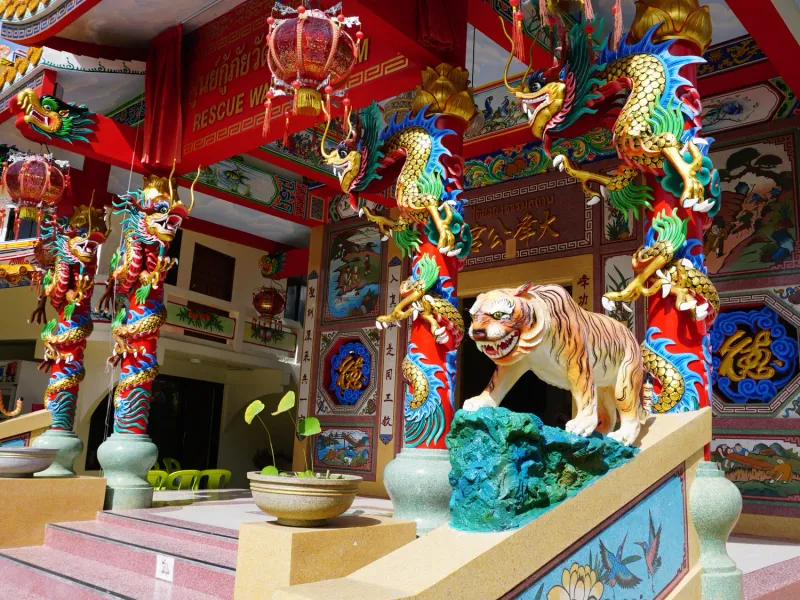
The most striking feature is the four massive dragons that coil around the temple’s main pillars: two guarding the entrance and two inside the main hall. Meticulously painted in vibrant green and gold, these dragons represent power, strength, and good luck.
Red and Gold Symbolism
Every surface of the temple is adorned in red and gold. In Chinese culture, red symbolizes happiness and prosperity, while gold represents wealth and divinity. The intricate rooflines are decorated with porcelain mosaics and small figures depicting scenes from Chinese folklore and mythology.
What to See: Altars and Old Samui
The interior of the shrine is intimate and filled with detail.
- The Main Altar: The central altar is dedicated to the shrine’s primary deity, often surrounded by offerings of tea, oranges, and burning incense. The air is frequently thick with the sweet scent of joss sticks.
- Zhao Mei Guan Murals: The walls are decorated with vibrant murals telling the stories of Chinese deities and legends, providing a colorful backdrop for prayer and reflection.
- Historical Photographs: Look for the small display of old photographs near the entrance. They offer a rare glimpse into what Maenam and its “Chinatown” looked like over 50 years ago.
Activities: Festivals and Markets
The Chinese Temple of Maenam is more than a place of worship; it’s a community hub.
Thursday Night Market
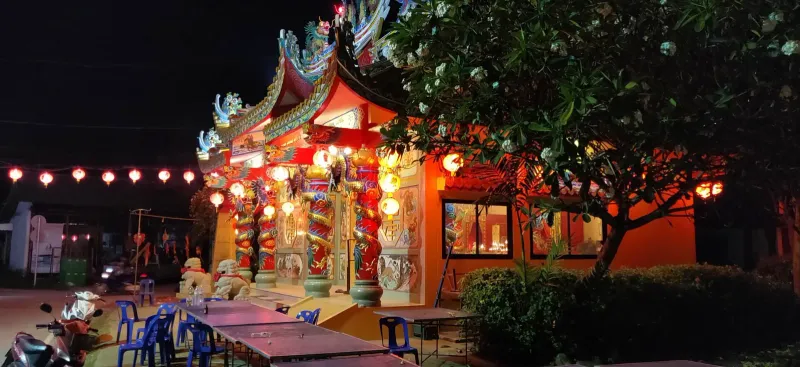
Every Thursday, the Maenam Walking Street takes place right outside the temple gates. The shrine is often lit up with red lanterns during the market, providing a stunning backdrop for the food stalls and vendors. It is the best time to experience the temple’s lively atmosphere.
Chinese New Year
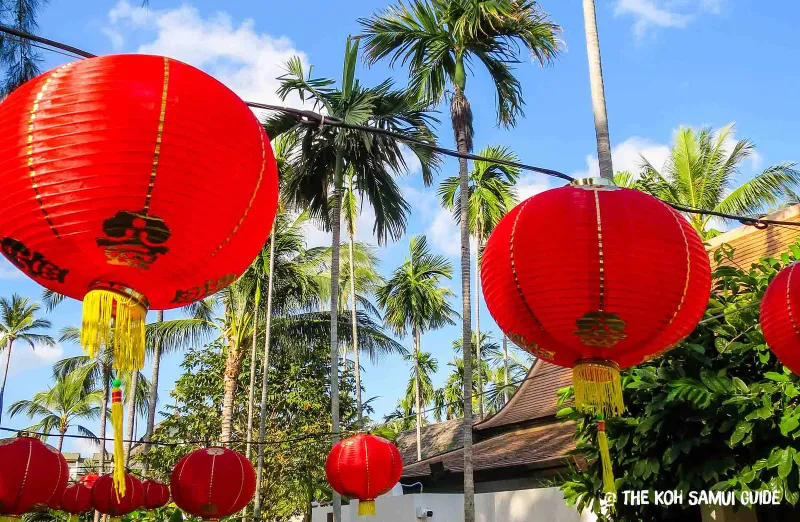
During late January or February, the temple becomes the center of Samui’s Chinese New Year celebrations. Expect spectacular lion and dragon dances, the deafening sound of firecrackers to ward off evil spirits, and hundreds of red lanterns decorating the village streets.
Where to Eat: Maenam Chinatown Flavors
Being in the center of Maenam village means you are surrounded by some of the island’s most authentic Thai-Chinese cuisine.
| Restaurant | Style | Price Range (THB) | Distance |
|---|---|---|---|
| Kwan-Kao | Traditional Thai | 150 - 400 | 2 min walk |
| Pee Soe | Thai-Chinese Seafood | 200 - 500 | 3 min walk |
| Walking Street Stalls | Variety / Market | 40 - 150 | At the gates (Thurs) |
| About Cafe | Artisanal Coffee | 80 - 200 | 1 min walk |
Nearby Attractions
Maenam’s compact center makes it easy to see several sights on foot:
- Maenam Beach (1 min walk): The temple is just a few dozen meters from the sand.
- Maenam Pier (2 min walk): Watch the local longtail boats and high-speed ferries come and go.
- Chinese Temple of Bophut (15 min drive): Compare the architecture with its larger sister temple in Bophut.
- Maenam Walking Street: The main road of the village, famous for its boutique shops and traditional architecture.
Getting There: Maenam Village Access
The shrine is tucked away in the narrow streets of Maenam Village, near the main beach access point.
- By Motorbike: Turn toward the beach at the main Maenam traffic lights (near the 7-Eleven). Follow the road down toward the water; the temple is on a corner about 200 meters down.
- By Car: Parking is difficult in the narrow lanes of Chinatown. It is recommended to park on the main Ring Road and walk down.
- By Songthaew: Ask the driver to drop you at the “Maenam Beach” or “Lomprayah Pier” turnoff.
Best Time to Visit: Day and Night
| Time | Experience | Rating |
|---|---|---|
| Morning (9-11 AM) | Quietest time; best light for interior photos. | ★★★★★ |
| Thursday Evening | Lively market atmosphere; temple is beautifully lit. | ★★★★★ |
| Chinese New Year | Peak cultural experience with traditional ceremonies. | ★★★★★ |
Practical Tips for Visitors
- Remove Shoes: Always remove your shoes before stepping into the inner shrine area.
- Dress Respectfully: While less formal than a Buddhist Wat, covering your shoulders and knees is appreciated.
- Donations: Look for the small donation boxes. Even a small contribution helps maintain the intricate artwork and structure.
- Respect Worshippers: If you see locals praying, avoid using flash photography or walking directly in front of the altar.
- Stay for Sunset: Since you’re so close to the beach, visit the temple at 5:30 PM and then head to the sand for a Samui sunset.
Who Is the Chinese Temple Best For?
| Traveler Type | Rating | Why? |
|---|---|---|
| Culture Seekers | ★★★★★ | A rare look at the island’s Hainanese immigrant history. |
| Photographers | ★★★★★ | Incredible color, intricate dragons, and red lanterns. |
| Foodies | ★★★★ | Surrounded by great local eats and the Thursday night market. |
| History Buffs | ★★★★ | The old photographs provide a fascinating look at Samui’s past. |
FAQ
Is there an entry fee? No, entry to the Chinese Temple of Maenam is completely free. Small donations are welcome to support the ongoing maintenance and the lighting of the lanterns.
Is it different from a Thai temple? Yes. While Thai temples follow Theravada Buddhist traditions, this is a Chinese Taoist/Folk religion shrine. The architecture, the deities honored, and the rituals performed are distinct to the Chinese immigrant culture.
Can I visit during the Thursday Night Market? Yes, in fact, this is one of the best times to visit. The temple is right in the middle of the market action and is often beautifully illuminated with red lanterns in the evening.
What is the best way to get there? If you are coming by car, park on the main road and walk down the lane toward the beach. If you have a motorbike, you can drive closer, but be mindful of the narrow streets and pedestrians.
Who is the deity honored here? The shrine is primarily dedicated to Zhao Mei Guan (Chao Eng Sae), a revered local deity in Hainanese culture believed to provide protection and prosperity to the community.
About the author

Migues Ferfumoz
Writer, Koh Samui resident since 2019
Freelance writer and Koh Samui resident since 2019. Migues covers local culture, food, and the best off-the-beaten-path destinations on the island.
Articles by Migues →