Overview
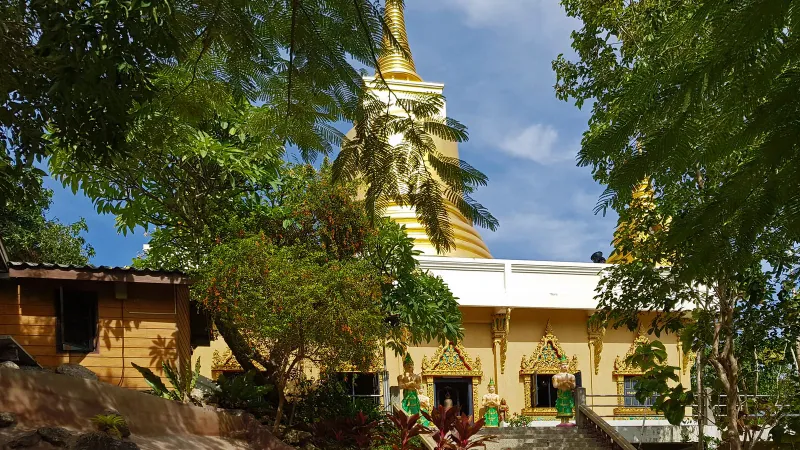
Wat Chaeng (วัดแจ้ง) is one of Koh Samui’s most historically significant and culturally rich spiritual hubs. Located at the southern entrance of Nathon, the island’s administrative capital, it serves as a grand introduction to the authentic, local side of Samui life. While the tourist-heavy east coast focuses on luxury, Wat Chaeng remains a temple for the people: a place of blessings, education, and community gathering.
The temple is instantly recognizable by its magnificent golden Buddha image at the entrance and two of the largest, most detailed Yak (giant) statues on the island. For generations, Wat Chaeng has been the first stop for travelers arriving at the Nathon pier, a tradition that continues today as locals seek protection for their journeys across the sea. If you want to experience a temple that feels like the “real” Koh Samui, Wat Chaeng is an essential stop on any west coast itinerary.
History: The Refuge of Early Travelers
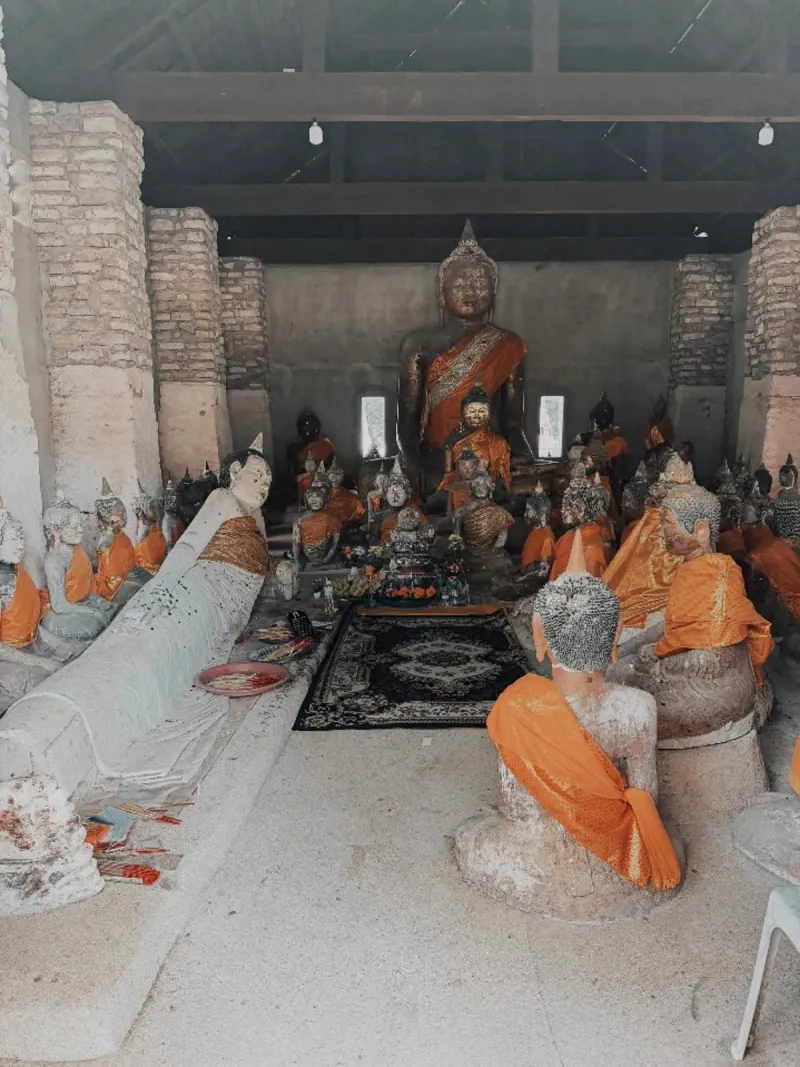
Wat Chaeng is considered one of the oldest temples on Koh Samui, established long before the island became a global travel destination. Its history is inextricably linked to Nathon Pier, which for decades was the only way to reach the island from the mainland.
Historically, the temple served as an informal hostel and spiritual refuge. Travelers waiting for the slow wooden boats to Surat Thani would often sleep on the temple grounds, seeking the protection of the monks and the Buddha. This role as a “traveler’s temple” has given Wat Chaeng a unique character of hospitality and blessing that persists to this day.
The Golden Entrance: A Beacon of Peace
As you approach Nathon from the south, the first thing you see is the Golden Buddha of Wat Chaeng. Seated in the Bhumisparsha Mudra (the earth-touching gesture symbolizing the defeat of temptation), the statue is set against a large, stylized Wheel of Dharma.
This entrance is more than just a landmark; it is a spiritual boundary. Crossing through the gate, the noise of the main Ring Road fades away, replaced by the shaded tranquility of the temple grounds. Many local drivers give a quick “Wai” (bow) as they pass, acknowledging the statue’s role as a protector of the town.
The Giant Yak Warriors
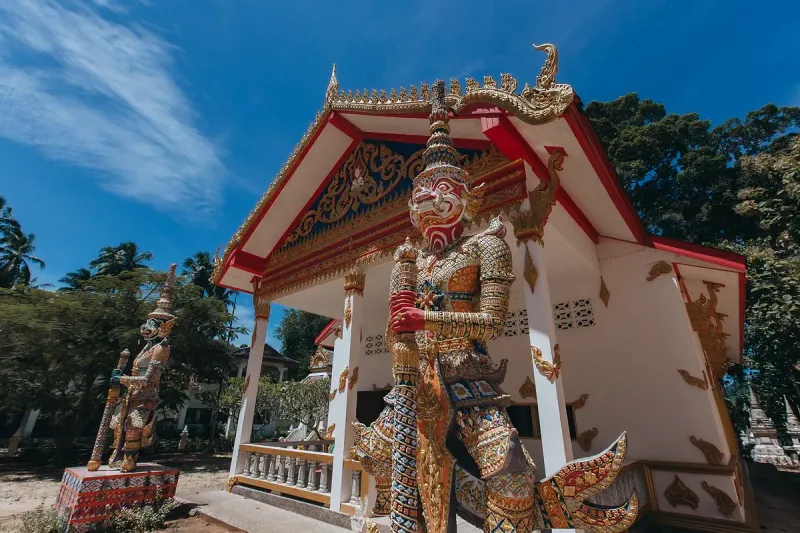
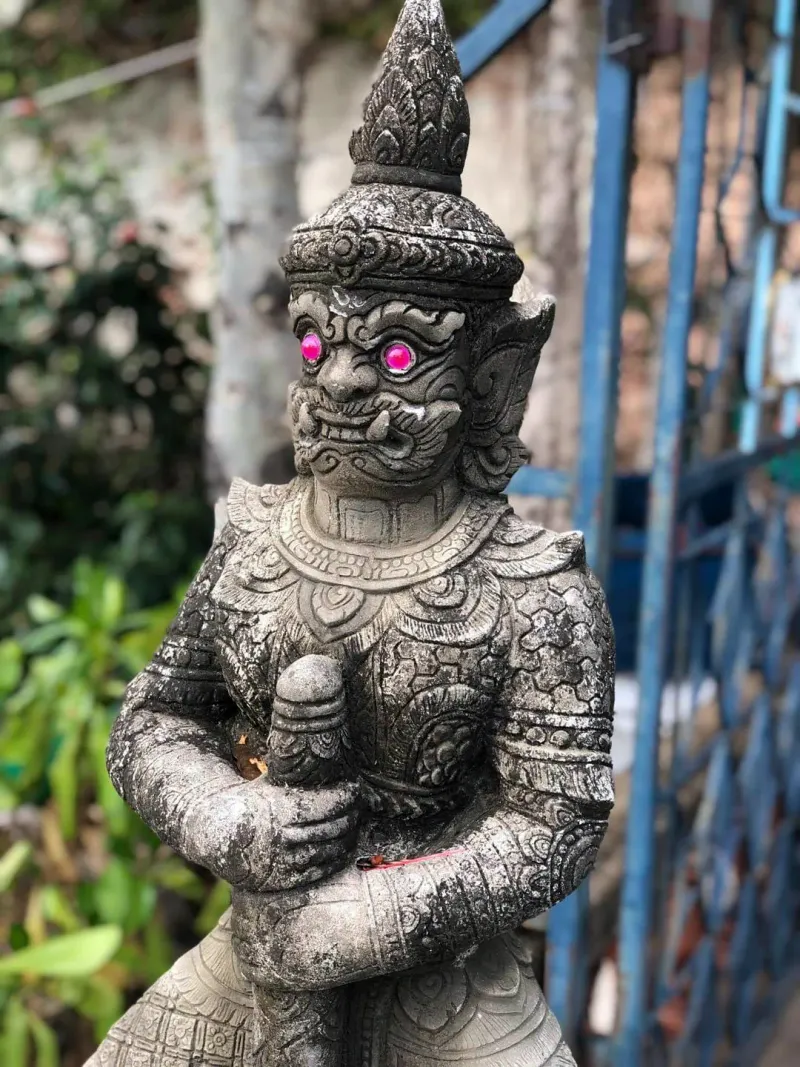
The most photogenic features of Wat Chaeng are the two massive Yak statues that guard the entrance to the inner shrines. These mythical giants are common in Thai Buddhism, representing protectors of the sacred teachings.
At Wat Chaeng, the Yaks are rendered in incredible detail, with intricate armor patterns and fierce, colorful expressions. They are among the largest statues of their kind on the island, and their imposing presence is intended to ward off any negative energy before it can enter the sacred space.
Architecture: White, Gold, and Hindu Gods
The architecture of Wat Chaeng is a beautiful example of the syncretic nature of Thai spirituality, where Buddhist and Hindu influences blend seamlessly.
The White Ordination Hall
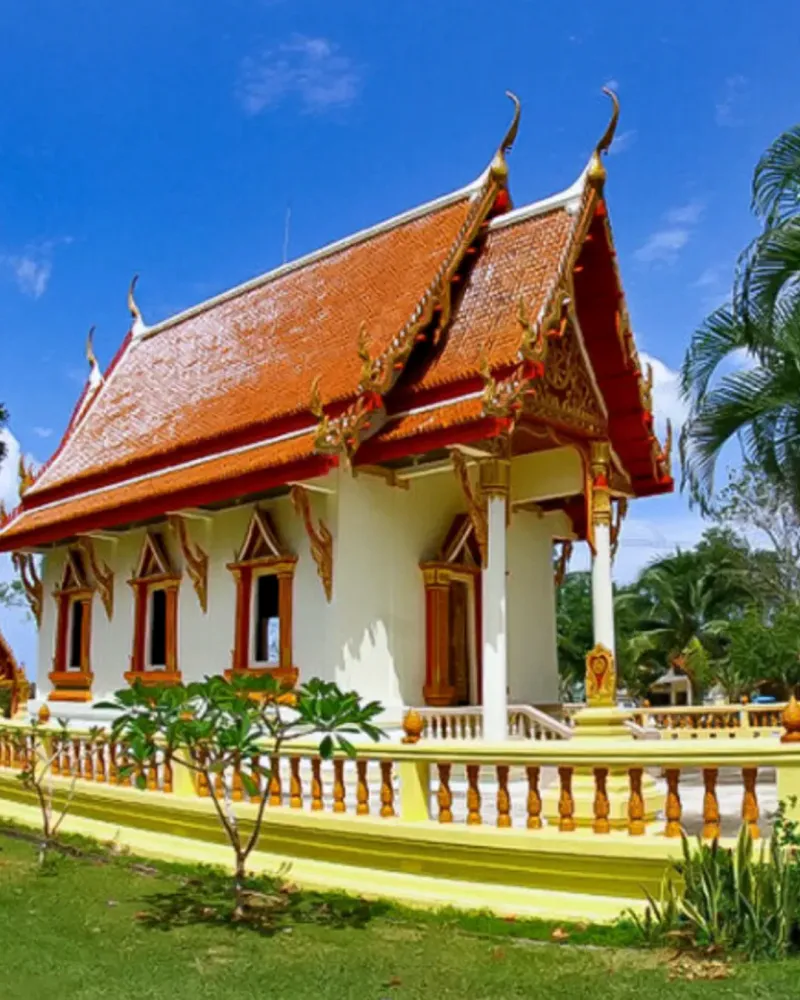
The main Bot (ordination hall) is a stunning white structure decorated with elegant gold trim. Its clean lines and tiered roofs reflect the traditional Thai style but with a level of restraint that makes the gold accents pop against the white background.
Hindu Shrines
As you explore the rear of the grounds, you will find shrines dedicated to Phra Phrom (the four-faced Brahma) and Lord Shiva. It is common for Thai Buddhists to pray to these Hindu deities for success in specific areas of life, such as business or family protection. This blend of traditions is a core part of the island’s Thai-Chinese heritage.
Activities: Blessings and Local Markets
- Seek a Traveler’s Blessing: If you are planning a boat trip or a long journey, visit the main hall to make a small offering. You may be able to receive a traditional water blessing from a resident monk.
- Saturday Night Market: If your visit coincides with a Saturday, the Nathon Walking Street begins just a short walk from the temple. It is the most authentic night market on the island.
- Photography: The contrast of the white buildings and the colorful Yaks makes for exceptional photos, especially in the early morning.
Where to Eat: Nathon Town Flavors
Nathon is famous for having some of the island’s best Thai-Chinese shophouse dining, which is significantly cheaper than the resort areas.
| Restaurant | Style | Recommendation | Distance |
|---|---|---|---|
| Lucky Restaurant | Thai-Chinese | Seafood Curry | 5 min walk |
| Nathon Night Market | Street Food | Satay / Fresh Juices | 8 min walk |
| About Cafe | Artisanal Coffee | Cold Brew | 5 min walk |
| Local Duck Rice | Traditional | Roasted Duck Rice | 2 min walk |
Nearby Attractions
Wat Chaeng is the perfect starting point for a West Coast exploration:
- Nathon Pier: Watch the large ferries come and go or catch a spectacular sunset.
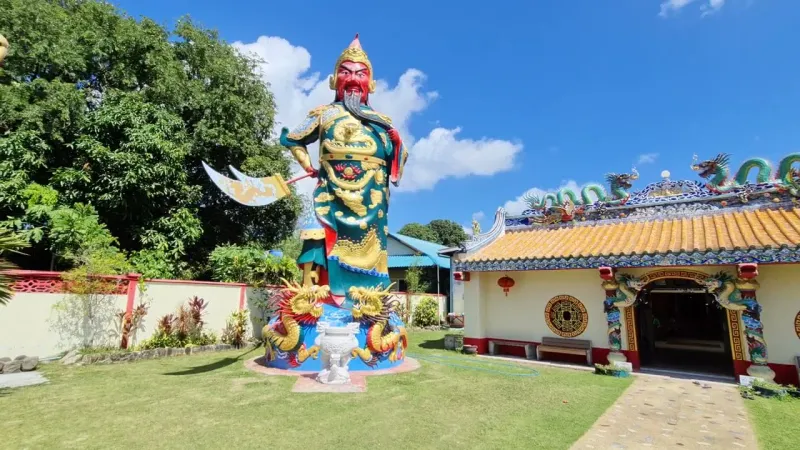
- Hainan Shrine: A small, colorful Chinese temple in the heart of Nathon.
- Nathon Waterfront: A great place for a walk, filled with old teak buildings and local shops.
- Hin Lad Waterfall (10 min drive): A jungle waterfall located just inland from Nathon.
Getting There: The Nathon Ring Road
Wat Chaeng is located directly on the Main Ring Road (Route 4169) at the southern end of Nathon town.
- By Motorbike/Car: If you are coming from the south (Taling Ngam), the temple will be on your left as you enter Nathon. If coming from the north (Maenam), drive through the town; the temple is on your right just before you leave the built-up area.
- By Songthaew: All songthaews traveling the main ring road pass by the temple.
- Parking: There is ample free parking inside the temple gates.
Best Time to Visit
| Time | Experience | Rating |
|---|---|---|
| 8:00 AM - 10:00 AM | Cool air; best light for photos of the white hall. | ★★★★★ |
| 11:00 AM - 3:00 PM | Can be hot, but the large trees provide plenty of shade. | ★★★★ |
| 4:30 PM - 6:00 PM | Perfect for a visit before heading to the pier for sunset. | ★★★★★ |
Practical Tips for Visitors
- Dress Modestly: This is a conservative community temple. Ensure shoulders and knees are covered.
- Remove Shoes: Take your shoes off before entering any temple building.
- Respect the Monks: You will likely see monks and students going about their day. Give them a polite “Wai” but avoid interrupting their rituals.
- Mind the Traffic: The temple is on a busy road. Be careful when entering and exiting the parking area.
- Support Local: Nathon is the island’s administrative center. Spending money in the local shops and restaurants helps support the permanent Samui community.
Who Is Wat Chaeng Best For?
| Traveler Type | Rating | Why? |
|---|---|---|
| Culture Seekers | ★★★★★ | One of the most authentic and historically deep sites on Samui. |
| Photographers | ★★★★★ | Incredible scale, color, and high-contrast architecture. |
| Budget Travelers | ★★★★★ | Free entry and surrounded by the island’s best-value food. |
| History Buffs | ★★★★ | Learn about the island’s origins as a seafaring hub. |

FAQ
Is Wat Chaeng free to visit? Yes, like most temples on the island, entry is free. Small donations are encouraged to help with the upkeep of the grounds and the temple school.
How far is it from the Nathon ferry pier? It is a very short 10-minute walk or a 2-minute drive from the main ferry terminals.
Can I see the sunset from the temple? While the temple is near the coast, it is surrounded by trees and buildings. For the best sunset, walk five minutes down to the Nathon waterfront or the pier.
Who are the “Giants” at the entrance? These are Yak, mythical giant warriors from Buddhist and Hindu mythology who serve as guardians of sacred sites and ward off evil spirits.
Is there a school on the grounds? Yes, Wat Chaeng houses a Buddhist school for young monks and local children. You will often see students in uniform or saffron robes during your visit.
About the author

Migues Ferfumoz
Writer, Koh Samui resident since 2019
Freelance writer and Koh Samui resident since 2019. Migues covers local culture, food, and the best off-the-beaten-path destinations on the island.
Articles by Migues →