
Koh Samui floods after heavy rain, police urge visitors to postpone trips
Police asked visitors to postpone non-essential trips after rain flooded roads in Samui on 12 November; the Chaweng Canal gate closed and pumps ran.
Read more
We only collect anonymous data for site statistics and never share it with anyone else.
We collect anonymous site statistics and never share them with anyone else. You can turn them off on the privacy page.
Right now on Samui
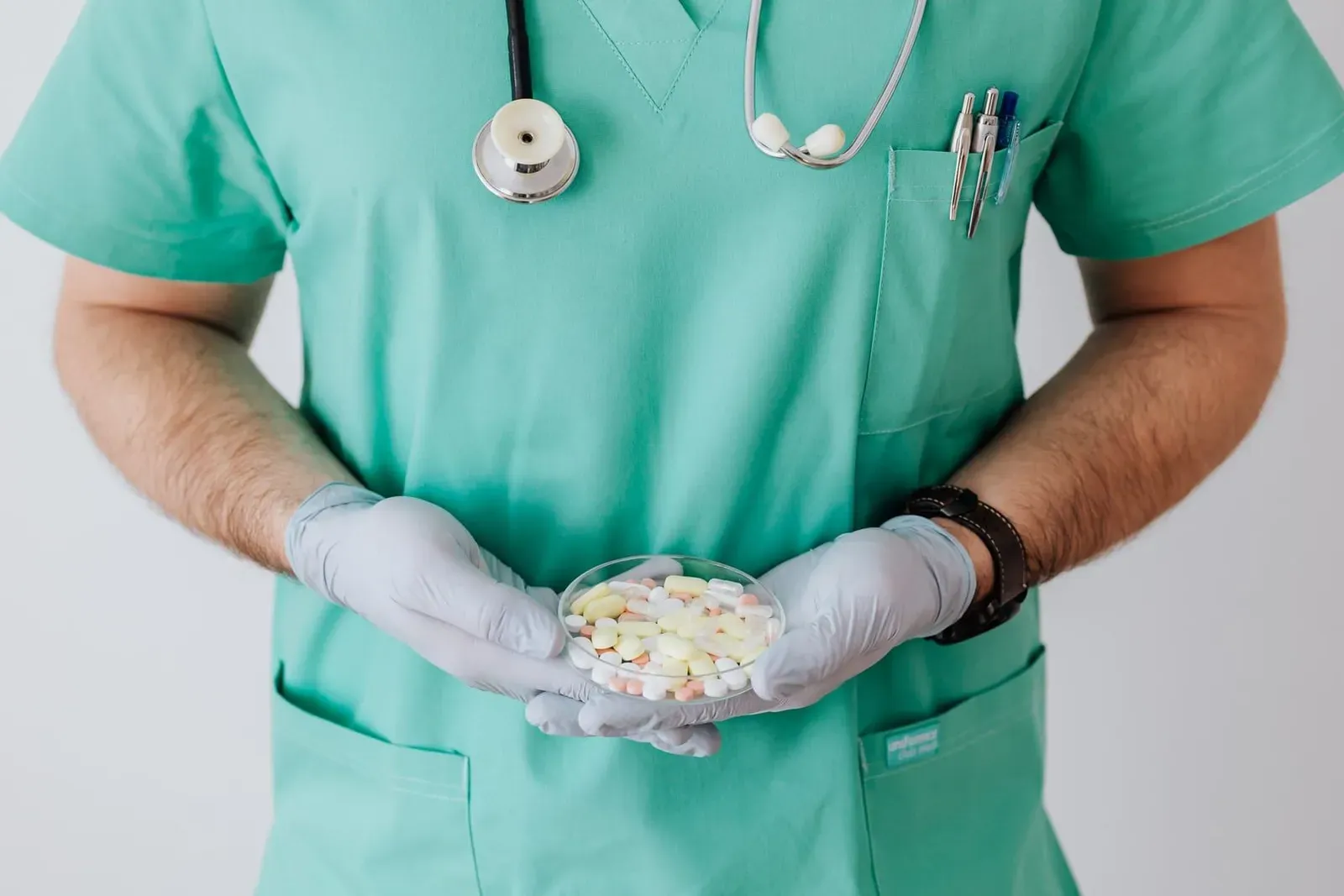
Koh Samui has five private hospitals and one government hospital, so most visitors are never more than a 20-30 minute drive from emergency care. Bangkok Hospital Samui, part of the Bangkok Hospital Group (BDMS) network, is the island’s largest private facility and the closest thing to a trauma center, with 24-hour emergency care and international-standard equipment. Samui International Hospital and Thai International Hospital (unverified, confirm current name and hours before relying on it) are smaller private options in and around Chaweng and Bophut. For residents and budget-conscious visitors, the public Koh Samui Hospital in Na Mueang, near Nathon, offers Thai-price care but longer waits and less English. For any life-threatening emergency, dial 1669 first. See our Koh Samui safety guide for accident and scam risks beyond hospital care.
Koh Samui’s hospitals split cleanly into two tiers: fast, English-speaking private hospitals that bill like a business, and a single government hospital that is cheap but slower. The table below is a starting point. Call ahead or check each hospital’s own site before you travel, since hours, phone lines and staff availability change.
| Hospital | Area | Type | 24h ER | Languages | Price level |
|---|---|---|---|---|---|
| Bangkok Hospital Samui | Bo Phut, between Chaweng and Bophut | Private (BDMS network) | Yes | English, Thai, some German/Chinese | $$$ |
| Samui International Hospital | Central Chaweng | Private | Yes (unverified, confirm) | English, Thai | $$ |
| Bandon International Hospital | Chaweng | Private | Yes (unverified, confirm) | English, Thai | $$ |
| Thai International Hospital | Bophut area (unverified, confirm) | Private | Unverified: confirm | Thai, some English | $$ |
| Koh Samui Hospital (government) | Na Mueang, near Nathon | Public | Yes | Thai first, limited English | $ |
A fifth private facility, sometimes listed as Wattanapat Hospital, has historically operated on Samui but current branch status could not be confirmed here: treat any specific claim about it as unverified until you check locally.
For anything urgent (a serious scooter crash, chest pain, a bad allergic reaction), Bangkok Hospital Samui is the safest default because it runs a 24-hour emergency room with international-standard equipment and can stabilize trauma cases before an evacuation if needed. Samui International Hospital and Bandon International Hospital, both closer to central Chaweng, are reasonable alternatives if you’re already near that beach and the case is less severe. The government Koh Samui Hospital in Nathon will treat genuine emergencies regardless of nationality or ability to pay up front, but expect a slower process and more Thai-language paperwork. If you are unsure how serious an injury is, call 1669, Thailand’s free national ambulance service, and let paramedics triage and choose the nearest appropriate facility rather than guessing yourself.
A private hospital visit on Koh Samui typically starts at ~800-2,000 THB (~23-57 USD) for a general consultation, before tests, medication or imaging are added. Government hospital consultations are far cheaper, often ~100-300 THB (~3-8.50 USD), though foreigners sometimes pay a modest non-resident surcharge. Treat every figure here as a budgeting estimate, not a quote: costs vary by hospital and case.
The single most common tourist ER visit on Koh Samui is a scooter injury: road rash, a fractured wrist, or a head injury from a low-speed spill. At a private hospital, treating a moderate scooter injury (cleaning, sutures, an X-ray, a short observation period) commonly runs into the tens of thousands of THB, and a case needing surgery or an overnight stay can climb past 100,000 THB (~2,857 USD) without insurance. See our scooter rental guide for accident-rate context. The government hospital treats the same injuries for a fraction of the price, with a longer wait. For a broader sense of everyday costs on the island, see our cost of living guide.
Many of Koh Samui’s private hospitals, especially Bangkok Hospital Samui as part of the wider BDMS network, can bill major international insurers and travel-assistance companies directly for inpatient and higher-cost treatment, so you may not need to pay the full bill up front. Direct billing depends entirely on your specific policy, though, so call your insurer’s emergency assistance line before or during treatment to confirm coverage: a genuine emergency is treated first regardless.
Without direct billing, private hospitals generally expect payment (card or cash) before discharge for non-emergency treatment, and you claim reimbursement afterward with the itemized invoice. This is why travel insurance that explicitly covers scooter and motorbike injuries matters on Koh Samui: a policy exclusion discovered mid-treatment is a bad time to learn about it. Factor potential medical costs into your overall trip budget too. See Koh Samui travel tips for the wider pre-departure checklist.
Koh Samui has both international pharmacy chains and independent Thai pharmacies, and the two behave differently. Boots and Watsons operate branches in shopping areas such as Central Samui in Chaweng, stocking familiar Western brands, over-the-counter medication and basic first-aid supplies with English-speaking staff. Independent Thai pharmacies (recognizable by a green cross sign and the Thai word “ร้านขายยา”) are found in every town from Chaweng to Bophut to Nathon, often cheaper, and commonly staffed by a licensed pharmacist who can advise directly rather than requiring a doctor’s visit for minor complaints.
Basic pain relief, antihistamines, rehydration salts and travel-sickness tablets are sold over the counter almost everywhere. Antibiotics and stronger prescription medication legally require a prescription in Thailand, even if enforcement varies by pharmacy: don’t assume a Thai pharmacy will sell you something your home country restricts. If you take regular medication, bring enough for the full trip plus a buffer (see our packing list for what else to bring), since matching an exact brand or dosage locally is not guaranteed.
Koh Samui has a reasonably developed private dental scene, driven partly by medical-tourism demand for cheaper dental work than back home. Bangkok Hospital Samui and Samui International Hospital both run dental departments, and several standalone clinics operate around Chaweng and Bophut: confirm current clinics, pricing and English availability before booking. For minor non-dental complaints (a bad stomach, a skin infection, a jellyfish sting), walk-in clinics attached to pharmacies or resorts are often faster and cheaper than a full hospital visit; anything beyond that is safer handled at one of the hospitals above.
For injuries or illnesses beyond what Koh Samui’s hospitals can treat (major trauma, complex surgery, specialist cardiac or neurological care), patients are typically evacuated to a larger Bangkok hospital by air ambulance or a commercial flight with medical escort, arranged through your travel insurer’s 24-hour assistance line or, for BDMS patients, coordinated directly between Bangkok Hospital Samui and its Bangkok facilities. Samui International Airport (USM) supports this kind of transfer, which is why comprehensive insurance with a real emergency-assistance number matters more than the premium difference between policies.
Without insurance, an air evacuation from Koh Samui to Bangkok can cost from several thousand up to tens of thousands of US dollars, depending on aircraft and medical staffing: a bill that dwarfs almost any policy premium. If evacuation is mentioned, call your insurer immediately; assistance companies want to arrange and pre-approve the transfer, not just reimburse it afterward.
Save these numbers in your phone before you need them: Thai emergency lines are free to call and generally have some English-speaking staff, though response quality varies by operator availability.
| Number | Service | Notes |
|---|---|---|
| 1669 | National medical emergency / ambulance | Free, nationwide; dispatches the nearest available ambulance |
| 191 | Royal Thai Police | General police emergency |
| 199 | Fire | Fire and rescue |
| 1155 | Tourist Police | English-language line for tourists; also handles disputes and scams |
The Tourist Police hotline (1155) is specifically set up to help foreign visitors, including with translation during a hospital visit if needed: it’s worth calling alongside 1669 for a serious incident, not instead of it, and can also help report a scam.
Do I need a visa for Koh Samui?
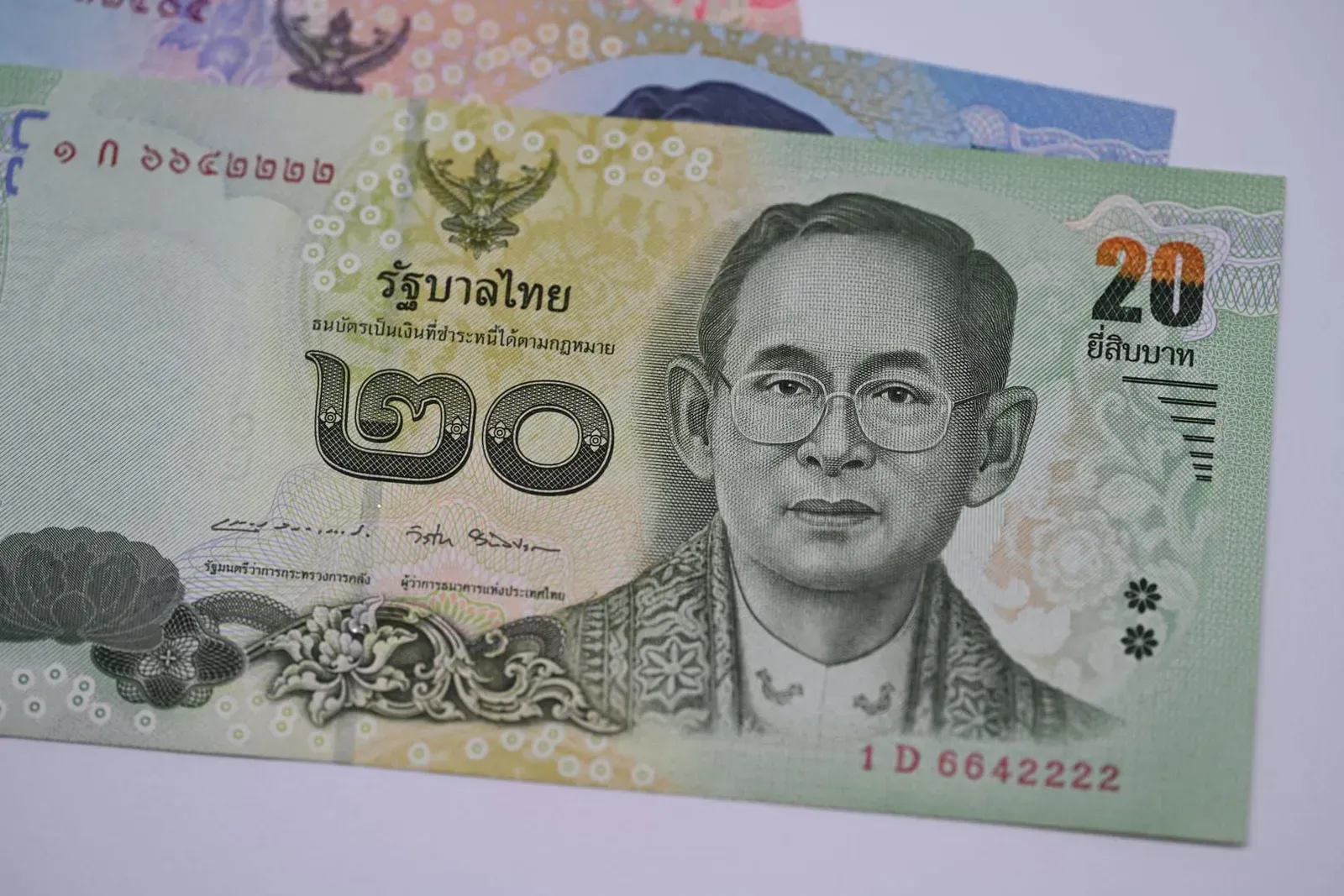
Koh Samui prices in 2026: a trip costs ~43 USD (1,500 THB) a day on a backpacker budget, ~114 USD mid-range
Koh Samui ATM guide: every Thai bank ATM charges a 220 THB (~6.50 USD) foreign-card fee, so withdraw large.
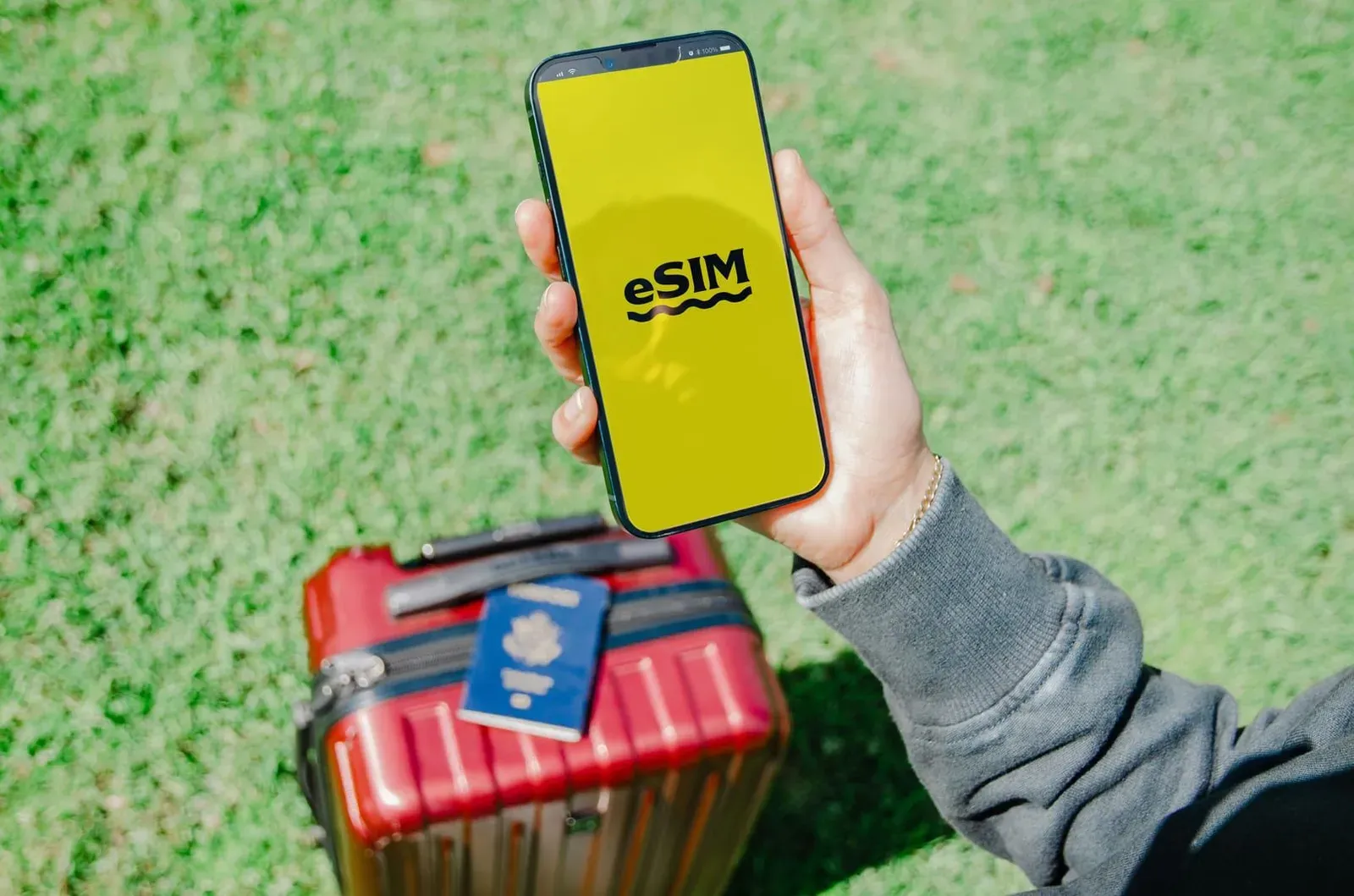
SIM card Koh Samui 2026: buy AIS, True or dtac at the airport arrivals hall for about 299-1,199 THB
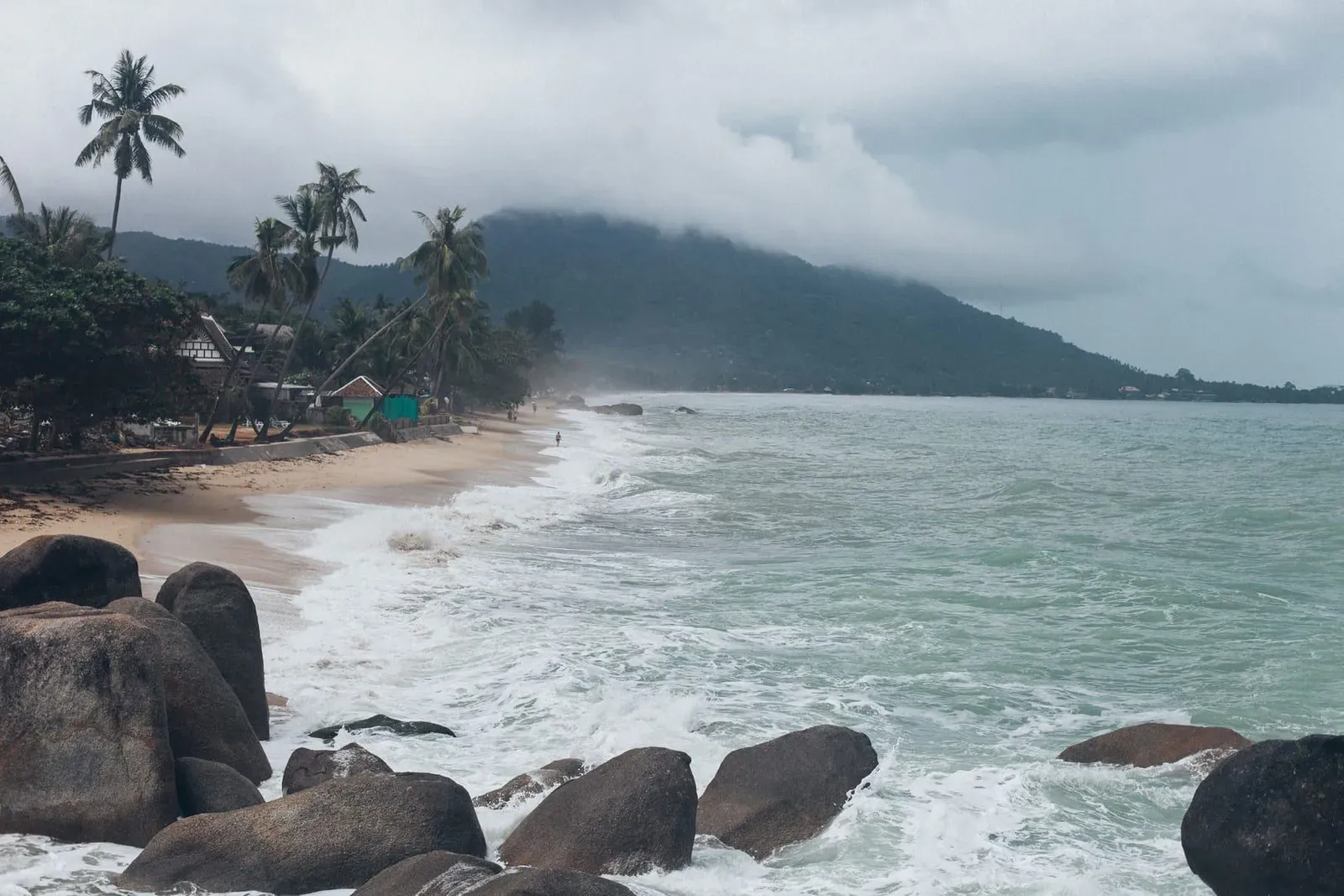
What to wear in Koh Samui: light clothes for 28-32°C, covered shoulders and knees at temples
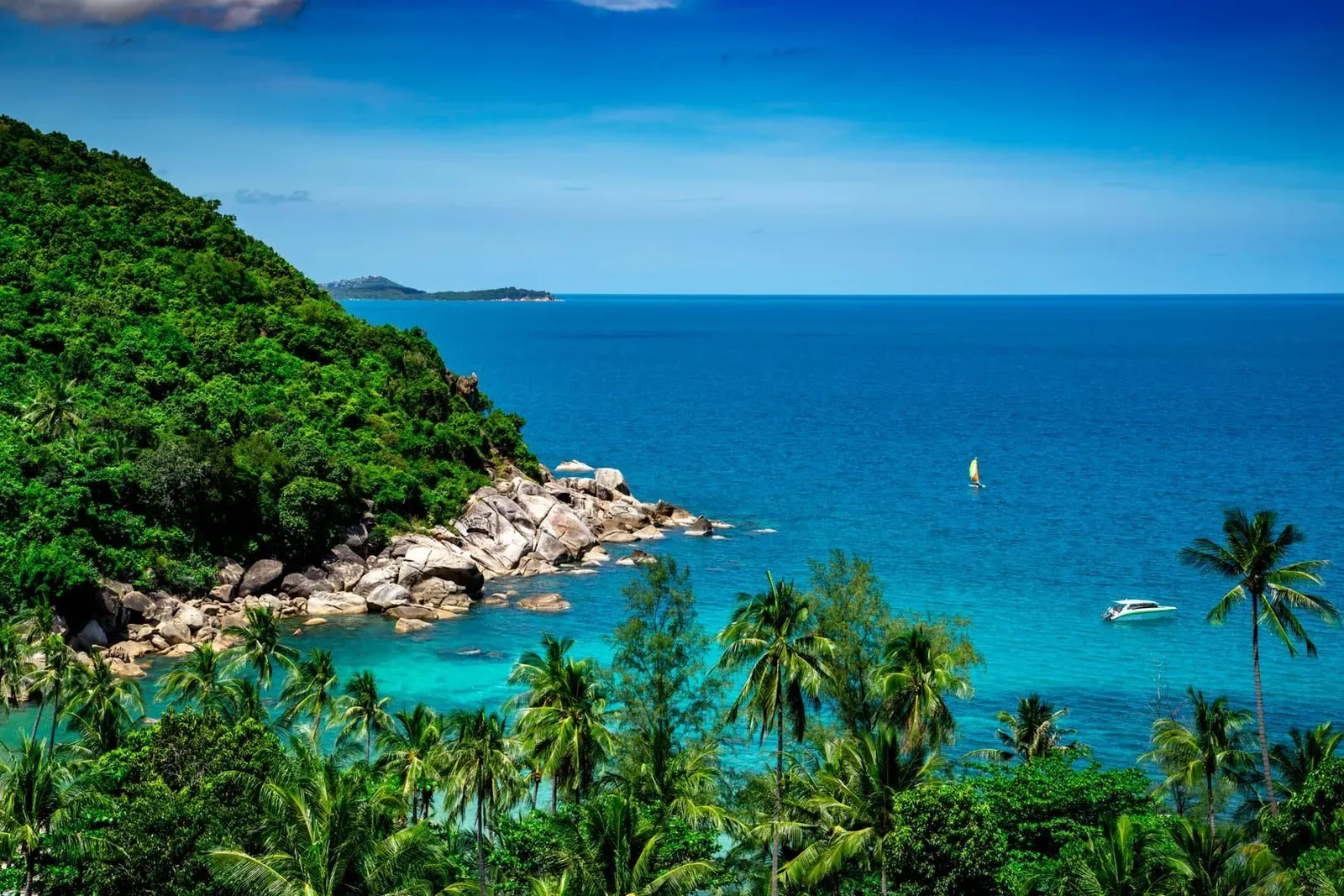
Koh Samui travel guide for 2026: visa and TDAC, best months, getting around, the 220 THB ATM fee
Karma Two Palms Beach, Koh Samui
Fisherman's Village, Bophut Beach Road, Bophut, Koh Samui
Samui International Muay Thai Stadium, Chaweng, Koh Samui
Jump Shack, Koh Samui

Tembo Beach Club & Resort, Koh Samui

CLUB SEEN, Koh Samui

Woobar, Koh Samui
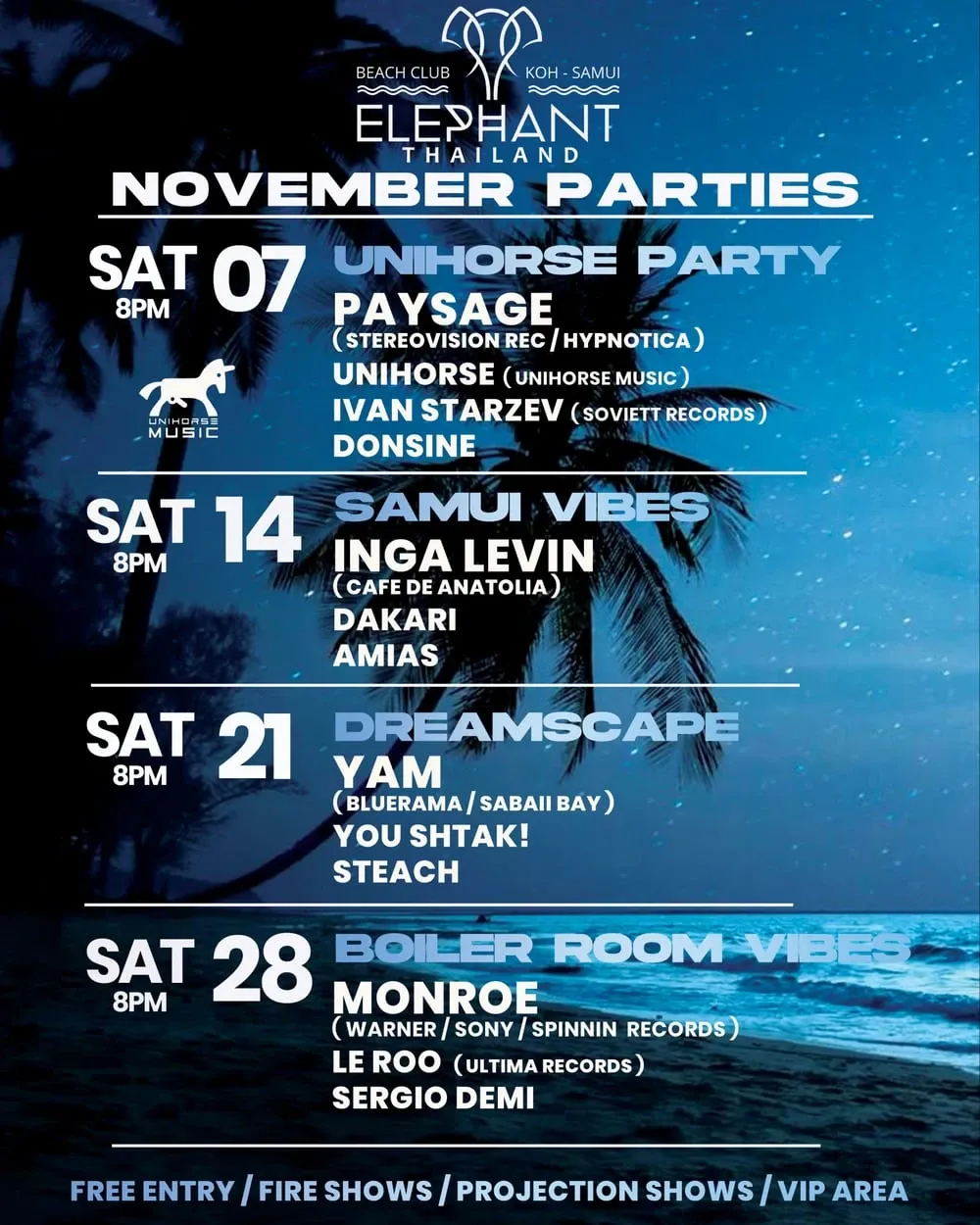
Elephant Beach Club, Chaweng, Koh Samui
BABOU, Chaweng, Koh Samui
Nothing listed for today yet.
All eventsWe're happy to see you here. We will be even more happy to see you reading our weekly digest.