Contents
Renting a car in Koh Samui makes the most sense for families, anyone based on the west coast, and travelers visiting during the rainy season. Compact cars run roughly 900-1,800 THB per day (~26-51 USD); SUVs run 1,500-2,500 THB per day (~43-71 USD). Every renter needs a home-country driving licence plus an International Driving Permit (IDP) covering car categories, arranged before arrival.
Key takeaways
- Best for families, west-coast stays near Lipa Noi or Taling Ngam, and the September-November rainy season.
- Compact: ~900-1,800 THB/day (~26-51 USD); SUV: ~1,500-2,500 THB/day (~43-71 USD); weekly rates cut the daily cost by roughly 30-40%.
- You need your home driving licence plus an IDP with car categories, arranged before you fly — Thailand does not issue IDPs to tourists.
- Airport counters cost 30-60% more than local operators a short drive from the terminal.
- Photograph the whole car before driving off — the best defence against a disputed damage charge on return.
Key facts: compact ~900-1,800 THB/day (~26-51 USD) · SUV ~1,500-2,500 THB/day (~43-71 USD) · IDP + home licence required · insurance excess 5,000-15,000 THB (~143-429 USD) · Route 4169 ring road ~51 km · drive on the left
Do You Need a Car in Koh Samui?
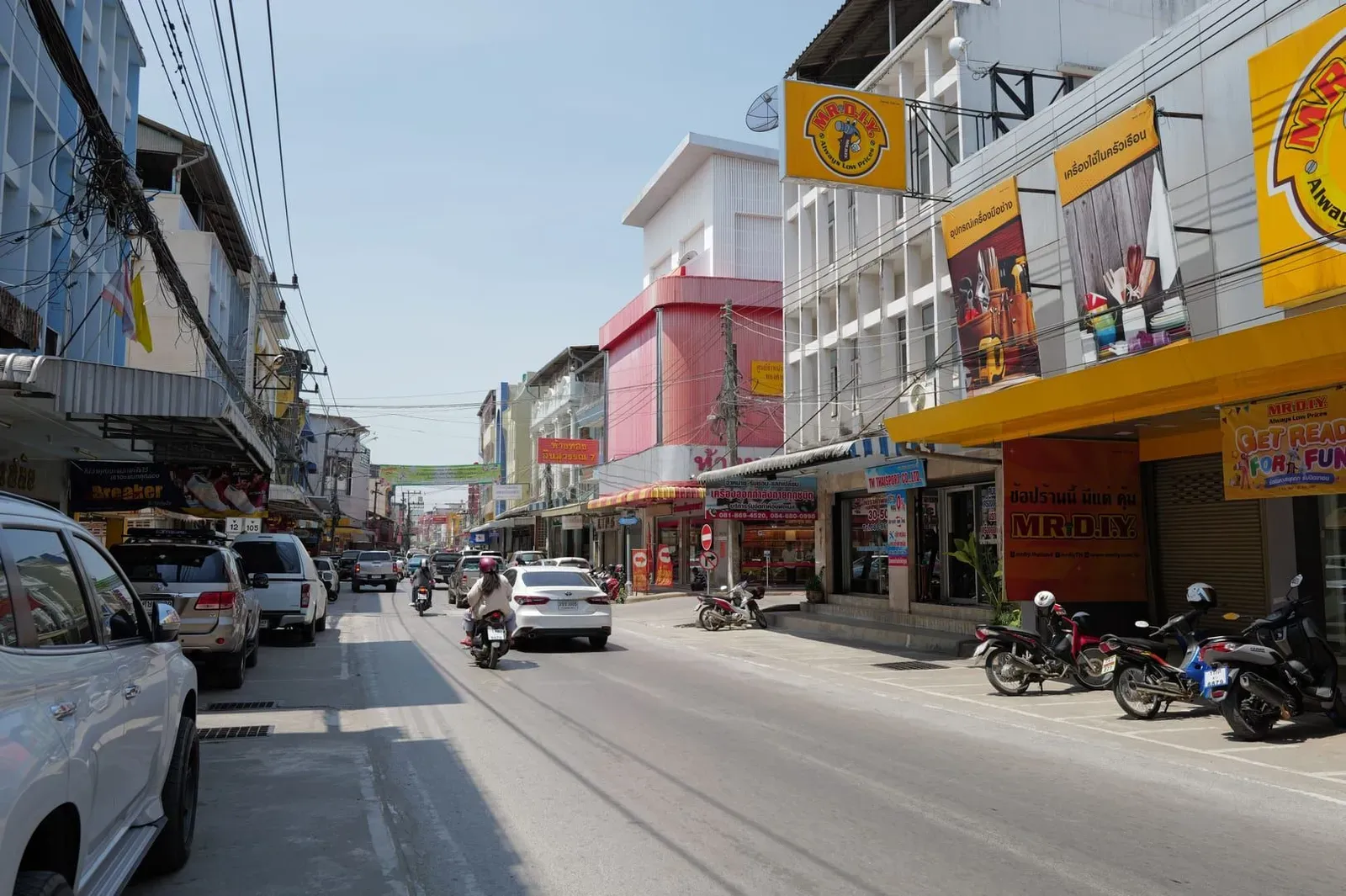
A car is worth renting in Koh Samui if you’re traveling with children, based on the west coast near Lipa Noi or Taling Ngam, visiting during the September-to-November rainy season, or planning to reach several waterfalls and viewpoints in one day, such as Na Muang Waterfall. For a short stay in Chaweng or Bophut with no interior sightseeing planned, other ways of getting around — Grab or a rented scooter — are usually cheaper and easier to park.
A car costs three to five times a scooter’s daily rate but adds real advantages: dry, air-conditioned transport in the rain, room for luggage and child seats, and far lower accident exposure than two wheels in mixed island traffic. Grab covers most of the island with a fixed fare, but coverage thins out west of Nathon and on side roads to interior waterfalls — a single day exploring the interior often justifies a one-day car rental even if Grab and songthaews cover the rest of the trip.
What Does Car Rental Cost in Koh Samui?
Car rental on Koh Samui costs 900-2,500 THB per day (~26-71 USD) depending on vehicle class, with weekly rentals cutting the effective daily rate by roughly 30-40%. Compact cars sit at the low end; SUVs, crossovers, and 4x4 pickups cost more but suit rougher interior roads and larger groups.
| Class | Examples | Daily | Weekly | Insurance excess |
|---|---|---|---|---|
| Compact / economy | Toyota Yaris, Nissan March, Honda Brio | 900-1,300 THB (~26-37 USD) | 5,500-7,500 THB (~157-214 USD) | 5,000-10,000 THB (~143-286 USD) |
| Mid-size sedan | Toyota Vios, Honda City | 1,200-1,800 THB (~34-51 USD) | 7,000-10,000 THB (~200-286 USD) | 8,000-12,000 THB (~229-343 USD) |
| SUV / crossover | Honda HR-V, Toyota Corolla Cross | 1,500-2,200 THB (~43-63 USD) | 9,000-13,000 THB (~257-371 USD) | 10,000-15,000 THB (~286-429 USD) |
| 4x4 pickup | Toyota Hilux, Ford Ranger | 1,800-2,500 THB (~51-71 USD) | 11,000-15,000 THB (~314-429 USD) | 10,000-15,000 THB (~286-429 USD) |
Most local operators already include basic third-party insurance in the daily rate, but the insurance excess — what you’re liable for if the car is damaged — varies from around 5,000 THB on a compact to 15,000 THB on a pickup. Paying a small daily premium for a “zero excess” option is usually worth it on Samui’s narrow village lanes, where minor scrapes are common. Airport counters for international chains typically charge 30-60% more than local operators a few minutes’ drive from the terminal.
What Licence Do You Need to Rent a Car in Koh Samui?
Renting a car in Koh Samui legally requires your valid home-country driving licence plus an International Driving Permit (IDP) that covers car categories — a foreign licence alone is not accepted, and Thailand’s Department of Land Transport does not issue IDPs to tourists, so you must arrange one before you fly. Most countries issue IDPs through a national motoring association (AAA in the US, DVLA-approved issuers in the UK, ADAC in Germany) for a small fee.
Both the 1949 and 1968 Convention IDPs are generally accepted at Samui rental counters, though some smaller local shops are less strict and may rent to you on a home licence alone — doing so is still against Thai law and can void your travel insurance in an accident. Police checkpoints around the island, especially near Chaweng and the airport, do check licences and IDPs alongside vehicle documents. See the US Embassy Thailand driving guidance and Thailand’s Department of Land Transport for the current official rules before you travel.
Where Can You Rent a Car in Koh Samui?
You can rent a car at Samui Airport (USM) arrival-hall counters, where international chains including Avis, Budget, Hertz, and Sixt operate alongside Thai agencies, or from local rental shops around Chaweng, Lamai, Bophut, and Nathon. Airport counters are the most convenient option straight off a flight and typically run 24 hours, but cost more and often leave less room to negotiate.
Local operators, booked online or in person, tend to undercut airport rates by 30-60% and are more flexible on weekly or monthly terms, though the tradeoff is less English-language support and more variable insurance quality — ask to see the insurance certificate and confirm the excess before signing. A car-with-driver option is available from most local agencies and hotel concierges too, priced by day or route — useful for a full ring-road tour without driving yourself. Book a few days ahead during December-February peak season, when the best-value cars sell out first.
What Is Driving in Koh Samui Like?
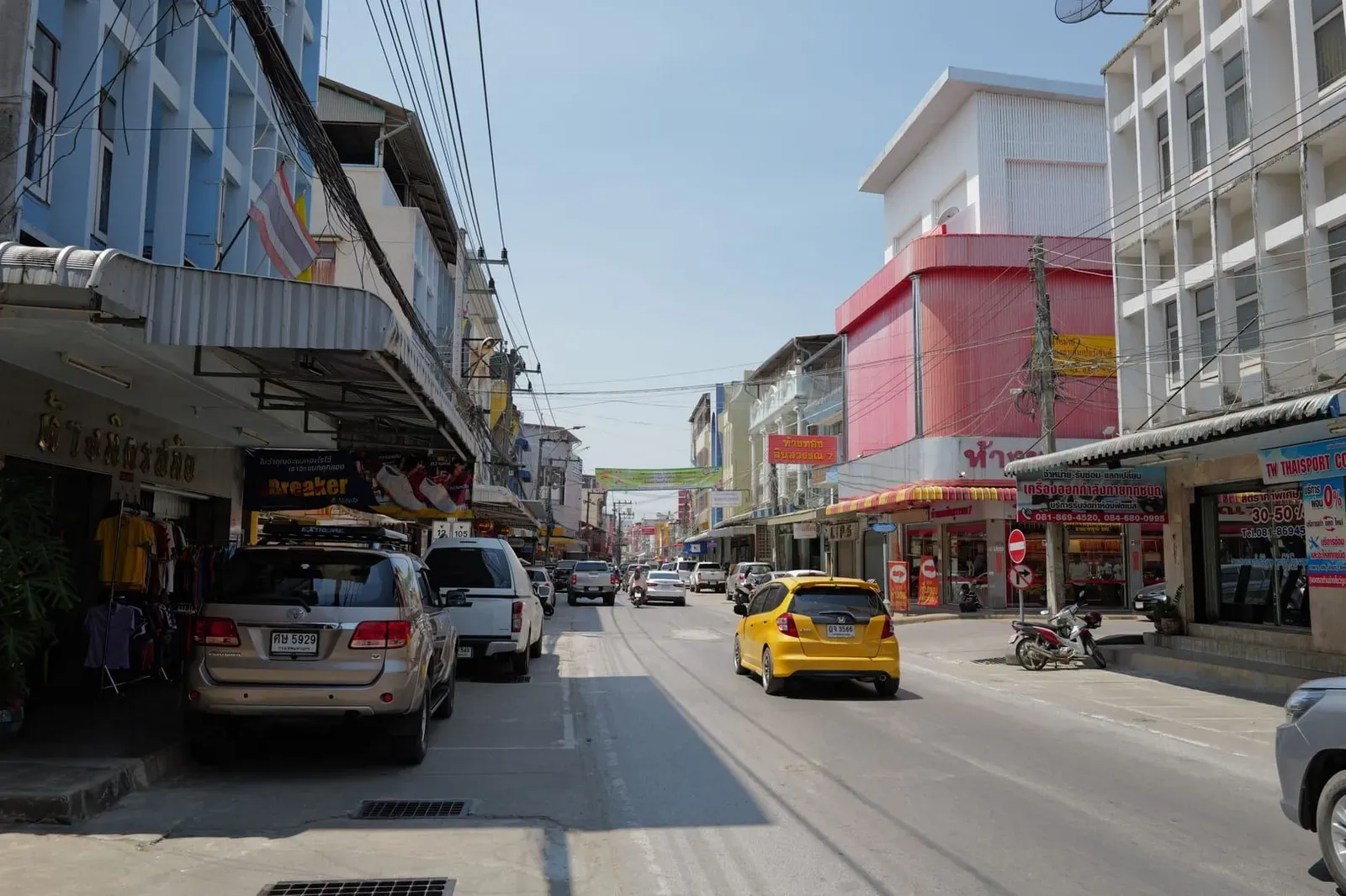
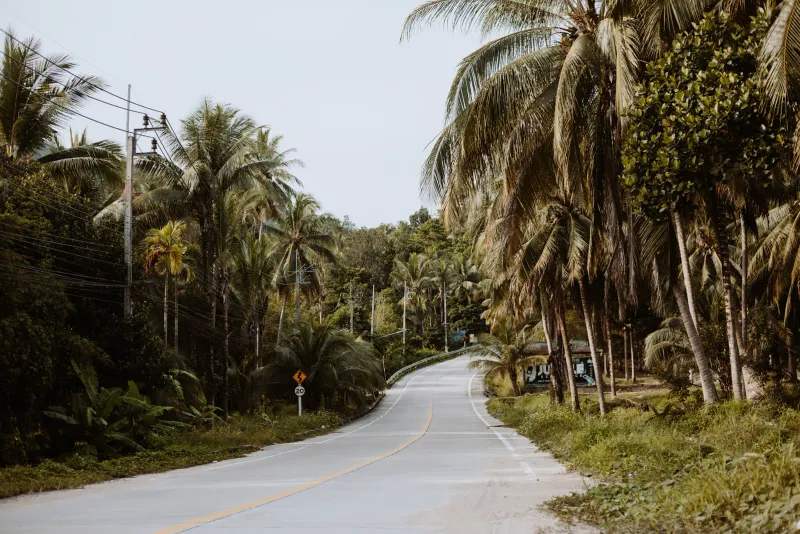
Thailand drives on the left, so rental cars are right-hand drive — a mirror image of driving in the US or mainland Europe that catches out first-time renters in the first few kilometers. The Route 4169 ring road circles the island for about 51 km, connecting every beach town in roughly an hour without stops, and is well-paved two-lane tarmac for nearly its full length.

Two stretches deserve extra caution. The Chaweng-Lamai corridor gets busy around sunset (roughly 5-7 PM), with songthaews, scooters, and delivery trucks moving at different speeds. The hilly section between Lamai and Nathon has steep grades and sharp hairpin bends that surprise drivers used to flatter roads. Rain raises risk on both — the September-November monsoon brings sudden downpours that turn tarmac slick within minutes, so slow down the moment rain starts. Parking is free almost everywhere except the densest stretch of central Chaweng.
What Happens If You Damage the Rental Car?
If you damage a rental car in Koh Samui, the company deducts repair costs from your deposit up to the insurance excess agreed at pickup — anything beyond that should be covered by the policy, assuming you were driving legally. Before you drive off, walk around the car and photograph or video every panel, the wheels, mirrors, and interior, with your phone’s timestamp visible — repeat the same walk-around at return, before handing back the keys.
This habit is the best protection against a disputed damage claim, the most common complaint about car rental on Samui. Get a written rental agreement noting existing scratches, and pay deposits by card hold or cash against a receipt rather than leaving your passport. If a dispute happens anyway, Thailand’s Tourist Police (dial 1155) can mediate before you pay a contested fee.

FAQ
Do I need an International Driving Permit to rent a car in Koh Samui?
Yes. Thai law requires a valid home-country driving licence plus an International Driving Permit (IDP) covering car categories, arranged before you travel — Thailand’s DLT does not issue IDPs to tourists. Some local shops rent without checking, but driving without one is illegal and can void your travel insurance in an accident.
How much does it cost to rent a car in Koh Samui?
Expect 900-1,800 THB per day (~26-51 USD) for a compact or mid-size car, and 1,500-2,500 THB per day (~43-71 USD) for an SUV or pickup, with weekly rentals cutting the daily rate by roughly 30-40%. Airport counters typically charge 30-60% more than local operators nearby.
Is it cheaper to rent a car at Samui Airport or in town?
Local rental shops in Chaweng, Lamai, Bophut, and Nathon are usually 30-60% cheaper than airport counters for a comparable car. Airport counters trade that premium for 24-hour convenience straight off your flight and generally more English-language support and standardized paperwork.
Can you rent a car with a driver in Koh Samui?
Yes. Most local agencies and hotel concierges arrange a car with driver, typically priced by day or route rather than by vehicle class — useful for airport transfers, a full ring-road tour, or travelers who would rather skip driving on the left altogether.
Is it safe to drive a rental car in Koh Samui?
Driving is generally manageable at moderate speed but carries real risk from mixed traffic, unfamiliar left-hand roads, and steep hairpin sections between Lamai and Nathon. Rain during the September-November monsoon sharply raises hazard. A car is markedly safer than a scooter, which accounts for most of the island’s road fatalities.
Published on
About the author

Mike Brochlowski
Travel photographer & writer
Travel photographer and island explorer. Mike has spent years documenting Southeast Asia's hidden gems, from secluded beaches to jungle waterfalls.
Articles by Mike →More in Travel Guides
Next in Travel Guides
Koh Samui in August — Weather, Sea, Crowds & Is It Worth It?
Koh Samui in August: the driest month of the wet-season stretch at 100mm rain, sea 29.5°C, but European summer holidays make it the busie…

Next in Travel Guides
Chaweng Nightlife — Soi Green Mango, Ark Bar & the Rest, Street by Street
Chaweng nightlife by street: Soi Green Mango's clubs, Ark Bar's fire shows and Soi Solo's bars — hour by hour, with prices, walk times an…
Chaweng Beach — Samui's 7km White Sand Strip and Nightlife Capital
Chaweng Beach on Koh Samui — 7 km of white sand, beach clubs, Soi Green Mango nightlife, Central Festival shopping, and year-round swimming.