Contents
Are Koh Samui’s Beaches Safe from Wildlife?
Yes — Koh Samui’s beaches are safe for the vast majority of visitors, and nothing here should keep you out of the water. Four things are worth knowing before you go: biting midges (locally called “sandflies”) bite at dawn, dusk and after rain on quiet, shaded beaches; box jellyfish appear in a seasonal window and call for vinegar, not fresh water; sea urchins live on the rocky and reef beaches, not the sandy ones, so water shoes solve most of the risk; and Koh Samui’s beach dogs are almost always harmless strays that want food, not confrontation.
Key takeaways
- Sandflies (biting midges) bite most at dawn, dusk and after rain on quiet, seaweed-lined or shaded beaches — not on busy, wind-exposed sand.
- Box jellyfish cluster in a seasonal window on the east coast; see the full jellyfish guide for season, nets and first aid.
- Sea urchins live on rocky, reef-fringed beaches — Coral Cove, Silver Beach, Thongson Bay, Laem Set, Na Khai — where water shoes are the single best defence.
- Monitor lizards, hermit crabs and beach dogs are common but essentially harmless if you leave them alone; the main animal risk on Samui is a scooter, not a bite.
Key facts: Emergency 1669 · Sandfly season: worst after rain, dawn/dusk · Jellyfish season: see /guides/jellyfish · Reef beaches needing water shoes: 5+ (Coral Cove, Silver Beach, Thongson Bay, Laem Set, Na Khai) · Stray dogs: island-wide, mostly harmless
What Are Koh Samui’s Sandflies and How Do You Avoid Bites?
Koh Samui’s “sandflies” are almost always biting midges (family Ceratopogonidae), tiny 1–3 mm insects that locals and travellers alike call sandflies or “no-see-ums” because they are nearly invisible until they bite, according to a general entomological overview of the family (Wikipedia, Ceratopogonidae). Only the females bite, feeding on blood to develop eggs, and their saliva triggers a histamine reaction that leaves small, intensely itchy welts rather than the flat mosquito bump most travellers expect.
Bites cluster on quieter, shaded beaches with seaweed lines, mangrove edges or overhanging vegetation — the moist organic debris where midge larvae develop — rather than on wide, wind-exposed sand like central Chaweng. Activity peaks at dawn and dusk when wind drops, and midge numbers commonly spike for a day or two after rain, a pattern widely reported across tropical midge habitats even though exact Samui-specific counts are not published.
Prevention: a DEET or picaridin repellent applied to ankles and lower legs (their usual biting zone), covering up at dawn/dusk on shaded beaches, and avoiding sitting directly on seaweed piles or damp sand near vegetation. Standard mosquito nets and fans (midges are weak fliers) also help at beachfront bungalows.
Treatment: wash the area, apply an antihistamine cream or take an oral antihistamine for itching, and avoid scratching — broken skin around a midge bite is the most common route to a secondary infection in the tropics. See a pharmacy or the hospitals guide if bites become swollen, hot or spread beyond the bite site.
How Dangerous Are Box Jellyfish on Koh Samui?
Box jellyfish stings are rare but genuinely serious, and Koh Samui carries more of Thailand’s recorded box jellyfish fatalities than any other destination in the country — six of the seven confirmed box jellyfish deaths in Thailand between 1999 and 2015 occurred on Koh Samui or neighbouring Koh Pha Ngan, according to English Wikipedia’s Koh Samui entry, which cites Thai health-ministry reporting. The genus most implicated, Chironex, is native to the Indo-Pacific from southern Japan to northern Australia and is described as highly venomous by Wikipedia’s Chironex entry.
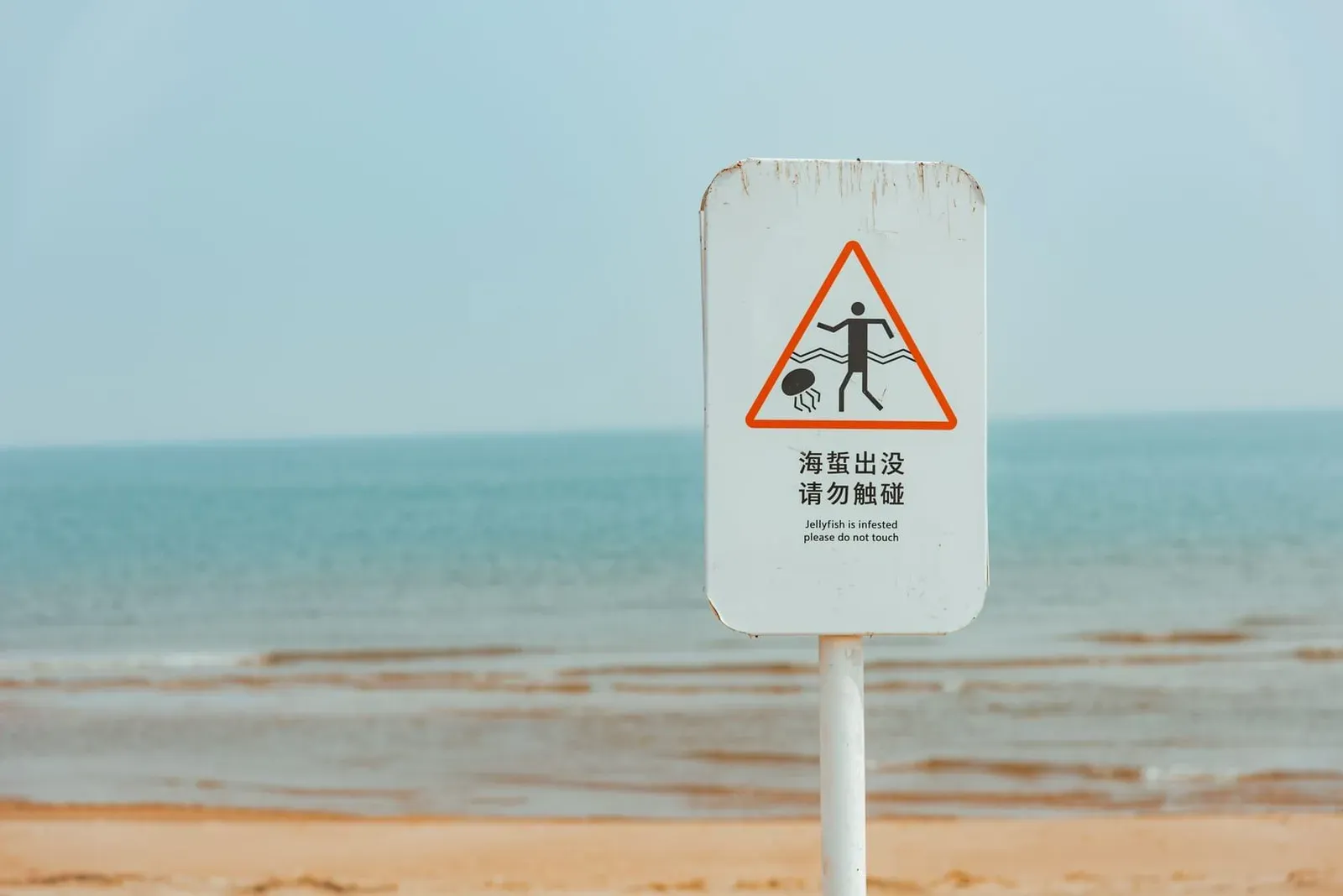
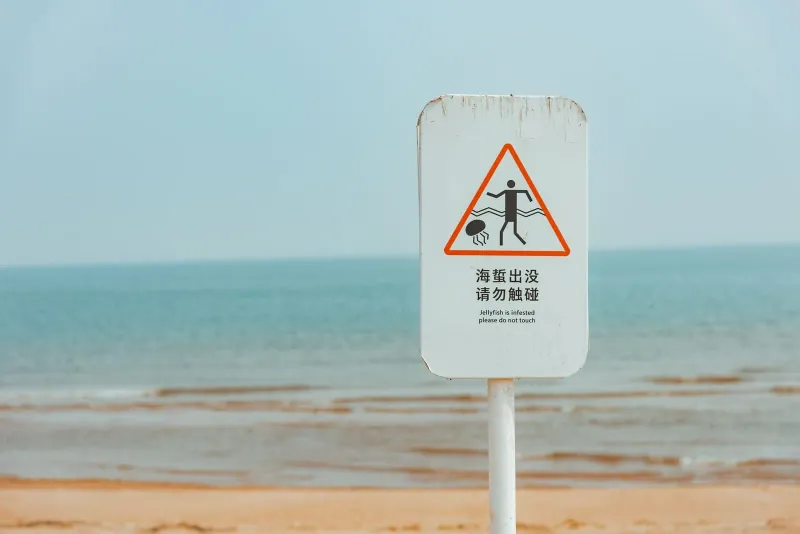
This page keeps it brief on purpose — the full jellyfish guide is the authority on season (roughly June–October, peaking August–September), which beaches have nets and vinegar stations (Chaweng and Lamai), and step-by-step first aid. In short: vinegar for at least 30 seconds, never fresh water or rubbing, and call 1669 for any serious sting. Reported incidents include a 10-year-old visitor who survived a sting at Lamai Beach in November 2019, and hotels across Samui underwent joint sting-prevention and treatment training in March 2022 — a sign local businesses now take the risk seriously.
Which Koh Samui Beaches Have Sea Urchins?
Sea urchins turn up wherever there’s rock or a fringing reef close to shore, not on Koh Samui’s long sandy beaches — the beaches to watch are Coral Cove, Silver Beach, Thongson Bay, Laem Set and Na Khai, all of which have coral rubble, boulders or a reef within wading distance. Silver Beach explicitly flags sea urchins on its rocks as a reason to wear reef shoes, and Coral Cove, Thongson Bay, Laem Set and Na Khai all sit on coral rubble or reef seabeds where the same footwear advice applies.
A sea urchin spine is a mechanical injury, not a poisoning for most Samui species — the pain comes from puncture and, in a minority of the roughly 80 (of 600) urchin species that carry toxin, from mild venom too, per a clinical overview of sea urchin injuries (Wikipedia, Sea urchin injury). Expect sharp pain, redness and sometimes a purple-black stain from the urchin’s natural dye where a spine broke the skin.
First aid: soak the area in water as hot as can be comfortably tolerated — heat is thought to break down the toxin and ease pain — and remove any spine fragments you can reach with tweezers. Spines are brittle and often snap off under the skin; don’t dig aggressively for fragments you can’t see, since retained pieces near a joint or tendon can form a painful nodule (granuloma) weeks later and occasionally need minor surgical removal. See a clinic (the hospitals guide lists options) if pain persists, the area swells significantly, or a spine sits over a joint.
Prevention: water shoes are genuinely the single best defence at all five reef beaches above — cheap, sold island-wide, and the difference between a fun snorkel and a limping walk back to the car.
What Reef Life Will You Actually See?
Koh Samui’s shallow fringing reefs support a modest but real tropical fish population, and the beaches above are exactly where you’re likely to see it while snorkeling. Coral Cove’s offshore reef shows parrotfish and colourful reef fish close enough to reach from the sand, our own Coral Cove coverage notes, while Thongson Bay reports parrotfish and angelfish around its eastern rocks in clear, dry-season water (December–April).
Clownfish and small anemonefish, butterflyfish, wrasses and Moorish idols show up around several north and east coast reef patches, and — more surprising to most visitors — small blacktip reef sharks have been spotted, though irregularly, in the shallows off Ban Tai and beyond the rocks at Silver Beach. These are shy, shallow-water juveniles that avoid people; there is no record of a blacktip reef shark posing any real threat to swimmers on Samui, and sightings are occasional rather than routine.
Are Monitor Lizards and Hermit Crabs Dangerous?
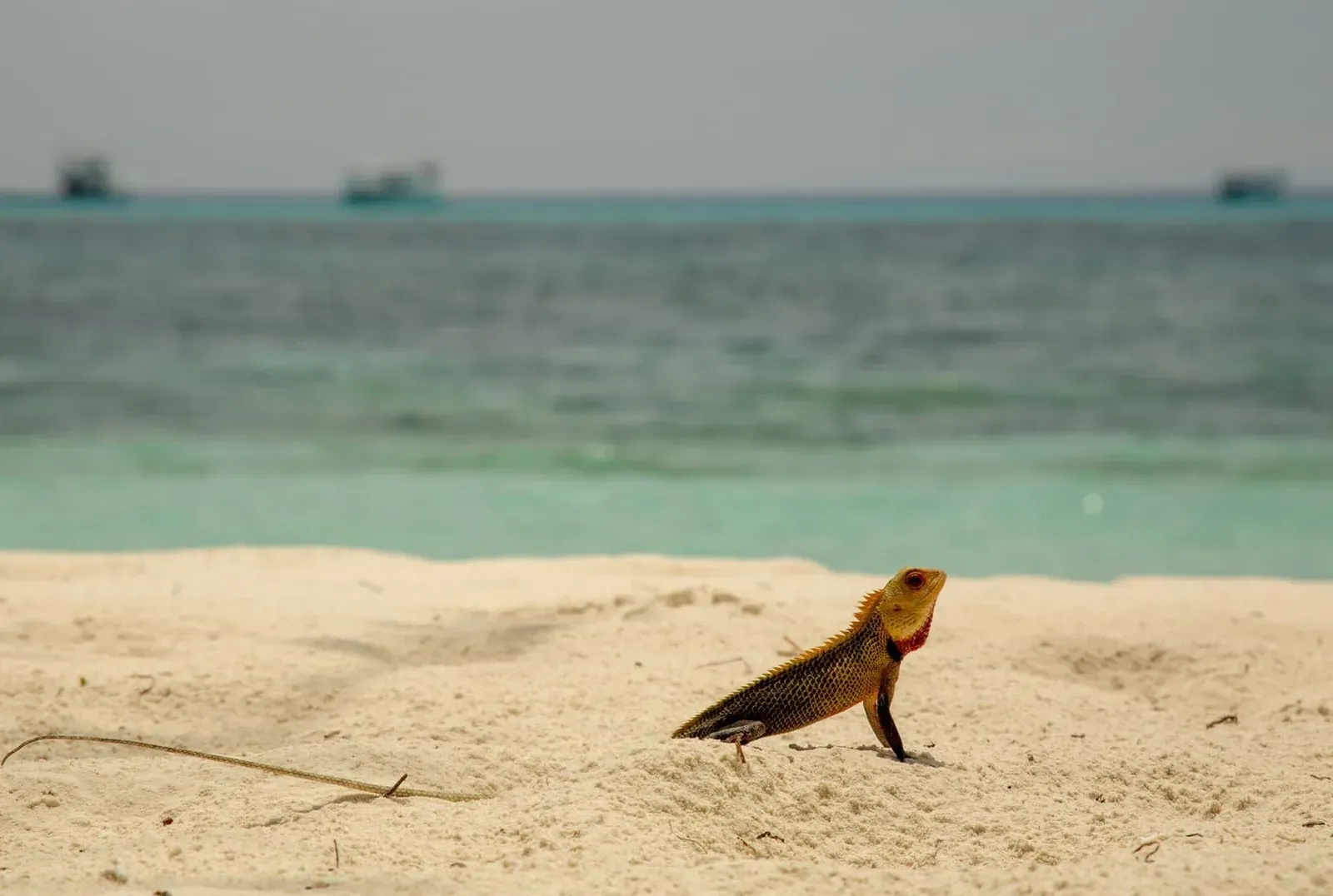
No — both are common on and around Koh Samui’s beaches and neither poses a realistic threat if left alone. Asian water monitors (Varanus salvator), which regularly appear along Samui’s rivers, canals and forest edges and occasionally near the shoreline, typically grow 1.5–2 m long, with an exceptional recorded specimen from Sri Lanka reaching 3.21 m, according to Wikipedia’s Asian water monitor entry. The species is legally protected in Thailand and is not inherently aggressive — the same source records only isolated bite incidents elsewhere in Southeast Asia, generally when a monitor was cornered or provoked. Give one space and it will move off; do not attempt to feed or corner it.
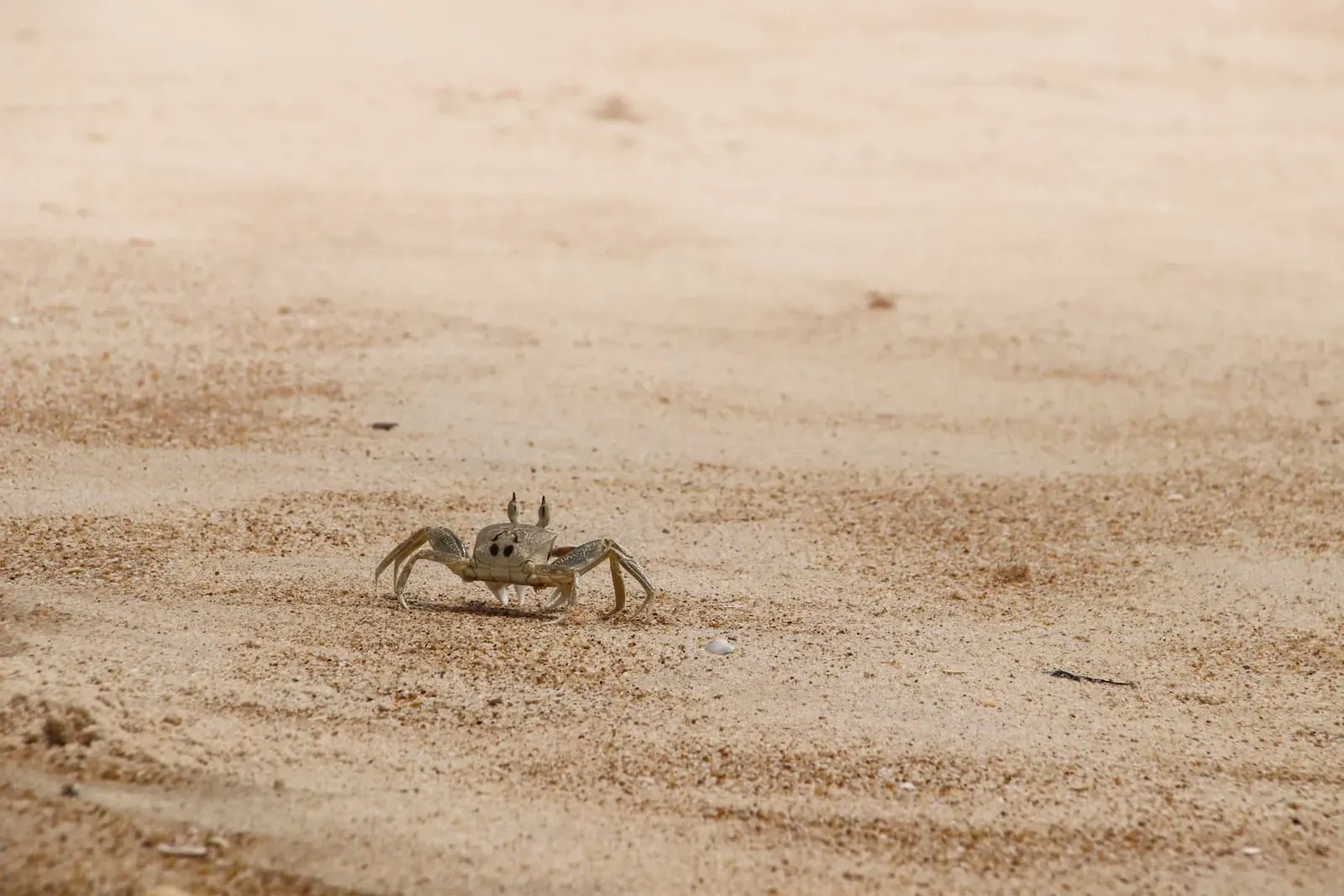
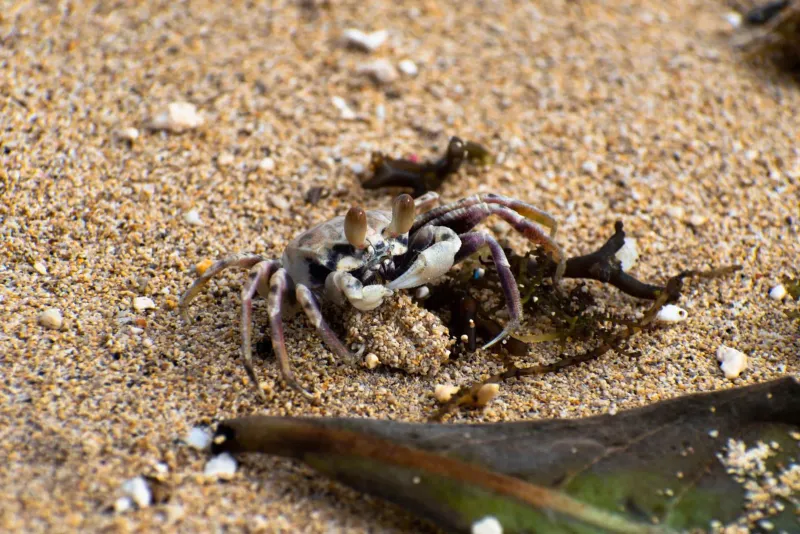
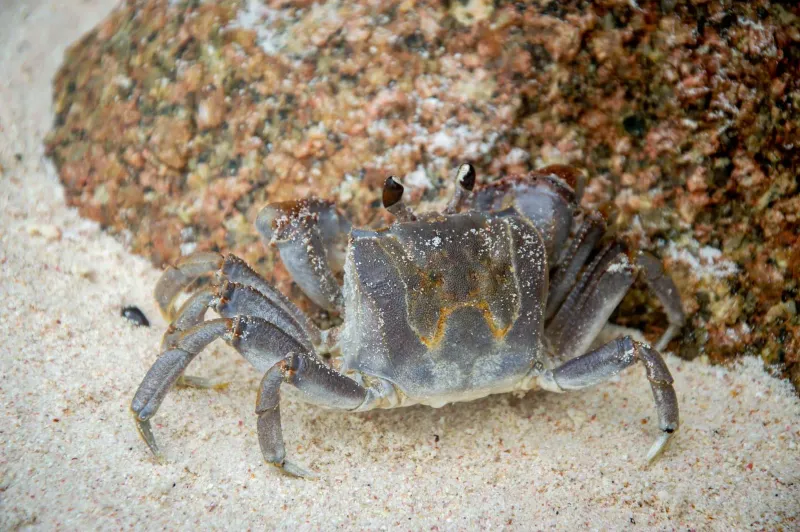
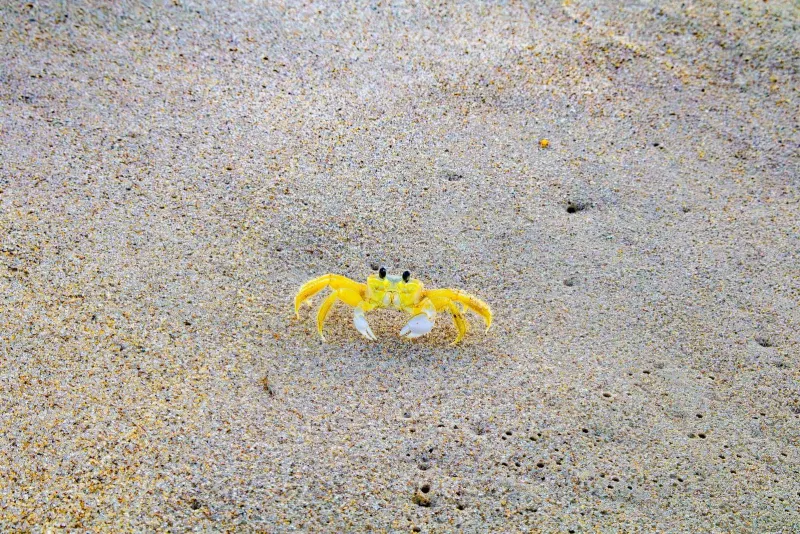
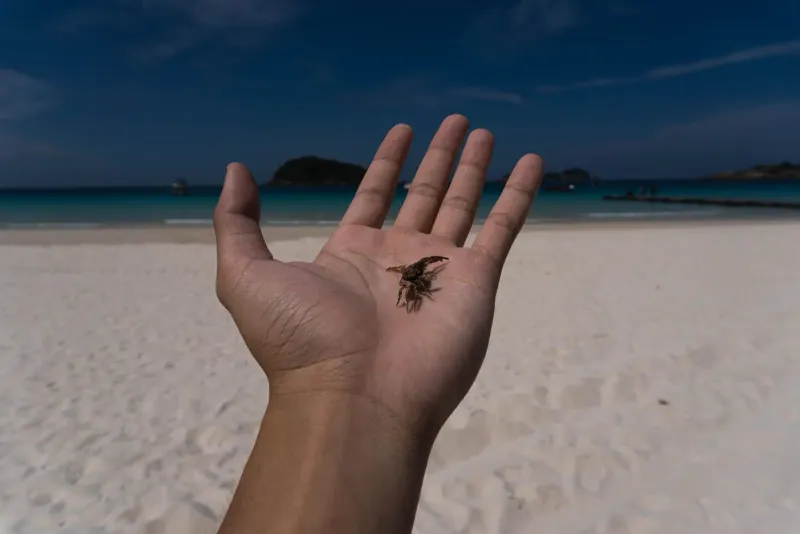
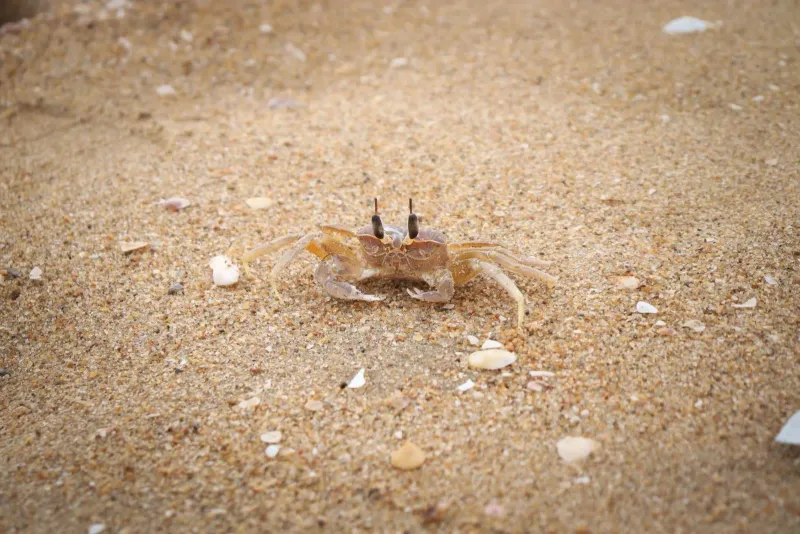
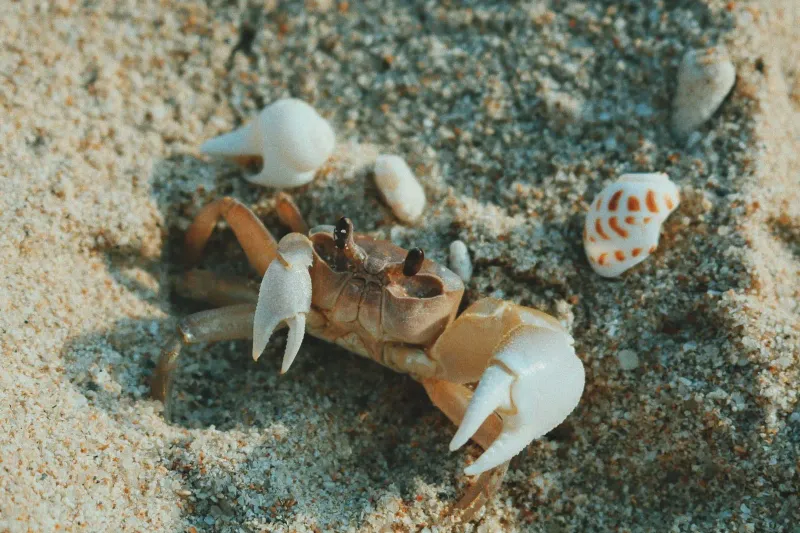
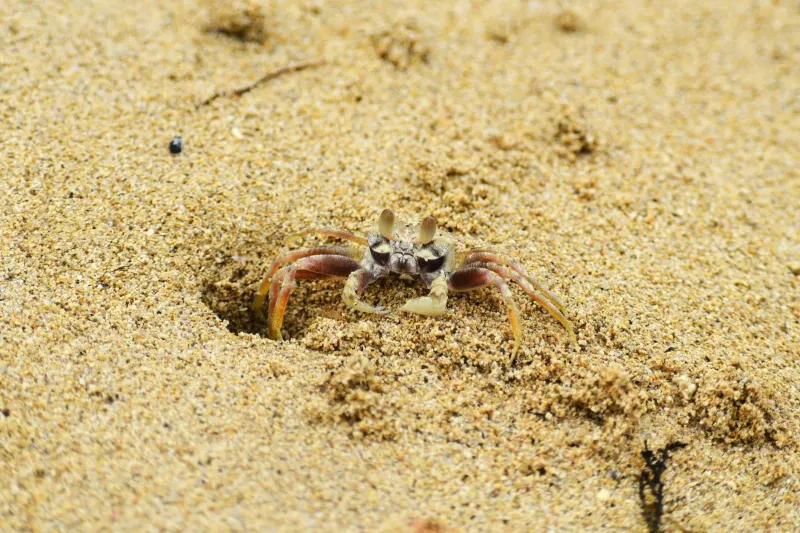
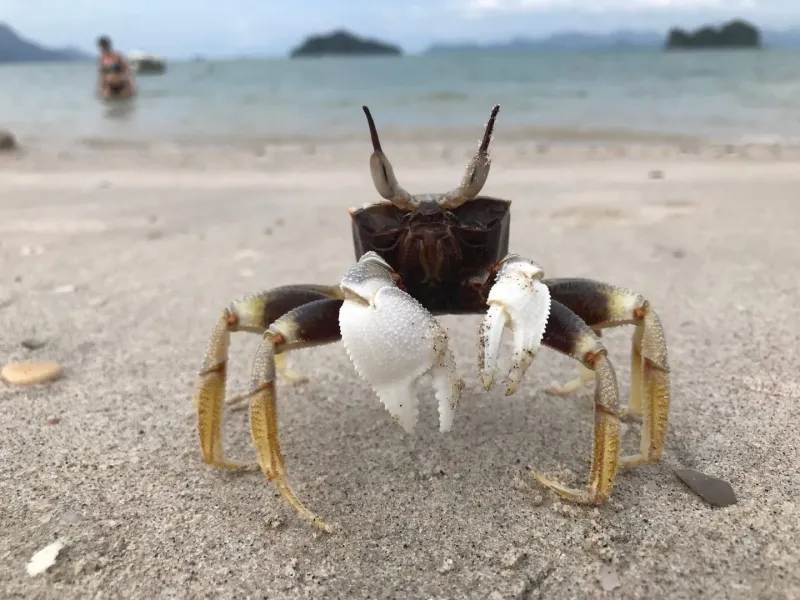
Hermit crabs are the small, shell-carrying scavengers you’ll see scuttling across the sand at dusk on quieter beaches — they’re omnivorous, mostly nocturnal, and harmless unless picked up and squeezed, in which case their pincer can break skin, per a general overview of hermit crab behaviour (Wikipedia, Hermit crab). Ghost crabs, the fast, pale, sand-coloured crabs that dart into burrows as you approach, behave the same way: watch, don’t grab.
Are Koh Samui’s Beach Dogs Safe to Approach?
Mostly yes, but treat every stray with caution rather than as a pet. Koh Samui has tens of thousands of stray dogs, a population that grew largely unchecked before organised sterilisation efforts began around 1999, per Wikipedia’s Koh Samui entry. Most beach dogs are food-motivated and people-habituated rather than aggressive — they nap in the shade, beg politely at beachfront restaurants, and generally ignore passing tourists — but packs can be territorial after dark, and any dog can bite if startled, cornered or protecting food or puppies.
Rabies is present in Thailand’s stray dog population, and the World Health Organization notes that dog bites account for the large majority of rabies exposures reported by travellers in the country. Wash any bite or scratch immediately with soap and running water for a full 15 minutes and get same-day medical care for a post-exposure vaccine — see is Koh Samui safe for the full rundown on this and other health risks. The Soi Dog Foundation ran a mobile sterilisation and vaccination clinic on Koh Samui in February 2021 in partnership with local authorities, part of a broader island effort — alongside independent local rescues — to reduce both the stray population and rabies risk over time.
Practical rules: never approach a feeding or sleeping pack, don’t run past a dog (it can trigger a chase response), and keep children from petting strays no matter how friendly they look. Most encounters end with nothing more than a dog rolling over for a belly rub.
What Do Koh Samui’s Beach Warning Flags Mean?
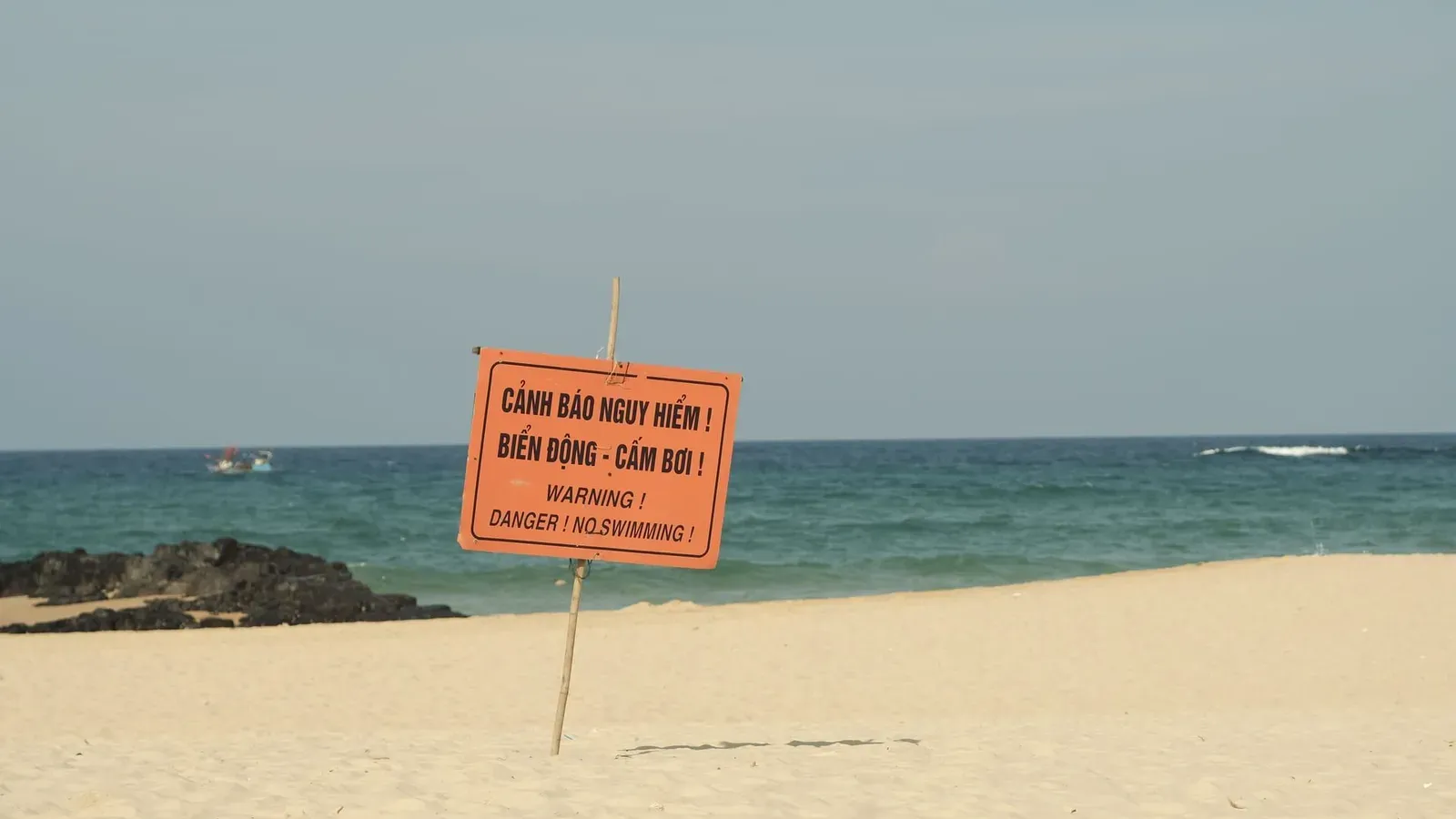
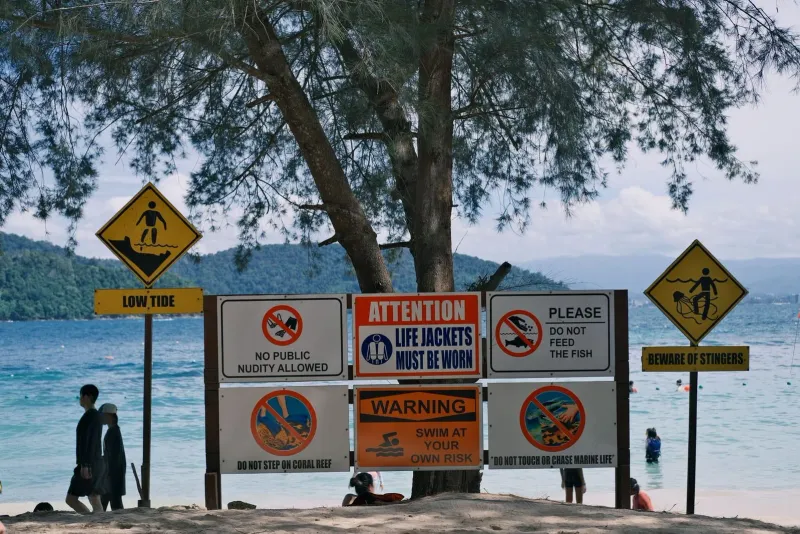
Red flags and posted signs mean stop and read them — Koh Samui’s beaches are not uniformly staffed with lifeguards, so warning signs and flag colour are often the only safety information you’ll get. Resort-front sections of busier beaches (parts of Chaweng, Lamai and some hotel beaches) may have seasonal lifeguard coverage, but most of the island’s beaches, including all five reef beaches named above, have none — you swim, snorkel and wade at your own judgement.
Treat a red flag or a jellyfish/no-swimming sign as absolute, not advisory, particularly during the box jellyfish season or when a beach has posted sea urchin or rocky-entry warnings — check our sea conditions by month guide for how wave state shifts through the year. If in doubt, ask staff at a beachfront restaurant or resort — most know current local conditions better than any app. Pack reef shoes, a vinegar sachet or bottle, and antihistamine cream in your packing list before a beach-heavy trip, keep the hospitals guide bookmarked for anything beyond first aid, and see our travel tips hub for more pre-trip essentials.
FAQ
Are sandflies dangerous on Koh Samui?
No — Koh Samui’s “sandflies” (biting midges) cause itchy bites, not serious illness. They bite most at dawn, dusk and after rain on shaded, seaweed-lined beaches. Repellent on ankles and lower legs, plus avoiding damp sand near vegetation at those hours, prevents most bites. Scratching broken skin is the main risk, since it can lead to a minor secondary infection.
Do I need to worry about box jellyfish at every Koh Samui beach?
No. Reports cluster on the east coast, mainly Chaweng and Lamai, and mostly within a seasonal window — see the full jellyfish guide for exact months. Elsewhere on the island, sightings are occasional. Always heed posted warning signs and carry vinegar as a precaution if you swim on the east coast during the season.
Which Koh Samui beaches have sea urchins?
Reef and rocky beaches, chiefly Coral Cove, Silver Beach, Thongson Bay, Laem Set and Na Khai, where coral rubble or a fringing reef sits close to shore. Koh Samui’s long sandy swimming beaches, like Maenam or Chaweng’s main stretch, are far less likely to have them. Water shoes solve most of the risk at the reef beaches.
Are Koh Samui’s stray dogs safe?
Most beach dogs are food-motivated strays that ignore tourists, but rabies is present in Thailand’s dog population, so any bite or scratch needs immediate washing and same-day medical care. Never approach a feeding or sleeping pack, and keep children from petting strays. See is Koh Samui safe for full health-risk guidance.
Will I see monitor lizards on Koh Samui’s beaches?
Occasionally, mostly near river mouths, canals and forest edges rather than open sand. Asian water monitors typically reach 1.5–2 m, are legally protected in Thailand, and are not aggressive toward people who leave them alone. Give any monitor lizard space and do not attempt to feed it.
Is it safe to swim where reef sharks have been seen, like Ban Tai or Silver Beach?
Yes. Sightings at Ban Tai and Silver Beach are of small, shy blacktip reef shark juveniles in shallow water, occasional rather than routine, and there is no record of them threatening swimmers on Koh Samui. They are far more likely to swim away from you than toward you.
Published on
About the author

Mike Brochlowski
Travel photographer & writer
Travel photographer and island explorer. Mike has spent years documenting Southeast Asia's hidden gems, from secluded beaches to jungle waterfalls.
Articles by Mike →More in Travel Guides

Also in Travel Tips
Hospitals & Clinics in Koh Samui — Costs & Insurance (2026)
Koh Samui hospital guide: Bangkok Hospital Samui vs government care, ER and scooter-injury costs, insurance direct billing, pharmacies an…
Also in Travel Tips
Is Koh Samui Safe? Scooters, Scams, Sea & Health (2026)
Is Koh Samui safe?
Also in Travel Tips
Box Jellyfish in Koh Samui — Season, Beaches with Nets & First Aid
Box jellyfish appear in Koh Samui's waters mainly June to October; stings are rare but can be serious.