Contents
Overview
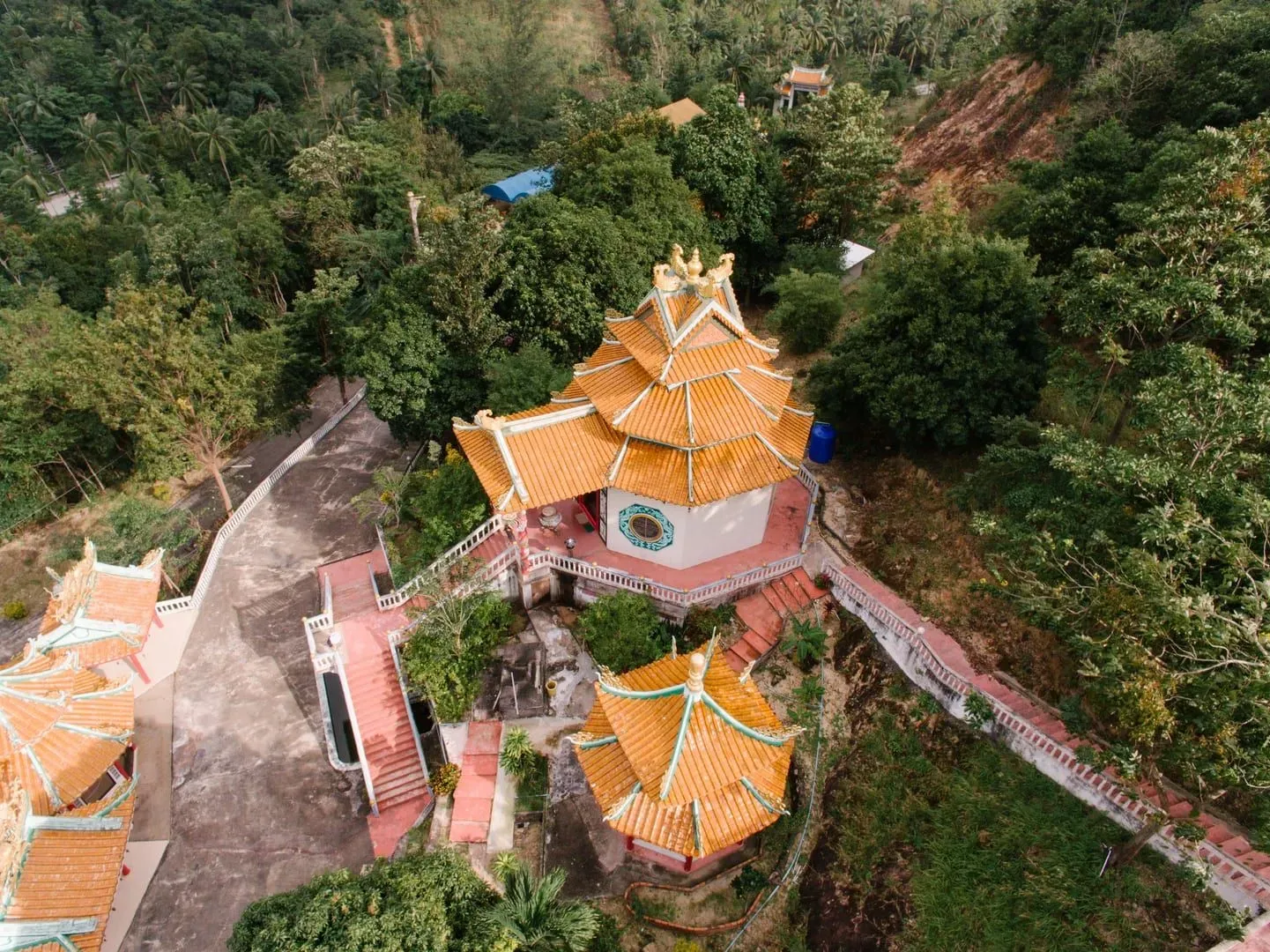
Koh Samui has seven places to meditate without leaving the island, from a donation-based silent-retreat hermitage above Lamai to a free evening drop-in session in Bophut, plus three well-known off-island options within a half-day of the ferry pier. Most on-island sessions cost nothing beyond a voluntary donation; the two off-island yoga retreats and the mainland silent retreat charge fixed fees. This guide compares all of them so you can pick a format that matches the time and commitment you actually have.
Key takeaways
- Free and drop-in: Samui International Meditation Center in Bophut runs a public evening session daily.
- Committed and silent: Dipabhavan above Lamai runs donation-based 3-day and 7-day Vipassana retreats; Wat Suan Mokkh in Chaiya runs a 10-day silent retreat for 2,000 THB (~57 USD).
- Resort-only: the Kamalaya Monk Cave is reserved for staying guests and pre-booked day visitors.
- Yoga-first: Vikasa (Chaweng Noi) and Samahita Retreat (Laem Sor) fold meditation into daily yoga classes rather than teaching it as a standalone practice.
- Retreats observe the 8 precepts and Noble Silence — no talking, no eye contact, no phone — for the full duration.
Where Can You Meditate on Koh Samui?
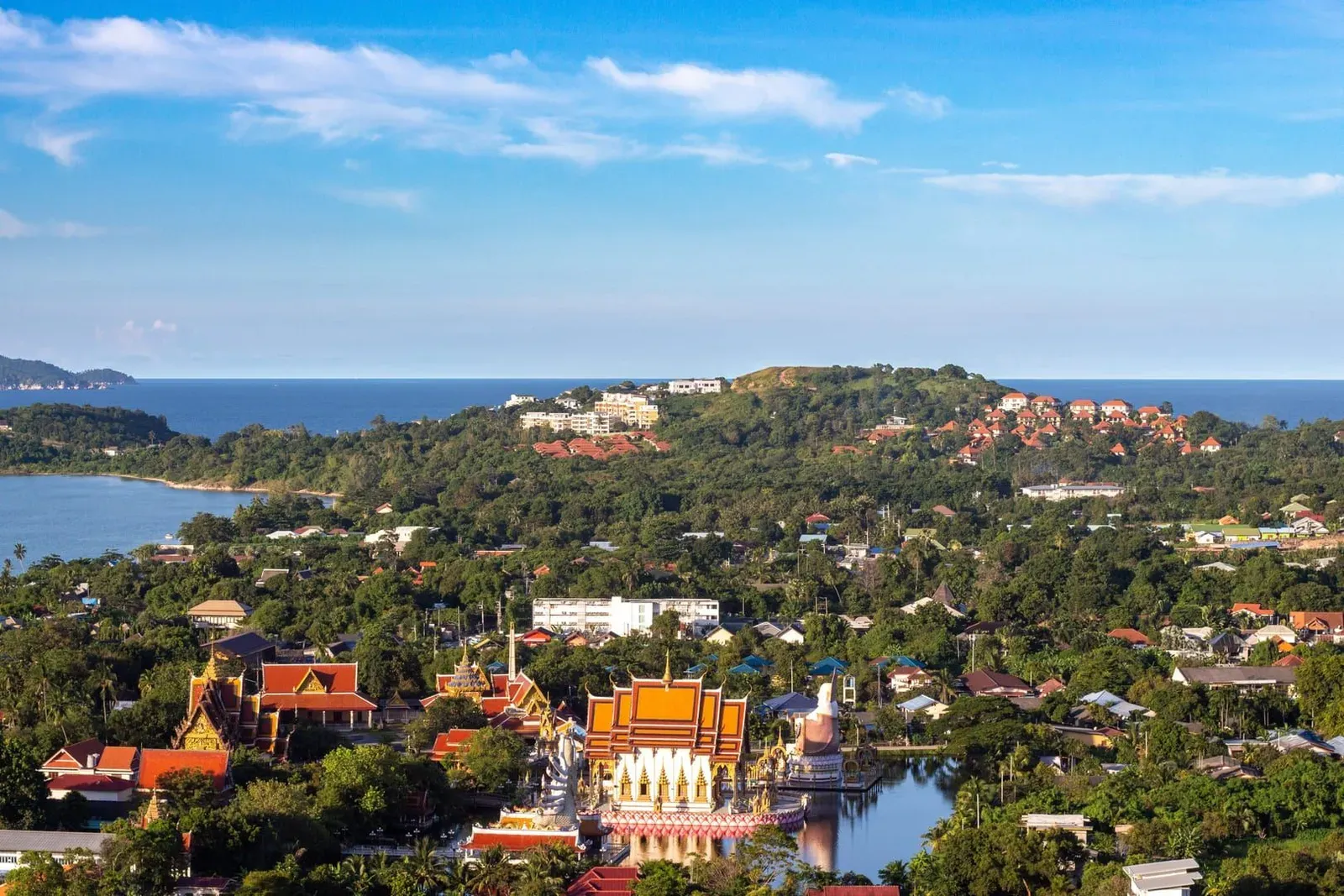
Seven sites on the island offer some form of meditation practice, ranging from free evening drop-ins to resort-restricted access. Compare the format, cost, and commitment level before picking one.
| Place | Area | Format | Cost | Best For |
|---|---|---|---|---|
| Dipabhavan | Above Lamai (SE hills) | 3-day intro & 7-day silent Vipassana retreats, book ahead | Free (donation) | Committed first-timers and repeat meditators |
| Samui International Meditation Center | Bophut hills (N) | Free daily drop-in 7:00-8:15 PM, plus 3-day/7-day retreats | Free (donation) | Anyone wanting one evening, no booking |
| Kamalaya Monk Cave | Laem Set (S) | Self-guided silent sitting inside a 300-year-old granite cave | Resort guests / pre-booked day pass | Wellness travelers already staying at Kamalaya |
| Wat Hin Lad | Nathon interior | Occasional monk-led silent retreats; quiet forest zones year-round | Free (donation) | Hikers who also want stillness |
| Wat Khao Chedi | Taling Ngam hilltop (SW) | Short self-guided sit with 360-degree views; no organized program | Free (donation) | A 15-20 minute quiet stop |
| Wat Laem Sor | Bang Kao (SW) | Dedicated Meditation Forest for self-guided Anapanasati | Free (donation) | Slow travelers exploring the compound |
| Secret Buddha Garden | Khao Pom hills (Central) | A stone bench near the lower falls, not an organized practice | ~80 THB (~2.50 USD) entry | Photographers who also want a still moment |
Dipabhavan — Silent Vipassana Above Lamai
Dipabhavan Meditation Center runs Koh Samui’s most structured silent-retreat program from a hillside hermitage in the southeast, following the lineage of Ajahn Buddhadasa’s mainland monastery Suan Mokkh. Retreats are entirely donation-based (dana) and teach Anapanasati (mindfulness of breathing) alongside Vipassana insight practice, with Noble Silence in force for the full stay — no talking, gesturing, or eye contact between participants. You cannot drive straight to the hermitage; register in advance and meet the free transport truck at the Dipabhavan Foundation office near Wat Sila Ngu (the Red Temple) in Hua Thanon. See the full Dipabhavan guide for the daily schedule, what to pack, and booking details.
Samui International Meditation Center — Free Evening Sits in Bophut
The Samui International Meditation Center (SIMC) is the easiest way to try meditation on Samui without any commitment: a free public session runs daily from 7:00 PM to 8:15 PM in the hills above Bophut, no booking required for individuals. The center teaches the Middle Way Meditation technique — resting attention on a point roughly two finger-widths above the navel — taught by resident English-speaking monks as a secular, non-denominational tool. Beyond the evening drop-in, SIMC also runs residential 3-day and 7-day retreats with morning chanting and occasional alms rounds through the local Bophut community. Full details, including directions to the hillside campus, are in the SIMC guide.
Five More Places to Sit on Koh Samui
Beyond the two dedicated meditation centers, five more temples and one resort cave on Samui offer a place to sit quietly, though only one runs a scheduled program.
Kamalaya’s Monk Cave
The Kamalaya Monk Cave (Tham Phra) is a natural granite chamber on the resort’s Laem Set hillside that Buddhist monks used for solitary meditation for more than three centuries before Kamalaya was built around it. Access is restricted to staying guests and visitors who book a spa treatment or day pass in advance — casual walk-in sightseeing is not permitted. Inside, all electronics are banned and even 10 minutes of sitting is enough for most guests to feel the cave’s cool, sound-dampened stillness. See the Kamalaya Monk Cave guide for access policy and pricing.
Wat Hin Lad
Wat Hin Lad, a forest monastery (Wat Pa) near Nathon, occasionally hosts multi-day silent retreats led by resident monks focused on Vipassana technique, though these run less predictably than Dipabhavan’s fixed schedule — check locally before planning a trip around one. Even without a retreat running, the shaded jungle paths near the Hin Lad Waterfall trailhead offer dedicated quiet zones for a self-guided sit. Full details on the Wat Hin Lad guide.
Wat Khao Chedi
The white hilltop stupa at Wat Khao Chedi in Taling Ngam has no organized meditation program, but its 360-degree views over Samui’s undeveloped southwest coast and near-constant sea breeze make it one of the quietest spots on the island for a short, self-guided sit — most visitors manage 15-20 minutes before the midday heat sets in. Details on the Wat Khao Chedi guide.
Wat Laem Sor’s Meditation Forest
Within the sprawling Wat Laem Sor compound at Bang Kao Beach, a small, densely planted Meditation Forest is set aside specifically for self-guided Anapanasati practice, with stone benches shaded by old trees and no formal teacher present. It’s a digital-free zone by convention rather than by rule — visitors are simply encouraged to leave phones behind. Read the Wat Laem Sor guide for the rest of the compound.
Secret Buddha Garden
The Secret Buddha Garden (Tarnim Magic Garden) is a jungle sculpture park, not a meditation site, but its stone benches near the lower falls offer close to absolute silence, broken only by moving water. It’s worth a stop if you’re already driving the central hills, though it’s not a substitute for the dedicated centers above. See the Secret Buddha Garden guide.
Off Samui: Wat Suan Mokkh’s 10-Day Silent Retreat in Chaiya
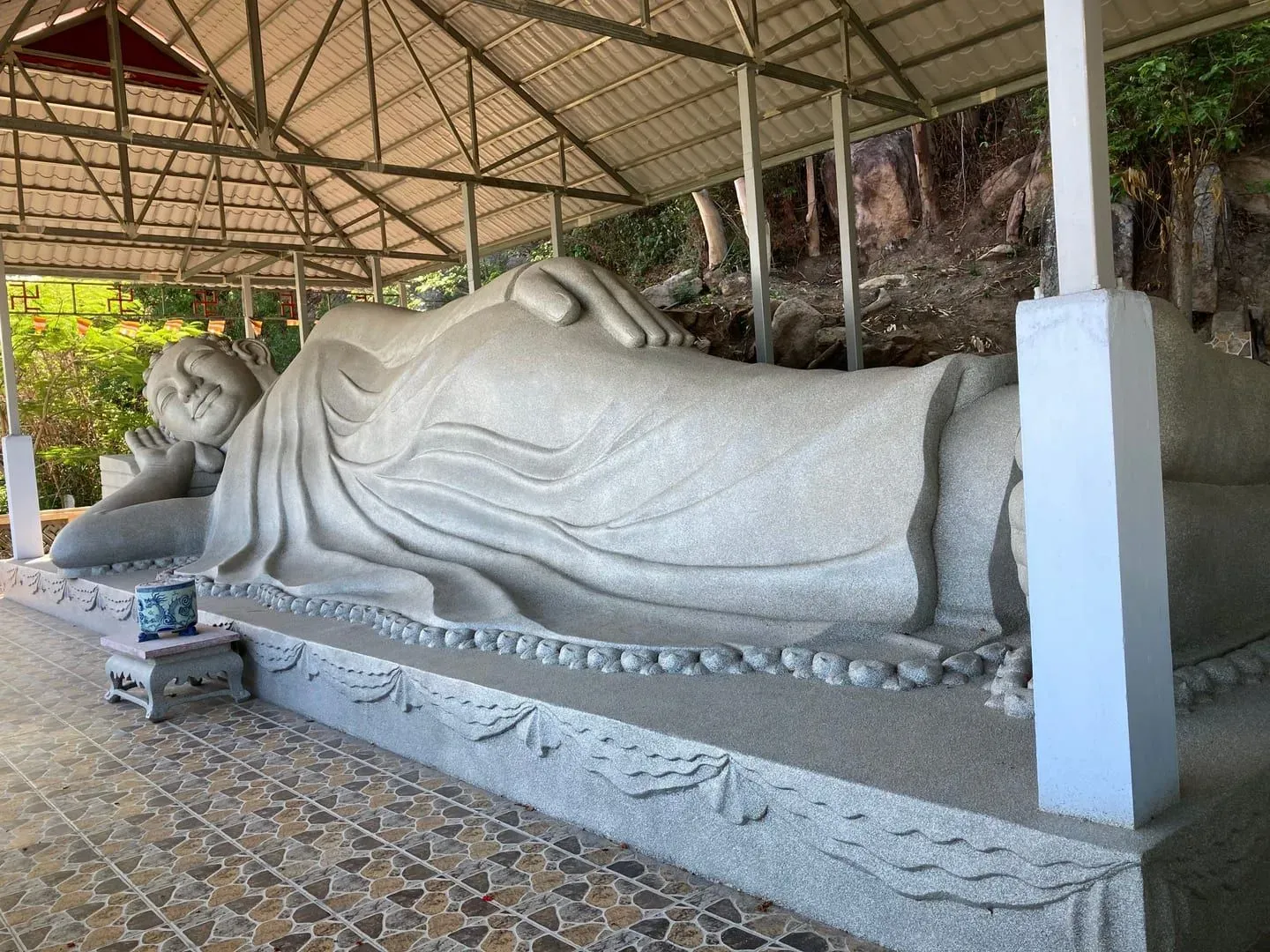
The Wat Suan Mokkh International Dharma Hermitage in Chaiya, on the mainland near Surat Thani, runs Thailand’s best-known 10-day silent meditation retreat for foreigners, teaching Anapanasati (mindfulness of breathing) in a strict monastic setting with no talking permitted for the full stay. Retreats run 1st to 11th of every month with no shorter or longer option, and registration is walk-in only — there is no advance booking, and applicants must arrive in person by 3:00 PM (15:00) on the last day of the preceding month. The suggested donation is 2,000 THB (~57 USD), paid on the first day. Bring loose, modest clothing (shoulders and knees covered), a towel, mosquito repellent, and a flashlight; no food, drink, books, or phones are allowed inside.
Getting there from Koh Samui: take a ferry from Nathon or Bang Rak to Donsak or Tapee Pier on the mainland (about 1.5 hours), then a songthaew or bus toward Chaiya from Surat Thani town or the Phun Phin train station (roughly 50 THB, 1-1.5 hours), asking to be dropped at Suan Mokkh. Door to door, budget 3-4 hours from a Samui pier to the hermitage gate. See Surat Thani to Koh Samui and ferry piers for crossing options and timetables.
Vikasa Yoga and Samahita Retreat — Meditation Through Yoga
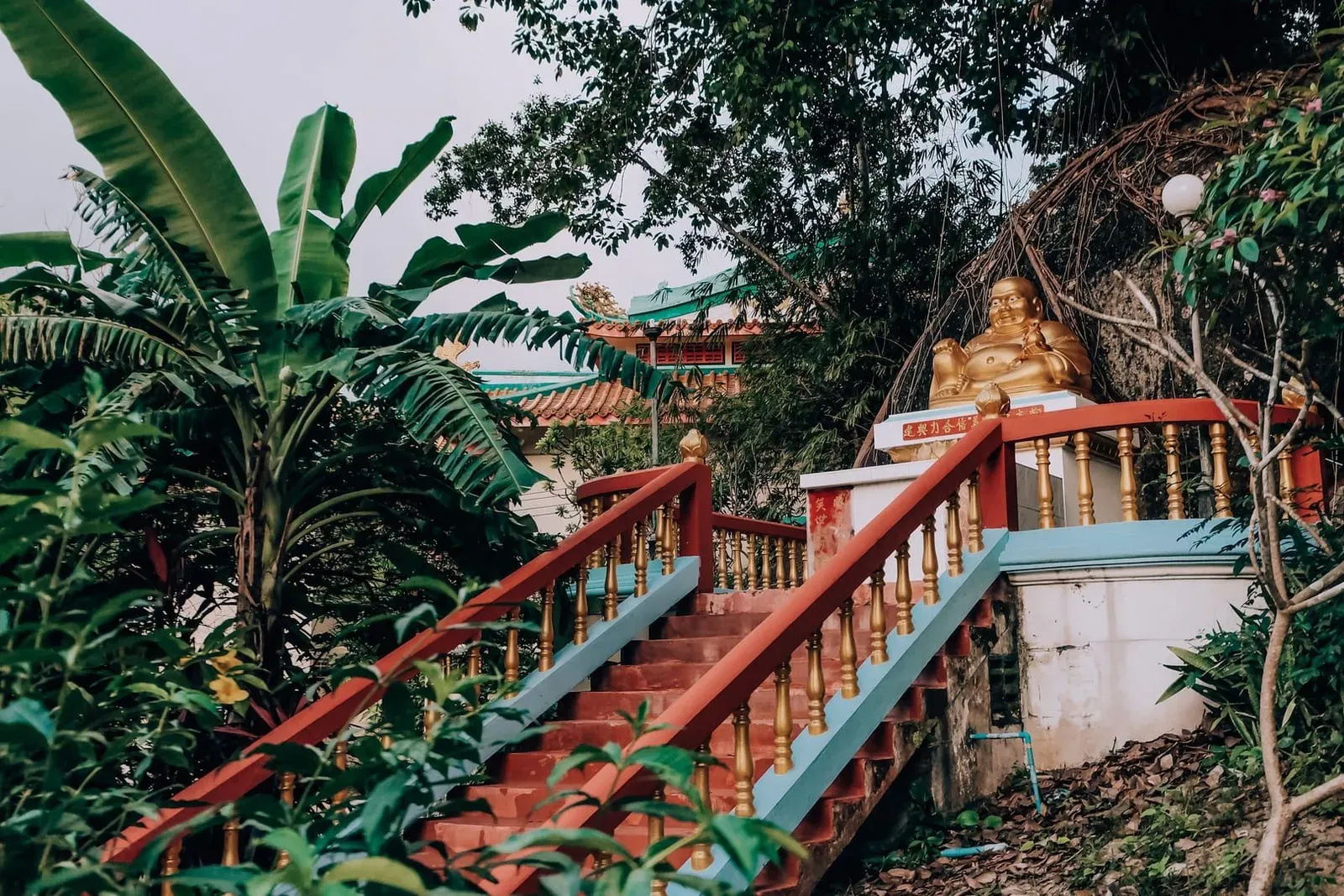
Two wellness resorts fold meditation into a yoga-first daily routine rather than teaching it as a standalone practice. Vikasa Yoga on the oceanfront cliffs at Chaweng Noi sells single drop-in classes for 600 THB (~17 USD), a 7-day unlimited pass for 1,700 THB (~49 USD), and a 30-day pass for 3,500 THB (~100 USD); its 60-minute “Breathe” class pairs 30 minutes of guided pranayama with seated meditation, and multi-day all-inclusive retreat packages (accommodation, meals, unlimited classes) are also available — confirm current rates directly on vikasa.com. Samahita Retreat at Laem Sor Beach in the south runs two yoga and meditation classes daily, at roughly 7:30 AM and 4:30 PM, blending asana, breathwork, and seated meditation; its all-inclusive retreat packages bundle both classes, meals, and a guided walk to a local temple, with pricing set by package — check samahitaretreat.com for current rates.
What Rules Do Retreats Follow?
Residential retreats on and off Samui ask participants to observe the 8 precepts: the 5 standard lay precepts (no killing, stealing, sexual misconduct, lying, or intoxicants) plus three retreat-specific rules — no eating after noon, no entertainment or adornment, and no luxurious beds. Alongside the precepts, silent retreats enforce Noble Silence: no talking, no gesturing, and no eye contact with other participants for the full duration, with the only exception being scheduled one-on-one interviews with a teacher. Most students find the first one to two days the hardest; by day three, the absence of small talk and social performance tends to feel like relief rather than deprivation.
What Does a Monk’s Day Look Like?
A Theravada monk’s day on Samui typically starts with a wake-up bell around 4:00 AM, followed by group chanting and a walk into the community for the alms round around 6:00 AM, where laypeople offer rice and food directly into the monk’s bowl without needing to speak. The final meal of the day is eaten before noon, per the monastic rule against solid food after midday, and the day closes with evening chanting around 6:00 PM before rest. Exact timing varies by temple — Dipabhavan’s retreat schedule runs its own version of this rhythm, and SIMC’s morning chanting begins at 5:20 AM — so treat these as typical hours, not a fixed timetable.
Can You Watch the Morning Alms Round?
Yes, informally — Nathon, Maenam, and Lamai are the towns most commonly mentioned for encountering monks on their morning alms round, but there is no scheduled public “show” the way some other Southeast Asian cities run one, so go with the understanding that you might see it walking through a town center around dawn, not to a fixed street schedule. If you want to offer alms yourself, bring small pre-packaged food or rice, place it directly into the bowl without speaking or making eye contact, and if you’re a woman, place your offering on a cloth or stand rather than handing it to the monk directly — Buddhist monastic rule (Vinaya) forbids physical contact between a monk and a woman.
How Much Does a Meditation Retreat Cost?
Most Samui-based options are free or donation-based; the mainland retreat and the yoga resorts charge fixed or package fees.
| Option | Typical Cost |
|---|---|
| Dipabhavan retreats | Free (donation) |
| SIMC evening drop-in | Free (donation) |
| SIMC 3-day/7-day retreat | Free (donation) |
| Kamalaya Monk Cave | Included for resort guests; day-pass pricing on request |
| Wat Hin Lad, Wat Khao Chedi, Wat Laem Sor | Free (donation) |
| Secret Buddha Garden entry | ~80 THB (~2.50 USD) |
| Wat Suan Mokkh 10-day retreat | 2,000 THB (~57 USD), paid day 1 |
| Vikasa single class / week / month | 600 / 1,700 / 3,500 THB (~18/50/105 USD) |
| Samahita all-inclusive package | Varies by room and length — check site |
Before you go, review temple etiquette for dress code and behavior that applies at every site on this list, and see the full Koh Samui temples guide for the island’s other 12 temples worth a visit.
FAQ
What is the best free meditation retreat on Koh Samui?
The Samui International Meditation Center (SIMC) in Bophut is the most accessible free option — a daily drop-in session runs 7:00-8:15 PM with no booking needed, teaching the Middle Way technique to English speakers. For a deeper commitment, Dipabhavan above Lamai runs free, donation-based 3-day and 7-day silent Vipassana retreats, but these require advance registration.
How do I book the Suan Mokkh 10-day retreat from Koh Samui?
You cannot book Wat Suan Mokkh’s retreat in advance — registration is walk-in only, in person, by 3:00 PM on the last day of the month before your intended retreat. From Samui, take a ferry to Donsak or Tapee Pier (about 1.5 hours), then a bus or songthaew toward Chaiya (roughly 50 THB, 1-1.5 hours), budgeting 3-4 hours total travel time.
Can non-guests visit the Kamalaya Monk Cave?
Only with advance arrangement. The Kamalaya Monk Cave is primarily reserved for staying guests; non-guests who book a spa treatment or day pass may be permitted to visit, but casual walk-in sightseeing is not allowed. Contact the resort directly before planning a visit.
What should I wear to a meditation retreat on Koh Samui?
Loose, modest clothing that covers the shoulders and knees, in line with standard temple etiquette. White is preferred but not mandatory at most centers, including Dipabhavan and SIMC. Bring a light jacket or shawl for early-morning sits, since hermitage buildings have no air conditioning.
Is Noble Silence mandatory at every meditation center on Samui?
No. Noble Silence — no talking, gesturing, or eye contact — is enforced during Dipabhavan’s residential retreats and Wat Suan Mokkh’s 10-day program, but SIMC’s free evening drop-in only asks for silence once you’re inside the meditation hall, and self-guided spots like Wat Khao Chedi or Wat Laem Sor’s Meditation Forest have no formal rule beyond common courtesy.
Do I need meditation experience to join a retreat on Koh Samui?
No. Dipabhavan and SIMC both welcome complete beginners — Dipabhavan’s 3-day introductory retreat and SIMC’s evening drop-in are built for first-timers, with structured instruction included. Wat Suan Mokkh’s 10-day retreat is more demanding due to its length and strict silence, so first-time meditators sometimes start with a shorter Samui-based option before attempting it.
Published on
About the author

Mike Brochlowski
Travel photographer & writer
Travel photographer and island explorer. Mike has spent years documenting Southeast Asia's hidden gems, from secluded beaches to jungle waterfalls.
Articles by Mike →More in Travel Guides
Next in Travel Guides
Private Boat Charters & Sunset Cruises from Koh Samui
Compare Koh Samui boat charters and sunset cruises: shared trips vs private hire, boat types, 2026 prices per boat and per head, routes a…
Next in Travel Guides
Koh Samui in February — Weather, Sea, Crowds & Is It Worth It?
Koh Samui in February: the driest month of the year at 65 mm rain over 4 days, 29.4°C highs, 28.5°C seas, calm boat conditions, and peak-…
Chaweng Beach — Samui's 7km White Sand Strip and Nightlife Capital
Chaweng Beach on Koh Samui — 7 km of white sand, beach clubs, Soi Green Mango nightlife, Central Festival shopping, and year-round swimming.