Overview
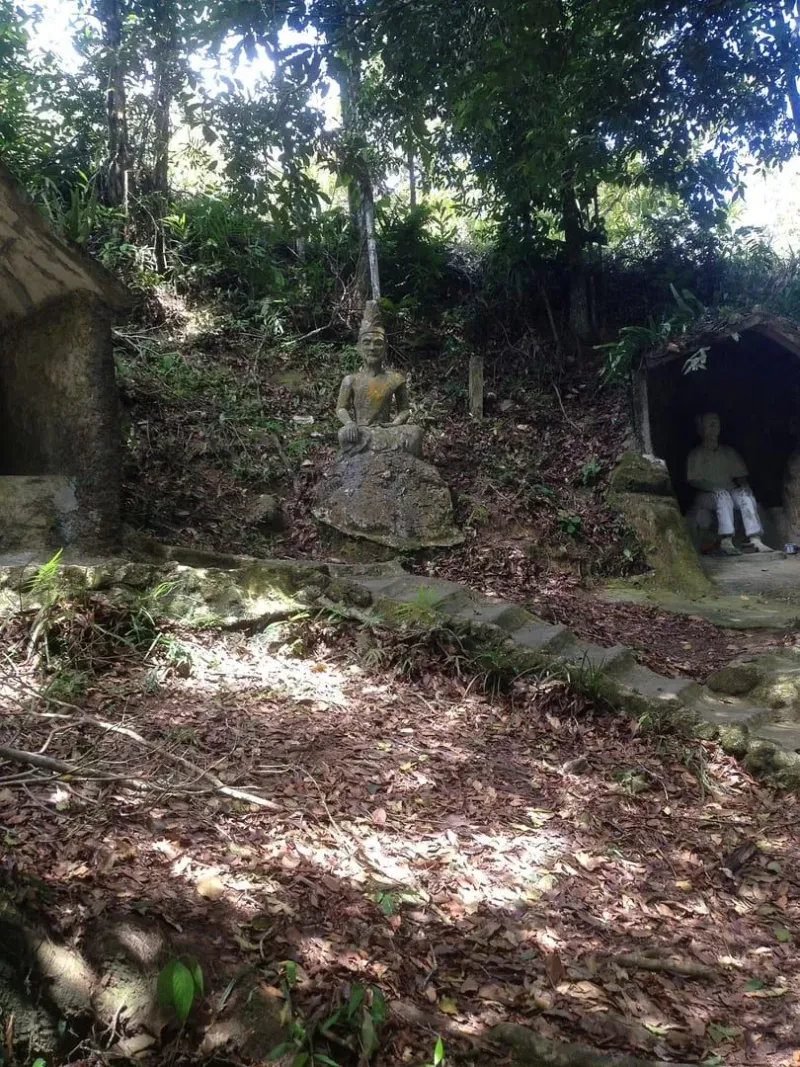
The Secret Buddha Garden (สวนพระพุทธเจ้าลับ), also known as the Tarnim Magic Garden, is one of Koh Samui’s most enchanting and mystical destinations. Tucked away high in the lush, interior hills of the island, far above the heat and bustle of the coast, this private sculpture park feels like a scene from a fairytale. It is a place where weathered stone statues of deities, angels, and mythical animals emerge from the dense tropical jungle, all surrounding a cool, freshwater stream.
Unlike the ancient temples of Samui, the Magic Garden is a relatively modern creation, but one with a deeply personal soul. It was the lifelong project of a single man who wished to create a physical representation of Buddhist heaven on his family’s land. Today, it stands as a testament to individual devotion and a sanctuary for those who wish to experience the quiet, spiritual heart of the island’s jungle.
The Vision of Nim Thongsuk: A Lifelong Labor of Love
The garden is the legacy of Khun Nim Thongsuk, a pioneering Samui durian farmer. In 1976, at the age of 77, Nim began transforming a rugged section of his mountain property into a spiritual retreat.
- The Motivation: Nim was a deeply spiritual man who wanted to create a place for meditation and to share the beauty of Buddhist mythology with others.
- The Craftsmanship: He spent the next 14 years hand-carving statues and building small stone houses, continuing his work until his death at age 91.
- The Legacy: Nim and his wife are buried in a small tomb within the garden, forever watching over the “heaven on earth” they created together.
The Sculptures: Mythology in Stone
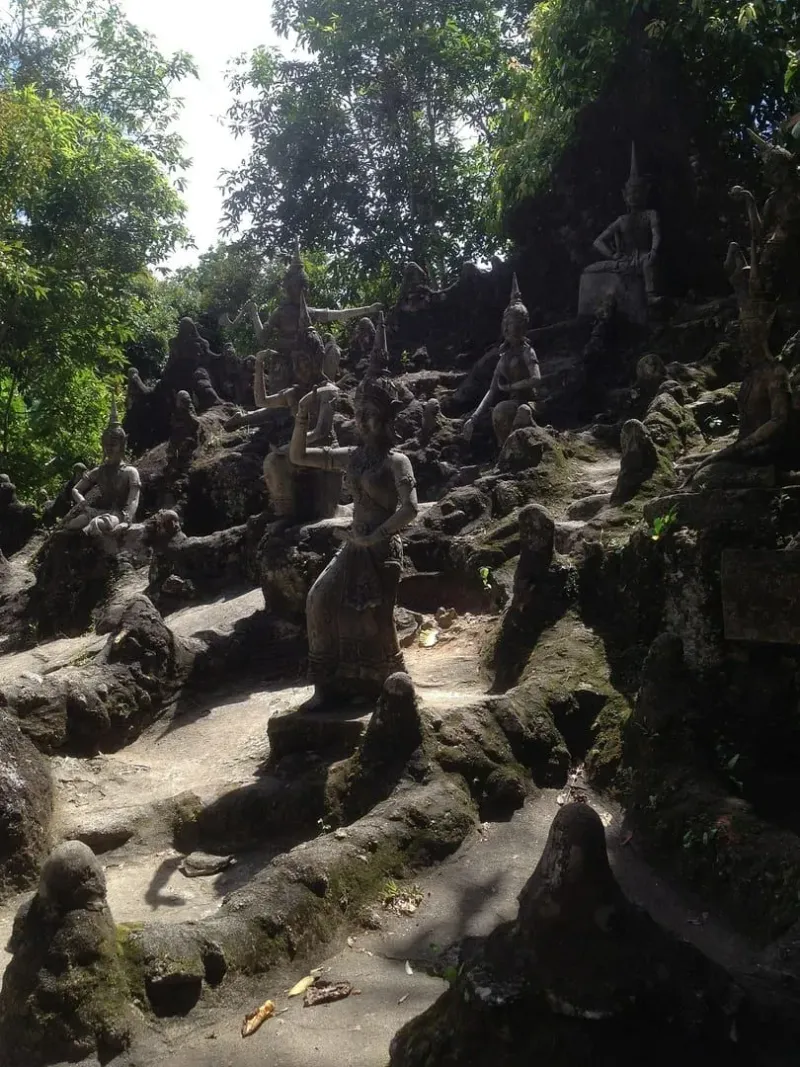
As you wander the winding paths, you will encounter dozens of meticulously crafted stone figures.
Buddhist Deities and Angels
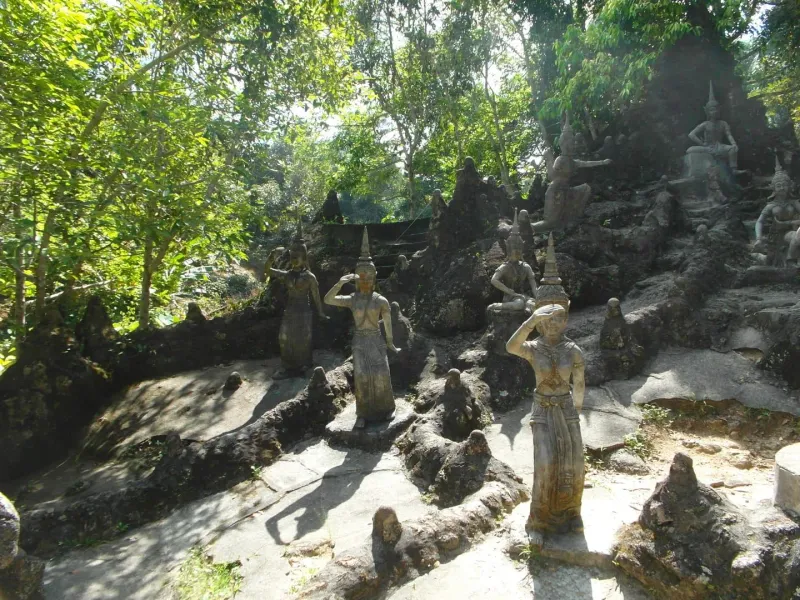
The most famous area is the “Angel Amphitheater,” where a group of graceful celestial beings are depicted playing traditional Thai musical instruments. These statues, now covered in a soft layer of green moss, appear to be frozen in a permanent heavenly performance.
Animals and Folklore
Beyond the deities, the garden is filled with statues of monkeys, snakes, frogs, and birds. Each animal has a specific meaning in Thai folklore or Buddhist parables. Look for the hidden musicians tucked under rock overhangs and the stern-faced guardians that protect the stream’s entrance.
Personal Tributes
Nim also included statues of himself, his father, and his grandparents, integrating his own family history into the spiritual landscape of the garden.
The Tarnim Stream: A Natural Water Sanctuary
The garden is built around the Namtok Tar Nim, a small freshwater stream that tumbles down the mountainside.
- Miniature Waterfalls: The stream creates a series of small falls and pools that provide a constant, cooling mist and a peaceful soundtrack of rushing water.
- Spirit Houses: Scattered along the banks are small, mossy stone huts. Nim originally built these to provide shelter for traveling monks who wished to meditate by the water.
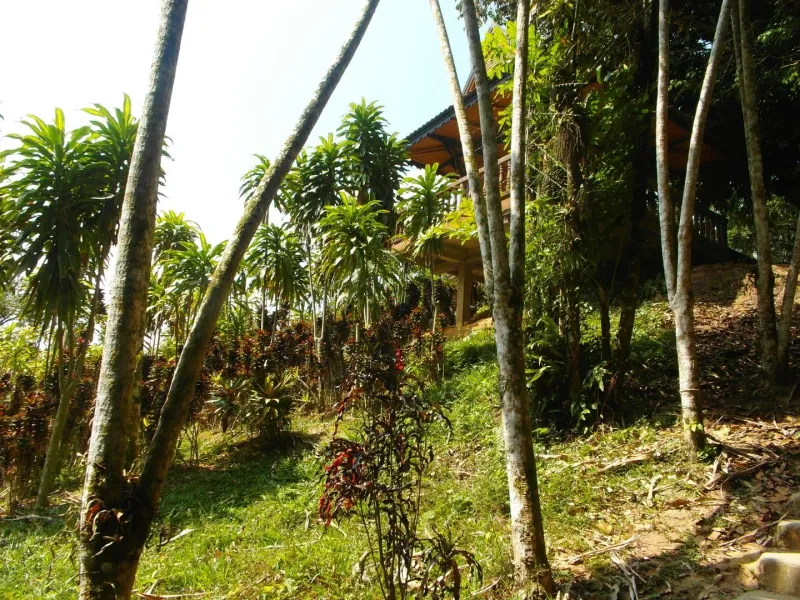
- Cooler Climate: Because of the altitude and the dense canopy, the temperature in the garden is often several degrees cooler than at sea level, making it a perfect escape from the midday heat.
Activities: Exploration and Photography
- Discover Hidden Figures: Many of the smaller statues are tucked away in crevices or behind large trees. The garden rewards those who take their time and look closely.
- Macro Photography: The contrast of weathered stone, vibrant green moss, and the dappled sunlight through the leaves makes this a world-class location for photographers.
- Meditation: Find a stone bench near the lower falls. It is one of the few places on the island where you can enjoy near-absolute silence, broken only by nature.
Where to Eat: Mountain Top Dining
The high-altitude interior of Samui offers several restaurants with some of the most dramatic views in Thailand.
| Restaurant | Style | Recommendation | Distance |
|---|---|---|---|
| Jungle Route 360 | Viewpoint / Thai | Pan-fried Seafood | 5 min drive |
| The Peak | Upscale / Views | Signature Cocktails | 8 min drive |
| Mountain Coffee | Cafe / Snacks | Local Coffee | At the entrance |
| The Giant Summit | Traditional Thai | Massaman Curry | 10 min drive |
Nearby Attractions
Since reaching the garden requires a trip into the interior, it is best combined with other mountain sites:
- Khao Pom Viewpoint: A short drive further up the mountain for views of the entire northern and southern coastlines.
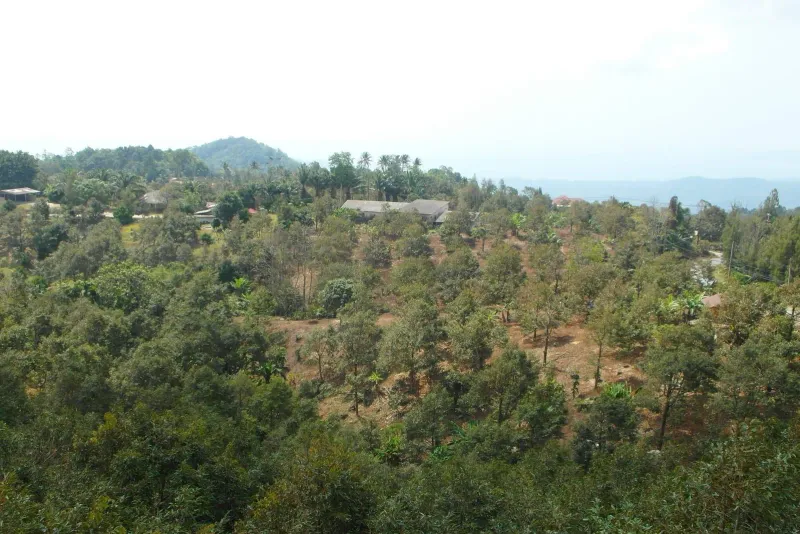
- Durian and Mangosteen Farms: Pass through the lush plantations that made Nim Thongsuk a local legend.
- Wat Khunaram (at the base of the hill): Visit the mummified monk before or after your mountain ascent.
Getting There: The Steep Mountain Climb
The Secret Buddha Garden is located near the summit of Khao Pom, the island’s highest mountain.
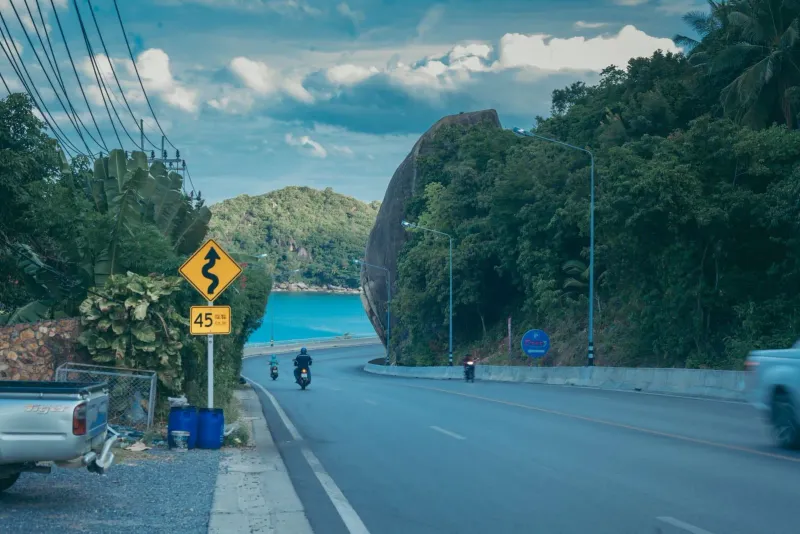
- By 4x4 Vehicle: This is the safest and most recommended way. The road is extremely steep, winding, and has sections that can be difficult for standard cars.
- By Motorbike: Only for highly experienced riders. The descent requires excellent brakes and careful throttle control. Ensure your bike is in top mechanical condition.
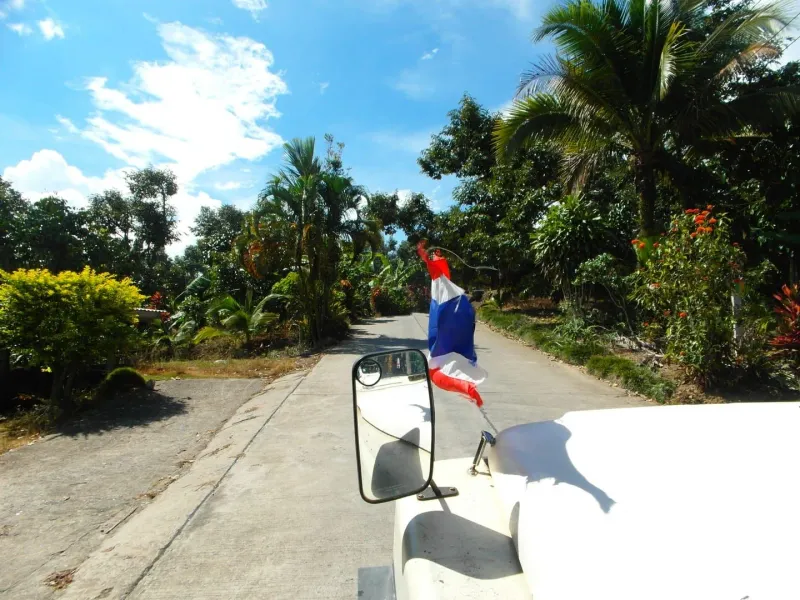
- By Tour: Most “Jungle Safari” jeep tours on the island include the Magic Garden as a primary stop. This is the most popular way for tourists to visit.
- Finding the Turn-off: The mountain road begins directly opposite Wat Khunaram on the southern Ring Road. Look for the signs pointing toward “Secret Garden” or “Magic Garden.”
Best Time to Visit
| Time | Experience | Rating |
|---|---|---|
| 8:30 AM - 10:00 AM | Quietest time; best light through the trees. | ★★★★★ |
| 11:00 AM - 2:00 PM | Can get crowded with tour groups; air remains cool. | ★★★ |
| 3:30 PM - 5:00 PM | Very peaceful; soft afternoon light on the moss. | ★★★★ |
Pro Tip: Arrive as soon as the garden opens at 8:30 AM. You will likely have the entire place to yourself before the first jeep tours arrive around 10:30 AM.
Practical Tips for Visitors
- Wear Grip Shoes: The paths and steps are made of natural stone and can be very slippery, especially near the stream or after rain.
- Insect Repellent: You are in the heart of the jungle. Mosquitoes are active here, especially in the shaded areas.
- Pay the Fee: The small entry fee goes toward the maintenance of the garden and the local community.
- Respect the Tomb: The final resting place of Nim and his wife is a sacred spot. Please keep your voice low and show respect when visiting.
- Check Your Brakes: If you are driving yourself, do a quick brake check before starting the steep downhill drive back to the coast.
Who Is the Secret Buddha Garden Best For?
| Traveler Type | Rating | Why? |
|---|---|---|
| Nature Lovers | ★★★★★ | An immersive jungle experience with unique flora. |
| Photographers | ★★★★★ | Incredible light, texture, and mystical subjects. |
| Adventure Seekers | ★★★★ | The drive up the mountain is an adventure in itself. |
| Artists | ★★★★ | Highly inspiring environment for sketching or writing. |
FAQ
What is the difference between Secret Buddha Garden and Magic Garden? They are the same place! The site is known by several names, including Secret Buddha Garden, Tarnim Magic Garden, and sometimes Heaven’s Garden.
Is it suitable for the elderly or those with limited mobility? No. The garden features steep, uneven stone steps and narrow paths that can be slippery. It requires a reasonable level of physical fitness and balance to explore fully.
Can I drive a normal car to the garden? It is not recommended. While the road is mostly paved, it is incredibly steep. A 4x4 vehicle is much safer and more capable of handling the mountain conditions.
How much does it cost to enter? The entrance fee is typically around 80 Thai Baht (approx. 2.50 USD). This is used for the upkeep of the private grounds.
Is there a lot of walking involved? The garden itself is relatively compact, but exploring all the statues involves about 20-30 minutes of walking up and down stairs and sloping paths.
About the author

Mike Brochlowski
Travel photographer & writer
Travel photographer and island explorer. Mike has spent years documenting Southeast Asia's hidden gems, from secluded beaches to jungle waterfalls.
Articles by Mike →Mentioned in Island Life
Rainy-Day Dates on Koh Samui: What to Do When It Pours
Koh Samui rainy day dates: real rainfall numbers, what's better wet, fully indoor and covered picks, and why most storms only run an hour…
Proposing on Koh Samui: Spots, Timing and Keeping It Quiet
A proposal koh samui guide: private and semi-private spots, ring-through-customs advice, photographer vetting and honest weather timing.
Cycling Koh Samui: the Ring-Road Loop, the Climbs and the Risk
Cycling Koh Samui: the 51km Route 4169 ring-road loop, interior climbs over 20%, dawn heat by month, and the road-safety numbers a rider…