Overview
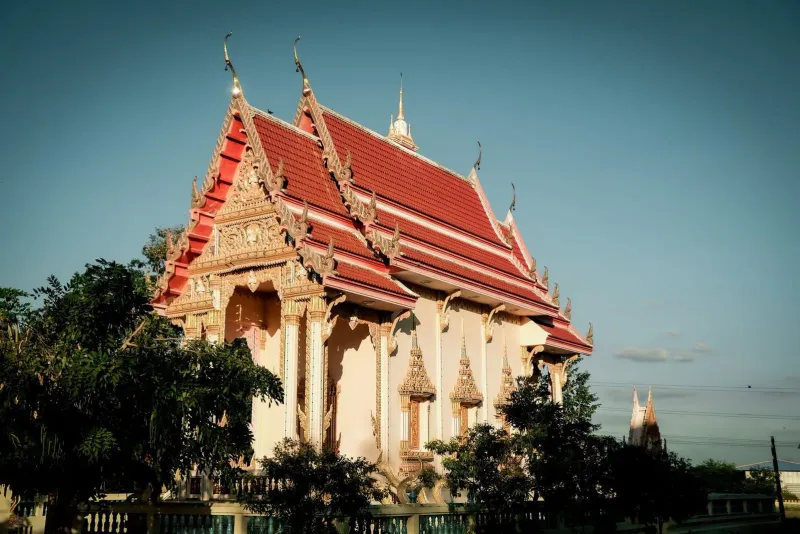
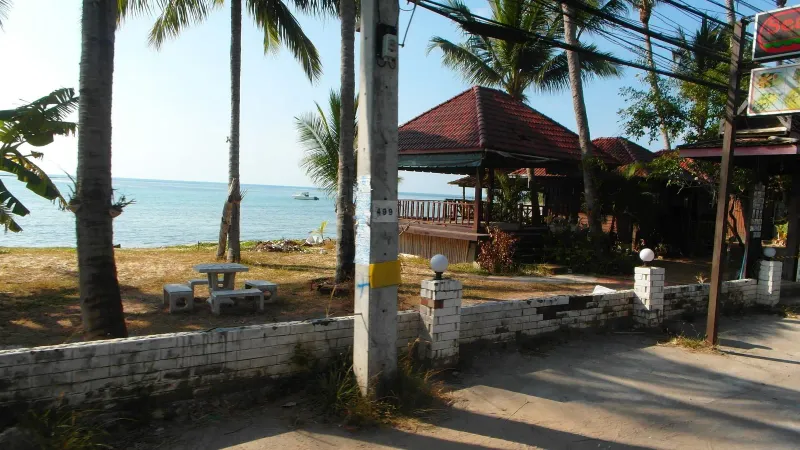
Wat Sila Ngu (วัดศิลางู), officially Wat Ratchathammaram, is the “Red Temple” of Koh Samui: a working Buddhist temple on the Route 4169 ring road in Hua Thanon, about 5 minutes’ drive south of Lamai, with free entry. The name means “Stone Snake Temple” (sila is stone, ngu is snake), after the Naga serpents that guard it. Located on a clifftop in the Hua Thanon area, it offers a stunning juxtaposition of deep terracotta red against the brilliant blue of the Gulf of Thailand.
Plan on 30-45 minutes for the red hall with its relief carvings, the golden pagoda and the Naga staircase down to the shore. The road up to Overlap Stone starts opposite the temple, so the two combine easily into one short trip. Modest dress (shoulders and knees covered) and no shoes inside the buildings.
The Red Ubosot: A Masterpiece in Clay
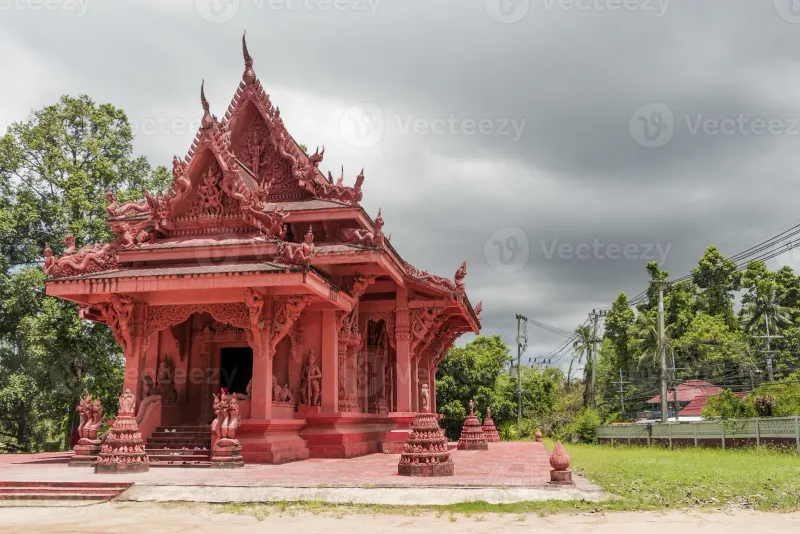
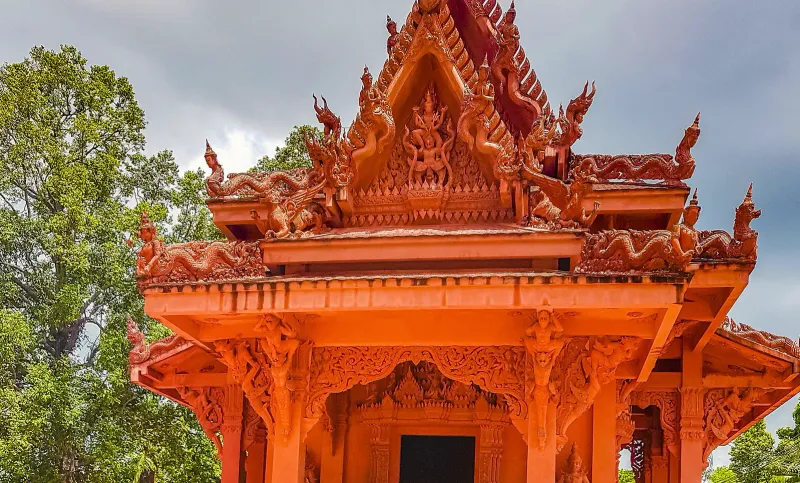
The most iconic building at Wat Sila Ngu is the Ubosot (Ordination Hall). Unlike most temples built with concrete and painted in bright colors, this structure is left in red stone-toned material with relief carving (sources describe it variously as laterite, red brick or clay, so the exact material is not settled).
Intricate Carvings
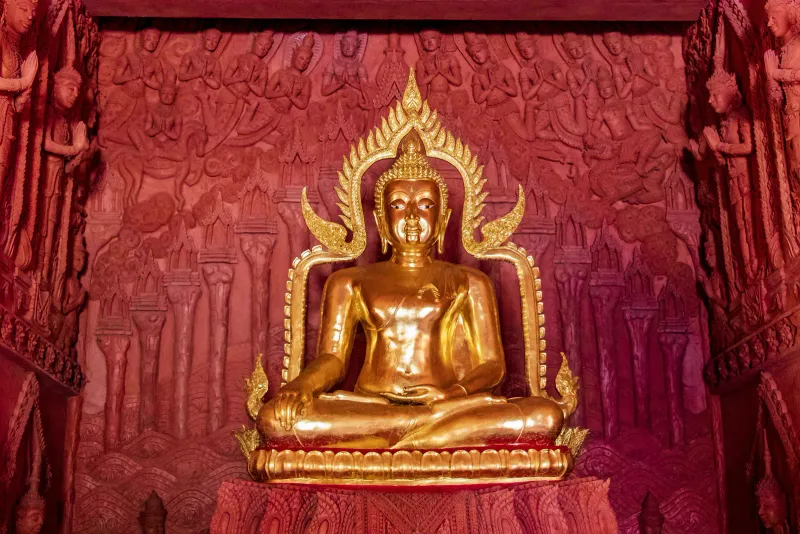
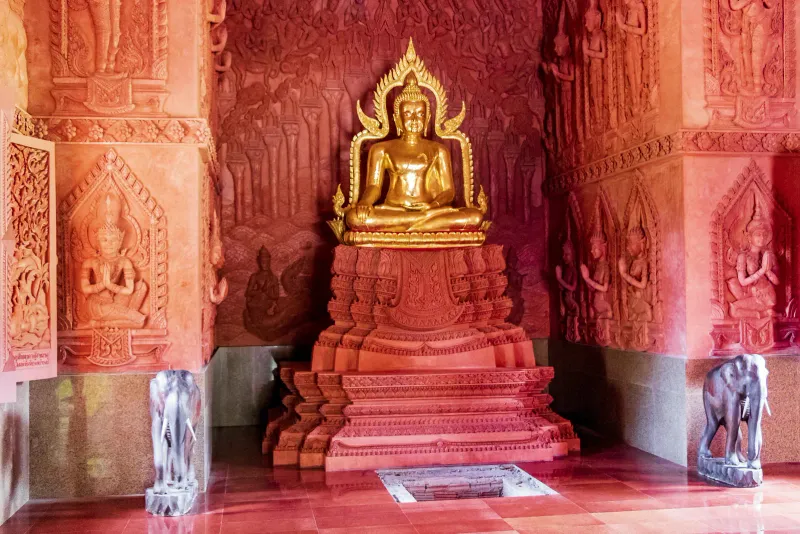
The walls, both inside and out, are a canvas for incredible craftsmanship. You will find detailed carvings depicting:
- The Ramayana: Scenes from the great Hindu-Thai epic.
- Buddhist Mythology: The life stories of the Buddha and various deities.
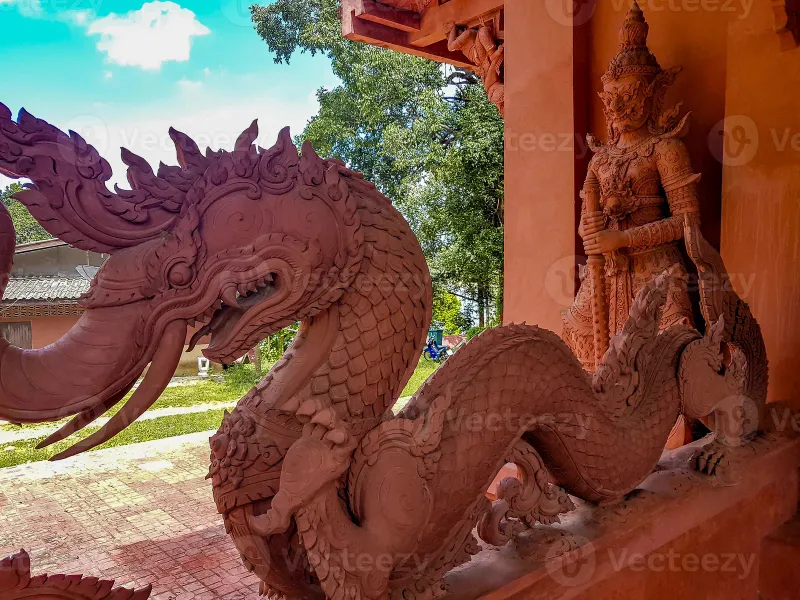
- Mythical Creatures: Dragons, sea monsters, and guardians that seem to emerge from the red stone.
The lack of gold leaf and bright paint allows the shadows and textures of the carvings to take center stage, creating a moody and powerful atmosphere that is rare in Thai temples.
History: The Snake and the Stone
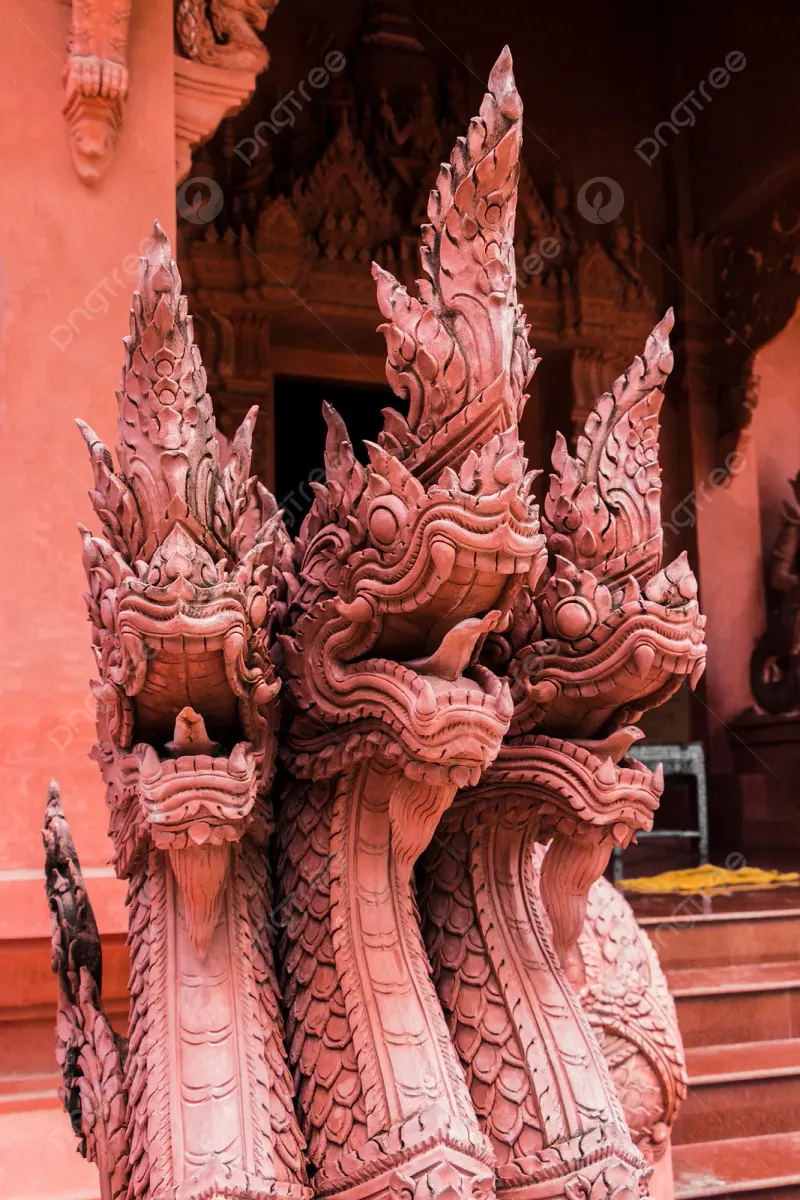
The name “Sila Ngu” translates roughly to “Stone Snake.” This refers to the Naga, the mythical serpent-like creature that is a guardian of the Buddha. The temple has been a center for local worship since the early 20th century and is deeply respected by the fishing community of nearby Hua Thanon.
The current red hall is a relatively modern addition, built to replace an older structure, but it was designed to feel ancient. The choice of red clay reflects the local soil and the earthy, grounded nature of Samui’s spiritual heritage.
The Golden Pagoda: Relics and Reverence
While the red hall captures the most attention, the spiritual heart of the complex is the Phra That Sila Ngu, a shimmering golden pagoda located on a rocky terrace.
This pagoda is believed to house a sacred relic of the Lord Buddha, making it a major pilgrimage site for locals. Many devotees come here specifically to circumambulate the pagoda (walking around it three times in a clockwise direction) while offering prayers for health and prosperity. The contrast between the golden chedi and the red ordination hall is one of the most beautiful sights on the island.
The Naga Staircase: Pathway to the Sea
Connecting the temple grounds to the rocky shoreline below is a magnificent Naga staircase. Two giant, multi-headed serpents serve as banisters, their bodies curving gracefully down the hillside.
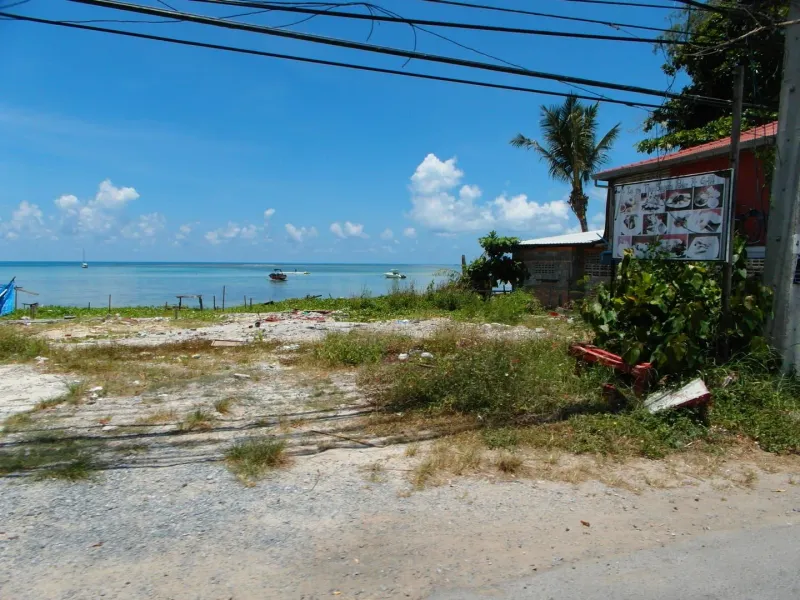
Descending these stairs is a peaceful experience. At the bottom, you find a quiet, un-manicured stretch of coast where you can watch local fishermen or simply listen to the waves. It is one of the few places on Samui where you can transition directly from a sacred temple space to the natural beauty of the sea.
Activities: Merit-Making and Photography
- Admire the Bas-Reliefs: Spend time walking around the perimeter of the red hall. The carvings are so dense that you will find new details every time you look.
- Photography: This is a world-class location for photography. The red walls against a deep blue sky provide incredible color saturation.
- Make Merit: You can offer incense and lotus flowers at the golden pagoda. Look for the small donation boxes to support the temple’s upkeep.
- Coastal Walk: Follow the Naga stairs down to the water for a short, scenic walk along the rocks.
Where to Eat: Hua Thanon Flavors
The temple is located just a minute’s drive from the Hua Thanon Fishing Village, famous for its authentic Thai-Muslim cuisine.
| Restaurant | Style | Recommendation | Distance |
|---|---|---|---|
| Hua Thanon Market | Street Food | Halal Fried Chicken | 2 min drive |
| Sabienglae | Seafood | Coconut Husk Smoked Fish | 3 min drive |
| The Cliff | Mediterranean | Upscale Dining | 5 min drive |
| Local Stalls | Thai / Muslim | Spicy Curry | Outside gates |
Nearby Attractions
Wat Sila Ngu is part of a cluster of high-interest sites in the south:
- Hin Ta Hin Yai (1 km north): The famous Grandmother and Grandfather rock formations.
- Guan Yu Shrine (2 min drive south): The giant bronze-faced Chinese warrior statue.
- Hua Thanon Fishing Village (2 min drive south): Explore the traditional teak houses and colorful fishing boats.
- Lamai Beach (5 min drive north): Samui’s second-largest beach.
Getting There: The South Lamai Route
Short answer: from Lamai, ride or drive south on Route 4169 for about 5 minutes; the temple is on the ocean side. For a wider look at Lamai’s attractions before or after, see our Lamai Beach guide.
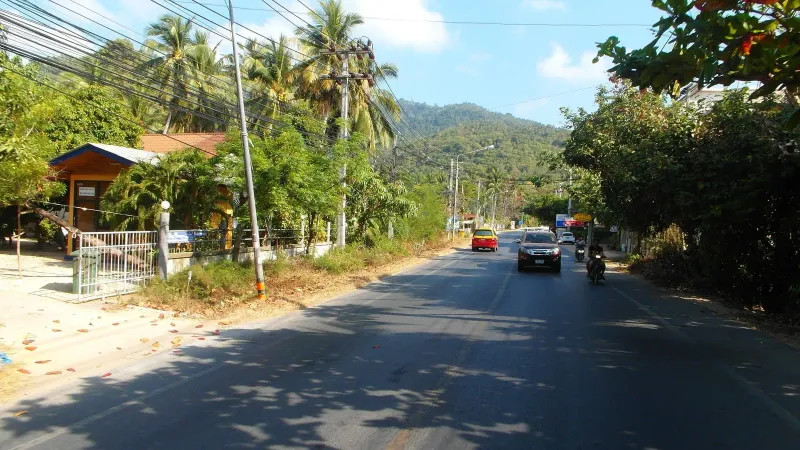
The temple is located directly on the Main Ring Road (Route 4169), making it exceptionally easy to find.
- By Motorbike/Car: Head south from Lamai. After you pass the turn-off for Hin Ta Hin Yai, keep driving for about one kilometer. The temple entrance is on the left-hand (ocean) side of the road.
- By Songthaew: Any songthaew traveling between Lamai and Nathon will pass the temple.
- Parking: There is plenty of free parking for motorbikes and cars directly in front of the red hall.
Best Time to Visit: Daylight Vibrancy
The hall faces the sea, so morning light suits the red walls and the late afternoon suits the pagoda terrace. Rain makes the concrete Naga stairs slick, so the drier months (roughly January to April) are the easier season for the coastal walk. For recent visitor notes on hours and conditions, check the Tripadvisor listing before you go.
Listings vary on hours (8:00 AM to 6:00 PM on some, 9:00 AM to 5:00 PM on others), so treat the times below as a guide and confirm locally.
| Time | Experience | Rating |
|---|---|---|
| 9:00 AM - 11:00 AM | Best light for the red walls; cool ocean breeze. | ★★★★★ |
| 12:00 PM - 3:00 PM | Can be very hot; minimal shade on the staircase. | ★★★ |
| 4:00 PM - 5:30 PM | Soft golden light; very peaceful; best for the pagoda terrace. | ★★★★★ |
Practical Tips for Visitors
- Dress Code: Ensure shoulders and knees are covered. This is one of the more conservative temples on the island.
- Remove Shoes: Before entering the red hall or stepping onto the pagoda terrace, you must remove your shoes.
- Watch the Stairs: The Naga staircase is concrete and can be slippery when wet. Use the handrails (the dragons’ bodies).
- Silence is Appreciated: Because the temple is built on a cliff, sound travels. Keep your voice low to respect the resident monks.
- Support the Art: The red temple is a massive maintenance project. Small donations help preserve the delicate clay carvings from tropical erosion.
Who Is Wat Sila Ngu Best For?
| Traveler Type | Rating | Why? |
|---|---|---|
| Photographers | ★★★★★ | Unique color palette and high-contrast architecture. |
| Art Enthusiasts | ★★★★★ | The best example of bas-relief carving on Koh Samui. |
| Peace Seekers | ★★★★ | Quieter than Lamai Beach; the sound of the ocean is meditative. |
| Couples | ★★★★ | A romantic spot for a walk down the Naga stairs at sunset. |
FAQ
Why is it called the Red Temple? Because the main ordination hall is left in red stone-toned material rather than the white-painted concrete found in most Thai temples. This gives the structure a deep terracotta hue.
Is there an entrance fee for Wat Sila Ngu? No, entry is free. However, given the extraordinary level of artistic detail, a small donation is highly appreciated to help with the upkeep.
How far is it from Lamai? It is about a 5-minute drive south of central Lamai on the ring road, just over 1 km past the Hin Ta Hin Yai rocks.
Can I swim at the beach below the temple? The shore below the Naga stairs is quite rocky and shallow. It is better for a quiet walk or taking photos than for swimming. For swimming, head just a few minutes north to Lamai Beach.
What does Wat Sila Ngu mean? “Sila Ngu” means “Stone Snake”. The name refers to the Naga guardians and the stone-snake pagoda (Phra That Hin Ngu) on the temple grounds.
Can I combine it with Overlap Stone? Yes. The road up to the Overlap Stone viewpoint starts opposite the temple, and both fit into under two hours.
Who is the deity honored here? Like all Thai Buddhist temples, it is primarily dedicated to the Lord Buddha. However, there are many carvings depicting Ganesha, Vishnu, and other Hindu-derived figures that are integral to Thai Buddhist cosmology.
About the author

Mike Brochlowski
Travel photographer & writer
Travel photographer and island explorer. Mike has spent years documenting Southeast Asia's hidden gems, from secluded beaches to jungle waterfalls.
Articles by Mike →