Overview
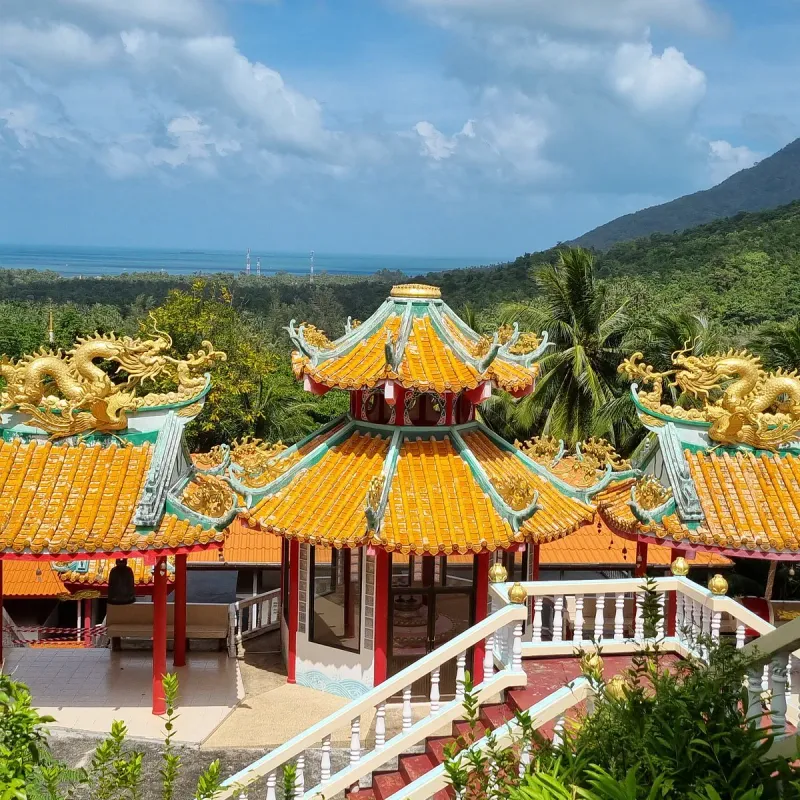
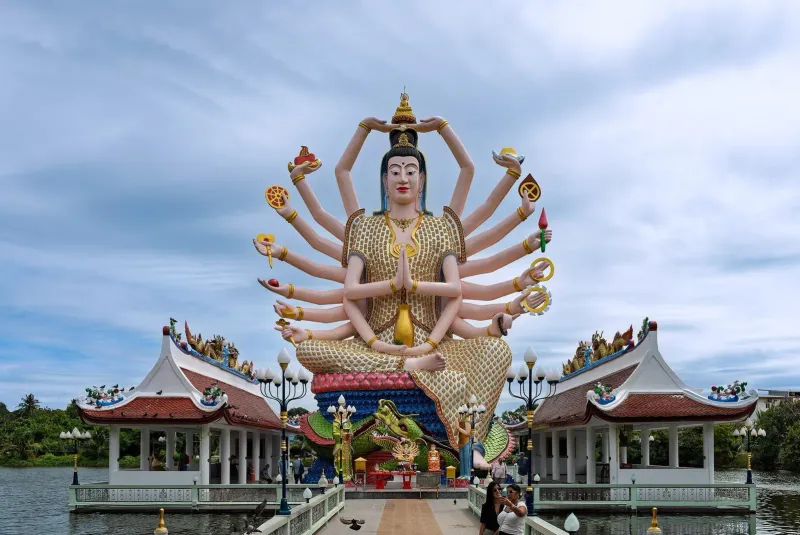
The Guam Im Shrine (ศาลเจ้าแม่กวนอิม), often called the Chao Mae Guan Im Shrine, is a beautifully maintained Chinese sanctuary located on the rugged northeastern headland of Koh Samui. While the giant 18-armed statue at Wat Plai Laem captures the majority of tourist attention, this smaller, clifftop shrine near Tongsai Bay offers a much more intimate and spiritually resonant experience.
Set against the dramatic backdrop of the Gulf of Thailand, the shrine is dedicated to Guan Im, the Goddess of Mercy and Compassion. Its “ocean-facing” position is highly symbolic, reflecting the goddess’s role as a protector of seafarers. For those seeking a quiet moment of reflection combined with stunning coastal views, the Guam Im Shrine is one of the island’s most rewarding hidden gems.
The Ocean Setting: A Clifftop Sanctuary
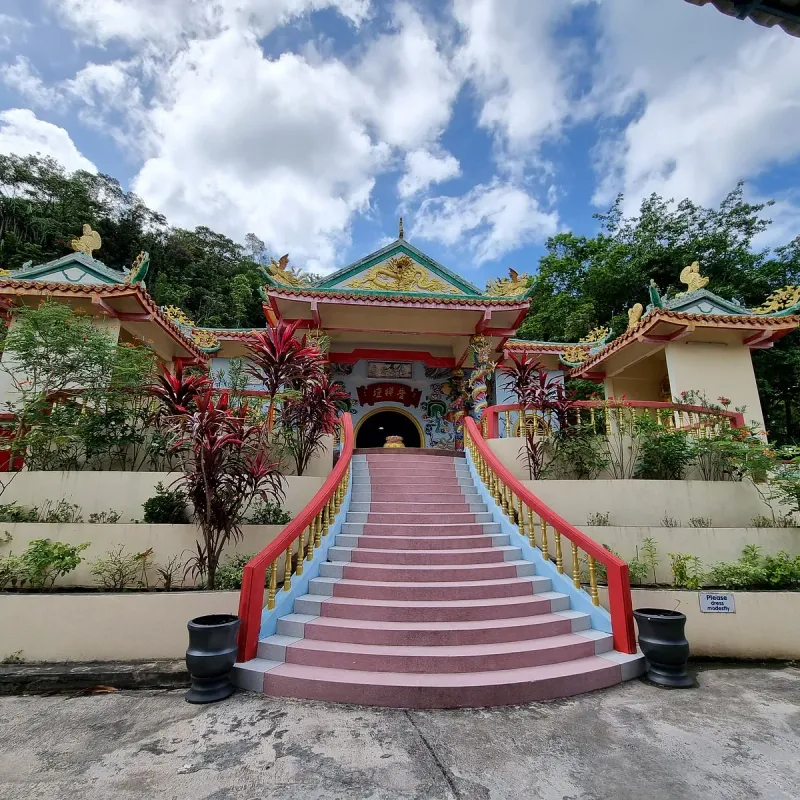
What distinguishes the Guam Im Shrine from other religious sites on the island is its breathtaking location. Built onto the rocky cliffs between Choeng Mon Beach and Plai Laem, the shrine directly overlooks the turquoise waters of the gulf.
On clear days, you can see the distant silhouettes of the Ang Thong National Marine Park and the neighboring island of Koh Phangan. the sound of waves crashing against the rocks below provides a constant, meditative soundtrack to any visit. The placement of the shrine allows Guan Im to gaze perpetually over the sea, watching over the fishermen and sailors of Samui.
The Spirit of Mercy: Honoring Guan Im
Guan Im (also spelled Guanyin) is one of the most beloved figures in East Asian spiritual traditions. As the Bodhisattva of Compassion, she is believed to have vowed to remain in the earthly realm until all beings are freed from suffering.
At this specific shrine, she is honored in her more traditional, graceful form. Local Thai-Chinese families often come here to light incense and offer prayers for health, fertility, and the well-being of their families. The atmosphere is noticeably less commercial than the larger tourist wats, making it a place where you can truly observe local devotion.
Architecture: Ornate Chinese Details
Despite its small size, the Guam Im Shrine is packed with intricate architectural details that demand a closer look.
Traditional Colors
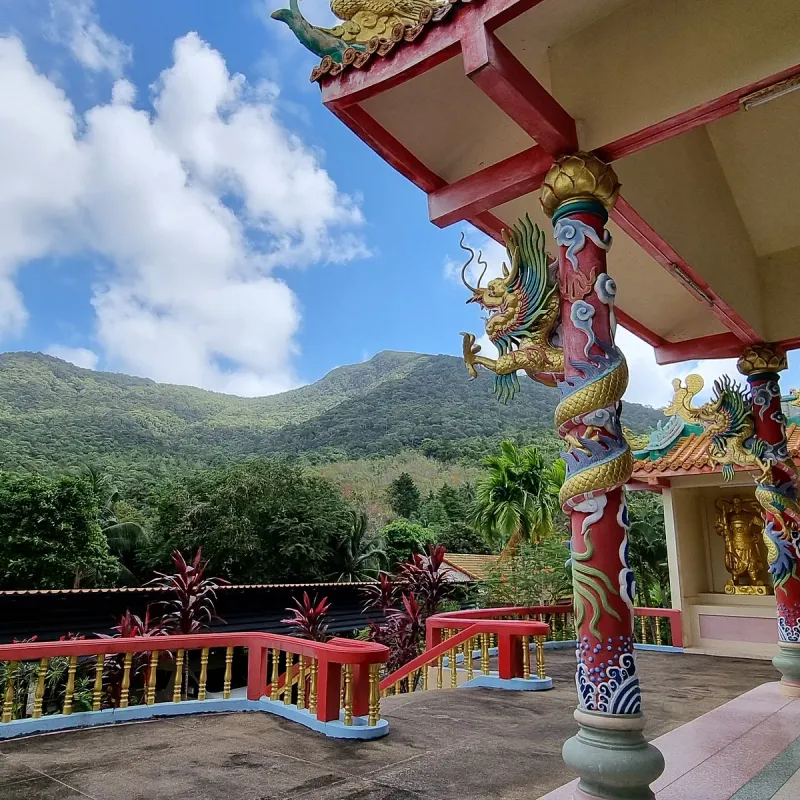
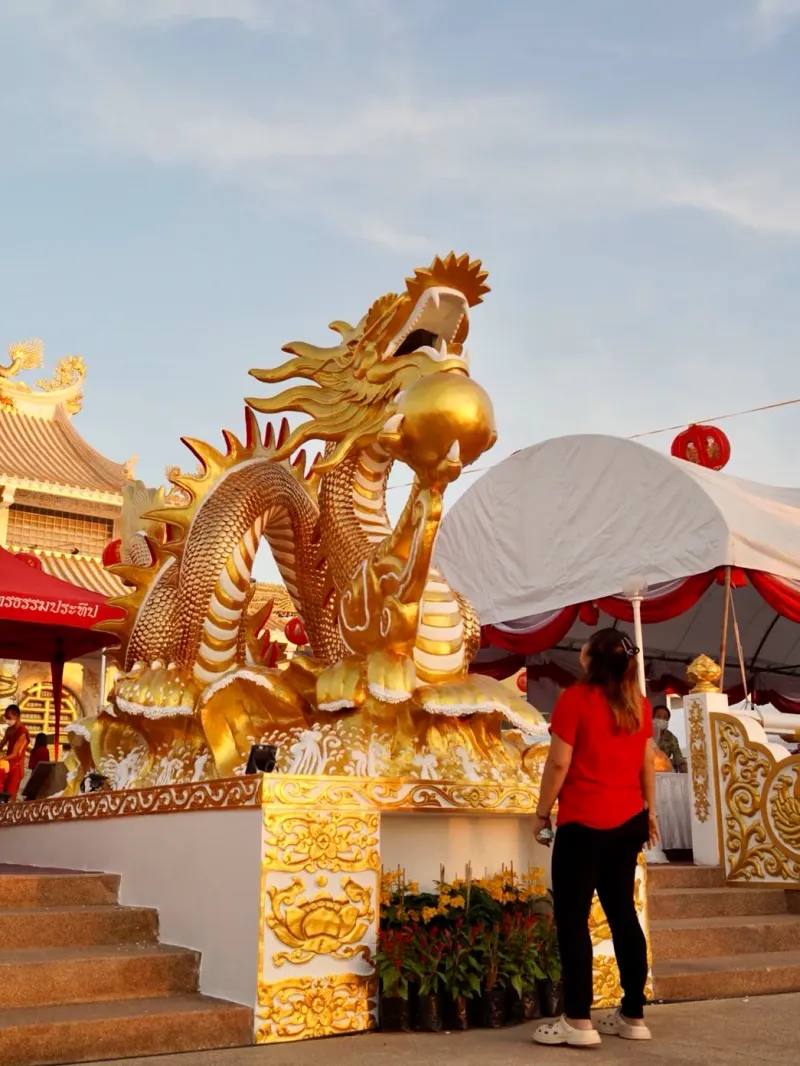
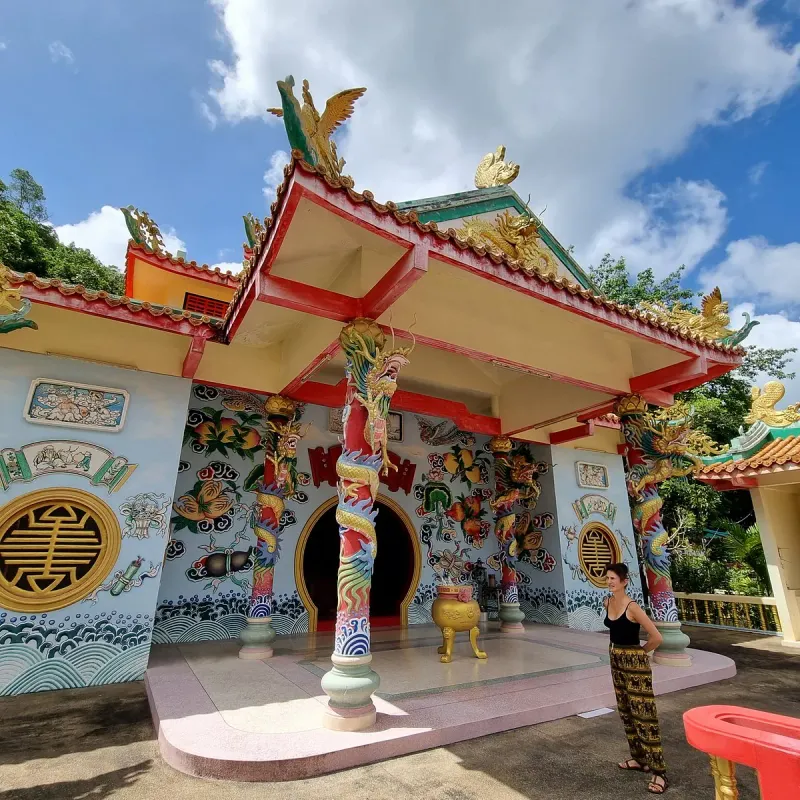
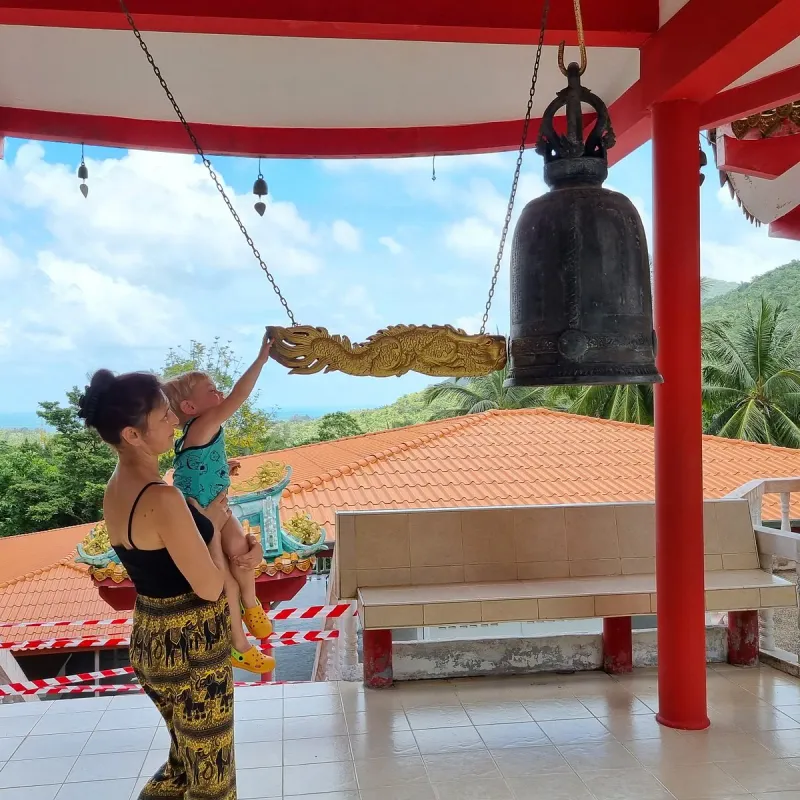
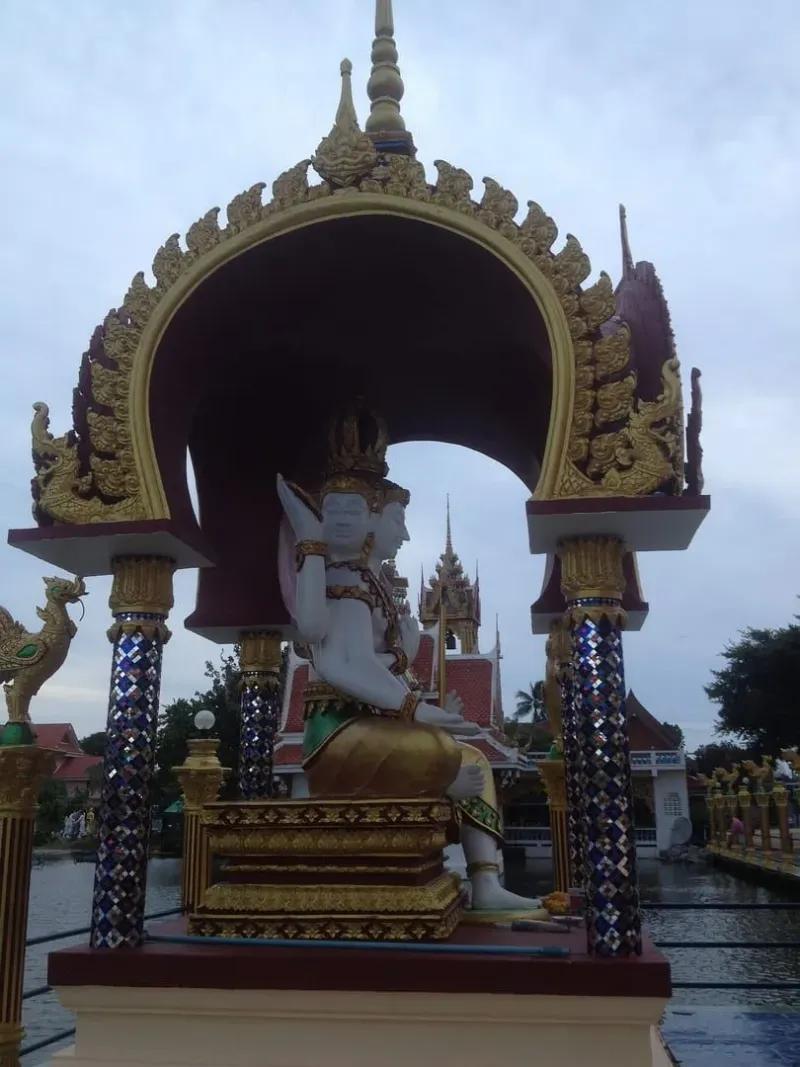
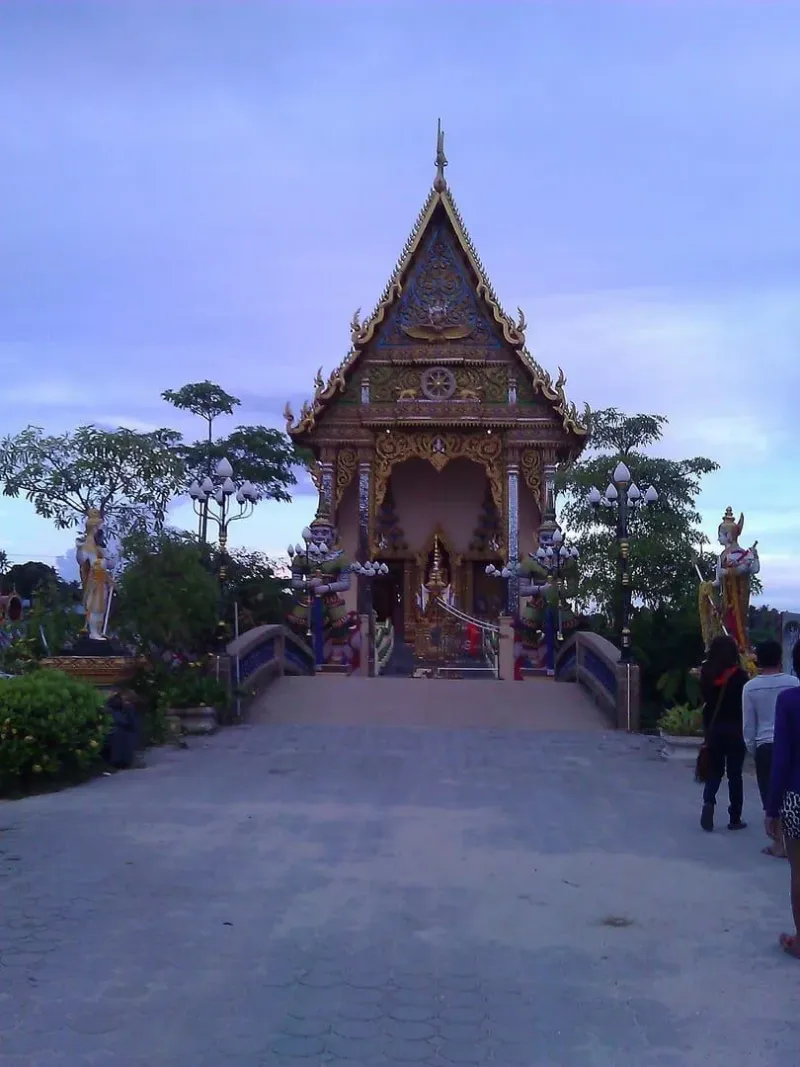
The shrine is a vibrant mix of red, gold, and green. The red pillars are often decorated with golden Chinese characters and swirling dragon motifs. The rooflines are steeply curved in the traditional Southern Chinese style, topped with porcelain figurines of mythological creatures.
Intricate Altars
The inner sanctum houses a beautifully crafted altar where the image of Guan Im resides. The space is often filled with the fragrance of fresh jasmine garlands and sandalwood incense. Small lanterns hang from the ceiling, casting a warm, inviting glow over the worship area.
Activities: Prayer and Scenery
A visit to the Guam Im Shrine is usually short but deeply impactful.
- Offer a Prayer: Visitors are welcome to participate in traditional offerings. You can purchase incense and candles at the entrance to place at the various altars.
- Photography: The contrast of the colorful shrine against the deep blue of the ocean makes this one of the most photogenic spots in Northeast Samui.
- Catch the Sunrise: Because the shrine faces east, it is one of the premier locations on the island to watch the sunrise. The morning light hitting the red facade is spectacular.
Where to Eat: Choeng Mon Culinary Scene
After your visit, you are ideally placed to enjoy the upscale yet relaxed dining scene of Choeng Mon and Tongsai Bay.
| Restaurant | Style | Recommendation | Distance |
|---|---|---|---|
| Choeng Mon Night Market | Street Food | Local Snacks | 5 min drive |
| Po-Ladda | Traditional Thai | Seafood Platter | 4 min drive |
| Garrya Tongsai Bay | Fine Dining | Sunset Cocktails | 2 min walk |
| The Mother Restaurant | Local / Fusion | Green Curry | 5 min drive |
Nearby Attractions
The northeast tip of Samui is dense with high-quality sites:
- Choeng Mon Beach (5 min drive): A family-friendly bay with golden sand and shallow waters.
- Wat Plai Laem (10 min drive): Visit the much larger 18-armed Guan Yin for comparison.
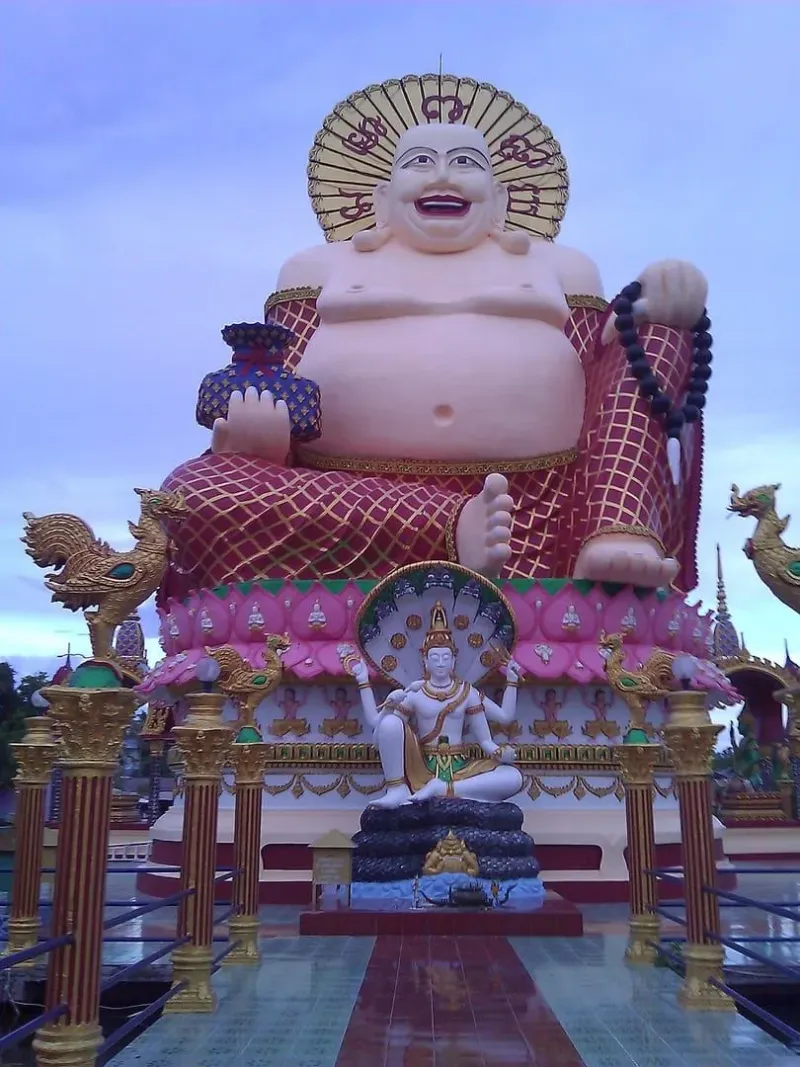
- Big Buddha (12 min drive): Samui’s iconic 12-meter golden landmark.
- Koh Fan (Big Buddha Island): Explore the small island connected by a causeway.
Getting There: Tongsai Bay Access
The Guam Im Shrine is located near the entrance to the Garrya Tongsai Bay Samui resort area.
- By Motorbike: From the main Choeng Mon road, follow the signs for Tongsai Bay or Garrya Resort. The shrine is located on the coastal road just before the resort gates.
- By Taxi: A taxi from Chaweng will cost approximately 300-400 THB (~8.50-11 USD). It is a well-known landmark for local drivers.
- Parking: There is a small gravel area near the shrine where motorbikes and a few cars can park for free.
Best Time to Visit: Sunrise and Serenity
The shrine is open from dawn to dusk.
| Time | Experience | Rating |
|---|---|---|
| 6:00 AM - 7:30 AM | Sunrise; cool air; perfect for meditation. | ★★★★★ |
| 9:00 AM - 11:00 AM | Vibrant colors under the high sun; good for photos. | ★★★★ |
| 5:00 PM - 6:30 PM | Soft evening light; very peaceful atmosphere. | ★★★★★ |
Practical Tips for Visitors
- Remove Shoes: Like all shrines and temples in Thailand, remove your shoes before entering the main prayer area.
- Dress Respectfully: Even though it’s a smaller shrine, cover your shoulders and knees out of respect for the local worshippers.
- Be Quiet: The shrine is very small, and sound carries easily. Keep your voice low.
- Watch Your Step: The clifftop area can be uneven. Be careful when moving around the edges to take photos.
- Support the Shrine: Small donations go a long way in keeping this hidden gem clean and well-lit.
Who Is the Guam Im Shrine Best For?
| Traveler Type | Rating | Why? |
|---|---|---|
| Seekers of Peace | ★★★★★ | Much quieter and more secluded than the Big Buddha. |
| Photographers | ★★★★★ | The ocean-facing red architecture is a stunning subject. |
| Early Birds | ★★★★★ | One of the best sunrise viewpoints on the island. |
| Culture Enthusiasts | ★★★★ | A pure, non-commercialized look at Thai-Chinese folk religion. |
FAQ
Is this the same place as Wat Plai Laem? No. Wat Plai Laem is a large, modern temple complex nearby that features a massive 18-armed Guan Yin statue on a lake. The Guam Im Shrine is a much smaller, traditional Chinese shrine located directly on the ocean cliffs near Tongsai Bay.
Is there an entrance fee for the Guam Im Shrine? No, visiting the shrine is completely free. However, donations are always appreciated to help maintain the structure and the beautiful grounds.
Can I see the sunrise from here? Yes! Because the shrine is located on the northeastern headland and faces the sea, it is one of the absolute best spots on Koh Samui to watch the sun rise over the Gulf of Thailand.
How much time should I plan for a visit? Since it is a small site, most visitors spend about 15 to 30 minutes here: enough time to offer a prayer, take some photos, and enjoy the coastal views.
Is it accessible for children? Yes, children are welcome. However, because it is located on a clifftop, parents should keep a close eye on young children near the rocky edges.
About the author
Samui69 Editorial Team
Editorial team
Guides researched and fact-checked by the Samui69 editorial team: residents and frequent visitors who verify opening hours, prices and directions on the ground.
About the author →