Contents
Overview
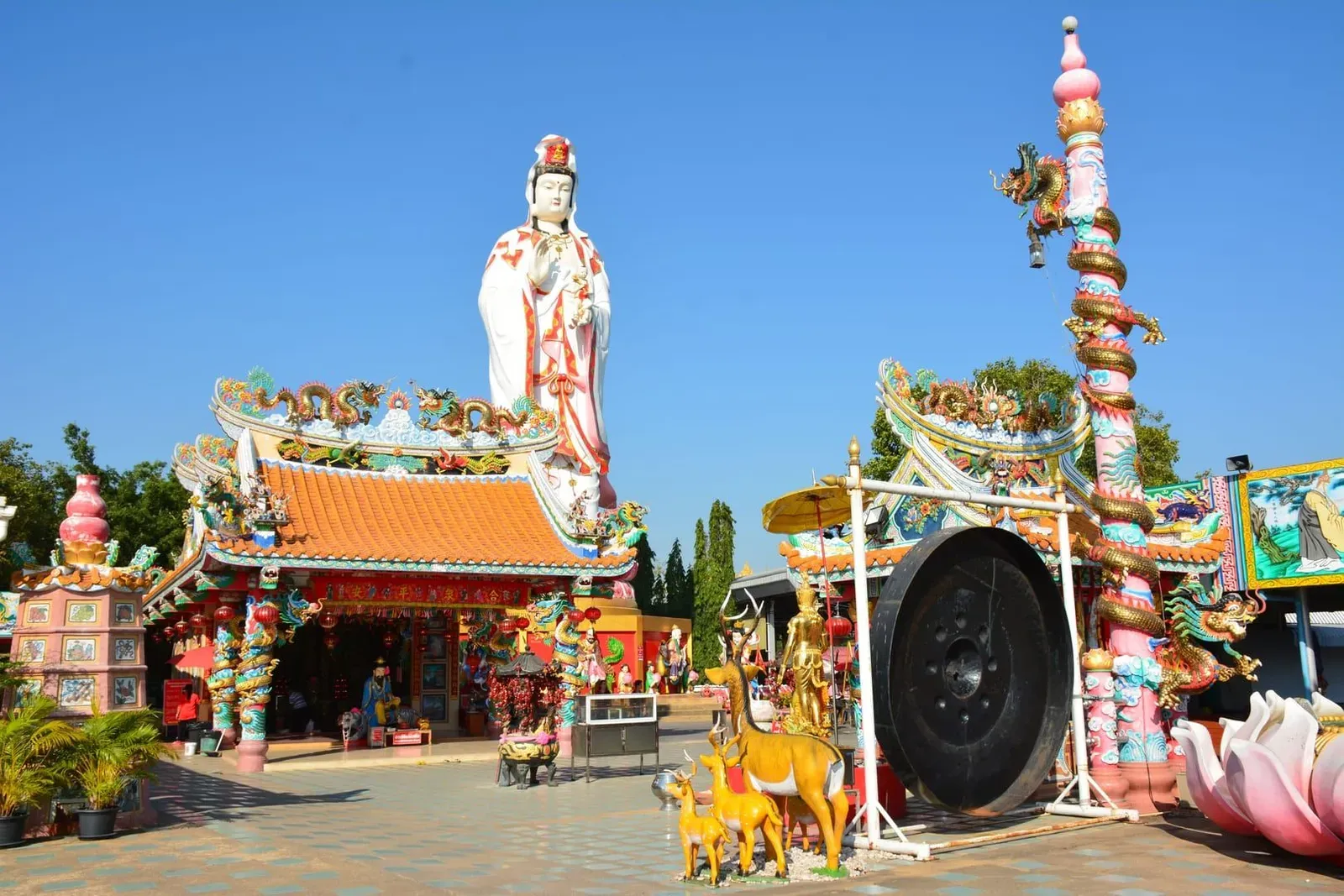
Koh Samui has five sites where Chinese and Hainanese devotion shapes the architecture instead of Thai Buddhist orange and gold: four dedicated Chinese shrines and one temple, Wat Plai Laem, built around a giant Chinese-style Guanyin. Together they trace roughly 150 years of Hainanese migration to the island, the coconut trade that funded the community, and four deities — Guan Yu, Guanyin, Mazu and Budai — worshipped nowhere else on Samui’s temple circuit.
Key takeaways
- Four dedicated shrines: Guan Yu Shrine (Hua Thanon), Chinese Temple of Maenam, Nathon Hainan Shrine, and Guam Im Shrine (Choeng Mon) — plus Wat Plai Laem’s 18-armed Guanyin.
- The story traces to 19th-century Hainanese traders who built Samui’s coconut and cotton plantations.
- Four deities anchor the shrines: Guan Yu (loyalty), Guanyin (mercy), Mazu (the sea), and Budai (fortune).
- Dragons, phoenixes, fu lions and qilin stand in for the naga, garuda and yaksha guardians of a Thai wat.
- 2026 calendar: Chinese New Year falls on 17 Feb, Hungry Ghost Day on ~27 Aug, and the Vegetarian Festival runs ~10-18 Oct.
The Five Sites at a Glance
| Shrine | Area | Deity | Signature Feature | Best For | Link |
|---|---|---|---|---|---|
| Guan Yu Shrine | South (Hua Thanon) | Guan Yu | 16m bronze statue, tallest of its kind in Thailand | History, photography | Details |
| Chinese Temple of Maenam | North (Maenam) | Local Hainanese deity (Chao Eng Sae) | Four dragon-wrapped pillars | Festival timing, north-coast trips | Details |
| Nathon Hainan Shrine | West (Nathon) | Jao Mae Tubtim (Mazu) | Paired golden guardian lions | Old-town history, ferry stopovers | Details |
| Guam Im Shrine | Northeast (Choeng Mon) | Guanyin | Clifftop, ocean-facing altar | Sunrise, quiet reflection | Details |
| Wat Plai Laem | Northeast (Bang Rak) | Guanyin (18-armed) | 15m lakeside statue | First-time visitors, families | Details |
Guan Yu Shrine — Bronze Giant of Hua Thanon
In Hua Thanon on the south coast, the Guan Yu Shrine honors the deified Chinese general with a 16-meter bronze statue — about 4 meters taller than the Big Buddha and the largest of its kind in Thailand. The shrine’s own history places its roots at Ban Nakai, near Hua Thanon, where Hainanese-Chinese migrants who settled around 1872 brought a small Guan Yu statue for protection; the current complex opened in January 2016 after a fundraising drive that began in 2008.
Best for: history, photography, Hua Thanon’s Hainanese street food. Con: busy roadside location on the main ring road. Full details on Guan Yu Shrine.
Chinese Temple of Maenam
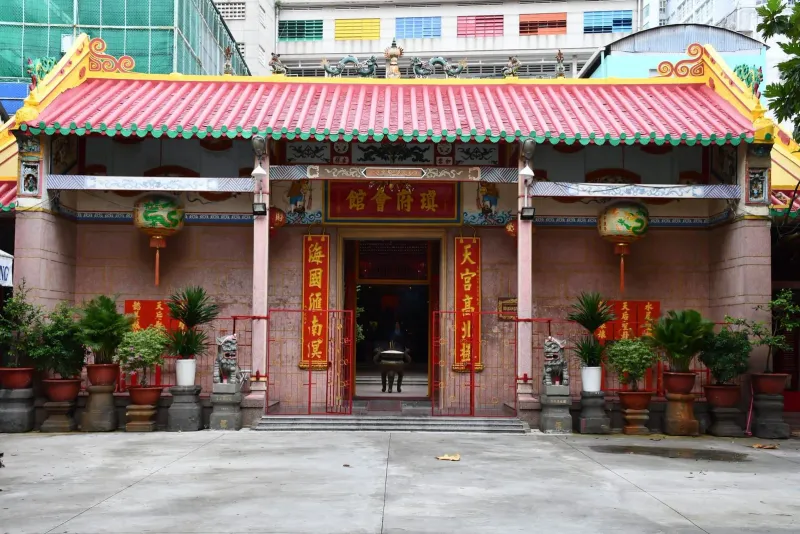
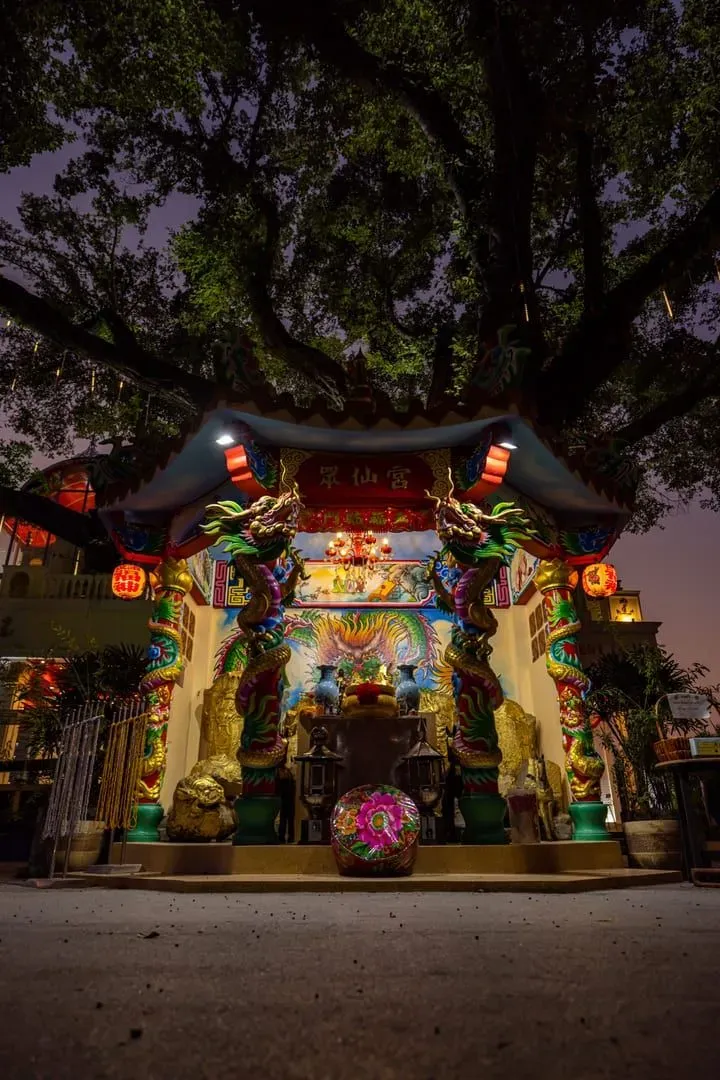
Officially the Chao Eng Sae Shrine, the Chinese Temple of Maenam sits a few dozen meters from the sand in Maenam’s small “Chinatown” district, its entrance and main hall wrapped by four dragon pillars painted in green and gold. It grew out of the same wave of Hainanese settlement that arrived on Samui through the late 19th and early 20th centuries, and it still doubles as the neighborhood’s spiritual hub during the Thursday Maenam Walking Street market and Chinese New Year.
Best for: festival timing, pairing with the Thursday night market. Con: small site, narrow lanes make parking difficult. Full details on Chinese Temple of Maenam.
Nathon Hainan Shrine
On Ang Thong Road in the island’s old capital, the Nathon Hainan Shrine is instantly recognizable by the pair of golden guardian lions flanking its gate, one resting a paw on a globe, the other guarding a cub. Its primary altar is dedicated to Jao Mae Tubtim, better known as Mazu, the sea goddess local fishermen and ferry captains still pray to for safe passage. Nathon itself grew into Samui’s original administrative and trading capital because of its deep-water harbor — the reason 19th-century Hainanese traders settled there in the first place — but no independently verifiable source confirms an exact founding date or story for this specific shrine, so treat any precise year you see elsewhere with caution.
Best for: old-town history, a stop before or after the ferry. Con: founding history is not well documented outside local tradition. Full details on Nathon Hainan Shrine.
Guam Im Shrine — The Ocean-Facing Sanctuary
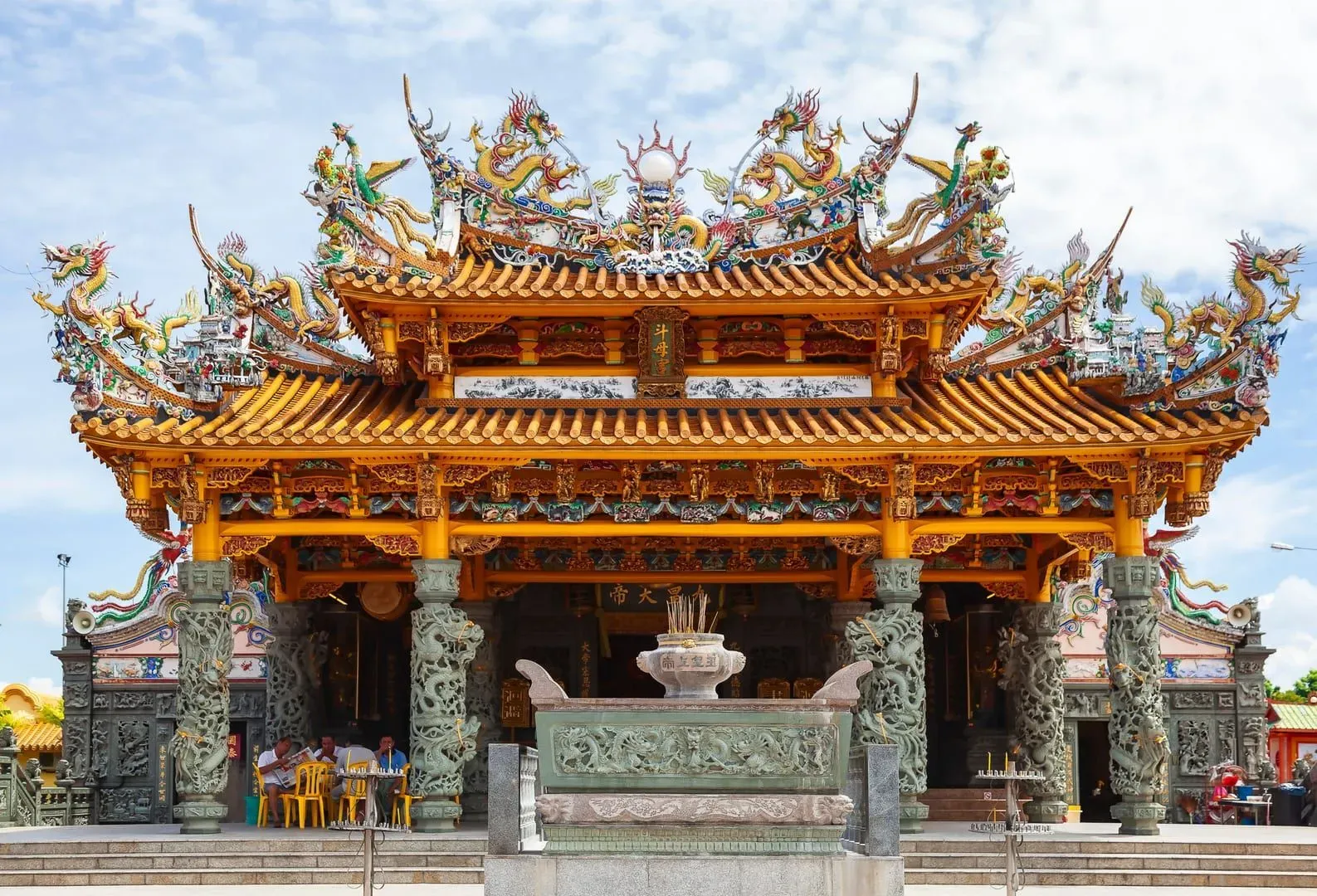
Between Choeng Mon and Plai Laem, the small Guam Im Shrine perches on a rocky headland with an uninterrupted view of the Gulf of Thailand — a deliberate layout, since Guanyin is honored here partly as a protector of seafarers. It is far quieter and less commercial than Wat Plai Laem’s giant statue a short drive away, and its east-facing position makes it one of the better sunrise spots on the island.
Best for: sunrise, quiet reflection, photography. Con: very small — most visits run 15-30 minutes. Full details on Guam Im Shrine.
Wat Plai Laem — The 18-Armed Guanyin
Technically a Buddhist wat rather than a Chinese folk shrine, Wat Plai Laem earns its place on this list for its centerpiece: an 18-armed white Guanyin statue roughly 15 meters tall, rising straight out of a lake. Completed around 2004, the complex also holds a 20-meter Budai (the laughing Buddha) in its own pavilion, blending Chinese Mahayana iconography with Thai Theravada architecture in a way no other Samui temple attempts. Entry is free, and hours run roughly 6 AM to 6 PM.
Best for: first-time visitors, families feeding the lake’s fish. Con: limited shade around the lake at midday. Full details on Wat Plai Laem.
Meet the Deities — Guan Yu, Guanyin, Mazu and Budai
Four figures explain almost everything worshipped at Samui’s Chinese shrines, and each protects something different. Guan Yu, a general who served the warlord Liu Bei during China’s Three Kingdoms period (roughly 220-280 CE), was deified over centuries into Guandi — the god of loyalty, righteousness and business ethics, recognizable by his red face and Green Dragon Crescent Blade (Wikipedia). Guanyin (Guan Im), the Bodhisattva of Compassion, is worshipped for mercy, health and fertility, and appears at three sites on this list in forms ranging from Wat Plai Laem’s 18-armed giant to the intimate clifftop statue at the Guam Im Shrine. Mazu, worshipped at the Nathon Hainan Shrine as Jao Mae Tubtim, began as Lin Moniang, a Fujianese woman said to have died young rescuing a ship at sea around the 10th century; she is now the sea’s protector across Chinese coastal communities (Wikipedia). Budai, the round, laughing monk at Wat Plai Laem, is considered an incarnation of Maitreya, the future Buddha, and stands for wealth, abundance and good fortune — rubbing his belly is the customary gesture for luck.
Chinese Guardians vs Thai Guardians — Dragons, Phoenixes and Naga
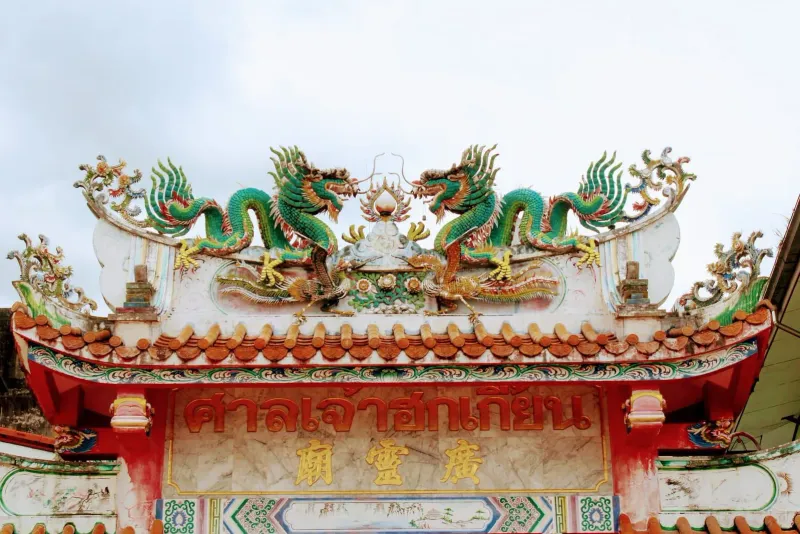
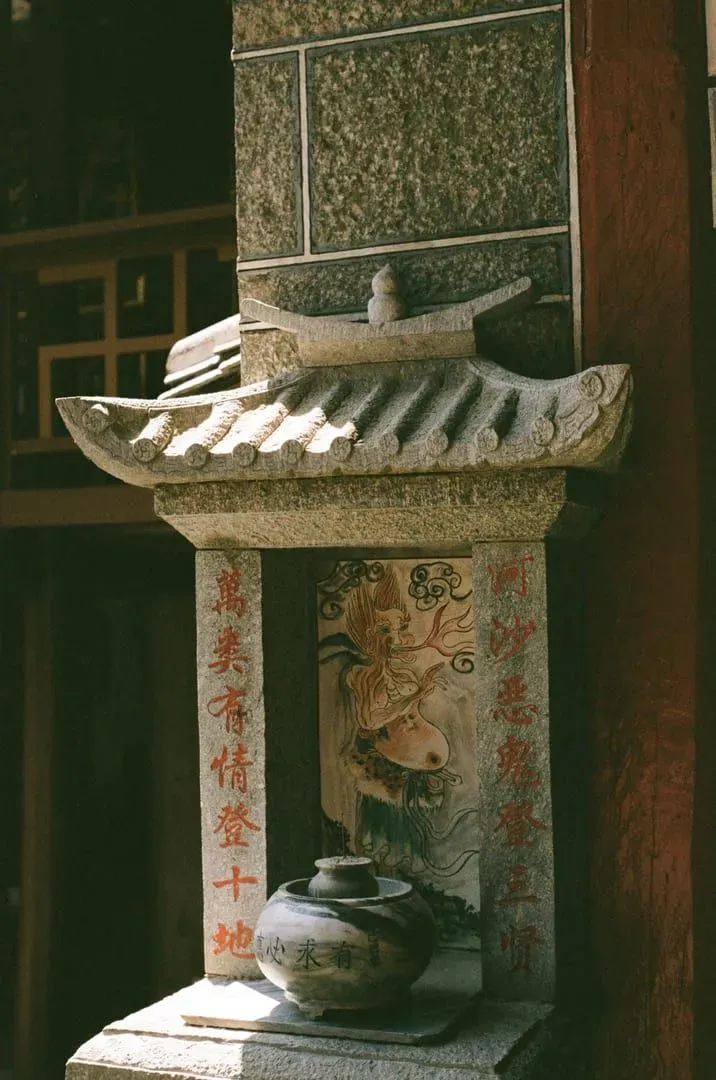
Spotting the difference between a Chinese shrine and a Thai wat is mostly a matter of which mythical creatures guard the roofline. Chinese shrines favor dragons (power and rain, coiled around pillars at the Chinese Temple of Maenam and the Guan Yu Shrine), phoenixes or fenghuang (renewal, paired with the dragon on roof ridges), fu lions or shi (a male-and-female guardian pair, as at the Nathon Hainan Shrine’s gate), and the qilin, a single hybrid creature symbolizing virtue that appears alone rather than in pairs. Thai wats swap in a different cast: the naga, a serpent guardian sheltering the Buddha and forming temple staircases; the garuda, a half-bird, half-human figure and Thailand’s national emblem, perched on roof finials (chofa); and the yaksha (yak), giant armored warrior statues that flank temple and palace gateways.
| Creature | Culture | Meaning | Where on Samui |
|---|---|---|---|
| Dragon | Chinese | Power, rain, prosperity | Chinese Temple of Maenam, Guan Yu Shrine |
| Phoenix (fenghuang) | Chinese | Renewal, paired with the dragon | Nathon Hainan Shrine roof ridges |
| Fu lion (shi) | Chinese | Guardian pair, protection | Nathon Hainan Shrine gate |
| Qilin | Chinese | Virtue, good rule | Chinese shrine gateways |
| Naga | Thai | Water guardian, shelters Buddha | Wat Phra Yai, Wat Sila Ngu staircases |
| Garuda | Thai | National emblem, roof finial | Every active Buddhist wat |
| Yaksha (yak) | Thai | Giant guardian warrior | Temple gateways |
The Hainanese Story — Coconut Traders Who Built the Shrines
Every shrine on this list traces back to the same migration. Beginning in the 19th century, traders from Hainan Island moved to Koh Samui and other parts of Thailand, and it was these settlers who started the island’s cotton and coconut plantations, shipping the harvest to the mainland on boats known as panuk lang si; Hainanese families tended to settle along the coast rather than inland, and a number of their temples and communities survive on Samui today (Wikipedia). The Guan Yu Shrine’s own account narrows that story to a specific date and place: the first wave of Hainanese arrivals settled at Ban Nakai, near Hua Thanon, around 1872, carrying a small Guan Yu statue across the sea for protection before building a wooden shrine to house it. Nathon developed in parallel into the island’s original administrative and commercial capital, thanks to a deep-water harbor that could take large trading vessels — the same advantage that drew Hainanese merchants there. Coconuts remained Samui’s economic backbone for roughly a century before tourism took over in the 1970s and 1980s, and the shrines these traders built are the clearest physical record left of that earlier economy.
How to Visit a Chinese Shrine
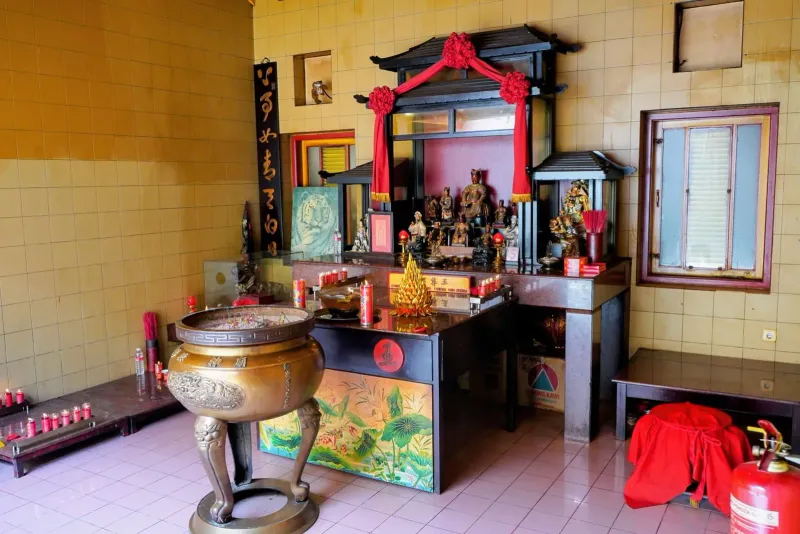
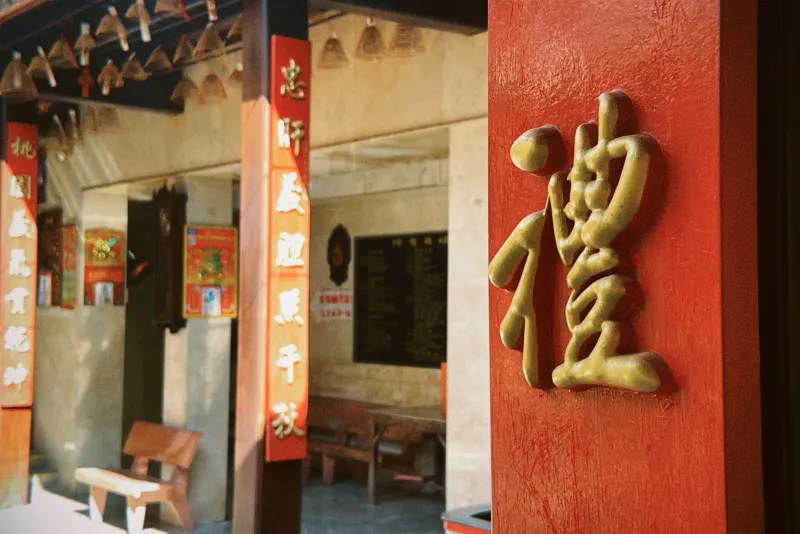
Visiting etiquette at a Chinese shrine overlaps with a Buddhist wat but isn’t identical. Buy a bundle of incense sticks at the entrance, light them, and bow three times while holding them at chest height before placing them in the sand-filled urn — the same three-bow gesture used across all four shrines on this list. Dress modestly (shoulders and knees covered) even though enforcement is generally more relaxed than at a Buddhist temple. Shoe removal varies by site: enclosed inner sanctums, like those at the Chinese Temple of Maenam, the Nathon Hainan Shrine and the Guam Im Shrine, ask visitors to leave shoes at the door before the altar, while open-air complexes such as the Guan Yu Shrine — built around an outdoor statue rather than an enclosed hall — don’t. At some of the larger Chinese temples in Thailand you can also try kau cim, shaking a cylinder of numbered bamboo sticks until one falls out, then matching its number to a printed fortune; it isn’t offered at every small Samui shrine, so ask a caretaker if you don’t see the sticks set out. A donation of 20-100 THB (~0.50-3 USD) in the collection box is customary but never demanded. For the fuller rundown covering Buddhist wats too, see the temple etiquette guide.
Chinese Festivals on Koh Samui
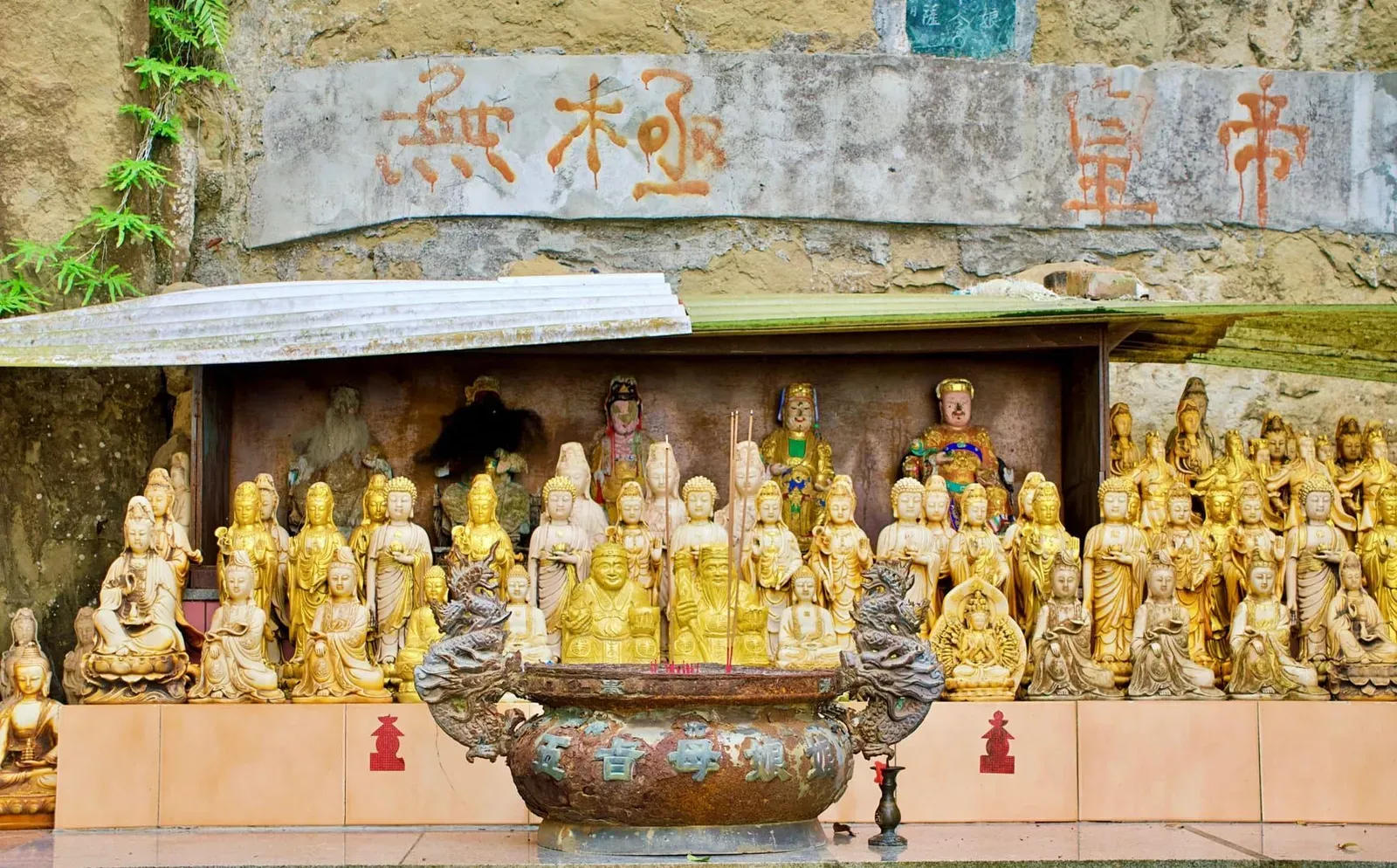
Three dates carry real weight at Samui’s Chinese shrines. Chinese New Year falls on 17 February 2026 (Year of the Fire Horse); Samui’s Chinese-Thai communities in Nathon and Hua Thanon mark it at their shrines with lion dances, firecrackers and family feasts, on a smaller scale than the mainland’s Phuket-style street events. Hungry Ghost month, when the gates between worlds are believed to open, runs the full seventh lunar month, with Ghost Day itself falling around 27 August 2026; the observance appeases wandering ancestor spirits with food offerings and burnt paper money, and is most visible at Chinese shrines rather than Buddhist wats (Wikipedia). The Vegetarian Festival, a nine-day Hokkien-Chinese observance banning meat, alcohol and eggs and marked by yellow flags outside participating restaurants and shrines, runs roughly 10-18 October 2026 on the lunar calendar used at Phuket’s much larger celebration; Samui’s smaller Chinese community observes the same principle, though no separately published island-wide schedule confirms exact local event times, so check with a shrine caretaker close to the date. For the alcohol-sale bans and other Buddhist holidays that overlap this calendar, see the temple etiquette guide.
FAQ
What Chinese temples are there in Koh Samui?
Koh Samui has four dedicated Chinese shrines — the Guan Yu Shrine in Hua Thanon, the Chinese Temple of Maenam, the Nathon Hainan Shrine, and the Guam Im Shrine in Choeng Mon — plus Wat Plai Laem, a Buddhist wat built around an 18-armed Chinese-style Guanyin statue. All are free to enter.
Is a Chinese shrine different from a Thai Buddhist wat?
Yes. A Chinese shrine honors folk deities like Guan Yu or Mazu rather than the Buddha, uses dragons, phoenixes and fu lions instead of naga and garuda on its roofline, and tends to feel livelier and more colorful than a Buddhist wat’s quieter, more formal atmosphere. Etiquette overlaps — modest dress and quiet respect apply at both — but the rituals, from incense bowing to kau cim fortune sticks, are distinct.
Do I need to take my shoes off at a Chinese shrine on Koh Samui?
It depends on the shrine. Enclosed inner sanctums, such as those at the Chinese Temple of Maenam, the Nathon Hainan Shrine and the Guam Im Shrine, ask visitors to remove shoes before the altar. Open-air complexes like the Guan Yu Shrine, built around an outdoor statue rather than an enclosed hall, generally don’t require it — but watch for signage or follow other visitors’ lead either way.
What is kau cim, and can I try it on Koh Samui?
Kau cim is a Chinese fortune-telling practice where you shake a cylinder of numbered bamboo sticks in front of an altar until one falls out, then match its number to a printed verse for guidance. It’s a common feature at larger Chinese temples in Thailand, but not every small Samui shrine offers it — ask a caretaker if you don’t see the sticks set out at the altar.
When is Chinese New Year celebrated on Koh Samui?
Chinese New Year 2026 falls on 17 February, marking the Year of the Fire Horse. Samui’s Chinese-Thai communities, centered on Nathon and Hua Thanon, mark the day at their shrines with lion dances, firecrackers and family gatherings — a smaller-scale version of Phuket’s larger street celebrations.
Is the Vegetarian Festival celebrated on Koh Samui?
Samui’s Chinese community observes the same Hokkien-Chinese Vegetarian Festival principles as Phuket’s larger nine-day event, expected around 10-18 October 2026 on the lunar calendar, with yellow flags marking participating stalls and shrines. No separately published Samui-wide schedule exists, so confirm specific shrine activities locally as the date approaches.
Published on
About the author

Mike Brochlowski
Travel photographer & writer
Travel photographer and island explorer. Mike has spent years documenting Southeast Asia's hidden gems, from secluded beaches to jungle waterfalls.
Articles by Mike →More in Travel Guides
Next in Travel Guides
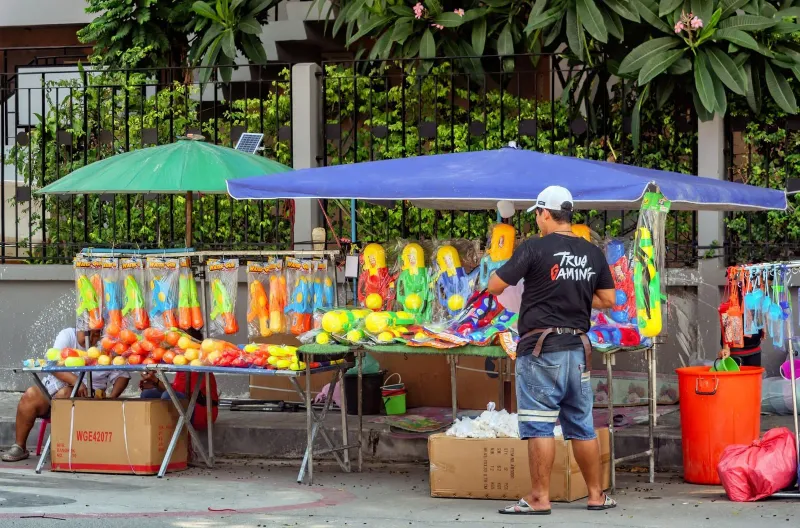
Songkran in Koh Samui (13–15 April) — Where the Water Fights Are
Songkran hits Koh Samui 13-15 April: Chaweng Beach Road, Lamai and Nathon turn into water fights.
Next in Travel Guides
Taling Ngam — Samui's Luxury Sunset Corner
Taling Ngam, Koh Samui's remote southwest corner: InterContinental, Conrad, Five Islands sunsets, Thong Krut pier for Pig Island — 45 min…
Chaweng Beach — Samui's 7km White Sand Strip and Nightlife Capital
Chaweng Beach on Koh Samui — 7 km of white sand, beach clubs, Soi Green Mango nightlife, Central Festival shopping, and year-round swimming.