Contents
Overview
Loy Krathong is Thailand’s festival of lights, when small floating offerings called krathongs go out onto water after dark to let go of the past year’s bad luck. On Koh Samui, without a river to float them on, krathongs go out on the sea instead — along Chaweng beach and Chaweng Lake, on temple ponds like Wat Plai Laem’s, and off the old pier in Nathon. The festival falls on the full moon of the twelfth lunar month, almost always in November, and lands inside the island’s wettest stretch of the year.
This page is for anyone building a November trip around Loy Krathong: what a krathong actually is, where locals and visitors float them on Samui, why the island has no Chiang Mai-style sky lantern release, what a krathong costs, and how to pick one that will not leave plastic on the seabed. Pair it with the things to do hub for the rest of the island’s activities and the November weather guide for the full rain picture.
Key takeaways
- Loy Krathong falls on the full moon of the twelfth lunar month — reliably November, though the exact date shifts every year with the Thai lunar calendar
- Samui has no river, so krathongs go out on the sea at Chaweng, on Chaweng Lake, on temple ponds, and off Nathon’s pier
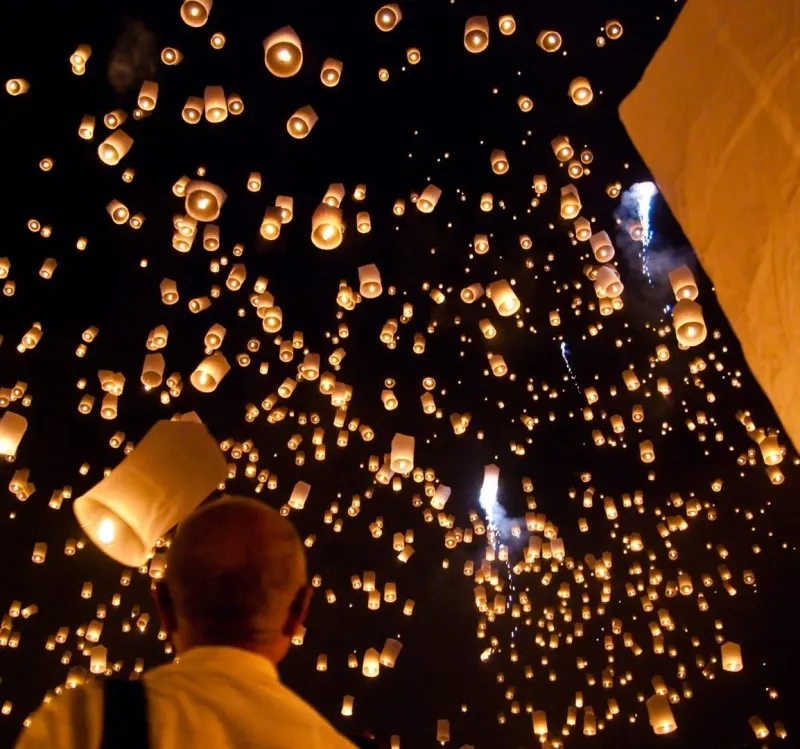
- Sky lanterns (the Chiang Mai/Yi Peng tradition) are a different festival — Thailand restricts lantern releases near any airport, Samui’s included
- A simple banana-leaf krathong runs roughly 20-100 THB (~0.50-3 USD); skip glued styrofoam or plastic-pinned versions
- The festival sits inside Samui’s wettest month, so build a rain buffer into the evening’s plans
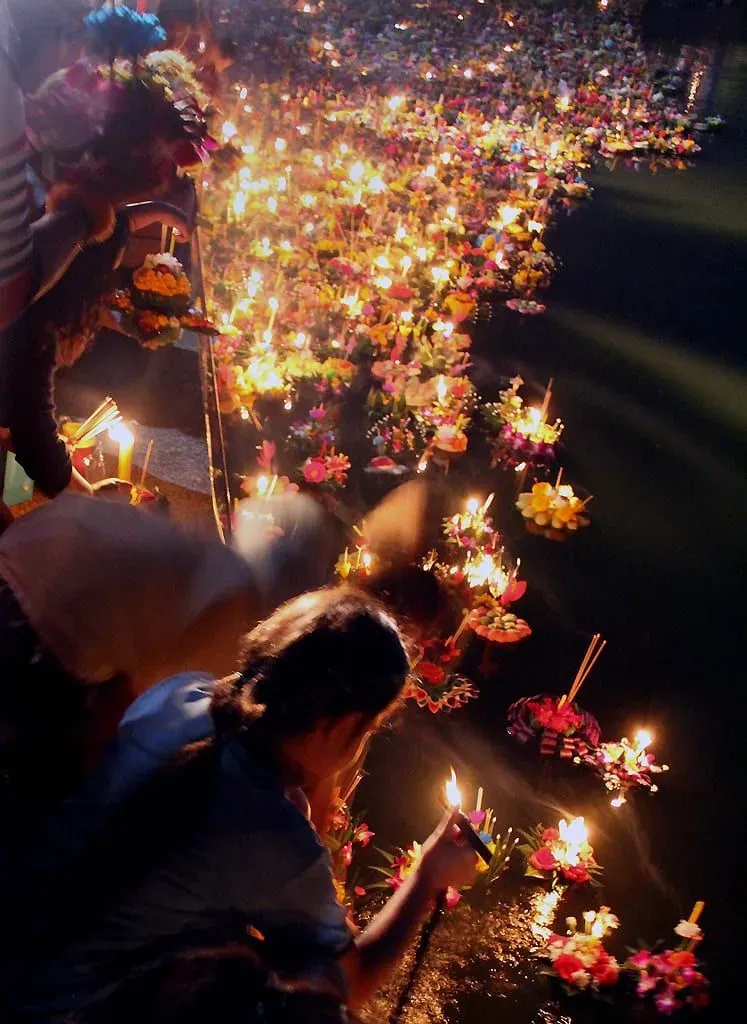
When Is Loy Krathong on Koh Samui?
Loy Krathong always falls on the evening of the full moon of the twelfth month in the traditional Thai lunar calendar, per Wikipedia’s Loi Krathong entry — a rule that fixes the festival to the moon rather than a set date on the Western calendar. That lunar rule lands the festival in November in almost every year, though the day itself moves — sometimes into very early December — depending on how the lunar and solar calendars line up that year. This site’s November weather page and Buddhist holidays guide list a working 2026 date; confirm it closer to your trip, since lunar-calendar festivals can shift by a day depending on which source’s calculation you check.
Whatever the exact date, the pattern around it is consistent: shops start selling pre-made krathongs about a week ahead, temples and beach clubs plan an evening program, and hotels along Chaweng and Bophut often lay on their own small krathong-floating event for guests who would rather not join the crowds on the open beach.
What a Krathong Is and What It Means
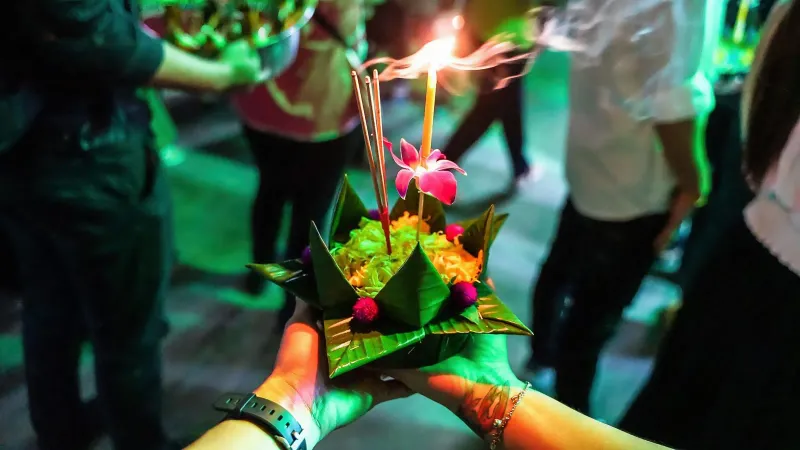
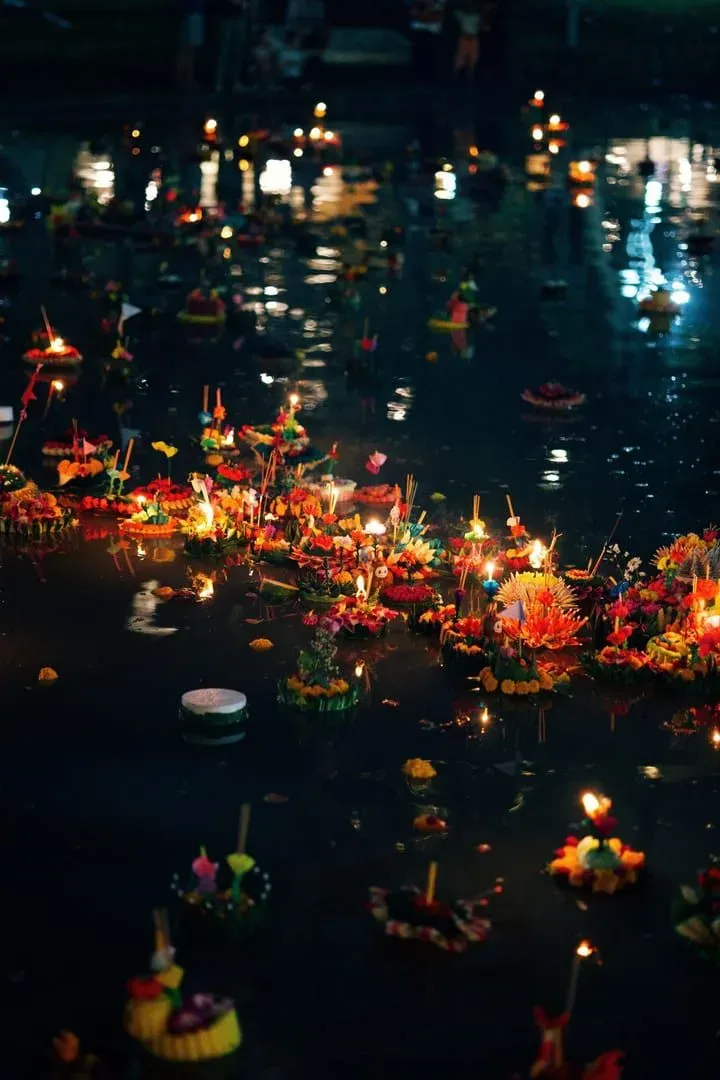
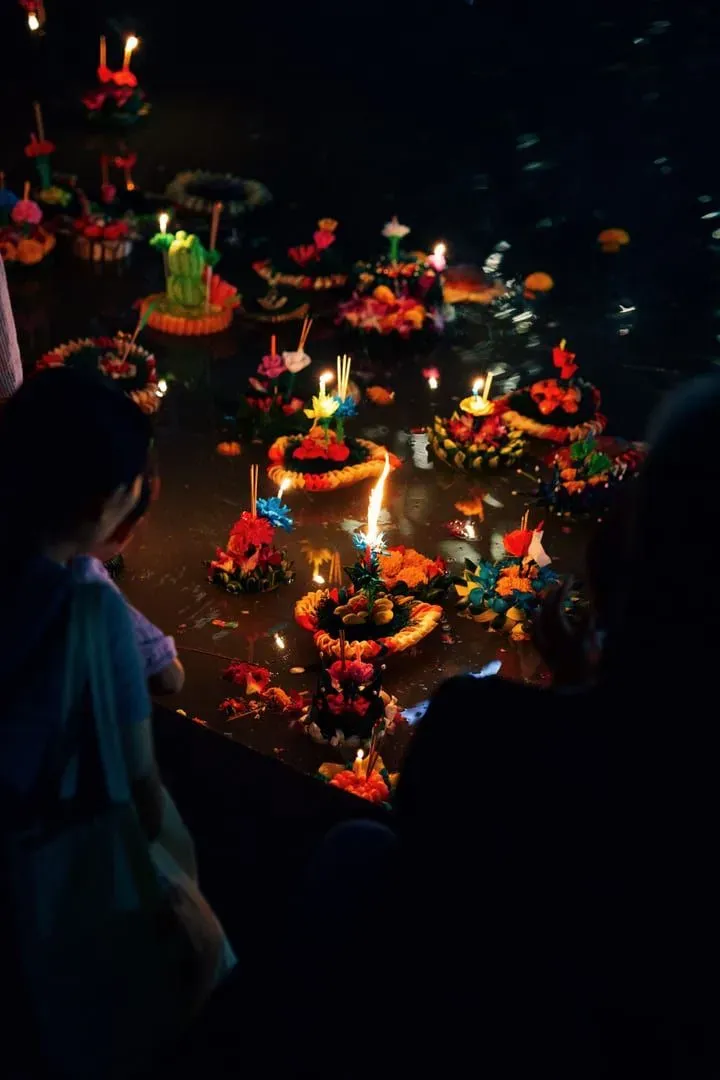
A krathong is a small floating offering, traditionally built on a slice of banana tree trunk or a spider lily stem, decorated with folded banana leaves, flowers, incense sticks and a candle. Setting it on the water is a way of releasing the past year’s bad luck and showing gratitude to the water itself — some people tuck in a coin, a strand of hair or a fingernail clipping as a symbol of what they are letting go of, then make a wish as the candle drifts off. The candle and incense are meant to honor Buddha and, on a river, the water spirits; on an island with no river, Samui’s version keeps the ritual but moves it to the sea, a lake or a temple pond instead.
Modern krathongs vary widely in what they are actually made from. Traditional banana-leaf-and-trunk versions break down naturally within days. Bread krathongs, sometimes shaped like animals, are sold as an eco-friendly option because fish eat them once they fall apart. Styrofoam versions, once common, are now banned or discouraged in most Thai provinces because they do not break down and wash back up as litter — see the choosing section below for what to actually buy on Samui.
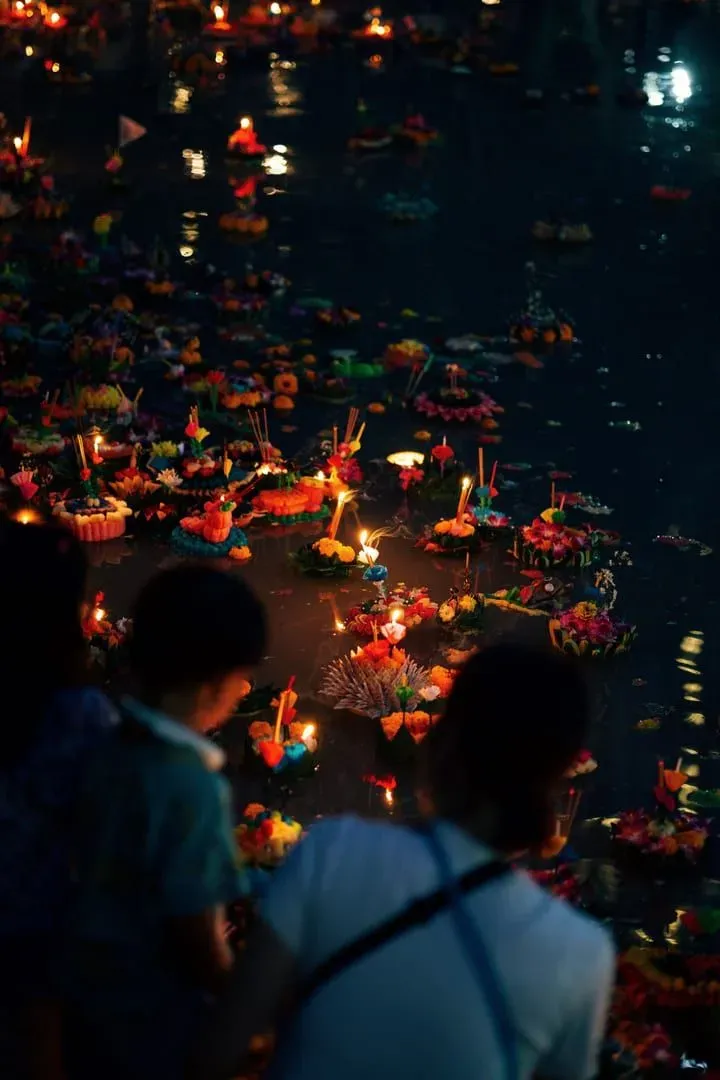
Where to Float a Krathong on Koh Samui
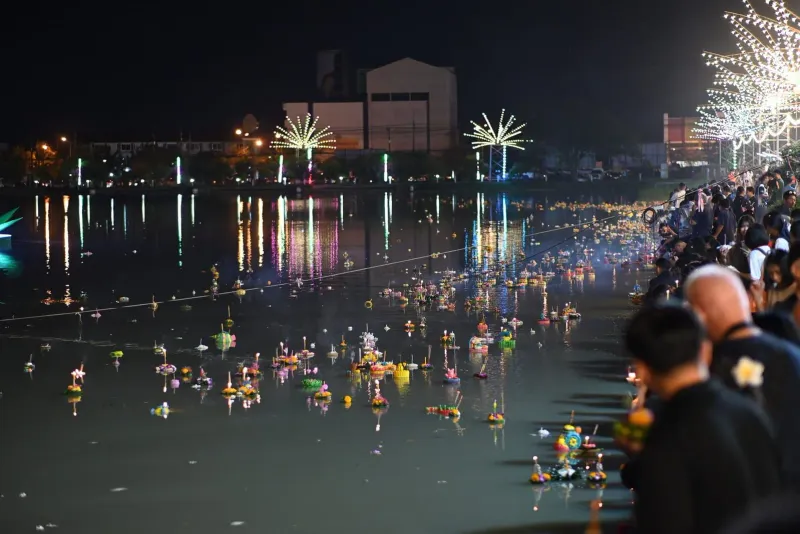
Koh Samui has no river, so the festival’s usual venue shifts to the sea, a lake or a temple pond depending on where you are staying. Chaweng beach hosts the island’s biggest public gathering, with stalls selling krathongs right on the sand and the beach filling up after dark as hundreds go out into the shallows together. A quieter alternative sits just behind the strip at Chaweng Lake, the heart-shaped lake known locally for its walking path and lakeside cafes, where a calmer krathong-floating scene draws people who would rather skip the beach crowds.
Temple ponds are the other classic choice. Wat Plai Laem’s lake, already one of the island’s most-photographed temple settings, becomes a popular, calmer spot to set a krathong down away from the open sea, and other temples with their own ponds run smaller versions of the same ritual — the usual temple dress code still applies even for a quick krathong visit after dark. Down on the west coast, Nathon, Samui’s ferry town and old capital, hosts a smaller, more local Loy Krathong scene off its working harbor and old pier — worth choosing over Chaweng for anyone who wants the ritual without the tourist-beach production.
Why Koh Samui Has No Sky Lantern Release
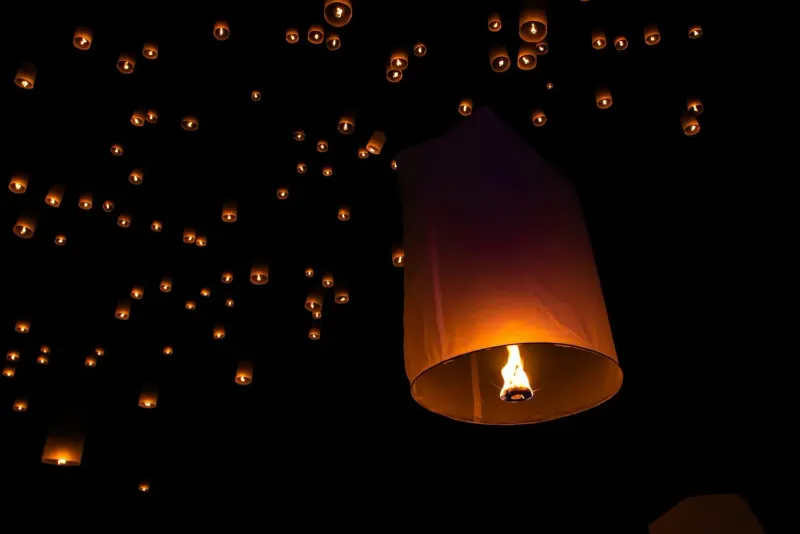
Loy Krathong is often confused with Yi Peng, the sky lantern festival most associated with Chiang Mai, but the two are distinct traditions that just happen to fall on the same lunar full moon. Yi Peng is a Lanna (northern Thai) custom in which thousands of paper-and-bamboo lanterns, called khom loi, are released into the night sky; Loy Krathong is the water-based ritual practiced nationwide, Samui included. Chiang Mai’s mass lantern releases have repeatedly forced the city’s airport to cancel or reschedule dozens of flights for safety reasons in past years — Wikipedia’s Yi Peng entry records over 150 flights adjusted during the 2025 festival alone — and Thai aviation authorities restrict sky lantern releases near any airport nationwide as a result.
Koh Samui does not run a Yi Peng-style sky lantern release, and that restriction is one reason why: the island’s airport sits close to the built-up Chaweng-Bophut corridor, and releasing open-flame paper lanterns near an active flight path is a genuine hazard, not just a local custom Samui happens to skip. If a Chiang Mai-style lantern release is the specific experience you are after, that trip belongs on the mainland in November, not on Samui — see this site’s things to do hub for what the island offers instead.
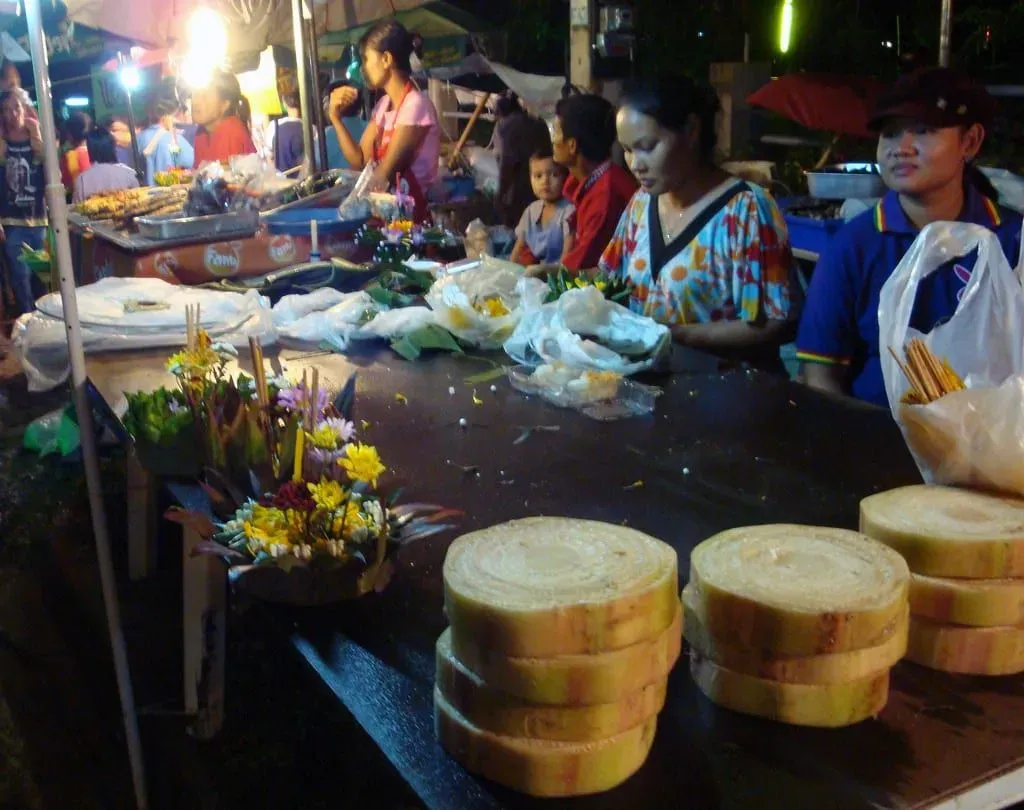
What a Krathong Costs and How to Choose a Biodegradable One
A simple, ready-made krathong from a beachside stall on Samui typically runs ~20-100 THB (~0.50-3 USD), built from a banana leaf base with flowers, incense and a candle already attached — no need to build one yourself unless a hotel or temple is running a workshop. More elaborate versions, larger or shaped like a lotus flower, can run higher, particularly from vendors set up right on Chaweng beach during the festival itself.
For the biodegradable choice, stick to krathongs made from a real banana leaf or trunk base with natural decorations, and avoid anything built on a styrofoam or plastic foam disc — those pieces do not break down and are increasingly restricted across Thailand for exactly that reason. Bread-based krathongs are another genuinely eco-friendly option, since fish eat them once they soften in the water. A quick check before buying: press the base — banana trunk feels fibrous and slightly damp, styrofoam feels light, dry and springy. Skip krathongs studded with metal pins, glitter glue or plastic beads, since those pieces sink or wash up on the beach long after the candle has burned out — the same reef- and beach-conscious thinking covered in this site’s responsible travel guide applies directly to a one-night festival like this one.
What the Evening Looks Like
Loy Krathong evenings on Koh Samui start with food stalls and vendors setting up by late afternoon, selling krathongs alongside the usual grilled seafood and Thai desserts found at any island night market. As it gets dark, families and couples wade a few steps into the shallows to set their krathong on the water together, often making a wish as the candle catches and the current pulls it away from shore. Larger venues along Chaweng add their own program on top of the ritual — music, food stalls and sometimes a fireworks display once the beach has filled up, similar in spirit to the island’s New Year’s Eve countdown but on a smaller scale.
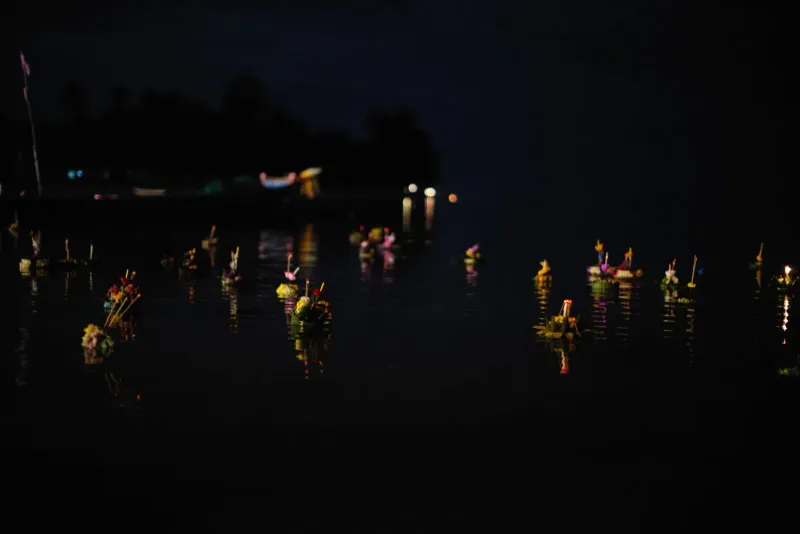
Quieter spots like Chaweng Lake or a temple pond skip the added entertainment entirely: the appeal there is watching dozens of small candlelit krathongs drift across still water rather than joining a beach party. Either way, plan to arrive by early evening for the best light and the calmest water, since wind and beach traffic both pick up as the night goes on.
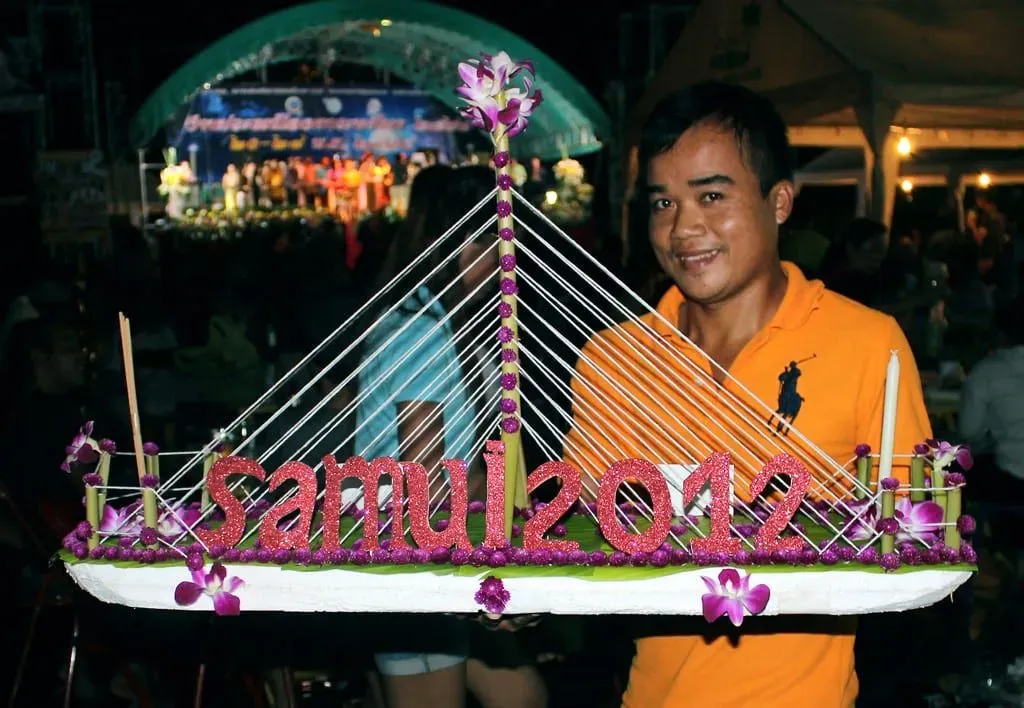
Rain and Crowds — Loy Krathong Inside the Wettest Month
Loy Krathong’s near-certain November timing means it lands inside Koh Samui’s wettest month of the year, which averages roughly 445 mm of rain across 16 rain days. Most of that rain still falls as short, hard afternoon downpours rather than an all-evening washout, and sunshine that month still averages around 6.0 hours a day, so an evening event has decent odds of staying dry even if the afternoon brought a squall. The real risk, as with any November plan on Samui, is a multi-day tropical depression parking itself over the Gulf — rare, but worth checking forecasts for in the days before the festival.
On the crowd and price side, November sits at the low point of Samui’s annual rate cycle, per this site’s rainy season guide, so a Loy Krathong trip usually costs noticeably less than the same dates in December. Loy Krathong itself does not push hotel rates up the way Christmas or New Year does — it is a one-night local and visitor draw, not a peak-season trigger — but rooms directly on Chaweng beach can still fill up close to the date, so booking a few weeks ahead is worth doing if a beachfront view of the festival matters.
FAQ
When is Loy Krathong 2026 in Koh Samui?
Loy Krathong falls on the full moon of the twelfth lunar month, which lands in November almost every year; this site’s Buddhist holidays guide and November weather page list a working 2026 date. Confirm the exact day closer to your trip, since lunar-calendar festivals can shift depending on the source calculation used.
Where can I float a krathong on Koh Samui?
Chaweng beach hosts the island’s biggest public event, with vendors selling krathongs right on the sand. Chaweng Lake, just behind the beach strip, offers a calmer alternative, as does the temple pond at Wat Plai Laem. Nathon’s harbor and old pier host a smaller, more local version of the same ritual on the west coast.
Does Koh Samui have a sky lantern release like Chiang Mai?
No. Chiang Mai’s Yi Peng sky lantern release is a separate northern Thai tradition that happens to share Loy Krathong’s full moon date. Thailand restricts sky lantern releases near airports nationwide for flight-safety reasons, and Samui’s airport sits close to the island’s main tourist corridor, so no equivalent mass release happens here.
How much does a krathong cost on Koh Samui?
A simple, ready-made banana-leaf krathong typically costs ~20-100 THB (~0.50-3 USD) from a beachside stall, with more elaborate versions running higher, especially on Chaweng beach during the festival itself.
What is the most eco-friendly krathong to buy?
Choose a krathong built on a real banana leaf or banana trunk base, or a bread-based one — both break down naturally or get eaten by fish. Avoid anything built on a styrofoam or plastic foam disc, or decorated with metal pins and plastic beads, since those pieces do not biodegrade and increasingly get restricted across Thailand.
Is Loy Krathong a good reason to visit Koh Samui in November?
Yes, for travelers who do not mind the risk of rain. Loy Krathong lands inside Samui’s wettest month, averaging around 445 mm of rain over 16 days, but most days still get several hours of sun, hotel rates sit near their annual low, and the festival itself is a genuine, low-key cultural event rather than a tourist show.
Published on
About the author

Mike Brochlowski
Travel photographer & writer
Travel photographer and island explorer. Mike has spent years documenting Southeast Asia's hidden gems, from secluded beaches to jungle waterfalls.
Articles by Mike →More in Travel Guides
Also in 25 Best Things to Do in Koh Samui (2026)
Koh Samui Events Calendar 2026-2027 — Dates, Prices & Crowds
Koh Samui events calendar 2026-2027: Songkran, Loy Krathong, Full Moon Party dates, the Samui Regatta and Chaweng's NYE countdown, with p…
Also in 25 Best Things to Do in Koh Samui (2026)
18 Free Things to Do in Koh Samui (2026)
18 free things to do in Koh Samui — temples, beaches, waterfalls and viewpoints — plus the real costs some 'free' spots hide.

Also in 25 Best Things to Do in Koh Samui (2026)
Golf in Koh Samui — Santiburi Green Fees, Football Golf & Mini Golf
Golf in Koh Samui: Santiburi's hillside 18-hole course (3,550-5,800 THB green fee), Football Golf near Big Buddha, and what's confirmed f…