Contents
Bophut in Three Sentences
Bophut is a village on Koh Samui’s north coast built around Fisherman’s Village, a row of century-old Sino-Portuguese shophouses turned into restaurants, boutiques and bars. It suits travelers who want boutique charm and a walkable evening scene without the density of Chaweng, and it sits close enough to the airport and Big Buddha to work as a base for the whole island. Bophut is more expensive than Maenam but calmer than Chaweng, with its identity built around the weekly Friday Walking Street market and the beach bonfires of Coco Tam’s.
Key takeaways
- Fisherman’s Village Walking Street runs every Friday, 5 PM–10 PM (~5–10 PM), rain or shine
- Bophut Beach is ~2 km long, calm and shallow — good for swimming, not for waves
- Samui Airport is ~10 min / ~7 km away; Big Buddha is ~4.5 km / ~10–15 min by car
- Hotels run budget at 700–1,400 THB (~20–40 USD) to five-star at 8,750+ THB (~250+ USD), concentrated around the village and beachfront
- Coco Tam’s fire shows run nightly at roughly 7:15 PM and 9:00 PM
Quick Facts
Bophut sits on Koh Samui’s north coast, roughly midway between Maenam to the west and Big Buddha / Choeng Mon to the east — a 10-minute drive or a scenic 15-minute coastal walk from the airport.
At a glance: ~7 km / ~10 min from Samui Airport (USM) · ~9 km / ~15–20 min from Chaweng · ~4.5 km / ~10 min from Big Buddha (Wat Phra Yai) · Vibe: boutique village, low-rise · Price tier: mid-range to luxury · Best for: couples, families, first-time visitors wanting a central base
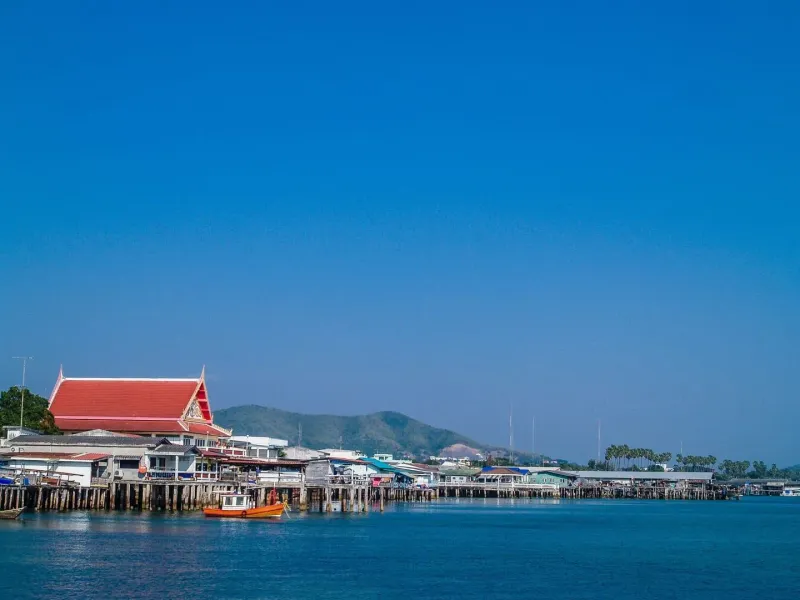
Fisherman’s Village itself is a single ~600-meter road running parallel to the beach, lined with 100+ shophouses, restaurants and independent stores. Unlike Chaweng’s high-rise strip, nothing in Bophut is taller than a few stories, and the pace stays unhurried even during the Friday market crush.
Beaches
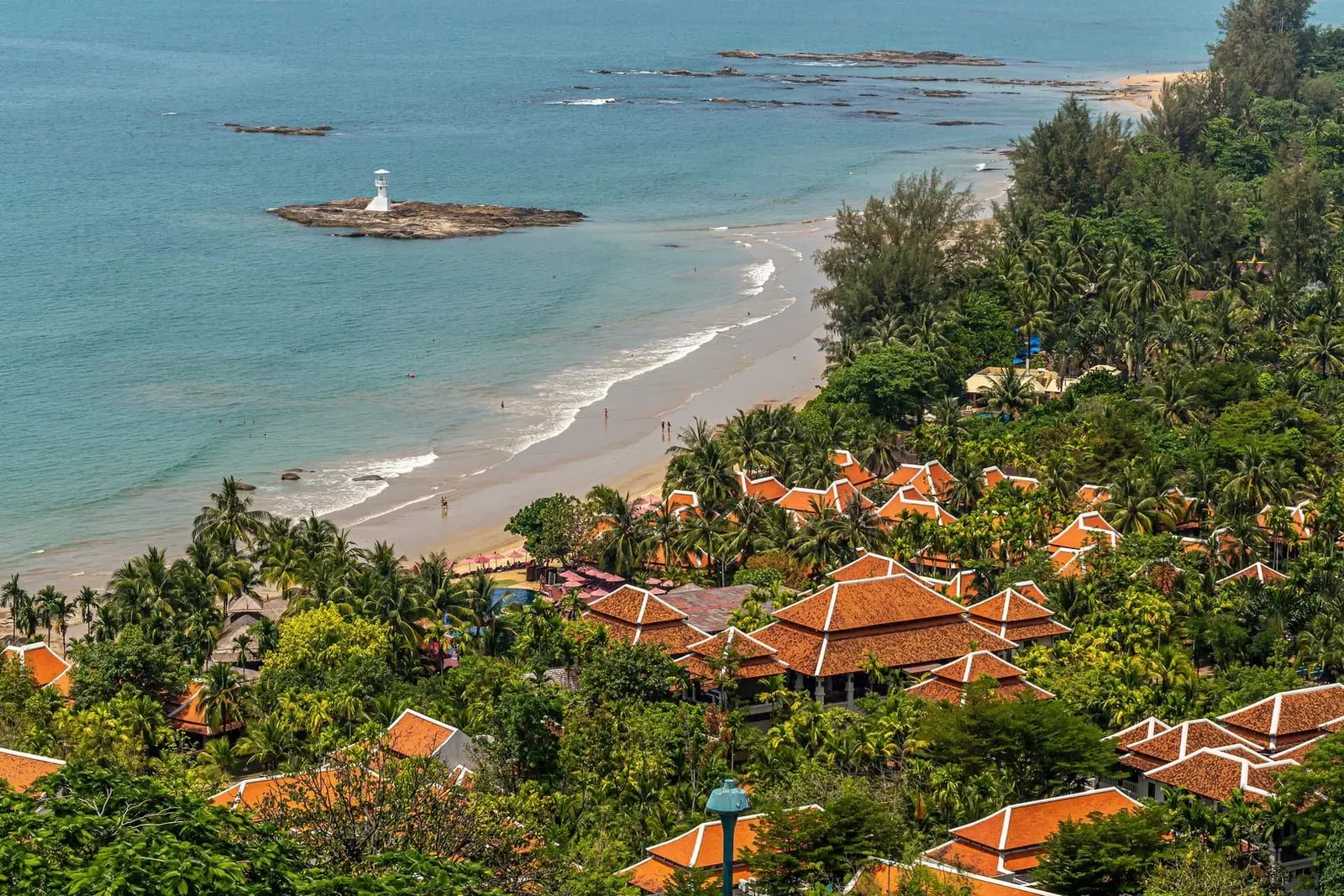
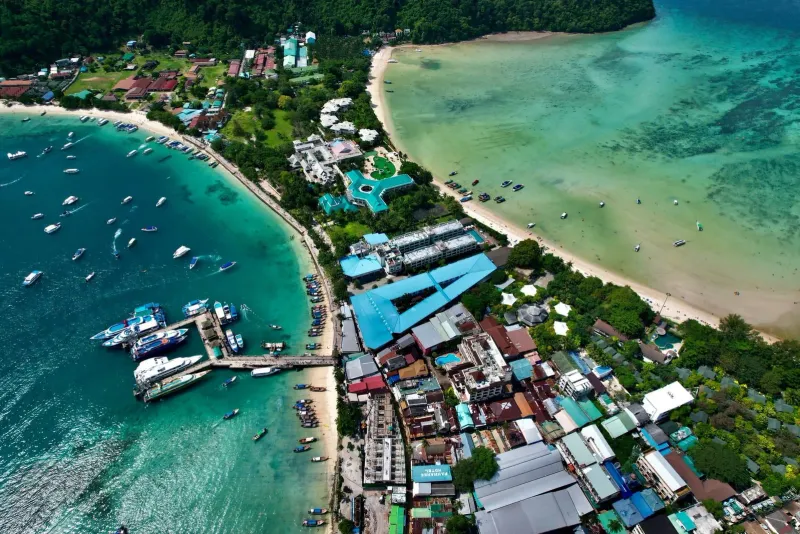
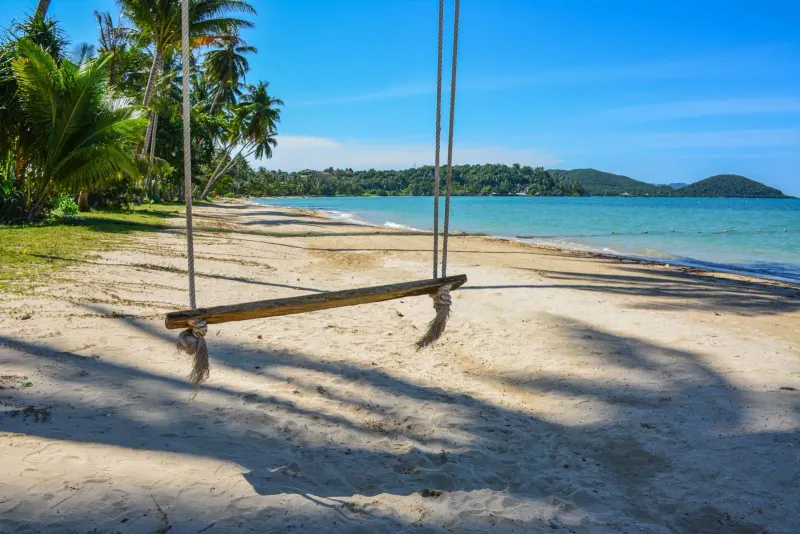
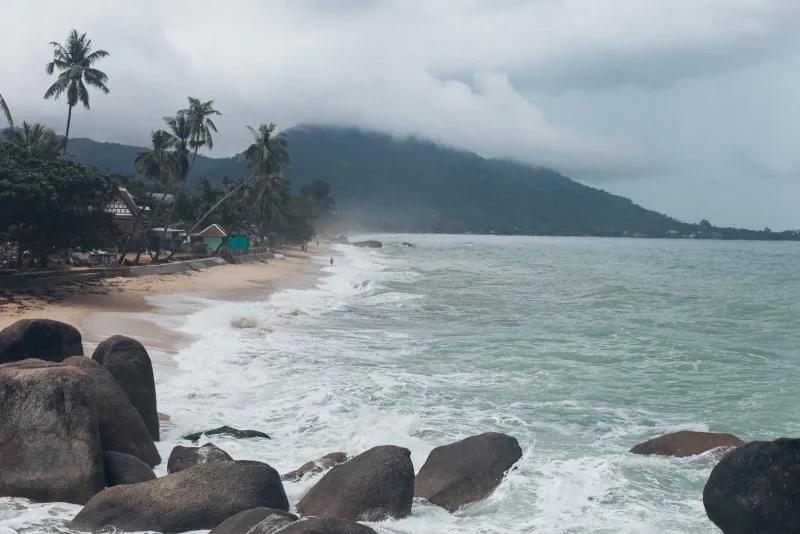
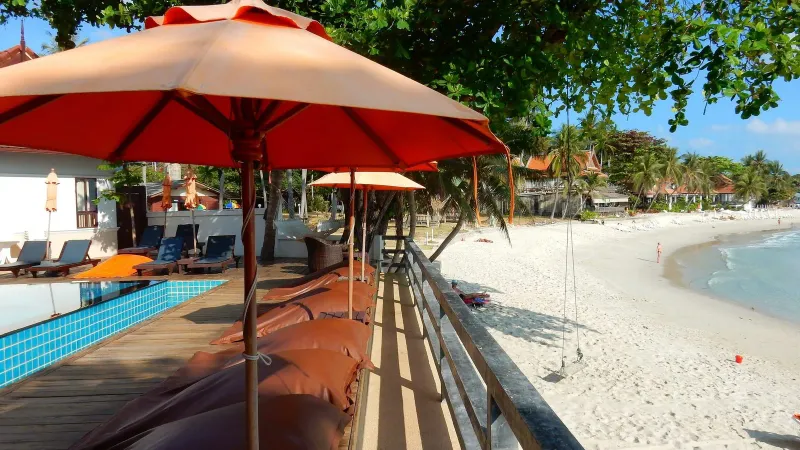
Bophut Beach is a ~2 km stretch of light-colored sand running along the north coast in front of the village, calm enough for swimming most of the year and shallow enough that it rarely draws a strong surf crowd. The beach is at its widest and busiest in the central section, in front of the resorts and Fisherman’s Village itself, and quieter toward its western end near the Bang Rak border.
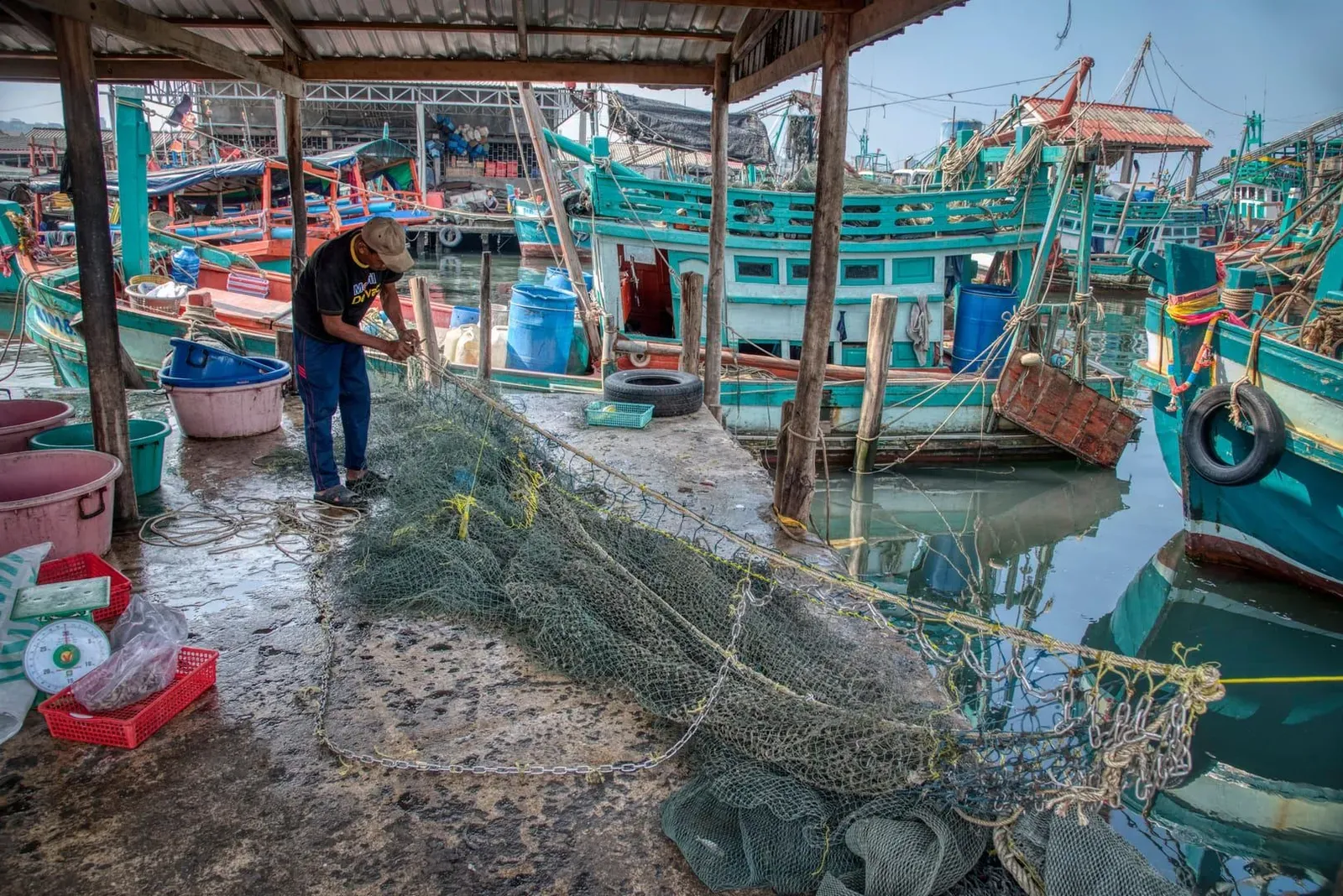
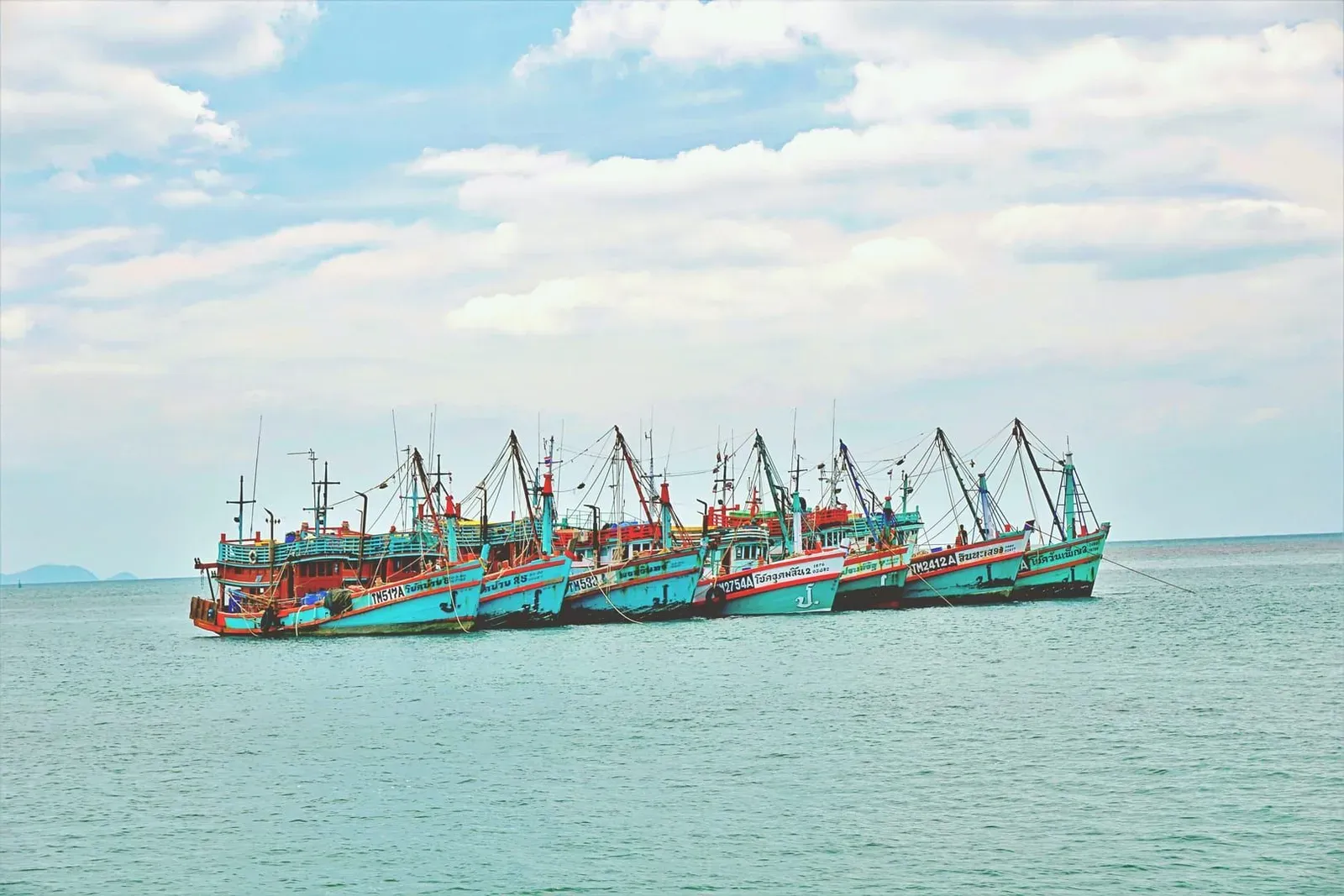
The seabed slopes gently and the water stays warm year-round (around 28–30°C), similar to other north-coast beaches, but Bophut is not the island’s top snorkeling spot — visibility is limited close to shore, and most operators run boat trips out to Koh Tao or Ang Thong Marine Park for that. Longtail boats moor along the eastern end near the old fishing pier, a reminder that Bophut was a working harbor long before it became a tourist village.
Sun loungers cost roughly 100–150 THB (~3–4.50 USD) per day from beachfront restaurants, and most of the shorefront is walkable end to end in well under an hour.
The western end of the beach, toward Bang Rak, is the quietest stretch — fewer resorts, more coconut palms, and a good spot for an early swim before the village wakes up. The eastern end blends into the fishing harbor, where longtail boats and small trawlers still operate daily, a working scene that predates the tourist village by generations.
Things to Do
Bophut’s main draw is walking Fisherman’s Village itself, but the surrounding north coast adds two of Samui’s most-visited landmarks within a 15-minute drive.
- Friday Walking Street (Bophut Walking Street): The signature event. Every Friday from about 5 PM to 10 PM, the main village road closes to traffic and fills with food stalls, handmade jewelry, Thai silk, wood carvings and live acoustic music. It draws visitors from across the island and is widely considered Samui’s best night market — see the island-wide roundup in Koh Samui’s night markets.
- Big Buddha (Wat Phra Yai): A 12-meter golden Buddha statue on a small island connected by causeway, about 4.5 km / 10 minutes east of Bophut. Free entry, best visited morning or late afternoon to avoid the midday heat and tour-bus crowds.
- Wat Plai Laem: A colorful lakeside temple complex with an 18-arm Guanyin statue, just beyond Big Buddha (roughly 2 minutes further by car). The two temples are usually visited together as a single stop.
- Village shophouse walk: Even outside market hours, the shophouse row is worth a slow walk — restored teak facades, art galleries, and independent boutiques that don’t exist elsewhere on Samui. Many of the buildings date to the era of Hainanese Chinese traders who settled the north coast, and the two-story wooden shopfronts are among the best-preserved examples of that architecture on the island.
- Beach walk to Bang Rak / Maenam: A flat coastal walk connecting Bophut to its quieter neighbors, roughly 45 minutes to Maenam at an easy pace.
- Boat trips from Bophut pier: Speedboats to Koh Phangan depart from nearby Bang Rak (Big Buddha) Pier in around 30 minutes, and longtail boat charters can be arranged directly from Bophut’s fishing harbor for half-day coastal trips, typically 1,500–3,000 THB (~43–86 USD).
For a full island-wide activity list beyond Bophut, see things to do in Koh Samui.
Where to Stay
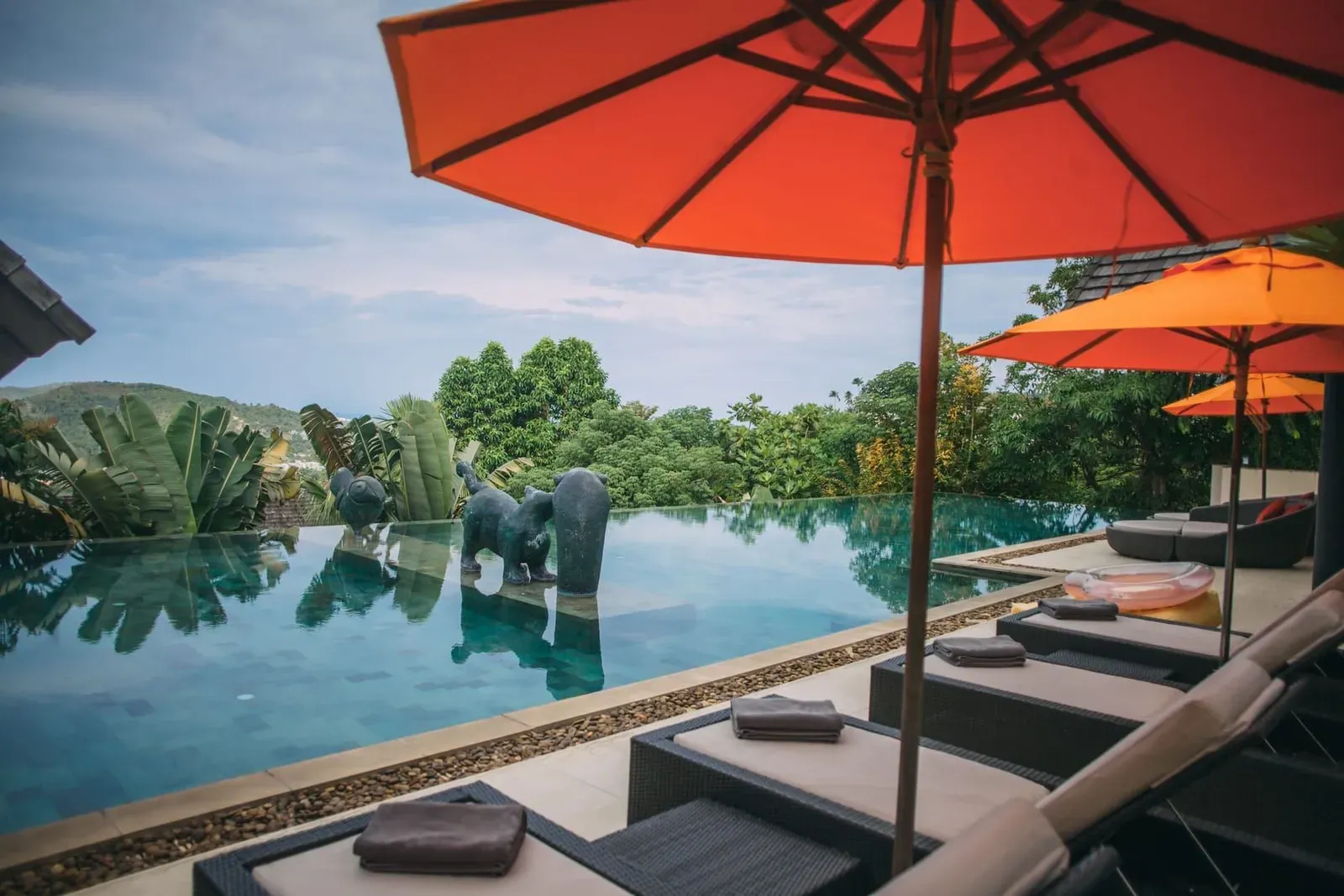
Bophut covers a wide price range, from simple guesthouses set back from the beach to five-star resorts along the shorefront, with most properties within a 5–10 minute walk of Fisherman’s Village.
| Tier | Price (per night) | What to expect |
|---|---|---|
| Budget | $20–40 (~700–1,400 THB) | Simple guesthouses and small hotels a short walk from the beach; fan or basic A/C rooms, limited amenities |
| Mid-range | $60–150 (~2,100–5,300 THB) | Boutique hotels inside or near the village, pools, breakfast included, walking distance to restaurants and the Friday market |
| Luxury | $200–400+ (~7,000–14,000+ THB) | Beachfront resorts such as Anantara Bophut Koh Samui Resort and Bandara Resort & Spa, private pools or pool access, spa and multiple dining options |
Booking inside the village itself puts you within a few minutes’ walk of dinner and the Friday market but away from the widest stretch of sand; beachfront resorts trade some of that walkability for direct beach access and quieter evenings. See the island-wide breakdown in where to stay in Koh Samui for how Bophut compares with Chaweng, Lamai and Maenam.
Notable properties include Anantara Bophut Koh Samui Resort (beachfront, from ~8,750 THB (~250 USD)/night), Bandara Resort & Spa (pool villas, from ~5,250 THB (~150 USD)/night), and a cluster of smaller boutique hotels directly inside the village priced from ~2,100 THB (~60 USD)/night with rooftop pools and a two-minute walk to the market.
Eat & Drink
Fisherman’s Village has the highest concentration of independent restaurants on the island, ranging from Thai seafood shacks to European-run bistros in restored shophouses.
- Village shophouse restaurants: Thai, Mediterranean, French and fusion menus fill the converted shophouses along the main road; mains typically run 150–400 THB (~4.50–11 USD) outside resort dining.
- Beachfront seafood: Restaurants along the shore grill the day’s catch to order; expect 200–500 THB (~5.50–14 USD) for a full seafood plate.
- Friday market food stalls: Grilled coconut prawns, papaya salad, mango sticky rice, crispy roti and fresh coconut ice cream, mostly 50–150 THB (~1.50–4.50 USD) per item.
- Local noodle and rice shops: Away from the main village strip, plastic-chair noodle shops serve pad thai and rice dishes for 50–80 THB (~1.50–2.50 USD) — the best value meals in the area.
For a wider island comparison of where to eat by budget and cuisine, see where to eat in Koh Samui.
Nightlife
Bophut’s evening scene centers on beach bars rather than clubs, with Coco Tam’s as the anchor venue for the whole north coast.
Coco Tam’s is an open-air beach bar built from bamboo and thatch, with beanbags on the sand, swing seats at the bar, and cabanas. It runs fire shows nightly at roughly 7:15 PM and 9:00 PM, and pairs Thai and international dishes (including wood-fired pizza) with cocktails from around 250–350 THB (~7–10 USD). It gets busy on Friday nights when the Walking Street crowd spills over from the market. The Tourism Authority of Thailand lists Bophut’s Fisherman’s Village among Koh Samui’s top cultural attractions for its preserved shophouse architecture.
Beyond Coco Tam’s, the village has a handful of low-key wine bars and rooftop spots, but nothing resembling Chaweng’s club strip — see Samui nightlife by area or sunset rooftop bars for options elsewhere on the island if you want a livelier night out.
Getting Around
Bophut’s village core is fully walkable — the main shophouse road is roughly 600 meters end to end, and most hotels sit within a 10-minute walk of it.
- From Samui Airport (USM): ~7 km, about 10 minutes by car. A prepaid airport taxi runs 200–300 THB (~5.50–8.50 USD).
- From Chaweng: ~9 km, 15–20 minutes by taxi (~200–300 THB) or songthaew (~100 THB).
- From Maenam: ~5 minutes by taxi (~100–150 THB) or a 45-minute beach walk.
- Songthaew (shared taxi): The north coast route runs Airport – Bang Rak Pier – Bophut – Maenam – Nathon, flagged down along Route 4169; fares are typically 50–100 THB depending on distance.
- Scooter or car rental: For reaching Big Buddha, Wat Plai Laem or the rest of the island independently, a scooter runs 200–300 THB/day (~5.50–8.50 USD) and a car 1,200–1,800 THB/day (~34–51 USD). See getting around Koh Samui for the full transport breakdown.
- Parking: Free parking is available along side streets near the village and at most beachfront restaurants; the main Fisherman’s Village road closes to vehicle traffic during the Friday market, so park on a side street before 5 PM.
Pros & Cons
Bophut’s strengths and trade-offs come down to its position between Samui’s quiet north coast and its busier east coast.
Pros
- Walkable village core with the island’s best-regarded restaurant density
- Friday Walking Street is a genuine weekly event, not a tourist trap
- Central location — 10 minutes to the airport, Big Buddha and Wat Plai Laem
- Calmer than Chaweng, more amenities than Maenam
Cons
- Beach is narrower and less scenic than Chaweng or Choeng Mon at points
- Hotel prices run higher than Maenam for comparable quality
- Village road gets genuinely crowded on Friday evenings
- Limited late-night options beyond Coco Tam’s if you want a bigger nightlife scene
FAQ
What is Fisherman’s Village in Bophut known for?
Fisherman’s Village is a row of restored Sino-Portuguese shophouses in Bophut, now home to restaurants, boutiques and bars. It is best known for the Friday Walking Street market, held every Friday from about 5 PM to 10 PM, when the main road fills with food stalls, crafts and live music — widely regarded as Samui’s best night market.
How far is Bophut from Samui Airport?
Bophut is about 7 km from Samui International Airport (USM), roughly a 10-minute drive. A prepaid airport taxi costs around 200–300 THB (~5.50–8.50 USD). It is one of the closest village bases to the airport on the island.
Is Bophut Beach good for swimming?
Bophut Beach is calm and shallow, suitable for swimming most of the year, though it is not the island’s top choice for snorkeling due to limited visibility close to shore. The central section in front of the resorts and Fisherman’s Village offers the easiest access and widest sand.
What time are the Coco Tam’s fire shows?
Coco Tam’s runs fire shows nightly at approximately 7:15 PM and 9:00 PM on the beach in Bophut. The bar also serves Thai and international food, including wood-fired pizza, with cocktails from around 250–350 THB (~7–10 USD).
Is Bophut better than Chaweng for a first trip to Koh Samui?
Bophut suits travelers who want a walkable village atmosphere, boutique hotels and easy access to Big Buddha and the airport without Chaweng’s density and nightlife strip. Chaweng suits those who want the widest choice of restaurants, shopping and clubs. Many first-time visitors base themselves in Bophut and day-trip to Chaweng.
How close is Bophut to Big Buddha and Wat Plai Laem?
Big Buddha (Wat Phra Yai) is about 4.5 km from Bophut, roughly a 10-minute drive. Wat Plai Laem sits just beyond it, about 2 minutes further by car. Both temples are commonly visited together on a single short trip from Bophut.
Nearby Areas
Bophut sits between two very different north-coast neighbors, with Samui’s east-coast hub also within easy reach.
- Bophut Beach: The beach itself, for swimming and sunset details beyond this village guide.
- Maenam: About 5 minutes west — quieter, more budget-friendly, with its own Thursday night market.
- Big Buddha / Choeng Mon: About 10–15 minutes east — home to Wat Phra Yai, Wat Plai Laem and a family-friendly beach.
- Chaweng: About 15–20 minutes southeast — the island’s main hub for shopping, dining variety and nightlife; see how the coasts compare in east vs west coast Koh Samui.
Published on
About the author

Mike Brochlowski
Travel photographer & writer
Travel photographer and island explorer. Mike has spent years documenting Southeast Asia's hidden gems, from secluded beaches to jungle waterfalls.
Articles by Mike →More in Travel Guides
Also in Where to Stay in Koh Samui
Best Mid-Range Hotels in Koh Samui — €50–150 a Night (2026)
12 verified mid-range Koh Samui hotels, €50–150 (~1,800–5,500 THB) a night in 2026, by area — beach access, pools, honest price bands and…
Also in Where to Stay in Koh Samui
Bophut vs Maenam — Which North Coast Base Wins? (2026)
Bophut vs Maenam compared: beaches, prices, nightlife, long-term rentals and getting around Koh Samui's north coast, with a clear verdict…
Also in Where to Stay in Koh Samui
Chaweng, Koh Samui — Beach, Nightlife, Hotels & Things to Do (2026)
Chaweng, Koh Samui: 7 km of white sand, Soi Green Mango nightlife, Central Festival mall and hotels from budget to five-star.