Contents
Overview
Koh Samui’s best food is rarely inside a hotel. Locals eat at open-air shophouses on the ring road, at village markets, and at plastic-table seafood shacks along the beach roads — not at the resort buffet. Street food plates run 60-120 THB (~1.50-3.50 USD), a sit-down local restaurant is 150-300 THB (~4.50-8.50 USD) per dish, beachfront tables with a view push to 400-800 THB (~11-23 USD), and full tasting menus at the island’s fine-dining rooms start around 1,500 THB (~43 USD) per person.
See our best restaurants guide for a curated shortlist if you’d rather skip straight to where to book. Samui’s food scene mixes central Thai staples with southern Thai cooking, which leans spicier, sourer, and more turmeric-forward than what most visitors know from Bangkok. Add a large Hainanese-Chinese community around Nathon and Maenam, a Muslim fishing village at Hua Thanon supplying much of the island’s seafood, and a growing wave of vegan cafes, and Samui’s plate is more varied than “beach resort food” suggests. Eating well is only part of the trip — see the full things-to-do guide for beaches, temples and day trips to pair with it.
Key facts: Street food 60-120 THB (~1.50-3.50 USD) · Local restaurant 150-300 THB (~4.50-8.50 USD) · Beachfront 400-800 THB (~11-23 USD) · Fine dining 1,500+ THB (~43+ USD) · Night markets run most nights somewhere on the island
Key takeaways
- Cheapest, most authentic food is at village shophouses and morning/night markets, not the beach strip.
- Bang Po, Hua Thanon and Lamai’s Sabienglae are the island’s reference points for fresh seafood.
- A different night market runs most nights of the week — check the weekday schedule before you plan dinner.
- Fine dining worth the splurge is concentrated at two verified rooms: Long Dtai at Cape Fahn and FishHouse at Kimpton Kitalay.
- Vegan and vegetarian options have expanded fast in Chaweng and Bophut; village Thai restaurants can usually adapt a dish on request.
Where to Eat by Area
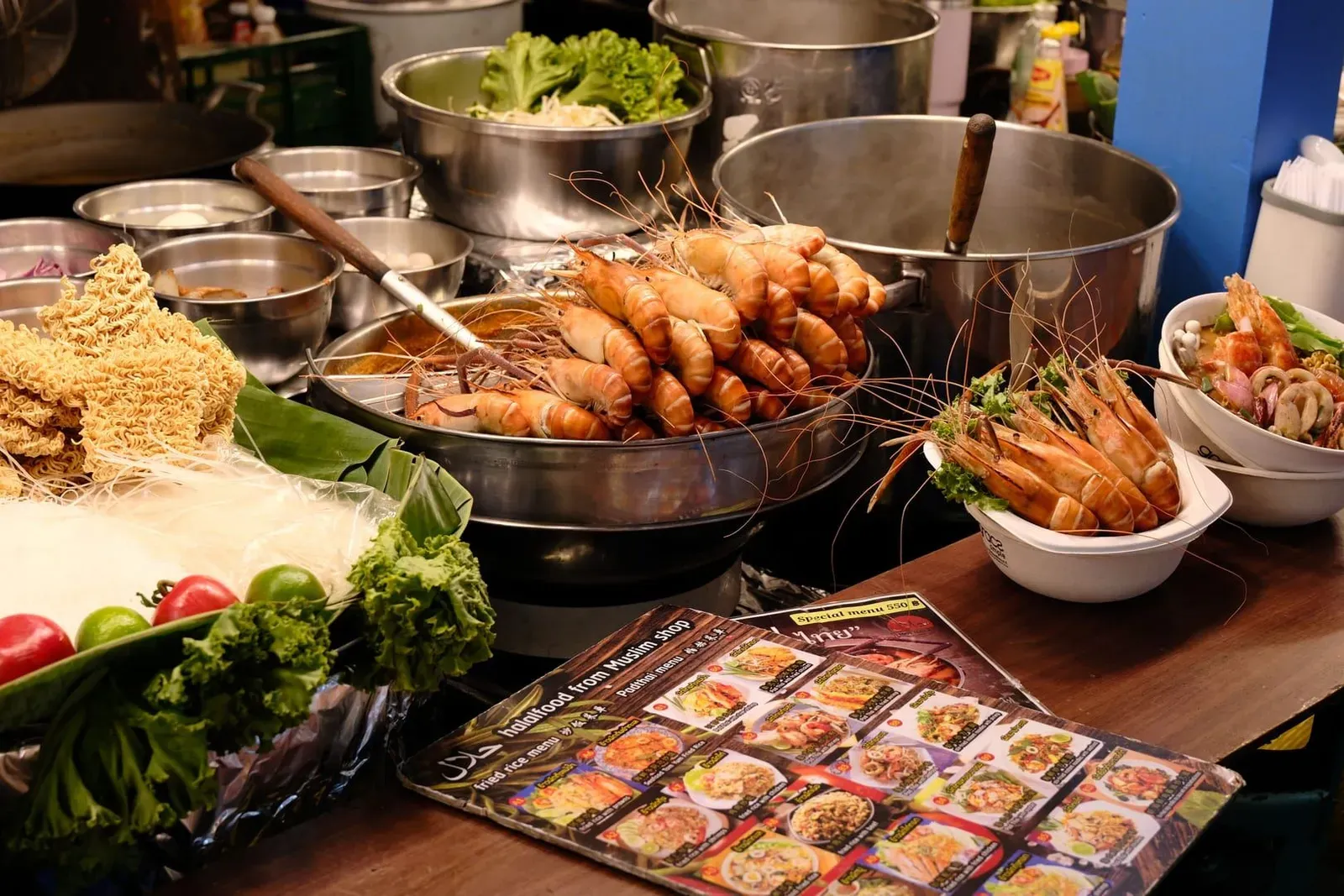
Every part of Koh Samui has a different food identity — Chaweng is convenient and international, Bophut is boutique, and Bang Po and Hua Thanon are where the seafood actually comes from. Use this table to match your base to what you want to eat.
| Area | Best For | Typical Price Level | Standout |
|---|---|---|---|
| Chaweng | Volume, international menus, late-night eats | $$-$$$ | Soi Colibri food stalls, mall food courts |
| Lamai | No-frills local Thai, seafood on the rocks | $-$$$ | Sabienglae Restaurant, Hin Ta Hin Yai food stalls |
| Bophut / Fisherman’s Village | Boutique dining, Friday market, fusion | $$-$$$$ | Fisherman’s Village Walking Street, Coco Tam’s |
| Maenam | Village Thai food, Thursday market | $-$$ | Maenam Walking Street, beachfront seafood shacks |
| Bang Po seafood strip | Whole grilled fish, working fishing-boat views | $-$$ | Bang Po Seafood Takho |
| Hua Thanon | Cheapest fresh fish, Muslim-Thai food, no alcohol | $ | Hua Thanon Fish Market |
| Nathon | Hainanese-Chinese cafes, ferry-side noodle shops | $ | Old-town coffee shops near the pier |
Must-Try Samui and Southern Thai Dishes
Southern Thai cooking on Koh Samui is spicier and more coconut- and turmeric-heavy than central Thai food, and these ten dishes cover the range from breakfast soup to street dessert. Order any of them at a village restaurant rather than a hotel menu for the closest thing to what locals actually eat — see our local dishes guide for a deeper dive into each one.
- Kai tom kati (coconut chicken soup): a milder, turmeric-tinted soup with galangal and lemongrass. 80-150 THB (~2.50-4.50 USD).
- Gaeng tai pla (fermented fish-stomach curry): the signature southern Thai curry — intensely savory and spicy, built around fermented fish paste, long beans and bamboo shoots. 100-180 THB (~3-5 USD).
- Khao yam: a herbal rice salad tossed with dried shrimp, toasted coconut, lime, and a tangy budu (fermented fish sauce) dressing. 60-100 THB (~1.50-3 USD).
- Massaman curry: a mild, Persian-influenced curry with beef or chicken, potato and peanuts — the least spicy option for newcomers to Thai food. 100-200 THB (~3-5.50 USD).
- Pad thai: stir-fried rice noodles with egg, tofu or shrimp, tamarind and crushed peanuts. 60-120 THB (~1.50-3.50 USD).
- Som tam (green papaya salad): shredded papaya pounded with chili, lime, fish sauce and palm sugar — ask for “mai phet” for mild. 50-100 THB (~1.50-3 USD).
- Moo ping (grilled pork skewers): sweet marinated pork on a stick, a common breakfast street snack. 15-20 THB (~0.50-0.50 USD) per skewer.
- Roti: a griddled flatbread, savory or filled with banana and condensed milk for dessert. 40-70 THB (~1-2 USD).
- Mango sticky rice: ripe mango over coconut-sweetened sticky rice, best April-June when mangoes peak. 80-150 THB (~2.50-4.50 USD).
- Coconut-everything: fresh coconut ice cream served in the shell, coconut shakes, and grilled coconut — sold from carts island-wide. 40-80 THB (~1-2.50 USD).
Seafood on Koh Samui
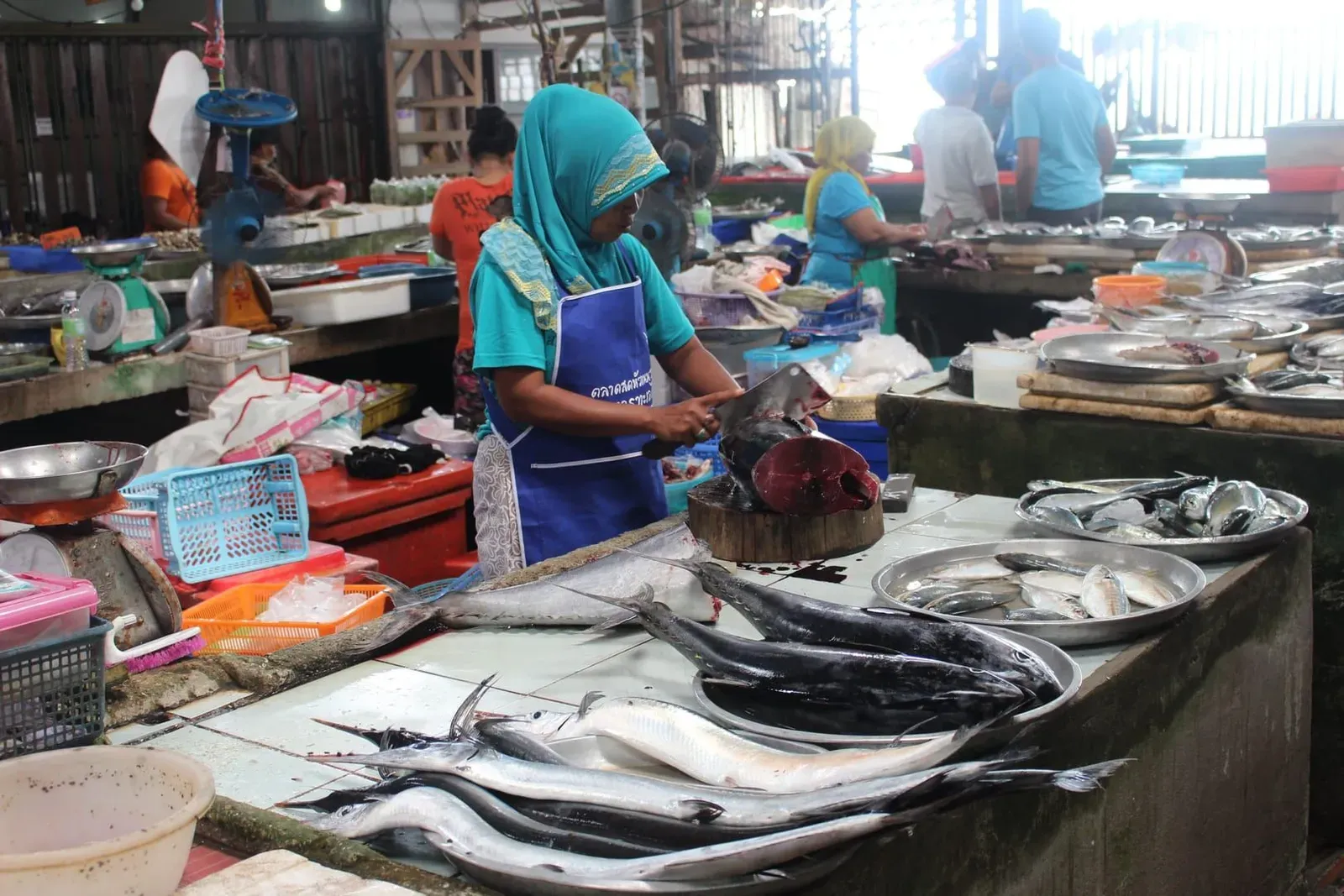
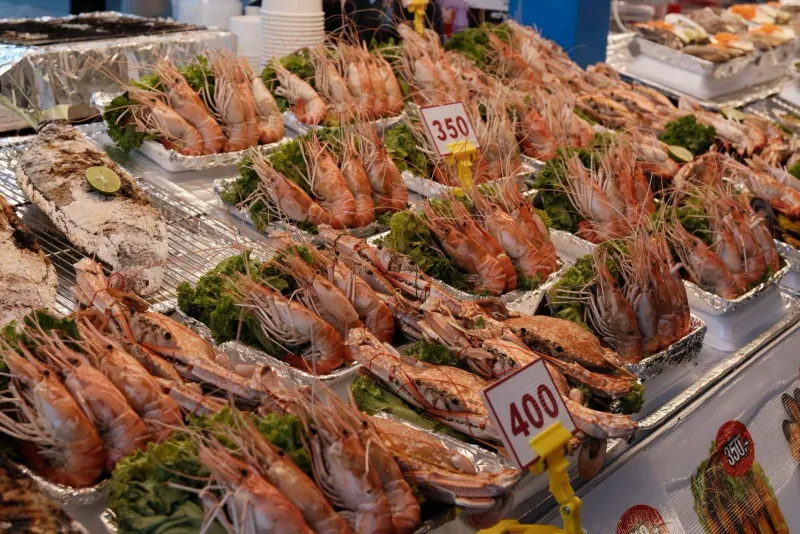
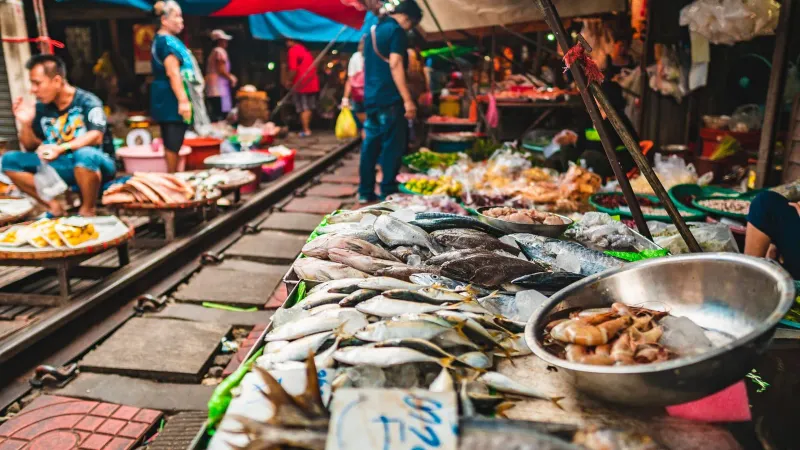
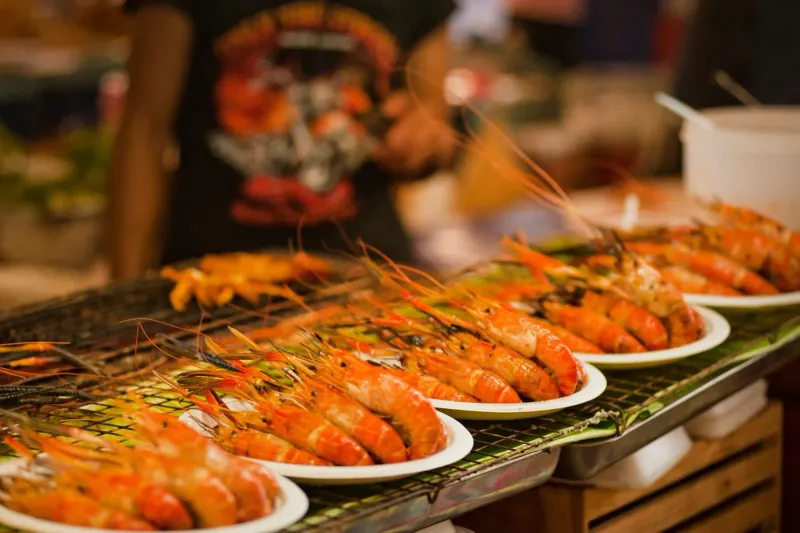
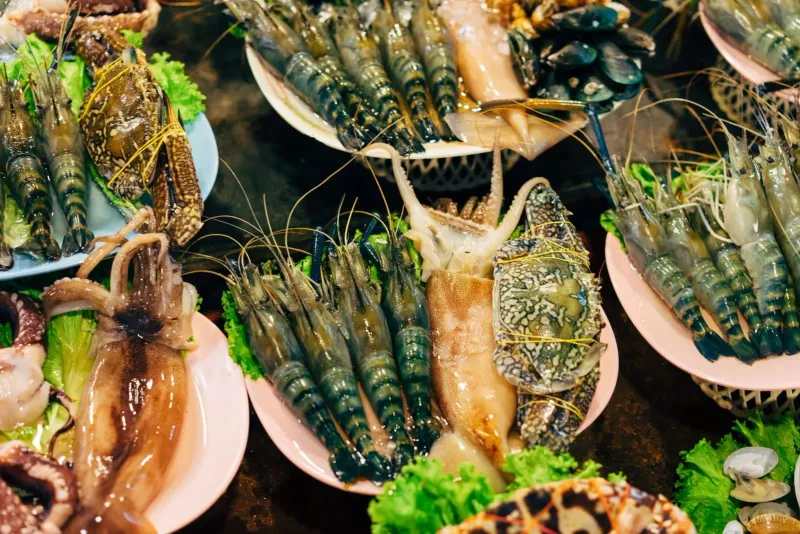
The island’s best seafood comes from three verified spots, each with a different atmosphere and price point. Bang Po Seafood Takho, on the Bang Po ring road, is a straightforward beachfront restaurant serving whole grilled fish and prawns at local prices, open daily roughly 10:00-22:00. The Hua Thanon Fish Market, in the island’s Muslim fishing village on the southeast coast, is a working market rather than a restaurant — tuna, squid and reef fish sold straight off the boats, typically open 07:00-18:00, cheaper than anything in Chaweng or Lamai. Sabienglae Restaurant in Lamai, near the Hin Ta Hin Yai rock formations, is the island’s best-known sit-down seafood house — open-air seating over the water, a full seafood and southern Thai menu, open daily 11:00-22:00, with meals typically running 250-500 THB (~7-14 USD) per person. For the fishing families who land that catch — Hua Thanon’s fleet, Bang Po’s squid boats and what’s left of Bophut’s — see our Samui fishing villages piece.
Buying seafood by weight is standard practice — expect the server to show you the fish before it’s grilled or steamed, and to quote a price per 100g. Confirm the price before you order; it protects you from the rare overcharge and is simply how seafood restaurants operate here. See our street food and seafood guide for more stalls and markets by area.
Night Markets and Street Food
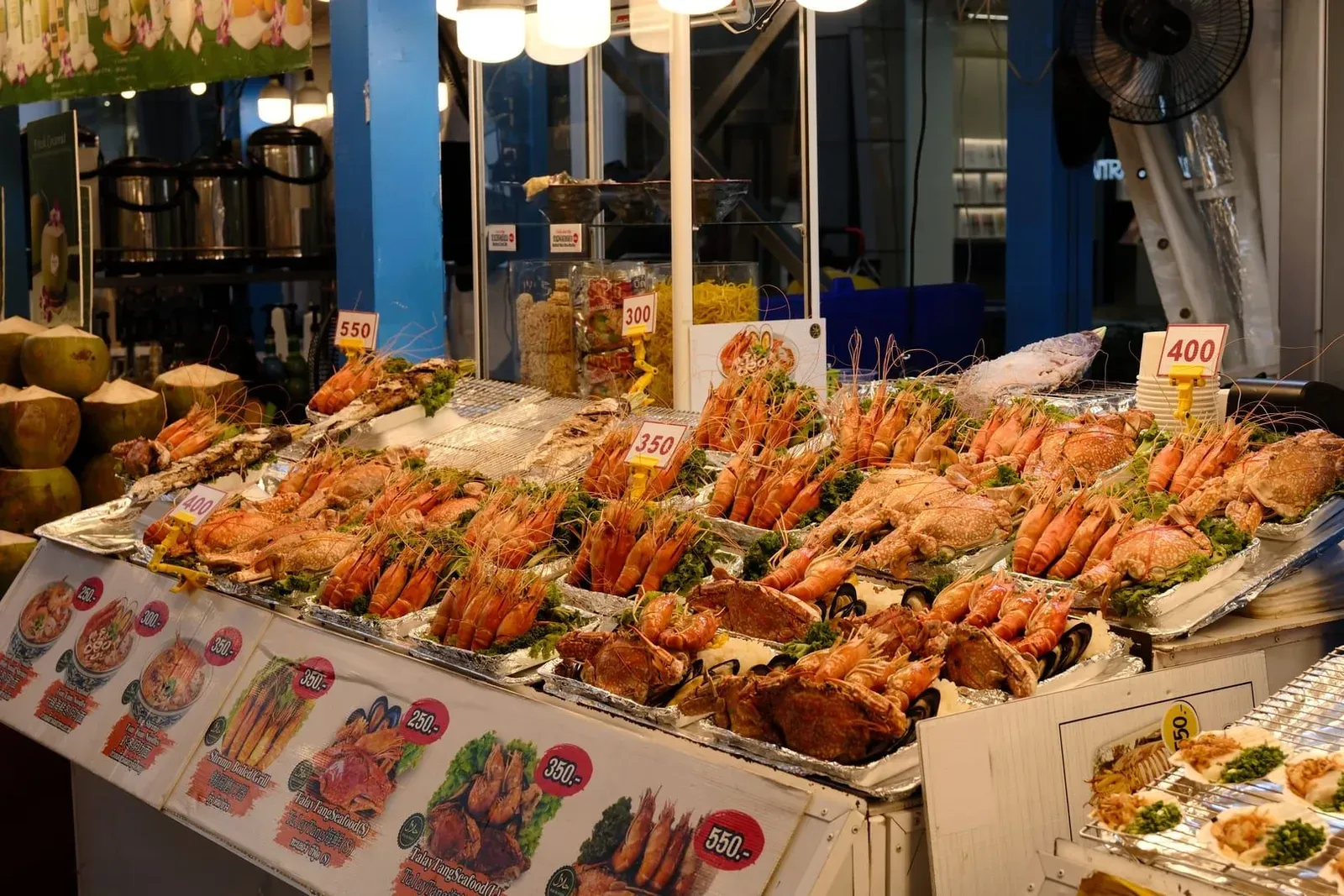
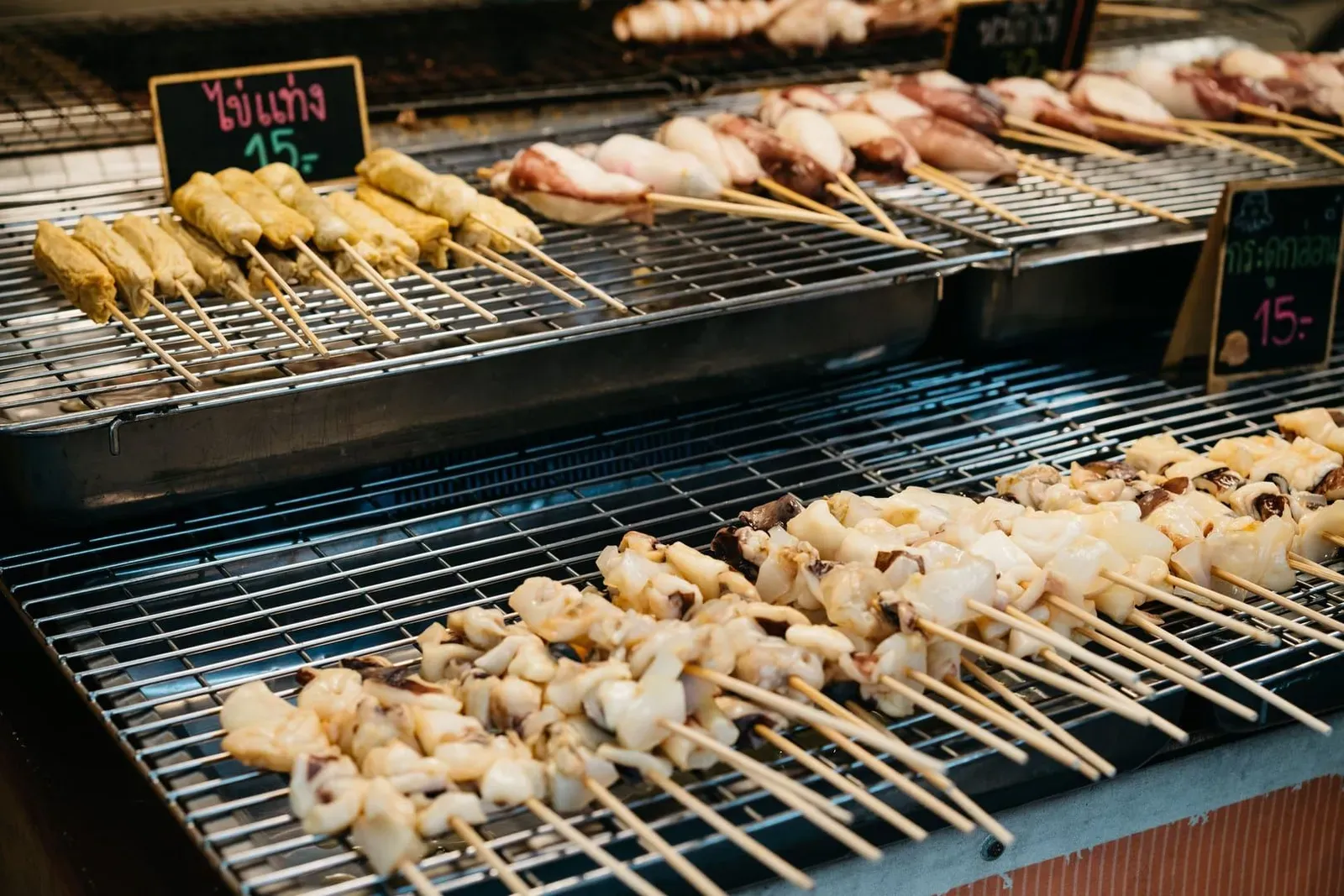
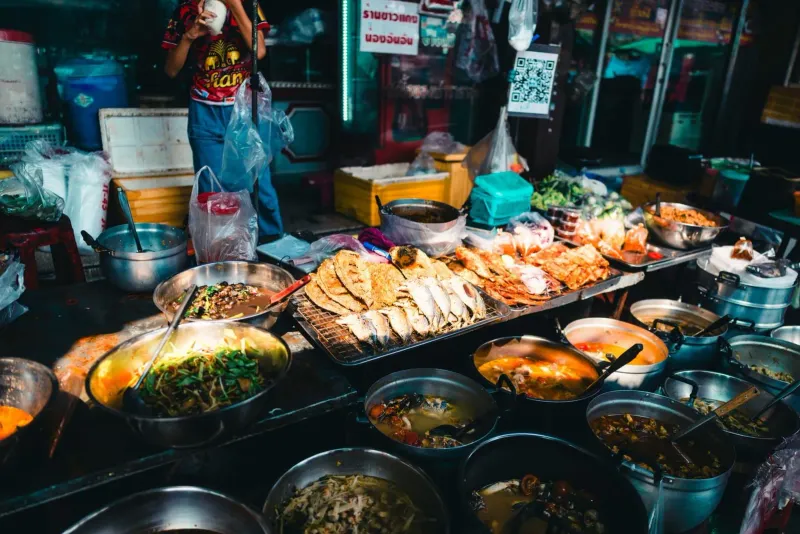
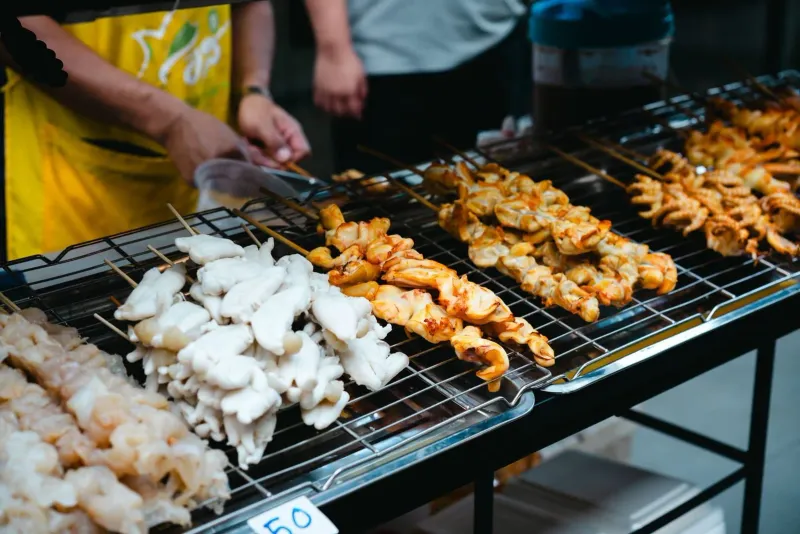
Somewhere on Koh Samui, a walking-street night market runs most nights of the week, and each one doubles as the cheapest way to sample a wide range of dishes in one stop. Fisherman’s Village in Bophut runs its market on Friday, Maenam’s Walking Street runs Thursday, and Lamai has its own Sunday market — see the full night markets guide for the current weekday schedule, hours and what each market specializes in. A full street-food dinner — a grilled skewer, a bowl of noodles, and a dessert — typically costs 150-300 THB (~4.50-8.50 USD) per person.
Outside the organized markets, look for roadside carts with plastic stools and a crowd of Thai customers; that combination is the single best indicator of good, cheap food anywhere on the island. Cash is expected at nearly every stall.
Beach Restaurants and Sunset Views
Paying for a view on Koh Samui usually means paying double what the same dish costs inland, but three spots are worth the premium. The Jungle Club, a hilltop restaurant above Chaweng Noi with panoramic viewpoint seating, is open Saturday-Wednesday 08:00-22:00 and closed Thursday and Friday — check this before planning a visit, since it catches out first-time visitors regularly. The Cliff Bar & Grill in Lamai sits on granite boulders above Crystal Bay with a Mediterranean-leaning seafood menu and has been recognized by Thailand Tatler as one of the island’s best restaurants for two decades running. Coco Tam’s in Bophut’s Fisherman’s Village is a bamboo-shack beach bar on the sand with Italian-leaning food, cocktails and nightly fire shows, open from around midday with the beach-bar and fire-show crowd building from late afternoon and closing around midnight (hours vary by season) — better for sunset drinks and a casual dinner than a formal meal.
Expect 400-800 THB (~11-23 USD) per person at any of these three, more with cocktails, and book ahead for sunset-hour tables at The Cliff and Jungle Club in peak season (December-February). Coco Tam’s and the Fisherman’s Village strip also double as the start of an evening — see the nightlife guide for where to go once dinner’s done.
Fine Dining
Koh Samui has two verified fine-dining rooms worth the splurge, both Michelin-recognized. Long Dtai, at the Cape Fahn Hotel on its own small island off the northeast coast, is helmed by chef David Thompson and serves an authentic southern Thai tasting menu focused on sustainable seafood, reached via a short boat or causeway transfer from the mainland resort — reservations are essential and tasting menus start around 2,500-3,500 THB (~71-100 USD) per person. FishHouse at the Kimpton Kitalay Samui in Choeng Mon serves European-leaning seafood — ceviche, black paella, fresh-caught fish — on a deck overlooking the beach, open daily 12:00-23:00, with mains from around 600-1,200 THB (~17-34 USD). Both restaurants appear in the Michelin Guide for their respective 2026 editions.
Outside these two, most hotel “fine dining” on Samui is really upscale casual — good food, but not tasting-menu territory. Confirm current hours and reservation policy directly before a special-occasion booking, since fine-dining hours shift more often than casual restaurants. Dress codes are relaxed by international standards — smart-casual covers both restaurants — but flip-flops and beachwear are generally discouraged after dark.
Vegetarian, Vegan and Cafes
Vegan and vegetarian eating on Koh Samui has grown well beyond token tofu pad thai. Dedicated cafes cluster in Chaweng and Bophut, with plant-based menus built around Thai flavors rather than Western substitutes — expect raw and vegan bowls, house-made vegan cheese and meat alternatives, and full vegan Thai curry menus, generally priced 150-350 THB (~4.50-10 USD) per dish. Outside the dedicated cafes, village Thai restaurants can usually make a curry or stir-fry vegetarian on request (“mangsawirat” or “jay”) — worth asking, since it’s rarely printed on the menu.
Coffee culture has followed the same curve: specialty cafes in Bophut and Chaweng now roast and pull espresso to a standard well above what you’d expect on a small Thai island, generally 80-150 THB (~2.50-4.50 USD) for a coffee. Well-reviewed plant-based options include raw-food and wellness cafes near Chaweng’s back streets and family-run vegan kitchens around Fisherman’s Village — hours and menus change seasonally at small cafes, so confirm they’re still open before making a special trip.
Cooking Classes
Island Organics Samui, on a working organic farm in the hills above Chaweng, has run farm-to-table Thai cooking classes since 2012. Chef Lat’s class covers curry paste and coconut cream from scratch, four dishes plus a dessert, and a walk through the property’s aquaponics and vegetable gardens before cooking starts. Classes run roughly half a day, accommodate vegan, vegetarian and gluten-free diets, and cost around 1,900-2,500 THB (~54-71 USD) per person including hotel transfer — book at least a few days ahead in peak season, since class sizes are kept small. See our full cooking classes guide for how it compares to other schools on the island.
Practical Tips for Eating in Koh Samui
- Tipping: Not obligatory. Rounding up or leaving 20-50 THB (~0.50-1.50 USD) for good table service is appreciated but not expected at local restaurants; upscale places sometimes add a 10% service charge automatically — check the bill.
- Water: Tap water is not drinkable. Bottled water is standard at every restaurant (10-20 THB / ~0.50-0.50 USD) and ice at established restaurants is made from filtered water and safe.
- Spice levels: Southern Thai food runs hotter than what most visitors are used to. Say “mai phet” (not spicy) or “phet noi” (a little spicy) when ordering som tam, curries or anything described as “southern style.”
- Cash vs cards: Markets, street stalls and village restaurants are cash-only or cash-preferred; resorts and fine dining accept cards. See our money and ATMs guide for withdrawal fees and exchange tips.
- Allergies: Fish sauce and shrimp paste appear in dishes that don’t look like seafood, including som tam and many curries — flag shellfish allergies clearly.
- Reservations: Casual and street-food spots never take bookings; beachfront and fine-dining restaurants do, especially in peak season (December-February) and around sunset — book Long Dtai, FishHouse, The Cliff and Jungle Club a day or two ahead.
- Halal food: Hua Thanon and its surrounding shops are the most reliable area for halal-certified Thai food, reflecting the village’s Muslim-Thai community.
FAQ
Where do locals eat on Koh Samui?
Locals eat at village shophouses along the ring road, morning and night markets, and no-frills seafood restaurants like Sabienglae in Lamai or Bang Po Seafood Takho — rarely at hotel restaurants. Look for plastic stools, hand-written menus, and a crowd of Thai customers; that combination consistently indicates good, affordable food across the island.
How much does a meal cost in Koh Samui?
Street food and market plates cost 60-120 THB (~1.50-3.50 USD), a sit-down local restaurant runs 150-300 THB (~4.50-8.50 USD) per dish, beachfront restaurants with a view cost 400-800 THB (~11-23 USD) per person, and fine dining at Long Dtai or FishHouse starts around 1,500 THB (~43 USD) and up per person. For total daily budgets beyond food, see our Koh Samui trip cost guide.
Is Koh Samui seafood fresh?
Yes. Much of the island’s seafood is landed daily at Hua Thanon, a Muslim fishing village on the southeast coast, and sold at its morning fish market before reaching restaurants across Samui. Beachfront restaurants like Bang Po Seafood Takho and Sabienglae display the catch and grill or steam it to order, priced by weight.
What night is the best food market on Koh Samui?
A market runs most nights somewhere on the island: Fisherman’s Village in Bophut on Friday, Maenam Walking Street on Thursday, and Lamai’s market on Sunday. See the full night markets guide for the current weekday schedule and what each one specializes in before planning dinner around it.
Is street food safe to eat in Koh Samui?
Yes, at stalls with high turnover and visible Thai customers. Choose vendors cooking food fresh to order over pre-made trays sitting in the sun, drink bottled water, and be cautious with raw vegetables washed in tap water at very informal stalls. Established night markets and long-running stalls are generally reliable.
Can vegetarians and vegans eat well on Koh Samui?
Yes. Dedicated vegan cafes in Chaweng and Bophut serve full plant-based Thai and international menus, and most village Thai restaurants can prepare a curry or stir-fry without meat or fish sauce on request. Ask for “jay” (vegan) or “mangsawirat” (vegetarian) when ordering, since it is rarely marked on printed menus.
Published on
About the author

Mike Brochlowski
Travel photographer & writer
Travel photographer and island explorer. Mike has spent years documenting Southeast Asia's hidden gems, from secluded beaches to jungle waterfalls.
Articles by Mike →More in Travel Guides

Also in 25 Best Things to Do in Koh Samui (2026)
Koh Samui Events Calendar 2026-2027 — Dates, Prices & Crowds
Koh Samui events calendar 2026-2027: Songkran, Loy Krathong, Full Moon Party dates, the Samui Regatta and Chaweng's NYE countdown, with p…

Also in 25 Best Things to Do in Koh Samui (2026)
18 Free Things to Do in Koh Samui (2026)
18 free things to do in Koh Samui — temples, beaches, waterfalls and viewpoints — plus the real costs some 'free' spots hide.

Also in 25 Best Things to Do in Koh Samui (2026)
Golf in Koh Samui — Santiburi Green Fees, Football Golf & Mini Golf
Golf in Koh Samui: Santiburi's hillside 18-hole course (3,550-5,800 THB green fee), Football Golf near Big Buddha, and what's confirmed f…