Contents
Overview
Koh Samui supports vegan and vegetarian travelers well beyond a token tofu pad thai: nine verified dedicated restaurants and cafes cluster in Chaweng and Lamai, three wellness retreats run kitchens that welcome day visitors, and nearly every ordinary Thai kitchen on the island can cook a dish “jay” (vegan) on request. Dedicated vegan meals run 60-350 THB (~1.50-10 USD), and the annual Vegetarian Festival brings yellow-flagged jay stalls island-wide for nine days each October. This guide covers named venues confirmed operating in September 2026, wellness-retreat kitchens open to non-guests, and the exact phrases and dish knowledge needed to eat vegan anywhere else — see the full where-to-eat guide for the island’s food scene overall.
Key facts: 9 dedicated venues verified · Dedicated vegan meal 60-350 THB (~1.50-10 USD) · 3 wellness-retreat kitchens open to day visitors · 2026 Vegetarian Festival ~Oct 10-18 · Key phrase: “jay” (เจ) = strict vegan
Key takeaways
- Chaweng and Lamai have the densest clusters of dedicated vegan and vegetarian restaurants; elsewhere, ask any Thai kitchen for food “jay.”
- Three wellness retreats — Vikasa, Absolute Sanctuary, and Samahita — run kitchens serving vegetarian or vegan food that day visitors can access, with different levels of walk-in access.
- “Jay” (เจ) means strictly vegan, including no garlic or onion; “mangsawirat” means vegetarian and may still include egg or dairy.
- Fish sauce and shrimp paste hide in dishes that look vegetarian, including som tam and most curry pastes — always ask specifically.
- The island-wide Vegetarian Festival (Jay Festival) runs roughly October 10-18, 2026, when yellow-flagged stalls sell only strict vegan food.
Dedicated Vegan and Vegetarian Restaurants by Area
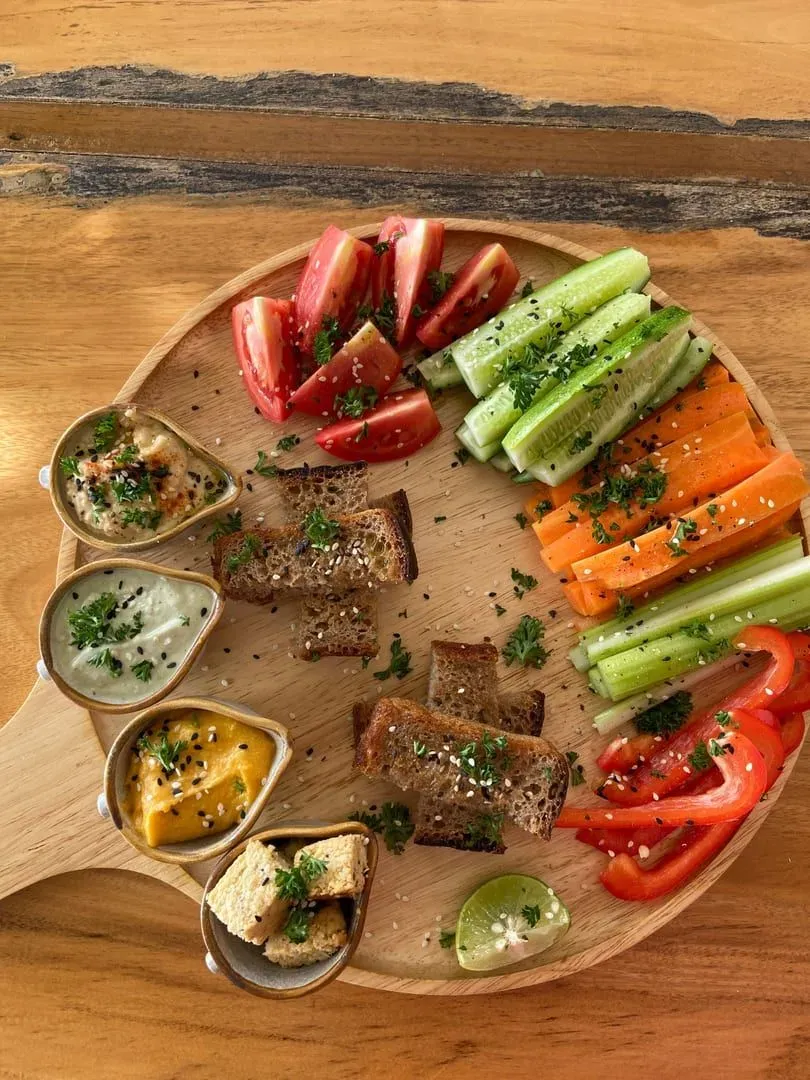
Nine dedicated vegan or vegetarian restaurants on Koh Samui are confirmed operating as of September 2026, concentrated in Chaweng and Lamai with one outlier on the quieter south coast. Each serves either a fully vegan menu or a vegetarian menu with vegan options clearly marked, and prices below reflect a typical main dish.
| Place | Area | Vegan or Vegetarian | Known For | Price Band |
|---|---|---|---|---|
| Lamai Vegan | Lamai | Vegetarian & Vegan | All-day Thai vegan curries and stir-fries | 100-200 THB (~3-5.50 USD) |
| Pure Vegan Heaven | Lamai | Vegan | Vegan brunch, plant-based bowls | 150-300 THB (~4.50-8.50 USD) |
| Halapua Restaurant | Lamai (Soi Sumnug) | Vegetarian & Vegan | Mixed vegetarian Thai menu | 100-250 THB (~3-7 USD) |
| Wild Tribe Café | Chaweng | Vegan | Plant-based superfood bowls, smoothies | 150-300 THB (~4.50-8.50 USD) |
| Khunnay | Chaweng | Vegan | All-you-can-eat vegan buffet | 120 THB (~3.50 USD) flat |
| Veganissimo | Chaweng | Vegan | Bakery, coffee, pastries | 80-180 THB (~2.50-5 USD) |
| Ikigai Health Cafe | Chaweng | Vegetarian-friendly | Clean brunch, smoothie bowls | 150-280 THB (~4.50-8 USD) |
| Noori India | Chaweng | Vegetarian (vegan options) | South Indian & Thai vegetarian thalis | 150-350 THB (~4.50-10 USD) |
| MY Vegan Food Shop & Cafe | Taling Ngam | Vegan | Home-style vegan Thai dishes, takeaway | 60-150 THB (~1.50-4.50 USD) |
Two previously circulated venues were dropped from this list: The Larder in Chaweng has permanently closed and was never primarily vegan, and an older “raw food” cafe once listed for Lamai could not be confirmed as still trading in 2026 — both excluded rather than risk sending readers to a closed door.
Bophut and Maenam have no dedicated vegan restaurant confirmed at time of writing; Thai kitchens in both areas will adapt dishes to order (see the phrases below), and the Fisherman’s Village Friday market usually has at least one fruit-and-juice stall.
Wellness Retreat Kitchens Open to Non-Guests
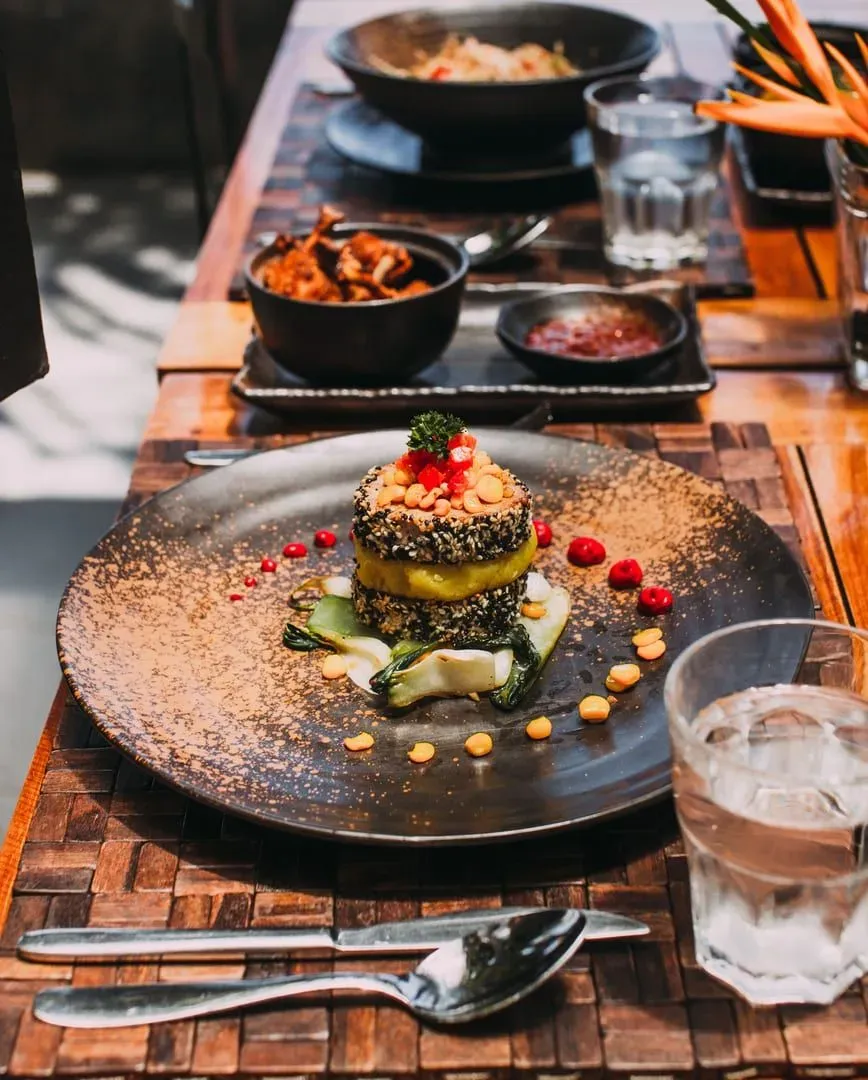
Three of Koh Samui’s four established yoga and wellness retreats run kitchens that non-staying visitors can access, each with a different access model. Vikasa, on the hillside between Chaweng Noi and Lamai, runs the Life Café alongside its drop-in yoga schedule — since a single class costs 600 THB (~17 USD) with no advance booking, the café is realistically open to anyone who shows up for a class. Absolute Sanctuary, near the Bophut/Choeng Mon border, serves a Mediterranean-Thai fusion menu of organic, locally sourced dishes at The Love Kitchen, and its day-pass programme explicitly includes wellness-cuisine meals for visitors who aren’t staying overnight. Samahita Retreat, on Laem Sor Beach in the south, bundles meals into its room and wellness packages rather than advertising standalone dining for day visitors — anyone wanting a meal without booking a stay should contact Samahita directly before planning a visit.
None of these three kitchens is exclusively vegan — all cook vegetarian and often vegan on request, built around the same wellness-diet principles (light, plant-forward, minimal processed sugar) as their retreat programmes. Kamalaya, the fourth retreat on the island, keeps its dining room reserved for staying guests only, so it’s excluded here.
Raw and Health Food Cafes
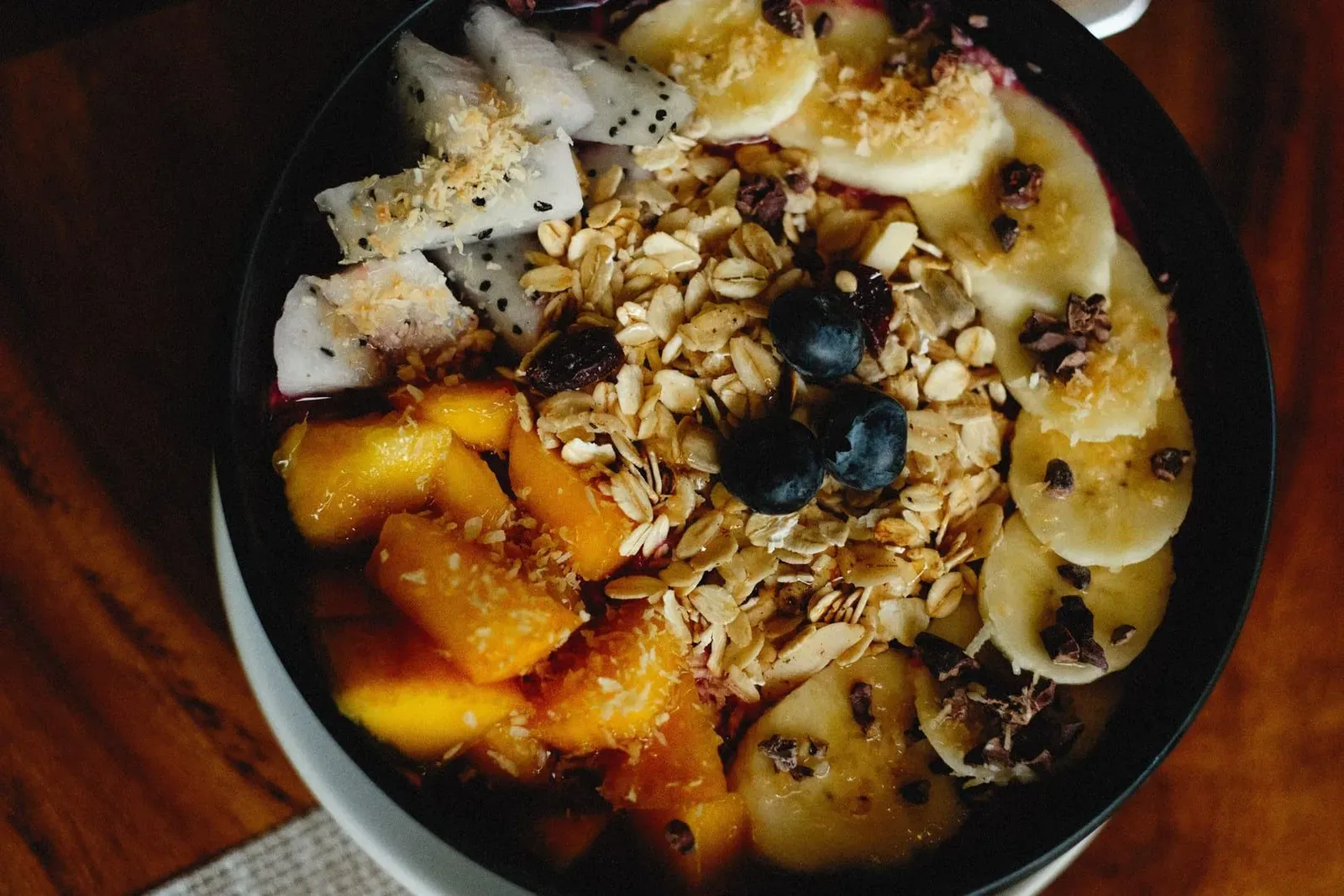
Beyond the dedicated vegan restaurants, a smaller cluster of raw-food and health-focused cafes serves smoothie bowls, cold-pressed juices, and raw desserts, mostly in Chaweng. Wild Tribe Café and Ikigai Health Cafe, both listed above, lean into this raw-and-clean style with smoothie bowls and unprocessed ingredients rather than cooked Thai dishes, typically 150-300 THB (~4.50-8.50 USD) per bowl. Expect fresh coconut, dragon fruit, and mango as base ingredients year-round, with seasonal fruit swapped in when mango peaks April-June.
How to Eat Vegan at Ordinary Thai Restaurants
Every village Thai restaurant on Koh Samui can make a dish vegan or vegetarian on request, even without an English menu, using two specific words. “Jay” (เจ) means strictly vegan — no meat, fish, eggs, dairy, and traditionally no garlic or onion either — and is the word to use for the strictest diet. “Mangsawirat” (มังสวิรัติ) means vegetarian in the broader Western sense and may still include egg or dairy, so specify further if needed. Beyond those two words, three short phrases cover almost every risk: “mai sai nam pla” (no fish sauce), “mai sai nam man hoi” (no oyster sauce), and “mai sai kapi” (no shrimp paste) — say all three together, since a kitchen might swap out fish sauce but still use shrimp paste in a curry base.
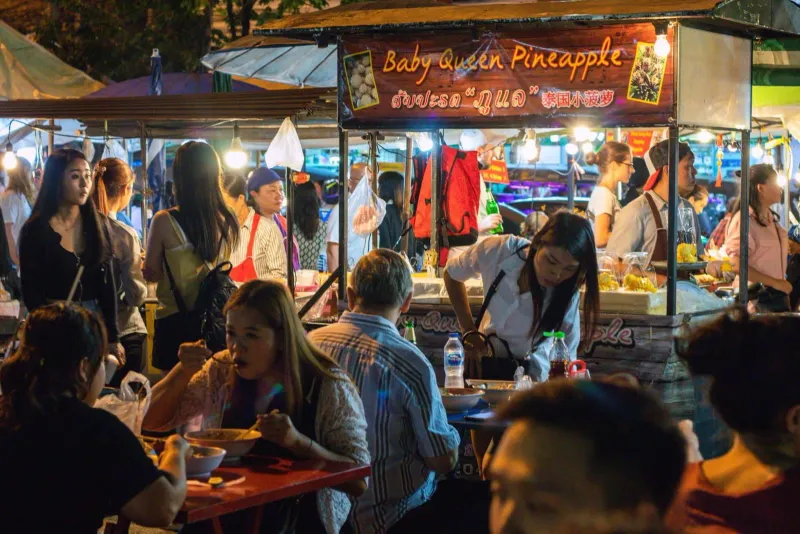
Markets and street stalls are the hardest place to eat vegan on the fly, since sauces are pre-mixed into curry pastes and stir-fry bases before cooking starts — asking after the wok is already hot rarely works. It’s more reliable at a sit-down restaurant, where a cook can substitute soy sauce for fish sauce and leave shrimp paste out of a fresh batch. The night markets guide flags which stalls sell fruit, sticky rice, and other naturally vegan items if a cooked substitution isn’t practical.
Safe Dishes and Dishes That Hide Fish Sauce
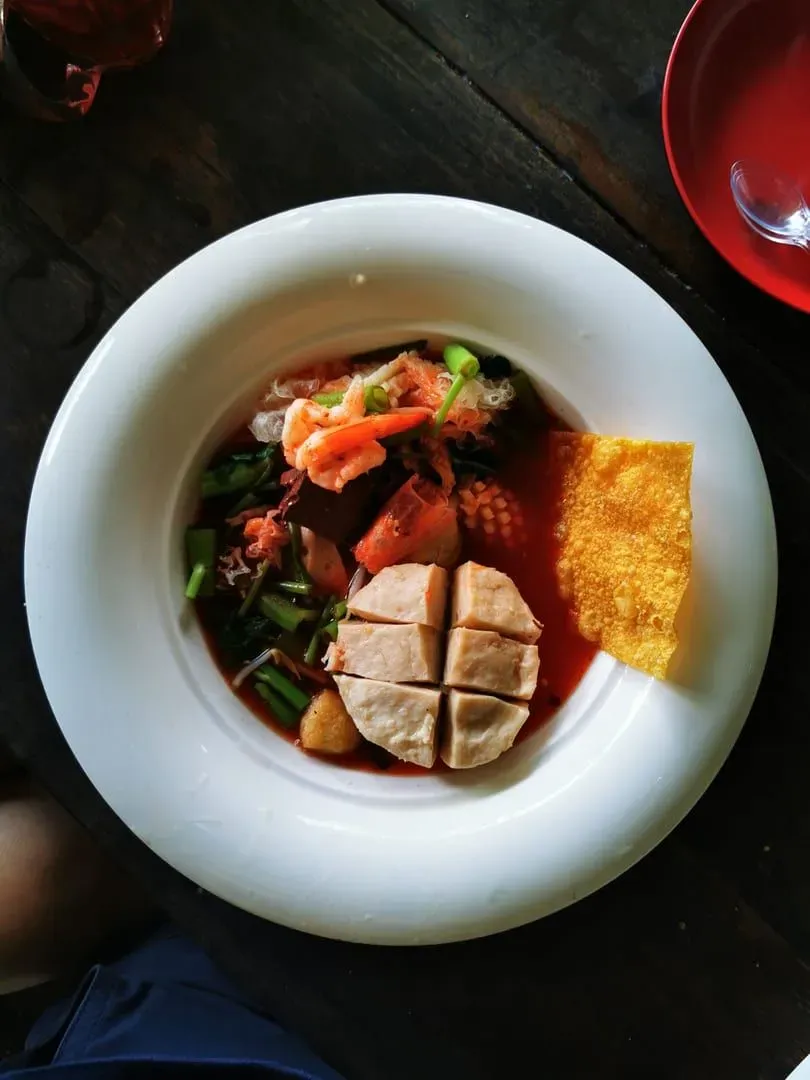
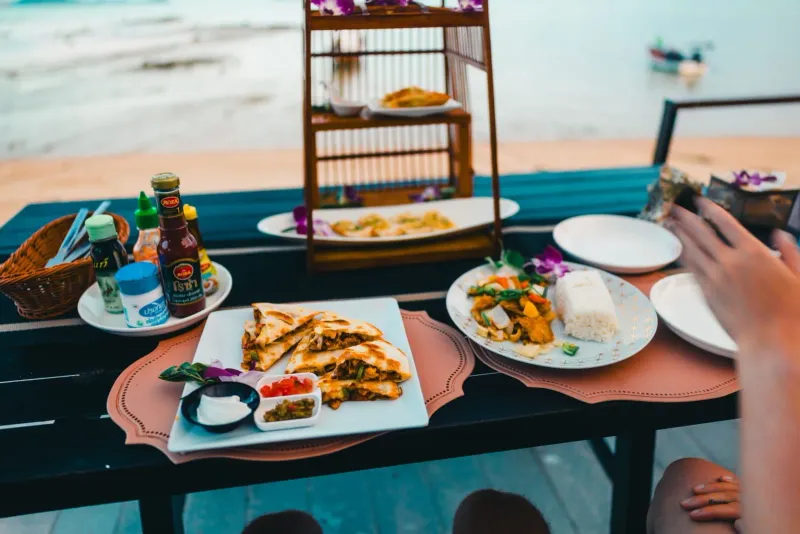
Some Thai standards are naturally vegan or easy to adapt, while others hide fish sauce or shrimp paste even when they look plant-based. Pad pak (stir-fried mixed vegetables) and tofu pad thai are usually safe if ordered “jay,” since the kitchen swaps fish sauce for soy sauce and skips egg. Khao niao mamuang (mango sticky rice) and fresh fruit plates are vegan by default. By contrast, som tam (green papaya salad) traditionally contains both fish sauce and dried shrimp even when it looks like a vegetable dish — always specify “som tam jay.” Tom yum and most curry pastes, including green and red curry, are built on a paste that typically contains shrimp paste, so a “vegan” curry needs the kitchen to prepare it with a separate paste, not just omit visible meat. Fried rice and noodle dishes are a coin flip — many use fish sauce as a base seasoning even in vegetable versions, so confirm rather than assume.
The Vegetarian Festival (Jay Festival)
The Vegetarian Festival, also called the Jay Festival or Nine Emperor Gods Festival, is a nine-day Taoist observance falling on the ninth lunar month of the Chinese calendar, and it runs across Koh Samui, Nathon, and the wider Gulf coast roughly October 10-18, 2026 (dates shift yearly with the lunar calendar; confirm the exact week closer to the date). During the festival, participating vendors fly yellow flags marked with the red Thai character “เจ” and sell only strict vegan food — no meat, fish, eggs, dairy, garlic, or onion — making it the easiest week of the year to eat vegan anywhere on the island. Nathon’s market and temples typically see the most visible observance on Samui, with extra jay food stalls appearing for the duration; the biggest regional celebrations are in Phuket, with firewalking and processions, according to the Nine Emperor Gods Festival tradition it follows.
Outside festival week, look for the same yellow “เจ” flag or sticker at any market stall year-round — a small number of vendors mark their food as permanently jay, which is a reliable shortcut when the vendor doesn’t speak English.
Practical Tips
- Always confirm on-site: Small vegan cafes change hours and menus seasonally; call ahead before a special trip, especially outside high season (December-February).
- Carry the phrases written down: Showing “เจ” or “มังสวิรัติ” on a phone screen works better than pronunciation alone with a busy kitchen.
- Vegan does not always mean allergy-safe: Shared woks and fryers mean cross-contact with fish sauce is possible even after a “jay” request — flag a genuine allergy separately from a dietary preference.
- Wellness-retreat meals are pricier than restaurants: Expect 300-600 THB (~8.50-17 USD) per meal at Vikasa, Absolute Sanctuary, or Samahita versus 100-300 THB (~3-8.50 USD) at a dedicated vegan restaurant.
- Cash helps at small vegan cafes and market stalls: See the money and ATMs guide for withdrawal tips; larger restaurants and retreats accept cards.
FAQ
Is it easy to eat vegan in Koh Samui?
Yes. Nine dedicated vegan or vegetarian restaurants operate across the island, concentrated in Chaweng and Lamai, and most ordinary Thai kitchens will cook a dish “jay” (vegan) on request. The hardest spots are pre-cooked market stalls, where sauces are mixed in before cooking starts.
What does “jay” mean in Thai food?
“Jay” (เจ) means strictly vegan: no meat, fish, eggs, dairy, and traditionally no garlic or onion. It is stricter than “mangsawirat” (vegetarian), which may still include egg or dairy, so use “jay” when a fully vegan dish is required.
Which Thai dishes usually contain fish sauce?
Som tam (papaya salad), most curry pastes including green and red curry, and many fried rice or noodle dishes typically contain fish sauce or shrimp paste even without visible meat. Pad pak (stir-fried vegetables) and tofu pad thai ordered “jay” are safer defaults.
Can I eat at Vikasa, Samahita or Absolute Sanctuary without staying overnight?
Vikasa and Absolute Sanctuary both welcome day visitors — Vikasa’s Life Café serves anyone attending a drop-in class, and Absolute Sanctuary’s day pass includes meals at The Love Kitchen. Samahita bundles meals into overnight packages, so day visitors should contact the retreat directly before planning a meal there.
When is the Vegetarian Festival on Koh Samui in 2026?
The Vegetarian Festival (Jay Festival) runs approximately October 10-18, 2026, following the ninth lunar month of the Chinese calendar. Yellow-flagged stalls selling strict vegan food appear island-wide, most visibly around Nathon’s market, for the festival’s nine days.
Are Koh Samui’s vegan restaurants expensive?
No. Dedicated vegan meals typically cost 60-350 THB (~1.50-10 USD), similar to or cheaper than a standard Thai restaurant meal. Wellness-retreat meals at Vikasa, Absolute Sanctuary, or Samahita run higher, around 300-600 THB (~8.50-17 USD), reflecting the resort setting.
Published on
About the author

Mike Brochlowski
Travel photographer & writer
Travel photographer and island explorer. Mike has spent years documenting Southeast Asia's hidden gems, from secluded beaches to jungle waterfalls.
Articles by Mike →More in Travel Guides
Also in Where to Eat in Koh Samui
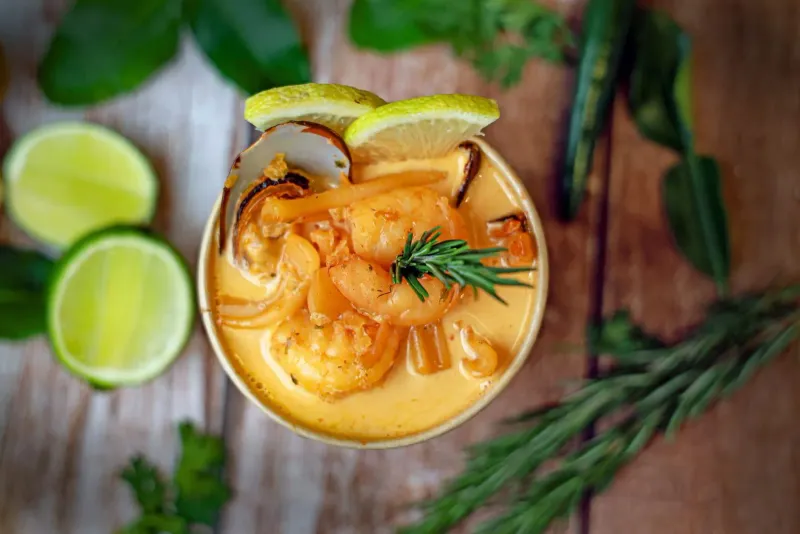
What to Eat in Koh Samui — 15 Southern Thai & Island Dishes (2026)
What to eat in Koh Samui: 15 southern Thai and island dishes from gaeng tai pla to hoy chaw, with heat levels, THB prices and where to fi…
Also in Where to Eat in Koh Samui
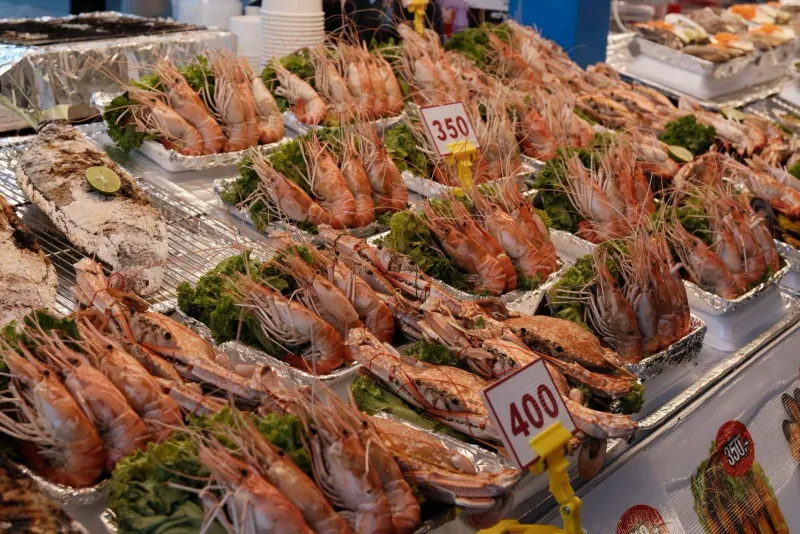
Street Food & Seafood in Koh Samui — Where Locals Eat
Where Koh Samui locals actually eat: Hua Thanon's fish market, Bang Po's seafood strip, Nathon's daily market, and how seafood pricing re…
Also in Where to Eat in Koh Samui
Koh Samui Night Markets — Which Day, Where & Hours (2026 Schedule)
There's a Koh Samui night market open somewhere every night.