Contents
Overview
What to eat in Koh Samui goes well beyond pad thai and green curry — the island sits in southern Thailand, where cooking leans sourer, spicier and more coconut- and turmeric-heavy than the central Thai food most visitors already know. This guide covers 15 dishes that are genuinely southern or island-specific, from the fermented-fish-stomach curry gaeng tai pla to hoy chaw, Samui’s own fried oyster pancake, each with its Thai name, heat level, typical price and the market or area where locals actually eat it.
Key takeaways
- Southern Thai food is spicier and more sour than Bangkok-style Thai — several dishes here rank “hot” or higher.
- Fresh seafood dishes cluster around Hua Thanon and Bang Po; coconut sweets and Chinese-Thai braises cluster around Nathon.
- Most dishes run 40-250 THB (~1-7 USD) at a market stall or village shophouse — a fraction of resort menu prices.
- Pair this list with the island’s night markets schedule to sample several dishes in one evening.
What Makes Koh Samui Food Different from Bangkok Thai
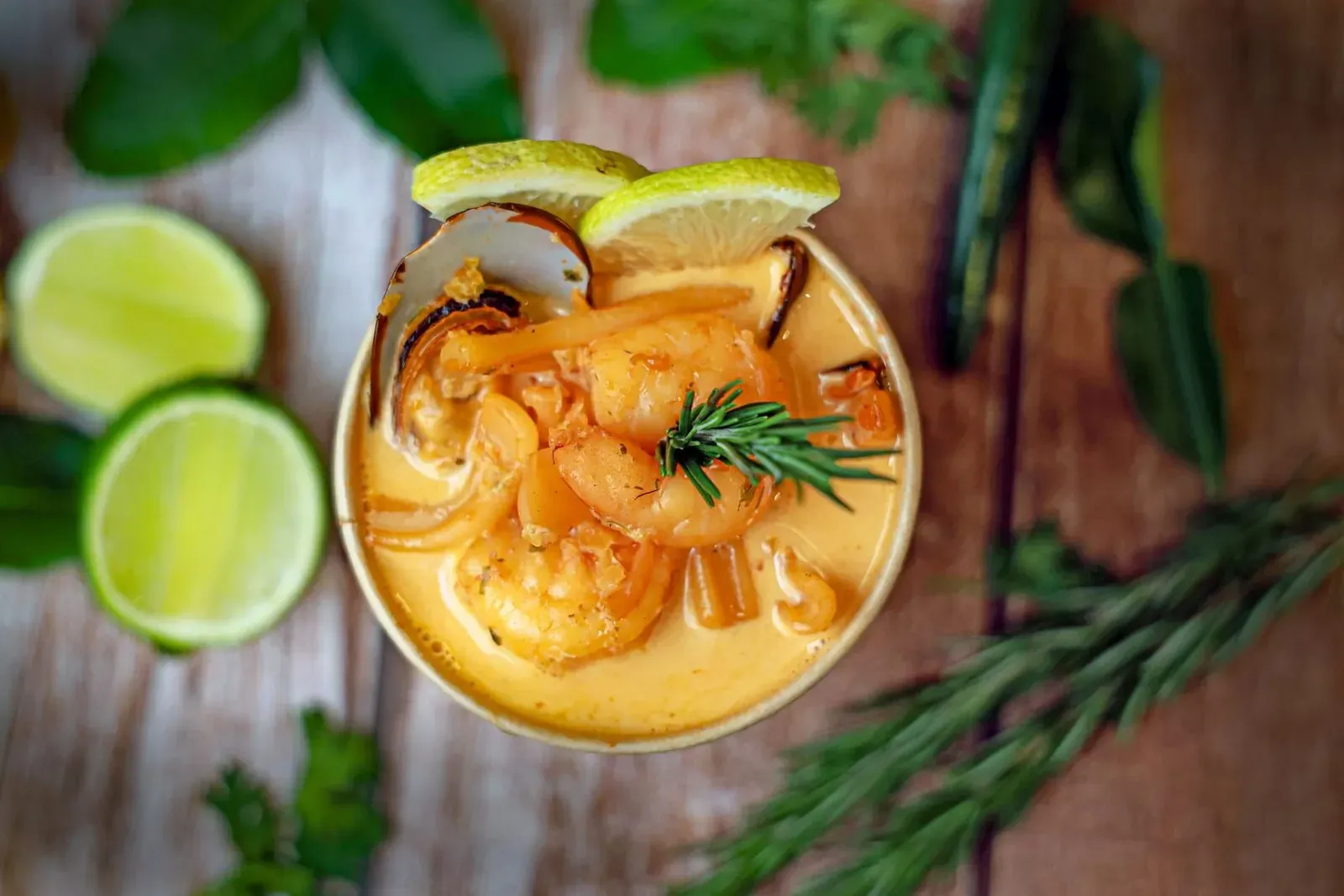
Koh Samui sits in Surat Thani province, part of a southern Thai food region that runs down the peninsula toward Malaysia, and that geography shapes the plate. Coconut milk, fresh turmeric and fermented fish products (like the pungent sauce tai pla, made from the fermented innards of short mackerel) appear far more often here than in central Thai cooking. A large Hainanese-Chinese community settled around Nathon and Maenam generations ago, adding braises like moo hong to the local repertoire, while a Muslim-Thai fishing community at Hua Thanon supplies much of the island’s seafood and its own biryani-style rice dishes. The result is a food scene that borrows from Malay, Chinese and central Thai traditions without fully belonging to any one of them.
The 15 Dishes at a Glance
Use this table to scan heat level and price before committing to a dish — southern Thai spice can catch first-timers off guard.
| Dish | Thai | Type | Heat | Typical Price |
|---|---|---|---|---|
| Gaeng Som | แกงส้ม | Sour curry | Medium-Hot | 60-120 THB (~1.50-3.50 USD) |
| Gaeng Tai Pla | แกงไตปลา | Fermented fish curry | Hot | 80-150 THB (~2.50-4.50 USD) |
| Khanom Jeen Nam Ya Pak Tai | ขนมจีนน้ำยาปักษ์ใต้ | Rice noodles + curry | Medium-Hot | 40-80 THB (~1-2.50 USD) |
| Kua Kling | คั่วกลิ้ง | Dry minced-meat stir-fry | Very Hot | 80-150 THB (~2.50-4.50 USD) |
| Sator Pad Kung | สะตอผัดกุ้ง | Stink bean + shrimp stir-fry | Medium | 100-200 THB (~3-5.50 USD) |
| Moo Hong | หมูฮ้อง | Braised pork belly | Mild | 80-150 THB (~2.50-4.50 USD) |
| Gai Tod Hat Yai | ไก่ทอดหาดใหญ่ | Fried chicken | Mild (side sauce hot) | 60-120 THB (~1.50-3.50 USD) |
| Khao Mok Kai | ข้าวหมกไก่ | Thai-Muslim chicken rice | Mild | 50-80 THB (~1.50-2.50 USD) |
| Pu Ma Neung | ปูม้านึ่ง | Steamed blue swimming crab | None-Mild | Priced by weight, ~150-300 THB/100g (~4.50-9 USD) |
| Hoy Chaw | หอยจ๊อ / หอยทอด | Fried oyster-mussel pancake | Mild | 60-100 THB (~1.50-3 USD) |
| Pla Pao | ปลาเผา | Salt-crusted grilled fish | Mild | 150-300 THB per fish (~4.50-9 USD) |
| Nam Prik Kapi | น้ำพริกกะปิ | Shrimp paste chili dip | Hot | 40-80 THB (~1-2.50 USD) |
| Khao Yam | ข้าวยำ | Herbal rice salad | Medium | 50-100 THB (~1.50-3 USD) |
| Khanom Thai (coconut sweets) | ขนมไทย | Coconut sweets | None | 10-30 THB/piece (~0.30-0.90 USD) |
| Samui Coconut (mafuang, ice cream, shakes) | มะพร้าวน้ำหอม | Fresh coconut products | None | 40-80 THB (~1-2.50 USD) |
Southern Curries and Khanom Jeen
Southern Thailand’s defining curries are sourer and more fermented than what most visitors know from Bangkok, and the three below are the ones to try first on Koh Samui.
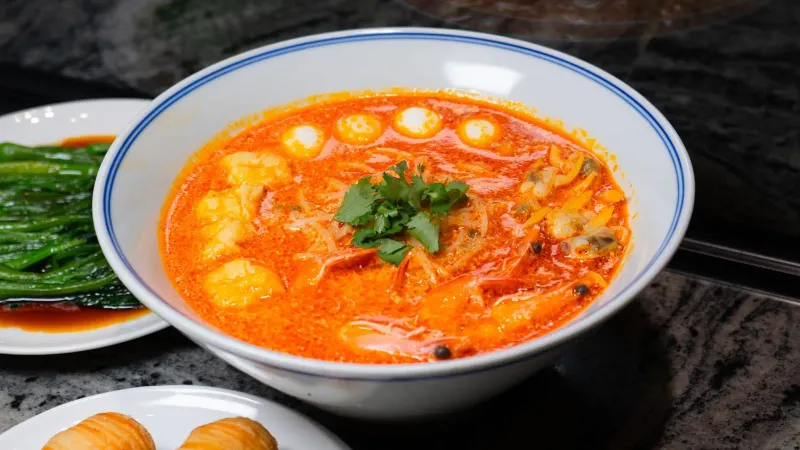
Gaeng Som (แกงส้ม, “sour curry”) is a tamarind-and-chili curry, usually with fish or shrimp and vegetables like green papaya or cabbage, colored orange by fresh chilies and turmeric rather than coconut milk. It carries a sharp, sour edge and medium-hot chili kick. Find it at village Thai shophouses and morning markets in Nathon and Maenam; 60-120 THB (~1.50-3.50 USD) per bowl.
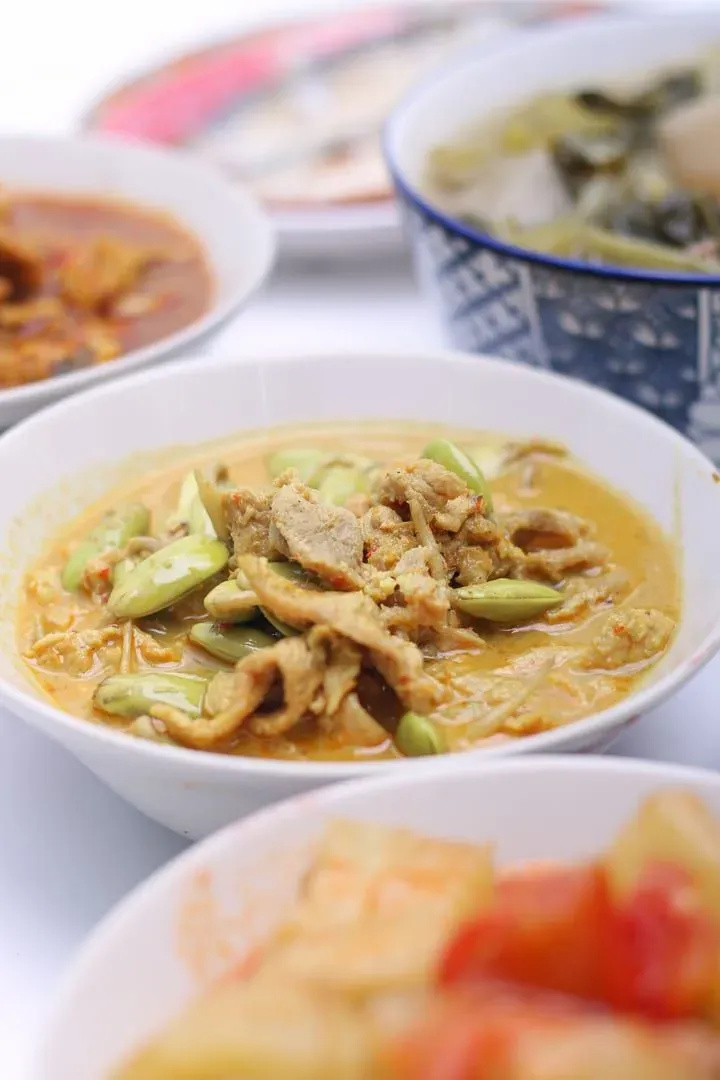
Gaeng Tai Pla (แกงไตปลา) is the signature dish of southern Thai cooking — a thick, intensely savory curry built on fermented fish innards (tai pla), with long beans, bamboo shoots and sometimes fish or pork. It is genuinely hot and pungent, an acquired taste even for many Thais from other regions. Look for it at Thai-run village restaurants rather than tourist menus; 80-150 THB (~2.50-4.50 USD).
Khanom Jeen Nam Ya Pak Tai (ขนมจีนน้ำยาปักษ์ใต้) pairs fresh fermented rice noodles with a southern-style fish curry sauce, served with a pile of raw vegetables and herbs on the side to cool the heat. It is a market-stall staple rather than a restaurant dish — look for the noodle baskets and curry pots at morning markets in Nathon or at the night markets circuit; 40-80 THB (~1-2.50 USD).
Stir-Fries, Beans and Braises
These three dishes cover the range from fiery street food to a mild Chinese-Thai family recipe, and all three show up regularly at village restaurants across the island.
Kua Kling (คั่วกลิ้ง) is dry-fried minced pork or beef cooked down with a thick, intensely spicy southern curry paste until almost no liquid remains — one of the hottest dishes on this list, served with plain rice to balance the chili. Village Thai restaurants and Muslim-Thai food stalls near Hua Thanon serve reliable versions; 80-150 THB (~2.50-4.50 USD).
Sator Pad Kung (สะตอผัดกุ้ง) stir-fries sator (“stink beans,” a large flat bean with a distinctive sulfurous aroma) with shrimp and shrimp paste (kapi) or pork. The smell puts some visitors off before they taste it, but the flavor is savory and only moderately spicy. Look for it at southern-leaning Thai restaurants island-wide, more often in the evening; 100-200 THB (~3-5.50 USD).
Moo Hong (หมูฮ้อง) is a Hainanese-Chinese braise — pork belly slow-cooked in soy sauce, garlic and five-spice until sweet and fall-apart tender, with no chili at all. It traces to the Chinese trading families who settled Nathon and Maenam generations ago, and is best found at the older Chinese-Thai cafes around Nathon’s old town; 80-150 THB (~2.50-4.50 USD).
Fried Chicken and Muslim-Thai Specialties
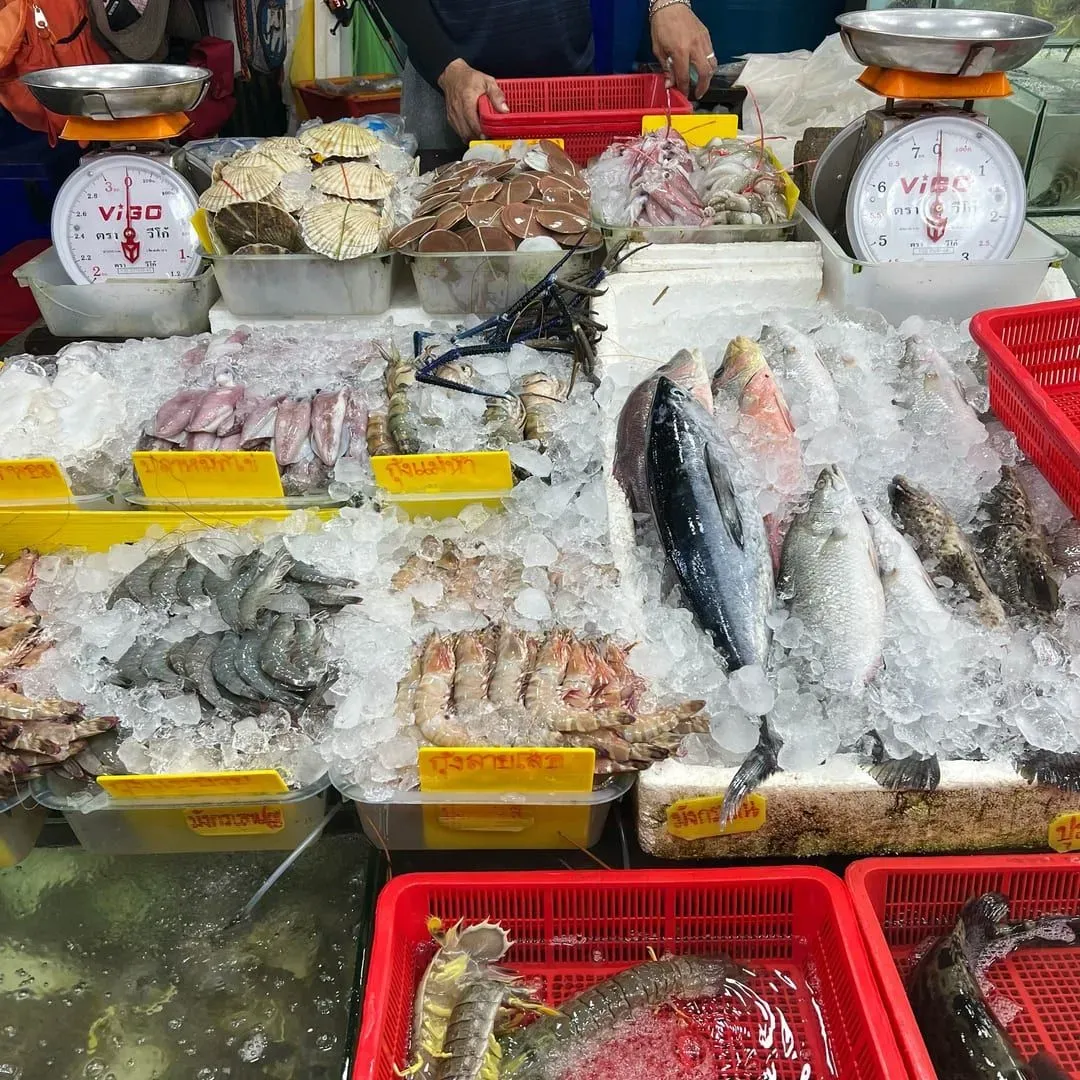
Koh Samui’s Hua Thanon fishing village is Muslim-Thai, and its food traditions — no pork, no alcohol — sit alongside the island’s more famous fried-chicken export from further down the peninsula.
Gai Tod Hat Yai (ไก่ทอดหาดใหญ่) is southern Thailand’s best-known fried chicken, marinated in coriander root, garlic and white pepper before frying, traditionally topped with crispy fried shallots. The chicken itself is mild; the accompanying chili dipping sauce is where the heat lives. It shows up at night markets and standalone fried-chicken stalls across the island; 60-120 THB (~1.50-3.50 USD) for a few pieces.
Khao Mok Kai (ข้าวหมกไก่) is a Thai-Muslim take on chicken biryani — turmeric-yellow rice cooked with chicken, served with a sweet-sour dipping sauce and a light broth on the side. It is a Hua Thanon specialty, reflecting the village’s Muslim-Malay heritage, and is mild enough for spice-averse eaters; 50-80 THB (~1.50-2.50 USD).
Fresh Gulf Seafood
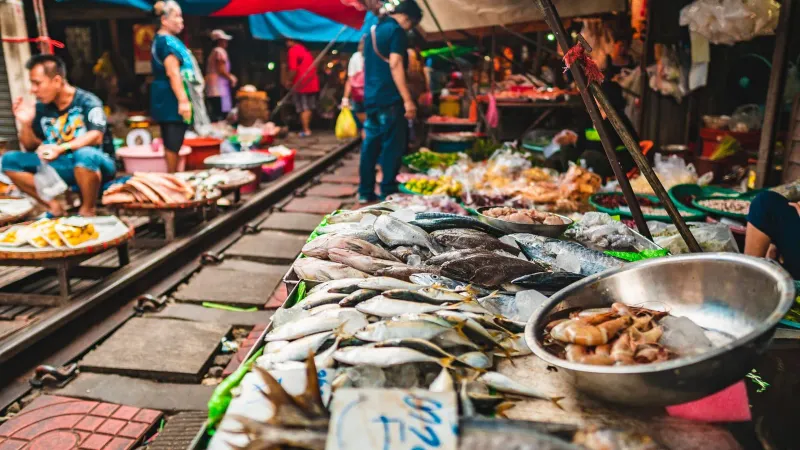
Much of what lands on Samui’s dinner tables passes through Hua Thanon Fish Market first, and these three dishes show off that catch with minimal fuss.
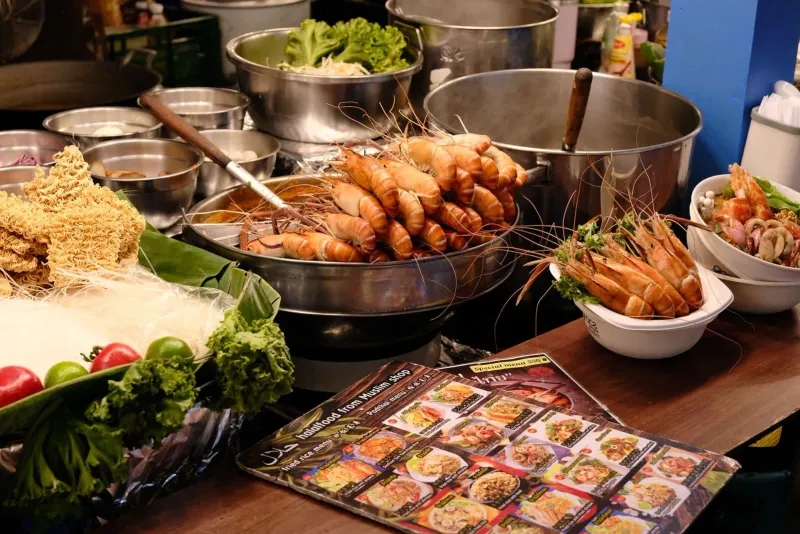
Pu Ma Neung (ปูม้านึ่ง, steamed blue swimming crab) is sold and priced by weight at seafood markets and restaurants, simply steamed and served with a sour-spicy seafood dipping sauce (nam jim seafood). It carries no inherent heat — the dip does the work. Buy it fresh at Hua Thanon Fish Market in the morning or order it at any seafood restaurant along the Bang Po strip; typically priced per 100g, roughly 150-300 THB (~4.50-8.50 USD) for a shareable portion.
Hoy Chaw (หอยจ๊อ, sometimes called hoy thod when made with oysters) is a Samui-area fried pancake of egg batter, oysters or mussels and bean sprouts, crisped on a hot griddle. It is mild and savory, closer to a seafood omelet than a curry. Look for it at seafood stalls near Bang Po and at evening market food courts; 60-100 THB (~1.50-3 USD).
Pla Pao (ปลาเผา) is whole fish — usually snapper or tilapia — packed in salt and grilled whole over charcoal until the skin blisters, then served with a tart chili-lime dipping sauce. It carries no chili in the fish itself. Seafood shacks along Bang Po and Hua Thanon grill it to order; 150-300 THB per fish (~4.50-9 USD), depending on size.
Dips, Salads and Rice
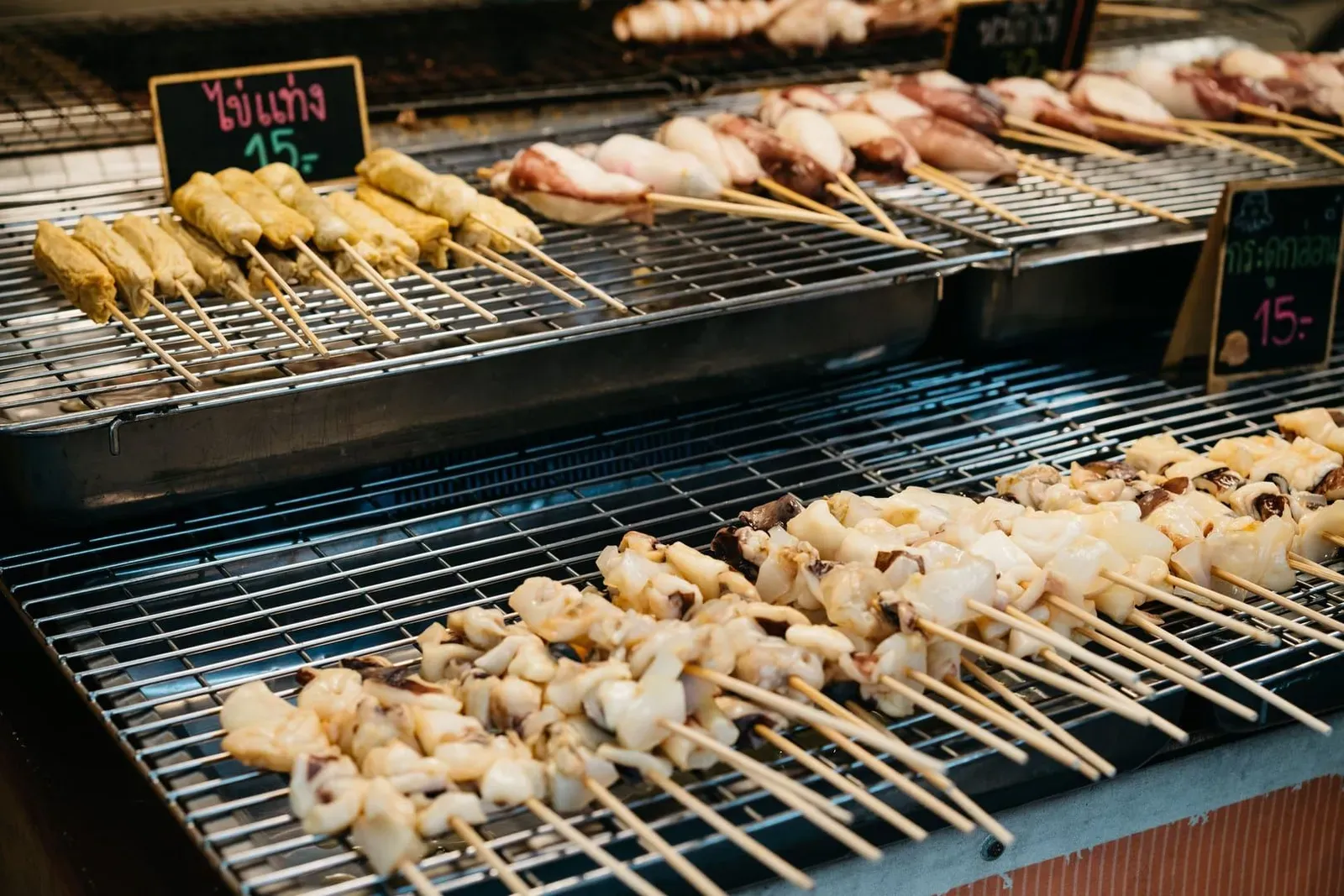
Southern Thai meals are built around sharing a chili dip or a rice salad alongside the main dishes, and these two are the ones worth ordering deliberately rather than treating as an afterthought.
Nam Prik Kapi (น้ำพริกกะปิ) is a pounded shrimp paste, chili, garlic and lime dip, served with a plate of steamed or raw vegetables and a piece of fried fish. It is genuinely hot and salty-pungent, meant to be eaten in small dabs with rice rather than as a standalone dish. Village restaurants across the island serve their own version; 40-80 THB (~1-2.50 USD).
Khao Yam (ข้าวยำ) is a southern herbal rice salad — rice tossed with dried shrimp, toasted coconut, lemongrass, herbs and a tangy dressing made from budu (fermented fish sauce) and lime. The result is sour, salty and only moderately spicy, closer to a Malay-influenced salad than a curry. It shows up at market stalls and southern-style restaurants, often as a lighter lunch option; 50-100 THB (~1.50-3 USD).
Coconut Sweets and Samui’s Own Coconut
Coconut is not just an ingredient on Koh Samui — the island was coconut plantation country for most of the 20th century, and that history still shows up on the dessert menu.
Khanom Thai (ขนมไทย, Thai coconut sweets) covers a family of small desserts built on coconut milk, coconut flesh and palm sugar: khanom babin (fried coconut-rice pancakes), khanom tom (coconut-dusted sticky rice balls with palm sugar filling), and khanom krok (coconut-rice pudding cooked in a cast-iron mold). None carry any heat, and each piece is small and inexpensive. Morning and night markets in Nathon, Maenam and Bophut’s night markets sell them by the piece or small bag; 10-30 THB per piece (~0.30-0.90 USD).
Samui Coconut Products close out the list because they are the island’s own signature more than any single dish — fresh young coconut water drunk straight from the shell (mafuang), coconut ice cream served in a scooped-out coconut shell with sticky rice and peanuts, and coconut shakes blended with ice. Vendors sell all three from carts near beaches and markets island-wide, and the coconuts themselves are often grown on Samui’s own remaining plantations; 40-80 THB (~1-2.50 USD).
Where and When to Find These Dishes
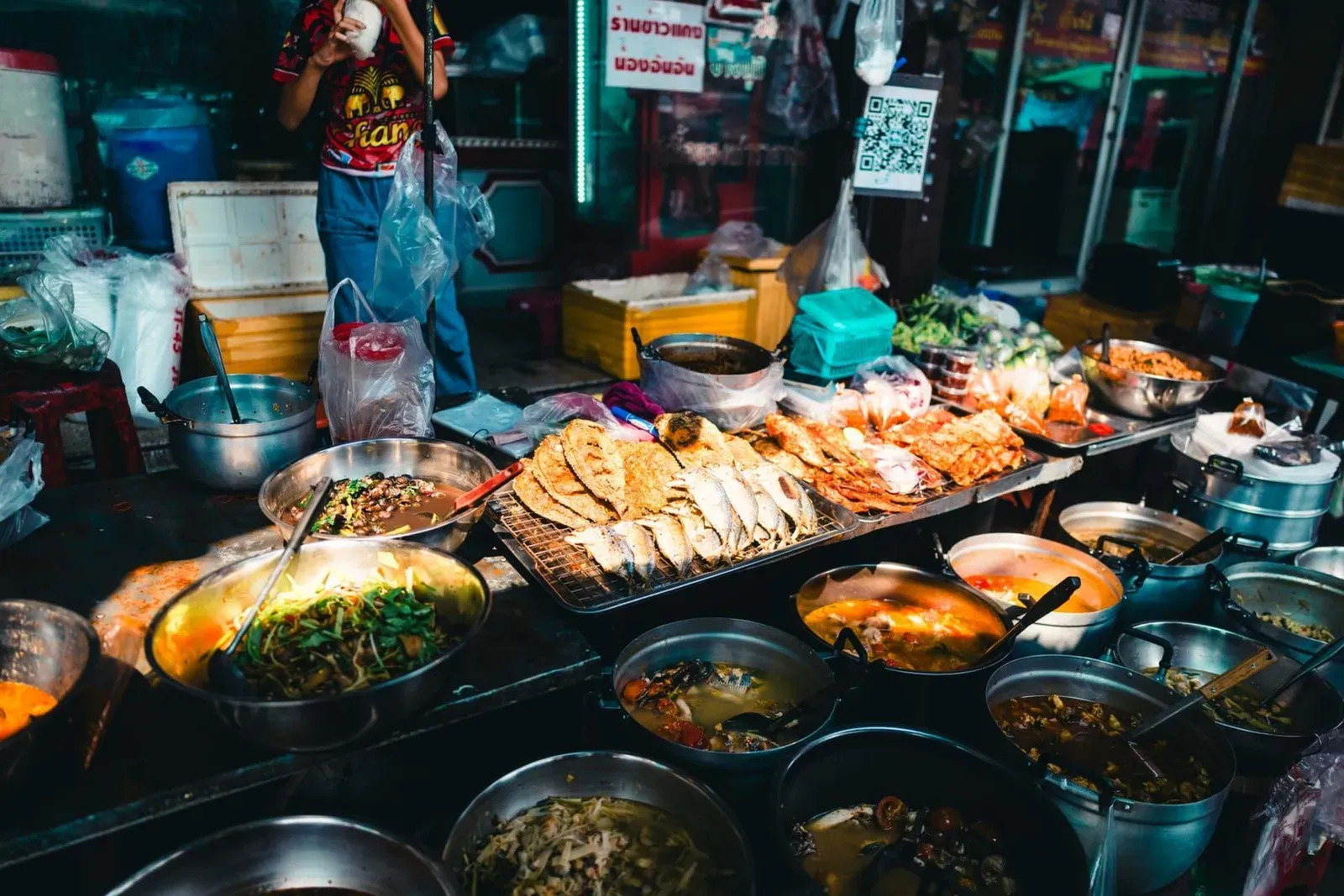
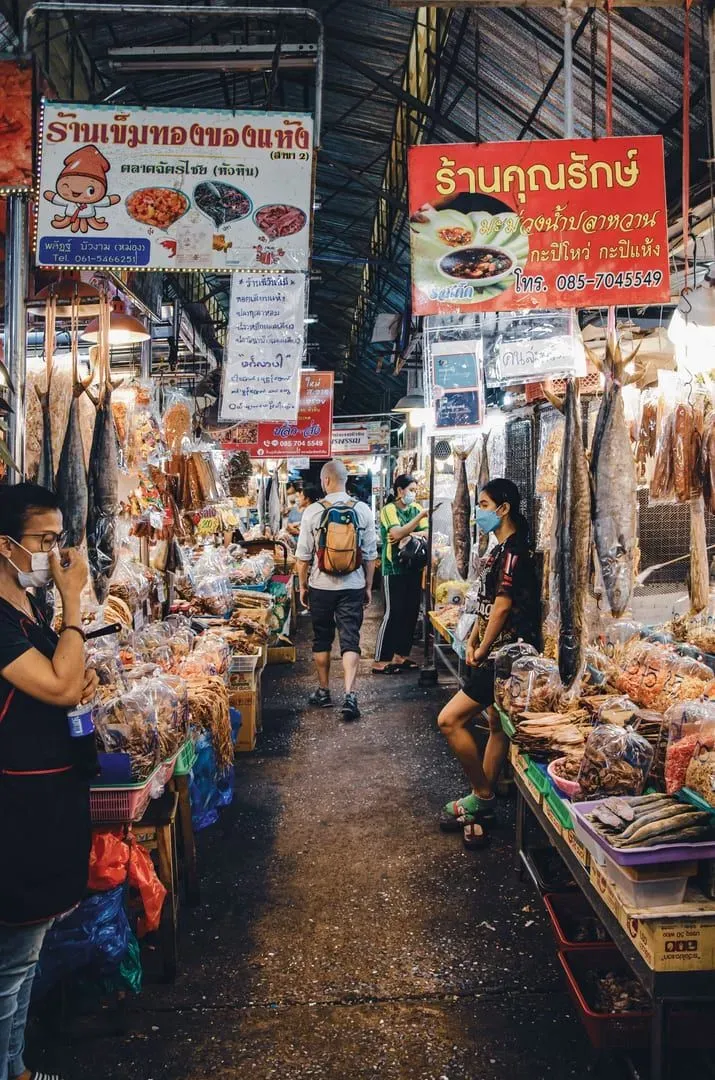
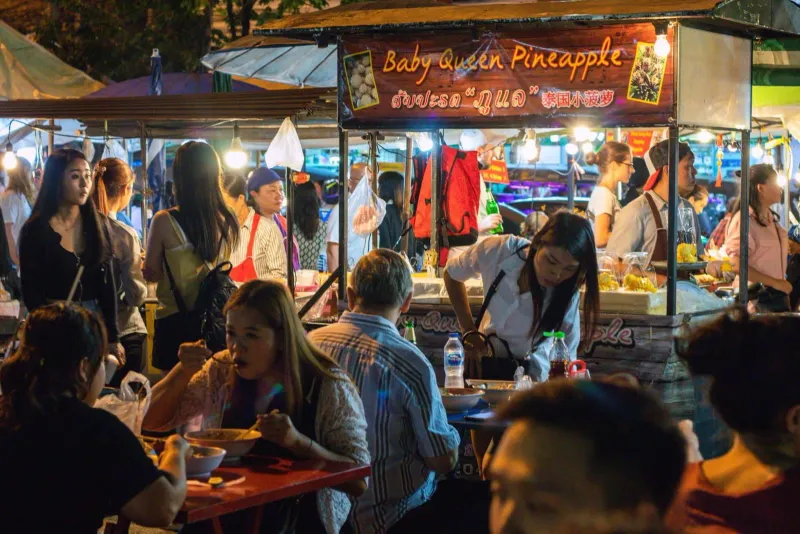
The single best strategy for trying several dishes on this list in one visit is to time a trip around Koh Samui’s rotating night and morning markets rather than hunting down individual restaurants. Hua Thanon Fish Market runs mornings and is the place for pu ma, pla pao and Muslim-Thai dishes like khao mok kai. Nathon, the old ferry-port town, has the island’s Hainanese-Chinese cafes for moo hong and a nightly food market for khanom jeen and coconut sweets. The weekly walking streets — Maenam on Thursday, Fisherman’s Village in Bophut on Friday, and Lamai on Sunday — each mix in southern curries, kua kling and fried chicken alongside the more familiar pad thai and satay stalls; see the full night markets guide for the current weekday schedule. For a broader sense of the island’s food scene beyond this list, the where to eat guide covers restaurants by area and price band, and the things to do guide ties food into a wider Samui itinerary.
FAQ
What is the most famous local dish in Koh Samui?
Gaeng tai pla is the dish most associated with southern Thai cooking, including on Koh Samui — a thick, intensely savory curry made from fermented fish innards, long beans and bamboo shoots. It is hot and pungent, so it is worth ordering a small portion first if you have not tried southern Thai food before. Village Thai restaurants serve it more reliably than tourist-facing menus.
Is southern Thai food on Koh Samui very spicy?
Yes, generally spicier than Bangkok-style Thai food, though it varies by dish. Kua kling and gaeng tai pla rank among the hottest dishes on the island, while moo hong, khao mok kai and pu ma neung (steamed crab) carry no inherent heat at all. Ask for “mai phet” (not spicy) or “phet noi” (a little spicy) to adjust any dish to taste.
Where can I find fresh seafood dishes like pu ma or pla pao?
Hua Thanon Fish Market, on the island’s southeast coast, is the main supply point for fresh crab and fish, with morning market stalls selling straight off the boats. The Bang Po seafood strip on the north coast also grills whole fish and steams crab to order at sit-down restaurants. Both are covered in more detail in the where to eat guide.
What are Samui’s best coconut desserts?
Khanom babin (fried coconut-rice pancakes), khanom tom (coconut-dusted sticky rice balls) and coconut ice cream served in the shell are the easiest coconut sweets to find, sold by the piece at markets in Nathon, Maenam and Bophut. None carry any chili heat, making them a safe choice after a spicier meal. Expect 10-30 THB (~0.50-1 USD) per piece.
Is it safe to eat street food and market food on Koh Samui?
Yes — busy stalls with high turnover and a crowd of local customers are generally the safest and freshest option, since food does not sit for long. Look for vendors cooking to order rather than food sitting uncovered for hours, and carry cash since most stalls do not accept cards. The night markets guide lists the island’s main weekly markets by day.
Can vegetarians find southern Thai dishes to eat on Koh Samui?
Some dishes on this list, like khao yam, can be ordered without dried shrimp on request, and khanom Thai coconut sweets are naturally vegetarian. Most of the seafood- and meat-centric dishes here, however — gaeng tai pla, kua kling, moo hong, pu ma — are not easily adapted. The where to eat guide covers the island’s dedicated vegetarian and vegan restaurants.
Published on
About the author

Mike Brochlowski
Travel photographer & writer
Travel photographer and island explorer. Mike has spent years documenting Southeast Asia's hidden gems, from secluded beaches to jungle waterfalls.
Articles by Mike →More in Travel Guides
Also in Where to Eat in Koh Samui
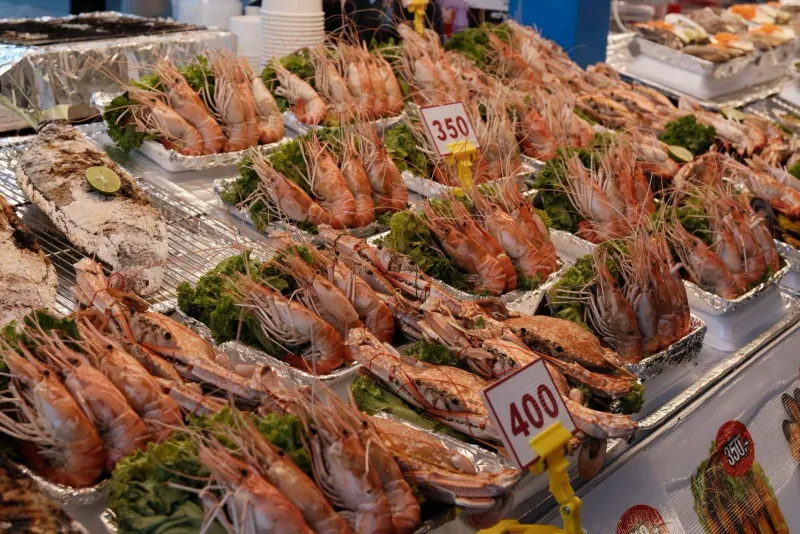
Street Food & Seafood in Koh Samui — Where Locals Eat
Where Koh Samui locals actually eat: Hua Thanon's fish market, Bang Po's seafood strip, Nathon's daily market, and how seafood pricing re…
Also in Where to Eat in Koh Samui
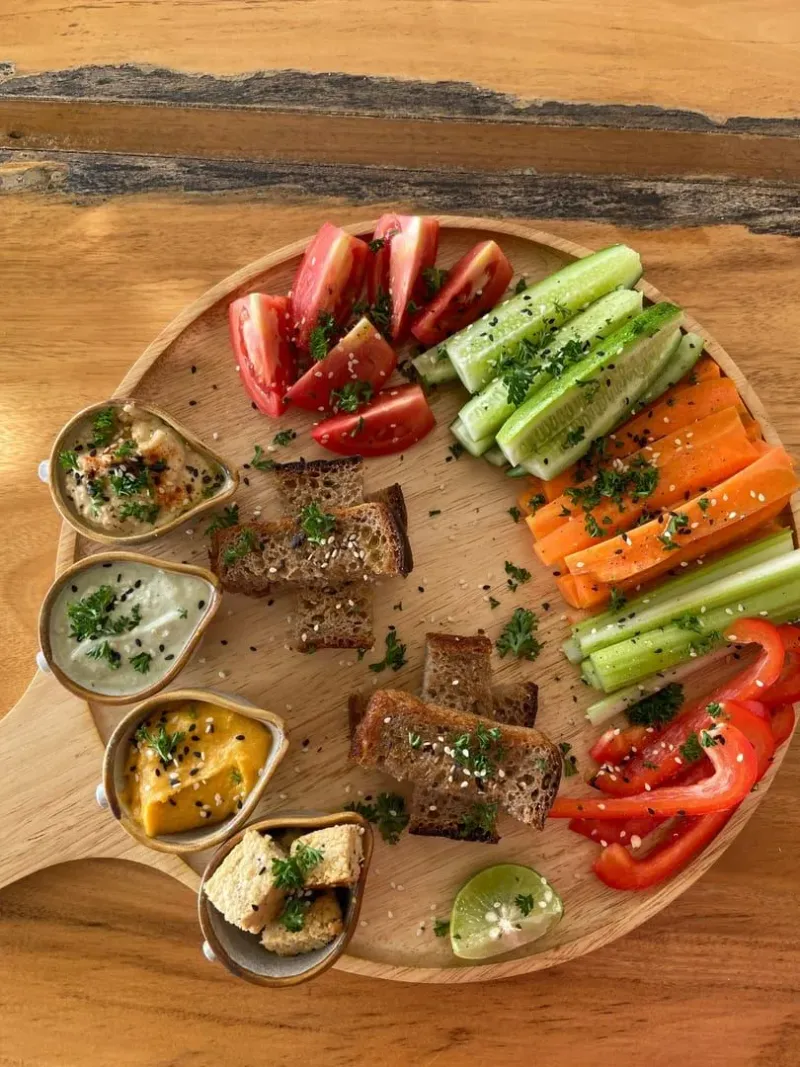
Vegan & Vegetarian Koh Samui — Where to Eat (2026)
Vegan Koh Samui: 9 verified restaurants by area, wellness-retreat kitchens open to day visitors, Thai jay-food phrases, and 2026 festival…
Also in Where to Eat in Koh Samui
Koh Samui Night Markets — Which Day, Where & Hours (2026 Schedule)
There's a Koh Samui night market open somewhere every night.