Contents
Overview
Koh Samui’s best street food and seafood is not in Chaweng — it is at Hua Thanon’s fishing-village market, Bang Po’s beachfront seafood strip, Nathon’s daily food market, and the roadside grill stalls locals actually queue at. These spots sell fish straight off the boat, weigh it in front of you, and skip the resort markup that doubles prices along the east coast.
Key takeaways
- Hua Thanon Fish Market (southeast coast) is where much of Samui’s seafood is landed and sold, roughly 6:00-9:00 AM daily.
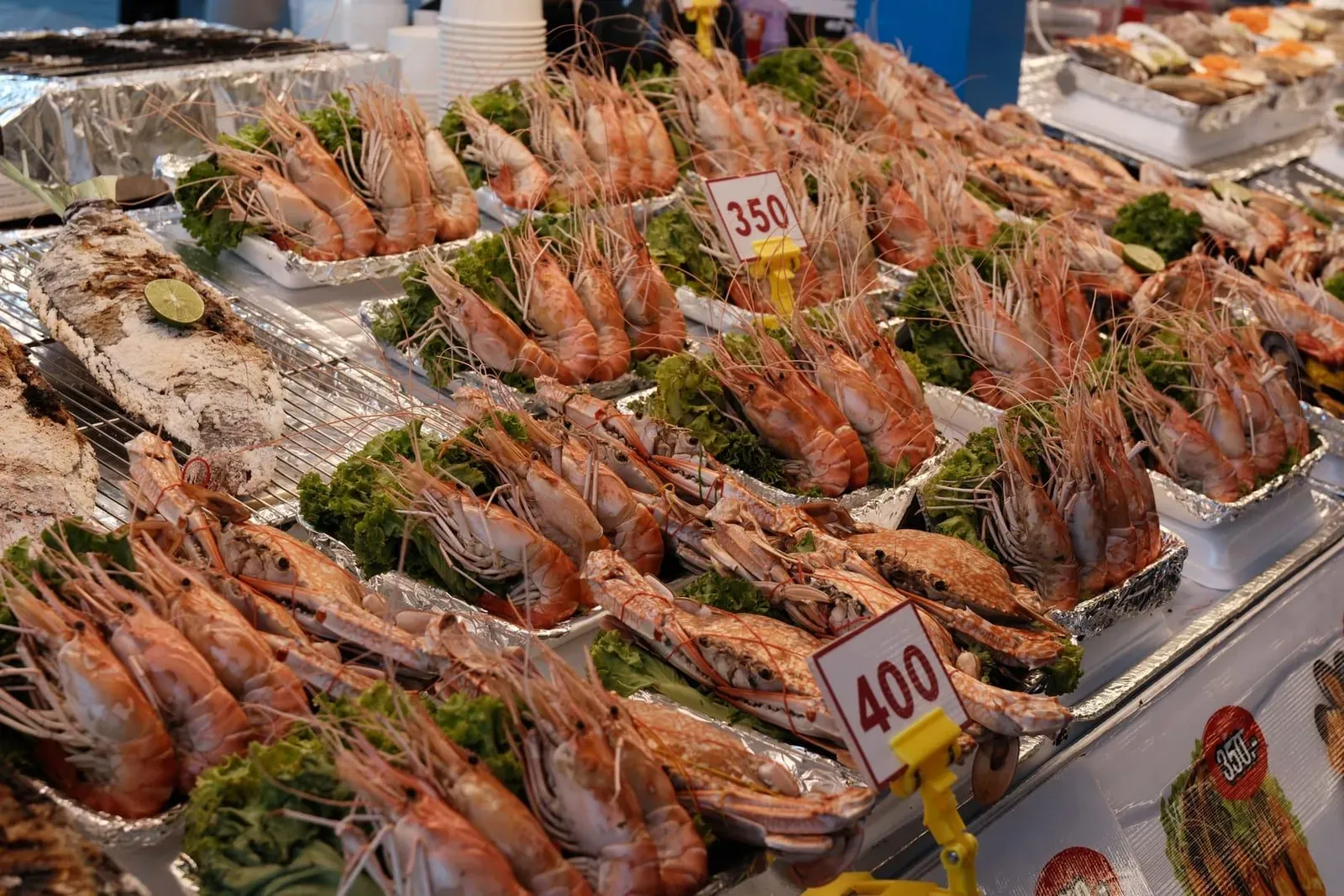
- Bang Po’s seafood shacks let you pick your fish from an ice tray for 150-350 THB (~4.50-10 USD) a plate.
- Seafood at market-style spots is priced by weight, usually per 100 g (a Thai ขีด/khit) — ask the price before it goes on the grill.
- “No MSG” (ไม่ใส่ผงชูรส, mai sai phong chu rot) only removes added flavor enhancer — it does not mean low salt, low sugar, or low oil.
- A busy stall with a queue of Thai customers and high turnover is a better food-safety signal than any certificate on the wall.
Where Locals Eat — Quick Reference
Locals split their eating between five kinds of spot: fishing-village markets, beachfront seafood shacks, town day markets, walking-street stalls, and pier-side seafood at the southern boat piers. Each has a different rhythm and price band, summarized below before the detail sections.
| Spot | Area | Days / Hours | What to Order | Price Band |
|---|---|---|---|---|
| Hua Thanon Fish Market | Southeast coast | Daily, ~6:00-9:00 AM (market); food carts run into the evening | Grilled fish/squid by weight, halal curries, roti | 40-300 THB (~1-8.50 USD) |
| Bang Po seafood strip | Northwest coast | Daily, ~11:00 AM-9:00 PM | Whole grilled fish, steamed prawns, pick-your-own tray | 150-350 THB (~4.50-10 USD) |
| Nathon day market & old town | West coast | Daily (day market); Saturday walking street evenings | Khao man gai, waterfront grilled fish, noodle soups | 40-350 THB (~1-10 USD) |
| Thong Krut pier seafood | South coast | Daily, ~11:00 AM-9:00 PM | Whole grilled fish, tom yum prawns, crab by weight | 60-800 THB (~1.50-23 USD) |
| Roadside grill stalls (island-wide) | Ring Road, every town | Evenings, ~5:00 PM-late | Grilled skewers, som tam, sticky rice | 20-80 THB (~0.50-2.50 USD) |
Hua Thanon — Fishing Village Market and Muslim-Thai Food
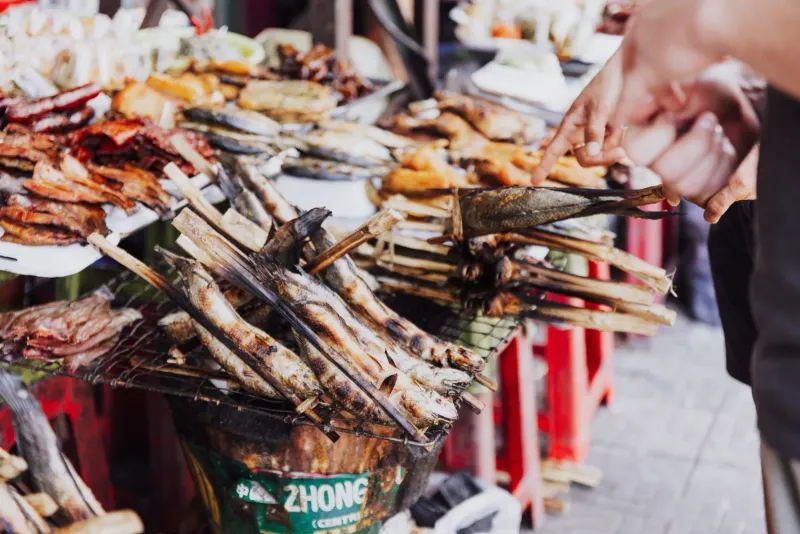
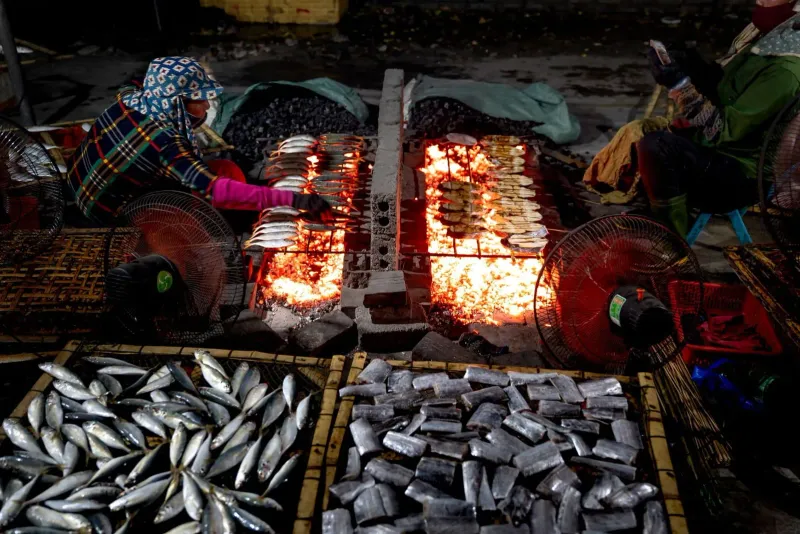
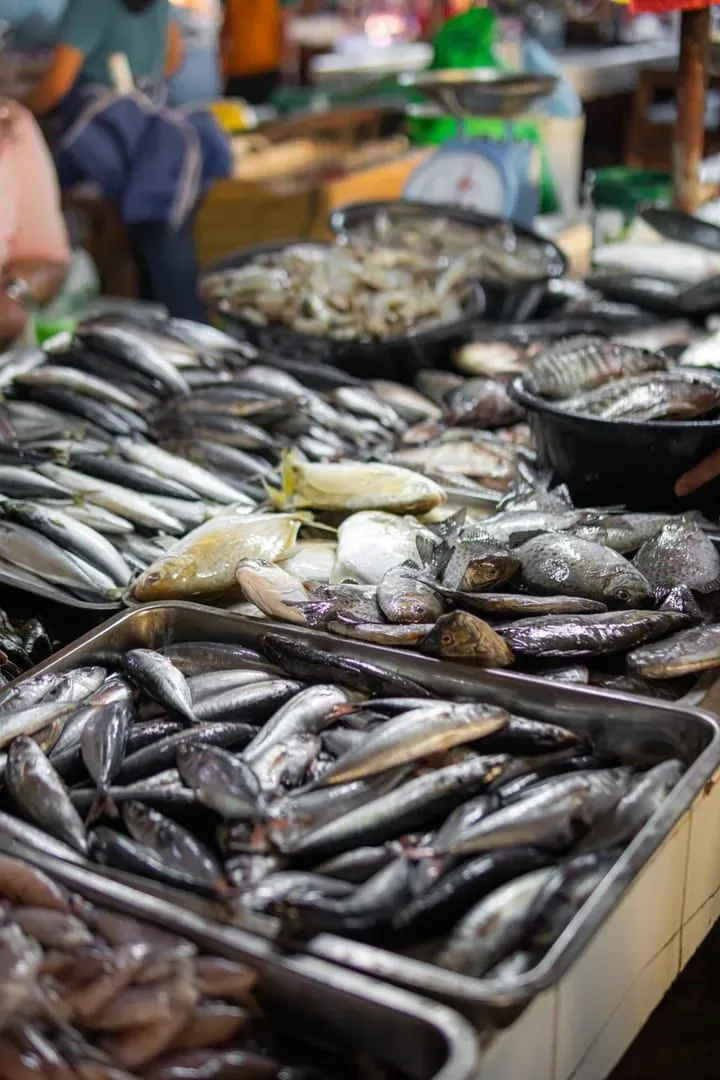
Hua Thanon’s fish market, on the southeast coast about five minutes south of Lamai, is the closest thing Koh Samui has to a source. It is a working Muslim fishing village, not a tourist market — longtail boats unload the night’s catch and traders sell it on to restaurants and shoppers from around 6:00 to 9:00 AM, with activity thinning out by mid-morning. Because the village is predominantly Muslim, the food carts around the market lean halal: curries, roti, and noodle dishes rather than the pork and alcohol-heavy menus found elsewhere on the island.
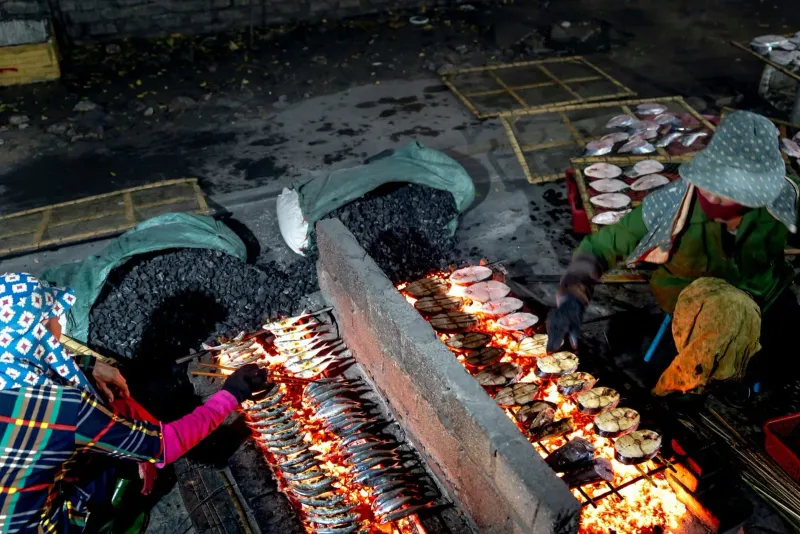
Eating here means buying from a stall, not sitting down to a menu. Grilled fish, squid, and prawns sold straight from the morning catch run roughly 100-300 THB (~3-8.50 USD) depending on weight, halal curries and roti go for 40-80 THB (~1-2.50 USD), and simple noodle carts serve pad thai or fried rice for 50-80 THB (~1.50-2.50 USD). Treat it as a cheap, authentic snack stop rather than a full sit-down dinner — Hua Thanon Beach has more on the village, the mosque, and the fishing fleet itself.
Bang Po — The Seafood Strip
Bang Po, on the island’s northwest coast beyond Maenam, runs a string of small, family-run seafood restaurants built directly on the sand rather than a market. The routine is the same at nearly every one: pick your fish, squid, or prawns off an ice tray, tell the cook grilled or steamed, and it comes out priced by the plate or by weight. A seafood plate typically costs 150-350 THB (~4.50-10 USD), while a simple pad thai, fried rice, or curry over rice runs 50-100 THB (~1.50-3 USD) — noticeably cheaper than the same meal in Chaweng.
What makes Bang Po worth the detour for locals and residents is the absence of a tourist markup: no beachfront cocktail menus padding the bill, no hawkers steering you to a specific table. See Bang Po Beach for restaurant names and the wider beach.
Nathon — Koh Samui’s Daily Food Market
Nathon, the island’s port town on the west coast, is where Samui residents shop and eat every day, not just on market night. The town’s day market and old-town noodle shops serve Hainanese-legacy dishes like khao man gai (Hainanese chicken rice) and khao mok gai (Thai-style biryani) for 50-70 THB (~1.50-2 USD), reflecting the Hainanese Chinese families who founded the town in the 1850s. Waterfront seafood restaurants near the ferry pier sell whole grilled fish and prawns for 150-350 THB (~4.50-10 USD), and the Saturday walking street adds grilled skewers and desserts to the mix in the evening.
Because Nathon’s prices are aimed at residents and ferry passengers rather than resort tourists, they run consistently below equivalent dishes on the east coast. See Nathon Beach for the wider port town, shophouses, and sunset views.
Thong Krut — Pier and Floating Seafood
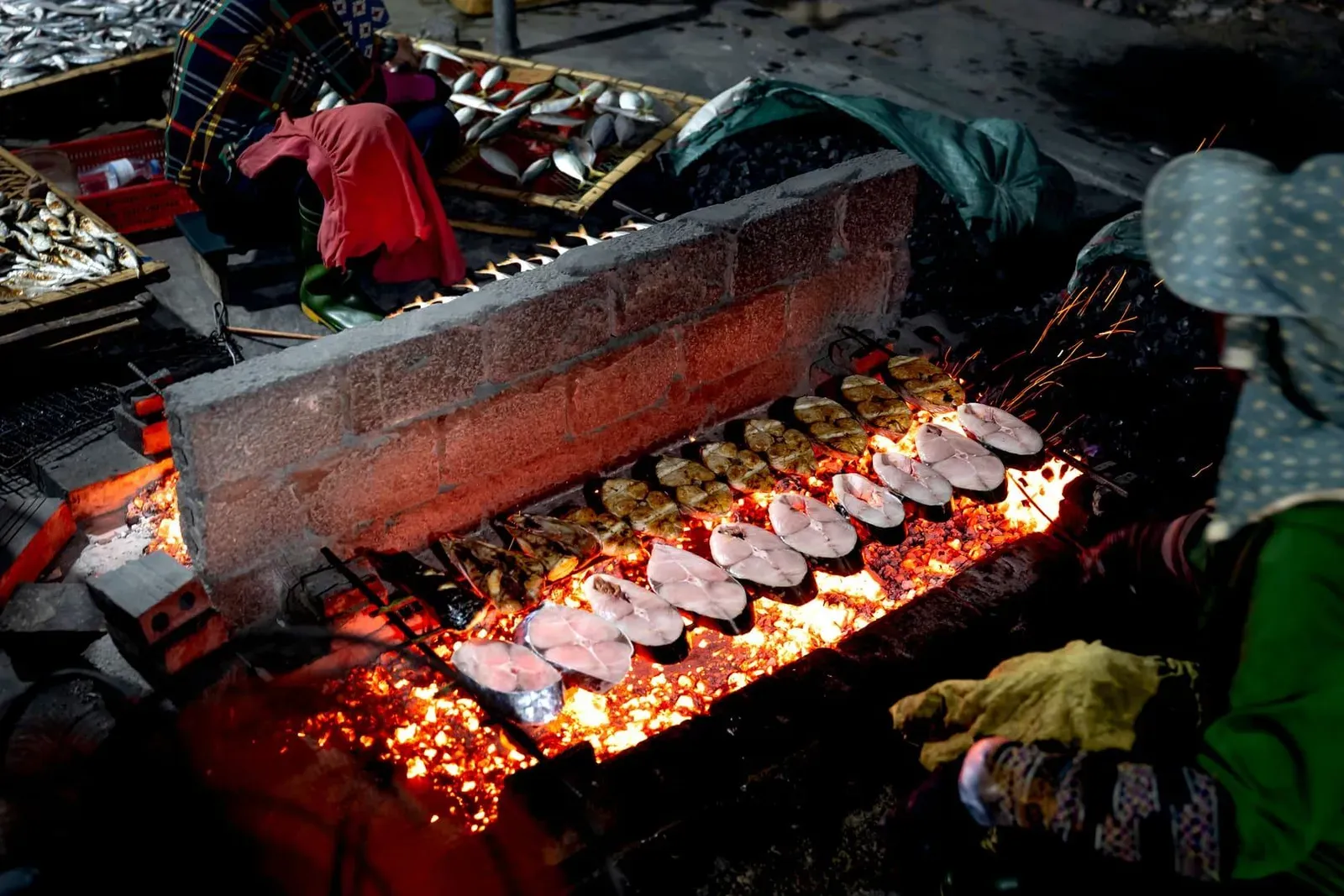
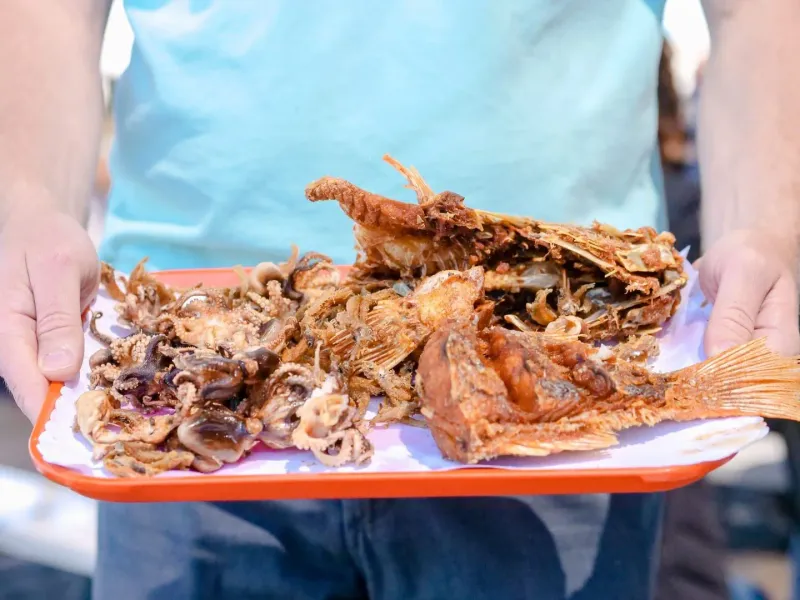
Thong Krut, on Samui’s southern tip, is a working fishing pier before it is a beach — the main departure point for boats to Koh Tan and Koh Madsum (“Pig Island”). The bay is lined with small, family-run seafood restaurants built at the water’s edge, several rated among the best-value seafood on the island. Grilled whole fish, steamed crab, stir-fried squid with basil, and prawns in tom yum soup are the standard order, with a full seafood dinner for two typically running 400-700 THB (~11-20 USD) — noticeably cheaper than beachfront dining on the east coast. Whole fish or crab sold by weight runs roughly 300-800 THB (~8.50-23 USD) depending on catch and size.
Pair a Thong Krut seafood lunch with an island-hopping trip; see Thong Krut Beach for boat details and restaurant names.
Walking Streets and Roadside Grill Stalls
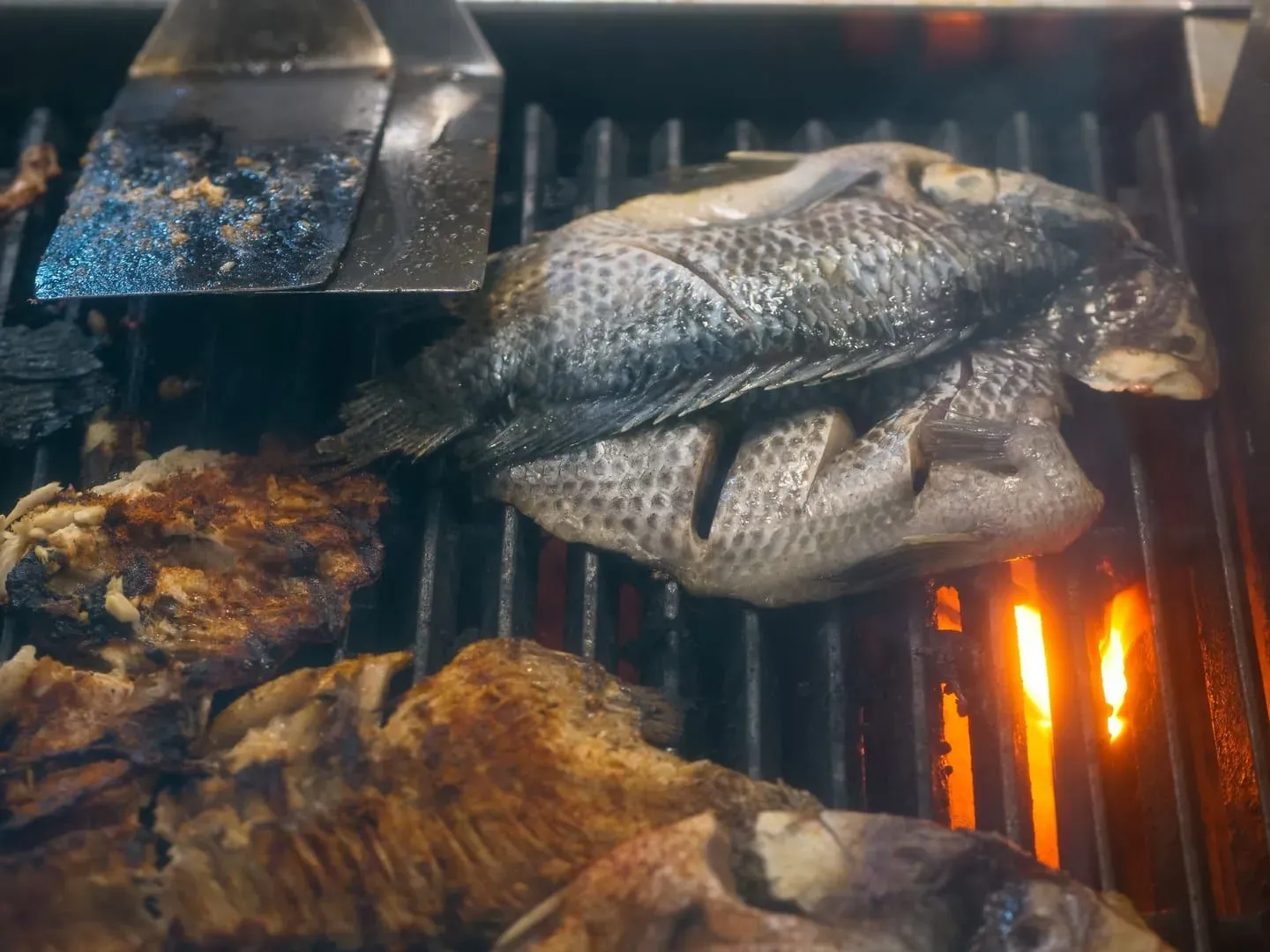
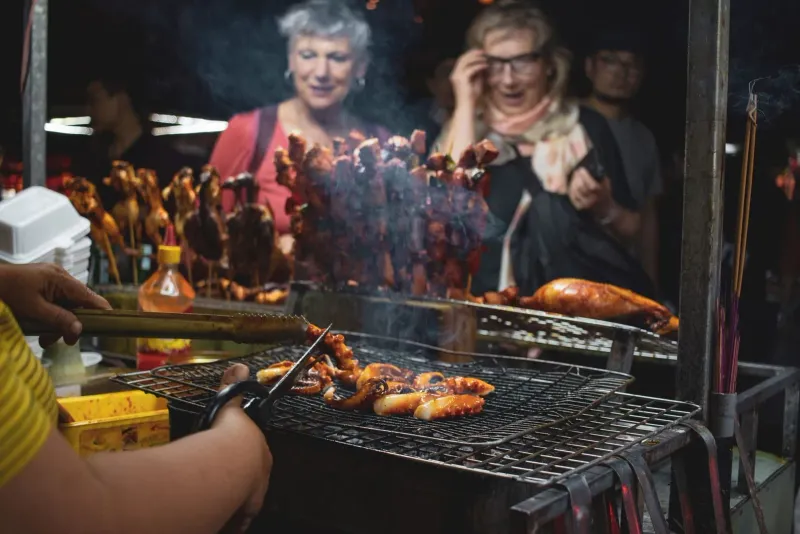
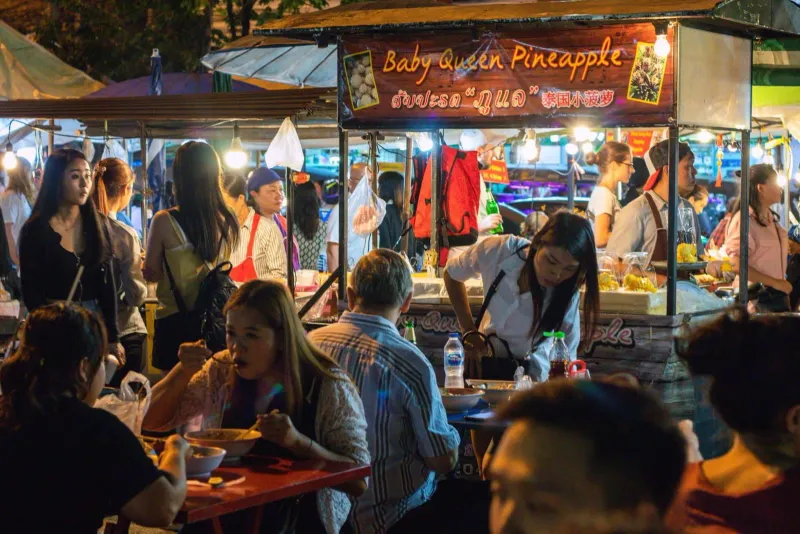
Beyond the four fishing-village and port spots above, every town on Koh Samui runs evening roadside grill stalls — plastic tables, a charcoal grill, and a handwritten Thai-only menu. These are where locals eat most nights: grilled pork or chicken skewers, som tam (green papaya salad), and sticky rice for 20-80 THB (~0.50-2.50 USD) a portion. The island’s weekly walking streets (Fisherman’s Village on Friday, Lamai on Sunday, Maenam on Thursday, and Nathon on Saturday) concentrate dozens of these stalls in one place — see the Koh Samui night markets guide for the full weekly schedule and hours. The broader where-to-eat guide covers sit-down restaurants and price bands by area if you want more than street food on a given night.
How Seafood Pricing Works
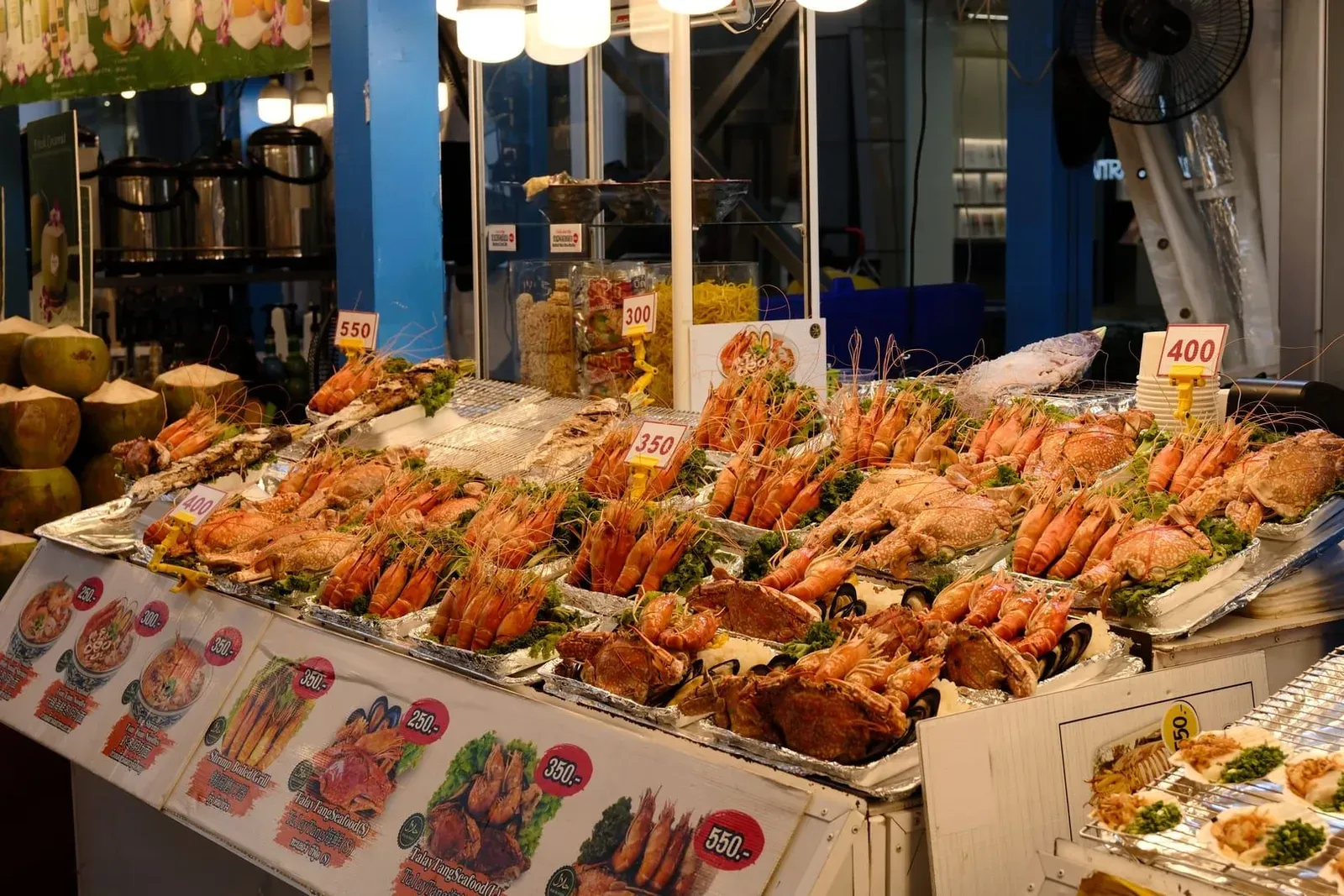
Seafood at market-style spots on Koh Samui is priced by weight, not by the plate — the same convention used across coastal Thailand. Restaurants and stalls typically quote a price per 100 grams (a Thai unit called a khit, ขีด), so a 600-gram fish at 15 THB per 100 g costs about 90 THB before cooking charges. Choose-your-own-fish tanks and ice trays work the same way: you select the live or fresh fish, it gets weighed on a scale in front of you, and the price is set before it goes on the grill or into the pan.
To avoid being overcharged, confirm three things before the fish leaves the counter: the price per 100 g (ask “ขีดละเท่าไหร่?” or simply “how much per 100 grams?”), that the fish is weighed on a visible scale rather than estimated, and whether the cooking style (steamed, grilled, or deep-fried) or sauce adds an extra charge — some stalls charge more for tom yum or garlic-and-pepper preparations. Watch the weighing happen; a common complaint at tourist-facing spots is a fish being swapped for a heavier one after selection. Sticking to the market and beachfront spots above, where locals eat and prices are aimed at residents rather than resort guests, sidesteps most of this entirely.
Food Safety Basics
The single best food-safety signal in Koh Samui is a queue of Thai customers and high turnover — food cooked to order and served hot is safer than anything sitting out at room temperature. Grilled and boiled seafood carries lower risk than raw or lightly-pickled dishes, so if you have a sensitive stomach, favor grilled fish and steamed prawns over raw crab in som tam poo. Ice at legitimate stalls and restaurants is almost always factory-made tube ice (cylindrical, with a hole through the center) rather than home-frozen ice, and is generally considered safe; crushed or shaved ice from an unclear source is the exception to be cautious with. Bottled or filtered water is the safer default over tap water, and carrying hand sanitizer is useful since market and roadside stalls rarely have a sink nearby.
What No-MSG Actually Means
Asking for a dish without MSG — “ไม่ใส่ผงชูรส” (mai sai phong chu rot) — is a reasonable and common request in Thailand, and most cooks will oblige without pushback. MSG (monosodium glutamate) is a sodium salt used to boost umami flavor, and while it developed a bad reputation as the source of so-called “Chinese restaurant syndrome,” the US FDA has stated that blinded tests have not provided strong evidence linking MSG to those symptoms at normal consumption levels. What “no MSG” does not do is make a dish healthier overall: Thai cooks commonly compensate with extra fish sauce, sugar, or oil to keep the flavor balanced, so a no-MSG order can still be high in salt or sugar. If salt is the actual concern, ask for “not too salty” (mai kem) alongside the no-MSG request.
Ordering Phrases That Help
A handful of Thai phrases make ordering at markets and roadside stalls faster and cheaper than pointing and hoping:
- Tao rai? (เท่าไหร่) — How much?
- Khit la tao rai? (ขีดละเท่าไหร่) — How much per 100 grams?
- Mai sai phong chu rot (ไม่ใส่ผงชูรส) — No MSG, please.
- Mai phet (ไม่เผ็ด) / Phet nit noi (เผ็ดนิดหน่อย) — Not spicy / a little spicy.
- Kin jay (กินเจ) — Strict vegan (no meat, no garlic, no onion); mangsawirat (มังสวิรัติ) for general vegetarian.
- Aroi mak (อร่อยมาก) — Very delicious — a genuine compliment that vendors appreciate.
- Check bin (เช็คบิล) — Bill, please.
These same phrases work at Hua Thanon’s food carts, Bang Po’s seafood shacks, and any of the walking-street stalls covered in the night markets guide.
FAQ
Where do locals actually eat seafood on Koh Samui?
Locals eat at Hua Thanon’s fish market, Bang Po’s beachfront seafood shacks, Thong Krut’s pier restaurants, and Nathon’s day market — all priced for residents rather than resort guests. Look for plastic stools, a handwritten Thai menu, and a queue of Thai customers; that combination reliably signals good, affordable food across Koh Samui.
How is seafood priced at Koh Samui markets?
Seafood at market-style spots is priced by weight, usually per 100 grams (a Thai khit), with the fish weighed on a visible scale before cooking. A 600-gram fish at 15 THB per 100 g costs roughly 90 THB before any cooking charge, and prices can rise for tom yum or garlic-pepper preparations.
How do I avoid being overcharged for seafood in Thailand?
Confirm the price per 100 grams before your fish is weighed, watch it go on the scale rather than accept a verbal estimate, and ask whether the cooking style adds an extra charge. Eating at market and village spots where locals shop, such as Hua Thanon or Bang Po, avoids most tourist-priced menus entirely.
Does “no MSG” make Koh Samui street food healthier?
Not necessarily. “No MSG” (mai sai phong chu rot) removes the added flavor enhancer, but Thai cooks often compensate with extra fish sauce, sugar, or oil, so the dish is not automatically lower in salt or calories. Ask for “mai kem” (not too salty) if salt is the real concern.
Is street food safe to eat on Koh Samui?
Yes, if you choose stalls with a queue of local customers and high turnover, since food is cooked to order and served hot rather than sitting out. Factory-made tube ice is generally safe; bottled or filtered water is the safer default, and grilled or steamed seafood carries less risk than raw preparations for sensitive stomachs.
What should I order at Hua Thanon’s fish market?
Grilled fish, squid, or prawns sold by weight straight from the morning catch, plus halal curries and roti from the village’s food carts, since Hua Thanon is a predominantly Muslim fishing community. Arrive between 6:00 and 9:00 AM to see the market at its most active, before the best catch is sold on to restaurants elsewhere on the island.
Published on
About the author

Mike Brochlowski
Travel photographer & writer
Travel photographer and island explorer. Mike has spent years documenting Southeast Asia's hidden gems, from secluded beaches to jungle waterfalls.
Articles by Mike →More in Travel Guides
Also in Where to Eat in Koh Samui
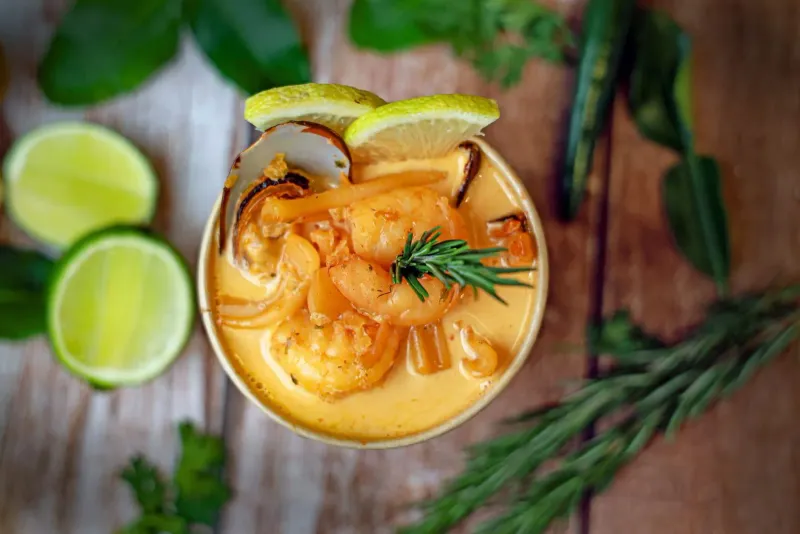
What to Eat in Koh Samui — 15 Southern Thai & Island Dishes (2026)
What to eat in Koh Samui: 15 southern Thai and island dishes from gaeng tai pla to hoy chaw, with heat levels, THB prices and where to fi…
Also in Where to Eat in Koh Samui
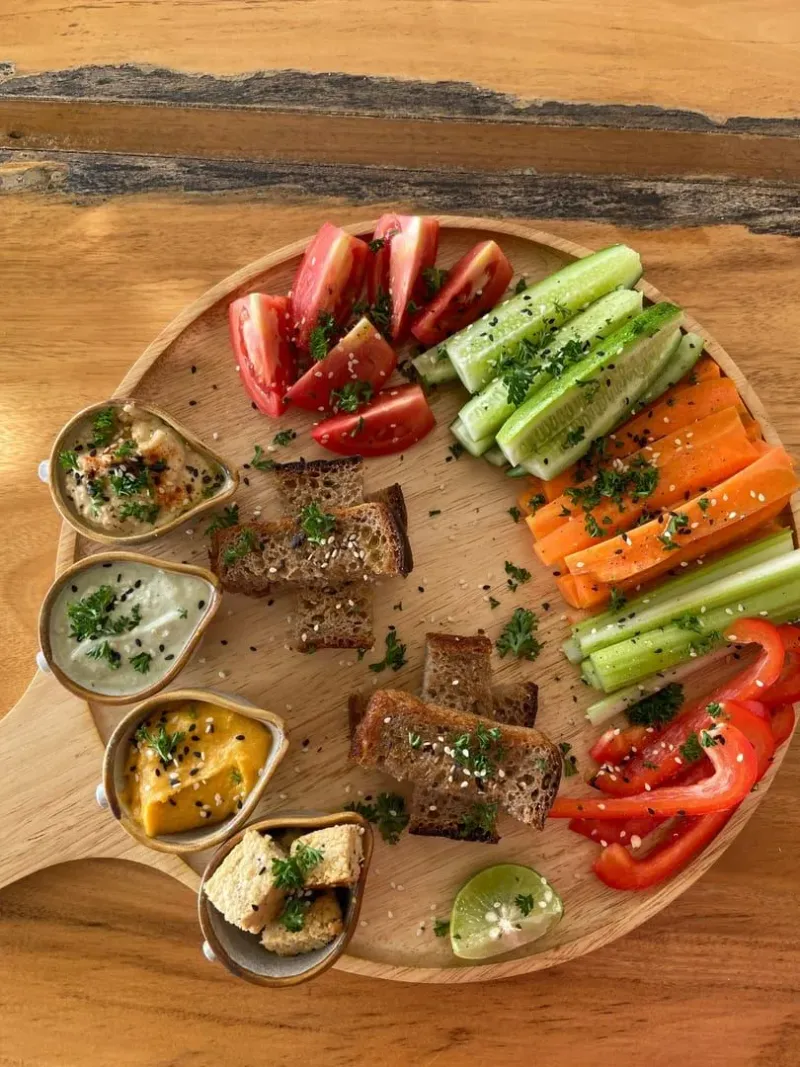
Vegan & Vegetarian Koh Samui — Where to Eat (2026)
Vegan Koh Samui: 9 verified restaurants by area, wellness-retreat kitchens open to day visitors, Thai jay-food phrases, and 2026 festival…
Also in Where to Eat in Koh Samui
Koh Samui Night Markets — Which Day, Where & Hours (2026 Schedule)
There's a Koh Samui night market open somewhere every night.