Contents
Is Koh Samui Rainy Season Worth Visiting?
Yes, with caveats. Koh Samui’s rainy season runs roughly September through December and peaks in November, but most days still see 4-6 hours of sun between showers, sea temperatures hold at 28-29 degrees Celsius, and hotel rates typically drop 20-40 percent below the December-February peak. The real trade-off is November itself, when multi-day rain and occasional cancelled boat trips become genuinely likely rather than a small risk.
Key takeaways
- Wettest months: October (~295 mm rain, 16 rain days) and November (~445 mm, 16 rain days) — November is the wettest month of the year
- Samui’s Gulf-side monsoon peaks October-December; the Andaman coast (Phuket, Krabi) peaks June-September — they run on opposite schedules
- Most rain falls as 20-40 minute afternoon squalls, not all-day downpours — multi-day rain is a November/storm-system risk, not the daily default
- Waterfalls like Na Muang and Hin Lad run at their fullest right after the wettest weeks
- Rooms run cheaper and beaches run emptier than at any other time of year

Koh Samui Rainfall by Month — Rain, Rain Days and Sunshine Hours
Koh Samui’s rain concentrates into two peaks: a smaller one in May-June and a much larger one from October to December, with November alone averaging roughly 445 mm of rain spread across 16 days. The table below uses this site’s best time to visit climate data (1991-2020 normals from Climates to Travel, cross-checked against the Thai Meteorological Department), compared against February, the island’s driest month.
| Month | Rain (mm) | Rain days | Sun hours/day |
|---|---|---|---|
| Feb (driest, for contrast) | 65 | 4 | 7.5 |
| Sep | 120 | 11 | 5.0 |
| Oct | 295 | 16 | 4.5 |
| Nov (wettest) | 445 | 16 | 6.0 |
| Dec | 265 | 12 | 5.5 |
Two things stand out. First, October and November share the same 16 rain days, but November dumps roughly 50 percent more water — rain falls harder, not just more often. Second, November’s sunshine average (6.0 hours) is actually higher than October’s (4.5), which reflects what locals describe as the real pattern: hard, brief downpours followed by clear skies, rather than a solid gray ceiling for weeks at a time. September, by contrast, sits closer to a normal wet-tropics month — 120 mm and 11 rain days is only slightly above the June-August average, while December tapers off to 265 mm as the dry season approaches.

Two Monsoons, Two Coasts — Why Samui’s Rainy Season Runs Backwards
Koh Samui’s rainy season is the opposite of what most “Thailand rainy season” advice describes, because the island sits on the Gulf of Thailand, not the Andaman Sea. The northeast monsoon that soaks Samui, Koh Phangan and Koh Tao runs roughly October to December. The southwest monsoon that soaks Phuket, Krabi and the Andaman islands runs roughly May to October and peaks in September — nearly the opposite window.
This inversion is the single most useful fact for anyone planning a Thailand trip around “avoiding the rain”: booking Samui in July because “it’s Thailand’s rainy season” skips the island’s best stretch of weather, while booking Samui in November because a generic Thailand guide called October-April the “dry season” walks straight into the wettest month of the year. The two coasts trade places — when one is at its wettest, the other is close to its best.
The practical rule for a multi-stop Thailand trip: visiting the Andaman side (Phuket, Krabi, the Similan Islands) from November to April and the Gulf side (Koh Samui, Koh Phangan, Koh Tao) from December to September gives good odds on both legs. Travelers splitting a trip between Phuket and Samui in, say, late September or October should expect the reverse of what they’d assume — Phuket easing out of its wettest month while Samui is only just entering its own.
What a Rainy Day on Koh Samui Actually Looks Like
A typical rainy-season day on Koh Samui starts sunny, clouds build through the early afternoon, and a heavy shower breaks for 20-40 minutes before clearing back to sun or at least dry haze by evening. This is the pattern on most days even in October and November — locals plan beach time for morning and midday, then treat 2-5 PM as the likely rain window.
The exception is a multi-day system: when a tropical depression or low-pressure trough sits over the Gulf, rain can run for 24-48 hours with little break, seas turn genuinely rough, and low-lying stretches of road on the east coast (parts of Chaweng and Lamai) can see localized flooding after the heaviest spells. These events cluster in November and are the reason the month has a real reputation, not the daily squall pattern. Most rainy-season storms are an inconvenience — cancelled boat trips, a soggy afternoon — rather than a danger, but it is worth checking Thai Meteorological Department warnings before a November booking.
What Gets Disrupted in the Rainy Season
- Boat day trips. Ang Thong Marine Park tours and snorkel/dive trips are the first thing cancelled on rough-sea days — this happens more often in October-November than any other stretch of the year.
- Ferries. Crossings to Koh Phangan, Koh Tao and the mainland can run late or choppy in bad weather, rarely cancelled outright.
- Roads. Low points on the east coast ring road can flood briefly after multi-day rain; scooter riders feel this more than car/taxi passengers.
- Viewpoint hikes and ziplines. Trails get slick and visibility drops on the worst days — not dangerous, just less rewarding.
- Outdoor evening markets. Stalls have covers and mostly carry on regardless, but a heavy squall can thin the crowds for an hour.
What Gets Better in the Rainy Season
- Waterfalls run full. Na Muang and Hin Lad reduce to a trickle by the March-April dry season; the rainy months and the weeks right after are when they look like the photos. See the full waterfalls and hikes guide for flow-by-month detail on every fall.
- Prices drop. Hotel rates typically fall 20-40 percent below December-February peak; see the trip cost guide for a full budget breakdown by season.
- Beaches empty out. Even Chaweng and Lamai see a fraction of peak-season crowds, and quieter beaches can feel genuinely private.
- The island turns green. Hillsides and jungle canopy visibly thicken up after a few wet weeks, and storm-light skies make for dramatic photos.
- Everything feels less touristy. Restaurants and bars are calmer, service is more relaxed, and long-stay/digital-nomad rates on monthly rentals soften along with hotel prices.

Where to Base Yourself When It Rains
Base yourself on the north coast — Maenam or Bophut — for the calmest rainy-season water, since the northeast monsoon swell that roughs up the east and south coasts hits the north side much less directly. This site’s sea conditions by month guide breaks down wave and tide conditions coast-by-coast for every month; the short version is that October-December turns the east coast (Chaweng, Lamai) from calm to rough while the north coast stays merely choppy. A north-coast hotel keeps the option of a swim open on days the east coast is red-flagged.
This matters more for a November stay than for October or December: north-coast beaches rarely go past “choppy” even at the peak of the monsoon, while Chaweng and Lamai can see red flags and genuine shore break for days at a stretch. Anyone locked into an east-coast resort booking for November should treat swimming as a bonus rather than a guarantee, and plan pool time or a north-coast day trip as the backup.
Is Koh Samui Rainy Season Right for You?
| Traveler type | Fit | Why |
|---|---|---|
| Budget travelers | ★★★★★ | Lowest hotel and villa rates of the year |
| Waterfall/jungle chasers | ★★★★★ | Na Muang and Hin Lad at full flow, lush hiking trails |
| Digital nomads | ★★★★ | Cheaper monthly rentals, quiet cafes, reliable indoor WiFi days |
| Photographers | ★★★★ | Dramatic storm light, empty beaches, green hillsides |
| Beach-holiday sunbathers | ★★ | Real risk of losing pool/beach days, especially in November |
| Families with toddlers | ★★★ | Fine most days, but flexible plans matter more than in dry season |
| First-time visitors wanting guaranteed sun | ★★ | Better served by December-February; see best time to visit |
Packing and Practical Tips for the Rainy Season
- Pack a light rain jacket or poncho and quick-dry clothing — a full waterproof shell is overkill for 20-minute squalls.
- Carry a dry bag or waterproof phone pouch for scooter rides and beach days; sudden downpours give little warning.
- Buy travel insurance that covers trip disruption, not just medical — the main rainy-season risk is a cancelled boat trip or a soggy day, not injury.
- Book flexible-cancellation accommodation for a November trip specifically; October, September and December carry far less need for it.
- Rent a scooter with care — wet roads and the occasional flooded low point make November the month to slow down or lean on Grab/taxi instead.







FAQ
When exactly is Koh Samui’s rainy season?
Roughly September through December, with October and November the two genuinely wet months — October averages ~295 mm of rain over 16 days, November ~445 mm over 16 days. September is only mildly wetter than the June-August average, and December tapers off toward the December-February dry, peak-season stretch.
Is Koh Samui’s rainy season the same as Thailand’s rainy season?
No. Koh Samui sits on the Gulf of Thailand and follows the northeast monsoon, wettest October-December. The Andaman coast (Phuket, Krabi) follows the southwest monsoon, wettest May-October and peaking in September. Generic “Thailand rainy season” advice usually describes the Andaman pattern, which is close to the opposite of Samui’s.
Does it rain all day on Koh Samui during rainy season?
Usually not. Most rainy-season days follow a sunny-morning, cloudy-afternoon, short-heavy-shower pattern — typically 20-40 minutes before clearing. Multi-day, all-day rain happens mainly during tropical depressions or storm systems, which cluster in November rather than showing up on a typical September or October day.
What is the wettest month on Koh Samui?
November, averaging roughly 445 mm of rain across 16 rain days — noticeably wetter than October’s 295 mm despite both months sharing the same number of rain days. November is the one month where travelers should build real flexibility into a Koh Samui itinerary.
Should I avoid Koh Samui in October and November?
Not necessarily. October is a genuine shoulder-season option with lower prices, fewer crowds and mostly sunny-with-squalls weather; November carries the highest risk of multi-day rain and cancelled boat trips. Travelers who want guaranteed sun should target December-February instead; see the full best time to visit breakdown.
Are Koh Samui’s waterfalls better in the rainy season?
Yes. Na Muang and Hin Lad rely on rainfall for their flow and reduce to a trickle by the March-April dry season. The wettest months and the weeks immediately after them are when the island’s waterfalls run at their fullest and most photogenic.
Published on
About the author

Mike Brochlowski
Travel photographer & writer
Travel photographer and island explorer. Mike has spent years documenting Southeast Asia's hidden gems, from secluded beaches to jungle waterfalls.
Articles by Mike →More in Travel Guides
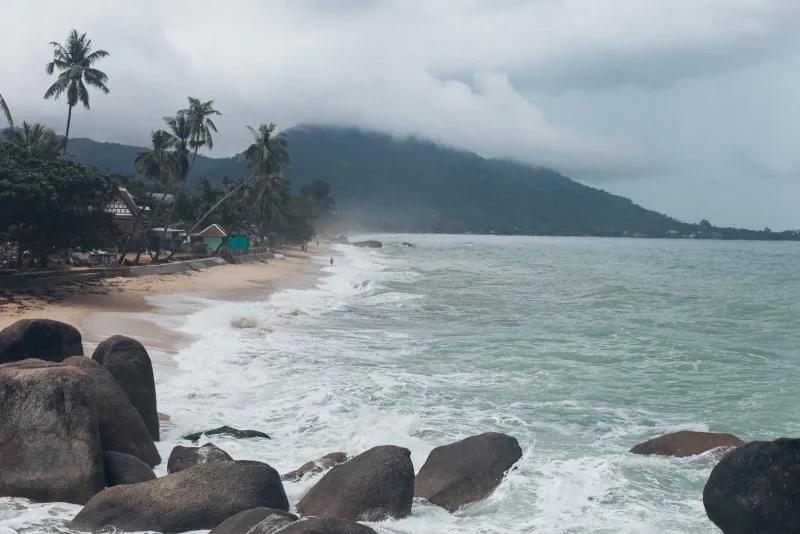
Also in Best Time to Visit Koh Samui
Koh Samui in January — Weather, Rain & Is It Worth It?
Koh Samui in January: 125 mm of rain over 8 days, 29.0°C highs, the coolest sea of the year at 28.0°C, and where prices fall once New Yea…
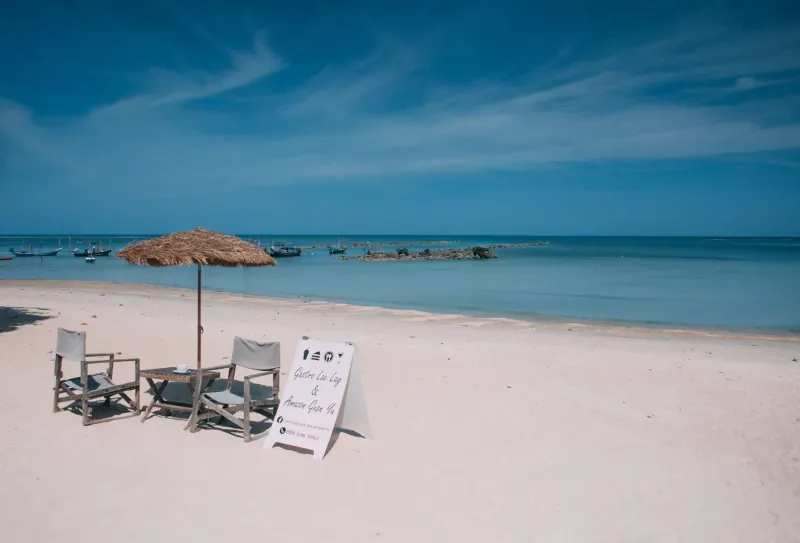
Also in Best Time to Visit Koh Samui
Koh Samui in July — Weather, Sea, Crowds & Is It Worth It?
Koh Samui in July: 32.3°C highs, 29.5°C sea, 115mm rain over 11 days, and peak European summer crowds.

Also in Best Time to Visit Koh Samui
Koh Samui in June — Weather, Sea, Crowds & Is It Worth It?
Koh Samui in June: 32.7°C highs, the year's warmest 30.0°C sea, 135mm rain over 10 days, and low-season prices while Phuket gets soaked.