Contents
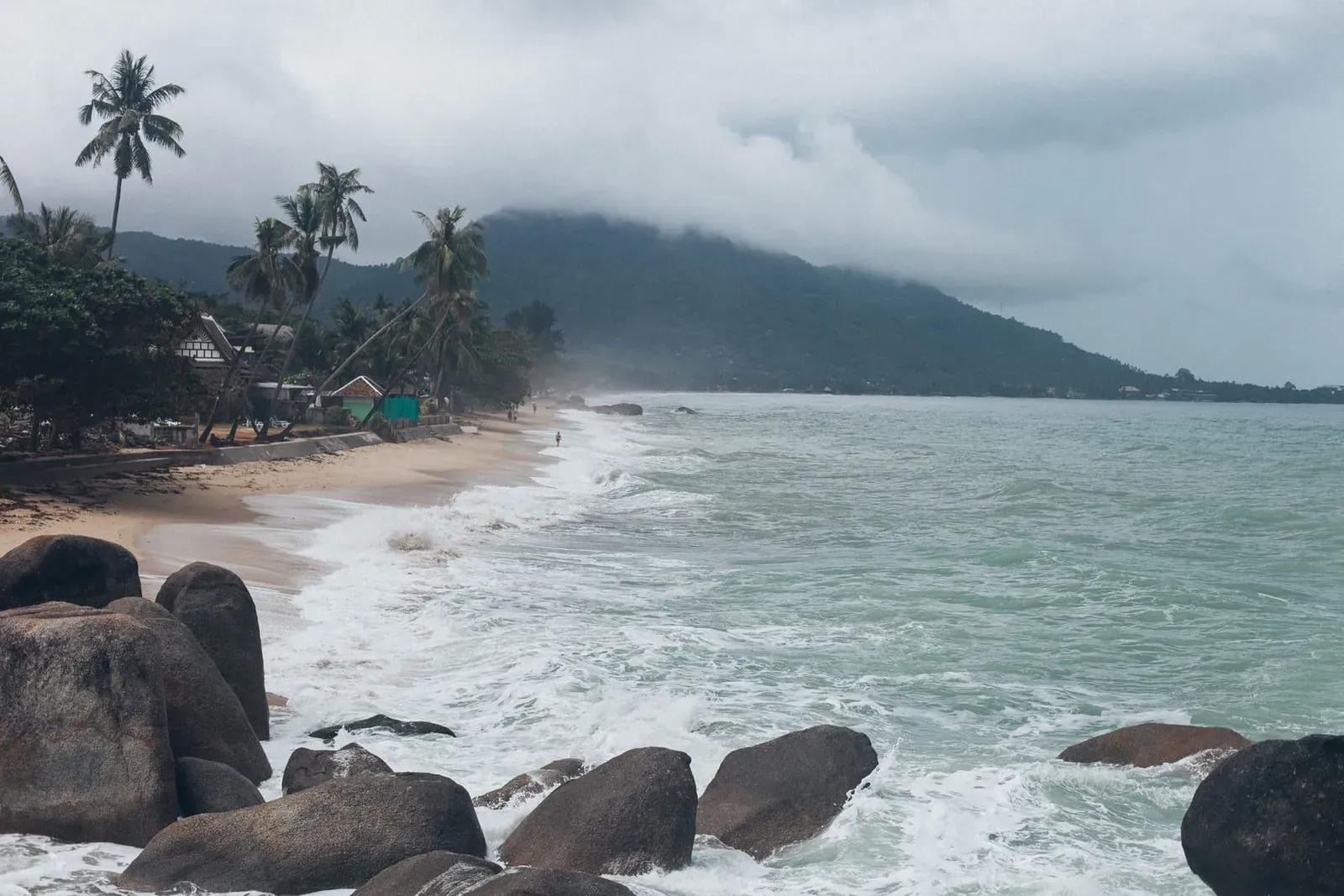
Is January a Good Time to Visit Koh Samui?
January is a good time to visit Koh Samui: rainfall drops to 125 mm across just 8 rain days, less than half of December’s 265 mm and 12 days, while sunshine climbs to 6.5 hours a day. Daytime highs top out at a comfortable 29.0°C — the lowest of the year — and the sea holds at its coolest, 28.0°C. The catch is the first week, when New Year crowds and prices are still close to their annual peak before easing fast.
Key takeaways
- Rain more than halves from December: 125 mm over 8 days vs. 265 mm over 12 days
- Coolest sea (28.0°C) and lowest max temperature (29.0°C) of the year — better for walking, temples and hiking than pure beach lounging
- Prices drop sharply once the first week of January passes and the New Year crowd disperses
- North-coast beaches (Maenam, Bophut, Bang Po) stay calm all month; the east coast is still choppy but improving
- Waterfalls and jungle trails are near their best, still fed by the tail end of the wet season

Koh Samui Weather in January — The Numbers
Koh Samui’s January climate sits between December’s leftover monsoon and February’s driest stretch, based on climatestotravel.com’s 1991-2020 climate normals, the same long-run station data referenced across this site’s best time to visit guide.
| Metric | December | January | February |
|---|---|---|---|
| Avg high | 29.3°C | 29.0°C | 29.4°C |
| Avg low | 24.0°C | 24.2°C | 24.9°C |
| Rainfall | 265 mm | 125 mm | 65 mm |
| Rain days | 12 | 8 | 4 |
| Sunshine | 5.5 h/day | 6.5 h/day | 7.5 h/day |
| Sea temperature | 28.5°C | 28.0°C | 28.5°C |
January is a genuine transition month: rain is already less than half of December’s total but hasn’t yet reached February’s near-dry 65 mm. It’s also the only month with both the year’s lowest average high and its coolest sea.
The Drying Trend — From December’s Rain to January’s Sunshine
The clearest fact about Koh Samui in January is the drying trend: rainfall falls from December’s 265 mm to January’s 125 mm, and rain days drop from 12 to 8, continuing the recovery that began once November’s 445 mm peak passed. For a one-week trip, that arithmetic matters more than the monthly total suggests — 8 rain days across 31 days works out to roughly one rain-affected afternoon in four, down from about one in 2.5 during December. Most of those days bring a short, heavy downpour rather than an all-day washout, so a typical week lands with one or two showers rather than a lost day.
This recovery is why Koh Samui’s dry season is usually described as running December through February, even though early December still carries real leftover weather. By January the northeast monsoon has largely spent itself — see the sea conditions by month guide for how that plays out coast by coast.
Coolest Sea, Lowest Heat — January’s Comfort Advantage
January is Koh Samui’s most physically comfortable month, not its warmest: the sea sits at 28.0°C, its coolest reading anywhere on the calendar, and the average high of 29.0°C is the lowest of the year. February edges both figures up slightly (28.5°C sea, 29.4°C high), which makes January the better pick for anything more strenuous than a lounger — walking Fisherman’s Village, climbing temple steps, or hiking without the extra half-degree that builds through February and March.
Underwater, the 2.0°C annual swing is barely noticeable once you’re swimming, per the sea temperature breakdown by month — but it is noticeable on land, especially mid-morning on an exposed trail or a shadeless temple courtyard. Choosing between January and February for pure beach time, the difference is negligible; for active days, lean January.
Best Beaches in January as the Monsoon Eases
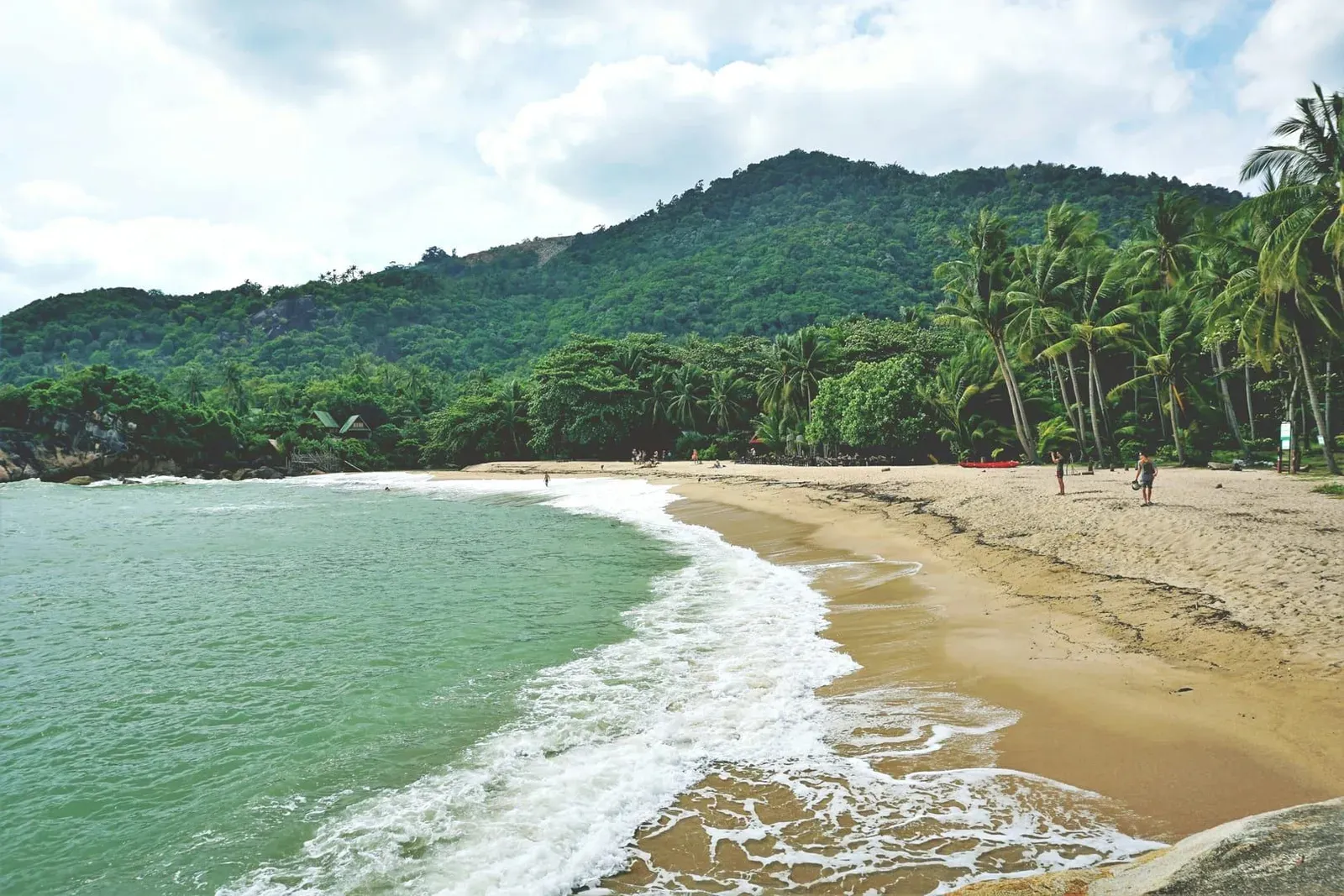
North-coast beaches are the best pick in January, per this site’s own sea conditions by month table, which rates the north coast “calm” every month including January. Maenam Beach and Bophut Beach sit sheltered from the last of the monsoon swell, while Bang Po Beach offers the same flat, shallow water along the same coast.
The east coast is still recovering: Chaweng Beach and Lamai Beach rate “choppy” rather than “rough” in January — the worst swell has passed, but the sea hasn’t fully settled, improving through February. For a first-week trip overlapping the New Year crowd, the north coast is both the calmer swim and the quieter beach; by late January, the east coast is a reasonable pick too.
Waterfalls, Hiking and Temples in January
Koh Samui’s waterfalls are close to their best in January, still running on water the wet season banked up. Na Muang Waterfalls and Hin Lad Waterfall are both fed by the October-January recharge window flagged in the best time to visit guide, and neither has thinned out yet the way both do by March-April.
Hiking is close to prime too: the Na Muang Waterfalls Trail and Hin Lad Waterfall Trail run green and well-watered, while shadeless viewpoint routes — the Monkey Trail and Overlap Stone Viewpoint — suit January’s cooler air better than the humid build-up of March-May. Start before 9am; paths can be muddy after a recent shower.
The same cooler highs make January strong for temples, which mean more time on open stone than a beach day does. Wat Phra Yai, home of the Big Buddha, and the Secret Buddha Garden up in the hills both involve stairs and limited shade — noticeably easier at 29.0°C than at April or May’s low-30s. The temples guide covers the full island list.

Events in January — New Year’s Hangover and the Next Full Moon
January’s event calendar is mostly the tail end of December’s celebrations. The Christmas and New Year guide covers the run-up in full — Chaweng’s countdown, gala dinners and their pricing — and that overlap runs into the first few days of January. Koh Phangan’s monthly Full Moon Party continues on its usual lunar schedule; confirm the exact date on the official schedule before booking a transfer.
Outside that overlap, January is quiet for island-wide events — no Songkran, no regatta, no Loy Krathong — good for dry-season weather without an extra festival on top of the New Year rush.
Prices and Crowds — Why Week Two Changes Everything
Koh Samui’s January prices follow a sharp curve, not a flat “high season” line. The Christmas and New Year guide documents rooms running 2-3x normal rates through the holiday fortnight, with 3-7 night minimum stays — pricing that holds through the first several days of January before dropping fast once that wave checks out.
By the second week, rates at most mid-range and beachfront properties fall back toward the broader December-February peak-season band rather than the New Year spike — elevated versus the shoulder months, but no longer double or triple. Crowds thin the same way: beaches and boat trips that felt packed on 1 January are noticeably quieter by 10-14 January. Book after the second week for calmer beaches and a smaller bill while keeping January’s dry weather. The when to book guide has the fuller timeline; the trip cost guide breaks down what a January week runs across budget tiers.
What to Pack for Koh Samui in January
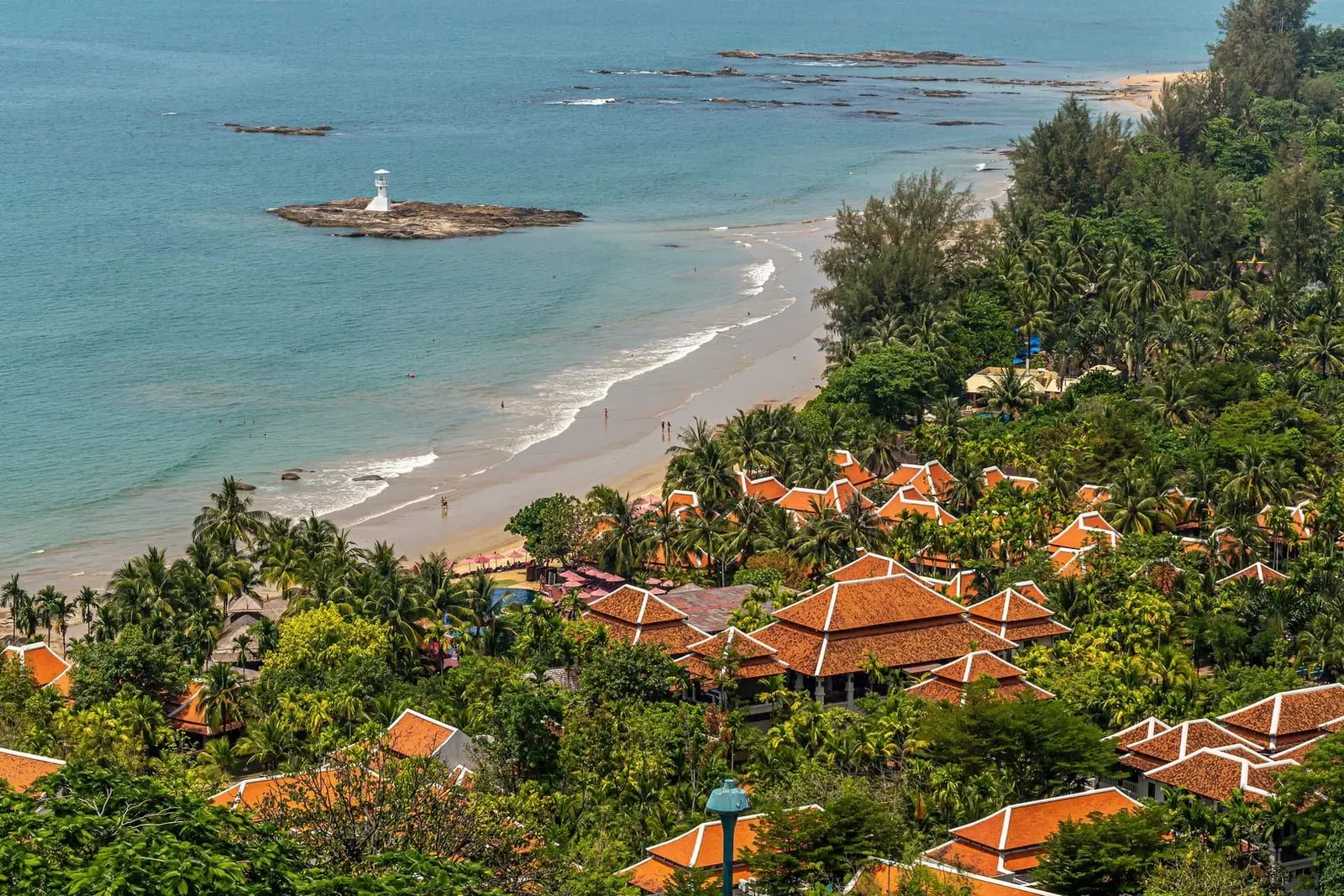
Pack for warm days and slightly cooler evenings: a light layer still helps after dark or on an open-deck boat, since January’s breeze feels sharper against the year’s lowest air and sea temperatures. Reef-safe sunscreen and a hat stay essential — UV is strong under January’s clearer skies. Keep a packable rain jacket for the odd downpour, needed far less often than in November or December. The packing list guide covers the rest of a standard kit.
December, January or February — Which Should You Pick?
All three sit inside the dry season, each with a different trade-off. December carries real leftover rain in its first half and the year’s highest prices throughout. February is driest and sunniest, but its extra half-degree of heat suits hiking and temples slightly less. January lands in between: drier and sunnier than December, cooler and calmer underfoot than February, with a price break for anyone booking after the first week. The full year-round breakdown is in the best time to visit guide.
FAQ
Is January a good month to visit Koh Samui?
Yes. January combines low rainfall (125 mm over 8 days), the year’s coolest sea (28.0°C) and lowest daytime high (29.0°C), and calm north-coast beaches. The only drawback is the first week, when New Year prices and crowds are still close to their annual peak before dropping fast.
Does it rain a lot in Koh Samui in January?
Less than the previous two months. January averages 125 mm of rain over 8 days, down from December’s 265 mm over 12 days and well below November’s 445 mm peak. Most rain falls as short, heavy afternoon showers rather than all-day rain, so a typical week sees one or two affected days.
Is the sea warm enough to swim in Koh Samui in January?
Yes. January’s sea temperature of 28.0°C is the coolest of the year but still warm enough to swim comfortably — the annual swing is only about 2°C. Wave state matters more than temperature: north-coast beaches like Maenam and Bophut stay calm, while the east coast is still choppy but improving.
When do Koh Samui prices drop after New Year?
Prices typically hold near their New Year peak through the first week of January, then fall back toward the broader December-February peak-season range once that crowd checks out — usually noticeable by 10-14 January. Beaches and restaurants quiet down on a similar timeline.
Is January better than February for Koh Samui?
It depends on the priority. February is drier and sunnier, with slightly warmer air and sea. January is cooler, which suits hiking, temple visits and walking more than February’s extra heat, and offers a clearer price drop once the first week passes. Both sit inside the same dry season and rarely disappoint.
Are Koh Samui’s waterfalls flowing in January?
Yes, and better than they will be by March or April. Na Muang Waterfalls and Hin Lad Waterfall are still fed by the October-January recharge window, before the dry season drains the interior through the following months.
Published on
About the author

Mike Brochlowski
Travel photographer & writer
Travel photographer and island explorer. Mike has spent years documenting Southeast Asia's hidden gems, from secluded beaches to jungle waterfalls.
Articles by Mike →More in Weather
Also in Best Time to Visit Koh Samui
Koh Samui in July — Weather, Sea, Crowds & Is It Worth It?
Koh Samui in July: 32.3°C highs, 29.5°C sea, 115mm rain over 11 days, and peak European summer crowds.
Also in Best Time to Visit Koh Samui
Koh Samui in June — Weather, Sea, Crowds & Is It Worth It?
Koh Samui in June: 32.7°C highs, the year's warmest 30.0°C sea, 135mm rain over 10 days, and low-season prices while Phuket gets soaked.
Also in Best Time to Visit Koh Samui
Koh Samui in March — Weather, Sea, Crowds & Is It Worth It?
Koh Samui in March: 115mm of rain over just 5 days, 30.4°C highs, 7.5 sun hours and a 29°C sea — the last comfortable month before April'…