Contents
Is Koh Samui Good to Visit in Summer (June to August)?
Yes — Koh Samui is one of Thailand’s better beach picks for June, July and August. The island sits on the Gulf of Thailand side, out of reach of the southwest monsoon that soaks the Andaman coast in these months, so Samui gets roughly 350 mm of rain across June-August against Phuket’s ~725 mm over the same stretch. Daytime highs run 32.3-32.7°C, the sea stays a warm 29.5-30°C, and mornings are usually clear enough for a full beach day before any afternoon shower rolls in.
Key takeaways
- Koh Samui: ~350 mm rain, 31 rain days across Jun-Aug. Phuket: ~725 mm, 53 rain days over the same months
- Gulf side (Samui, Koh Phangan, Koh Tao) stays dry-ish June-August; Andaman side (Phuket, Krabi, Koh Lanta) is in its wettest stretch
- East coast beaches — Chaweng, Lamai, Choeng Mon — sit at their calmest of the year in summer
- July and August bring a mid-year mini-peak in crowds and prices, driven by European school holidays, not weather
- Box jellyfish risk starts climbing from June — check posted flags before swimming
Koh Samui vs Phuket Rainfall — June to August
Koh Samui gets roughly half the rain Phuket does across June, July and August, the clearest data-backed reason to pick the Gulf side for a European summer trip. Both islands sit in the same country under different monsoon systems, so the gap isn’t small — it holds across all three months, not just one lucky one.
| Month | Koh Samui rain | Koh Samui rain days | Phuket rain | Phuket rain days |
|---|---|---|---|---|
| June | 135 mm | 10 | 265 mm | 19 |
| July | 115 mm | 11 | 215 mm | 17 |
| August | 100 mm | 10 | 245 mm | 17 |
| Jun-Aug total | 350 mm | 31 | 725 mm | 53 |
Figures combine this site’s own weather data, sourced from Climates to Travel’s Koh Samui climate normals (1991-2020, checked Sep 2026), with Climates to Travel’s Phuket climate normals for the Andaman-side comparison. Phuket logs more than 20 rain days a month through summer; Koh Samui stays at 10-11. Neither island is bone-dry in this window — Samui still gets a shower most weeks — but Samui’s rain arrives in shorter, less frequent bursts.
Why the Gulf Coast Stays Dry While the Andaman Coast Gets Wet
Thailand’s summer rain pattern is driven by the southwest monsoon, which runs roughly May through October and hits the Andaman coast first. Moisture-laden air blows in off the Indian Ocean and dumps most of its rain on Phuket, Krabi and Koh Lanta before it crosses Thailand’s mainland spine. By the time that same system reaches the Gulf of Thailand — where Koh Samui, Koh Phangan and Koh Tao sit — it has already lost much of its punch, leaving the Gulf islands comparatively dry through June, July and August.
This is the reverse of what happens later in the year. From October through December, the northeast monsoon flips the pattern: it picks up moisture over the South China Sea and dumps it on the Gulf coast instead, making October-November Samui’s wettest stretch while Phuket dries out and enters its own high season. This site’s rainy season guide covers that October-December window in more detail — worth checking if you’re weighing a Gulf-coast trip any later in the year than August.

Koh Samui in June, July and August — Month by Month
Rainfall barely moves across Koh Samui’s summer, but sea temperature, crowd levels and rain-day frequency each shift slightly month to month.
June
June is the wettest of the three summer months by volume — 135 mm across 10 rain days — but also the start of the season’s calmest seas, at 30.0°C. Daytime highs peak at 32.7°C, the warmest of the summer. Crowds are still moderate; the European school-holiday rush hasn’t started yet, so hotel rates sit closer to shoulder-season pricing.
July
July brings the most rain days (11) but the least total volume (115 mm) — expect more frequent, shorter showers rather than sustained downpours. Sea temperature eases slightly to 29.5°C. This is when European summer holidays begin filling rooms, so book beachfront hotels in Chaweng or Choeng Mon a few weeks ahead if travelling in the back half of the month.
August
August is the driest of the three months at 100 mm of rain across 10 days, and typically the busiest — it overlaps fully with European school summer. Highs hold at 32.4°C and sea temperature stays at 29.5°C. Expect the fullest beaches and highest room rates of the June-August window, though still well short of the December-January peak.
Crowds and Prices — The Mid-Year Mini-Peak
July and August bring Koh Samui’s mid-year mini-peak in crowds and prices, driven by European school-summer travel rather than weather — the island’s own best-time-to-visit crowd and price index rates both months “medium-high,” a step above June’s “medium” and well below the December-January “very high” peak. Expect hotel rates to run noticeably above the September-October low season, though still cheaper than Christmas and New Year.
This is an editorial estimate based on general Gulf-of-Thailand tourism seasonality, not an official occupancy index — treat it as a planning signal, not a guaranteed price. Families travelling specifically during the European summer break should book beachfront rooms in Chaweng, Choeng Mon or Bophut a few weeks ahead in July-August; last-minute availability tightens compared with the quieter shoulder months either side.
Sea Conditions on the East Coast in Summer
Koh Samui’s east coast — Chaweng and Lamai — sits at its calmest of the year through June, July and August, according to this site’s sea conditions by month guide. With the northeast monsoon still months away, the swell that roughens these beaches from September through November hasn’t arrived, making summer a genuine best-east-coast window: quieter and cheaper than the December-February peak, without the rough surf that shows up later in the year.
It isn’t calm everywhere, though. The southwest monsoon still reaches Samui as wind and chop on the island’s south and west coasts — Lipa Noi and Taling Ngam pick up more afternoon ripple from May through September, even while rainfall stays low. Pick an east- or north-coast base for the calmest summer swimming, and check the sea conditions guide’s full coast-by-coast table before booking a south- or west-facing hotel for July or August.
Best Koh Samui Beaches for a Summer Trip
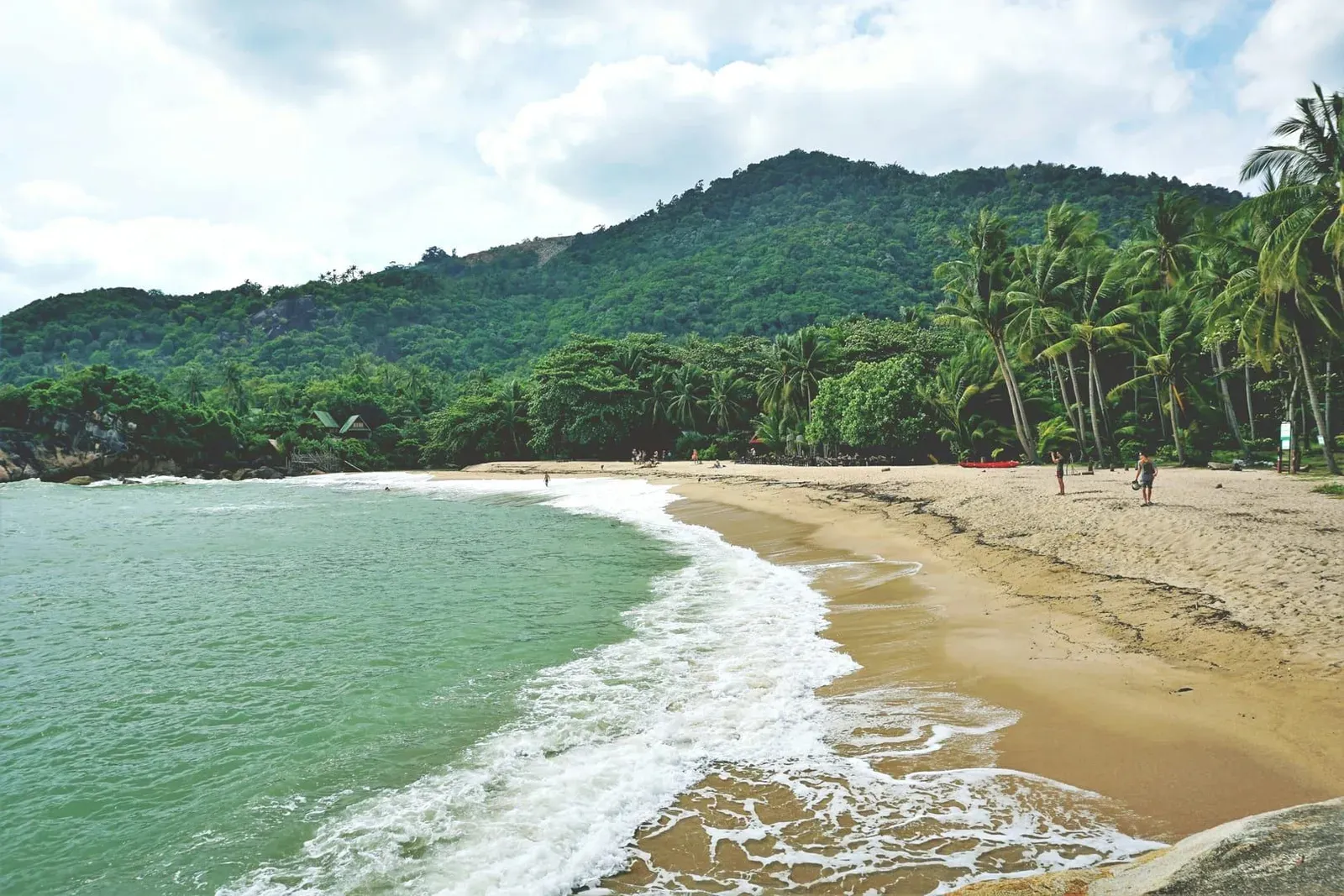
Four beaches suit the June-August window particularly well, based on this site’s own beach-by-beach seasonal notes:
- Chaweng Beach — the island’s main strip stays calm through summer, with the full range of restaurants, bars and shops open for a mid-year trip.
- Lamai Beach — Samui’s second-biggest beach, also calm through August, with a quieter, more local feel than Chaweng.
- Choeng Mon Beach — a sheltered, family-friendly bay on the northeast tip, a good pick for parents travelling during the July-August school-holiday window.
- Bophut Beach — a north-coast backup that stays calm essentially year-round, useful if a rare heavy shower rolls in and you want the most reliably swimmable water on the island.
One honest caveat for summer specifically: box jellyfish risk starts climbing in June and stays elevated through the rest of the year, per this site’s jellyfish guide. Check the flags posted at staffed beaches before swimming, especially at Chaweng and Lamai.
What to Do in Koh Samui in Summer
Morning is the best window for water activities in summer, before any afternoon shower builds. The island’s snorkeling spots are in reasonable shape through June-August — visibility is a notch below the December-February dry-season peak, but calm east-coast seas make for easy access straight off the beach at Chaweng and Choeng Mon, or by boat trip further afield. Book snorkeling and day trips for the morning where possible, both for water clarity and to dodge any midday buildup of cloud.
Summer is also a solid window for the island’s wider day trips — Ang Thong National Marine Park, Koh Tao and Koh Phangan all run more reliably now than during the rougher October-November stretch, though operators can still delay a departure if a squall passes through. Building a flexible morning-departure day trip into a June-August itinerary, rather than a tightly fixed one, avoids most weather-related disappointment.
What to Pack for Koh Samui in Summer
Pack for heat and humidity first, rain second. Daytime highs of 32-33°C with high humidity make lightweight, breathable clothing the priority; a compact umbrella or packable rain jacket covers the short afternoon showers that do turn up most weeks. Reef-safe sunscreen matters year-round, but especially now — UV stays strong even under summer’s occasional cloud cover. Water shoes help on the rockier stretches of the east coast, and a dry bag is worth carrying on any day-trip boat in case of a passing shower offshore.
For the full year-round packing rundown, see the Koh Samui packing list. Once your dates are set, the Koh Samui itinerary guide helps plan the days, and getting around covers scooter and car rental for exploring beyond the beach.

FAQ
Is Koh Samui dry in the summer?
Comparatively, yes. Koh Samui gets roughly 350 mm of rain across June-August, against Phuket’s ~725 mm over the same months, because the southwest monsoon soaks the Andaman coast before it reaches the Gulf side. Samui still gets some rain most weeks in summer, but showers tend to be shorter and less frequent than on Thailand’s west coast.
Is Koh Samui better than Phuket in July and August?
For weather, generally yes. Koh Samui logs about half of Phuket’s June-August rainfall and roughly 20 fewer rain days over the same stretch, based on climate normals from Climates to Travel. Phuket still has plenty to offer beyond weather, but a traveler prioritizing sun in July or August gets better odds on the Gulf side.
What is the weather like in Koh Samui in June?
June is Koh Samui’s wettest summer month by volume, at 135 mm of rain across 10 days, with daytime highs around 32.7°C and sea temperature at a warm 30.0°C. Mornings are usually clear; short afternoon showers are the main weather event most weeks, rather than sustained all-day rain.
Are the beaches crowded in Koh Samui in August?
August is Koh Samui’s busiest summer month, driven by European school-holiday travel rather than weather. Crowd and price levels sit “medium-high,” below the December-January peak but noticeably busier than the quieter September-October shoulder season. Booking beachfront hotels a few weeks ahead is worth it for an August trip.
Is it safe to swim in Koh Samui in summer?
Yes, with one seasonal caveat. Sea conditions are among the calmest of the year on the east coast in June-August, and sea temperature sits at a comfortable 29.5-30°C. Box jellyfish risk, however, starts climbing from June onward — check posted flags at staffed beaches like Chaweng and Lamai before swimming.
Published on
About the author

Mike Brochlowski
Travel photographer & writer
Travel photographer and island explorer. Mike has spent years documenting Southeast Asia's hidden gems, from secluded beaches to jungle waterfalls.
Articles by Mike →More in Travel Guides
Also in Best Time to Visit Koh Samui
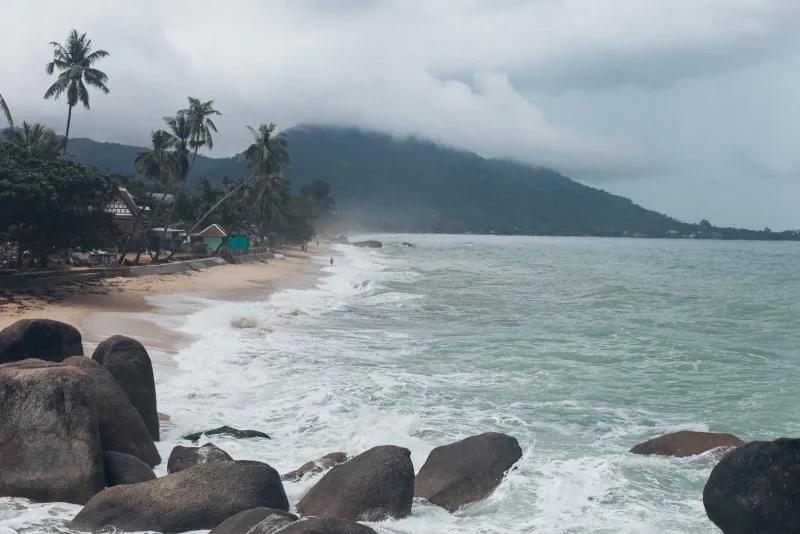
Koh Samui in January — Weather, Rain & Is It Worth It?
Koh Samui in January: 125 mm of rain over 8 days, 29.0°C highs, the coolest sea of the year at 28.0°C, and where prices fall once New Yea…
Also in Best Time to Visit Koh Samui
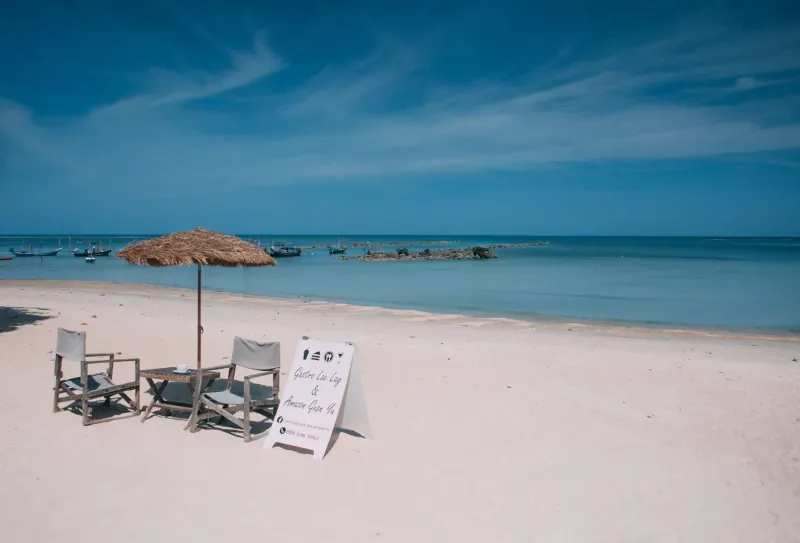
Koh Samui in July — Weather, Sea, Crowds & Is It Worth It?
Koh Samui in July: 32.3°C highs, 29.5°C sea, 115mm rain over 11 days, and peak European summer crowds.
Also in Best Time to Visit Koh Samui
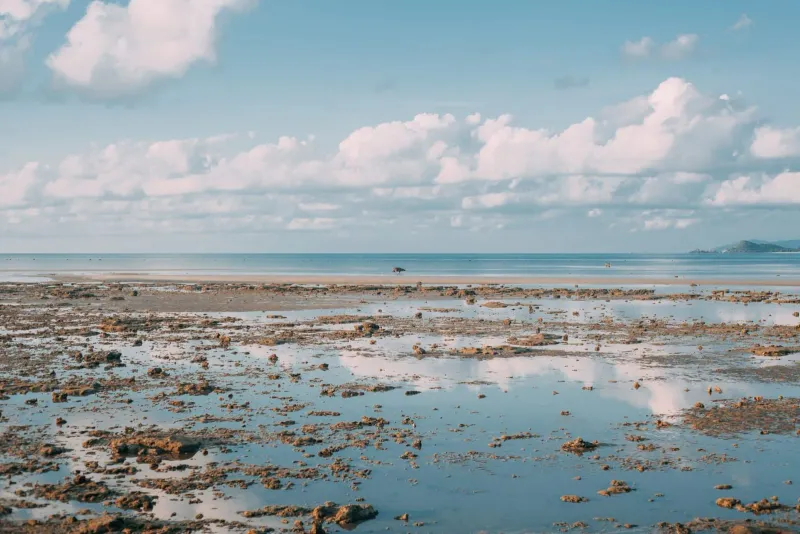
Koh Samui in June — Weather, Sea, Crowds & Is It Worth It?
Koh Samui in June: 32.7°C highs, the year's warmest 30.0°C sea, 135mm rain over 10 days, and low-season prices while Phuket gets soaked.