Contents
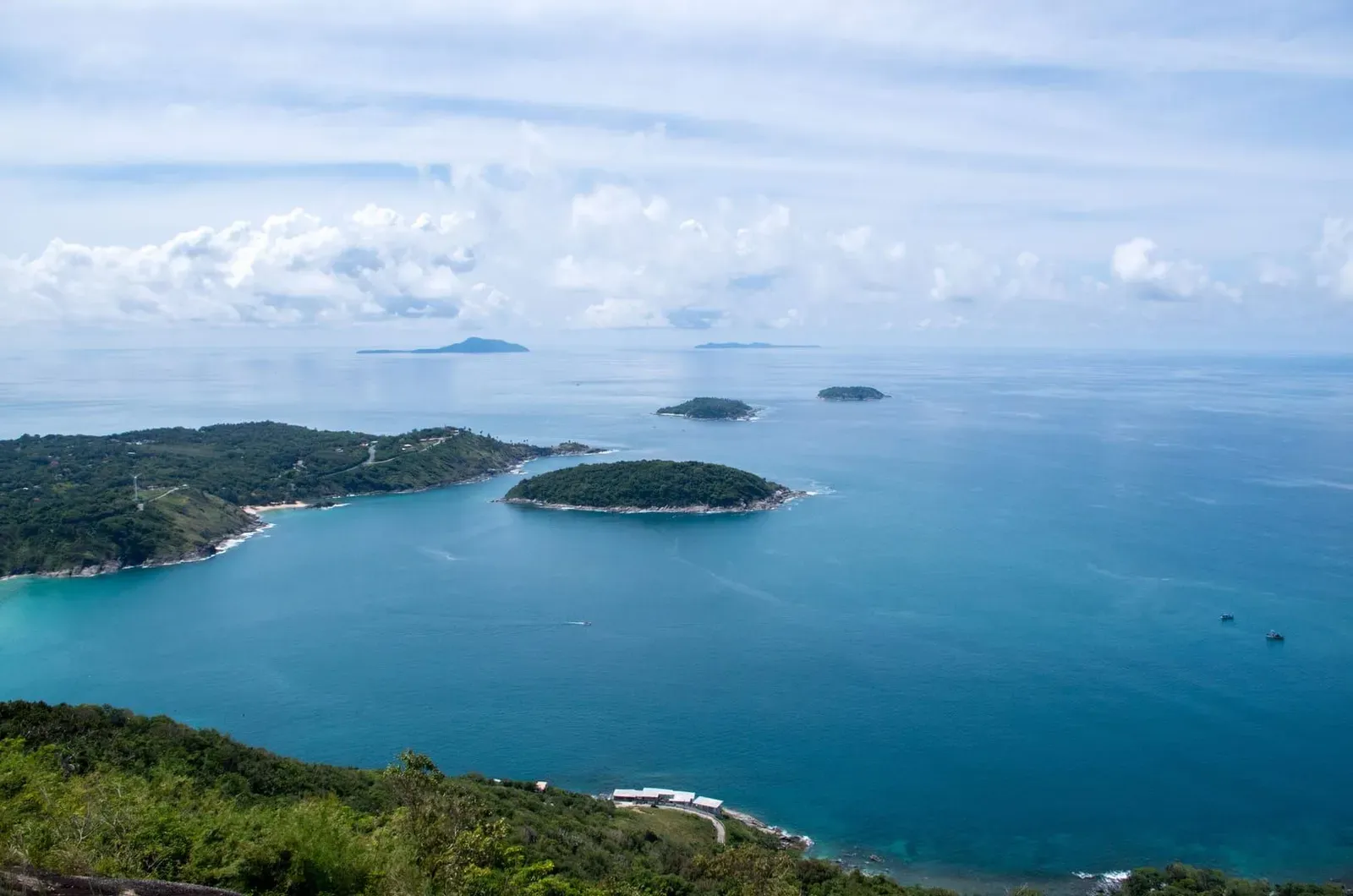
Koh Samui and Phuket sit on opposite coasts of southern Thailand and answer to opposite monsoon systems, which matters more than either island’s postcard looks. Phuket is roughly 576 km2 with its own dense road network, 71 international flight routes, and Thailand’s most famous nightlife strip. Koh Samui is 228 km2, quieter, and only reachable by direct flight from a handful of Asian hubs. Pick Samui for a calmer, smaller trip with an easier airport; pick Phuket for more nightlife, more day-trip variety, and cheaper flights from more of the world.
Key takeaways
- Opposite rain seasons: Phuket’s Andaman coast gets soaked May-October; Samui’s Gulf coast gets soaked October-December. Check the calendar before the coastline.
- Opposite scale: Phuket is about 2.5x the land area of Samui, with 6x the population and far more traffic.
- Phuket wins on flight choice, nightlife variety, and day-trip range (Phi Phi, James Bond Island, Similan).
- Samui wins on calmer seas for young kids, a smaller and less congested road network, and a more boutique hotel scene.
- Both islands cost roughly the same per day once you’re there — the real cost gap is in getting to them.
The Verdict — Why This Isn’t About Which Island Is Prettier
Koh Samui and Phuket are both beautiful, and arguing over which beach is nicer misses the decision that actually matters: their weather calendars run in opposite directions. Phuket faces the Andaman Sea and takes the full southwest monsoon from May to October, peaking in September. Samui faces the Gulf of Thailand and stays comparatively dry through that same window, then gets hit by the northeast monsoon from October to December. Book the wrong island for the wrong month and you can lose several days to rain regardless of how good the beaches are on paper. Beyond weather, the second real difference is scale: Phuket is a small province with a real city, an international airport serving dozens of countries, and Thailand’s biggest nightlife street. Samui is a smaller, calmer island with one boutique airport and a more contained, resort-driven pace. Neither island is objectively “better” — Phuket wins on variety and access, Samui wins on ease and calm.
Koh Samui vs Phuket at a Glance
| Criterion | Koh Samui | Phuket |
|---|---|---|
| Size | ~228 km2 | ~576 km2 (~2.5x larger) |
| Population | ~65,000 | ~415,000 |
| Flight access | Direct flights from Bangkok, a few regional Asian hubs; own boutique airport (USM) | 71 non-stop routes across 35 countries, including long-haul to London |
| Flight cost from Bangkok | ~2,500 THB (~71 USD) one-way, Bangkok Airways | Often cheaper and more competitive — multiple airlines including budget carriers |
| Rain season | October-December (northeast monsoon), peaks November | May-October (southwest monsoon), peaks September |
| Beach character | Calmer water, gentler slope, fewer big-wave days | More variety — from busy Patong to quiet Kamala — but rougher June-October |
| Nightlife | Contained, wraps up by ~2am, centered on Chaweng/Lamai | Thailand’s biggest strip (Bangla Road, Patong), runs later, far more variety |
| Family fit | Calmer seas favor young kids and weak swimmers | More kid-focused attractions and facilities, but rougher seas in low season |
| Daily prices | Budget ~1,200-2,000 THB/day; similar mid-range | Budget slightly cheaper (~1,500 THB/day), more ultra-budget hotel stock |
| Day trips | Ang Thong Marine Park, Koh Tao, Koh Phangan | Phi Phi Islands, James Bond Island, Similan Islands (seasonal) |
| Getting around | Simpler road layout, less traffic, shorter distances | Larger island, real traffic jams, longer transfer times |
Size and Scale
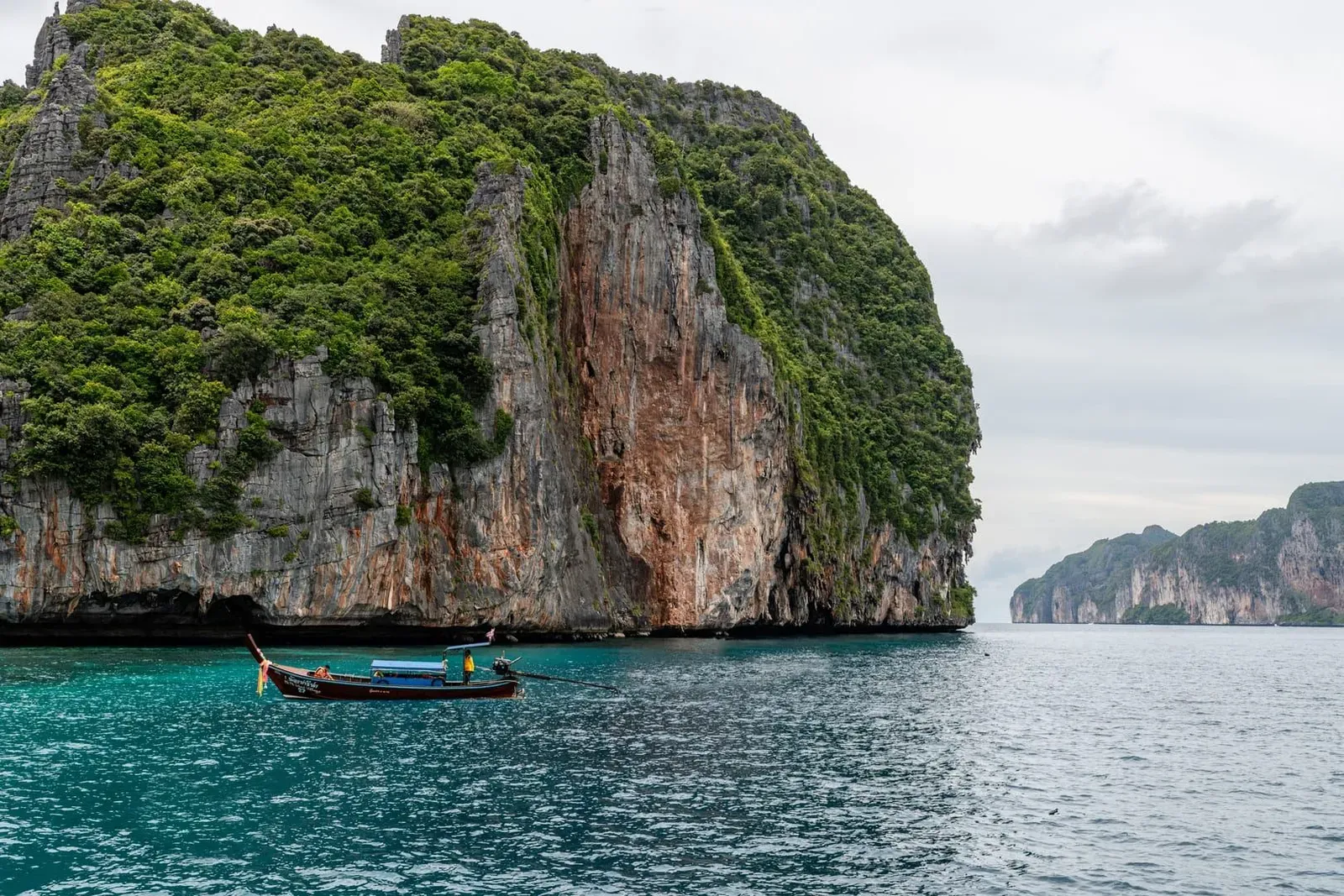
Phuket is Thailand’s largest island at roughly 576 km2, while Koh Samui, the country’s second largest, covers about 228 km2 — Phuket wins this category by sheer numbers, being about 2.5 times bigger. That size difference shows up everywhere in daily life on the ground: Phuket has a real city (Phuket Town), six-figure permanent population (~415,000 versus Samui’s ~65,000), and a road network built for that density. Samui’s smaller footprint means shorter drives between beaches, a more walkable feel in areas like Chaweng and Bophut’s Fisherman’s Village, and a sense that you can “see the whole island” in a day of exploring. Bigger isn’t automatically better here — it depends whether you want variety (Phuket) or compactness (Samui).
Flights and Getting There
Phuket International Airport (HKT) runs about 71 non-stop routes to 35 countries, including long-haul service to destinations like London, plus dense regional connections across Asia — a genuinely international gateway. Koh Samui Airport (USM) is smaller and privately owned by Bangkok Airways, with direct flights concentrated on Bangkok (about 17-18 daily departures) and a handful of regional hubs; see the full how to get to Koh Samui guide for every route from Bangkok. In practice this means travelers coming from Europe, Australia, or elsewhere in Asia often find more direct options and lower fares into Phuket, while Samui usually means a connection through Bangkok or another regional hub. If you’re weighing both islands on one trip, a direct flight between them runs about 55 minutes on Thai Airways, Bangkok Airways, or Qatar Airways, with one-way fares typically 2,000-6,500 THB (~57-186 USD) depending on how far ahead you book — see the Phuket/Krabi to Koh Samui guide for the overland alternative.
Rain Seasons — the Opposite Monsoon Problem
This is the single fact that should drive your island choice more than beaches or nightlife: Phuket and Koh Samui sit on opposite coasts and answer to opposite monsoon systems. Phuket faces the Andaman Sea (Indian Ocean side) and takes the full force of the southwest monsoon roughly May through October, peaking in September with rough surf, red-flag days, and the Similan Islands closed to boats entirely (May 16-October 14). Koh Samui faces the Gulf of Thailand and is sheltered from that southwest system, so it stays comparatively dry through the same months — see the full best time to visit guide for Samui’s month-by-month rainfall. Samui’s own wet season runs the other way, October through December, driven by the northeast monsoon crossing the South China Sea, peaking in November at roughly 445 mm of rain over 16 rain days. The practical upshot: if you’re traveling June-September, Samui is the safer bet for dry weather; if you’re traveling November-March, Phuket is drying out into its own high season while Samui is either still wet (November) or in its best months (December onward).
Beach Character
Phuket wins on beach variety, with everything from Patong’s packed, activity-lined sand to Kata’s family-friendly surf bay, Karon’s long quiet 3.5 km stretch, and Kamala’s residential calm — a wider spread of moods within one island. Koh Samui’s beaches, including Chaweng, Maenam, and Lamai, tend toward calmer, gentler-sloping water because the Gulf side lacks Phuket’s exposure to Andaman swell, though Samui has fewer genuinely quiet options once you’re past the two or three flagship beaches. Sand quality is close between the islands — both have fine, light-colored stretches at their best beaches — but Phuket’s west-coast beaches (Karon, Surin) are known for a distinctive squeaky-fine sand texture that Samui’s beaches don’t quite match. Rough-water days are more common on Phuket’s exposed west coast during the June-October window, another reason the rain-season split above matters as much as which beach looks better in photos.
Nightlife
Phuket wins this category decisively. Patong’s Bangla Road is Thailand’s most famous nightlife strip — a roughly 500-meter stretch where nearly every building is a bar, go-go venue, or international-standard club, running from sunset well into the early hours, with quieter, more upscale scenes in Bang Tao and Surin for travelers who want cocktails without the chaos. Koh Samui’s nightlife centers on Chaweng and Lamai, with beach bars, fire shows, and the Green Mango cluster of open-air clubs — livelier than most people expect, but smaller in scale and generally winding down by around 2am rather than running till dawn. Samui does hold one nightlife card Phuket can’t match: quick ferry access to Koh Phangan’s Full Moon Party, a half-day trip rather than a flight.
Family Fit
Neither island is automatically the better family choice — it depends on what causes friction for your specific kids. Koh Samui’s Gulf-side water is calmer and more consistently safe for young children and weak swimmers, since it dodges Phuket’s rougher Andaman swell, especially June-October when red flags are common on exposed Phuket beaches. Phuket counters with more structured kid-focused infrastructure — family resorts, water parks, and a wider beach selection around Karon and Kata specifically built for families — plus its larger tourism economy means more organized kids’ activities overall. Samui’s smaller size and simpler road layout also mean less time stuck in a car with tired children; Phuket’s bigger, busier road network and rush-hour traffic around Patong Hill and Chalong Circle can eat into a family day. If calm, predictable water is the priority, lean Samui; if you want more organized activities and don’t mind more driving, Phuket edges ahead.
Prices
Once you’re actually on either island, day-to-day costs land in a similar range: budget travelers can get by on roughly 1,200-2,000 THB/day (~34-57 USD) on Samui versus about 1,500 THB/day (~43 USD) on Phuket, and mid-range comfort runs comparably on both — see the full Koh Samui trip cost guide for a detailed daily breakdown. The bigger cost gap sits in accommodation stock and getting there: Phuket has more genuine ultra-budget guesthouses (700-1,000 THB) and a wider spread of hostels, especially around Phuket Town and Rawai, while Samui’s mid-range and boutique hotel scene tends to offer stronger value per baht once you’re above the budget tier. Because Phuket’s airport serves so many more origin cities with competitive fares, total trip cost — flights included — often comes out lower for Phuket unless you’re already routing through Bangkok, where Samui’s direct connection is hard to beat.
Day Trips
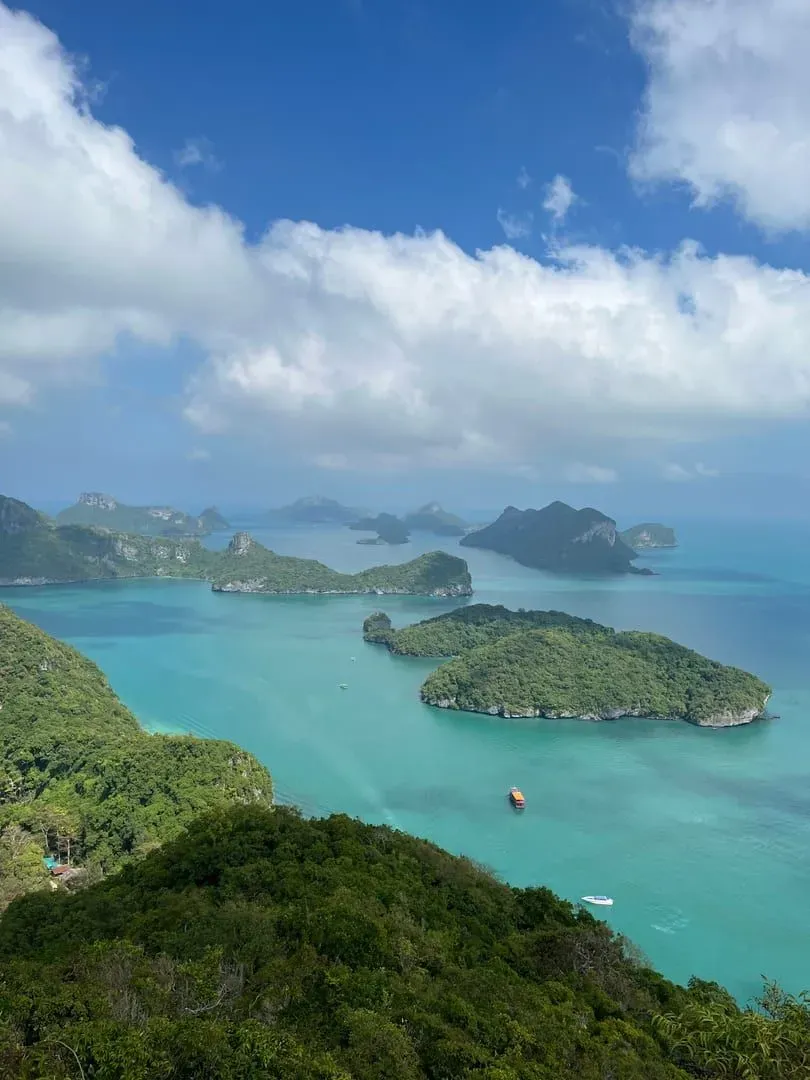
Phuket wins on day-trip variety and drama: Phi Phi Islands tours run roughly 1,400-2,400 THB (plus a 400 THB park fee), James Bond Island trips run 1,400-3,500 THB depending on boat type (plus a 300 THB park fee), and the Similan Islands — some of Thailand’s best diving and snorkeling — run 2,500-3,200 THB (plus a 500 THB park fee), though Similan closes annually May 16-October 14 for marine conservation. Koh Samui’s signature day trip is Ang Thong National Marine Park, a cluster of limestone islands with kayaking and a hike up to the Emerald Lake viewpoint, alongside ferry-accessible day trips to Koh Tao for diving and Koh Phangan for beaches — fewer options than Phuket, but each one is a shorter, calmer boat ride. Both islands run comparable half-day and full-day snorkeling trips in the 800-2,500 THB range; the real difference is that Phuket’s day-trip menu is longer and more varied, while Samui’s is smaller but easier to plan around.
Getting Around
Koh Samui’s smaller size and simpler ring-road layout make it genuinely easier to get around — most beaches sit within 20-30 minutes of each other, traffic is light outside Chaweng at peak times, and a scooter (200-300 THB/day) or taxi/Grab covers the island without much planning. Phuket is a different scale of driving: real rush-hour traffic at 8-9am and 5-7pm, frequent gridlock on the hill road between Phuket Town and Patong, and tuk-tuks that run unmetered flat fares (150-800 THB depending on distance) rather than Samui’s more predictable taxi-counter pricing — Grab is usually the cheaper, more transparent option on both islands. If minimizing transfer time and traffic stress matters to your trip, Samui’s compact layout is the easier island to navigate; if you want to island-hop between a dozen distinct beach towns in one trip, Phuket’s bigger network gives you more to explore per day, at the cost of more time in the car.
Pick This One If
Pick Koh Samui if: you want calmer water for young kids, a smaller island that’s easy to navigate without much driving, a direct flight from Bangkok, and a quieter, more contained nightlife scene — plus easy access to where to stay options across nine distinct areas.
Pick Phuket if: you’re flying from outside Asia and want more direct international routes, you want Thailand’s biggest nightlife strip, you want the widest menu of day trips (Phi Phi, James Bond Island, Similan), or you’re visiting June-September when Samui’s Gulf side is calmer but Phuket’s Andaman side is in full monsoon.
Do both: a short domestic flight (~55 minutes) or the overland bus-and-ferry route via Phuket/Krabi to Koh Samui connects them — some travelers base in Phuket for nightlife and day trips, then fly to Samui for a calmer final few days.
FAQ
Is Koh Samui or Phuket better for a first Thailand trip?
Both work well for first-timers. Koh Samui has an easier boutique airport and a calmer, more compact layout, while Phuket has more international flight routes and a bigger tourism infrastructure overall. If you’re flying from Europe or Australia, Phuket’s flight access usually tips the decision; if you’re routing through Bangkok, Samui’s direct connection is simpler.
Which is cheaper, Koh Samui or Phuket?
Day-to-day costs are similar: budget travelers spend roughly 1,200-2,000 THB/day (~34-57 USD) on Samui versus about 1,500 THB/day (~43 USD) on Phuket. Phuket has more ultra-budget hotel stock and often cheaper flights from more origin cities, making total trip cost slightly lower for many travelers.
Is Phuket or Koh Samui better for families with kids?
Koh Samui’s Gulf-side water is calmer and safer for young children, especially June-October when Phuket’s Andaman coast can be rough. Phuket offers more structured kid-focused resorts and activities, particularly around Karon and Kata. Choose Samui for calmer water, Phuket for more organized family infrastructure.
Can I visit both Koh Samui and Phuket in one trip?
Yes. A direct flight between them takes about 55 minutes and typically costs 2,000-6,500 THB (~57-186 USD) one-way. The overland bus-and-ferry route via Surat Thani/Donsak takes 7-9 hours and costs less — see the Phuket/Krabi to Koh Samui guide for the full comparison.
Does Koh Samui or Phuket have better nightlife?
Phuket, decisively. Patong’s Bangla Road is Thailand’s biggest nightlife strip, with hundreds of bars and clubs running past midnight. Koh Samui’s Chaweng and Lamai scene is smaller and more contained, generally wrapping up by around 2am, though Samui offers quick ferry access to Koh Phangan’s Full Moon Party.
When should I pick Koh Samui over Phuket for weather?
Pick Samui for trips June through September, when Phuket’s Andaman coast is deep in its southwest monsoon while Samui’s Gulf coast stays comparatively dry. Pick Phuket for trips December through February, when it’s in its dry season while Samui’s own wet season (October-December) may still be tailing off in early December.
Published on
About the author

Mike Brochlowski
Travel photographer & writer
Travel photographer and island explorer. Mike has spent years documenting Southeast Asia's hidden gems, from secluded beaches to jungle waterfalls.
Articles by Mike →More in Travel Guides
Also in Where to Stay in Koh Samui
Best Mid-Range Hotels in Koh Samui — €50–150 a Night (2026)
12 verified mid-range Koh Samui hotels, €50–150 (~1,800–5,500 THB) a night in 2026, by area — beach access, pools, honest price bands and…
Also in Where to Stay in Koh Samui
Bophut & Fisherman's Village — Guide to Samui's Prettiest Village
Bophut and Fisherman's Village on Koh Samui's north coast: Friday Walking Street, Coco Tam's, boutique hotels, and the best beach and foo…
Also in Where to Stay in Koh Samui
Bophut vs Maenam — Which North Coast Base Wins? (2026)
Bophut vs Maenam compared: beaches, prices, nightlife, long-term rentals and getting around Koh Samui's north coast, with a clear verdict…