Contents
Koh Samui is a 228 km2 island in the Gulf of Thailand; Krabi is a 4,708 km2 mainland province on the Andaman coast with island day trips bolted on, and the two run on opposite rain calendars. Krabi’s southwest monsoon soaks the province roughly May-October, peaking in September, while Samui’s Gulf side stays comparatively dry through that window and gets its own wet spell October-December instead. Pick Samui for a compact island trip with an easy direct-from-Bangkok airport and calmer water; pick Krabi for dramatic limestone scenery, world-class rock climbing, and easier overland or seasonal-charter access from outside Asia.
Key takeaways
- Opposite rain seasons: Krabi’s Andaman coast is soaked May-October, peaking September; Samui’s Gulf coast is wettest October-December, peaking November. Neither calendar overlaps much with the other’s worst months.
- Different shapes entirely: Samui is one island you fly or ferry to; Krabi is a mainland province where the “islands” (Railay, Koh Phi Phi) are day trips or boat-only extensions of the coast.
- Krabi wins on scenery drama, rock climbing, and budget backpacker costs.
- Samui wins on ease of access from Bangkok, calmer swimming water, and a livelier, more contained nightlife scene.
- Prices per day are close once you’re there; the bigger gap is which flights and seasons actually work for your dates.
The Verdict — One Is an Island, One Is a Coastline
Koh Samui and Krabi don’t really compete on the same axis, because they aren’t the same kind of place. Samui is a self-contained island: fly or ferry in, and every beach, waterfall, and viewpoint sits within a 20-40 minute drive of any hotel. Krabi is a mainland province with a jagged, cliff-lined coast — its most photographed “beaches,” Railay and Koh Phi Phi, are only reachable by boat even though they’re not technically their own islands or, in Phi Phi’s case, sit an hour offshore. That structural difference matters more than which one looks better in photos: Samui suits travelers who want to land, unpack once, and range out from a single base; Krabi suits travelers happy to island-hop by longtail boat and split a trip between a mainland base like Ao Nang and a beach town that has no roads at all. Weather is the second deciding factor, and it cuts the opposite way from what many first-time planners assume — see the season breakdown below before you book either one.
Koh Samui vs Krabi at a Glance
| Criterion | Koh Samui | Krabi |
|---|---|---|
| Landscape | Island, 228 km2, hills and coconut plantations | Mainland province, ~4,708 km2, dramatic limestone karst cliffs |
| Population | ~65,000 | ~440,000 (whole province) |
| Scenery | Green hills, curved bays, one long ring road | Sheer limestone towers, mangroves, hidden lagoons |
| Beaches | Chaweng, Lamai, Maenam — all road-accessible | Ao Nang (road), Railay and Koh Phi Phi (boat-only) |
| Weather season | Wettest Oct-Dec (peak Nov); calmer Jun-Aug | Wettest May-Oct (peak Sep); dry and busiest Dec-Feb |
| Nightlife | Chaweng/Lamai bar strips, Full Moon Party a short ferry away | Ao Nang night market and beach bars; quieter overall |
| Daily budget | ~1,200-2,000 THB (~34-57 USD) | ~900-1,400 THB (~26-40 USD), cheaper backpacker floor |
| Getting there | Direct flight from Bangkok (~1h), own boutique airport | Direct flight from Bangkok or Krabi flight from Samui (~50 min); overland via Surat Thani |
| Signature activity | Ang Thong Marine Park boat trip | Rock climbing at Railay/Tonsai, 4 Islands longtail tour |
| Best for | Calm-water families, first Bangkok-routed trip, contained nightlife | Climbers, scenery-first travelers, tight budgets |
Scenery and Landscape
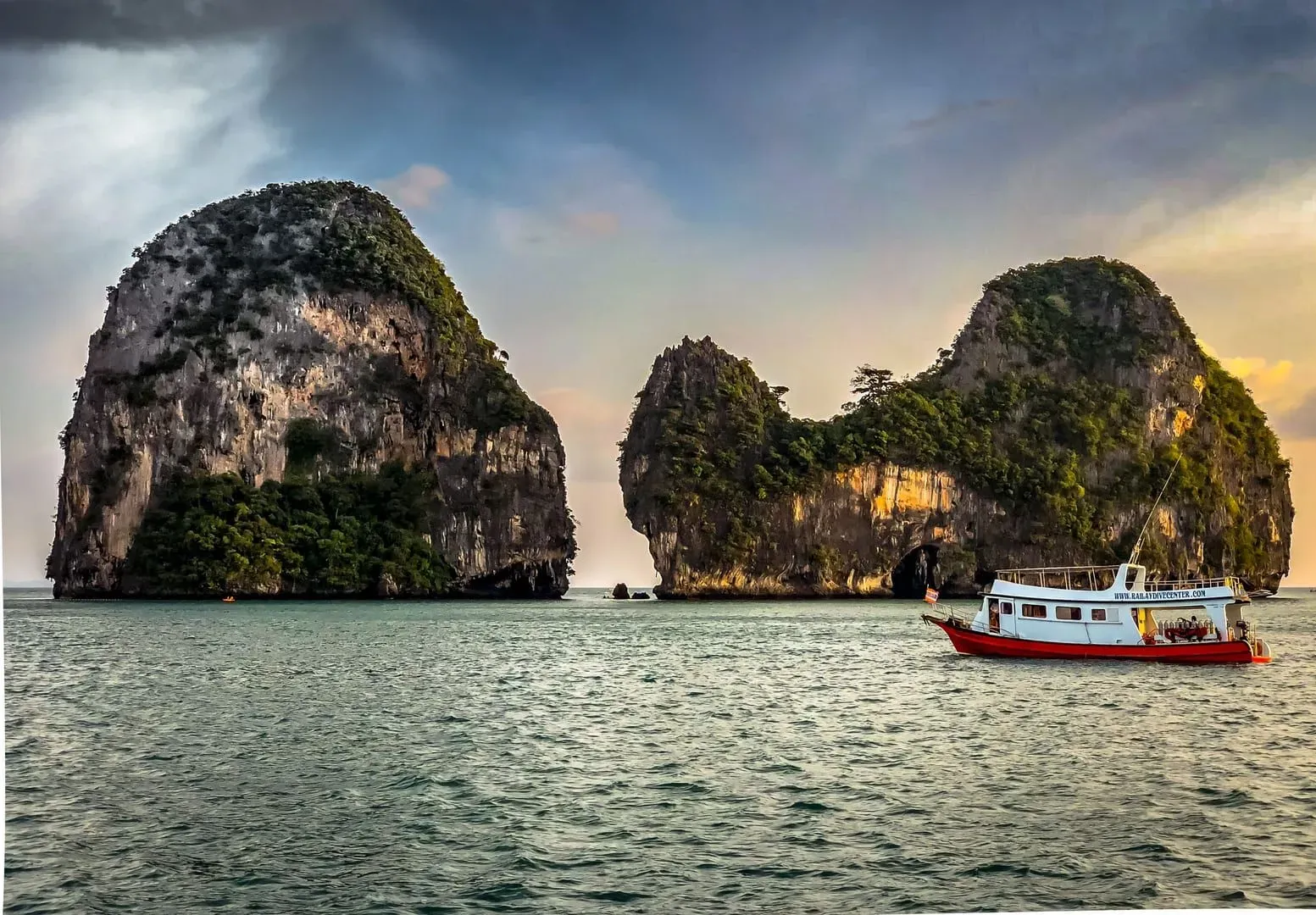
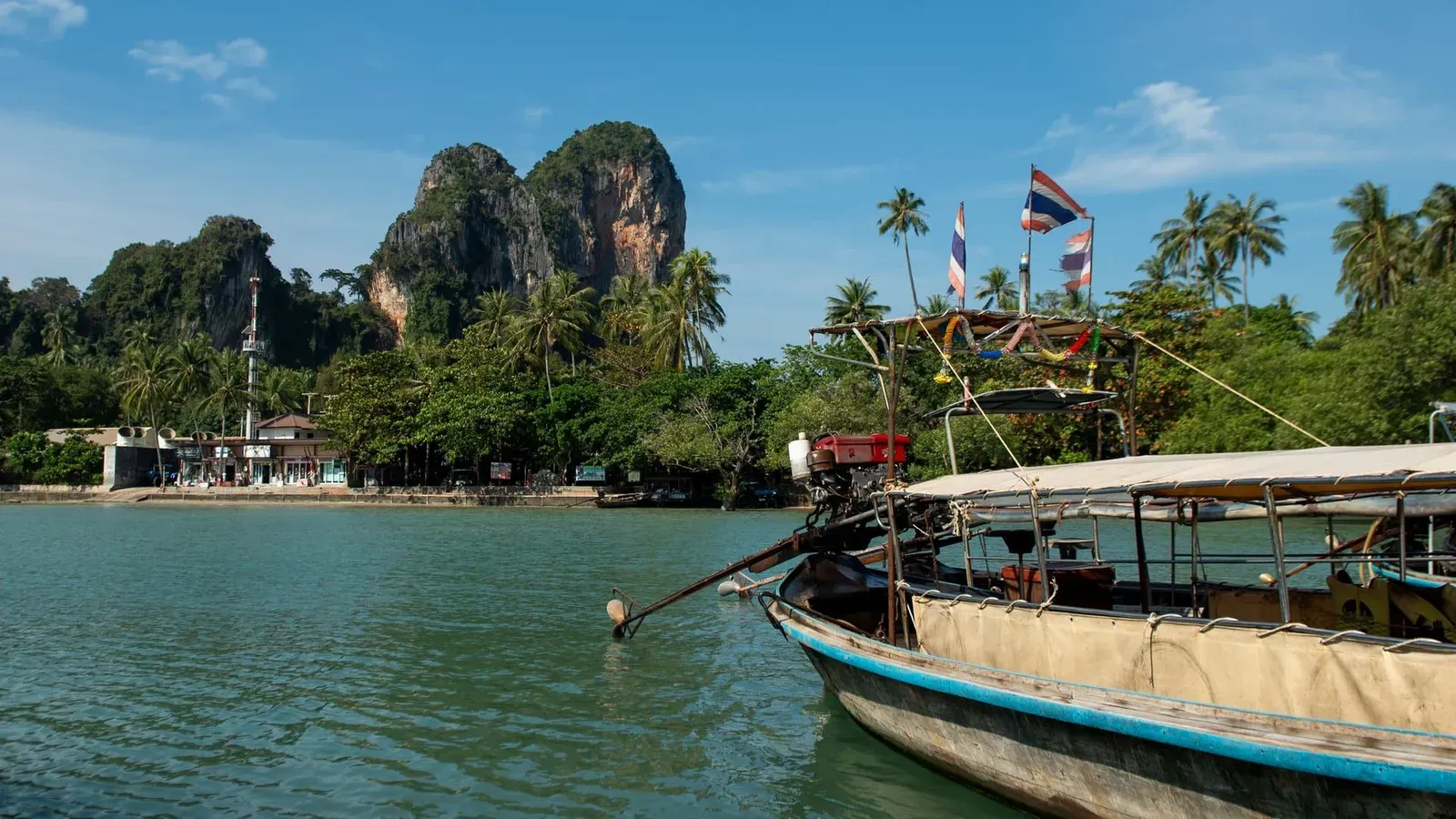
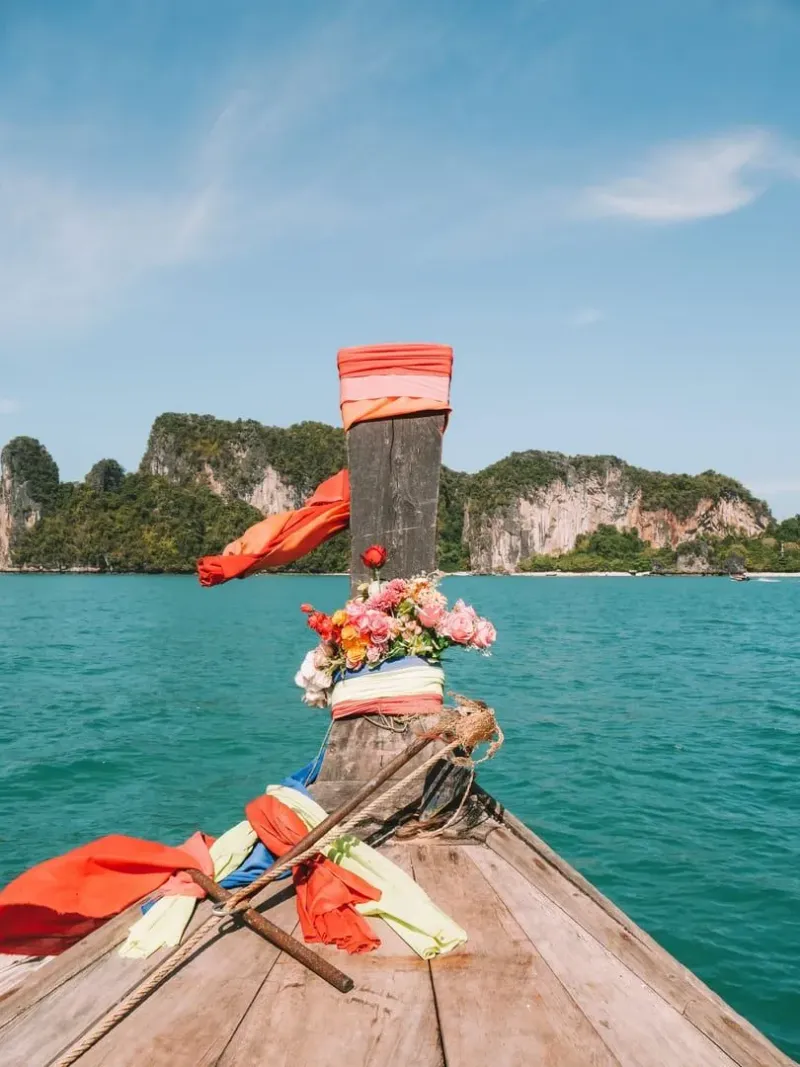
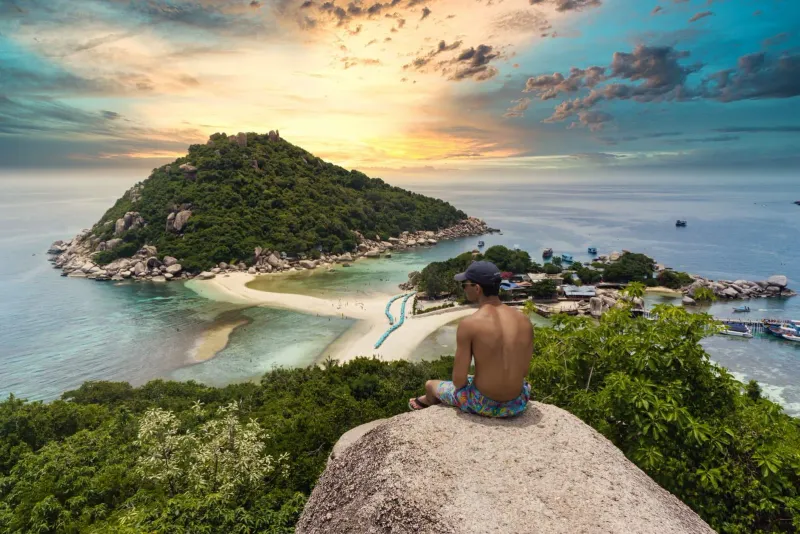
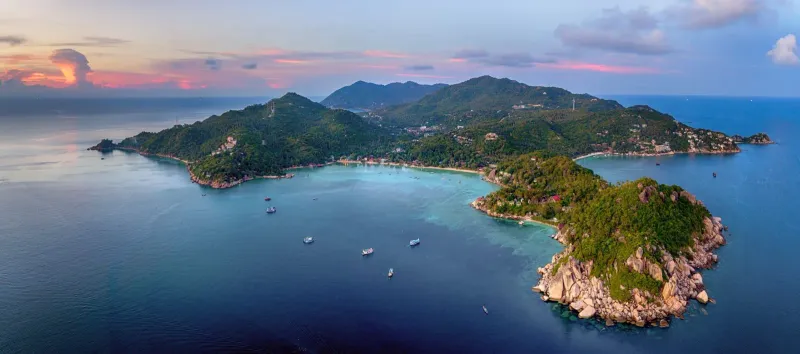
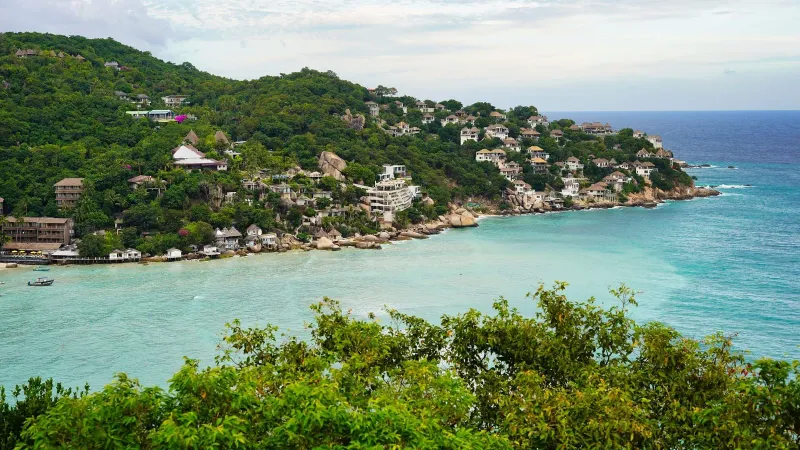
Krabi wins decisively on drama: its coastline is defined by sheer limestone karst towers rising straight out of turquoise water, a landscape that draws climbers and photographers from across the world and looks nothing like anywhere on Koh Samui. The province covers roughly 4,708 km2 of mainland Thailand, more than twenty times Samui’s 228 km2, though most of that is inland forest and rubber plantation rather than coastline you’d actually visit — the postcard scenery concentrates around Ao Nang, Railay, and the offshore islands. Koh Samui’s landscape is gentler: rounded, jungle-covered hills over 600 m at their highest, ringed by a single coastal road that connects curved sandy bays, coconut groves, and Chinese temples in a compact, easy-to-loop package. Neither landscape is “better” in an absolute sense — Krabi rewards travelers who want jaw-dropping cliff-and-water views and are willing to hop boats to get close to them; Samui rewards travelers who want an island they can fully explore without much planning.
Getting There and Flights
Krabi International Airport (KBV) runs roughly 15 airlines to about 40 airports as of September 2026, including seasonal European charters into Krabi itself — Finnair from Helsinki and SAS from Copenhagen both run November-March, alongside dense Bangkok Airways and budget-carrier service from Bangkok. Koh Samui Airport (USM) is smaller and privately run by Bangkok Airways, concentrated on Bangkok with a handful of regional Asian routes. The two islands connect to each other directly: Bangkok Airways flies Krabi-Koh Samui in about 50 minutes on a small ATR72, roughly twice daily, from 3,700-5,500 THB (~106-157 USD) one-way — see the full Phuket/Krabi to Koh Samui guide for every option. No boat sails directly between the two, so the overland alternative runs through Surat Thani: a fast Lomprayah bus-and-ferry combo takes 3h45m-6h for 1,200-1,400 THB (~34-40 USD), or a budget minivan-and-ferry combo takes 4-9 hours for 500-1,500 THB (~14-43 USD). Once you land at Krabi Airport, Ao Nang itself is another 26 km and about 28-45 minutes by taxi, with a fixed fare of roughly 600-1,000 THB (~17-29 USD).
Weather and Monsoon Seasons — the Opposite Coasts Problem
This is the fact that should drive your date choice more than either island’s beaches: Krabi sits on the Andaman Sea and Koh Samui sits on the Gulf of Thailand, so the two answer to opposite halves of Thailand’s monsoon system. Krabi takes the full southwest monsoon roughly May through October, with rain building through July and peaking in September — the same pattern that soaks Phuket, since both provinces share the same Andaman-facing coast. Koh Samui is sheltered from that system by the mainland spine and stays comparatively dry through June-August, then takes its own hit from the northeast monsoon October-December, peaking in November at roughly 445 mm of rain over 16 rain days — see the full best time to visit guide for the month-by-month numbers. The practical upshot: a June-September trip favors Koh Samui, since Krabi is deep in its wettest stretch while the Gulf side stays usable; a November-December trip flips the advantage to Krabi, which is drying out into its own high season while Samui is still finishing its wettest months. December through February is the one window where both islands are genuinely at their best, which is also why it’s the most expensive and crowded stretch on both coasts.
Beaches
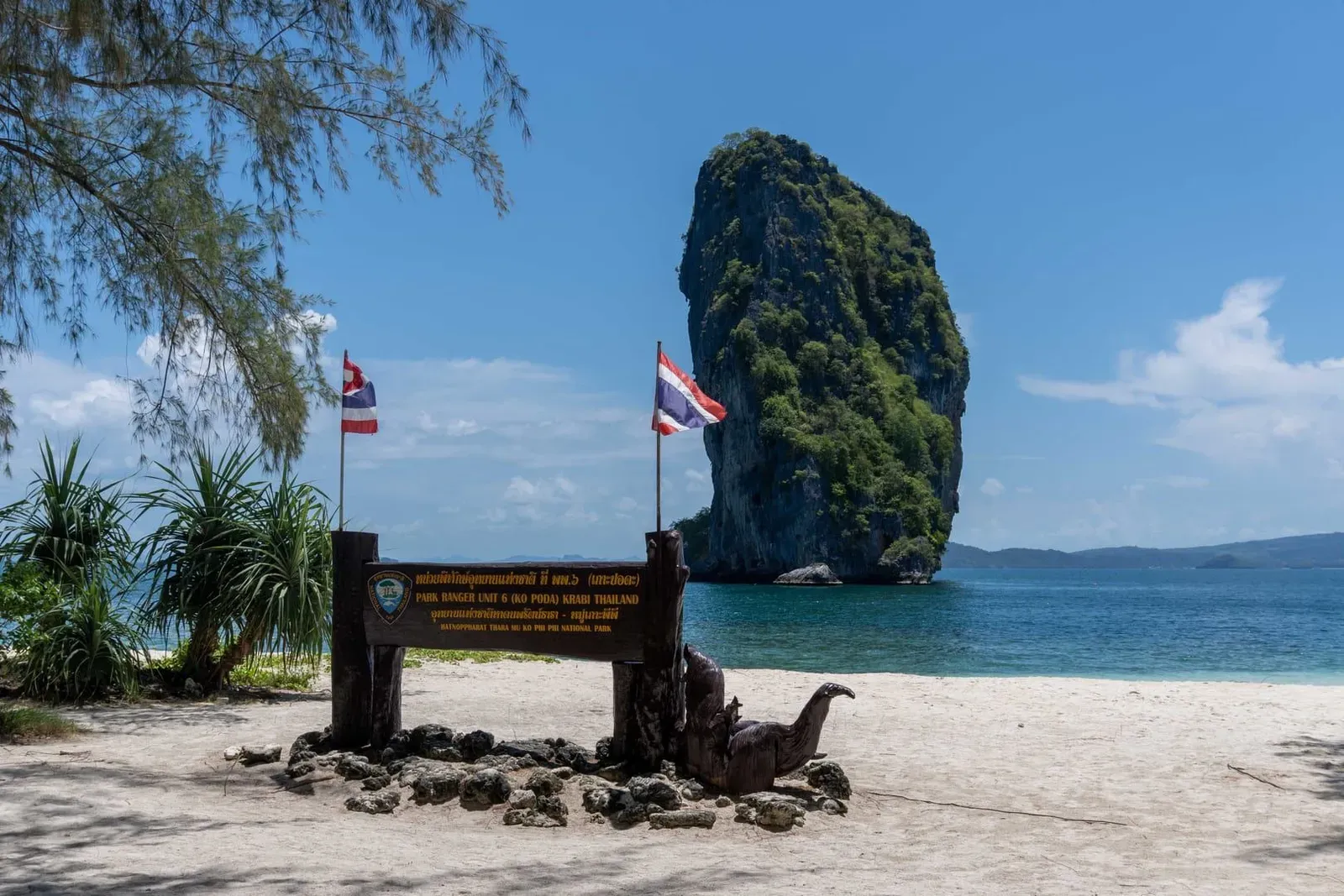
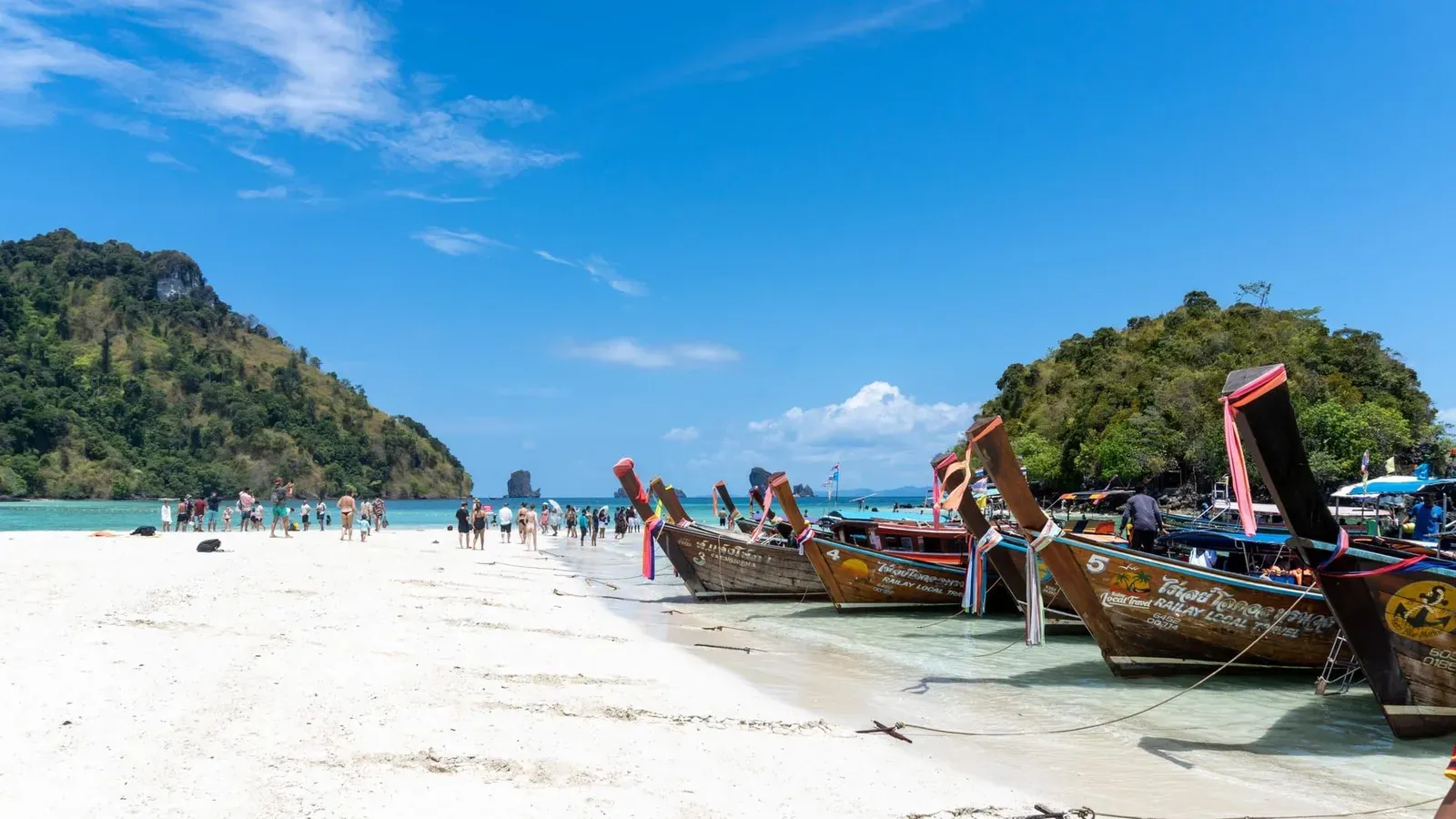
Koh Samui’s beaches are the easier ones to actually use: Chaweng, Lamai, and Maenam all sit on the ring road, so you can drive up, park, and swim without a boat. Krabi’s best-known beaches work differently — Railay and Phra Nang, hemmed in by limestone cliffs with no road access, are reached only by a 10-15 minute longtail boat from Ao Nang, priced at a fixed 100 THB one-way (~3 USD) or 200 THB return (~6 USD) with boats running roughly 8am-6pm. Ao Nang’s own beach is more built-up and road-accessible but less dramatic than what’s a short boat ride away, and the wider Krabi day-trip menu adds Koh Poda, Chicken Island, and the white sand of Koh Phi Phi’s Maya Bay for travelers willing to book a boat. Sand quality is a wash between the two — both have fine, pale sand at their best spots — but Krabi’s beaches sit inside far more striking cliff scenery, while Samui’s are calmer and simpler to reach on a whim.
Nightlife
Koh Samui wins this one clearly. Chaweng and Lamai run a real bar-strip scene with beach clubs, fire shows, and late-opening venues, and Samui holds a nightlife card Krabi can’t match: a short ferry to Koh Phangan’s Full Moon Party for a big night out without changing islands. Krabi’s nightlife centers on Ao Nang, where the Landmark Night Market runs daily from about 5pm to 11pm alongside a scattering of beach bars and reggae-leaning live-music spots — pleasant for an evening stroll and a drink, but nothing built for a big night out, and Krabi Town itself is quieter still. If bar-hopping and beach parties matter to your trip, Samui is the better base; if you’d rather wind down with a market meal and an early night before climbing or a boat trip, Krabi’s low-key evenings are a feature, not a gap.
Prices
Krabi is the cheaper base day to day: a backpacker budget of roughly 900-1,400 THB (~26-40 USD) covers a hostel dorm, three street meals, and a scooter, versus Samui’s typical 1,200-2,000 THB (~34-57 USD) for a similar budget setup — see the full Koh Samui trip cost guide for a detailed breakdown. Krabi Town specifically undercuts Ao Nang on both beds and food, while Ao Nang’s beachfront position pushes it closer to Samui’s price range. Activity costs run in similar territory on both coasts: Krabi’s 4 Islands longtail tour runs about 649-900 THB (~19-26 USD), a Phi Phi speedboat day trip runs roughly 1,700 THB (~49 USD), and Samui’s Ang Thong Marine Park trips land in a comparable band. The bigger cost swing is flights — Krabi’s seasonal European charter routes can beat the price of routing through Bangkok to reach Samui, while a Bangkok-based itinerary usually favors Samui’s direct connection.
Things to Do and Day Trips
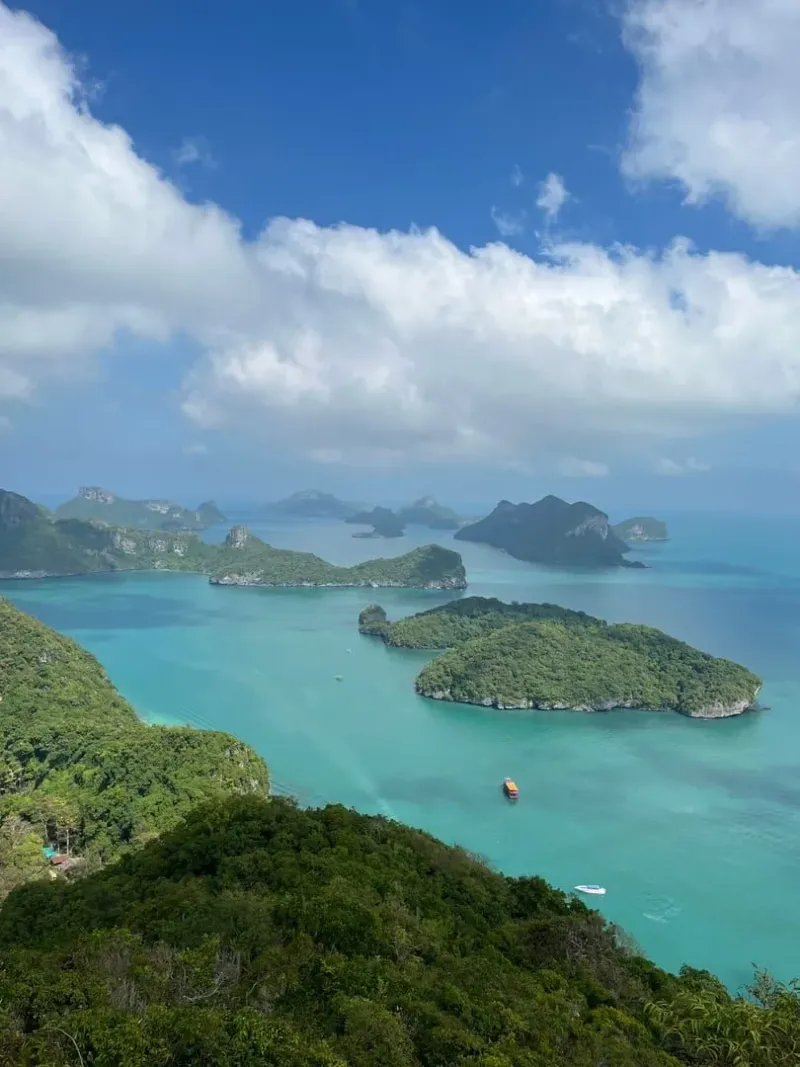
Krabi wins on adventure variety: Railay and Tonsai are among the world’s best-known rock-climbing destinations, with hundreds of bolted routes across limestone cliffs suited to complete beginners and experienced climbers alike, plus inland options like the roughly 1,260-step climb to Tiger Cave Temple (Wat Tham Suea, free entry with a small optional donation) and the turquoise Emerald Pool (Sa Morakot) in Khao Phanom Bencha National Park. Koh Samui’s signature day trip is Ang Thong National Marine Park, a cluster of limestone islands with kayaking and a hike to the Emerald Lake viewpoint, alongside easy ferry access to Koh Phangan and Koh Tao for diving. Both provinces run comparable snorkeling boat trips in the 650-1,850 THB range; the real difference is that Krabi’s menu leans toward climbing and karst exploration, while Samui’s leans toward calmer boat days and Gulf-island diving.
Getting Around
Koh Samui’s single ring road and compact 228 km2 footprint make it simple to get around by scooter (200-300 THB/day) or taxi/Grab, with most beaches 20-30 minutes apart and little real traffic outside Chaweng at peak times. Krabi’s road network covers a much larger mainland area, so driving between Krabi Town, Ao Nang, and inland attractions takes longer, and the actual beach highlights — Railay, Koh Phi Phi, the 4 Islands — require a longtail or speedboat rather than a road at all, adding a fixed boat-schedule element that Samui’s drive-anywhere layout doesn’t have. Songthaews connect Ao Nang and Krabi Town for about 60-150 THB per ride, a cheaper but slower alternative to a private taxi or scooter rental.
Who Each Island Suits
Pick Koh Samui if: you want one easy-to-reach island with a direct flight from Bangkok, calmer water for young kids and weak swimmers, and a livelier, more contained nightlife scene without needing a boat for every beach — see where to stay for a rundown of Samui’s nine main areas.
Pick Krabi if: you want the most dramatic limestone scenery in Thailand, you climb or want to try, you’re traveling on a tighter daily budget, or you’re flying in on a seasonal European charter route (Helsinki, Copenhagen) during the November-March dry season.
Do both: a direct 50-minute flight or the overland Surat Thani route connects Krabi and Koh Samui — some travelers spend a few days climbing and island-hopping around Krabi, then fly to Samui for a calmer, boat-light finish, timing the whole trip for December-February when both coasts are at their driest.
FAQ
Is Koh Samui or Krabi better for a first trip to Thailand?
Both work well. Koh Samui suits travelers routing through Bangkok who want one easy island base; Krabi suits travelers who want dramatic scenery and don’t mind boats and longer drives, and it has more seasonal direct flights from Europe (November-March). If you’re unsure, Samui’s simpler single-base layout is the lower-effort choice.
Which is cheaper, Koh Samui or Krabi?
Krabi is cheaper day to day: a backpacker budget runs roughly 900-1,400 THB (~26-40 USD) versus Samui’s 1,200-2,000 THB (~34-57 USD). Krabi Town is the cheapest base in either destination; Ao Nang and Samui’s resort areas sit closer together in price once you’re in mid-range accommodation.
Is Krabi or Koh Samui better for families with kids?
Koh Samui’s Gulf-side water is calmer and better suited to young children and weak swimmers, plus every beach is road-accessible with no boat required. Krabi works well for families with older kids who enjoy short boat rides and easy climbing or kayaking, but Railay’s boat-only access and Ao Nang’s busier road can add friction with toddlers and strollers.
Can I visit both Koh Samui and Krabi on one trip?
Yes. A direct flight between them takes about 50 minutes and runs 3,700-5,500 THB (~106-157 USD) one-way. The overland route via Surat Thani takes 4-9 hours depending on the bus or minivan option chosen, for roughly 500-1,500 THB (~14-43 USD) — see the Phuket/Krabi to Koh Samui guide for the full breakdown.
Does Krabi or Koh Samui have better beaches?
It depends what you want. Krabi’s Railay and Koh Phi Phi sit inside more dramatic limestone scenery but require a longtail boat to reach. Koh Samui’s Chaweng, Lamai, and Maenam are calmer, road-accessible, and easier to use on a whim, though less visually striking than Krabi’s cliff-lined bays.
When should I choose Krabi over Koh Samui for weather?
Choose Samui for trips June through September, when Krabi’s Andaman coast is deep in its southwest monsoon while Samui’s Gulf side stays comparatively dry. Choose Krabi for trips December through February, when it’s in its driest, busiest season while Samui’s own wet season (October-December) has usually just wrapped up.
Published on
About the author

Mike Brochlowski
Travel photographer & writer
Travel photographer and island explorer. Mike has spent years documenting Southeast Asia's hidden gems, from secluded beaches to jungle waterfalls.
Articles by Mike →More in Travel Guides
Also in Itinerary
3 Days in Koh Samui — The Perfect Short Itinerary
The perfect 3-day Koh Samui itinerary: Chaweng, Big Buddha, Bophut, Na Muang Waterfalls and Lamai, with taxi times, 2026 THB prices and a…
Also in Itinerary
5-Day Koh Samui Itinerary — Beaches, Ang Thong & Waterfalls
A 5-day Koh Samui itinerary with beaches, Big Buddha, Ang Thong Marine Park and Na Muang Waterfalls — day-by-day plan, travel times and T…
Also in Itinerary
One Week in Koh Samui — 7-Day Itinerary (2026)
A complete 7-day Koh Samui itinerary: day-by-day plan, real travel times between stops, THB/USD costs, and booking tips for one week on t…