Contents
Koh Samui is a 228 km2 island in the Gulf of Thailand with its own airport and a single ring road; Koh Lanta is a roughly 81 km2 island on the Andaman coast, reached only by road-and-ferry or road-and-bridge from Krabi, with a slower, quieter pace built around long west-facing beaches. The two also run on opposite monsoon calendars, so timing matters as much as taste. Pick Samui for the easiest access (a direct flight from Bangkok), a livelier nightlife scene, and calmer swimming water; pick Koh Lanta for a laid-back, low-rise beach vibe, cheaper daily costs, and easy access to Krabi’s limestone island day trips.
Key takeaways
- Opposite rain seasons: Koh Lanta’s Andaman coast is wettest May-October, peaking around September; Koh Samui’s Gulf coast is wettest October-December, peaking in November.
- Access is the biggest gap: Samui has its own airport with direct Bangkok flights (~1h); Koh Lanta has no airport at all — every route runs through Krabi by road, ferry, or a seasonal speedboat transfer that stops running May-October.
- Koh Lanta wins on quiet, low-key beaches, backpacker-friendly prices, and closeness to Krabi’s karst-island day trips.
- Koh Samui wins on ease of access, calmer swimming water for families, and a real nightlife scene.
- Both islands are budget-friendly day to day; the bigger cost and hassle swing is in flights and ferries, not meals or hotels.
The Verdict — Gulf Island vs Andaman Island
Koh Samui and Koh Lanta sit on opposite coasts of southern Thailand and solve different trip problems. Samui is a compact, self-contained island with its own airport, so you land, rent a scooter or grab a taxi, and every beach on the 228 km2 island sits within a 20-40 minute drive. Koh Lanta has no airport of its own: Ko Lanta Yai, the main inhabited island, covers about 81 km2 (25 km long, 6 km wide) and is reached via Krabi, either by a short car-ferry crossing or a bridge from the mainland at Sala Dan, then a long, straight stretch of coastal road linking a string of beaches that get progressively quieter the further south you go. That access gap is the single biggest planning factor — Samui suits travelers who want to land, unpack once, and go; Koh Lanta suits travelers happy to build in an extra transfer for a noticeably slower, more laid-back island once they arrive. Weather is the second deciding factor, and like Koh Samui vs Krabi, it cuts on opposite monsoon calendars — see the season breakdown below before you pick dates.
Koh Samui vs Koh Lanta at a Glance
| Criterion | Koh Samui | Koh Lanta |
|---|---|---|
| Landscape | Island, 228 km2, hills and coconut plantations | Ko Lanta Yai island, ~81 km2, low-rise and flat along the coast |
| Population | ~65,000 | ~30,500 (whole Koh Lanta district) |
| Beaches | Chaweng, Lamai, Maenam — road-accessible, curved bays | Klong Dao, Long Beach (Phra Ae), Klong Khong, Kantiang Bay — long, straight, low-key |
| Weather season | Wettest Oct-Dec (peak Nov); calmer Jun-Aug | Wettest May-Oct (peak Sep); dry and busiest Nov-Apr |
| Nightlife | Chaweng/Lamai bar strips, Full Moon Party a short ferry away | Beach bonfires and chilled bars; genuinely quiet after dark |
| Daily budget | ~1,200-2,000 THB (~34-57 USD) | ~900-1,400 THB (~26-40 USD), cheaper backpacker floor |
| Getting there | Direct flight from Bangkok (~1h), own airport | No airport — ferry/bridge from Krabi, ~2-4h from Krabi Airport |
| Signature activity | Ang Thong Marine Park boat trip | Mu Ko Lanta National Park and Koh Rok snorkeling day trips |
| Best for | Calm-water families, first Bangkok-routed trip, contained nightlife | Slow-paced beach time, backpackers, Krabi island-hoppers |
Weather and Monsoon Seasons — Opposite Coasts
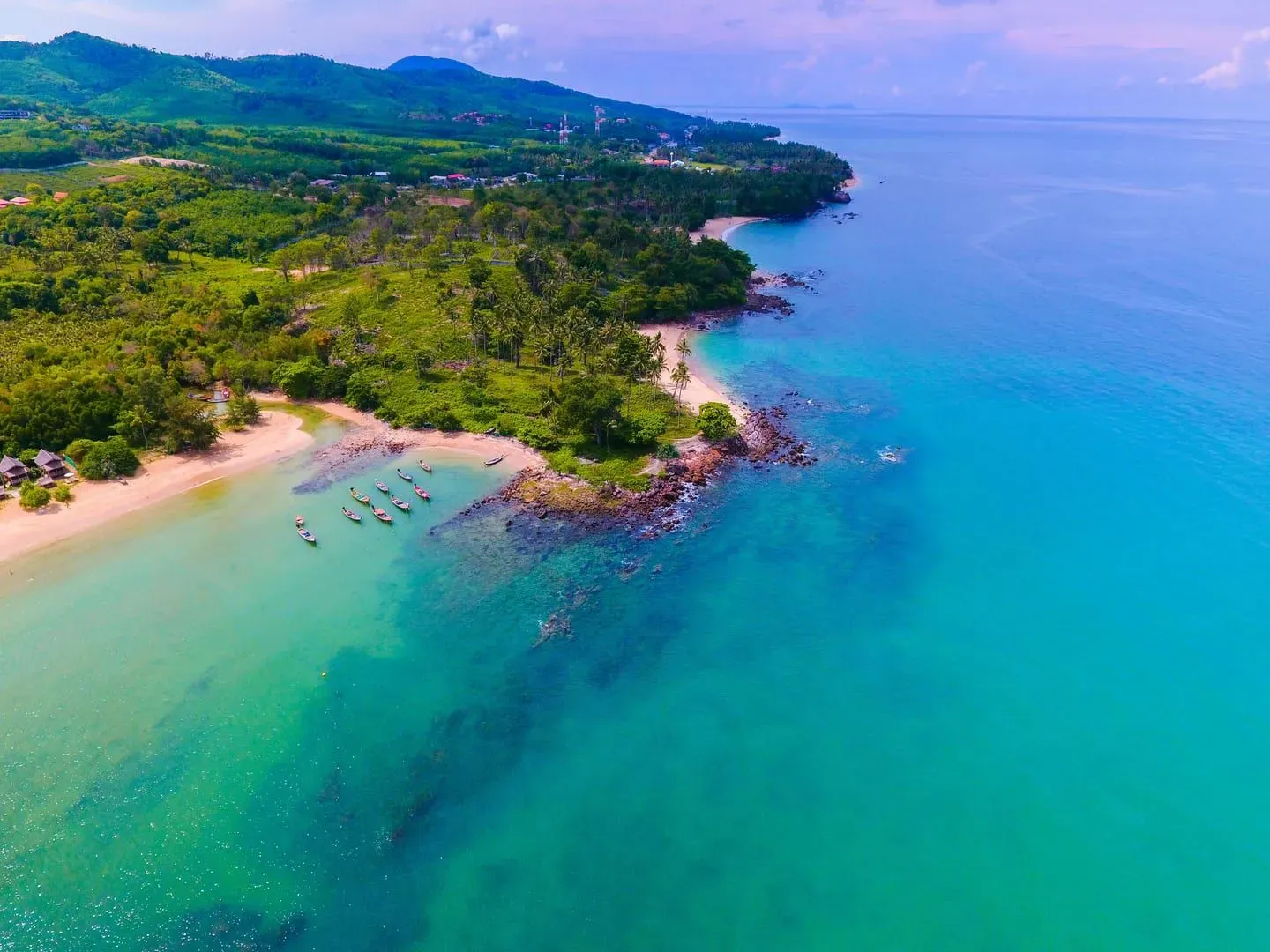
Koh Lanta sits on the Andaman Sea and Koh Samui sits on the Gulf of Thailand, so the two islands answer to opposite halves of Thailand’s monsoon system, the same split that separates Samui from Krabi and Phuket. Koh Lanta’s rainy season runs roughly May through October, with the westerly monsoon bringing the heaviest, most frequent downpours in September and October — October is typically the wettest month, with around 330 mm of rain, while February is the driest at around 30 mm. Koh Samui is sheltered from that Andaman-facing system by the mainland spine and stays comparatively dry through June-August, then takes its own hit from the northeast monsoon October-December, peaking in November — see the full best time to visit guide and rainy season guide for month-by-month numbers. The practical upshot: a June-September trip favors Koh Samui, since Koh Lanta is deep in its wettest stretch while the Gulf side stays usable; a December-February trip favors Koh Lanta, which is in its driest, busiest high season while Samui is finishing its own wetter months. November is a genuine gray zone — Koh Samui is often at its wettest while Koh Lanta is just drying out, so check short-range forecasts rather than the seasonal average if traveling that month.
Getting There
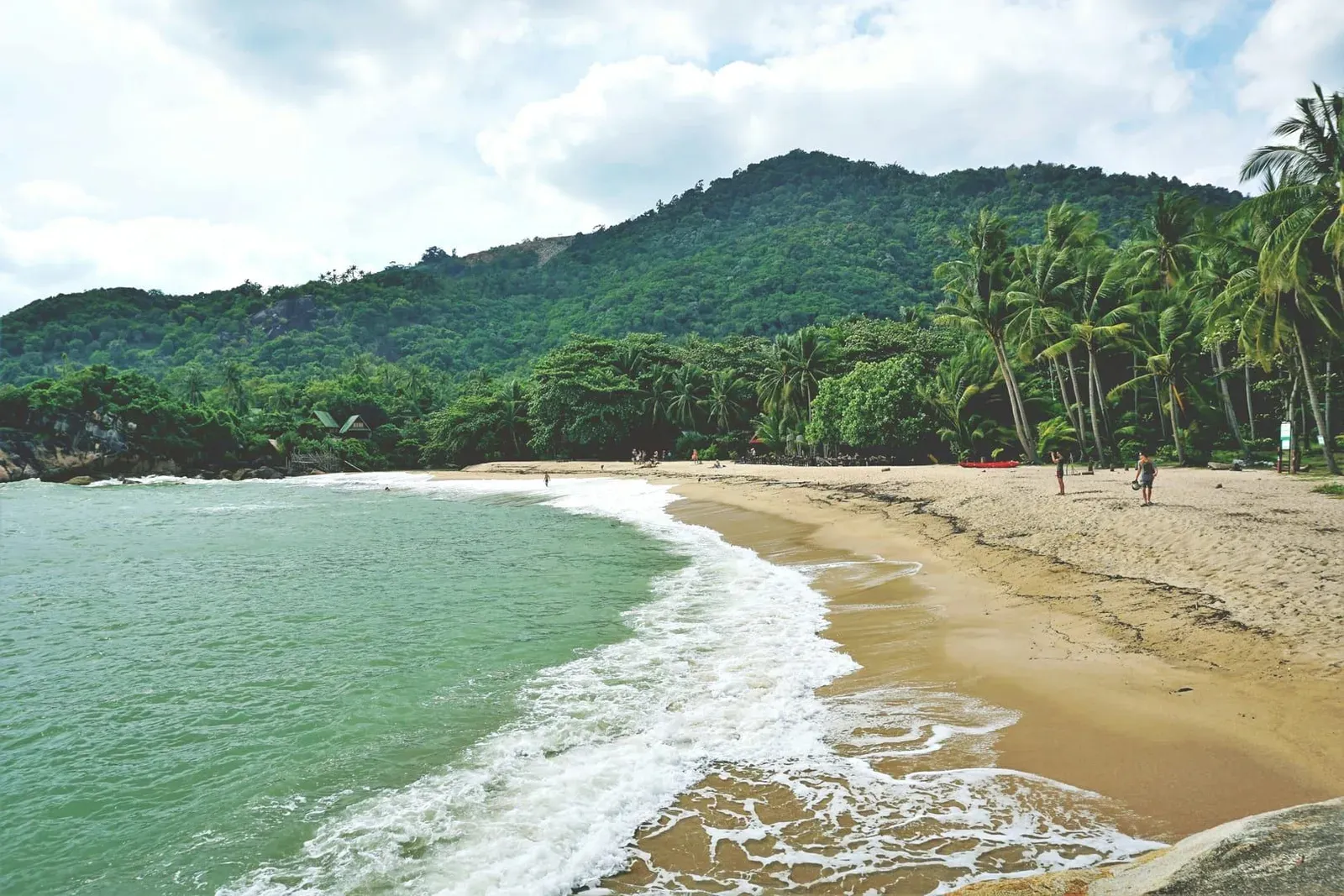
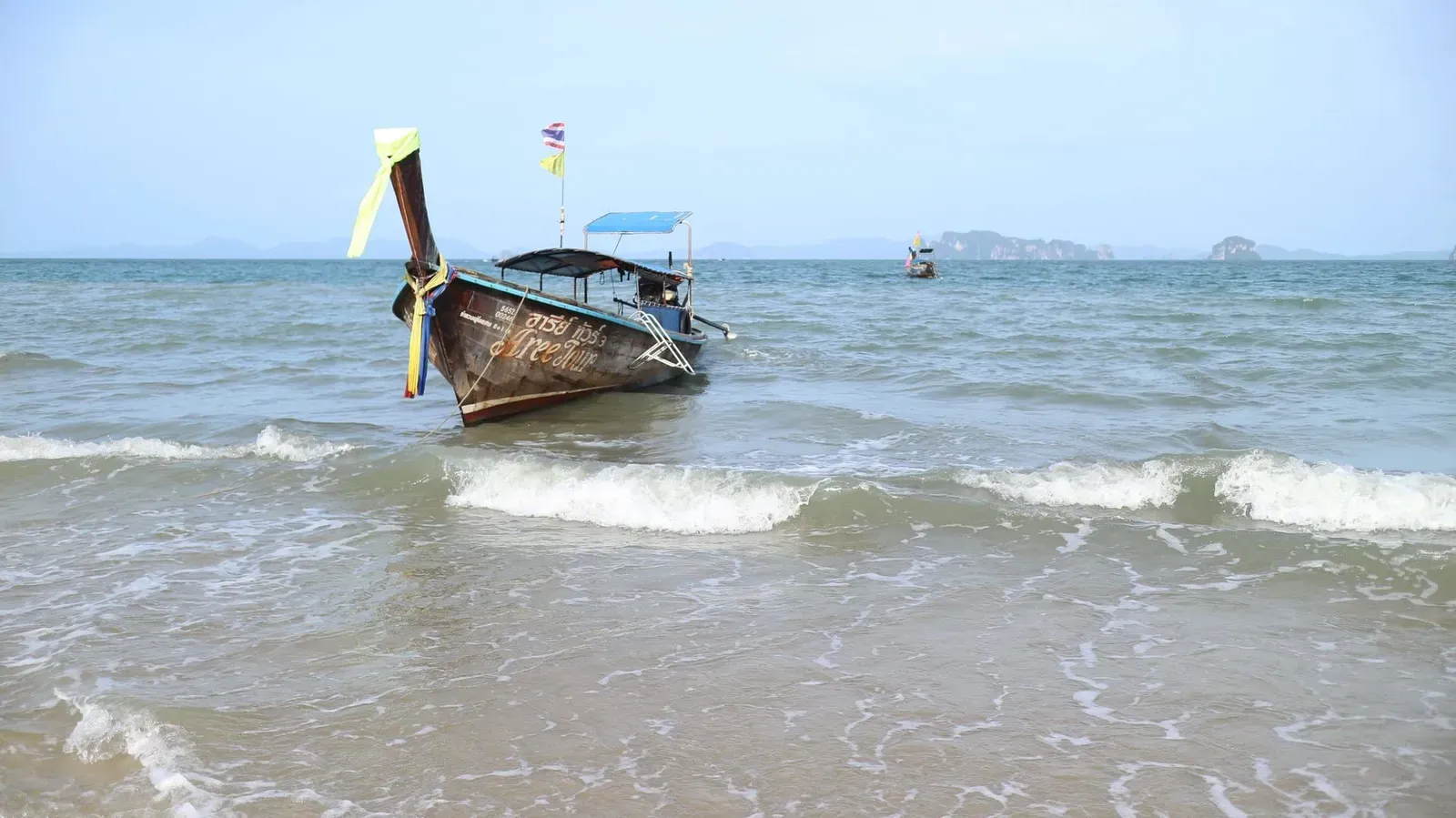
Koh Samui has the easier, faster route: Koh Samui Airport (USM) runs direct Bangkok Airways flights from Bangkok in about an hour, and the full how to get to Koh Samui guide covers every other option, including the overland Surat Thani route. Koh Lanta has no airport at all, so every route funnels through Krabi Airport (KBV) first: a taxi from Krabi Airport to Koh Lanta’s Saladan pier area covers roughly 70-85 km and takes about 2 hours for 2,800-3,000 THB (~80-86 USD), while a shared minivan-and-ferry combo costs 350-450 THB (~10-13 USD) but takes 3-4 hours. From May to October, the faster minivan-and-speedboat express transfer stops running because open-water speedboats aren’t safe in the swells, leaving only the slower minivan-and-car-ferry route (which runs year-round via the vehicle ferry or the bridge at Sala Dan) — factor that into low-season plans. There’s no direct ferry or flight between Koh Samui and Koh Lanta; combining both islands means routing through Surat Thani and Krabi, roughly 6-9 hours door to door, so most travelers treat this as an either/or choice rather than a single trip.
Beaches
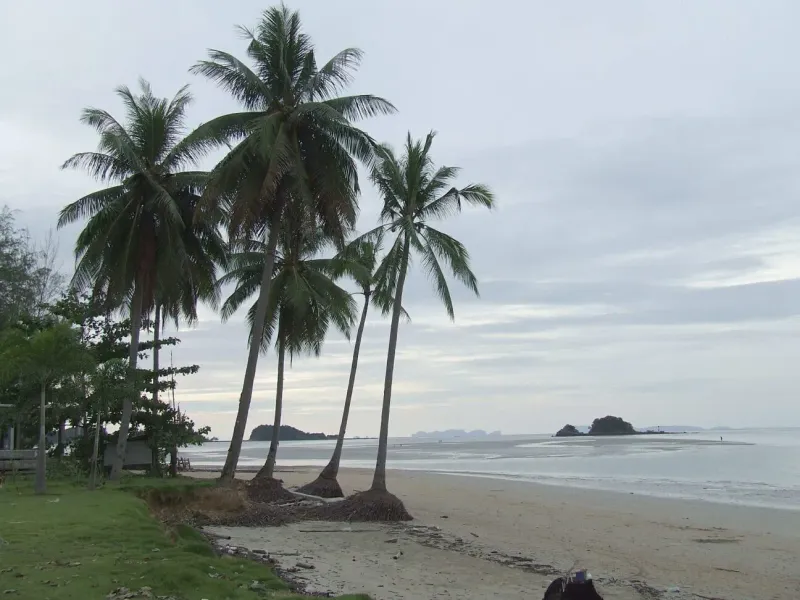
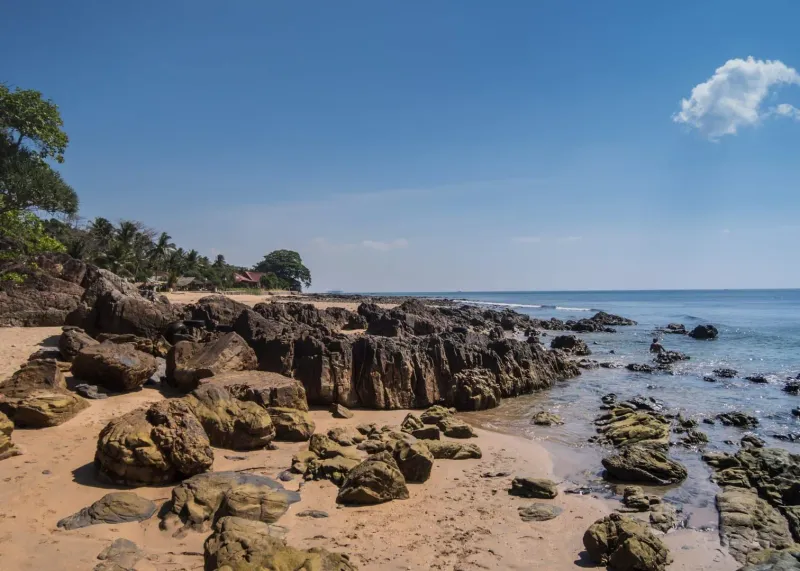
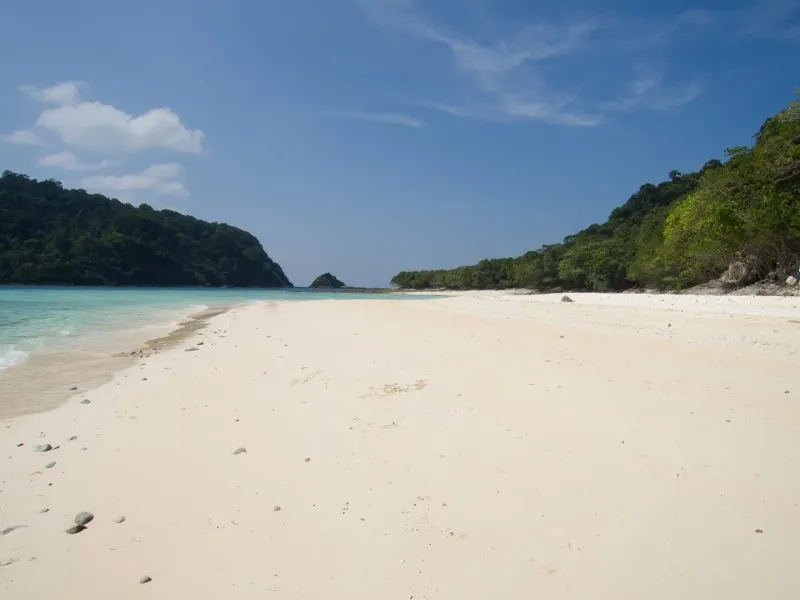
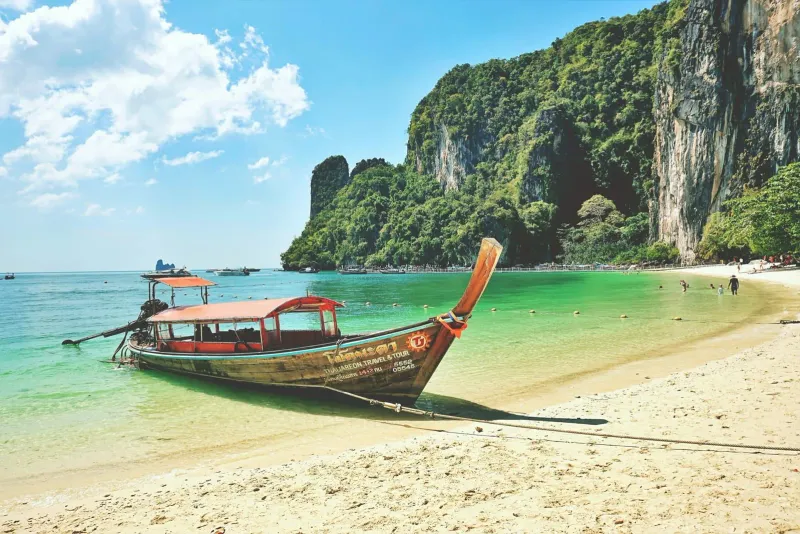
Koh Samui’s beaches are curved bays with a single ring road behind them: Chaweng, Lamai, and Maenam all sit within a short drive of any hotel on the island, with a mix of lively and quiet stretches depending which one you pick. Koh Lanta’s beaches run in long, mostly straight lines down the island’s west coast: Klong Dao, near the Saladan pier, stretches almost 3 km with calm, shallow water good for swimming; Long Beach (also called Phra Ae) runs about 3-5 km through the main hub of hotels and restaurants without ever feeling crowded, thanks to its length; and Kantiang Bay, about 45 minutes south near the island’s tip, is a quieter, more upmarket 2 km stretch of soft sand often rated among Thailand’s best. Sand and water quality are comparable between the two islands — both have fine, pale sand and warm, swimmable water in the dry season — but Koh Lanta’s beaches feel noticeably emptier even in high season, while Samui’s are busier and better set up with beach clubs and restaurants right on the sand.

Nightlife vs Quiet
This is close to a straight swap: Koh Samui has the real nightlife, Koh Lanta has the real quiet. Chaweng and Lamai run beach clubs, fire shows, and late-opening bars, and Samui also holds a card Koh Lanta can’t match — a short ferry to Koh Phangan’s Full Moon Party without changing islands, covered in the Koh Samui vs Koh Phangan guide. Koh Lanta, by contrast, is one of the more low-key islands in southern Thailand: evenings mean beach bonfires, a handful of chilled bars with live acoustic music, and an early close on most nights rather than a strip built for bar-hopping. If a lively bar scene and late nights matter to your trip, Koh Samui is the clear pick; if you want to fall asleep to waves instead of bass, Koh Lanta delivers a genuinely quieter island without having to search out its one quiet corner.
Families
Koh Samui is the steadier family pick: the Gulf-side water is generally calmer, every beach is road-accessible with no ferry or longtail boat required, and the island has a wider spread of family resorts, pharmacies, and a private hospital network. Koh Lanta works well for families too, especially with older kids — Klong Dao and Long Beach both have shallow, gently sloping sand good for younger children, and the island’s slower pace suits a relaxed, unstructured family trip — but the extra ferry or bridge transfer from Krabi, thinner medical infrastructure, and a more spread-out selection of restaurants and shops make it a slightly higher-effort choice for families with very young kids or tight schedules.
Prices
Koh Lanta is the cheaper base day to day: a backpacker budget of roughly 900-1,400 THB (~26-40 USD) covers a guesthouse room, three local meals, and a scooter, versus Koh Samui’s typical 1,200-2,000 THB (~34-57 USD) for a similar setup — see the full Koh Samui trip cost guide for a detailed breakdown. Entry to Mu Ko Lanta National Park costs 200 THB (~5.50 USD) for foreign adults and 100 THB (~3 USD) for children 3-14, with the park open 8:30am-5:30pm daily (free after 5:30pm for sunset visits). Activity costs run in a similar band on both islands: a Koh Rok snorkeling day trip from Koh Lanta typically runs 1,200-1,800 THB (~34-51 USD), comparable to a Samui-based Ang Thong Marine Park trip. The bigger cost swing is transport — Koh Lanta’s lack of an airport adds a Krabi flight-plus-transfer step that Samui’s direct route skips entirely.
Who Each Island Suits
Pick Koh Samui if: you want one easy-to-reach island with a direct flight from Bangkok, calmer water for young kids and weak swimmers, and a livelier nightlife scene without extra transfers — see where to stay for a rundown of Samui’s main areas.
Pick Koh Lanta if: you want a genuinely quiet, low-rise beach island, you’re traveling on a tighter daily budget, or you’re already routing through Krabi and want easy access to Koh Rok and other Andaman island day trips.
Do both: some travelers split a trip between Krabi’s limestone scenery and Koh Lanta’s quiet beaches on the Andaman side, then fly Surat Thani-to-Samui or route via Bangkok for a livelier finish on the Gulf coast — budget 6-9 hours of travel time to make the switch, and time the whole trip for December-February when Koh Lanta is driest even though Samui’s own dry stretch (June-August) has already passed.
FAQ
Is Koh Samui or Koh Lanta better for a first trip to Thailand?
Both work well, but Koh Samui is the lower-effort choice for a first trip: it has its own airport with direct Bangkok flights, so there’s no extra ferry or transfer step. Koh Lanta suits first-timers who prioritize a slow, quiet beach pace over convenience and don’t mind routing through Krabi Airport first.
Which is cheaper, Koh Samui or Koh Lanta?
Koh Lanta is cheaper day to day: a backpacker budget runs roughly 900-1,400 THB (~26-40 USD) versus Koh Samui’s 1,200-2,000 THB (~34-57 USD). The cost gap narrows once you factor in transport, since reaching Koh Lanta usually means flying into Krabi first and adding a ferry or minivan transfer.
Is Koh Lanta or Koh Samui better for families with kids?
Koh Samui suits families with younger kids best — calmer Gulf-side water, every beach reachable by road, and more hospitals and family resorts. Koh Lanta works well for families with older kids who enjoy a slower pace and shallow beaches like Klong Dao, but the added Krabi transfer and thinner medical infrastructure add friction for trips with toddlers.
Does Koh Lanta have an airport?
No. Koh Lanta has no airport of its own. Every route runs through Krabi International Airport (KBV) first, followed by a roughly 2-4 hour taxi, minivan, or minivan-and-ferry combination to reach Koh Lanta’s Saladan pier area, depending on season and transfer type.
When is the ferry to Koh Lanta closed?
The fast minivan-and-speedboat express transfer from Krabi Airport typically stops running from May to October because open-water conditions are too rough for speedboats. The year-round car ferry (and the bridge crossing at Sala Dan) still connects Koh Lanta to the mainland during those months, just on a slower schedule.
Is Koh Lanta or Koh Samui quieter?
Koh Lanta is markedly quieter. Its beaches see fewer crowds even in high season, and nightlife is limited to beach bonfires and a handful of low-key bars. Koh Samui has real nightlife strips at Chaweng and Lamai, plus quick ferry access to Koh Phangan’s Full Moon Party, making it the busier, livelier island of the two.
Published on
About the author

Mike Brochlowski
Travel photographer & writer
Travel photographer and island explorer. Mike has spent years documenting Southeast Asia's hidden gems, from secluded beaches to jungle waterfalls.
Articles by Mike →More in Travel Guides
Also in Itinerary
5-Day Koh Samui Itinerary — Beaches, Ang Thong & Waterfalls
A 5-day Koh Samui itinerary with beaches, Big Buddha, Ang Thong Marine Park and Na Muang Waterfalls — day-by-day plan, travel times and T…
Also in Itinerary
One Week in Koh Samui — 7-Day Itinerary (2026)
A complete 7-day Koh Samui itinerary: day-by-day plan, real travel times between stops, THB/USD costs, and booking tips for one week on t…

Also in Itinerary
Koh Samui on a Budget — Backpacker Itinerary Under 1,500 THB/Day
Koh Samui backpacker itinerary: 5 days under 1,500 THB (~43 USD) a day covering hostels, free waterfalls, temples and songthaew transport…