Contents
Koh Samui suits travelers who want an international airport, hospitals, family resorts, and paved roads. Koh Phangan suits travelers who want cheaper bungalows, a bigger backpacker and nomad scene, jungle waterfalls, and the Full Moon Party. Most first-time visitors fly into Koh Samui and take the 20-45 minute ferry across to Koh Phangan for a few nights — you don’t have to choose only one.
Key takeaways
- Families, couples on a short trip, first-timers to Thailand: pick Koh Samui — it has the only airport, the best hospitals, and calmer beaches.
- Backpackers, digital nomads, party travelers, yoga seekers: pick Koh Phangan — lower daily costs, a denser nomad community, and Haad Rin’s Full Moon Party.
- Both islands share the same Gulf of Thailand monsoon window (Oct — Dec).
- The ferry between them runs 20-45 minutes depending on operator, from ~130-300 THB (~3.50-8.50 USD).
The Verdict — Which Island Should You Choose?
Koh Samui wins for travelers who need convenience: Samui International Airport (USM) puts the island 1-2 hours from Bangkok, and Bangkok Hospital Samui is the region’s only JCI-accredited hospital. Koh Phangan wins for travelers chasing atmosphere over infrastructure: it has no commercial airport, but it has cheaper bungalows, a thriving yoga and remote-work scene, and Haad Rin’s Full Moon Party. If you have limited time and want things to go smoothly — flights, kids, healthcare, comfortable resorts — choose Koh Samui. If you have flexible time, a lower budget, and want a wilder, more social island — choose Koh Phangan. If you can spare 5+ days, do both: base in Samui, ferry over for 2-3 nights.
Koh Samui vs Koh Phangan at a Glance
| Criterion | Koh Samui | Koh Phangan |
|---|---|---|
| Getting there / airport | Own airport (USM), direct flights from Bangkok, Phuket, some regional hubs | No airport; reached only by ferry from Samui or Surat Thani |
| Beaches | Groomed, resort-lined (Chaweng, Lamai, Maenam) | Wilder, more undeveloped (Bottle Beach, Thong Nai Pan) |
| Nightlife | Bar strips and clubs in Chaweng | Full Moon Party at Haad Rin, more famous globally |
| Family | Calmer north-coast beaches, kids clubs, hospitals nearby | Fewer family resorts, more backpacker-focused |
| Couples | More luxury and honeymoon resorts | More boho/bohemian romantic guesthouses |
| Cost per day | ~1,200-1,800 THB (~34-51 USD) budget traveler | ~800-1,200 THB (~23-34 USD) budget traveler |
| Digital nomad scene | Growing, but fewer dedicated coworking spaces | Established nomad hub, multiple coworking spaces |
| Nature / hiking | 20+ marked hiking trails, viewpoints, waterfalls | Jungle waterfalls, fewer marked trails |
| Wellness | Luxury spa resorts (Kamalaya) | Dense yoga/detox retreat scene (The Sanctuary, Wonderland) |
| Size / getting around | 228.7 km², paved ring road, more taxis | 125 km², hillier roads, scooter often required |
| Monsoon timing | Oct — Dec, same Gulf coast pattern | Oct — Dec, same Gulf coast pattern |
Getting There and the Airport
Koh Samui wins on getting there — it is the only one of the two islands with a commercial airport. Samui International Airport (USM) receives direct flights from Bangkok, Phuket, and seasonal regional routes, landing you on the island in about 1 hour 15 minutes from Bangkok. Koh Phangan has no operational airport; a project has been stalled since 2012. Visitors reach Koh Phangan either by flying into Samui and taking a 20-45 minute ferry, or by flying into Surat Thani (URT) on the mainland and connecting via a longer bus-plus-ferry combo (roughly 2-3 hours total, cheaper but slower). Budget travelers often save money routing through Surat Thani; everyone else finds Samui’s airport faster.
Beaches
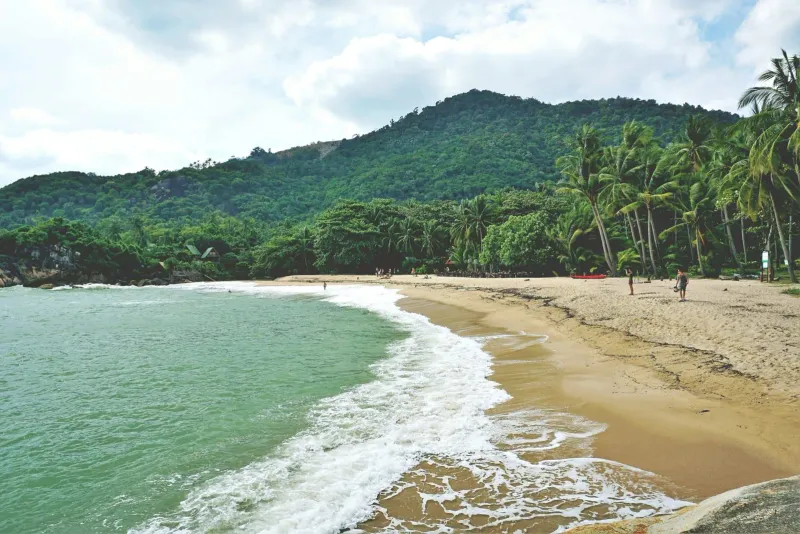
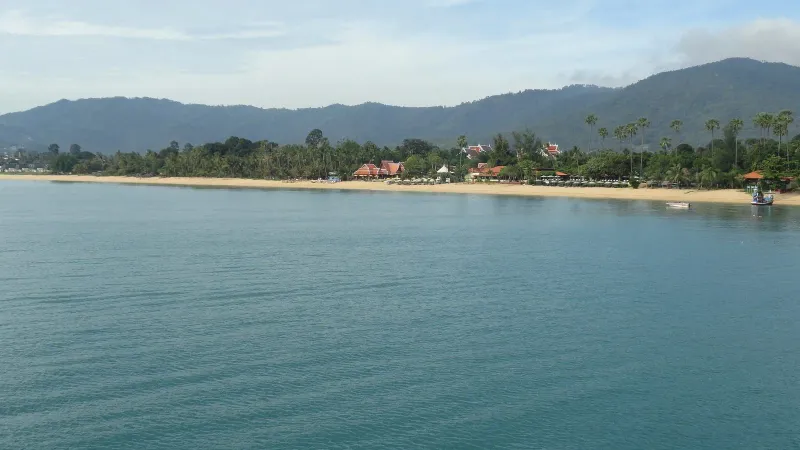
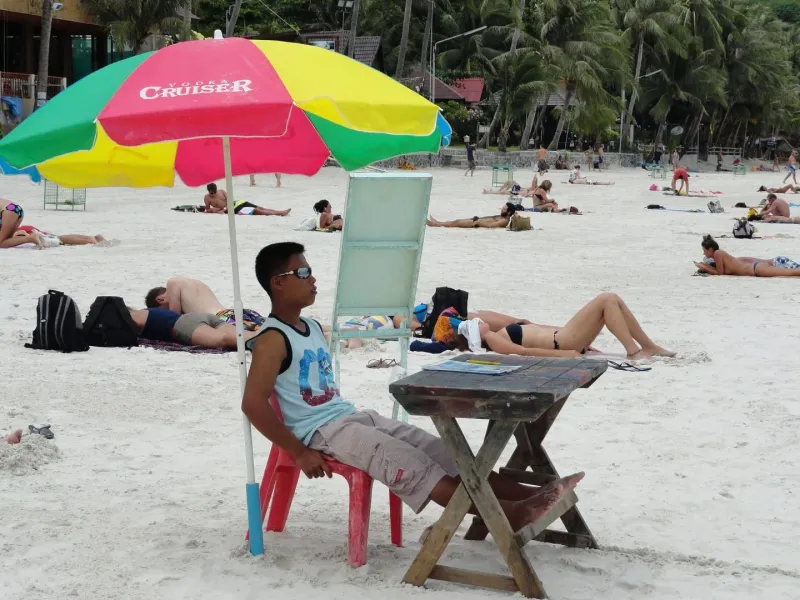
Koh Phangan wins for travelers who want undeveloped, quieter sand. Beaches like Thong Nai Pan and Bottle Beach (reachable only by boat or a steep jungle trail) stay close to how Samui’s coastline looked two decades ago. Koh Samui counters with more variety and better infrastructure: Chaweng Beach is Samui’s 7 km white-sand strip with the island’s densest resort and restaurant scene, while Maenam Beach and Choeng Mon Beach offer calm, shallow water safe for swimming. Samui’s beaches are easier to reach by taxi and better set up for sun loungers and beach clubs; Phangan’s best beaches often require more effort — a boat, a hike, or a bumpy dirt road.
Nightlife
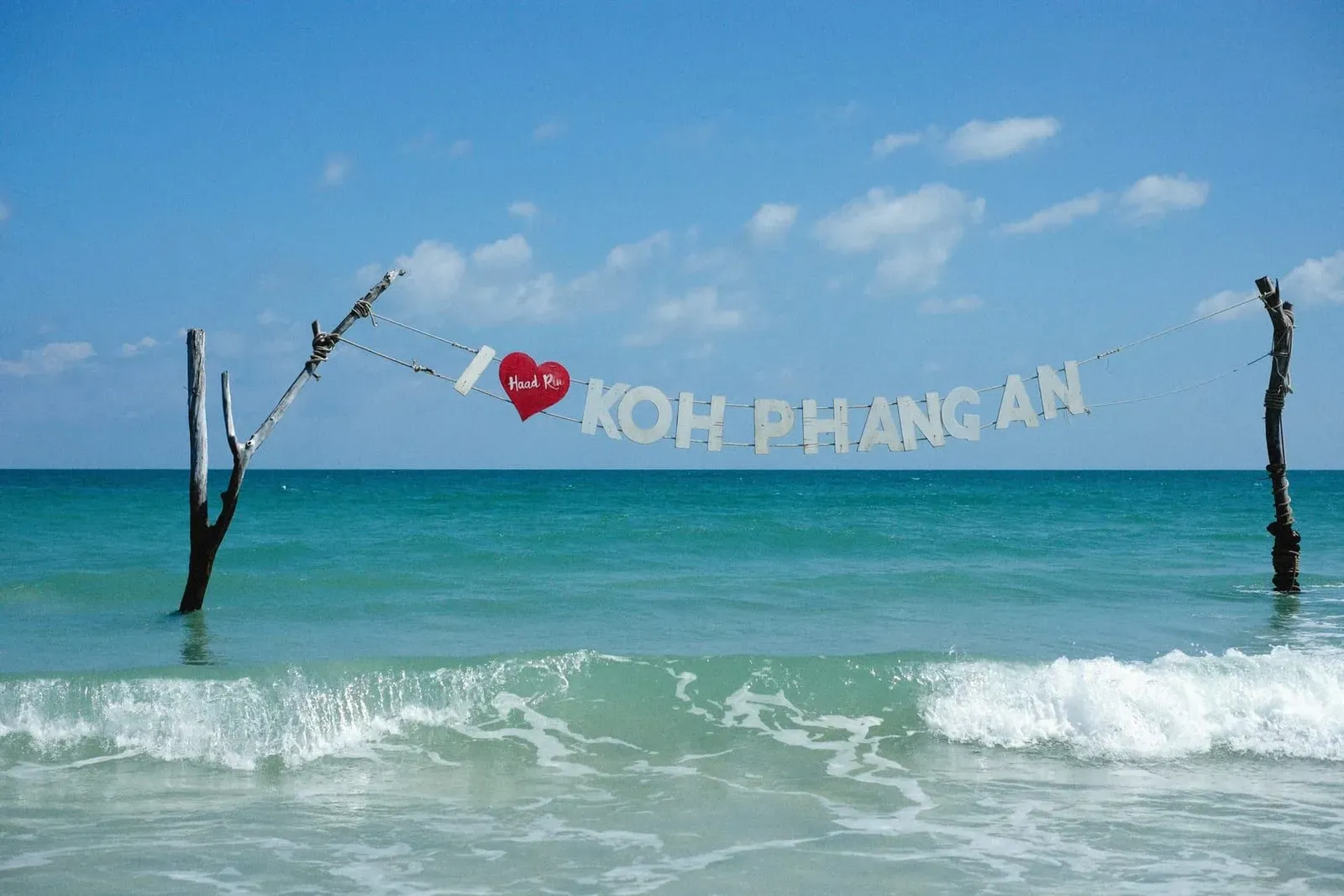
Koh Phangan wins on nightlife, largely because of one event. The Full Moon Party at Haad Rin draws thousands of visitors to the beach roughly once a month for an all-night dance party (entry ~200 THB / ~5.50 USD, cash at the gate). Outside Full Moon dates, Haad Rin and Baan Tai still run bars and beach clubs, and Koh Phangan also hosts a Half Moon Party and Black Moon Party on other lunar dates. Koh Samui’s nightlife centers on Chaweng Beach, where a strip of bars, clubs, and go-go venues runs late every night of the week — less globally famous than Full Moon, but consistent rather than tied to the lunar calendar. Travelers who dislike crowds should note Full Moon Party nights can draw 5,000-30,000 people to one beach.
Family Travel
Koh Samui wins clearly for families. The island has the region’s best-equipped hospital — Bangkok Hospital Samui, JCI-accredited with a boat ambulance service that evacuates patients from Koh Phangan and Koh Tao — plus an airport for quick departures if needed. Beaches like Maenam and Choeng Mon have calm, shallow water and family-oriented resorts with kids’ clubs. Koh Phangan’s single hospital, Phangan International Hospital, handles routine care but transfers serious cases to Samui, and the island’s identity leans backpacker and party-focused rather than family-focused. Parents traveling with young children are consistently better served on Samui.
Couples and Honeymoons
Koh Samui wins for couples wanting polish; Koh Phangan wins for couples wanting atmosphere. Samui has a denser concentration of five-star honeymoon resorts, private-pool villas, and beachfront fine dining around Choeng Mon and Chaweng Noi. Koh Phangan offers a more bohemian romance — quiet coves like Thong Nai Pan Noi, beachfront yoga shalas, and fewer crowds outside Full Moon dates — at generally lower prices than Samui’s luxury tier. Couples who want a spa resort and reliable infrastructure should pick Samui; couples chasing a laid-back, less commercial vibe should pick Phangan.
Cost Per Day
Koh Phangan wins on cost. A budget traveler on Koh Phangan can get by on roughly 800-1,200 THB (~23-34 USD) per day covering a bungalow, street food, and local transport, while the same budget traveler on Koh Samui typically spends 1,200-1,800 THB (~34-51 USD) per day, since Samui’s tourism infrastructure and international clientele push up accommodation and restaurant prices. Both islands see accommodation prices spike during peak season (Dec — Feb) and around Full Moon Party dates on Phangan, when bungalow rates can double or triple. Mid-range and luxury travelers see smaller cost gaps between the two islands, since Samui’s five-star resorts have direct Phangan equivalents at similar price points.
Digital Nomad Scene
Koh Phangan wins for remote workers. The island has an established nomad community with multiple dedicated coworking spaces (day passes ~300-400 THB / ~8.50-11 USD, monthly memberships ~3,000-6,500 THB / ~86-186 USD) and a critical mass of long-stay foreigners that supports work-friendly cafes. Koh Samui’s nomad scene is growing, especially around Bophut and Maenam, but has fewer dedicated coworking venues and a more transient, tourist-heavy population. Phangan’s lower cost of living — a private room with pool access can run under 20,000 THB (~571 USD) a month — is also a draw for long-stay remote workers, though its lack of an airport means visa runs and flights require the added Samui or Surat Thani connection.
Nature and Hiking
Koh Samui wins on marked, accessible nature trails. The island has more than 20 documented hiking routes and viewpoints, from the short Samui 360 Viewpoint Trail to boulder panoramas like Overlap Stone Viewpoint, plus multi-tier cascades such as Na Muang Waterfalls. Koh Phangan’s interior is more raw — dense jungle with waterfalls like Phaeng and Than Sadet, and the steep coastal trail to Bottle Beach — but fewer trails are signposted or maintained, and hikers should expect rougher paths and less infrastructure. Travelers who want a full day of jungle trekking with minimal crowds may prefer Phangan; travelers who want a range of easy-to-moderate, well-marked trails should stick to Samui.
Wellness and Yoga
Koh Phangan wins on sheer density of the wellness and yoga scene. The island is home to dedicated retreat centers such as The Sanctuary at Haad Tien and Wonderland Healing Center, offering week-long yoga, detox, and fasting programs from roughly 12,000-14,000 THB (~343-400 USD) per week including shared accommodation and meals. Koh Samui’s wellness offering leans luxury rather than volume — resorts like Kamalaya package wellness into five-star stays — and the island also has the Samui International Meditation Center for donation-based Vipassana-style practice. Budget-conscious yoga travelers gravitate to Phangan; travelers wanting a polished spa holiday find more options on Samui.
Size and Getting Around
Koh Samui wins on ease of getting around. At 228.7 km², Samui is nearly twice the size of Koh Phangan (125 km²) but has a fully paved ring road (Route 4169), frequent shared songthaews, metered taxis, and Grab availability outside the airport. Koh Phangan’s interior is hillier and some roads to beaches like Bottle Beach or Thong Nai Pan remain unpaved or require 4WD, so a scooter or truck-taxi is close to mandatory. Both islands report scooter accidents as a leading cause of tourist injury — confirm your travel insurance covers motorbike riding before renting on either island.
Monsoon Season Timing
Neither island wins here — Koh Samui and Koh Phangan sit on the same side of the Gulf of Thailand and share the same weather pattern, unlike Phuket or Krabi on the Andaman coast (see our Koh Samui vs Krabi guide for that pairing specifically). Both islands see their wettest, windiest weather from October through December, with November typically the rainiest month. This is the opposite of mainland Thailand’s rainy season (May — October), which is why the Samui archipelago stays a viable destination when the Andaman coast is in full monsoon. Whichever island you choose, avoid booking a beach-focused trip in November if calm seas and sunshine are the priority.
Best for Every Type of Traveler
Families
Koh Samui. The only island with an airport and a JCI-accredited hospital, plus calm swimming beaches at Maenam and Choeng Mon and family resorts with kids’ clubs.
Party and Nightlife Seekers
Koh Phangan. Haad Rin’s Full Moon Party is the headline event, backed by Half Moon and Black Moon parties and a strip of beach bars that run late outside party nights.
Couples
Either, depending on style. Samui for polished five-star honeymoon resorts and fine dining; Phangan for a quieter, more bohemian romantic getaway at a lower price.
Digital Nomads
Koh Phangan. A denser coworking and long-stay community, lower monthly rents, and cafes built around remote work — offset only by the extra ferry leg for flights.
Budget Travelers
Koh Phangan. Daily costs run roughly 30-35% lower than Samui for bungalows, street food, and local transport, outside Full Moon Party price spikes.
First-Timers to Thailand
Koh Samui. The airport, English-speaking hospital, and predictable infrastructure make it the easier island for a first Thailand trip, especially on a short itinerary.
Do Both — The Combo Plan
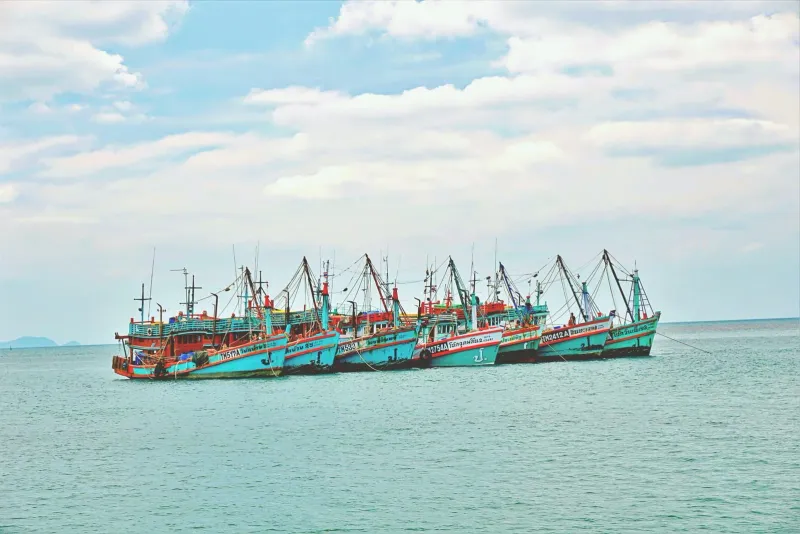
Most travelers with 5 or more days don’t need to choose — the two islands are close enough to combine into one trip. Fly into Samui International Airport (USM), spend the first 3-4 nights on Samui settling in and covering the essentials (beach time at Chaweng or Lamai, a visit to Wat Phra Yai), then take the ferry across to Koh Phangan for 2-3 nights. The crossing runs 20-45 minutes depending on the operator and pier — catamarans from Bang Rak or Nathon are fastest, while the car ferry from Lipa Noi takes closer to 90 minutes. Time the Phangan leg around a Full Moon Party date if that’s a priority, since accommodation there sells out and doubles in price within days of the party. Fly home from Samui rather than routing back through Surat Thani, since USM has more direct connections. For a full area-by-area breakdown of where to stay on each island, see our where to stay in Koh Samui guide.

FAQ
Is Koh Samui or Koh Phangan better for a first trip to Thailand?
Koh Samui is better for a first trip. It has the region’s only airport, an English-speaking JCI-accredited hospital, and predictable infrastructure — taxis, ATMs, supermarkets. Koh Phangan requires an extra ferry leg and has fewer safety nets, which suits confident repeat travelers more than first-timers.
Which is quieter, Koh Samui or Koh Phangan?
It depends on timing and location. Outside Full Moon Party dates, quiet coves on Koh Phangan (Thong Nai Pan, Bottle Beach) are quieter than anywhere comparable on Samui. But around Full Moon Party nights, Koh Phangan is far louder than Samui, where noise stays contained to Chaweng’s bar strip.
Is Koh Samui or Koh Phangan cheaper?
Koh Phangan is cheaper for budget travelers, running roughly 800-1,200 THB (~23-34 USD) a day versus 1,200-1,800 THB (~34-51 USD) on Koh Samui. Luxury travel costs are closer between the two islands, since Samui’s five-star resorts have similar-priced counterparts on Phangan.
Can you visit both Koh Samui and Koh Phangan in one trip?
Yes, and it’s the most common approach for trips of 5 or more days. Fly into Samui International Airport, spend the first few nights there, then take a 20-45 minute ferry to Koh Phangan for 2-3 nights before flying home from Samui.
Which island is better for digital nomads, Samui or Phangan?
Koh Phangan has the more established digital nomad scene, with multiple dedicated coworking spaces and lower monthly rents than Samui. Koh Samui’s nomad community is growing, especially around Bophut and Maenam, but currently has fewer coworking venues and a more transient population.
Does Koh Phangan have an airport?
No. A Koh Phangan airport project has been stalled since 2012. Visitors reach the island by ferry — either from Koh Samui’s airport (20-45 minutes) or via a longer bus-and-ferry combo from Surat Thani on the mainland (roughly 2-3 hours total).
Final Recommendation
There is no universal winner between Koh Samui vs Koh Phangan — the right island depends on what the trip needs to do. Choose Koh Samui if you’re traveling with family, want direct flights and reliable healthcare, or have a short itinerary that can’t absorb extra ferry connections. Choose Koh Phangan if you’re on a tighter budget, working remotely, chasing the Full Moon Party, or want a wilder, less developed island feel. With 5+ days, the strongest option is often both: Samui for the essentials, Phangan for 2-3 nights of contrast, connected by a ferry ride shorter than most airport transfers. If Koh Tao is also on the list, see our three-way Gulf islands comparison for how all three stack up.
Published on
About the author

Mike Brochlowski
Travel photographer & writer
Travel photographer and island explorer. Mike has spent years documenting Southeast Asia's hidden gems, from secluded beaches to jungle waterfalls.
Articles by Mike →More in Travel Guides
Also in Where to Stay in Koh Samui
Best Mid-Range Hotels in Koh Samui — €50–150 a Night (2026)
12 verified mid-range Koh Samui hotels, €50–150 (~1,800–5,500 THB) a night in 2026, by area — beach access, pools, honest price bands and…
Also in Where to Stay in Koh Samui
Bophut & Fisherman's Village — Guide to Samui's Prettiest Village
Bophut and Fisherman's Village on Koh Samui's north coast: Friday Walking Street, Coco Tam's, boutique hotels, and the best beach and foo…
Also in Where to Stay in Koh Samui
Bophut vs Maenam — Which North Coast Base Wins? (2026)
Bophut vs Maenam compared: beaches, prices, nightlife, long-term rentals and getting around Koh Samui's north coast, with a clear verdict…