Contents
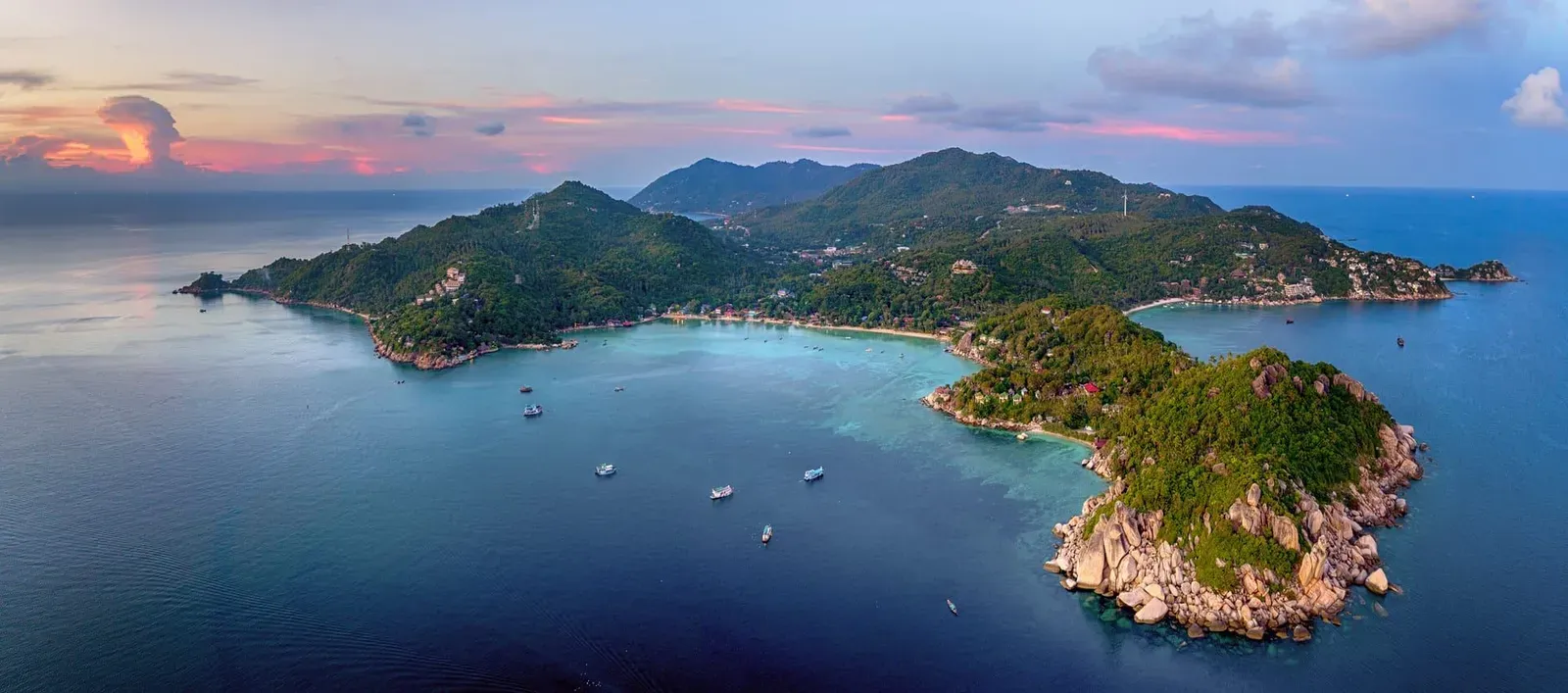
Koh Samui suits travelers who want an international airport, family resorts, paved roads and a full range of beaches and nightlife. Koh Tao suits travelers whose trip centers on scuba diving — it has no airport, a fraction of Samui’s population, and more dive schools per square kilometer than almost anywhere in the world. Most visitors fly into Koh Samui first and take the 1.5-2.5 hour ferry north to Koh Tao for a diving stint, rather than picking one island for an entire trip.
Key takeaways
- Divers, backpackers, and long-stay budget travelers: pick Koh Tao — cheap PADI courses, a tight-knit dive-town social scene, and lower daily costs.
- Families, couples on a short trip, first-timers to Thailand, non-divers: pick Koh Samui — the only airport, the region’s best hospital, and calmer resort beaches.
- Koh Tao has no airport; every visitor arrives by boat, either via Koh Samui (1.5-2.5 hours) or via Chumphon on the mainland (roughly 1-1.5 hours).
- Koh Tao is about 21 km² — roughly a tenth the size of Koh Samui’s 228.7 km² — with an official population under 2,500 that swells toward 8,000 with the seasonal dive-industry workforce.
- Serious medical emergencies on Koh Tao are evacuated by boat to Bangkok Hospital Samui, the region’s only JCI-accredited hospital.
The Verdict — Which Island Should You Choose?
Koh Samui wins for travelers who need convenience and variety: Samui International Airport (USM) puts the island 1-2 hours from Bangkok, Bangkok Hospital Samui is the region’s only JCI-accredited hospital, and the island has beaches, nightlife, and hotel tiers for every kind of trip. Koh Tao wins for one specific reason: diving. It has no commercial airport and a fraction of Samui’s infrastructure, but it trains more new scuba divers per year than almost any other single location on Earth, at course prices well below Europe, Australia or the Caribbean. If your trip is built around beach resorts, family logistics, or a short window with no room for extra ferry legs, choose Koh Samui. If your trip is built around getting PADI-certified or diving somewhere warm and cheap, choose Koh Tao. With 5+ days, the common pattern is both: fly into Samui, then ferry up to Koh Tao for 3-5 nights of diving.
Koh Samui vs Koh Tao at a Glance
| Criterion | Koh Samui | Koh Tao |
|---|---|---|
| Getting there / airport | Own airport (USM), direct flights from Bangkok, Phuket, some regional hubs | No airport; reached only by ferry from Koh Samui (1.5-2.5 hrs) or Chumphon (~1-1.5 hrs) |
| Diving | Day trips and courses available, but not the main draw | Thailand’s diving hub — 80+ dive schools, PADI courses from ~9,000-12,000 THB (~257-343 USD) |
| Beaches | Groomed, resort-lined (Chaweng, Lamai, Maenam), easy taxi access | Smaller and rockier, centered on Sairee’s 1.7 km strip and quieter southern coves |
| Nightlife | Bar strips and clubs in Chaweng, wraps up by ~2am | Sairee Beach fire shows and bars nightly, smaller and scrappier than Chaweng |
| Cost per day (budget) | ~1,200-1,800 THB (~34-51 USD) | ~800-1,200 THB (~23-34 USD), lower again for long-stay divers |
| Family and healthcare | JCI-accredited hospital, calm swimming beaches, kids clubs | Government hospital + dive-specific clinics and a hyperbaric chamber; serious cases go to Samui |
| Size / getting around | 228.7 km², paved ring road, taxis and Grab | ~21 km², hilly interior, songthaews and scooters, no ring road |
| Best for | Families, couples, first-timers, comfort-focused travelers | Certified and aspiring divers, backpackers, long-stay budget travelers |
Getting There and the Ferry Crossing
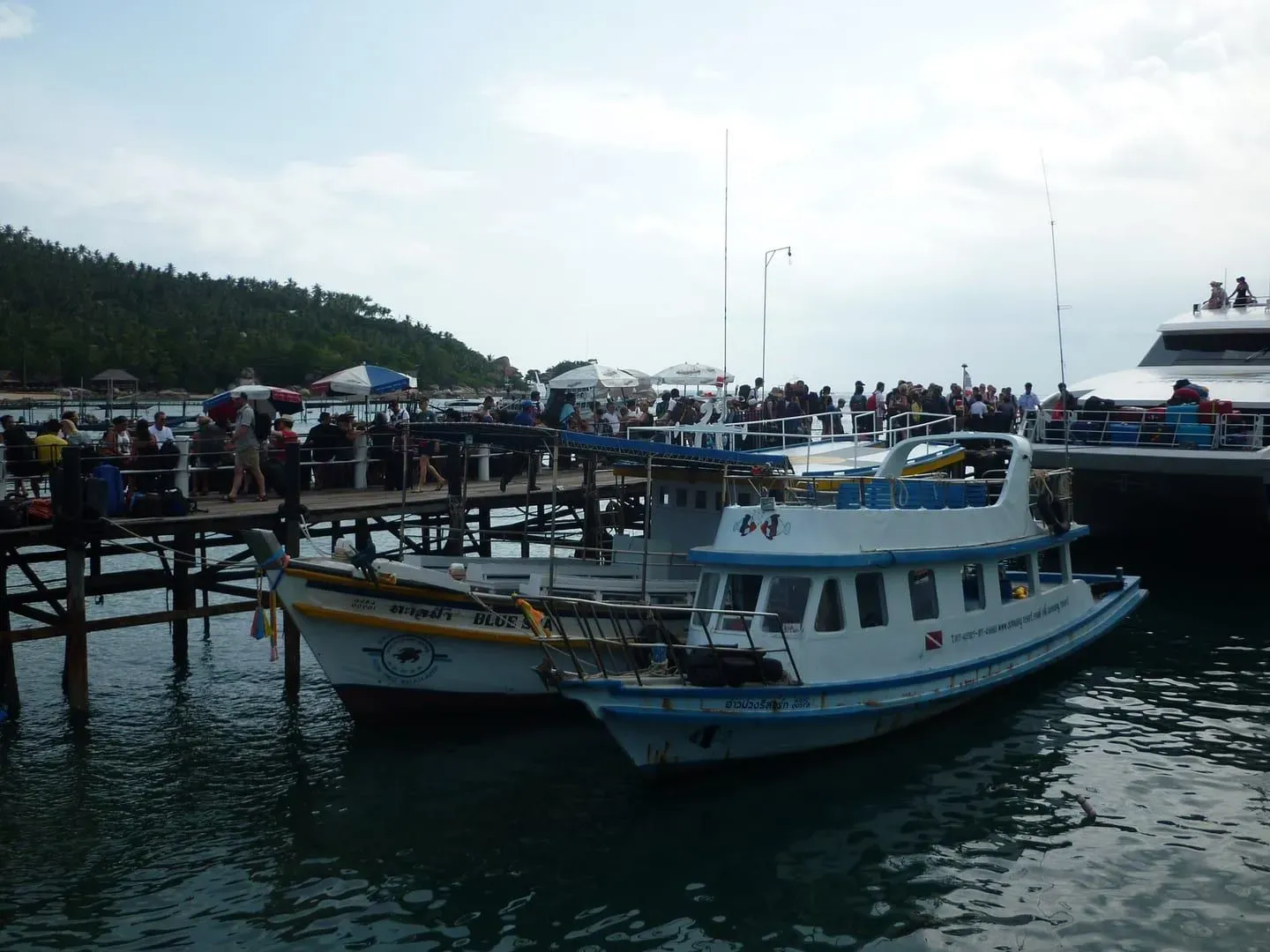
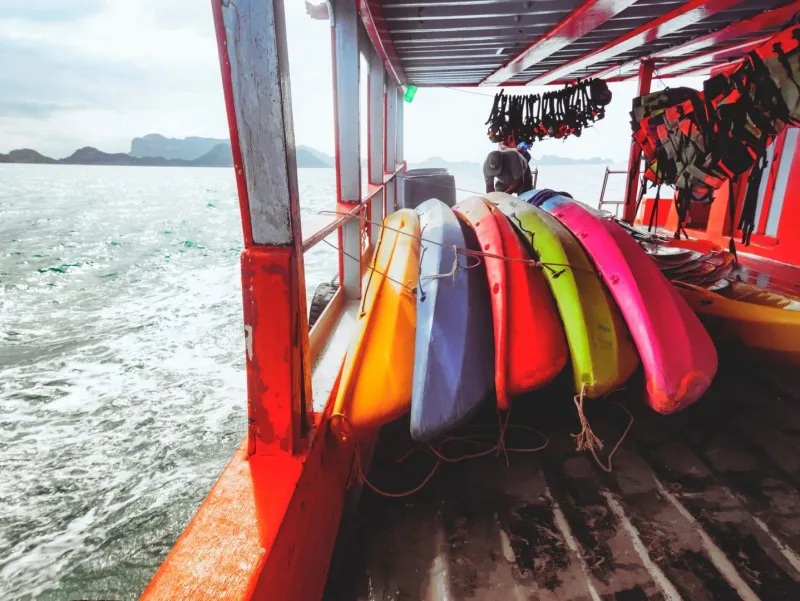
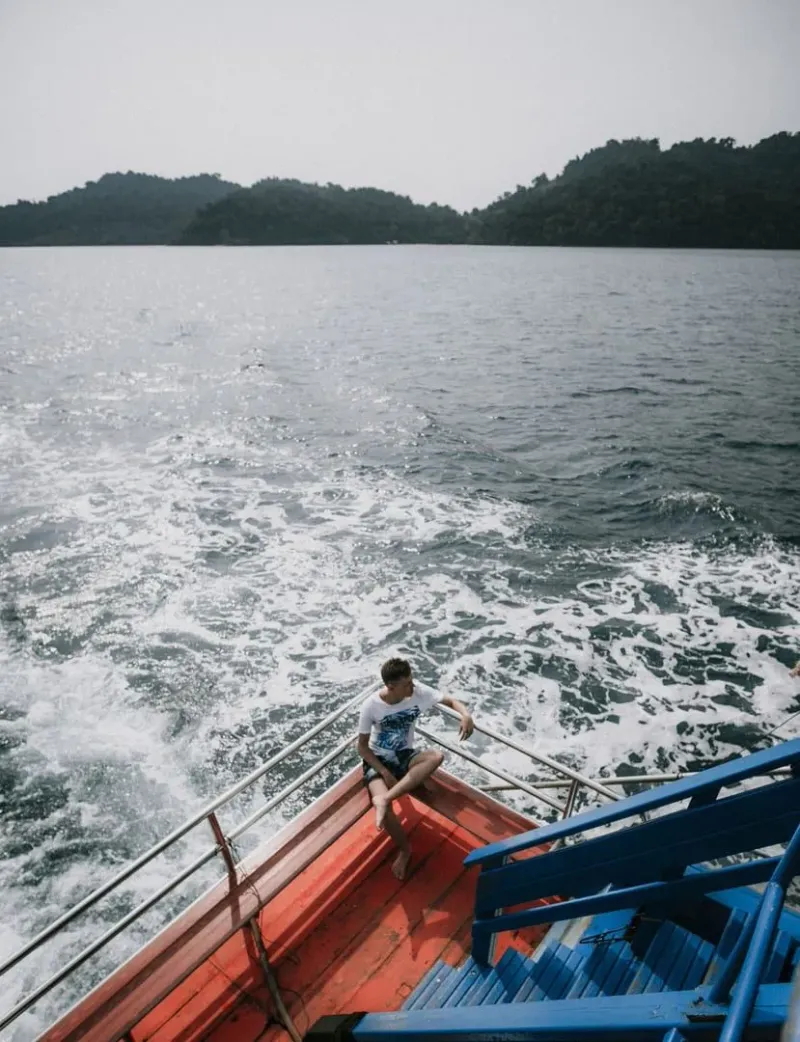
Koh Samui wins decisively on access — it is the only one of the two islands with a commercial airport. Samui International Airport (USM) lands direct flights from Bangkok, Phuket and a handful of regional hubs, putting the island about 1 hour 15 minutes from Bangkok. Koh Tao has never had an airport, so every visitor arrives by boat. The most common route is via Koh Samui: the Koh Samui to Koh Tao ferry runs 1.5-2.5 hours and costs 500-1,200 THB (~14-34 USD) one way, split across three operators — Lomprayah from Maenam pier (fastest, ~1.5 hrs, 650-700 THB), Seatran Discovery from Bang Rak pier (~2 hrs, 600 THB), and Songserm from Nathon pier (budget, ~2-2.5 hrs, 500-600 THB). Each operator runs only 2-3 sailings a day, far fewer than the hourly-feeling Samui-Phangan hop, so book a day or two ahead. Travelers coming overland from Bangkok often skip Samui entirely and connect through Chumphon on the mainland instead, where Lomprayah and Songserm run roughly ten combined daily sailings taking about 1-1.5 hours — usually the fastest way to Koh Tao if you’re not already committed to a Samui stopover. See our ferry piers guide for facilities at each departure point.
Diving
Koh Tao wins overwhelmingly, and it isn’t close. The island is home to more than 80 dive schools packed into 21 km², and by most industry estimates it certifies tens of thousands of new divers a year — more than almost any other single location on the planet, according to PADI’s own Koh Tao overview. A PADI Open Water course, the standard beginner certification, typically runs 9,000-12,000 THB (~257-343 USD) over 3-4 days including gear, boat trips and course materials, well below prices in Europe, Australia or the Caribbean. Certified divers pay 800-1,100 THB (~23-31 USD) per fun dive, dropping toward 1,000 THB (~29 USD) on a 10-dive package, and the island runs a dedicated hyperbaric recompression chamber (operated by the SSS Network) for decompression emergencies — a level of dive infrastructure Koh Samui simply doesn’t have. Koh Samui offers snorkeling trips and day-tour diving around Ang Thong and its own reefs, and operators run guided day trips up to Koh Tao and Koh Nang Yuan (2,500-3,500 THB / ~71-100 USD, plus a 200-300 THB marine park fee), but nobody flies to Samui to get certified. Anyone prioritizing dive hours over beach-resort comfort should base on Koh Tao, not Samui.
Beaches
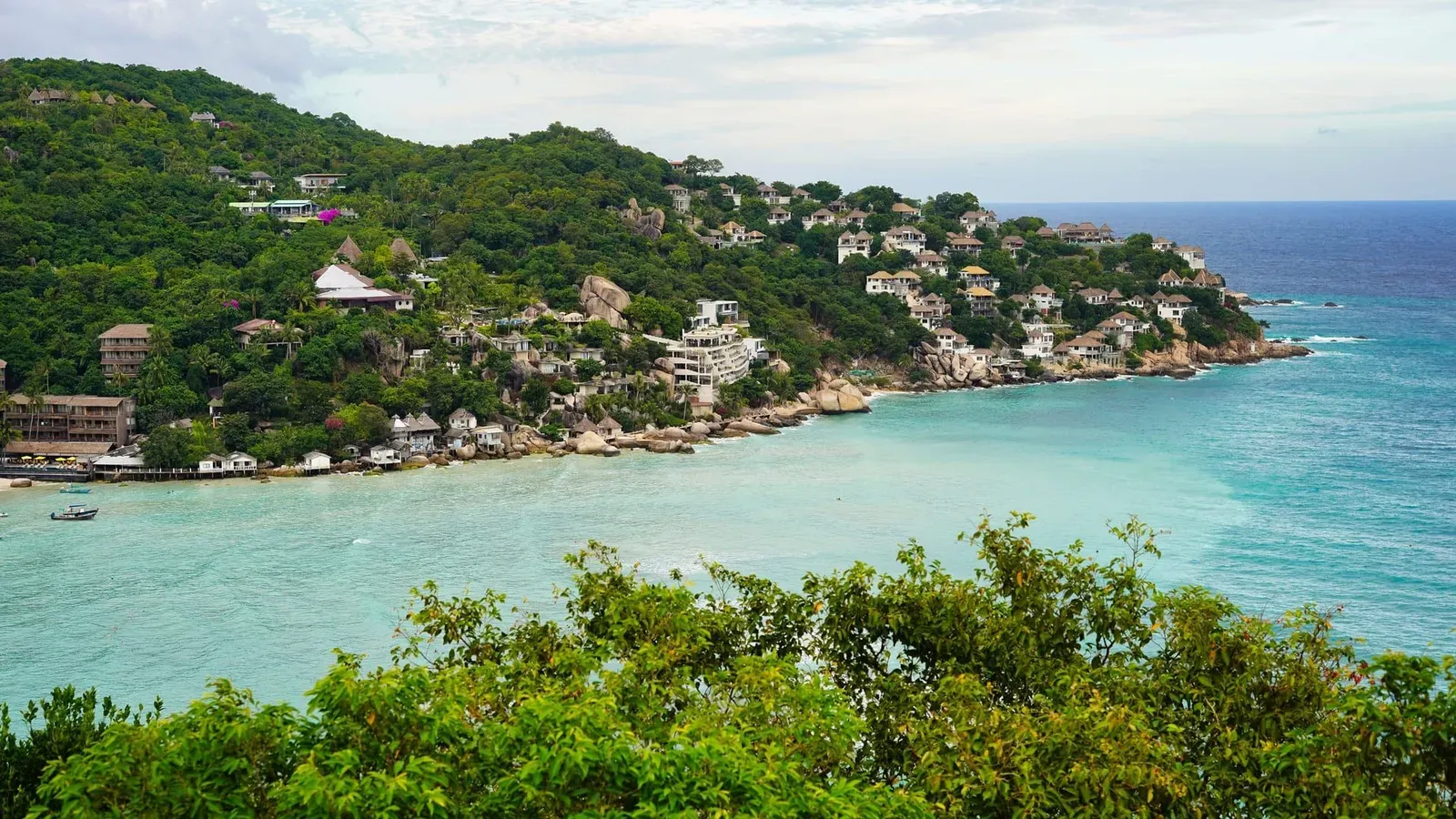
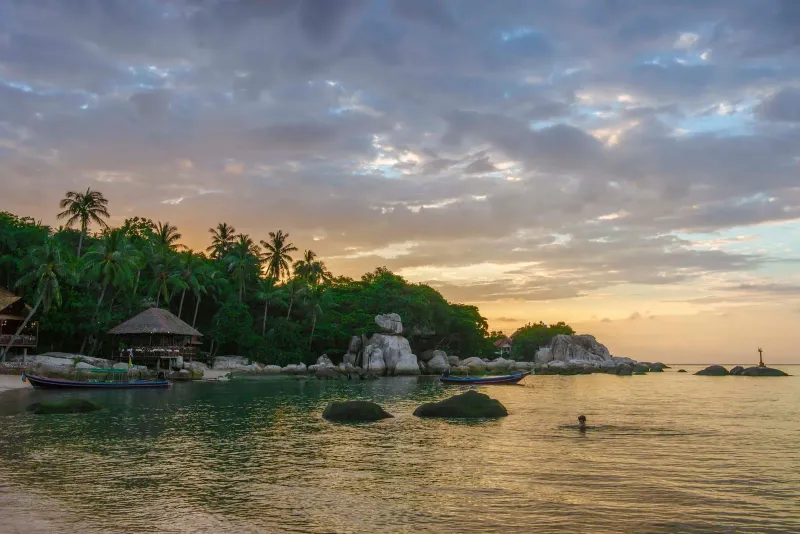
Koh Samui wins on beach variety and infrastructure. Chaweng Beach alone runs 7 km with the island’s densest resort and restaurant scene, while Maenam, Choeng Mon and Lamai add calmer, family-friendly alternatives — all reachable by taxi in minutes. Koh Tao’s beaches are smaller and rockier by comparison: Sairee Beach, the island’s longest at roughly 1.7 km, doubles as its main strip of dive shops, bars and restaurants, while Mae Haad is more harbor town than beach and Chalok Baan Kao on the south coast offers a quieter, more expat-heavy alternative. Koh Tao’s real beach highlight sits offshore: Koh Nang Yuan, a three-islet sandbar connected by a short walk, is one of the most photographed spots in the Gulf of Thailand and a short boat ride from Mae Haad. Travelers who want a long, groomed beach to spend a week on should pick Samui; travelers happy to trade beach length for easy access to world-class dive sites should pick Koh Tao.
Nightlife
Koh Samui wins on scale and variety. Chaweng’s nightlife strip runs a dense cluster of bars, clubs and go-go venues every night of the week, generally winding down by around 2am, with a quieter beach-bar and rooftop scene in Lamai and beyond. Koh Tao’s nightlife is smaller and more informal, centered almost entirely on Sairee Beach, where fire shows run most evenings and bars like Lotus Bar, Fishbowl Beach Bar and Chopper’s Sports Bar spill music onto the sand — closer to a backpacker beach-bar crawl than a club scene. Koh Tao has no Full Moon Party of its own (that’s Koh Phangan, a short hop further south), and many visitors keep evenings low-key anyway since early boat dives mean early mornings. Travelers wanting variety and later hours should stick to Samui; travelers happy with a beach bonfire and an early night before tomorrow’s dive will feel at home on Koh Tao.
Cost Per Day
Koh Tao wins on cost. A budget traveler on Koh Tao can cover a fan bungalow, street food and local transport for roughly 800-1,200 THB (~23-34 USD) a day, similar to nearby Koh Phangan, while the same traveler on Koh Samui typically spends 1,200-1,800 THB (~34-51 USD) because of Samui’s larger international resort footprint. Budget guesthouses on Koh Tao start around 500-800 THB (~14-23 USD) a night, and many divers cut accommodation costs further by booking a room bundled with a multi-day dive course. The gap narrows for divers specifically, since course fees (9,000-12,000 THB) are a fixed cost on either island, but daily living costs on Koh Tao stay consistently lower than Samui’s. See the full Koh Samui trip cost guide for a detailed daily breakdown of the Samui side.
Family Travel and Healthcare
Koh Samui wins clearly for families. The island has Bangkok Hospital Samui, the region’s only JCI-accredited hospital, plus an airport for quick departures and calm swimming beaches with kids’ clubs at Maenam and Choeng Mon. Koh Tao’s medical care is more limited: a small government hospital handles routine care, private clinics specialize in dive medicine (decompression sickness, ear issues) backed by the island’s hyperbaric chamber, but serious or non-dive emergencies are evacuated by boat ambulance to Bangkok Hospital Samui. Koh Tao’s terrain and social scene also skew toward divers and young travelers rather than young children — there is little of the resort-with-kids-club infrastructure Samui has built up. Families should base on Samui and treat Koh Tao, if visited at all, as a short day trip or a supervised dive-course stint for older kids and teens.
Size and Getting Around
Koh Samui wins on ease of getting around. At 228.7 km², Samui is roughly ten times the size of Koh Tao’s ~21 km², but it has a fully paved ring road, frequent shared songthaews, metered taxis and Grab availability outside the airport. Koh Tao’s interior is hilly and its road network is thinner, so a scooter or a shared songthaew truck covers most trips between Sairee, Mae Haad and Chalok Baan Kao — steep, sometimes unpaved sections near the island’s east coast can be rough going for inexperienced riders. Koh Tao’s small size cuts both ways: distances are short (most points are a 10-15 minute ride apart), but road quality and traffic safety lag behind Samui’s more developed network. Confirm your travel insurance covers scooter riding before renting on either island.
Digital Nomads and Long-Stay Divers
Koh Samui wins for general remote work; Koh Tao wins for a narrower, dive-focused long-stay crowd. Samui’s nomad scene is growing around Bophut and Maenam, with a wider range of coworking spaces, cafes and a larger expat community not tied to any single industry. Koh Tao’s long-stay population is smaller and skews heavily toward dive instructors, divemasters-in-training and dive-shop staff who structure their week around boat schedules rather than desk work — cost of living is lower, but the internet and coworking infrastructure is thinner than Samui’s. A remote worker who also wants to dive regularly can do both: work from Samui and take short Koh Tao diving trips, or base on Koh Tao short-term specifically to knock out a string of certifications.
Best for Every Type of Traveler
Certified and Aspiring Divers
Koh Tao. More than 80 dive schools, PADI courses from roughly 9,000-12,000 THB, a dedicated hyperbaric chamber, and a dive-town social scene built entirely around the ocean.
Families
Koh Samui. The only island with an airport and a JCI-accredited hospital, plus calm swimming beaches and family resorts with kids’ clubs.
Backpackers and Budget Travelers
Koh Tao. Daily costs run roughly 30% lower than Samui, and bundled dive-course accommodation stretches a budget further still.
Couples and First-Timers to Thailand
Koh Samui. More resort and dining variety, an easier airport connection, and infrastructure that doesn’t assume you’re here to dive.
Digital Nomads
Koh Samui, for general remote work and a broader expat community — unless your work-and-dive balance leans heavily toward diving, in which case Koh Tao’s lower costs and dive-focused long-stay scene win out.
Do Both — Combine Samui and Koh Tao in One Trip
Most travelers with 5 or more days don’t need to choose between them — Koh Tao works best as an add-on to a Samui base rather than a standalone destination. Fly into Samui International Airport (USM), spend the first few nights covering the essentials — beach time at Chaweng, a visit to Wat Phra Yai — then take the ferry north to Koh Tao for 3-5 nights to fit in a PADI course or a string of fun dives. Lomprayah’s ~1.5 hour crossing from Maenam pier is the fastest option; budget travelers can save on the Songserm run from Nathon at the cost of an extra hour. Non-divers who still want a taste of Koh Tao can book a guided day trip to Koh Nang Yuan instead of an overnight stay, skipping the ferry logistics entirely. Fly home from Samui rather than routing back overland, since USM has more direct connections than any mainland alternative. For area-by-area planning on the Samui side, see our where to stay guide and general Koh Samui itinerary.

FAQ
Is Koh Samui or Koh Tao better for diving?
Koh Tao, without question. The island has more than 80 dive schools and trains tens of thousands of new divers a year, with PADI Open Water courses running roughly 9,000-12,000 THB (~257-343 USD). Koh Samui offers snorkeling and day-trip diving but has nowhere near Koh Tao’s dive infrastructure or certification volume.
How do you get from Koh Samui to Koh Tao?
By ferry only — there’s no bridge or flight. The crossing takes 1.5-2.5 hours and costs 500-1,200 THB (~14-34 USD) one way via Lomprayah, Seatran Discovery or Songserm. Travelers coming from Bangkok overland can also connect through Chumphon in about 1-1.5 hours, skipping Samui entirely.
Is Koh Samui or Koh Tao cheaper?
Koh Tao is cheaper for budget travelers, running roughly 800-1,200 THB (~23-34 USD) a day versus 1,200-1,800 THB (~34-51 USD) on Koh Samui. Dive course fees (9,000-12,000 THB) apply regardless of which island you fly through, since the diving itself only happens on Koh Tao.
Does Koh Tao have an airport?
No. Koh Tao has never had a commercial airport. Every visitor arrives by boat, either via Koh Samui’s airport and a 1.5-2.5 hour ferry, or via Chumphon on the mainland in roughly 1-1.5 hours.
Which island is better for families, Koh Samui or Koh Tao?
Koh Samui, clearly. It has the region’s only JCI-accredited hospital, an airport for quick departures, and calm swimming beaches with family resorts. Koh Tao’s healthcare is dive-focused and more limited, and its social scene and terrain suit divers and backpackers more than young children.
Can you visit both Koh Samui and Koh Tao on one trip?
Yes, and it’s the most common way to see Koh Tao. Fly into Samui International Airport, spend a few nights there, then take a 1.5-2.5 hour ferry north to Koh Tao for a diving stint before flying home from Samui. Non-divers can substitute a guided day trip to Koh Nang Yuan instead of staying overnight.
Final Recommendation
There is no universal winner between Koh Samui vs Koh Tao — the two islands barely compete for the same traveler. Choose Koh Samui if your trip needs an airport, a hospital, family-friendly beaches, or nightlife and dining variety. Choose Koh Tao if your trip is built around scuba diving, you’re traveling on a tight budget, or you want a small, tight-knit island community rather than a resort destination. With 5+ days, the strongest option is often both: Samui for the essentials and the flight home, Koh Tao for a focused diving stint connected by a ferry ride most travelers plan around rather than avoid.
Published on
About the author

Mike Brochlowski
Travel photographer & writer
Travel photographer and island explorer. Mike has spent years documenting Southeast Asia's hidden gems, from secluded beaches to jungle waterfalls.
Articles by Mike →More in Travel Guides
Also in Itinerary
3 Days in Koh Samui — The Perfect Short Itinerary
The perfect 3-day Koh Samui itinerary: Chaweng, Big Buddha, Bophut, Na Muang Waterfalls and Lamai, with taxi times, 2026 THB prices and a…
Also in Itinerary
5-Day Koh Samui Itinerary — Beaches, Ang Thong & Waterfalls
A 5-day Koh Samui itinerary with beaches, Big Buddha, Ang Thong Marine Park and Na Muang Waterfalls — day-by-day plan, travel times and T…
Also in Itinerary
One Week in Koh Samui — 7-Day Itinerary (2026)
A complete 7-day Koh Samui itinerary: day-by-day plan, real travel times between stops, THB/USD costs, and booking tips for one week on t…