Contents
Koh Samui works well for digital nomads who want reliable infrastructure over a party scene: an international airport, a JCI-accredited hospital, fibre internet in most condos and villas, and a handful of dedicated coworking spaces spread across the north and east coasts. It is not the cheapest or most sociable base in Thailand — Koh Phangan has a denser, younger nomad community and lower rents, and Chiang Mai still has the largest and longest-running scene in the country — but Samui wins on convenience: direct flights, real hospitals, paved roads, and enough long-stay condos that a laptop-and-suitcase arrival can be working from a desk within a day or two.
Key takeaways
- Best base areas: Bophut (Fisherman’s Village) for café culture and expats, Maenam for budget long-stay, Chaweng for the only 24/7 coworking space.
- Coworking from ~600 THB/day (~17 USD); monthly desk memberships run roughly 5,000-9,000 THB (~143-257 USD) — confirm current rates before committing.
- Fibre internet from AIS, True, and 3BB advertises 100-1,000 Mbps plans, though crowd-sourced nomad speed tests average closer to ~28 Mbps in practice — condo wifi quality varies a lot.
- DTV visa: 5-year multiple-entry, up to 180 days per stay (extendable once to 360), 10,000 THB (~286 USD) fee, applied for outside Thailand.
- Realistic monthly budget: roughly 45,000-90,000 THB (~1,286-2,571 USD) all-in for rent, food, transport, and coworking, depending on lifestyle.
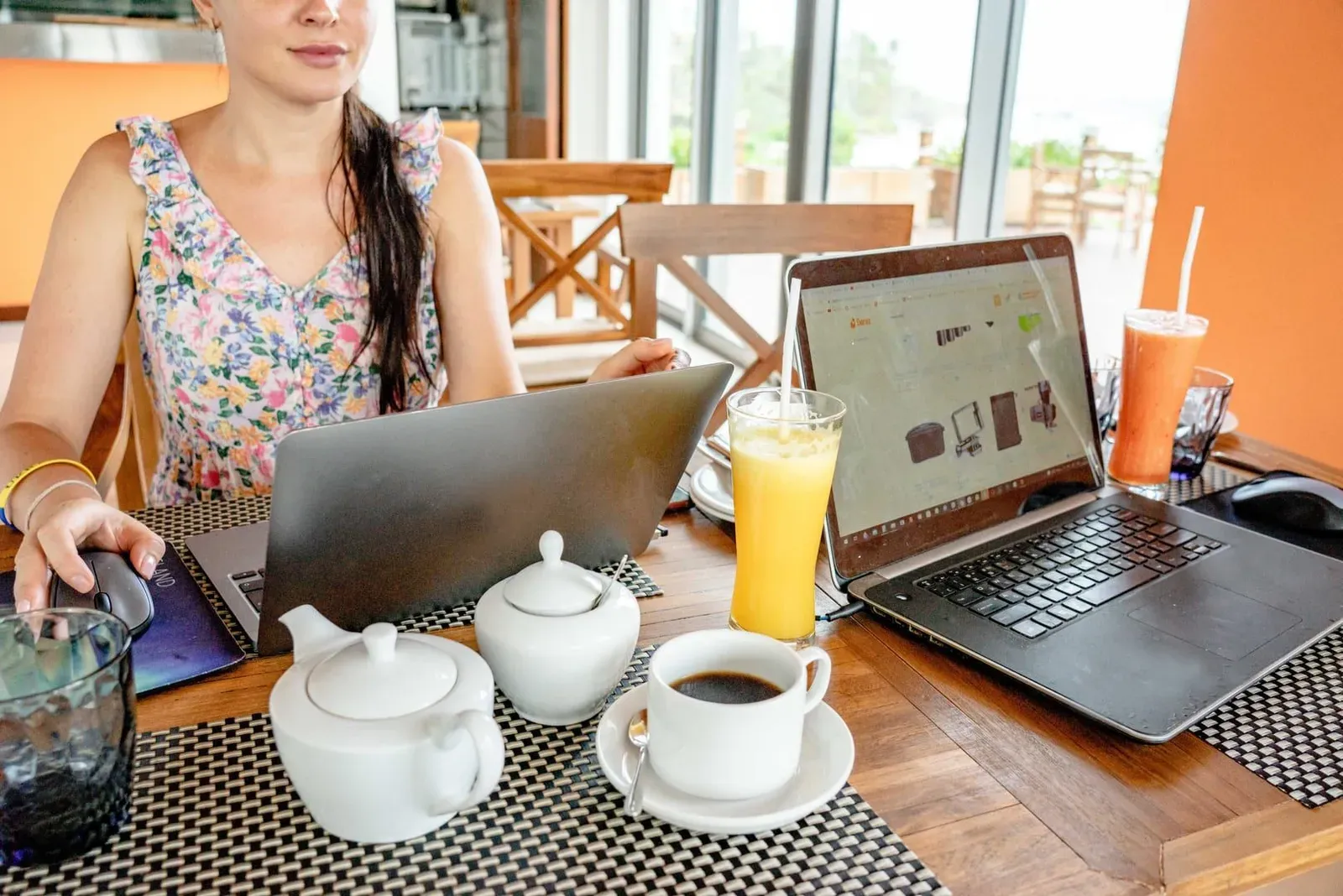
Best Areas for Nomads
The right base on Koh Samui depends on whether you prioritize café culture, budget, or a short commute to a coworking desk — Bophut and Chaweng suit sociable nomads, Maenam and Bang Rak suit budget-focused long-stayers, and Lamai splits the difference. All five areas sit within a 20-40 minute drive of Samui International Airport (USM) via Route 4169, the island’s ring road.
| Area | Studio rent (monthly) | Café / wifi scene | Vibe | Nearest beach |
|---|---|---|---|---|
| Bophut / Fisherman’s Village | 15,000-28,000 THB (~429-800 USD) | Dense cluster of boutique cafés and restaurants, generally reliable wifi | Boutique, expat-heavy, walkable | Bophut Beach |
| Maenam | 12,000-20,000 THB (~343-571 USD) | Fewer dedicated cafés, more hotel lobbies and villa wifi | Quiet, village pace, budget-friendly | Maenam Beach |
| Lamai | 12,000-22,000 THB (~343-629 USD) | Growing café scene, some coliving-style guesthouses | Mixed local/tourist, better value than Chaweng | Lamai Beach |
| Chaweng | 15,000-30,000 THB (~429-857 USD) | Most cafés and the island’s only 24/7 coworking space | Busy, commercial, best nightlife | Chaweng Beach |
| Bang Rak | 12,000-18,000 THB (~343-514 USD) | Handful of cafés, closest area to the airport | Low-key, transitional zone near USM | Bang Rak Beach |
For a full breakdown of pricing, hotel tiers, and traveler fit across all nine of Samui’s areas, see the where to stay guide. Nomads who want more community and lower rents at the cost of some infrastructure should also weigh Koh Phangan, a 20-45 minute ferry ride away.
Coworking Spaces
Koh Samui has a small but functional coworking scene concentrated in Chaweng and Maenam, rather than the dozens of options found in Chiang Mai or Bali. Desk + Chair in Chaweng is the island’s best-known dedicated space: it advertises 24/7 access, a day pass around 600 THB (~17 USD), and a monthly desk membership around 5,900 THB (~169 USD), with standing desks, meeting rooms, and a fast wired connection as the main draw over café wifi. The Exchange, part of the Explorar coliving property in Maenam, pairs a coworking floor with on-site accommodation aimed at longer-stay remote workers rather than drop-in day users.
Beyond these two, most nomads on Samui work from a rotating set of laptop-friendly cafés in Fisherman’s Village (Bophut) and along Chaweng’s main strip — reliable for a few hours, less reliable for back-to-back video calls, since wifi quality and seating availability depend on the individual café rather than a managed space. A dedicated coworking desk with fast, symmetrical fibre is still the safer choice for anyone with fixed client calls or a demanding upload workload.
Verify before you go: coworking pricing, hours, and even which spaces are currently open change faster than most Samui guides update — confirm current rates and 24/7 access directly with each venue before building a work routine around it. A dedicated coworking-spaces comparison for the island is planned for this site.
Internet & SIM
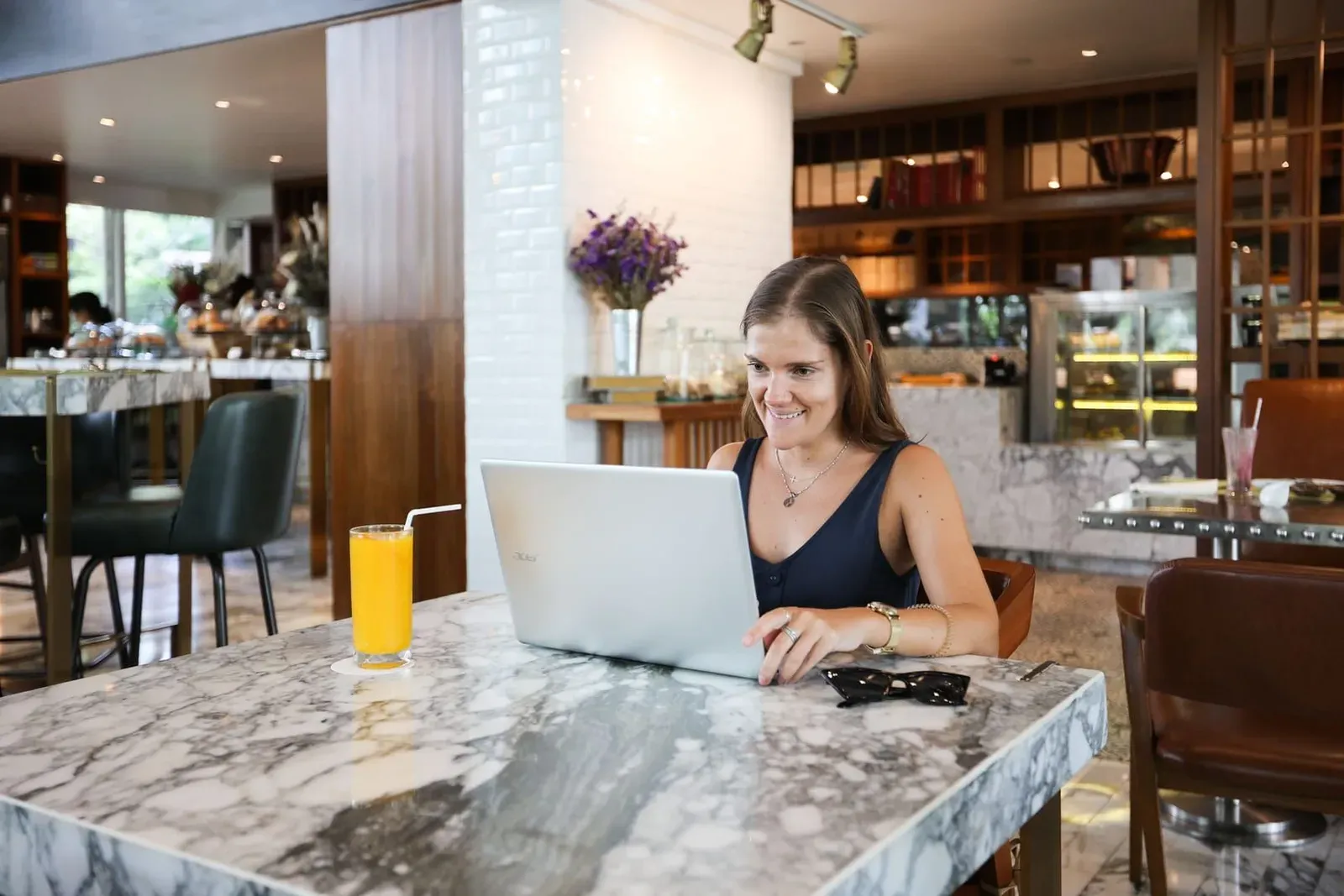
Fixed-line fibre from AIS Fibre, True Online, and 3BB covers most condos, villas, and coworking spaces on Koh Samui, with advertised residential plans typically ranging from 100 Mbps up to 1 Gbps depending on the package and building. In practice, actual performance varies a lot by property — older villas on shared building wiring can underperform their advertised plan, while newer condos and coworking spaces generally deliver close to the rated speed. Crowd-sourced nomad speed-test averages for Koh Samui sit around ~28 Mbps, well below what a good fibre plan should deliver — a sign that many reported tests come from hotel wifi and mobile data rather than a dedicated home connection, so always ask a landlord for a speed test screenshot before signing a lease if bandwidth matters to your work.
Mobile coverage from AIS, True, and dtac includes 5G in Chaweng, Bophut, and other populated areas, with 4G as the reliable fallback island-wide, including most beaches and rural roads. A local SIM (available at the airport, 7-Eleven, or any operator shop) or a Thailand eSIM from providers like Airalo or Holafly is enough for day-to-day mobile data and works as a solid backup for video calls if fixed-line wifi drops. For everything else about SIMs, data plans, and getting online the day you land, see the Koh Samui travel tips guide, which covers eSIM setup alongside other pre-arrival essentials.
Visa Options
Most nomads start on Thailand’s standard 30-day visa exemption (reduced from 60 days for entries from 15 September 2026), which is enough for a short scouting trip but not a real relocation. For anyone planning to work remotely from Koh Samui for months at a time, the Destination Thailand Visa (DTV) is the purpose-built option: a 5-year, multiple-entry visa allowing stays of up to 180 days per entry, extendable once by another 180 days at a Thai immigration office for up to 360 continuous days before you need to exit and re-enter.
The DTV costs a 10,000 THB (~286 USD) application fee and requires proof of at least 500,000 THB (~14,286 USD) in savings (seasoned for roughly three months at most embassies) plus evidence of remote income — an employment contract, client invoices, or business registration. It must be applied for from outside Thailand at a Royal Thai Embassy or consulate; there is no in-country application route. The DTV does not authorize working for a Thai employer — that still requires a Non-Immigrant B visa and work permit — but it is the standard route for remote workers who want to base long-term on Samui without repeated visa-exemption entries or visa runs.
Full rules, extension steps at the Samui Immigration Office, the mandatory Thailand Digital Arrival Card (TDAC), and overstay penalties are covered in the site’s dedicated visa guide — read that before booking a long-stay flight, since Thai visa policy shifted substantially in September 2026 and can change again with little notice. For official information, see the Thailand e-Visa portal and the Immigration Bureau of Thailand.
Monthly Costs
A realistic monthly budget for a single digital nomad on Koh Samui runs roughly 45,000-90,000 THB (~1,286-2,571 USD), depending heavily on housing choice and how often you eat out versus cook. Rent is the biggest lever: a studio or one-bedroom condo runs 12,000-25,000 THB (~343-714 USD) a month depending on area and finish quality, while a private pool villa starts around 40,000 THB (~1,143 USD) and climbs well past 80,000 THB (~2,286 USD) for higher-end properties in Bophut or Choeng Mon.
| Expense | Typical monthly range (THB) | Approx. USD |
|---|---|---|
| Studio / 1BR condo rent | 12,000-25,000 | ~340-710 |
| Private pool villa | 40,000+ | ~1,140+ |
| Food (mix of street food and restaurants) | 8,000-15,000 | ~230-430 |
| Scooter rental + fuel | ~3,000 | ~85 |
| Coworking desk (if used) | 5,000-9,000 | ~140-260 |
| SIM / mobile data | 300-600 | ~9-17 |
| Total (studio, no villa) | ~45,000-70,000 | ~1,280-2,000 |
| Total (villa lifestyle) | ~70,000-90,000+ | ~2,000-2,570+ |
These are directional ranges, not quotes — condo rent especially varies by season, contract length, and whether a landlord is willing to negotiate a 6- or 12-month lease. Scooter costs come from the site’s scooter rental guide, which breaks daily, weekly, and monthly rates down by engine size; a longer-term rental for daily commuting typically nets out around 3,000 THB a month including fuel. A separate cost of living guide on this site goes deeper into food, utilities, and family budgets if you need a more granular breakdown.
Community & Lifestyle
Koh Samui’s nomad community is smaller and quieter than Koh Phangan’s, built more around long-term expats and families than a transient backpacker-nomad crowd — crowd-sourced estimates put roughly 1,800 remote workers on the island at any given time, with two general nomad meetup groups gathering monthly and a Startup Samui Facebook group organizing weekly meetups for founders and freelancers. If you want daily coworking-cafeteria energy and instant social plans, Koh Phangan’s scene is denser; if you want a smaller, calmer network alongside a functioning island, Samui delivers that instead.
Outside of work, the island supports an active expat lifestyle: Muay Thai training and fight nights are a genuine draw, with the Samui International Stadium hosting bouts on Tuesday, Friday, and Sunday evenings from around 21:00, alongside several gyms offering daily and monthly training packages for visitors at any skill level. Yoga studios and drop-in classes are common across Bophut, Chaweng, and the resort belt, with several properties running weekly or multi-day retreats. Weekend trips are easy to fit around a normal work schedule — Ang Thong National Marine Park, a half-day speedboat over to Koh Phangan, or a dive trip to Koh Tao are all realistic Saturday plans without eating into the work week.

Samui vs Phangan vs Chiang Mai for Nomads
Each of Thailand’s three main nomad bases trades community density for infrastructure in a different way: Chiang Mai is the cheapest and most established, Koh Phangan has the strongest social scene on an island, and Koh Samui sits in between with the best airport and healthcare access of the three.
| Koh Samui | Koh Phangan | Chiang Mai | |
|---|---|---|---|
| Airport | Own airport (USM), direct flights | None — ferry only | International airport (CNX) |
| Est. monthly budget | ~45,000-90,000 THB (~1,286-2,571 USD) | Lower — cheaper bungalows and food | Lowest of the three — widely cited as the cheapest major nomad hub in Thailand |
| Coworking density | A handful of spaces | Growing but limited | Dozens of established spaces |
| Nomad community size | Small, family/long-stay leaning | Large, younger, very social | Largest and longest-running in Thailand |
| Healthcare | JCI-accredited Bangkok Hospital Samui | Limited — Samui/mainland transfer for serious cases | Multiple large hospitals |
| Climate | Tropical beach, monsoon Oct-Dec | Tropical beach, same monsoon window | Cooler, less humid, no beach |
There is no universally “best” choice — it depends on whether reliable infrastructure (Samui), social density (Phangan), or lowest cost with the deepest coworking scene (Chiang Mai) matters most for your work and lifestyle. Many long-term nomads in the region base in one and visit the others for a change of pace; Samui to Phangan is a short ferry, and Samui to Chiang Mai is a roughly 90-minute domestic flight via Bangkok.
Banking and Health Insurance
Opening a Thai bank account as a nomad on Samui is possible but not guaranteed — most banks want a non-tourist visa (a DTV or Non-Immigrant category typically qualifies, a 30-day exemption usually does not) plus proof of address, such as a rental contract or hotel confirmation, and requirements vary by branch and bank. Many nomads instead rely on a Wise multi-currency account for receiving international payments and paying in THB via card or bank transfer, which avoids the account-opening hurdle entirely and typically beats standard international transfer fees.
Thailand does not currently require proof of travel or health insurance for the standard 30-day visa exemption, though the DTV application process is stricter on financial proof and some nomads carry insurance anyway given the cost of private care. Comprehensive travel or expat health insurance is strongly recommended regardless of visa type — a single hospital stay or scooter accident without cover can run into hundreds of thousands of baht. For serious or emergency care, Bangkok Hospital Samui is the region’s only JCI-accredited hospital, located near Chaweng, with smaller clinics and pharmacies available in every main town for routine issues.
FAQ
Is Koh Samui good for digital nomads?
Koh Samui suits digital nomads who prioritize infrastructure over community: an international airport, a JCI-accredited hospital, fibre internet in most condos, and a couple of dedicated coworking spaces. It has a smaller, quieter nomad scene than Koh Phangan and fewer coworking options than Chiang Mai, so it fits remote workers who want convenience and comfort more than a dense social scene.
What is the best area on Koh Samui for remote work?
Bophut (Fisherman’s Village) suits nomads who want café culture and an expat-friendly community. Chaweng has the island’s only 24/7 coworking space and the most cafés. Maenam and Bang Rak offer lower rents for budget-focused long-stayers. Most nomads pick based on commute to a coworking desk and proximity to the beach they actually want to live near.
How fast is the internet on Koh Samui?
Fibre plans from AIS, True, and 3BB advertise 100 Mbps to 1 Gbps depending on the package, and coworking spaces and newer condos generally deliver close to that. Crowd-sourced nomad speed tests average closer to ~28 Mbps island-wide, reflecting variable hotel and villa wifi rather than dedicated fibre — always ask for a speed test before signing a long lease if bandwidth is critical.
What visa do digital nomads need for Koh Samui?
The Destination Thailand Visa (DTV) is the purpose-built option: a 5-year, multiple-entry visa allowing up to 180 days per stay, extendable once to 360 days, for a 10,000 THB fee. It requires 500,000 THB in savings and proof of remote income, and must be applied for outside Thailand. Short scouting trips can use the standard 30-day visa exemption instead. See the full visa guide for details.
How much does it cost to live in Koh Samui as a digital nomad?
A realistic monthly budget runs roughly 45,000-90,000 THB (~1,286-2,571 USD), covering rent (12,000-25,000 THB for a studio, 40,000+ for a villa), food, a scooter, and an optional coworking desk. Costs swing most on housing choice — a shared or budget condo keeps totals near the low end, while a private pool villa pushes the budget toward the top.
Is there a real nomad community on Koh Samui?
Yes, though smaller than Koh Phangan’s — crowd-sourced estimates put around 1,800 remote workers on the island, with monthly general meetups and a weekly Startup Samui group for founders and freelancers. The community leans toward longer-term expats and families rather than a transient backpacker-nomad crowd, so it takes a bit more effort to plug into than Phangan’s denser scene.


Published on
About the author

Mike Brochlowski
Travel photographer & writer
Travel photographer and island explorer. Mike has spent years documenting Southeast Asia's hidden gems, from secluded beaches to jungle waterfalls.
Articles by Mike →More in Travel Guides

Also in Travel Tips
Hospitals & Clinics in Koh Samui — Costs & Insurance (2026)
Koh Samui hospital guide: Bangkok Hospital Samui vs government care, ER and scooter-injury costs, insurance direct billing, pharmacies an…
Also in Travel Tips
Is Koh Samui Safe? Scooters, Scams, Sea & Health (2026)
Is Koh Samui safe?
Also in Travel Tips
Box Jellyfish in Koh Samui — Season, Beaches with Nets & First Aid
Box jellyfish appear in Koh Samui's waters mainly June to October; stings are rare but can be serious.