Contents
Learning Thai on Koh Samui splits into two different projects: full fluency, which the US State Department rates at roughly 1,100 classroom hours, and survival Thai, which most residents get useful in a few months because the grammar underneath is simple. Samui has a handful of ways to do either — a small pool of tutors, online lessons, and daily practice at the market and the gym — but far fewer formal options than Bangkok or Chiang Mai.
Key takeaways
- Thai is a Foreign Service Institute Category III language: about 1,100 class hours to professional fluency. Survival Thai is fast because there’s no conjugation, no tenses, no plurals and no articles.
- Tones aren’t an accent — get one wrong and you’ve said a different word. Thais often genuinely won’t understand a confident, tonally-wrong foreigner.
- The script is phonetic and learnable in weeks; transliteration is inconsistent across every book and app and caps your progress. Short-stay visitors can reasonably skip it.
- Samui has four confirmed Thai-language schools — Mae Nam, Bophut and Lamai — far fewer than Chiang Mai or Bangkok, and three of them advertise ED-visa sponsorship.
- Getting khrap/kha right, even badly, changes the price you’re quoted and how you’re treated — the real payoff, ahead of fluency itself.
What This Actually Is
An honest cost-benefit: what learning Thai takes in hours, where tones trip up nearly every learner, whether the script is worth it, and what’s realistically available on Samui versus Bangkok or Chiang Mai. It doesn’t rank schools — Samui doesn’t have enough of them for that to help.
What It Really Costs You
The US State Department’s Foreign Service Institute places Thai in Category III, its “hard languages” group: about 1,100 class hours, roughly 44 weeks full-time, to professional working proficiency, on top of daily immersion. For genuine fluency, budget years, not a season.
The encouraging half: almost nobody living here needs that number. What makes Thai hard is mostly the sound system and script — the grammar is simple by comparison. No conjugation — “I go”, “he goes”, “they go” all use the same verb ไป (pai). No tenses — time words mark completed or future action instead of the verb changing. No plurals — context or a classifier does that job. No articles, no gendered nouns. A traveler who accepts they’ll never sound like a diplomat can get genuinely useful — ordering food, negotiating, small talk — in a few months, because none of that grammar is in the way.
The Tone Problem
This is where almost every learner fails: a wrong tone doesn’t make you sound foreign, it makes you say a different word. Central Thai has five tones — mid, low, falling, high, rising — and changing only the tone on an identical syllable changes its meaning completely. Wikipedia’s example of the syllable khaa: khaa (mid) “stick”; khàa (low) “galangal”, the spice in tom kha soup; khâa (falling) “value”; kháa (high) “to trade”; khǎa (rising) “leg”. Five meanings, one syllable, five tones.
That’s why a confident foreigner with a wrong tone genuinely isn’t understood, while a hesitant learner who nails the tone gets through fine. The tone carries as much of a word’s identity as the vowel does — it isn’t decoration. The fix is slowing down early and drilling tones on single words before speaking full sentences at normal speed.

Should You Learn the Script?
The case for reading: every transliteration system disagrees with every other one — one book’s j is another’s ch, tone marks vanish in casual romanizations — and that inconsistency caps your progress. Thai script itself is more consistently phonetic than English spelling; once you know the consonant-class and vowel-length rules, you can sound out words you’ve never seen, usually within a few weeks.
The counter-case: for a two-to-four-week stay, learning the script is likely the wrong use of time. Survival phrases, correct tones and the particles below pay off faster. Reading earns its keep once signs, menus and paperwork are a daily fact of life — a live-here decision, not a holiday one.
What Exists on Samui
Samui is thin on formal Thai-language options next to Bangkok or Chiang Mai’s dozens of dedicated schools, but four confirmed, currently-operating schools do teach Thai to foreigners on the island — a mix of visa-focused course tracks and one plain, non-visa course.
| School | Where | Thai group course | Class hours | ED visa |
|---|---|---|---|---|
| Koh Samui Language & Vocational School | Mae Nam | 15,000–35,000 THB for 3–15 months (120–460 hrs) | Mon–Fri 8am–6pm; adult groups 10am–12pm & 1pm–3pm | Sponsors it — minimum 8 hrs/week attendance |
| Mind Your Language Thailand | Bophut | 17,900 THB per 2-week intensive (30,430 THB for two levels combined) | Mon–Fri 9am–1pm | Advertises CSN and ED visa support |
| Samui Language School | Lamai (Maret) | 18,000–48,000 THB for 3–12 months | Not published — confirm at enrollment | Advertises ED and DTV visa support; the school itself says final approval is Immigration’s call, not guaranteed |
| Mee Fah Samui Language School | Mae Nam | From 12,000 THB (800–950 THB per 50-minute lesson, minimum 10 lessons) | Mon–Sat 8:30am–5:30pm | Not offered — an OPEC-licensed language course with no visa track |
Prices and hours above are each school’s own published rate as of September 2026 — confirm directly before enrolling, since course terms change. KSTVS is the island’s oldest, opened in 2003 and a three-time winner of the Ministry of Education’s Quality School Award, though one published 2023–2024 student account also describes attendance sign-in sheets that were rarely checked — a reminder that a visa-eligible course and a rigorously-attended one aren’t automatically the same thing. Mind Your Language, running since 2001 and Ministry of Education-approved, has reviewers specifically noting the school works with Samui Immigration on genuine visas rather than paperwork alone. Mee Fah is OPEC-licensed but doesn’t offer visa sponsorship at all — the plain-course option if a visa isn’t the goal.
Private tutoring happens locally rather than through an agency, roughly 300-600 THB (~8.50-17 USD) an hour for conversational lessons, checked against general Thailand tutoring rates as of September 2026 — an estimate to confirm locally, not a published rate. Per site policy, no individual tutor is named here.
Online tutoring is the more reliable route: marketplaces like italki and Preply connect learners with Thailand-based teachers, often in Bangkok or Chiang Mai, priced per lesson with cheap trial lessons first — the practical stand-in for the schools Samui doesn’t have, and an easy add to a digital nomad’s weekly routine between coworking sessions.
Apps people actually use: Google Translate’s camera-translate for menus and signs, ThaiPod101 for structured audio lessons, Ling or Drops for vocabulary drilling with tone audio.

The ED-Visa Question
Thailand’s education (ED) visa lets a foreigner stay long-term to study, Thai language included, sponsored by an accredited school that reports your attendance to Immigration — not paperwork bought once and forgotten.
Take enforcement seriously. Immigration has spent recent years cracking down on “ED-visa mills” that sold the paperwork without real class time, pushing toward genuine, checked attendance — a school with a poor compliance record risks losing sponsorship rights entirely. Three of the four confirmed Samui schools above advertise ED-visa sponsorship for their Thai courses: KSTVS publishes an 8-hour-a-week minimum, with the visa valid 6–9 months at a time depending on level and renewable annually for up to five years; Samui Language School and Mind Your Language Thailand offer the same route but, like every school, can’t guarantee Immigration will approve any individual application. This page could not verify 2026 attendance-hour thresholds beyond what KSTVS itself publishes, or any school’s current sponsorship standing — that changes with enforcement and has to be checked directly. Verify a school’s current status and its real weekly attendance requirement directly with Immigration or the school before enrolling; see the Koh Samui Visa Guide for how an ED visa compares with other long-stay routes.
Learning From the Island
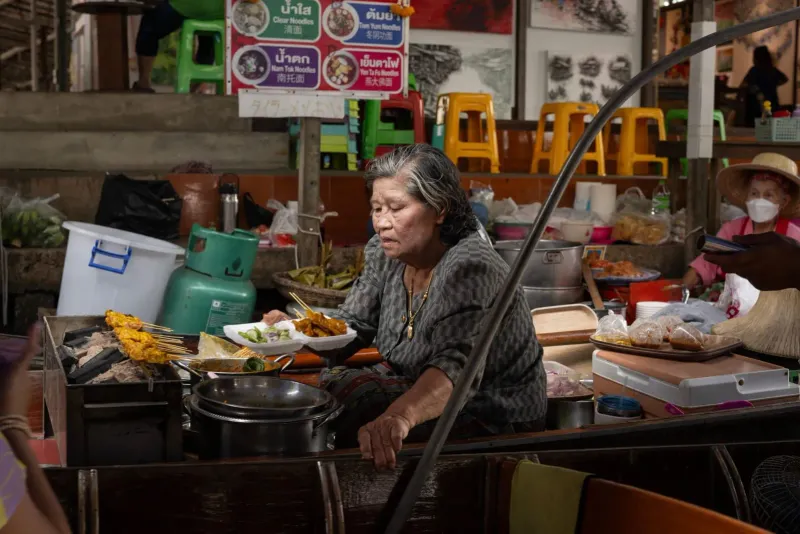
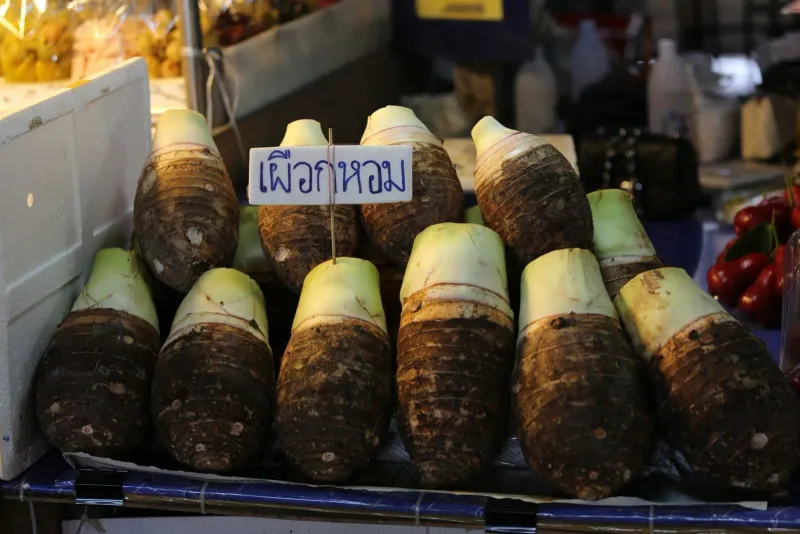
The island is a bigger classroom than any course. The market drills numbers and food words with real stakes — a vendor at Nathon or the walking market by Bophut’s Fisherman’s Village will correct your tone without malice. The gym works the same way; asking a Muay Thai trainer for Thai round counts is a welcomed, low-stakes drill. The motorbike shop gives prices and parts vocabulary real repetition. Language exchange with Thai staff wanting English practice is one of the island’s most common informal arrangements — a mutual trade, not a paid lesson.
One surprise for nearly every learner: southern Thai (Pak Tai), spoken across Samui, is a distinct dialect from the central Thai every textbook and app teaches — faster, more clipped, with its own vocabulary and tone patterns. Months of textbook study can still leave a fast local conversation hard to follow; that’s a second dialect layered on top, not a sign the studying failed.
Essential Phrases
Tone marks: à low, â falling, á high, ǎ rising, no mark = mid. Add khráp if you’re male, khâ (statements) or khá (questions) if female — dropping the particle reads as blunt; a man saying khâ by mistake reads as mimicking a woman.
| English | Thai | Notes |
|---|---|---|
| Hello | sà-wàt-dii (+ khráp/khâ) | Always add the particle |
| Thank you | khàawp-kun (+ khráp/khâ) | Safe anywhere |
| No / not | mâi châi | ”Not correct” |
| Sorry / excuse me | khǎaw-thôot (+ khráp/khâ) | Also gets attention politely |
| How much? | tâo-rài | The most useful phrase here |
| 1–5 | nùeng, sǎawng, sǎam, sìi, hâa | |
| 6–10 | hòk, jèt, pàet, kâao, sìp | |
| I want… | ao … khráp/khâ | Point-and-say works |
| Not spicy | mâi phèt | Say before ordering |
| Delicious | à-ròi | Appreciated when told to the cook |
| The bill, please | check bin (+ khráp/khâ) | Loanword, universal |
| I need a doctor | tǎwng-kaan mǎaw | First words at reception |
| It hurts here | jèp trong-níi | Pair with pointing |
| I don’t understand | mâi khâo-jai | Better than staying silent |
| I lost my passport | passport hǎai | Useful at a police stop |
| Police station | sà-thǎan-nii tam-rùat |
What It Changes
The payoff of bad, tonally-imperfect Thai shows up before fluency does. The price you’re quoted at a stall or a taxi often moves once someone hears an attempt at Thai — the real cost of living here has a local rate and a tourist rate, and language is one of the few things that moves you toward the first. The conversations you get open up — a joke with gym staff, a real answer from a mechanic instead of a shrug. And how you’re treated as a long-stayer changes once you visibly try: khrap and kha in the right places, a tone corrected with a laugh instead of a blank stare. None of it needs 1,100 hours — it needs showing up and getting it wrong out loud.
FAQ
How long does it take to learn basic Thai on Koh Samui?
Most residents reach useful survival Thai — food, numbers, directions, small talk — within a few months, since Thai grammar skips conjugation, tenses, plurals and articles. Full professional fluency is bigger: the US Foreign Service Institute estimates roughly 1,100 class hours for English speakers.
Is it worth learning to read Thai script for a short trip?
For two to four weeks, usually not — spoken survival phrases and correct tones pay off faster. For a longer stay where signs, menus and paperwork are daily, the script is learnable in a few weeks and skips the inconsistency every transliteration system carries.
Are there Thai language schools on Koh Samui?
Far fewer than Chiang Mai or Bangkok, but four confirmed schools operate here: Koh Samui Language & Vocational School (Mae Nam), Mind Your Language Thailand (Bophut), Samui Language School (Lamai) and Mee Fah Samui Language School (Mae Nam), each with its own website and a published Thai course. Many residents still combine one of these with online tutoring through teachers based elsewhere in Thailand.
Can I get an ED visa to study Thai from Samui?
Yes — Koh Samui Language & Vocational School, Mind Your Language Thailand and Samui Language School all advertise ED-visa sponsorship for their Thai courses, typically requiring at least 8 hours of class a week. An ED visa needs a school with current sponsorship rights that reports genuine attendance — Immigration has tightened enforcement against schools that sold paperwork without real class time — so verify a school’s current standing directly with the school and Immigration before enrolling. See the Koh Samui Visa Guide for how it compares with other routes.
Why do Thais sometimes not understand my Thai even when I know the word?
Almost always a tone problem, not pronunciation in the English sense. Thai’s five tones change a syllable’s meaning entirely, so a confident but tonally-off sentence can be genuinely unintelligible rather than just accented.
Is southern Thai the same as what apps and courses teach?
No — apps, books and courses teach central Thai; Samui speaks Pak Tai, a distinct, faster dialect with its own vocabulary. Textbook Thai is still the right foundation, but real local conversation will sound different.
Turning Up
There’s a real classroom to walk into now, if that’s the goal — KSTVS in Mae Nam and Mind Your Language in Bophut both publish weekday class hours; Samui Language School in Lamai and Mee Fah in Mae Nam confirm times at enrollment. Plenty of learners still start with a first online lesson through italki or Preply instead, then use the phrase table at Nathon’s market or Bophut’s Fisherman’s Village next time you’re there. Say the numbers instead of pointing at a phone, add khráp or khâ every time, and let a vendor correct your tone — worth more than a week of an app alone.

Published on
About the author

Mike Brochlowski
Travel photographer & writer
Travel photographer and island explorer. Mike has spent years documenting Southeast Asia's hidden gems, from secluded beaches to jungle waterfalls.
Articles by Mike →More in Island Life
Na Muang Waterfalls — Samui's Purple Cascades and Jungle Pools
Explore Na Muang Waterfalls on Koh Samui — the accessible 18m Purple Waterfall with its swimming pool and the 80m jungle trek to the isla…
Wat Phra Yai — Big Buddha Temple on Koh Samui
Visit Wat Phra Yai (Big Buddha) on Koh Samui: a 12-meter golden Buddha, naga staircase, panoramic views, and market stalls.
Apirom Viewpoint — Koh Samui's Closed Hillside Lookout Above Ban Tai
Apirom Viewpoint: a ~304m hilltop lookout inland of Ban Tai, Koh Samui, its restaurant closed since the pandemic but the hillside track s…