Contents
Most of Koh Samui’s waterfall trails need nothing but water and decent shoes. A handful of interior routes have no signage, no phone signal and a real history of hikers getting turned around — there, a trail guide is buying route-finding and judgement, not company. Knowing which category a trail falls into before you commit is the whole decision.
Key takeaways
- Signed, short, well-trodden trails — Na Muang 1, Hin Lad, Wang Sao Thong, Lamai Viewpoint — need no guide at all.
- The unmarked interior — Khao Pom, the Monkey Trail network above Na Mueang, Nathon Ridge, Khao Phra, Tan Rua — is where people genuinely get lost; local operators price a guided day at roughly 2,000-3,000 THB per group.
- Heat, not cliffs, is the real killer here: start by 08:00, carry 2+ litres per person, and know the signs of heat exhaustion before you’re the one showing them.
- Flash floods in waterfall gullies, no phone signal in the interior and no organised mountain rescue mean several of these routes should not be done solo, and none of the unmarked ones should be attempted in heavy rain.
What This Actually Is
A trail guide on Samui is a jungle specialist, not the licensed cultural guide covered on going with a private guide — the job here is reading a jungle, not narrating a temple. Most guided treks are arranged informally through a hotel or a local operator with a public trekking page, and the product is route-finding and pace-setting on terrain with no official trail authority, not a certified profession with a licence card.
The island’s own waterfalls and hikes guide is the place to browse every trail by difficulty; this page answers the narrower question of when a guide changes the outcome of the day.
Trails You Can Do Alone
Most of Samui’s waterfall trails are short, signed and busy enough that getting lost is unlikely — one path to a car park and a viewing platform.
| Trail | Distance | Why it’s solo-safe |
|---|---|---|
| Na Muang 1 | ~100 m | Paved, flat, ticketed park with staff on site |
| Hin Lad Trail | Short forest walk | Signed temple-forest path, regular foot traffic |
| Wang Sao Thong Trail | 8-10 min each way | Single path in, same path out — “hard to get lost” by the trail’s own account |
| Lamai Viewpoint | Short stair climb | Paved stairway with handrails, no scrambling |
| Tartain Waterfall Trek | Marked with entrance briefing | Signed route; staff brief visitors on the rope sections before they start |
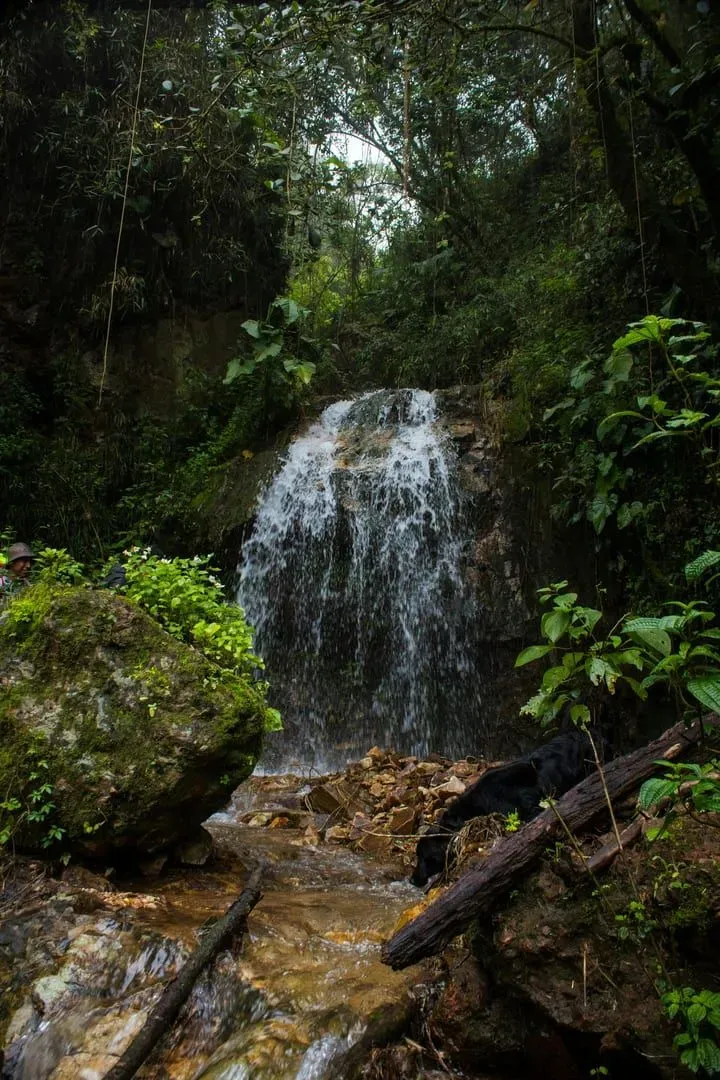
None of these need a guide. The common thread on this site’s own trail pages is that difficulty here comes from heat and footing, not navigation.
Trails Where People Get Lost
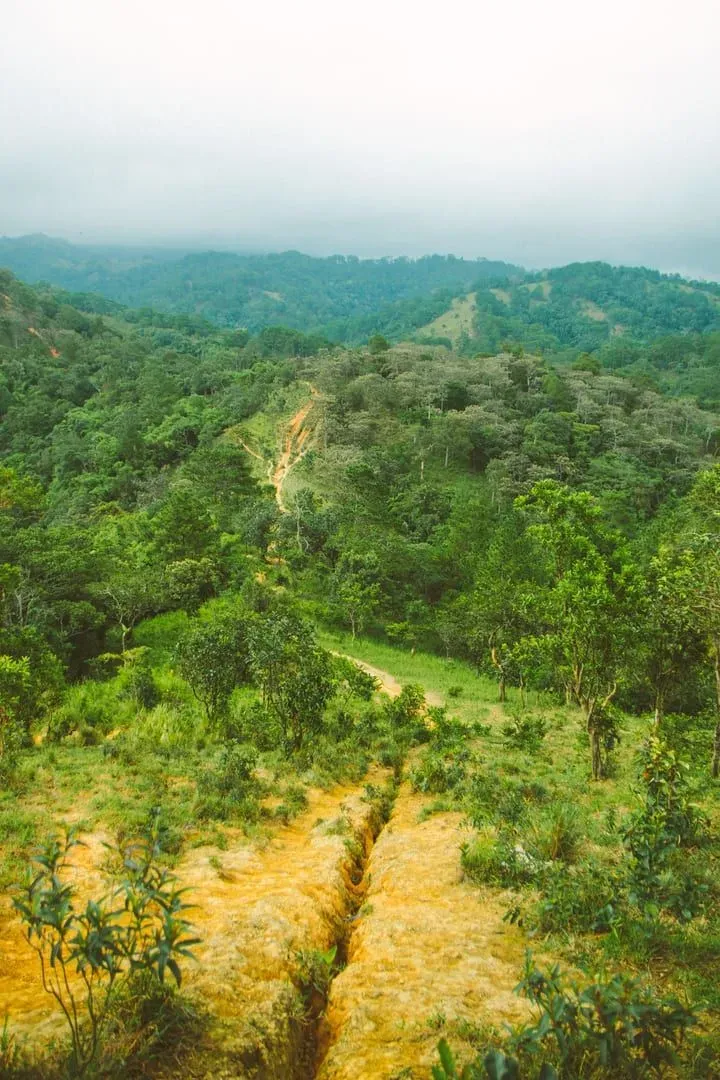
The interior is a different proposition: unmarked track, seasonal overgrowth, and on harder routes, no phone signal to bail yourself out.
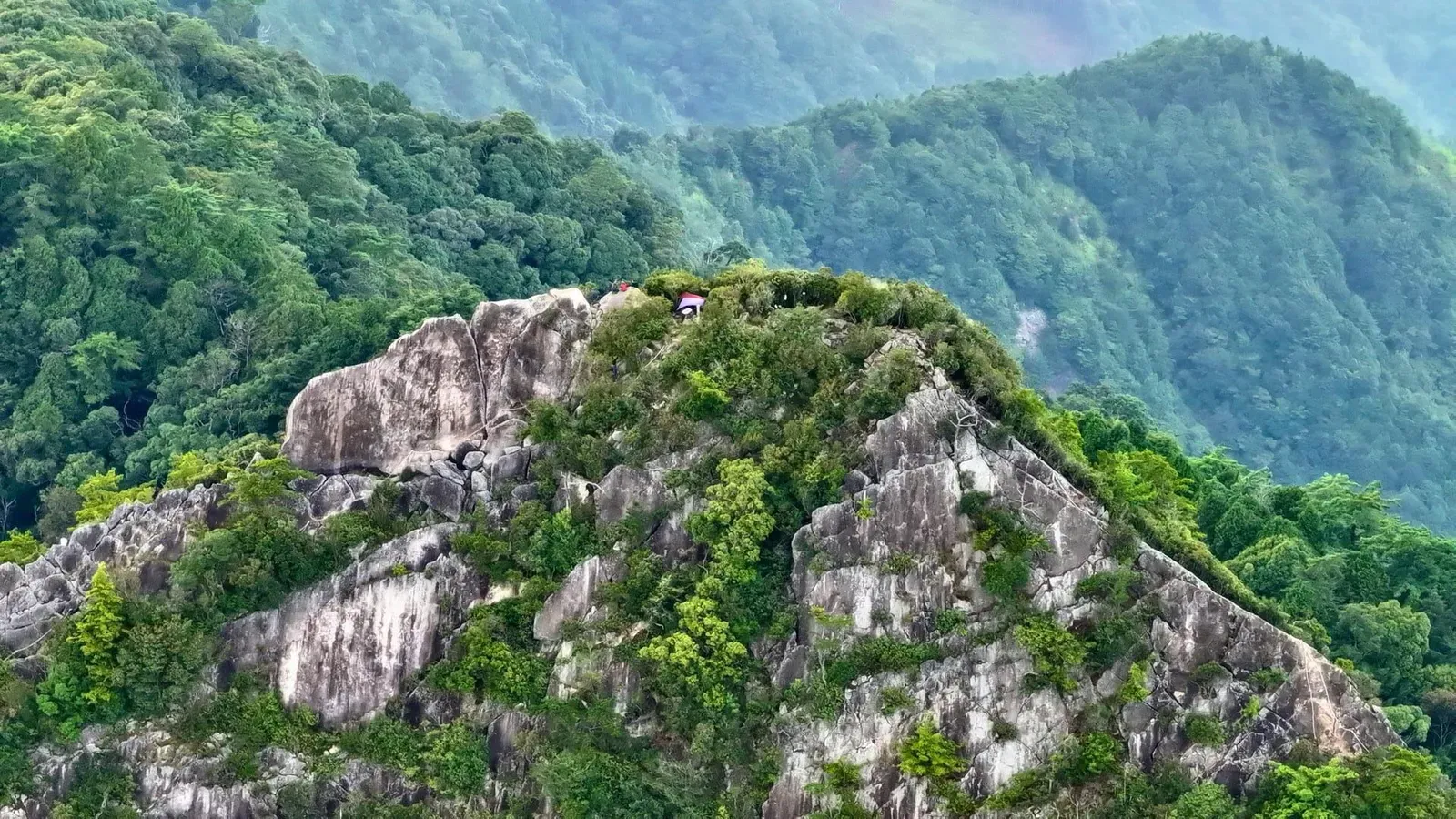
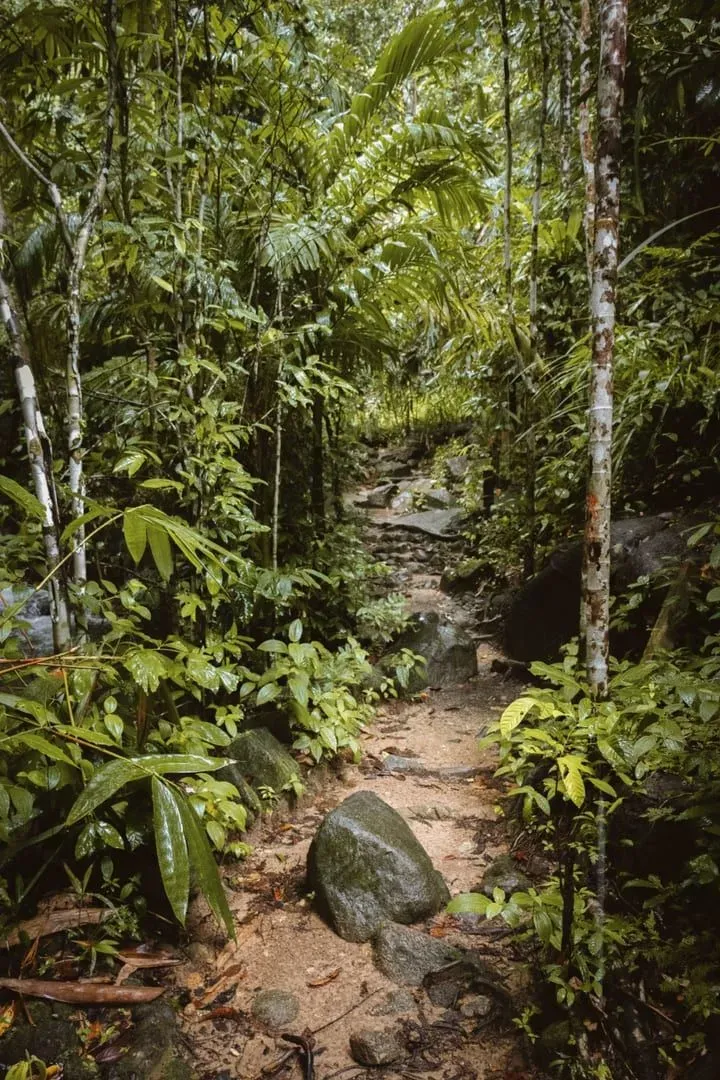
- Khao Pom, the island’s highest point: no marked trail, no signage, no cell signal in the canopy — this site’s own trail page states plainly that hikers who attempted it without a guide have become lost in identical-looking vegetation.
- The Monkey Trail network above Na Mueang — the same valley that feeds the Na Muang waterfalls — is dirt tracks and ridge lines marked mostly by race-day ribbons; outside the annual Samui Trail event it’s easy to lose the correct fork.
- Nathon Ridge: local operators call it the island’s hardest standard trail, with inconsistent markings and an ending descent to Zong Raue Waterfall that shifts with the plantation seasons.
- Khao Phra and Tan Rua: sparse markings, patchy signal, distance enough that an off-route detour adds hours, not minutes.
- Waterfall-chain approach tracks near Tartain and Khao Phra wash out or vanish under fresh growth after heavy rain — a route obvious last dry season can simply not be there.
The pattern on this site’s own trail pages repeats three words: unmarked, inconsistent, GPS-recommended. A guide replaces that with someone who walks the route regularly enough to know its current state.
What a Guided Walk Costs
Expect a per-group rate, not per-person, since a guide leads the same route regardless of headcount. As of 2026, local operators price a guided jungle trek at roughly 2,000-3,000 THB per group of 1-4 hikers, arranged a day or two ahead rather than on a fixed schedule — this site’s own Khao Pom trail guide quotes the same band. A day with the island’s licensed cultural guides, covered on going with a private guide, is a different, pricier job entirely — history and temples, not jungle navigation.
Typically included: a guide who has walked the route recently enough to know its current state, basic first-aid awareness, and on wetter routes a machete for overgrowth and salt or repellent for leeches. Typically excluded: park or waterfall entry fees, transport to the trailhead, your own food and water.
What a Good Trail Guide Actually Gives You
The value is not company on a walk — it is four specific things a guidebook cannot give you.
- Route-finding on ground that changes. Interior trails grow over between visits; a guide who treks the same hills regularly knows this week’s actual line, not last season’s.
- Plant knowledge. Which forest plants are used locally for food, rope, medicine or shelter — context a trail sign never carries.
- Where the water is. Which stream sections run year-round versus dry up in low season is practical safety information, not trivia.
- Knowing when to turn around. The most valuable call a guide makes is refusing to push on — into a darkening sky, a rising stream, a flagging hiker — before a shortened day becomes an emergency.
The Real Dangers, in Order
Heat and humidity injure and kill far more hikers worldwide than falls or wildlife, and Samui’s trails sit near the equator with little shade on exposed sections — this island’s own Monkey Trail write-up puts it plainly: heat exhaustion is a bigger real-world risk on the ridges than any wildlife or terrain hazard.
Heat exhaustion shows up as tiredness, dizziness, headache, nausea, heavy sweating with pale clammy skin, cramps and irritability — it responds to shade, water and cooling within about 30 minutes. If it progresses to hot dry skin, confusion, a racing heart or fainting, that’s heatstroke: a medical emergency, not a rest stop. Start by 08:00 to be off exposed ridges before midday heat, and carry 2+ litres per person on anything over an hour.
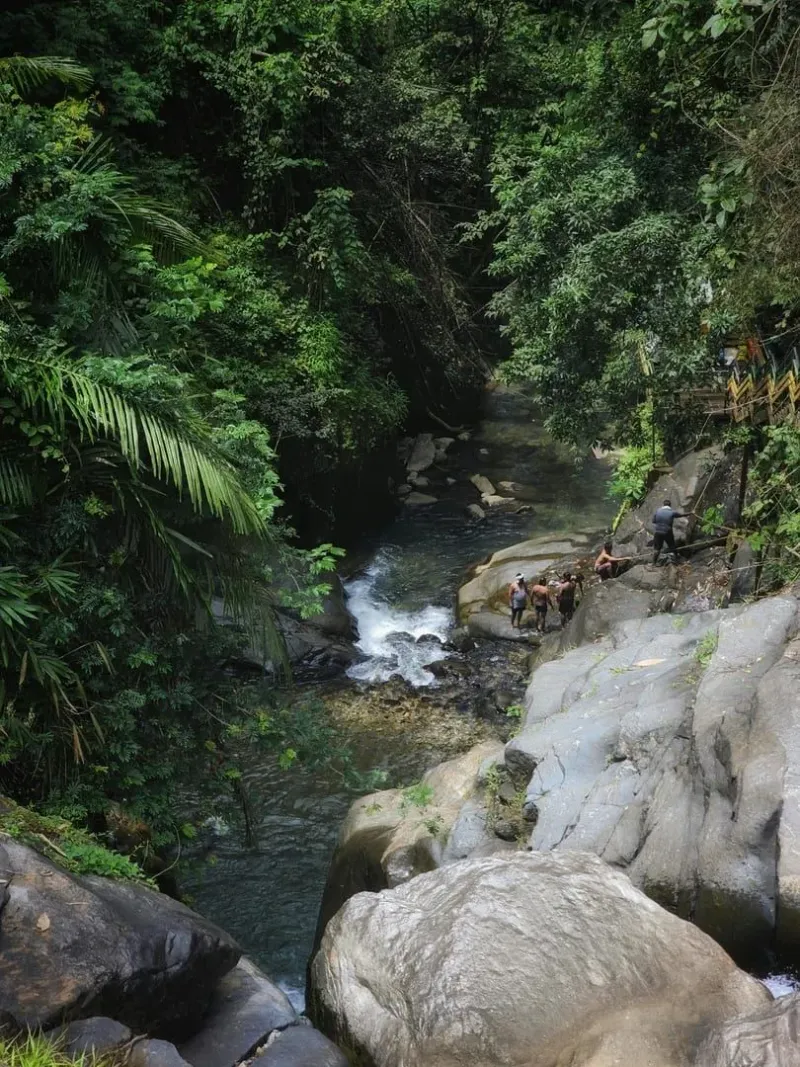
Flash flooding is the sharpest hazard after heat. Gullies can rise fast from rain falling upstream, even when it looks dry where you stand — the Na Muang trail guide tells visitors to wait hours after heavy rain before continuing past its pool sections. Granite turns genuinely slick wet, and rope-assisted sections like Na Muang 2’s are, by this site’s own account, the most hazardous part of the network in rain.
No phone signal across most of the interior means a fall or wrong turn on Khao Pom, Nathon Ridge or the Monkey Trail’s back sections can leave you unable to call for help; a downloaded offline GPS track is the minimum precaution, a guide who knows the ground the more reliable one.
Snakes are present but the real risk is narrower than it sounds. Thailand’s forests hold venomous species including the king cobra and Malayan pit viper; the pit viper is the practical concern because it sits motionless under leaf litter rather than fleeing, so bites come from a misplaced footstep, not an attack. Boots rather than sandals, staying on the cleared line, and watching your footing cut this risk to a genuine minimum.
Dogs are mostly a lowland and settlement issue, not a deep-jungle one — Thailand’s stray dog population carries a real rabies risk, so any bite or scratch near a village needs an immediate 15-minute soap-and-water wash and same-day care for a post-exposure vaccine; see hospitals and clinics.
Rescue is slow. There is no dedicated mountain rescue service on Koh Samui — an injury deep in the interior means a slow walk-out, not a helicopter within the hour. That is the strongest argument for a guide and a firm turnaround time past the signed, short trails.
Bottom line: Khao Pom should not be attempted solo at all — this site’s own trail page calls a guide non-optional. None of the unmarked interior routes (Khao Pom, the Monkey Trail’s back country, Nathon Ridge, Khao Phra, Tan Rua) should be attempted solo or in the wet season, when overgrowth, slick rock and flash-flood risk stack together.
Telling a Guide From a Driver
A driver who parks at a waterfall car park and walks the paved section with you is providing transport, not trail knowledge — a fair, useful service, but only a problem when it’s sold as more. A real trail guide describes the current state of the route past where signage ends: which stream crossings are running, where last month’s rain took out a section, what the turnaround point is if the group slows. Vague answers, or a “guide” who only knows the way to the first viewpoint, means you’ve hired transport with a walk attached — fine for the trails above, not enough for the ones below.
What to Agree Before You Set Off
Three things settled before anyone starts walking prevent almost every bad outcome on an interior trail.
- The route. Ask which specific trail or loop, not just “a jungle hike” — Khao Pom and the Monkey Trail network are both sold loosely as “mountain treks” but differ hugely.
- A turnaround time. Agree the latest time to head back regardless of how close the summit or waterfall is, and hold to it if weather turns.
- Who carries the water. Confirm whether it’s supplied or your job, and carry more than feels necessary either way.
FAQ
Do I need a guide for Koh Samui’s waterfall trails?
No, for the short, signed, ticketed ones — Na Muang 1, Hin Lad, Wang Sao Thong and similar. Yes, in practice, for unmarked interior routes like Khao Pom, where this site’s own trail guide calls a guide not optional.
How much does a guided jungle trek cost on Koh Samui?
As of 2026, roughly 2,000-3,000 THB per group of 1-4 hikers for a half- to full-day interior trek, arranged through a hotel or local operator a day or two ahead. That excludes park entry fees and transport to the trailhead.
What is the biggest real danger on Samui’s trails?
Heat and humidity, not cliffs or wildlife. Multiple trail pages on this site name heat exhaustion the most common real-world hazard, ahead of terrain or animals — carry more water than feels necessary and start early.
Can waterfall trails flood without warning?
Yes. Rain falling upstream can raise a gully fast even when it looks dry at the trailhead. Several trails on this site advise waiting hours after heavy rain before continuing past pool or rope sections.
Is there phone signal on the interior trails?
Largely no. Coverage is patchy to absent across Khao Pom, Nathon Ridge and the deeper Monkey Trail sections, which is why an offline GPS track or a guide who knows the ground both matter more here than elsewhere.
Should I hike the interior trails alone in the wet season?
No. Overgrowth, slick granite and flash-flood risk compound on every unmarked route named here, and rescue in the interior is slow with no dedicated mountain rescue service. Wait for the dry season or go with someone who treks that route regularly.
Turning Up
There is no booking desk for this — arrange a guided trek through your own hotel or a local tour shop a day or two ahead, since operators like Hiking on Samui work by informal arrangement, not a fixed schedule. For the trails you can do without one, Na Muang and Hin Lad see hikers throughout the day, best started mid-morning before the heat peaks. Read next: Koh Samui’s waterfalls and hikes guide for the full trail list by difficulty, and going with a private guide for the separate, licensed job of cultural guiding.
Published on
About the author

Mike Brochlowski
Travel photographer & writer
Travel photographer and island explorer. Mike has spent years documenting Southeast Asia's hidden gems, from secluded beaches to jungle waterfalls.
Articles by Mike →More in Island Life
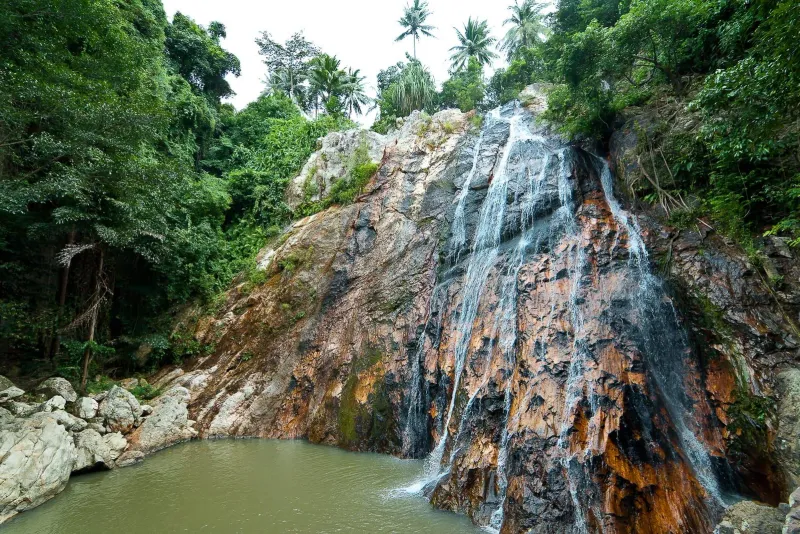
Na Muang Waterfalls — Samui's Purple Cascades and Jungle Pools
Explore Na Muang Waterfalls on Koh Samui — the accessible 18m Purple Waterfall with its swimming pool and the 80m jungle trek to the isla…
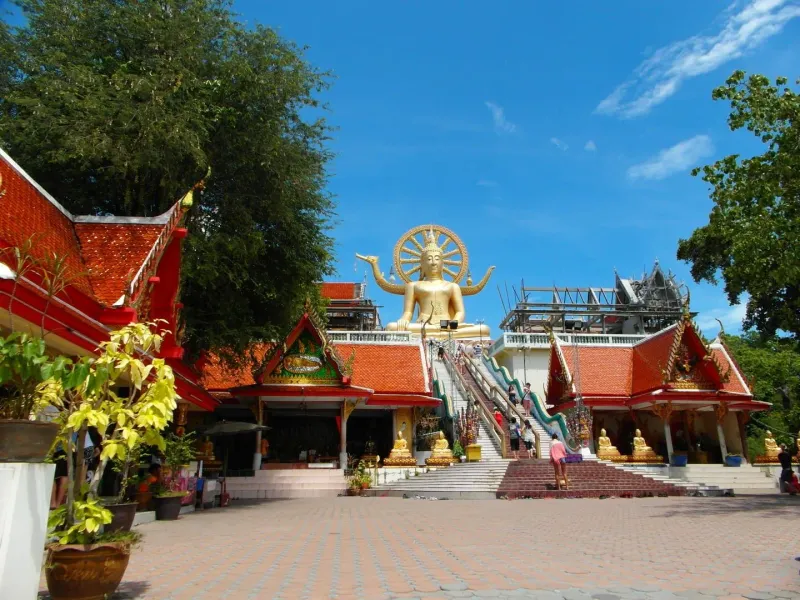
Wat Phra Yai — Big Buddha Temple on Koh Samui
Visit Wat Phra Yai (Big Buddha) on Koh Samui: a 12-meter golden Buddha, naga staircase, panoramic views, and market stalls.
Apirom Viewpoint — Koh Samui's Closed Hillside Lookout Above Ban Tai
Apirom Viewpoint: a ~304m hilltop lookout inland of Ban Tai, Koh Samui, its restaurant closed since the pandemic but the hillside track s…