Overview
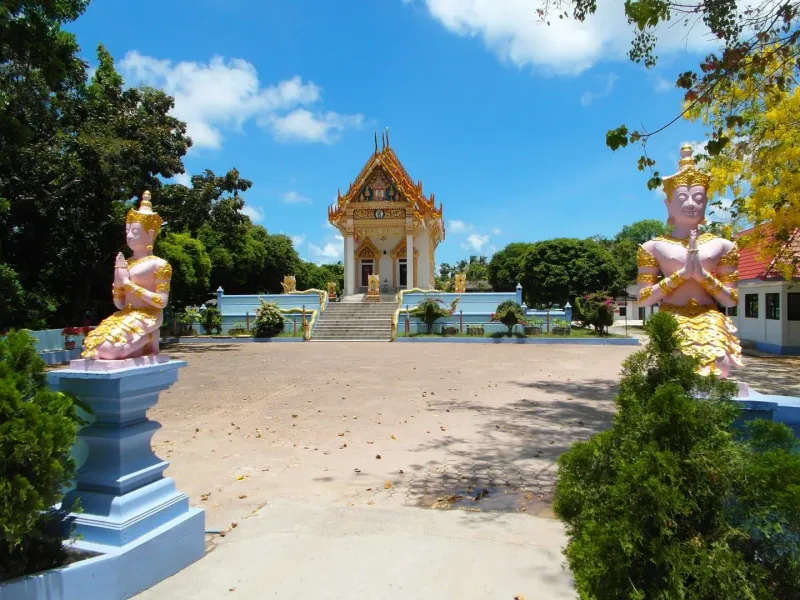
Wat Pradoem is the oldest temple on Koh Samui, and one of the most overlooked. Founded in 1682 CE (Buddhist Era 2225) during the late Ayutthaya Period, this is the temple that started Buddhism on the island. Its name literally means “to begin” or “to inaugurate” in Thai.
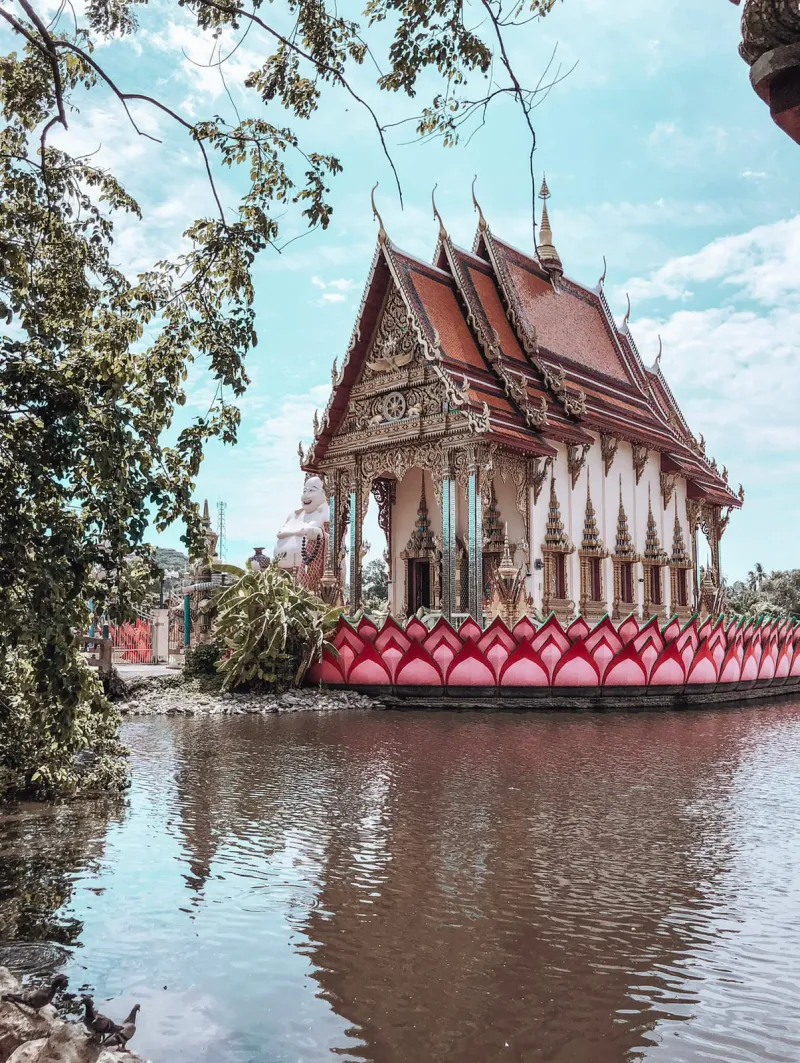
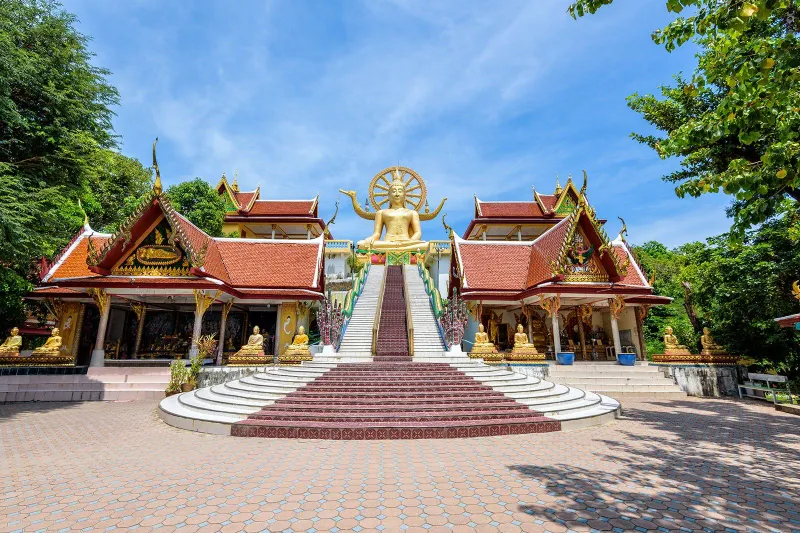
While tour buses line up at Wat Plai Laem (built 2004) and the Big Buddha (built 1972), Wat Pradoem sits quietly in the southern interior with its 344-year-old scripture library, ancient wooden halls, and exactly zero souvenir shops. You will likely be the only visitor.
This is not a photogenic Instagram temple. It’s a living piece of Koh Samui’s history: a working monastery where monks still chant at dawn and local families come to make merit on Buddhist holidays, exactly as they have for over three centuries.
History: The Temple That Started It All
Founding
According to oral tradition recorded in Thai temple registries, Wat Pradoem was founded by a Mon monk in Buddhist Era 2225 (1682 CE). Mon monks were instrumental in spreading Theravada Buddhism across mainland Southeast Asia during this era, and this unnamed monk brought the tradition to Koh Samui.
The temple was originally located at Ban Khao Khwang before government authorities later relocated it to its current position in Tambon Na Mueang in the island’s southern interior.
The name
Because it was the very first Buddhist temple built on Koh Samui, it received the name “Pradoem” (ประเดิม): meaning “to begin” or “to inaugurate.” The name is a statement of historical fact: this is where organized Buddhism on the island started.
Royal recognition
Wat Pradoem received the royal grant of Wisungkhamasima (the formal royal designation of monastery boundaries that permits ordinations) in 1803 CE (B.E. 2346). This recognition from the Thai monarchy confirmed the temple’s importance as an established religious institution.
Regional context
While Wat Pradoem dates to the Ayutthaya period, Koh Samui itself sits within the broader Surat Thani region that was once part of the Srivijaya Kingdom (7th-14th century). Ancient Chinese maps from 1687 already show the island. The Srivijaya influence is more directly visible at nearby Wat Khao Chedi with its Srivijaya-style pagoda.
Architecture
Wat Pradoem’s architecture is traditional southern Thai: modest, functional, and weathered by three centuries of tropical climate. There are no golden spires, no giant statues, no modern additions. That’s exactly what makes it special.
Key structures
- Two-story Viharn (Sermon Hall): Features a distinctive hip roof layered in two tiers, built during the tenure of famous abbot Phra Khru Wibun Thammasarn (Luang Phor Phet Tisso).
- Ancient wooden Viharn: The most interesting building: filled with ancient sculptures, art carvings, and Buddhist scriptures. Often locked on weekdays; most accessible during festivals.
- Ho Phra Tripitaka (Scripture Library): Built around 1803, this hall houses ancient palm-leaf manuscripts and religious texts. Listed by Thailand’s Office of Natural Resources and Environmental Policy (ONEP) as a site worthy of conservation.
- Drum tower: A traditional wooden structure used to signal monastic routines.
- Kuti (monk quarters): Where the resident monks live.
What makes it different
Unlike Samui’s tourist temples, Wat Pradoem has no gaudy modern additions, no oversized statues, no ticket booths. The architecture is authentically old and modest: centuries of genuine patina that no amount of new construction can replicate.
What to See
Ancient wooden Viharn
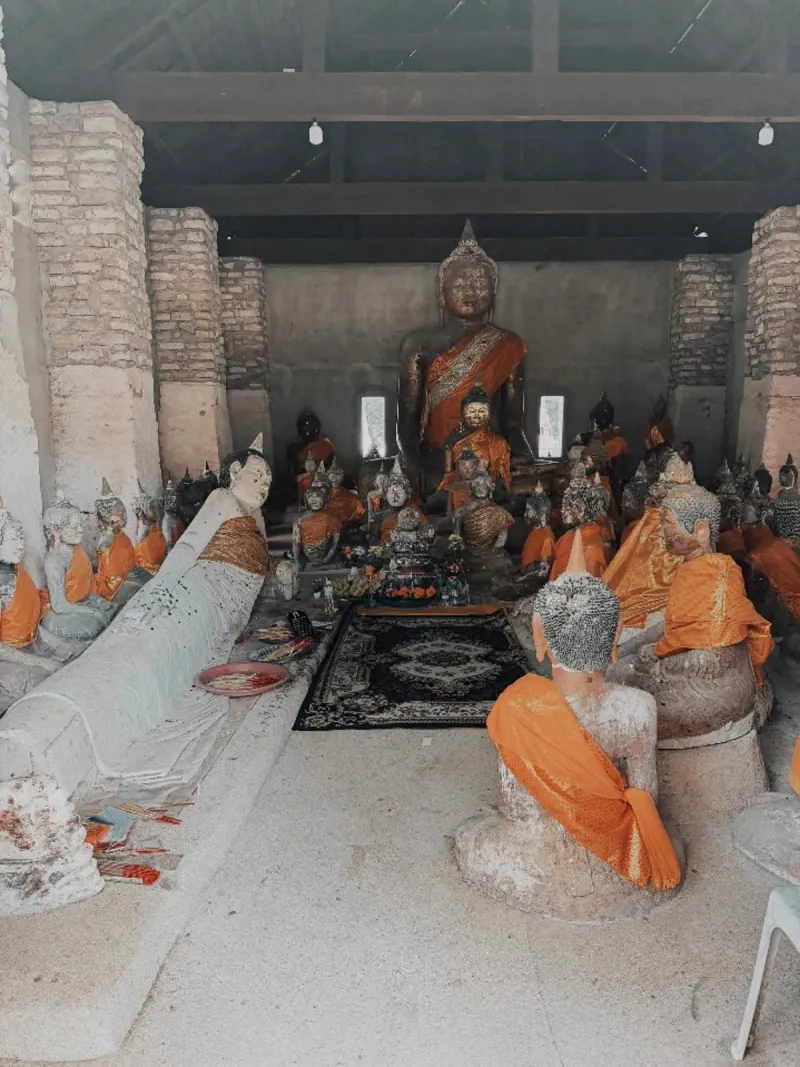
The highlight of any visit: a wooden hall containing ancient sculptures, ornate carvings, and Buddhist scriptures accumulated over 340+ years. The craftsmanship reflects traditional southern Thai woodworking at its finest.
Note: This building is often locked on weekdays. It’s most likely to be open during Buddhist festivals or by arrangement. If it’s closed, you can still admire the exterior and explore the rest of the grounds.
Ho Phra Tripitaka
The scripture library dating to 1803, housing old palm-leaf manuscripts: the kind of religious texts that have been hand-copied by monks for centuries. This is one of the oldest intact library structures on any Gulf island.
Buddha images and artifacts
The temple has accumulated a significant collection of Buddha images, statues, and religious artifacts over its long history. Many are housed within the various viharns.
The grounds
Shaded by mature tropical trees, the temple grounds are peaceful and well-maintained. You’ll hear birdsong, cicadas, and the occasional chanting, but almost never other tourists. The serenity is the point.
Cultural Significance
First temple, deep roots
As the first Buddhist temple on Koh Samui, Wat Pradoem holds a unique place in the island’s spiritual identity. Every other temple on Samui came after this one.
Famous abbot
Phra Khru Wibun Thammasarn (known as Luang Phor Phet Tisso) served as abbot and is a revered figure in Koh Samui’s religious history. He oversaw the construction of the two-story viharn and is remembered in Thai Buddhist registries.
Living monastery
This is a functioning Wat Ratsadon (community temple) under the Maha Nikaya Buddhist order. Monks reside here year-round. The Wisungkhamasima designation means ordinations can be performed: young men from the surrounding community still come here to be ordained as monks, continuing a tradition that stretches back to the temple’s founding.
Festival life
The temple comes alive during major Buddhist holidays: Makha Bucha (February/March), Visakha Bucha (May), Asalha Bucha (July), and Khao Phansa (Buddhist Lent). These are the times local families gather for merit-making ceremonies, and when the usually-locked buildings are most likely to be open.
Why Tourists Rarely Visit
Wat Pradoem is virtually unknown to international visitors. Here’s why:
- No marketing: No ticket booth, no TripAdvisor listing, no Instagram presence, no inclusion on “top temples” lists
- Location: In the quiet southern interior, far from Chaweng, Lamai, and the Big Buddha area where 90% of tourists stay
- Competition: Wat Plai Laem’s giant Guanyin and the Big Buddha’s golden statue are visually dramatic and heavily marketed: Pradoem can’t compete on spectacle
- Buildings often locked: The most interesting structure (ancient wooden viharn) is closed on weekdays
- No English signage: The temple caters to Thai Buddhist worshippers, not international visitors
The appeal is precisely this. Multiple sources describe the experience of being “completely alone” on the grounds, surrounded by centuries-old structures and mature tropical gardens. If you’ve seen enough tourist temples and want something real, this is it.
Dress Code and Etiquette
No specific dress code is posted: this isn’t a tourist-oriented temple. But standard Thai Buddhist etiquette applies, and respectful dress matters more here precisely because you’re a guest in a quiet community space.
- Cover shoulders and knees: no tank tops, shorts, or beachwear
- Remove shoes before entering any building
- Do not point feet toward Buddha images or monks
- Women must not touch monks or hand objects directly to them
- Speak quietly: this is a contemplative place
- Ask permission before photographing inside buildings or photographing monks
- No smoking or alcohol on temple grounds
Nearby Attractions
All within the southern Samui area, easily combined into a half-day cultural tour:
Under 10 minutes
- Na Muang Waterfalls: Samui’s most famous cascades: Na Muang 1 (easy access, swimming pool) and Na Muang 2 (80m jungle hike). 3-5 km away.
- Samui Butterfly Garden: Botanical garden and butterfly park at Laem Na Thian. 1-2 km.
Under 20 minutes
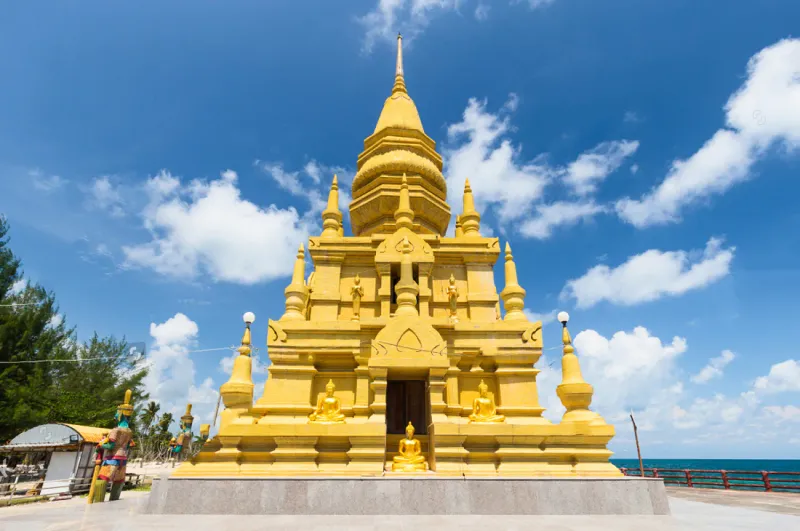
- Laem Sor Pagoda: Striking golden pagoda on Bang Kao Beach. 3-4 km south.
- Wat Khao Chedi: Srivijaya-style hilltop pagoda with panoramic views of Bang Kao Bay, Koh Tan, and Koh Mudsum.
- Hua Thanon fishing village: Traditional Muslim fishing village on the southeast coast. ~3 km east.
- Koh Tan and Koh Mudsum: Small islands accessible by longtail boat from Thong Krut pier nearby.
Getting There
Location
Wat Pradoem is in Tambon Na Mueang in the southern interior of Koh Samui, near Na Muang, not on the tourist-heavy north or east coasts. Look for signs to the Samui Butterfly Garden as a navigation aid.
Address: 2/1 Ban Hua Wiang, Moo 1, Tambon Na Mueang, Amphoe Koh Samui, Surat Thani 84140
From different areas
| Starting Point | Drive Time | Notes |
|---|---|---|
| Chaweng | 20-25 min | Via Route 4169/4170 southwest |
| Lamai | 15-20 min | West through the interior |
| Nathon | 20 min | Southeast via Route 4169 |
| Bophut/Big Buddha | 30-35 min | South across the island |
Transport options
- Scooter: Most practical: the temple is in a quiet area with limited public transport. 200-300 THB/day rental.
- Taxi/private driver: A southern Samui temple tour covering Wat Pradoem, Laem Sor Pagoda, and Wat Khao Chedi typically costs around 1,500 THB for 3-4 hours.
- Songthaew: Infrequent in the south: possible but may require a walk from the ring road.
Parking
No dedicated lot, but roadside parking is easy: you won’t compete with tour buses.
Best Time to Visit
| Time | Experience | Rating |
|---|---|---|
| Buddhist festivals | Temple alive with locals, buildings open, ceremonies | ★★★★★ |
| Early morning (7-9 AM) | Monks’ alms round, morning chanting, coolest temperatures | ★★★★★ |
| Late afternoon (4-5:30 PM) | Golden light, peaceful, monks in residence | ★★★★ |
| Midday weekday | Quiet but buildings likely locked | ★★★ |
Seasonal notes
- Dec-Apr (dry): Best for exploring outdoor temple grounds in comfort
- Buddhist holidays: The best time to visit: buildings open, ceremonies happening, community gathering
- Makha Bucha: February/March
- Visakha Bucha: May
- Asalha Bucha: July
- Combine with Na Muang Waterfalls (3-5 km away) for a half-day southern Samui cultural/nature itinerary
Practical Tips
Essentials
- Entry fee: Free. Donations can be left at donation boxes on the grounds.
- Opening hours: Dawn to dusk (approximately 6 AM-6 PM). No posted hours: it’s a functioning temple, not a tourist attraction.
- Time needed: 20-30 minutes (more if buildings are open during festivals)
- English information: None on-site. Read about the temple before you visit.
- Toilets: Basic facilities available.
What to expect
- You will almost certainly be the only foreign visitor
- The grounds are peaceful, shaded, and atmospheric
- Some buildings may be locked. Don’t be disappointed; the grounds alone are worth the visit
- Monks may or may not be visible: they follow their own daily routines
- There are no food or drink vendors on site
What to bring
- Modest clothing: this is not optional at a conservative local temple
- Water: no vendors
- Camera: but ask permission for interior shots
- Quiet demeanor: match the atmosphere
Who Is Wat Pradoem Best For?
| Traveler Type | Fit | Why |
|---|---|---|
| History buffs | ★★★★★ | The oldest temple on Samui: 344 years of unbroken religious history |
| Cultural depth seekers | ★★★★★ | Authentic Thai temple life without any tourism infrastructure |
| Off-the-beaten-path explorers | ★★★★★ | Zero tourists, no marketing, genuine discovery |
| Photographers | ★★★★ | Ancient textures, weathered wood, tropical patina: atmospheric |
| Spiritual seekers | ★★★★ | Working monastery with real monastic life, especially during festivals |
| First-time Samui visitors | ★★ | Visit Big Buddha and Wat Plai Laem first: Pradoem rewards those who already know the tourist temples |
| Families with young children | ★★ | Not much to engage kids; better to visit the nearby waterfalls |
FAQ
How old is Wat Pradoem?
Founded in 1682 CE (Buddhist Era 2225), approximately 344 years old. It is the oldest temple on Koh Samui and the first Buddhist temple ever built on the island. The name “Pradoem” literally means “to begin.”
Where is Wat Pradoem located?
In Tambon Na Mueang in the southern interior of Koh Samui: near the Na Muang Waterfalls area, not on the tourist-heavy north coast. About 20 minutes from Chaweng or Lamai by car.
Is Wat Pradoem worth visiting?
Yes, if you value authentic cultural experiences over spectacle. You won’t find giant golden statues or colorful Instagram-ready architecture. You will find a 344-year-old working monastery with ancient wooden halls, centuries-old scriptures, and complete solitude. It’s the antidote to overtourism.
Is Wat Pradoem free?
Yes: no entrance fee. Donations are appreciated and can be left at donation boxes. There are no vendors, ticket booths, or commercial activity of any kind.
Can I see inside the ancient wooden hall?
The ancient wooden viharn (the most interesting structure) is often locked on weekdays. Your best chance to see inside is during major Buddhist festivals (Makha Bucha, Visakha Bucha, or Asalha Bucha) when the temple opens fully for community ceremonies.
How does Wat Pradoem compare to Big Buddha and Wat Plai Laem?
Completely different experiences. Big Buddha (1972) and Wat Plai Laem (2004) are modern tourist attractions with dramatic statues and heavy foot traffic. Wat Pradoem (1682) is the opposite: ancient, quiet, zero tourists, no commercial infrastructure. Visit the tourist temples first, then come to Pradoem when you want something real.
About the author
Samui69 Editorial Team
Editorial team
Guides researched and fact-checked by the Samui69 editorial team: residents and frequent visitors who verify opening hours, prices and directions on the ground.
About the author →