
Overview
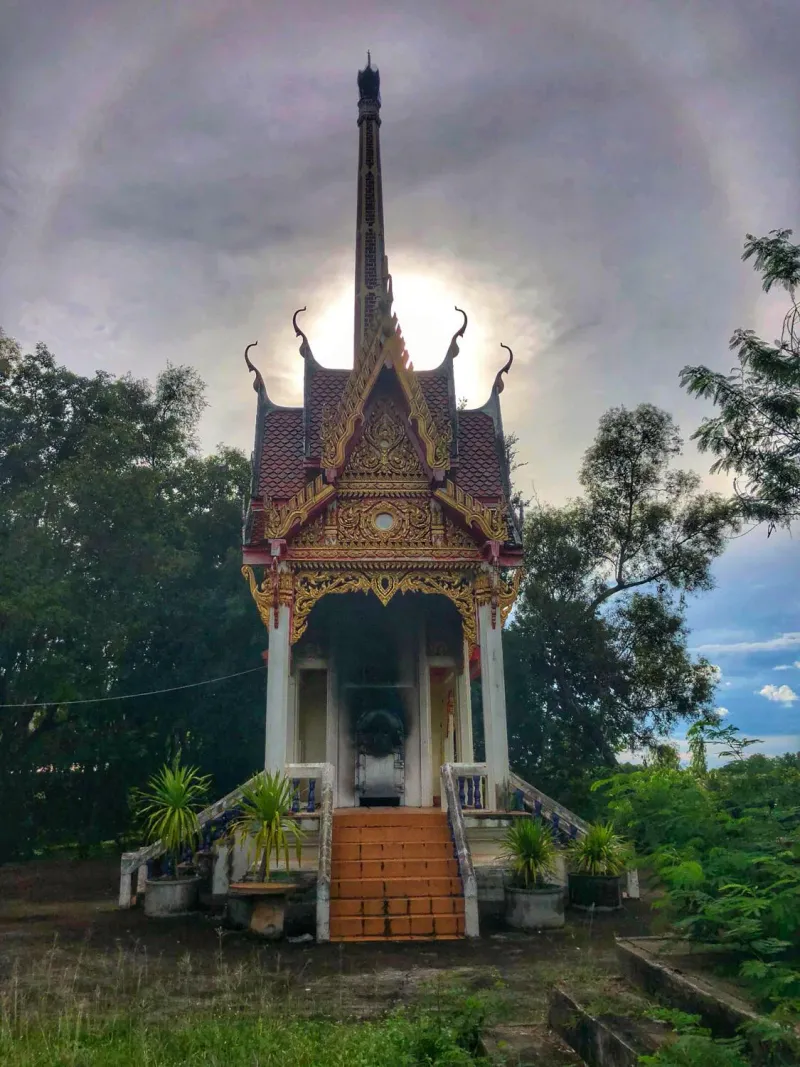
Wat Sawang Arom (วัดสว่างอารมณ์), traditionally known as Wat Chaweng, is the most important historical and spiritual anchor for the Chaweng community. While thousands of travelers flock to Chaweng Beach just a few hundred meters away, very few realize that one of the island’s oldest and most authentic temples sits right on their doorstep.
Established in the late 18th century, the temple complex is a fascinating blend of ancient history and modern artistic expression. From its revered mummified monk to its stunningly detailed contemporary murals, Wat Sawang Arom provides a deep, quiet contrast to the neon lights and party atmosphere of the coast. It is a place where Samui’s past and present coexist in a serene, shaded hillside setting.
History: Over Two Centuries of Devotion
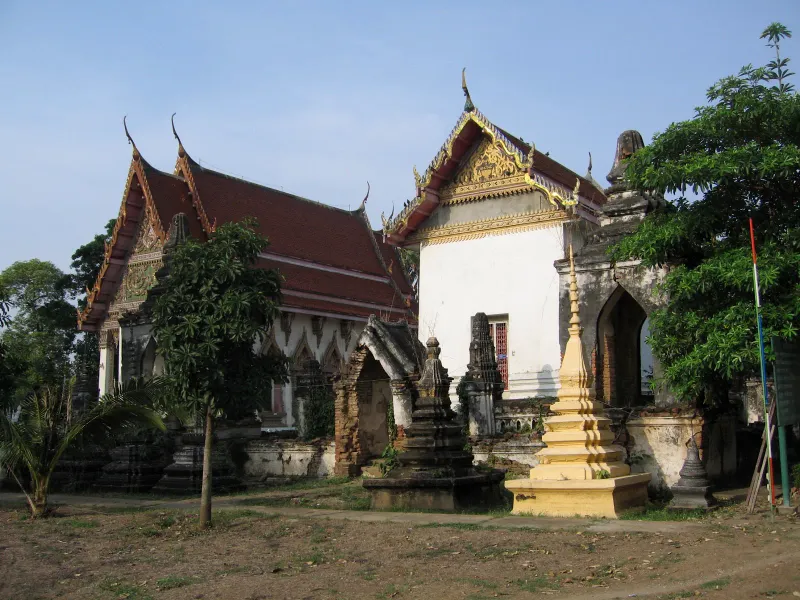
Wat Sawang Arom was founded in 1794 by a monk named Phra Arjarn Kaew. At the time, Chaweng was a remote collection of coconut farms and fishing huts. The temple was built to provide a spiritual center for these early settlers, and it has remained the heart of the village ever since.
For most of its history, it was simply known as Wat Chaweng. It wasn’t until later that it was renamed Wat Sawang Arom, which translates to “the temple of bright emotions” or “enlightened spirit.” Over the years, the complex has grown from a single wooden hall into a sprawling site featuring multiple chapels, a crematorium, and even a primary school.
The Mummified Monk: A Sacred Legacy
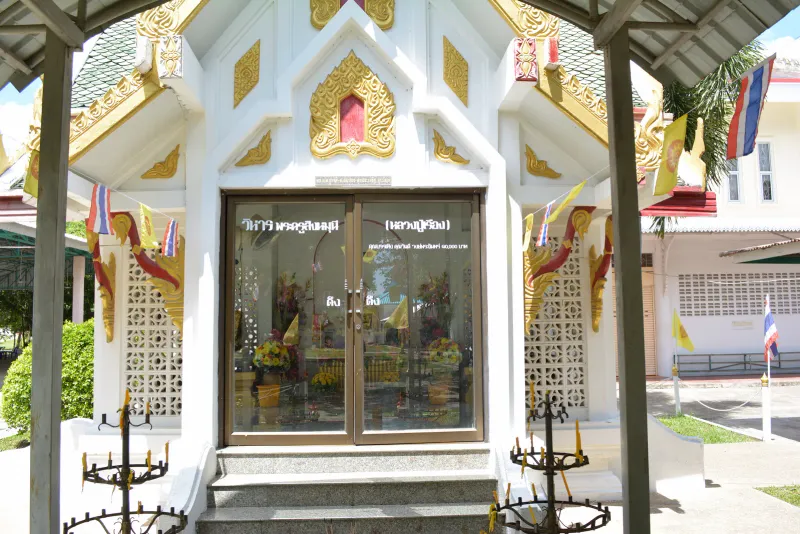
One of the most significant and respected features of the temple is the preserved remains of Phra Kru Phra Pat Tumakhun, a highly revered former abbot. Unlike the famous mummified monk at Wat Khunaram who sits in meditation, the monk at Wat Sawang Arom is housed in a glass casket in a specially built side chapel.
For local Thais, this is not a macabre curiosity but a sacred point of pilgrimage. They come here to pay their respects to a man who dedicated his life to the community and the Dhamma. The presence of the monk is believed to bring protection and good fortune to the area.
Architecture: Murals and White Chapels
While the temple is ancient, it has recently undergone a major artistic transformation.
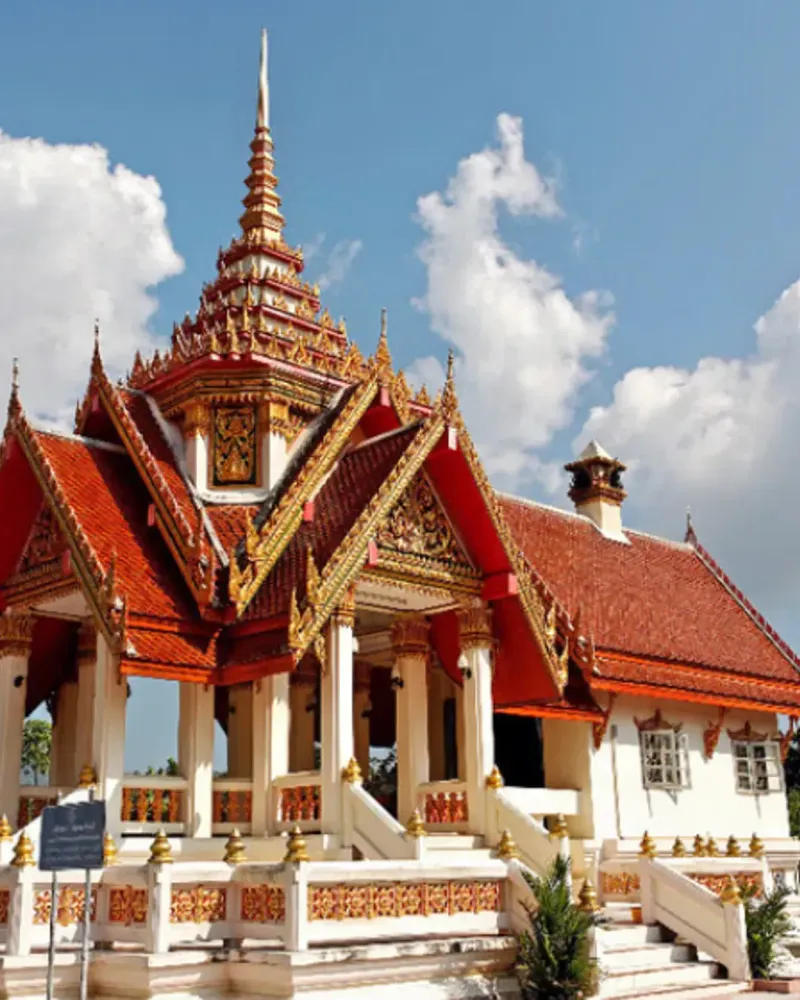
The New Chapel
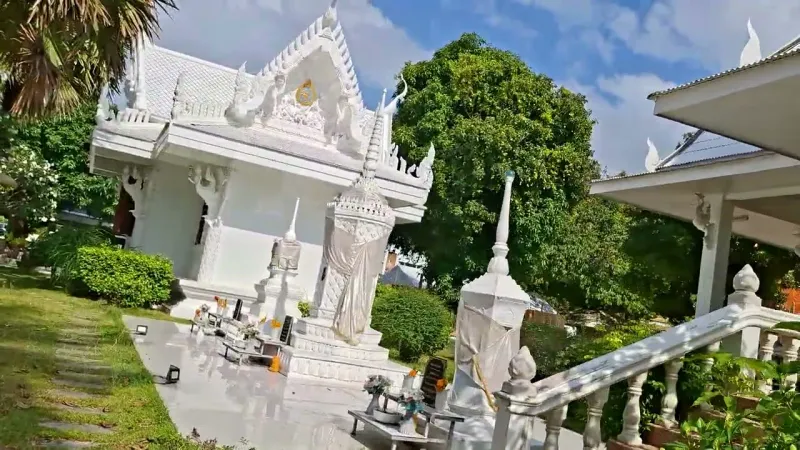
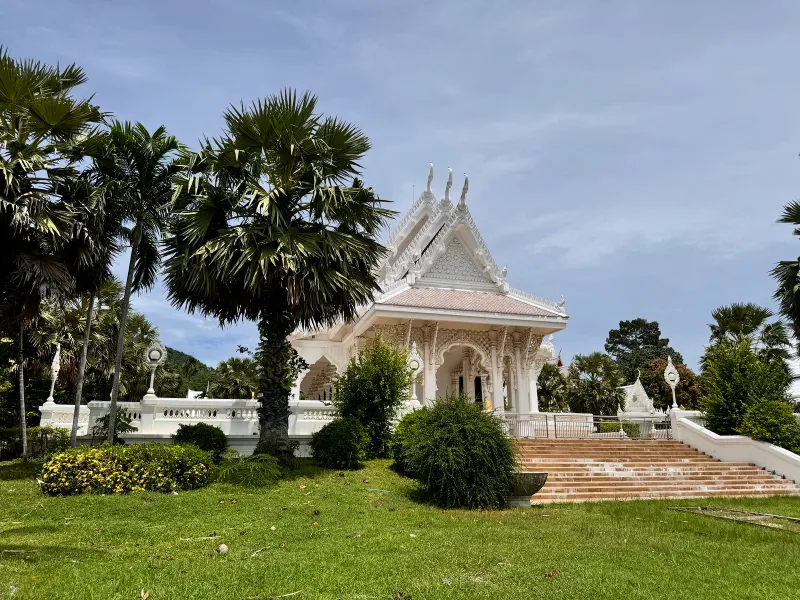
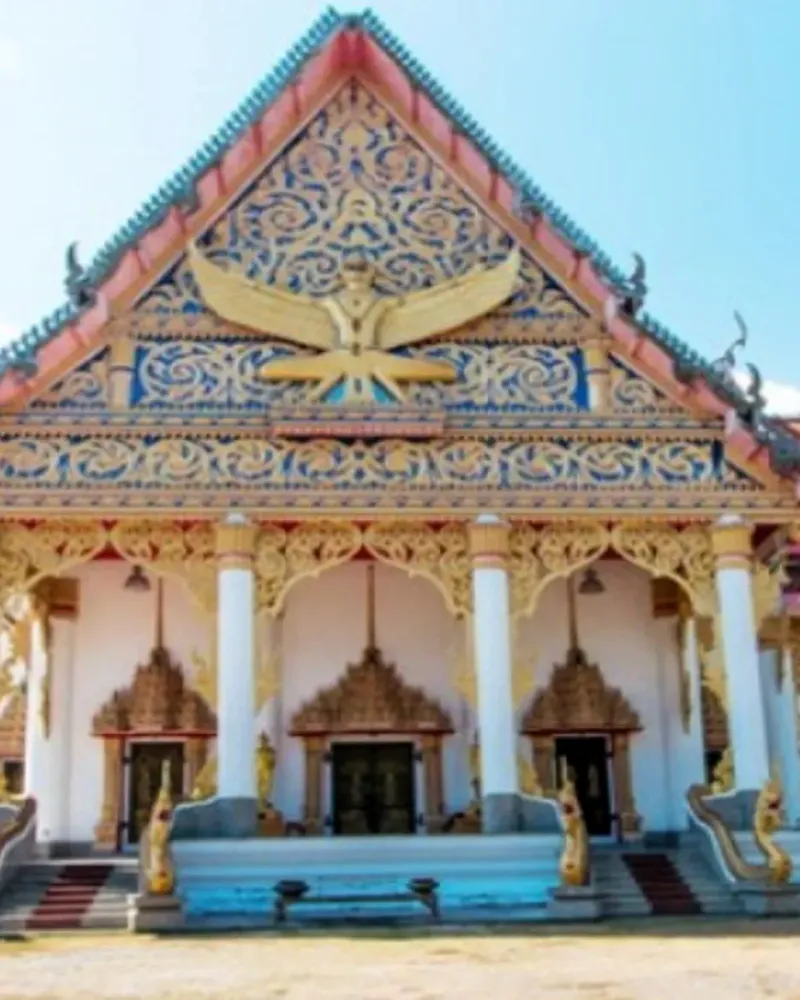
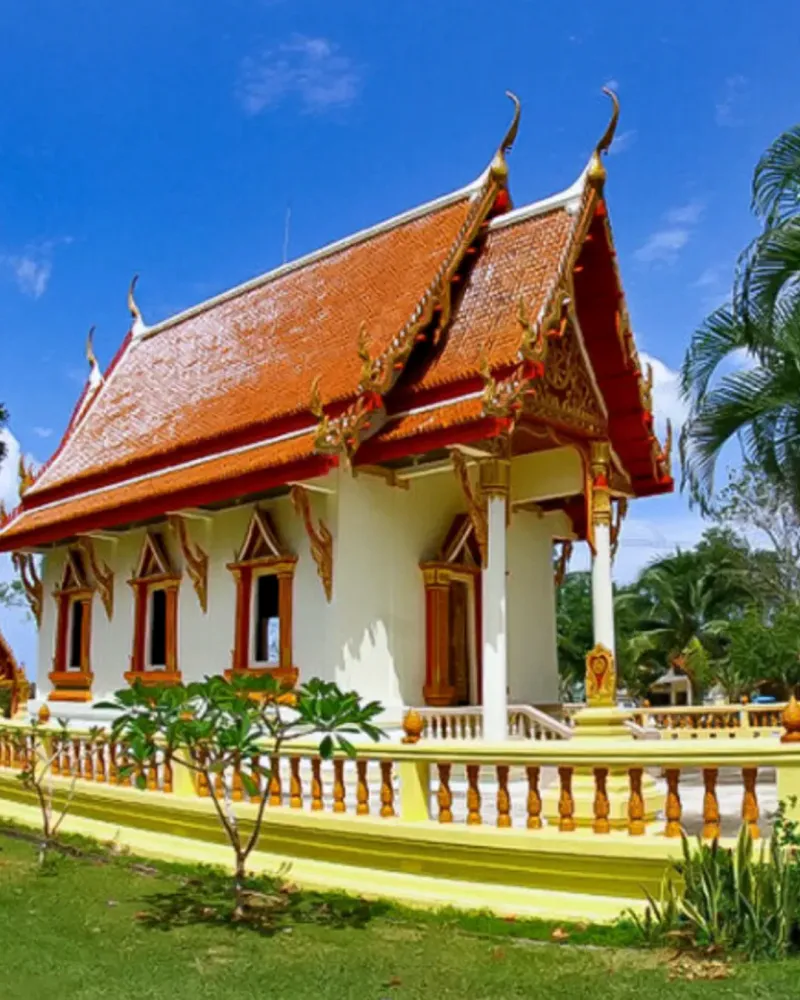
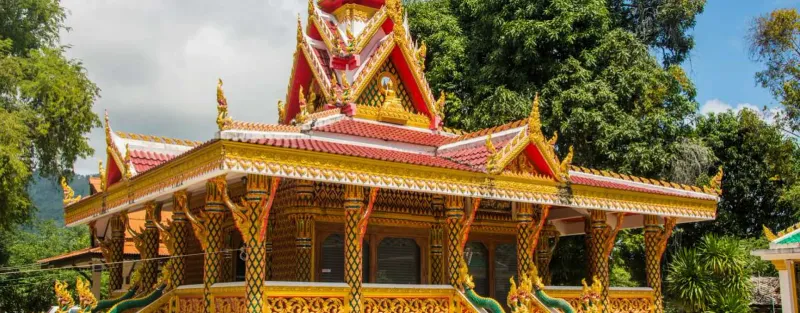
A striking new ordination hall was completed around 2015. Unlike the typical red-and-gold wats found elsewhere on Samui, some of the auxiliary buildings here feature a clean all-white design, giving the complex a modern, ethereal feel.
Magnificent Murals
The true hidden treasure of Wat Sawang Arom is found inside the main chapel. The interior walls are covered in magnificent murals that were only completed in December 2020. These paintings depict the life of the Buddha and various Buddhist hells and heavens with incredible detail and vivid colors. The craftsmanship is among the finest on the island, rivaling the famous artwork at Wat Plai Laem.
Community Life: The Temple School
Wat Sawang Arom is a “living” temple. The grounds are shared with the Wat Sawang Arom Nursery and Primary School. During the day, you will hear the laughter of children and the sound of school bells, making this one of the most active community hubs on the island. This integration of religion and education is a classic feature of traditional Thai village life.
Activities: Merit-Making and Viewpoints
- Study the Murals: Spend at least 15 minutes inside the main hall studying the artwork. Each panel tells a story of moral conduct and spiritual struggle.
- Make Merit: Join the locals in offering candles, incense, and lotus flowers. You can also make a small donation to support the temple’s school and maintenance.
- Quiet Reflection: The upper areas of the temple, away from the school, offer shaded benches that are perfect for reading or silent meditation.
- Nearby Viewpoints: A short path behind the temple leads slightly higher up the hill, offering glimpses of the white sands of Chaweng Beach through the trees.
Where to Eat: Chaweng Local Delights
Since the temple is located on the edge of the Chaweng residential district, you are near some of the best local-style eateries that are much cheaper than the beach resorts.
| Restaurant | Style | Recommendation | Distance |
|---|---|---|---|
| Chaweng Fresh Market | Local Market | Mango Sticky Rice | 5 min walk |
| Khao Hom | Traditional Thai | Yellow Curry | 10 min walk |
| Street Stalls | Quick Bites | Chicken Skewers | Outside gates |
| The Larder | Fusion / Deli | Gourmet Sandwiches | 5 min drive |
Nearby Attractions
Wat Sawang Arom is a perfect starting point for a day in Chaweng:
- Chaweng Beach (5 min drive): The island’s most famous stretch of sand.
- Chaweng Lake (3 min drive): A heart-shaped lake with a scenic walking path.
- Central Samui Mall (5 min drive): The island’s premier shopping and entertainment destination.
- Khao Hua Jook Pagoda (8 min drive): Visit for the best panoramic views of the area.
Getting There: Chaweng Ring Road Access
The temple is very easy to find, located directly on the Main Ring Road (Route 4169).
- By Motorbike/Car: Look for the ornate temple gates just south of the large Lotus’s (formerly Tesco Lotus) supermarket in Chaweng.
- By Songthaew: Any songthaew traveling along the East Coast Ring Road will pass the temple. Just tell the driver “Wat Sawang Arom” or “Wat Chaweng.”
- Parking: There is a large, shaded parking area inside the temple gates, shared with the school.
Best Time to Visit: Morning Peace
| Time | Experience | Rating |
|---|---|---|
| 7:00 AM - 9:00 AM | Monks’ rituals and coolest weather. | ★★★★★ |
| 10:00 AM - 3:00 PM | Busy with school activity; can be very hot. | ★★★ |
| 4:00 PM - 6:00 PM | School has finished; very peaceful; beautiful light. | ★★★★ |
Note: Be aware that this is a cremation temple. If you see a funeral ceremony in progress (black and white decorations), please be extra respectful and consider returning another time.
Practical Tips for Visitors
- Dress Modestly: Even though it’s near the beach, swimwear or revealing clothing is not allowed. Carry a sarong to cover up.
- Remove Shoes: Always take your shoes off before entering any of the chapels or halls.
- Respect the School: If school is in session, avoid wandering into the classroom areas and keep noise to a minimum.
- No Flash: Photography is allowed inside the mural hall, but please disable your flash to protect the artwork.
- Bring Water: While there are vendors nearby, the temple grounds are large and open, and you will appreciate having a drink with you.
Who Is Wat Sawang Arom Best For?
| Traveler Type | Rating | Why? |
|---|---|---|
| History Lovers | ★★★★★ | One of the oldest continuously active sites on the island. |
| Art Enthusiasts | ★★★★★ | The 2020 murals are some of the best modern Thai art on Samui. |
| Local Seekers | ★★★★★ | A genuine glimpse into how religion and community life intersect. |
| Families | ★★★★ | Kids enjoy the school atmosphere and the colorful statues. |
FAQ
Is Wat Sawang Arom free to visit? Yes, like most local temples, entry is entirely free. Small donations are encouraged to help with the upkeep of the school and the temple buildings.
How does it compare to the Big Buddha? Wat Sawang Arom is much older and far less crowded. While it doesn’t have a massive golden statue visible from miles away, its murals and historical depth offer a more authentic experience for those interested in Thai culture.
Can I see the mummified monk? Yes, the preserved remains of the former abbot are housed in a dedicated chapel within the complex. Visitors are welcome to pay their respects, provided they follow the standard temple etiquette.
Is it easy to reach from Chaweng Beach? Yes, it is about a 5-10 minute drive or a 20-minute walk from the main Chaweng beach road. It is located right on the main Ring Road that circles the island.
Are there any festivals held here? Yes, the temple is a focal point for major Buddhist holidays like Loy Krathong and Visakha Bucha. During these times, the grounds are filled with food stalls and locals making merit.
About the author

Migues Ferfumoz
Writer, Koh Samui resident since 2019
Freelance writer and Koh Samui resident since 2019. Migues covers local culture, food, and the best off-the-beaten-path destinations on the island.
Articles by Migues →