Overview
Wat Bo Phuttharam (วัดบ่อพุทธาราม), often referred to as the Luang Pu Thuad Temple, is one of Koh Samui’s most distinctive and serene Buddhist sites. Located in the heart of Bophut, this temple stands in stark contrast to the bustling Fisherman’s Village just a few minutes away. While it may not have the fame of the Big Buddha, it offers a deeply authentic look into Thai spirituality and local community life.
The temple’s defining feature is a massive, jet-black statue of the revered monk Luang Pu Thuad, seated atop a large concrete ship that appears to float in a tranquil pond. This striking architectural choice makes it a favorite for photographers and those seeking a quieter alternative to Samui’s more commercialized landmarks.
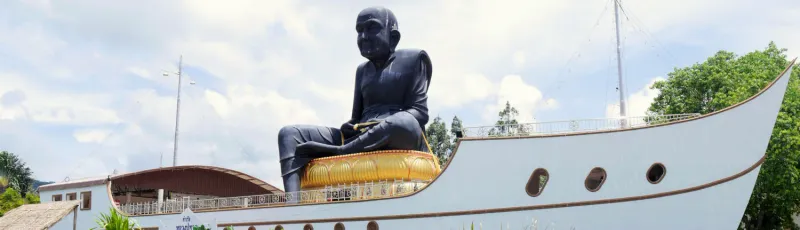
History: The Legacy of Luang Pu Thuad
Wat Bo Phuttharam has a history stretching back to 1934. Originally known as Wat Chaweng, it has long served as the spiritual anchor for the Bophut sub-district. Over the decades, it evolved from a simple village monastery into a significant pilgrimage site for devotees of Luang Pu Thuad.
Luang Pu Thuad (1582-1682) is arguably Thailand’s most famous monk, renowned for his legendary miracles. The most famous tale involves him turning salt water into fresh water during a sea voyage to save a thirsty crew. This connection to the sea explains the temple’s unique “monk on a ship” design. In Thai culture, Luang Pu Thuad is considered a protector of travelers; many Thais carry his amulets in their cars to prevent accidents.
The Temple Grounds: Monk on a Ship
The temple complex is spacious and well-maintained, blending traditional Thai architecture with modern decorative elements.
The Concrete Ship and Pond
The centerpiece is a large concrete junk boat situated in a man-made pond. A small bridge leads visitors onto the deck of the ship, where the massive black statue of Luang Pu Thuad sits in meditation. The statue is meticulously detailed, often adorned with golden flower garlands by local devotees.
The Ordination Hall (Ubosot)
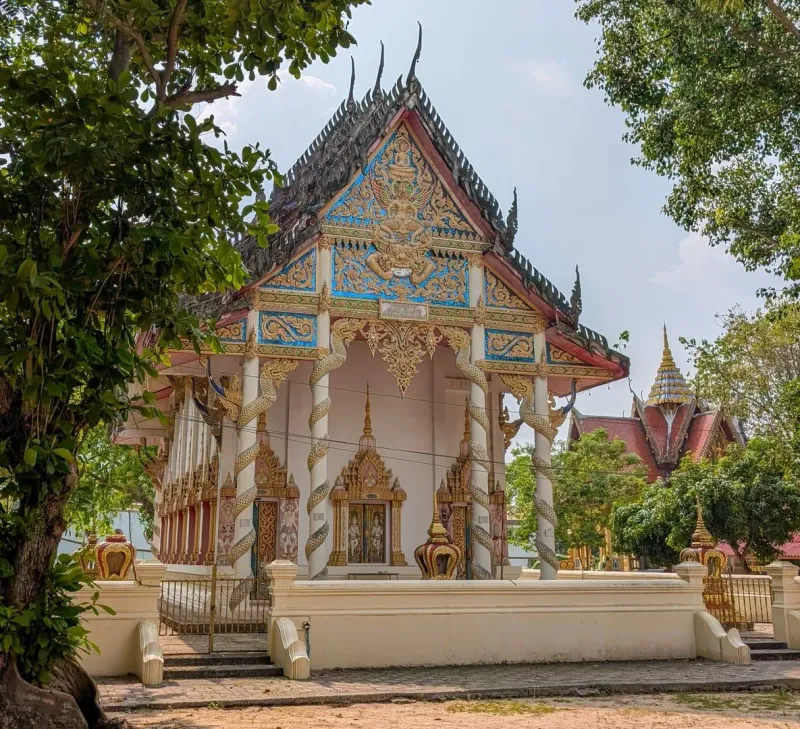
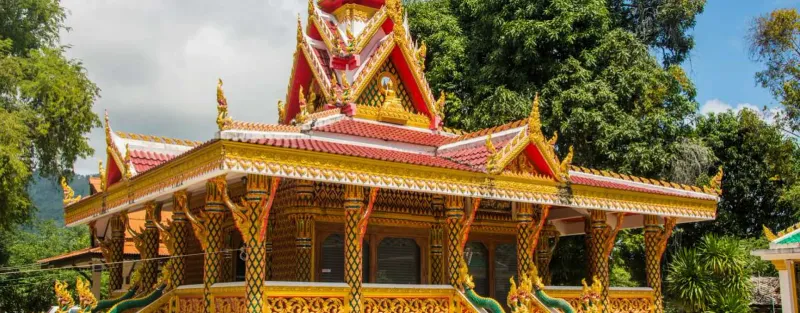
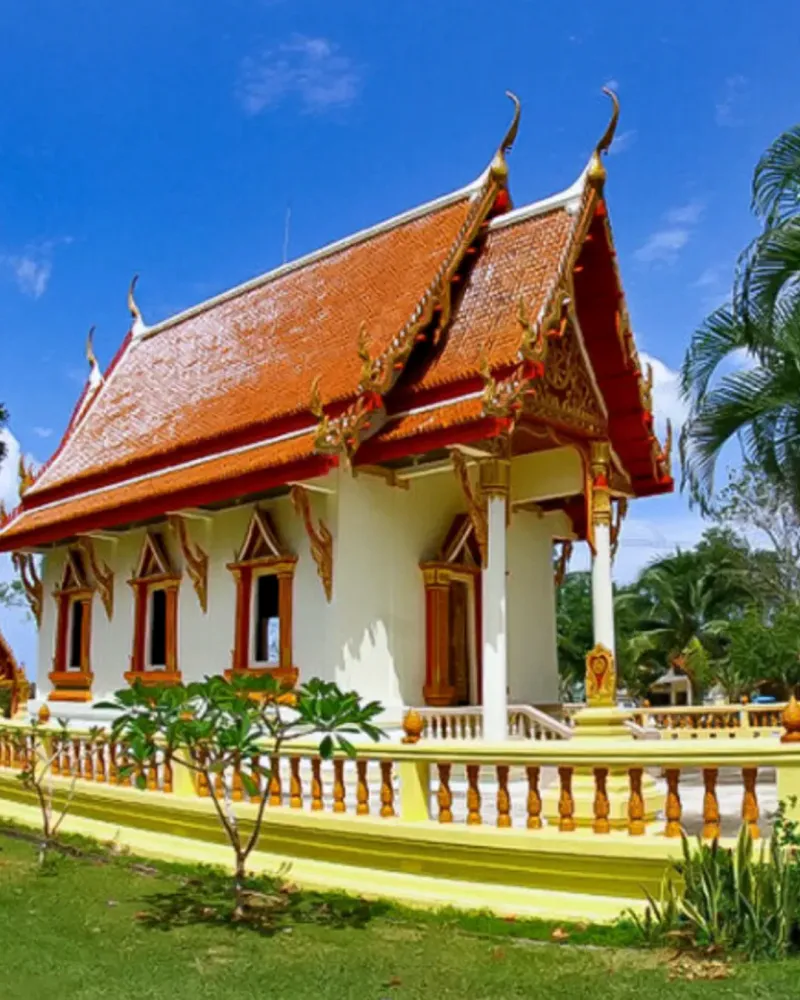
The main ubosot is a classic example of Thai temple architecture, featuring multi-tiered roofs and intricate carvings. Inside, the walls are covered with vibrant murals depicting the life of the Buddha and various Buddhist parables. The hall is often quiet, providing a perfect space for meditation or contemplation.
Shrines and Statues
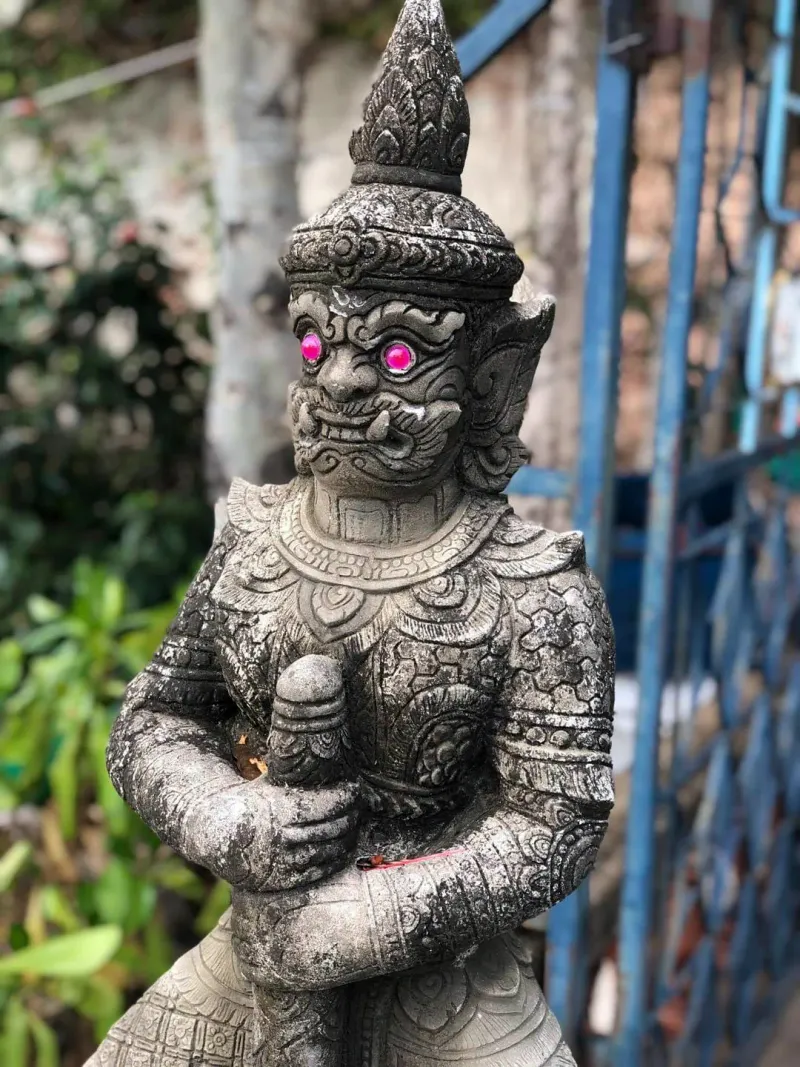
Scattered around the grounds are various smaller shrines dedicated to other deities and legendary figures, including Chinese-influenced statues reflecting Samui’s Hainanese heritage.
Activities: Feeding the Fish and Local Devotion
A visit to Wat Bo Phuttharam is more than just sightseeing; it’s an opportunity to engage in local customs.
Feeding the Fish and Turtles
This is the most popular activity for families. The pond surrounding the ship is teeming with massive catfish, carp, and turtles. You can purchase a bucket of fish food for around 10-20 THB (~0.50-0.50 USD) at the temple entrance. Watching the water boil as dozens of fish surface for food is an entertaining experience for children and adults alike.
Receiving a Blessing
If you visit during the morning hours, you may encounter resident monks. Visitors are welcome to enter the shrines to light incense, offer lotus flowers, and receive a traditional water blessing.
Exploring the Murals
The artwork inside the temple buildings is exceptional. Spend some time studying the murals; they provide deep insight into Thai mythology and the values of Buddhist society.
Where to Eat: Local Flavors in Bophut
Being located right on the ring road in Bophut, Wat Bo Phuttharam is surrounded by excellent dining options ranging from street food to high-end restaurants.
| Restaurant | Cuisine | Price Range (THB) | Distance |
|---|---|---|---|
| Local Food Stalls | Thai Street Food | 50 - 100 | 1 min walk |
| Bophut Market | Variety / Snacks | 40 - 150 | 5 min walk |
| Fisherman’s Village | International / Seafood | 300 - 1,000+ | 10 min walk |
| Smile House | Traditional Thai | 200 - 500 | 12 min walk |
For a quick and cheap lunch, the stalls directly opposite the temple entrance serve excellent Khao Man Gai (Hainan chicken rice) and spicy papaya salad.
Nearby Attractions: Exploring North Samui
Wat Bo Phuttharam is perfectly situated to be part of a larger North Samui itinerary.
- Fisherman’s Village (2 min drive / 10 min walk): The most famous walking street in Samui, filled with boutiques, bars, and the famous Friday Night Market.
- Big Buddha Temple (Wat Phra Yai) (8 min drive): Samui’s most iconic landmark, located on a small island to the northeast.
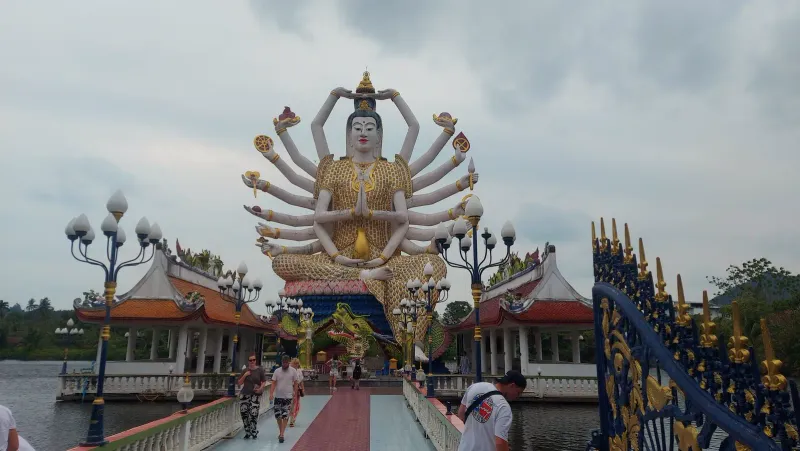
- Wat Plai Laem (10 min drive): Another stunning modern temple featuring the 18-armed Guanyin statue.
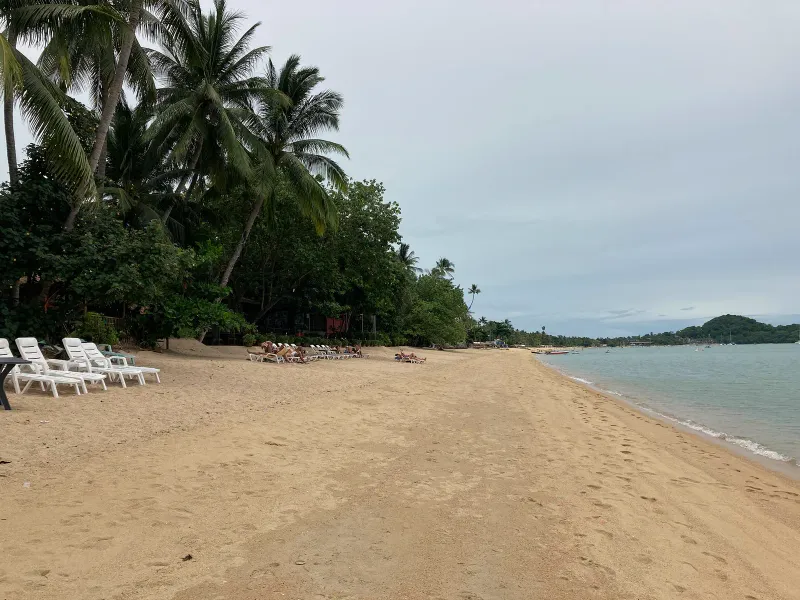
- Bophut Beach (5 min walk): A long, narrow beach with calm waters and a view of Koh Phangan.
Getting There: Bophut Ring Road Access
Wat Bo Phuttharam is exceptionally easy to find as it sits directly on the Main Ring Road (Route 4169).
- From Chaweng: A 15-20 minute drive north. A taxi will cost approximately 300-400 THB (~8.50-11 USD), or you can take a shared songthaew for 50-100 THB.
- From Maenam: A 10-minute drive east along the ring road.
- Parking: There is a large, free parking area directly inside the temple gates for both cars and motorbikes.
Best Time to Visit: Seasonal Guide
The temple is open daily from sunrise to sunset. However, certain times offer a better experience.
| Season | Months | Rating | Notes |
|---|---|---|---|
| Dry Season | Jan - April | ★★★★★ | Best weather, clear blue skies for photos. |
| Hot Season | May - Aug | ★★★★ | Very hot; visit early morning (7:00 - 9:00 AM). |
| Rainy Season | Sept - Dec | ★★★ | Pond is full and lush, but watch for afternoon storms. |
Pro Tip: Visit around 4:00 PM. The lighting on the black statue is soft and beautiful, and the temperature begins to drop as you head into the evening.
Practical Tips for Visitors
- Dress Modestly: This is an active place of worship. Ensure your shoulders and knees are covered. Carry a sarong if you are wearing shorts or a tank top.
- Remove Shoes: Always remove your shoes before stepping inside any temple building or onto the deck of the ship.
- Respect the Monks: If you see a monk, give a polite “Wai” (bow with hands pressed together). Women should never touch a monk or their robes.
- Bring Small Change: You’ll need 10 or 20 THB notes for fish food or to leave in donation boxes.
- Stay Hydrated: The temple grounds are open and can get very hot. There are small shops nearby selling cold water and coconuts.
Who Is Wat Bo Phuttharam Best For?
| Traveler Type | Rating | Why? |
|---|---|---|
| Families | ★★★★★ | Kids love feeding the massive fish and turtles. |
| Photographers | ★★★★ | The “monk on a ship” is a unique and striking subject. |
| Budget Travelers | ★★★★★ | Free entry and low-cost activities. |
| Spiritual Seekers | ★★★★ | Quieter and more authentic than the major tourist temples. |
FAQ
Is there an entry fee for Wat Bo Phuttharam? No, entry to the temple is entirely free. However, small donations are encouraged to help with the maintenance of the grounds and the care of the resident monks. You can place a few baht in the donation boxes located near the shrines.
Can I feed the fish at any time? Yes, as long as the temple is open, you can purchase fish food from the small stall near the entrance and feed the catfish and turtles in the pond. It is one of the highlights of the temple, especially for children.
What is the dress code? As with all Buddhist temples in Thailand, you should dress respectfully. This means covering your shoulders and knees. If you are wearing a swimsuit or revealing clothing, you will likely be asked to cover up before entering the sacred areas.
Who is the “Black Monk” statue? The statue depicts Luang Pu Thuad, one of Thailand’s most revered historical monks. He lived over 400 years ago and is famous for his legendary miracles, particularly his ability to protect travelers. His statue on a ship commemorates his connection to the sea.
How long should I spend at Wat Bo Phuttharam? Most visitors spend between 30 and 45 minutes exploring the grounds, feeding the fish, and taking photos. It is a relatively small site compared to the Big Buddha but offers a much more peaceful and contemplative atmosphere.
About the author
Samui69 Editorial Team
Editorial team
Guides researched and fact-checked by the Samui69 editorial team: residents and frequent visitors who verify opening hours, prices and directions on the ground.
About the author →