Overview
Wat Kiri Wongkaram (วัดกิริวงการาม) is one of Koh Samui’s most profound and peaceful spiritual sites, located in the quiet fishing village of Taling Ngam on the island’s southwestern “Virgin Coast.” While the more famous Wat Khunaram attracts large crowds, Wat Kiri Wongkaram offers a serene, authentic alternative for those who wish to experience the island’s unique spiritual heritage in silence.
The temple’s primary significance lies in its housing of the remarkably preserved remains of Luang Por Ruam, a highly respected former abbot. Beyond its mummified monk, the temple is a beautiful example of traditional Thai craftsmanship, featuring elegant white architecture and lush, manicured gardens. For travelers exploring the less-developed west coast, Wat Kiri Wongkaram represents the quiet, contemplative soul of Samui: a place where history, faith, and nature exist in perfect harmony.
The Legacy of Luang Por Ruam: The Mummified Monk
Born in 1879 near the site of the current temple, Luang Por Ruam was a figure of immense importance to the Taling Ngam community. In the early 20th century, he traveled to Burma to deepen his studies of the Dhamma and meditation before returning to Samui to lead the monastery.
- Strict Discipline: He was renowned for his ascetic lifestyle, often eating only one simple meal a day and spending many hours in solitary meditation.
- The Miracle: Upon his death in 1966 at the age of 87, his body did not undergo the natural process of decomposition. Local devotees believe this is a result of his advanced meditative state and spiritual purity.
- Display: His body remains in a meditative sitting posture inside a glass casket, offering a physical reminder of the Buddhist teachings on the cycle of life and death.
An Unfiltered Connection
One significant difference between Wat Kiri Wongkaram and Wat Khunaram is how the mummified monk is presented. While the monk at Wat Khunaram famously wears Ray-Ban sunglasses, Luang Por Ruam is displayed without them.
This provides visitors with a more direct and “unfiltered” encounter. For many, this makes the experience more powerful and less like a tourist attraction. Local lore even suggests that his hair and fingernails continue to grow, and clippings are sometimes used by the monks to create protective amulets for the community.
Architecture: White Elegance and Vibrant Tiles
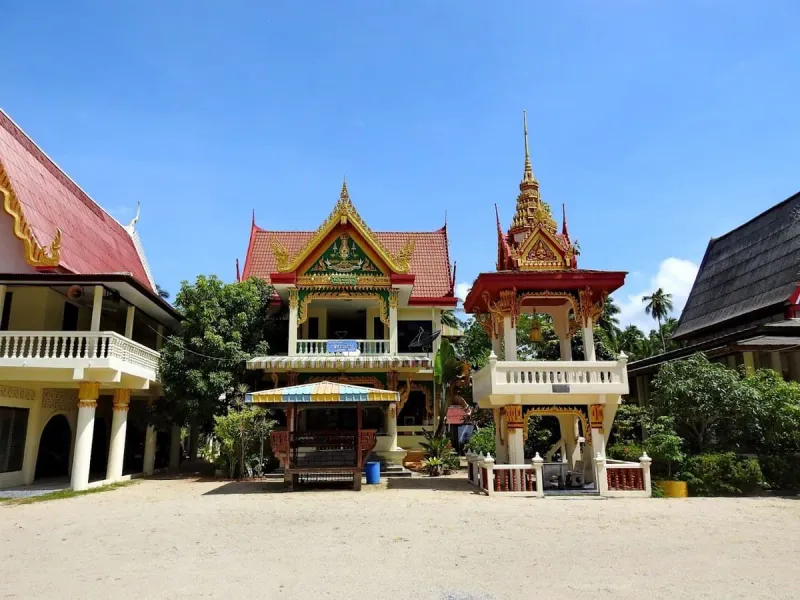
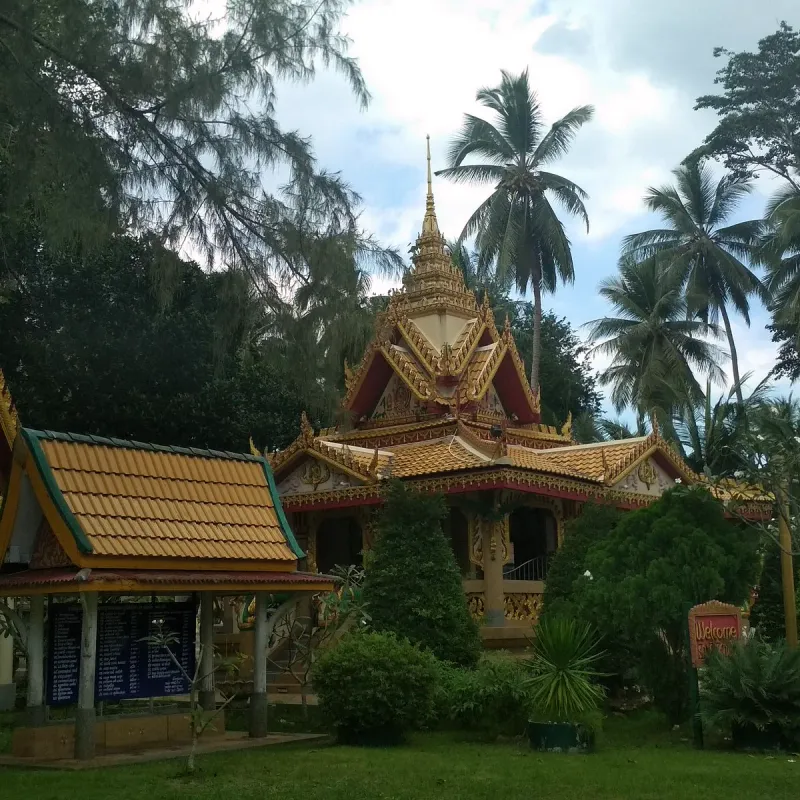
The architecture of Wat Kiri Wongkaram is among the most elegant on the island.
Striking Colors
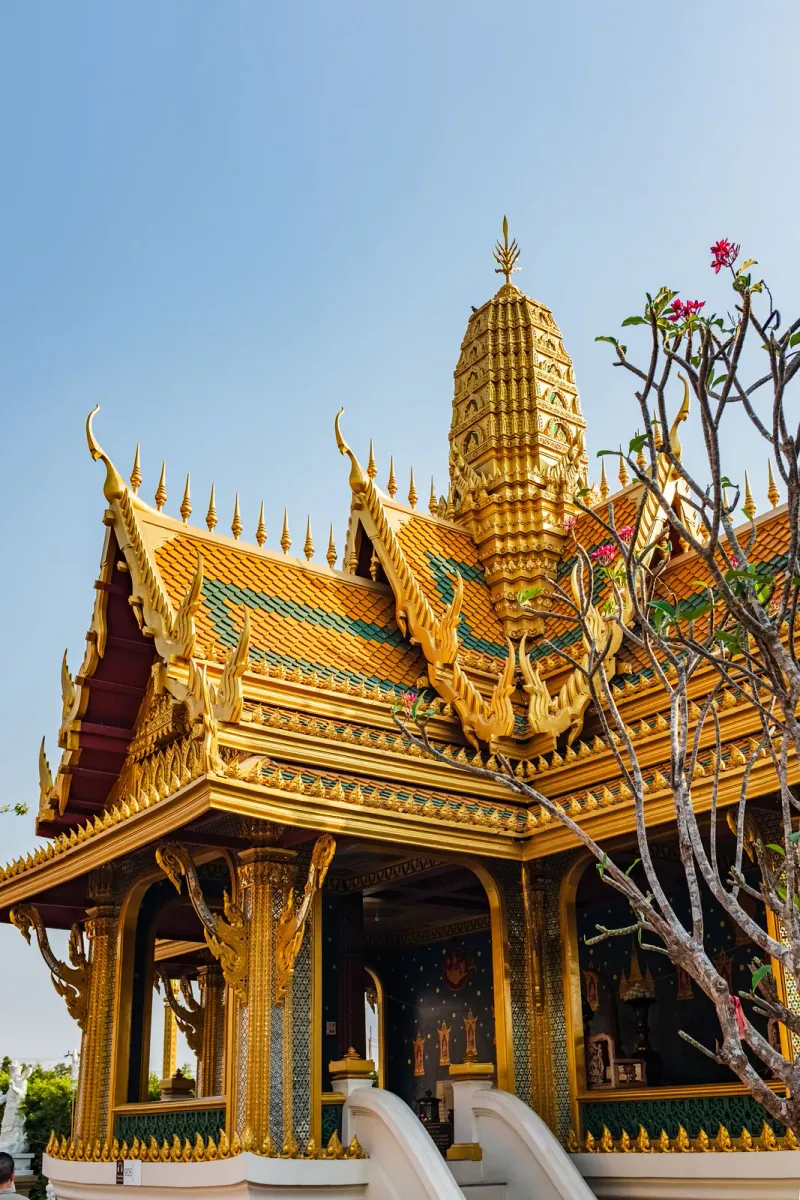
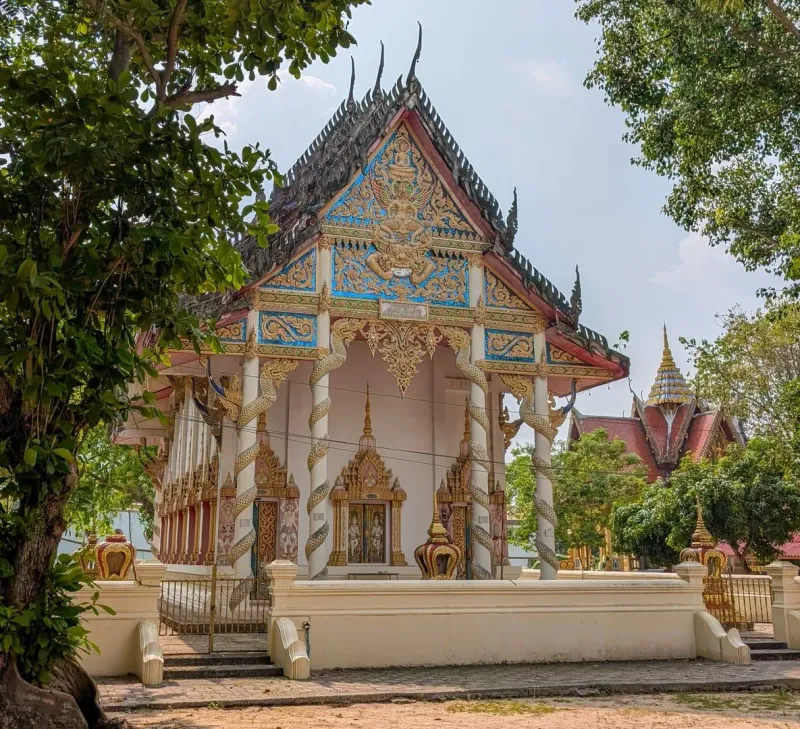
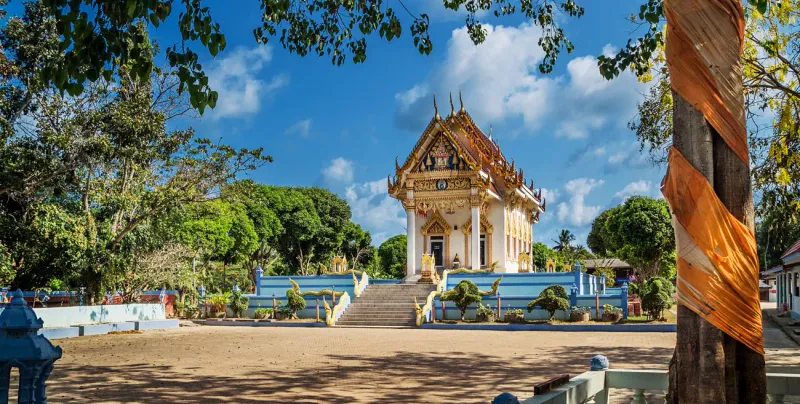
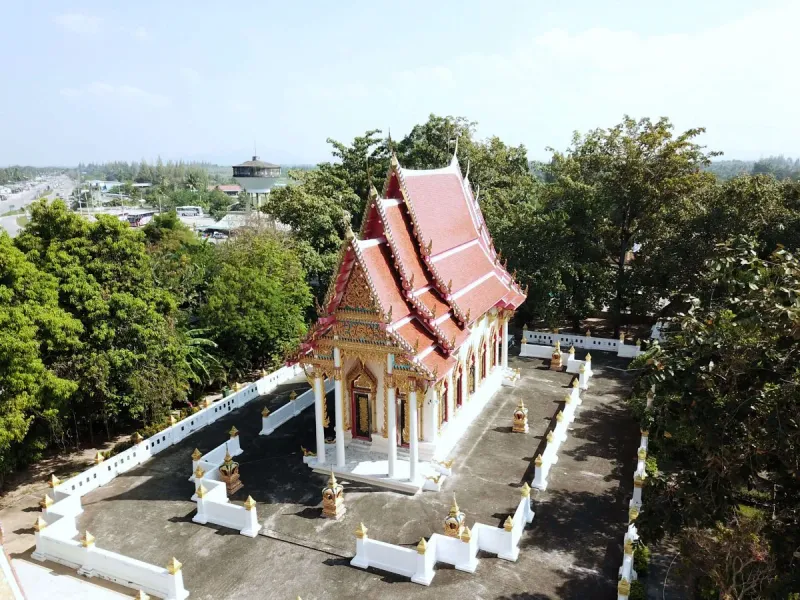
The temple buildings feature brilliant all-white walls, which provide a sharp, clean contrast to the vibrant green, yellow, and red roof tiles. This color palette is somewhat unique on Samui and gives the complex an ethereal, heavenly feel, especially under the bright midday sun.
Intricate Details
The staircases leading into the main ordination hall are decorated with detailed Naga (mythical serpent) carvings. These serpents are believe to be guardians of the Buddha and the temple’s sacred spaces. The grounds also feature a traditional drum tower and a beautifully maintained Buddhist cemetery.
The Elephant Gate
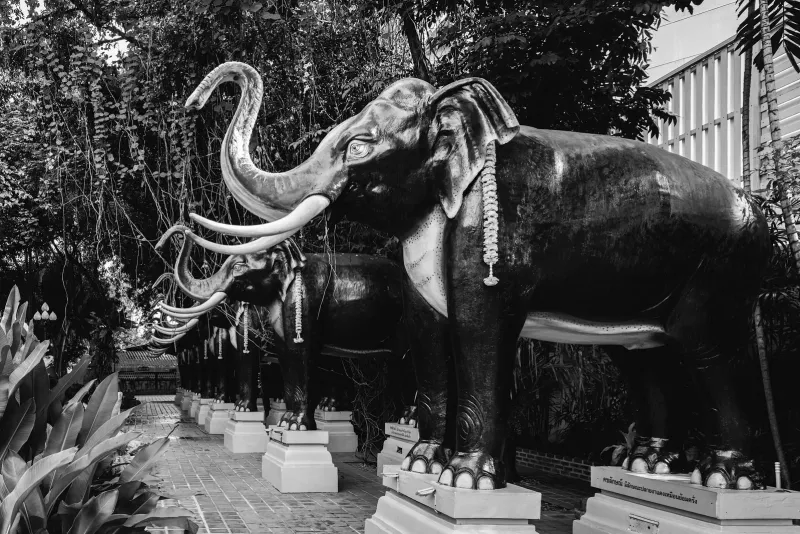
As you enter the village of Taling Ngam and approach the temple area, you will pass through an iconic Elephant Gate. Two large, brilliantly painted elephant statues guard the road, marking the transition from the secular world into the sacred community of the temple and fishing village. These elephants are symbols of strength and wisdom in Thai culture and are a favorite spot for quick roadside photos.
Activities: Merit-Making and Quiet Exploration
- Pay Your Respects: Spend a few minutes in silent reflection before the shrine of Luang Por Ruam. You can purchase candles and incense to offer as a sign of respect.
- Photography: The temple’s white walls and intricate carvings against the deep blue sky make it a photographer’s dream. The grounds are often deserted, allowing you to take your time.
- Explore the Virgin Coast: Use the temple as your base to explore the “Real Samui.” Drive the backroads of Taling Ngam to see traditional coconut farms and buffalo roaming the fields.
Where to Eat: Taling Ngam Flavors
The southwest coast offers some of the island’s most romantic and authentic dining experiences.
| Restaurant | Style | Recommendation | Distance |
|---|---|---|---|
| The Five Islands | Fine Dining / Views | Sunset Seafood | 5 min drive |
| Cool Bar | Relaxed Beachfront | Fresh Coconuts | 8 min drive |
| I-Talay | Beachfront / Thai | Massaman Curry | 6 min drive |
| Local Food Stalls | Snacks / Satay | Grilled Pork | Outside gates |
Nearby Attractions
Wat Kiri Wongkaram is perfectly located for a quiet afternoon:
- Taling Ngam Beach (5 min drive): Famous for having the absolute best sunset views on Koh Samui.
- Five Islands Viewpoint: Look out over the iconic limestone karsts known as “Koh See Koh Haa.”
- Laem Sor Pagoda (15 min drive): The golden pagoda on the beach further south.
- Virgin Beach: A secluded stretch of sand where you can find complete solitude.
Getting There: The Quiet West Coast
Wat Kiri Wongkaram is located on Nara-Taling Ngam Road in the heart of Taling Ngam village.
- By Motorbike: This is the most enjoyable way to visit. From Nathon, follow the Ring Road south and turn toward the coast following the signs for Taling Ngam or InterContinental Resort. The drive through the coconut groves is spectacular.
- By Car: The roads are well-paved and easy to navigate with GPS.
- By Songthaew: You can take a songthaew from Nathon toward the south and ask to be dropped at the Taling Ngam junction.
Best Time to Visit
| Time | Experience | Rating |
|---|---|---|
| 8:00 AM - 10:00 AM | Coolest air; watch the village wake up. | ★★★★★ |
| 11:00 AM - 3:00 PM | Quietest time; ideal for meditation. | ★★★★ |
| 4:30 PM - 5:30 PM | Perfect light; visit before heading to the beach for sunset. | ★★★★★ |
Practical Tips for Visitors
- Modest Dress: This is a highly respected local site. Ensure shoulders and knees are covered.
- Remove Shoes: You must take off your shoes before entering any of the temple buildings.
- Silence is Appreciated: Keep your voice to a whisper to respect those who have come to pray.
- Bring Water: There are small local shops nearby, but the temple grounds are large and can be hot.
- Respect the Cemetery: While exploring the grounds, be mindful of the memorials and avoid walking directly over grave sites.
Who Is Wat Kiri Wongkaram Best For?
| Traveler Type | Rating | Why? |
|---|---|---|
| Cultural Seekers | ★★★★★ | A pure, non-commercial look at Thai spiritual heritage. |
| Photographers | ★★★★★ | Stunning white architecture and intricate dragon carvings. |
| Peace Seekers | ★★★★★ | Far enough from the main road to be truly silent. |
| Road Trippers | ★★★★ | An essential stop on a tour of the island’s west coast. |
FAQ
Is it different from the Mummified Monk at Wat Khunaram? Yes. While both temples house naturally mummified monks, the monk at Wat Khunaram (Luang Pho Daeng) famously wears sunglasses. The monk at Wat Kiri Wongkaram (Luang Por Ruam) does not, and his temple is much quieter and less visited by tourists.
Is there an entrance fee? No, entry is free. Donations are welcome and go toward the maintenance of the temple and the local school.
How far is it from Lamai? It is about a 20-25 minute drive west from Lamai, following the southern Ring Road and then turning into the Taling Ngam village roads.
Can I see the “Five Islands” from here? The temple is in the village, about 1 kilometer from the shore. To see the Five Islands, drive five minutes down to the Taling Ngam beach area.
Is it safe to visit the cemetery? Yes, the Buddhist cemetery is part of the temple grounds and is a place of respect. Visitors are welcome to walk through, provided they remain quiet and respectful.
About the author

Mike Brochlowski
Travel photographer & writer
Travel photographer and island explorer. Mike has spent years documenting Southeast Asia's hidden gems, from secluded beaches to jungle waterfalls.
Articles by Mike →