Contents
Overview
Monkeys on Koh Samui means three separate stories that get flattened into one: pig-tailed macaques trained to pick coconuts, mostly on the mainland south rather than Samui itself; captive monkeys used in tourist photo ops and shows; and wild long-tailed macaques living in the island’s own jungle. All three are real, and only one of them is genuinely contested.
Key takeaways
- Trained coconut-picking macaques are a documented, centuries-old practice in southern Thailand, but its current scale is disputed — treat “how common” as unresolved, not “does it happen.”
- Koh Samui’s own coconut industry has shrunk as land converted to resorts, so most commercial monkey-picking happens on the mainland, not here — though the island is not exempt, per its own Wikipedia entry.
- Paying to hold, photograph or watch a performing monkey funds the same capture-and-training pipeline, full stop.
- No registered monkey rescue or sanctuary is physically based on Koh Samui itself — donating to a mainland organisation, or simply not paying for the attraction, does more than visiting one.
- A monkey bite or scratch is a same-day medical matter: rabies and Herpes B are both real risks, both treatable if caught early, both dangerous if ignored.
What This Actually Is
This page is the deep version of one paragraph in our responsible travel guide, which covers Samui’s wider ethical-tourism questions — elephant riding, the Tiger Zoo, reef damage — in brief. It sits alongside our Coconut Island piece on Samui’s coconut economy broadly, which gives monkey labour a short, sourced summary and points here for the full picture. Nothing on this page is a fundraising pitch. samui69 is non-commercial and takes no cut from anything mentioned below — the aim is an honest account, not an appeal.
Who Is In It
Four groups share this story, unevenly. Smallholder farmers, many working small plots for thin margins, some of whom still use trained macaques because it is faster than a human climber on a tall palm. The macaques themselves — two different species get conflated in most reporting, which matters (see below). Tourists, who mostly encounter monkeys as photo props or in “shows” rather than on a farm. And the rescue and welfare organisations, all based on the Thai mainland, none physically present on Samui, trying to intervene at both ends.
How It Works
Commercial coconut-picking with trained monkeys works like this: a young macaque is captured or bred, trained over months to climb, twist and drop coconuts on command, then worked on a lead or chain for a farmer or a contracted “monkey team” that moves between plantations. Tourist-facing use is a different pipeline: monkeys destined for shows or photo ops are typically kept permanently rather than worked seasonally, chained or caged between performances, and handled by people all day rather than a few hours. Wild macaques on Samui need none of this — they forage the island’s own jungle canopy and shoreline scrub without training or restraint, which is precisely why habituating them to tourist food is its own separate problem, covered further down.
What It Costs
To the animal, captivity denies a highly social species its troop structure, its foraging range and its choice of when to work — the actual welfare cost, detailed below. To the farmer, a trained monkey team is often cheaper and faster than the alternative of paying human climbers or installing mechanical harvesting equipment, which matters on margins thin enough that a bad season can end a smallholding — this page does not pretend that economic pressure away. To a shopper, choosing coconut products labelled hand-picked or monkey-free, where that labelling exists, costs little beyond checking the packet. To a tourist, the honest cost of a monkey photo or show is that the money supports exactly the captivity being described here.
How To Help
The single highest-leverage choice available to a visitor is what you decline to pay for: no photo monkeys, no monkey shows, no monkey “school” sold as a cultural demonstration. Beyond that, buy coconut products labelled hand-picked or monkey-free when you can find them, and support a verified mainland rescue with a donation rather than a visit — see What Actually Helps for names. None of this requires a special trip or a booking; it is entirely about where you choose not to spend money.
The Coconut-Picking Monkey — Fact and Dispute
What is documented: Thailand has trained macaques to harvest coconuts for around four centuries, and the practice — along with a 2019 formal objection from the animal-rights group PETA — is recorded on Wikipedia’s coconut entry. PETA’s objection followed undercover material it said showed pig-tailed macaques chained on farms in southern Thailand and trained using physical correction; the story was picked up widely by international media at the time and, by most accounts, prompted a number of UK and US supermarket chains to pull specific Thai coconut-milk brands from shelves in 2019–2020 pending sourcing assurances.
What is contested: how common the practice remains today. Thai officials and coconut-industry representatives pushed back on the coverage, arguing that trained monkeys are used on a minority of farms, that many are kept by families as working animals rather than caged commercial labour, and that mechanical harvesting and human pickers already do most of the country’s coconut picking. Nobody has published an independent, on-the-ground count of how many farms nationwide still use trained monkeys versus thirty or fifty years ago — that number is not in the public record, and this page will not invent one.
What is not in doubt: the practice still exists somewhere on the ground, including — per Wikipedia’s Koh Samui entry, citing a 2023 investigation in The Times — “macaques … forced by some farmers on the island to harvest coconuts, often under threat of violence.” That single sourced sentence is doing real work here: it means this is not only a mainland or historical story, even if it is mostly one.
Samui Versus the Mainland South
Most commercial coconut-monkey labour happens on the mainland south — Surat Thani, Chumphon and Nakhon Si Thammarat provinces — not on Samui itself, and Samui’s own coconut industry has shrunk substantially as land converted to resorts, villas and tourism infrastructure over the past few decades — the coconut groves that once lined Taling Ngam’s coastline are typical of what’s now resort frontage instead. That shift cuts both ways for animal welfare: fewer working coconut plantations on the island means fewer working monkeys here, but it also means the island’s coconut-growing identity is now more a matter of history and roadside stands than an active mainstream industry — a story our Coconut Island piece tells in full. The one sourced Samui-specific claim above shows the island is not a clean exception, just a smaller piece of a mainland-centred picture.
Training, Chains and What Captivity Denies
The species matters. Coconut-picking monkeys are typically southern pig-tailed macaques (Macaca nemestrina), listed as Endangered on the IUCN Red List as of a 2022 assessment (errata published 2023). Wikipedia’s entry on the species notes they have been trained for coconut harvesting in Thailand for around 400 years, and used for the task across Southeast Asia since the 19th century. That is a different animal from the long-tailed macaque (Macaca fascicularis) most visitors actually see loose in Samui’s own jungle — more on that below.
In the wild, pig-tailed macaques live in large, complex troops, forage widely across mixed terrain, and spend much of the day socially engaged with other macaques. Training for coconut work — reported methods include tethering, isolation between sessions and repetition-based correction — removes all of that: a working or performing monkey is typically kept alone or in a small group, restrained by a chain or lead for some or all of its life, and denied the foraging range and social structure the species evolved for. None of this requires an invented anecdote to state; it follows directly from comparing documented captive conditions against the species’ own baseline behaviour.
Tourist-Facing Monkey Use
Photo monkeys on a beach towel, monkey “shows” staged for a bus tour, and monkey “schools” marketed as a cultural demonstration are the same economic transaction wearing different labels: an animal is captured or bred, trained, and kept for as long as it can perform. If you pay to hold it, photograph it or watch it perform, you are funding that pipeline — there is no ethical version of this particular transaction, and no amount of the animal looking calm or well-fed in the moment changes what produced it. Samui’s own responsible travel guide covers this alongside the island’s snake shows and the Tiger Zoo’s suspended animal performances; the short version there and the long version here agree.
The Wild Macaques You Will Actually See
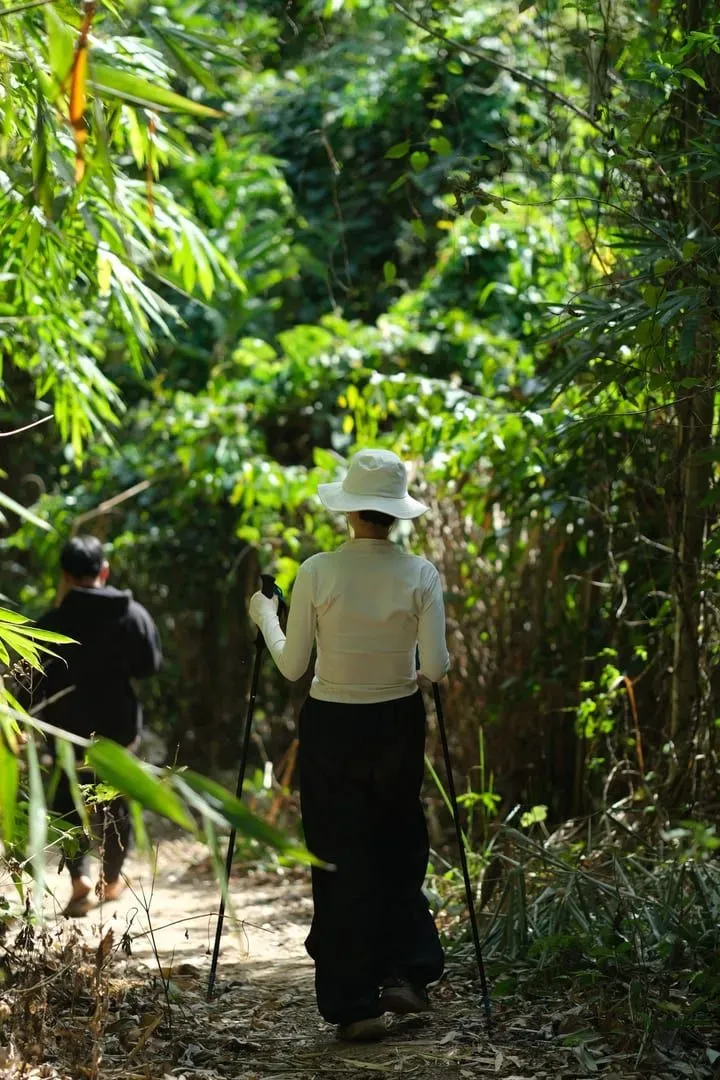
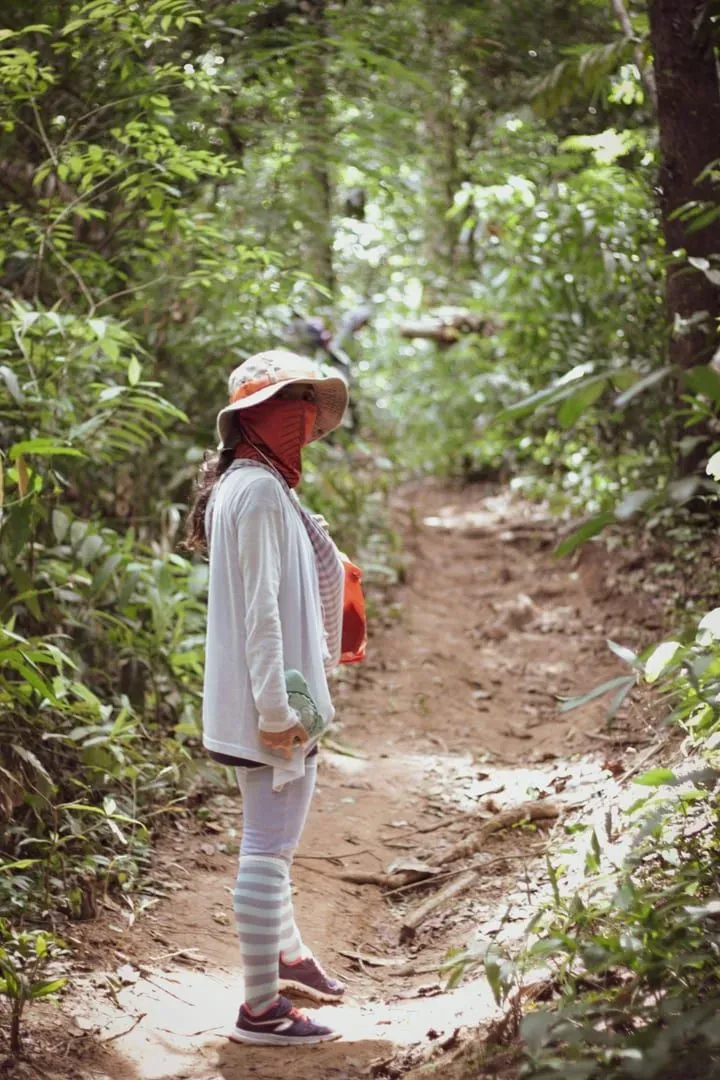
The monkeys most visitors actually encounter on Koh Samui are wild long-tailed macaques living in the island’s remaining interior jungle, documented on our own Monkey Trail hiking guide as commonly seen moving through the canopy, especially early morning. They are not trained, chained or fed by anyone — which is exactly why tourist feeding is a problem rather than a kindness: habituated macaques that associate people with food get bolder around bags, snatch items, and can scratch or bite when refused or crowded, a pattern reported at wild-monkey sites across Thailand generally, not unique to Samui.
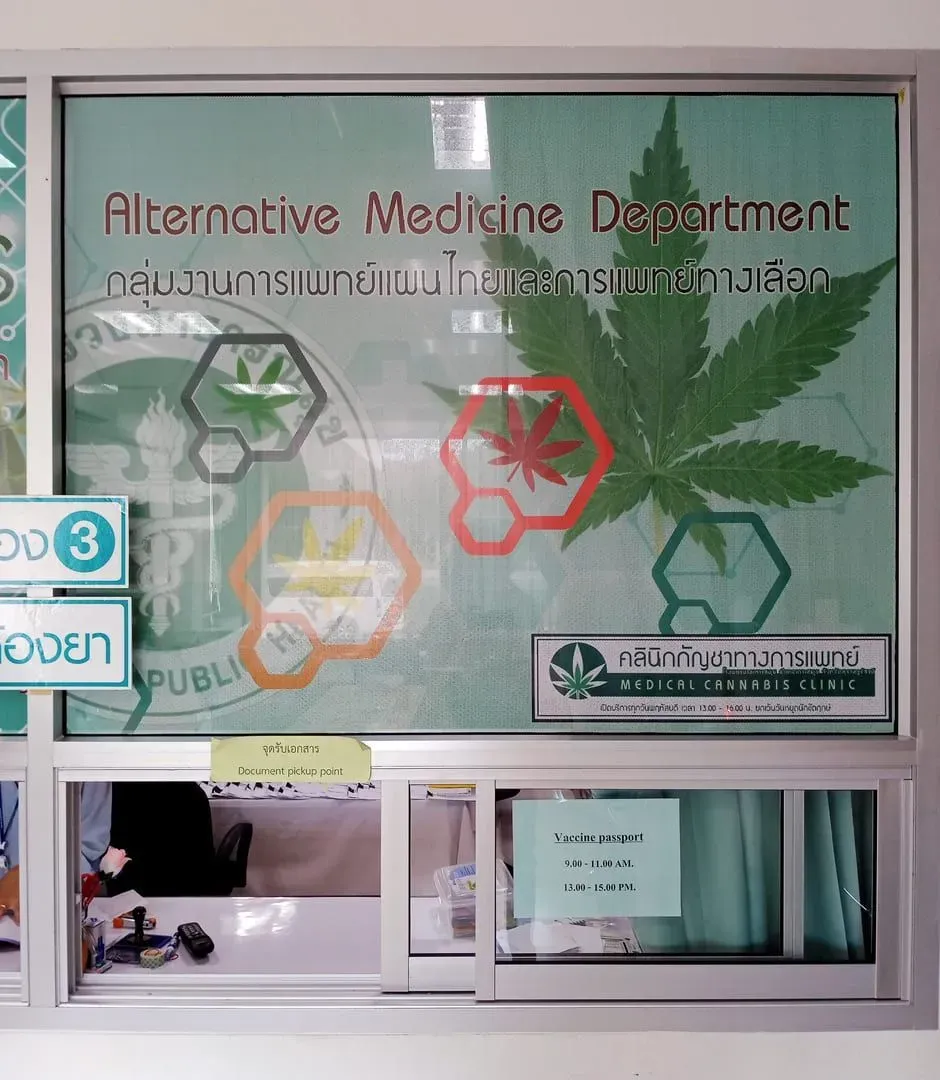
A monkey bite or scratch is a same-day medical matter, not a wait-and-see one. The World Health Organization recommends washing any bite or scratch immediately with soap and running water for a full 15 minutes, then seeking post-exposure treatment the same day — rabies is present in Thailand and delayed treatment has caused fatal cases in the country in recent years. Separately, macaque bites and scratches carry a risk of Herpes B, a virus that can be fatal without prompt treatment; the CDC recommends immediately washing the wound with soap and running water for 15 minutes (flushing eyes or mouth with saline or water if exposed there) and seeking urgent medical care — there is no vaccine, so first aid and speed are what matter. See our hospitals guide for where to go on the island, and is Koh Samui safe for the same protocol as it applies to dog bites and other everyday risks.
What Actually Helps
Wildlife Friends Foundation Thailand (WFFT) is a registered Thai foundation (reg. T271/2545), founded in 2001, running a wildlife rescue centre in Tha Yang, Phetchaburi province that takes in macaques among other species, and has separately run a public campaign calling for the closure of a monkey zoo and show on Koh Samui itself. We could not verify any registered monkey rescue or sanctuary physically based on Koh Samui — if one exists, it does not have the public presence a reader could independently confirm, and this page will not name an unverified one.
A genuine sanctuary — for monkeys, exactly as for the elephants covered in our elephant sanctuaries guide — does not let visitors handle, hold or hand-feed the animals, does not breed them, does not stage performances, and commits to lifetime care rather than working the animal for its keep. A petting attraction that lets you hold a monkey for a photo is not that, regardless of what sign is on the gate. Beyond visiting nothing, the two most useful things a reader can do are donate directly to a verified organisation like WFFT rather than paying for an in-person encounter, and buy coconut products labelled hand-picked or monkey-free where that labelling is available.

FAQ
Are monkeys used to pick coconuts on Koh Samui?
Documented mostly on the mainland south — Surat Thani, Chumphon and Nakhon Si Thammarat — rather than Samui, whose own coconut industry has shrunk as land converted to tourism. But Wikipedia’s Koh Samui entry, citing a 2023 investigation in The Times, states macaques are forced by some farmers on the island itself to harvest coconuts, so it is not a clean mainland-only exception.
Is all Thai coconut milk made using monkey labour?
No, and nobody has published a reliable figure for what share is. Thai officials and industry representatives dispute the scale implied by 2019 media coverage, saying trained monkeys are used on a minority of farms and much harvesting is done by machine or human pickers. Look for hand-picked or monkey-free labelling if you want to avoid the practice specifically.
Is it okay to take a photo with a monkey on Koh Samui?
No. Paying to hold, photograph or watch a performing monkey funds the same capture-and-training pipeline that supplies coconut-picking and show monkeys alike — there is no ethical version of that transaction, regardless of how the animal appears in the moment.
What should I do if a monkey bites or scratches me on Koh Samui?
Wash the wound immediately with soap and running water for a full 15 minutes, then get same-day medical care — Thailand carries both rabies and Herpes B risk from macaque bites, and both require prompt treatment to be effective. See our hospitals guide for where to go.
Is there a monkey sanctuary on Koh Samui I can visit?
We could not verify one with a public presence on the island itself. Wildlife Friends Foundation Thailand, a registered rescue in Phetchaburi province on the mainland, takes in macaques and has campaigned against a Samui monkey show — donating to a verified mainland organisation does more good than visiting an unverified on-island attraction.
Turning Up
There is no single place this page sends you, deliberately — the point is what you don’t pay for rather than a stop to add to an itinerary. If you want to see Samui’s own monkeys honestly, walk any section of the Monkey Trail network in the island’s southern hills early in the morning, keep food packed away, and watch wild long-tailed macaques move through the canopy from a sensible distance. If you want to do something rather than just avoid something, the donation link is worth more than the visit.
Macaques and monkey welfare
Where your help actually goes
See who we checked for this cause, where the money actually lands, and that samui69 takes none of it.
- Wildlife Friends Foundation Thailand Tha Yang, Phetchaburi
Published on
About the author
Mike Brochlowski
Travel photographer & writer
Travel photographer and island explorer. Mike has spent years documenting Southeast Asia's hidden gems, from secluded beaches to jungle waterfalls.
Articles by Mike →More in Island Life
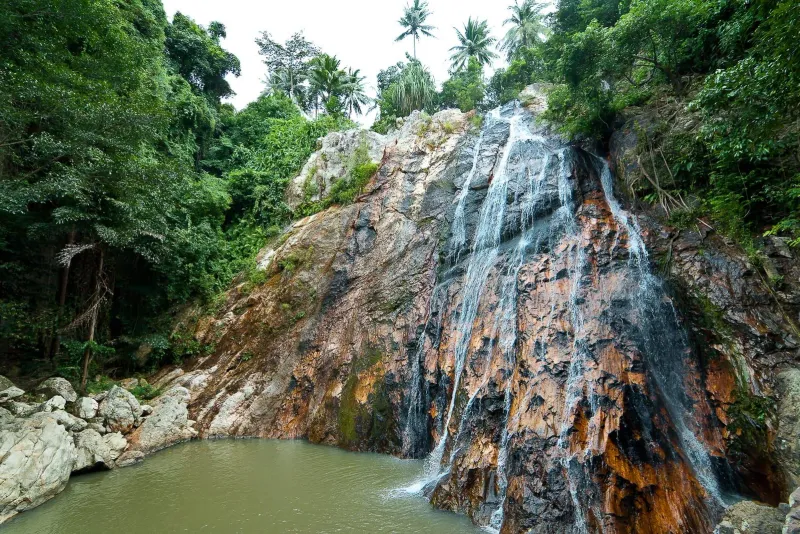
Na Muang Waterfalls — Samui's Purple Cascades and Jungle Pools
Explore Na Muang Waterfalls on Koh Samui — the accessible 18m Purple Waterfall with its swimming pool and the 80m jungle trek to the isla…
Wat Phra Yai — Big Buddha Temple on Koh Samui
Visit Wat Phra Yai (Big Buddha) on Koh Samui: a 12-meter golden Buddha, naga staircase, panoramic views, and market stalls.
Apirom Viewpoint — Koh Samui's Closed Hillside Lookout Above Ban Tai
Apirom Viewpoint: a ~304m hilltop lookout inland of Ban Tai, Koh Samui, its restaurant closed since the pandemic but the hillside track s…