Contents
A beach clean up on Koh Samui means turning up at a public beach with gloves and a bag and working a stretch of sand for an hour or two, usually organised by a dive shop, a resort or the island’s Trash Hero chapter rather than by any single person. It is free, needs no booking, and the busiest weeks — roughly November to January, when the northeast monsoon piles debris onto the north and east coasts — are worth more than any other time of year.
Key takeaways
- Most of the plastic on Samui’s beaches did not come from a dropped wrapper — it arrived by sea on the monsoon current or washed out of a canal after rain.
- The northeast monsoon (roughly November–January) is the highest-yield window on the north and east coasts; the west coast runs on a different, calmer rhythm.
- Trash Hero Koh Samui, part of the global Trash Hero network founded in Thailand in 2013, is the island’s longest-running organised option.
- Gloves, closed shoes and drinking water are not optional — broken glass, fish hooks and weeverfish hide in wrack lines, and heat is the real risk on an open beach at midday.
What This Actually Is
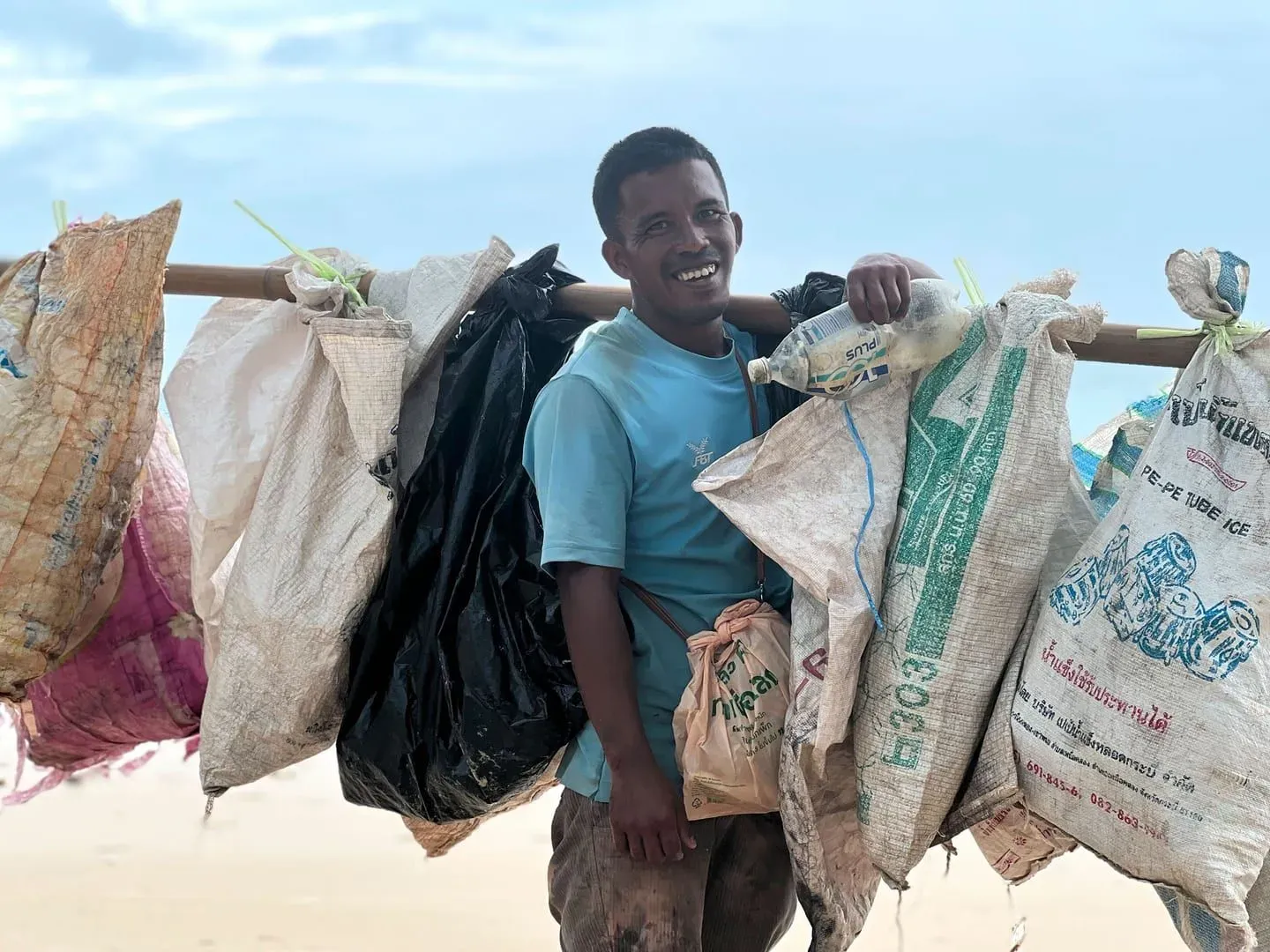
This is the low-key, unpaid side of Samui’s environmental scene — not a certified programme, not a tour, and not run by any one person. A clean is a stretch of sand, a few dozen bags, and whoever showed up that morning, repeated on a rhythm set by whichever group posted it. It sits next to, but is separate from, the island’s responsible travel choices — refusing a straw and joining a clean are different actions, and this page is about the second one. It is also narrower than reef restoration diving or a longer organised volunteering placement, both worth their own page — this one stays on the free, walk-up, sand-and-gloves version.
Who Is In It
The regulars are a mix that would not otherwise share a morning: long-stay expats, dive instructors squeezing one in between boat trips, Thai schoolchildren and monks on a temple-organised morning, and travellers who found a poster or an Instagram post the day before. Nobody needs experience, a wetsuit, or Thai language — a first-timer is useful within five minutes.
How It Works
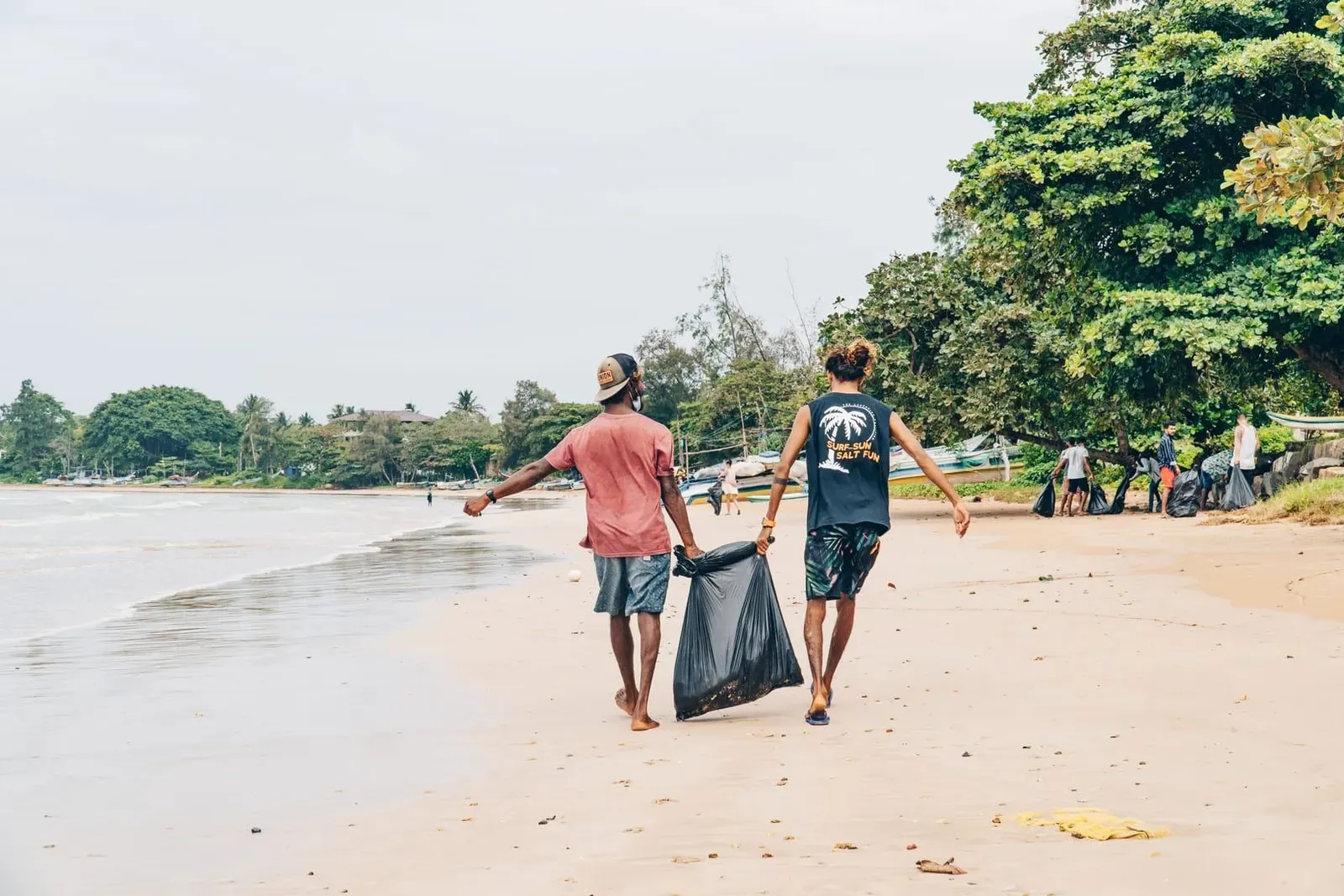
A typical session runs 60–120 minutes, starts early (7–9am, before the heat builds), and ends with bags weighed or counted and a group photo. Organisers usually supply bags; bring your own reusable water bottle, gloves and a bucket for sharp items if you have them. There is no island-wide registration — each group runs its own calendar, so the way in is finding that group’s page, not a central events board.
What It Costs
Nothing. No group running a public beach clean on Samui charges an entry fee or takes bookings — that would sit against this site’s own non-commercial policy as much as theirs. The only cost is your morning, sun protection, and shoes you don’t mind getting wet.
How To Join
Pick a group from the list below, find its own page or social account, and turn up at the time and place it posts — never a fixed slot published anywhere else, since these move with tides, staffing and season. If you can’t find an upcoming date, message the group directly rather than guessing.
Where the Rubbish Actually Comes From
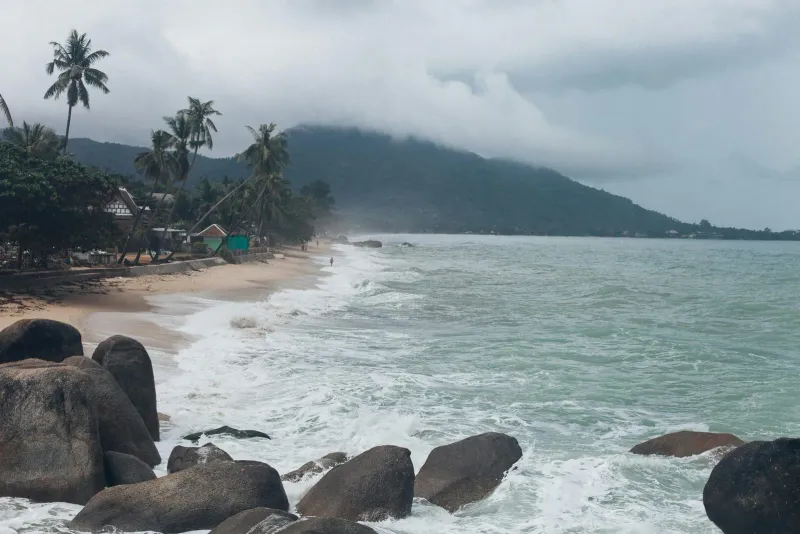
Three separate sources put plastic on a Samui beach, and they call for different responses. Some is dropped or left on the beach itself — wrappers, bottles, cigarette butts — the smallest share by volume and the easiest to prevent. A larger share arrives by sea: the Gulf of Thailand’s currents, and above all the northeast monsoon, push floating debris onto Samui’s north- and east-facing shores like Bang Po and Chaweng, which is why a clean the week after a big blow finds far more than one on a calm week. The third source is the island’s own waste system, and it is the part locals argue about.
Koh Samui generates far more solid waste than a small island’s infrastructure was built for, especially in high season when the resident population multiplies with tourists. The responsible travel guide already documents the practical result: there is no recycling plant on Samui itself, waste is trucked to a landfill near Maret reported overflowing in high season for years, and material not landfilled is shipped to the mainland at a cost the municipality keeps paying. Thai media have covered Samui’s waste-to-energy and landfill troubles as a recurring, politically live story for years — a small island trying to process a tourist city’s volume of rubbish with nowhere left to bury it. What we could not confirm from a source solid enough to print here: current daily tonnage, the incinerator’s present operating status, and an up-to-date cost for barging waste to Surat Thani. Treat any specific figure you read elsewhere as a claim to verify, not a settled fact.
The Seasonal Rhythm — When a Clean Actually Matters
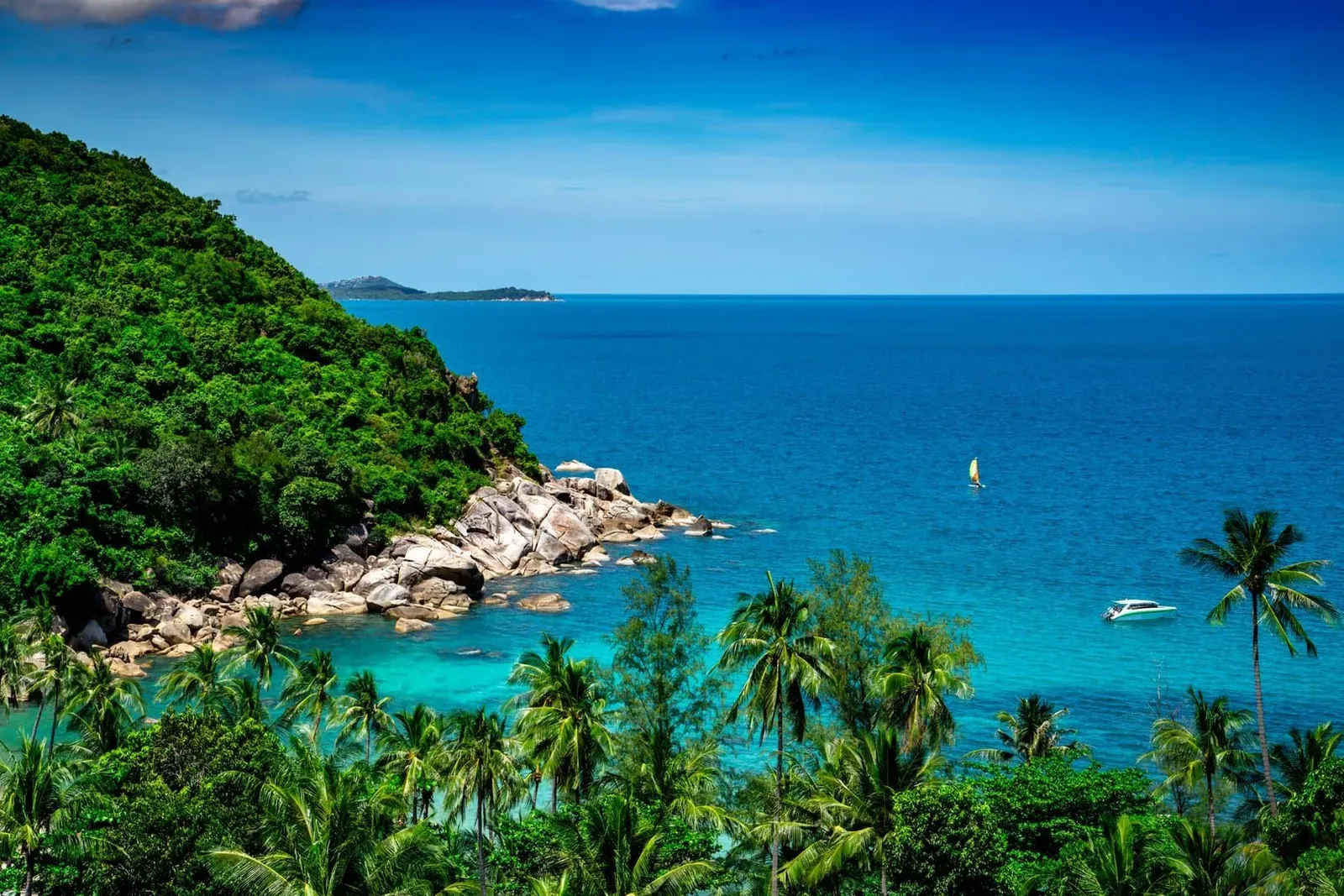
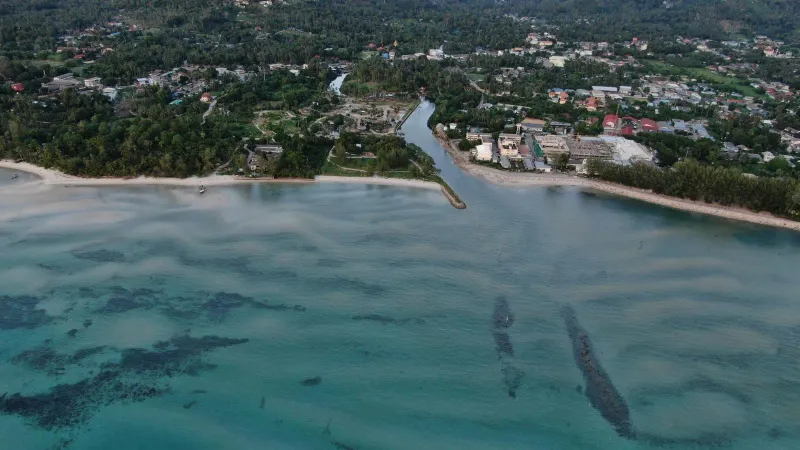
A clean in April moves a fraction of what the same effort moves in December, because the debris load on Samui’s beaches is seasonal, not constant. The northeast monsoon, roughly November through January, drives wind and swell onto the north and east coasts and piles up marine debris — fishing line, foam, bottles, flip-flops — faster than any group can clear it, making this the highest-value window to help. The west coast (Lipa Noi, Taling Ngam) sits in the lee of that wind and runs calmer most of the year, picking up more instead during southwest-monsoon weather (roughly May–October). Separately, heavy rain anywhere flushes plastic down canals straight onto the nearest beach within hours, so a clean the morning after any big downpour is unusually productive regardless of season.
Who Organises Cleans
No single calendar covers the island, so the practical approach is to follow a group’s own page rather than trust a fixed time published anywhere, including here.
| Who | What they run | Where to check |
|---|---|---|
| Trash Hero Koh Samui | Regular volunteer beach cleans, part of the Trash Hero World network founded in Thailand in 2013 | trashhero.org — chapter and network pages |
| Dive shops (island-wide) | Underwater and shoreline cleans, often as PADI Dive Against Debris sessions tied to a course or a fixed date | Individual shop websites and social pages — see the diving guide for operators |
| Resorts and beach restaurants | Daily cleaning of their own frontage, not open volunteer sessions | Not open to drop-in volunteers; ask directly if you want to help |
| Schools and temples | Occasional community clean mornings tied to a school term or a temple event | Not centrally listed; ask locally or watch community boards |
| International Coastal Cleanup | Ocean Conservancy’s global cleanup day, usually mid-to-late September | coastalcleanup.org — event map |
| World Cleanup Day | Global single-day cleanup, held every September (20 Sept in 2025) | worldcleanupday.org — country page for Thailand |
Checked September 2026: Trash Hero’s network page lists an active Koh Samui chapter alongside Koh Phangan, and World Cleanup Day’s Thailand page listed events for the current cycle. Neither publishes a fixed weekly time worth repeating here — check the group’s own page for the next date rather than trusting one printed on any third-party site, this one included.
How to Do It Properly
Doing a clean properly starts with what you wear: closed shoes and gloves are not optional, because wrack lines hide broken glass and fish hooks, and weeverfish near the waterline sting if stepped on. Bring more water than feels necessary — an open beach at 10am dehydrates people faster than the work tires them, and shade is often a walk away.
Leave alone and flag instead of collecting: chemical or oil drums, anything medical (syringes, needles, dressings), and dead animals — jobs for the organiser or authorities, not a volunteer’s bag. Separate what you collect if asked: clean bottles and cans have a real recycling route through Thailand’s informal collectors, but a large share of what washes up — degraded film, foam, sun-brittled fragments — has no buyer and goes to the same landfill as general waste even after being picked up. That is discouraging, and worth knowing before you start.
Do not rake dry sand looking for microplastics — it feels productive but buries surface debris and crushes the crab burrows and invertebrate life underneath; hand-picking visible fragments works without the damage. During nesting season, never dig test holes or drive above the high-tide line — a turtle nest is invisible from the surface and one reversed step can crush it. Finally, log what you collect if the organiser keeps a tally — that is what turns a morning of bending over into data someone can cite later.
What Helps More Than a Clean
A single clean removes what has already washed up; the habits below reduce how much washes up in the first place, and any traveller can keep them going all trip. Refilling a reusable bottle at a hotel, guesthouse or café filtered-water station instead of buying another plastic one is the highest-leverage habit available — most accommodation now offers one, free. Refusing a straw and a plastic bag by default, not only when asked, removes two of the most common items in every clean’s tally, and choosing restaurants that don’t drop a straw into every drink rewards the businesses already doing this unasked. Because so much of what a clean collects has no recycling route at all, the money version of help — a donation to Trash Hero or another registered environmental group — moves more waste out of the system per baht than most individual actions can.

FAQ
Is there a regular beach clean up on Koh Samui I can just show up to?
Not on a single fixed schedule — Trash Hero Koh Samui and the island’s dive shops run sessions on their own calendars, publicised on their own pages rather than one shared events board. Check the group’s page for the next date rather than a time printed elsewhere, since sessions move with weather, tides and staffing.
What is the best time of year for a beach clean up on Koh Samui?
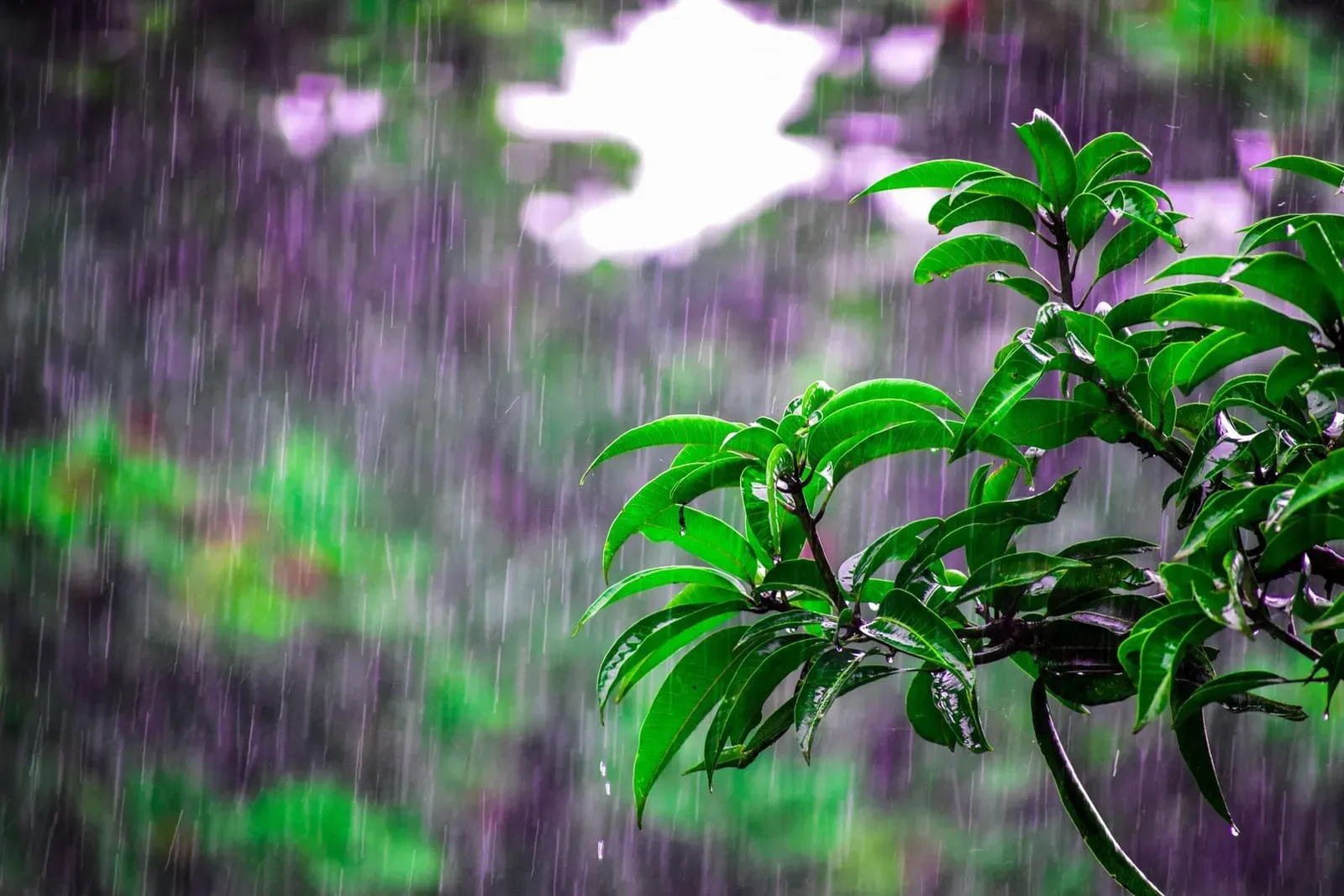
Roughly November through January, during the northeast monsoon, when wind and swell push the most marine debris onto the north and east coasts. A clean the morning after any heavy rainfall, in any month, is also unusually productive because canals flush plastic onto nearby beaches within hours.
Is Koh Samui’s plastic waste actually recycled?
Some of it — clean bottles and cans have a real route through local collectors — but a large share of what a beach clean collects, especially degraded film and mixed fragments, has no recycling buyer in Thailand and ends up at the same landfill as general waste. That is a documented limitation of the local system, not a reason to skip separating what you can.
Do I need any equipment to join a beach clean up on Koh Samui?
Closed shoes and gloves are the two non-negotiables, because wrack lines hide broken glass and fish hooks and the shallows can hold weeverfish. Bring more drinking water than feels necessary and sun protection; most organisers supply bags, but bring your own if you have them.
Why shouldn’t I rake the sand during a beach clean?
Raking disturbs the beach ecosystem — crab burrows and small invertebrates living just under the surface — more than it removes debris, and it can also destroy an invisible turtle nest during nesting season. Hand-picking visible plastic, including small fragments, collects the same rubbish without that damage.
Turning Up
There is no single Samui-wide beach clean up you can pencil in months ahead — the honest version of “how to join” is to open Trash Hero Koh Samui’s page or a local dive shop’s social feed this week, see what they have posted for the next few weekends, and go to that. If nothing is posted, message the group directly; most run when someone has time to organise one, not on a fixed roster. The two dates worth marking regardless — International Coastal Cleanup in September and World Cleanup Day on 20 September — are the two mornings a year when showing up needs the least homework, because the organisers have already done it for you.
Beach cleaning
Where your help actually goes
See who we checked for this cause, where the money actually lands, and that samui69 takes none of it.
- Trash Hero Koh Samui Koh Samui
Published on
About the author

Mike Brochlowski
Travel photographer & writer
Travel photographer and island explorer. Mike has spent years documenting Southeast Asia's hidden gems, from secluded beaches to jungle waterfalls.
Articles by Mike →More in Island Life
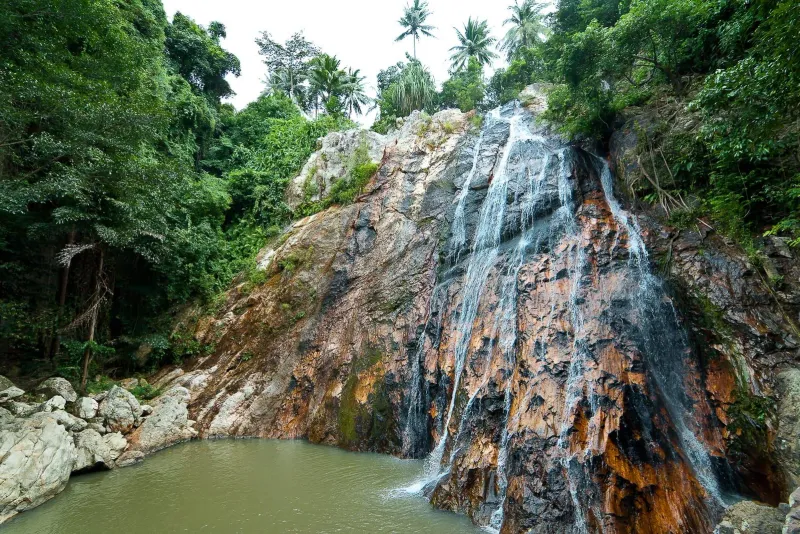
Na Muang Waterfalls — Samui's Purple Cascades and Jungle Pools
Explore Na Muang Waterfalls on Koh Samui — the accessible 18m Purple Waterfall with its swimming pool and the 80m jungle trek to the isla…
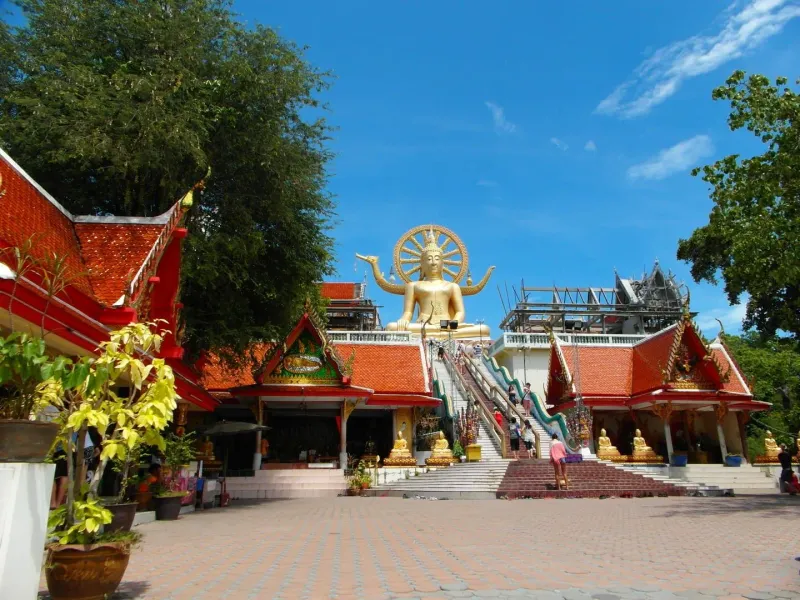
Wat Phra Yai — Big Buddha Temple on Koh Samui
Visit Wat Phra Yai (Big Buddha) on Koh Samui: a 12-meter golden Buddha, naga staircase, panoramic views, and market stalls.
Apirom Viewpoint — Koh Samui's Closed Hillside Lookout Above Ban Tai
Apirom Viewpoint: a ~304m hilltop lookout inland of Ban Tai, Koh Samui, its restaurant closed since the pandemic but the hillside track s…