Contents
Quick Answer
Koh Samui has four operating elephant venues that market themselves as sanctuaries and none of them allow riding: Samui Elephant Sanctuary (Bophut and Chaweng Noi), Samui Elephant Haven (Bophut), Elephant Kingdom Samui (Lipa Noi) and Elephant Jungle Sanctuary Samui (Maenam). Prices for 2026 run roughly 1,000–3,000 THB (~29–86 USD) per adult depending on program length. Samui Elephant Sanctuary is the strictest on hands-off welfare — no riding, no bathing, no chains — and includes round-trip hotel transfer in every package. If you want a shorter, cheaper visit, Samui Elephant Haven’s 45-minute feeding option starts at 1,000 THB. Not every listed venue skips bathing, so check the comparison table below before booking, and see our things to do in Koh Samui guide for how a sanctuary visit fits into a wider itinerary.
Key takeaways
- Four venues on Koh Samui advertise as sanctuaries in 2026; all four have dropped elephant riding
- Only Samui Elephant Sanctuary and Elephant Kingdom Samui are fully hands-off (no riding and no bathing)
- Elephant Jungle Sanctuary Samui still offers a mud-bath / shower program — read the difference before you book
- Prices range from ~1,000 THB (~29 USD) for a short feeding visit to ~3,000 THB (~86 USD) for a half-day program
- Elephant trekking and riding camps still operate elsewhere on the island — look for “trek” or “ride” in the tour name
Elephant Sanctuaries in Koh Samui at a Glance
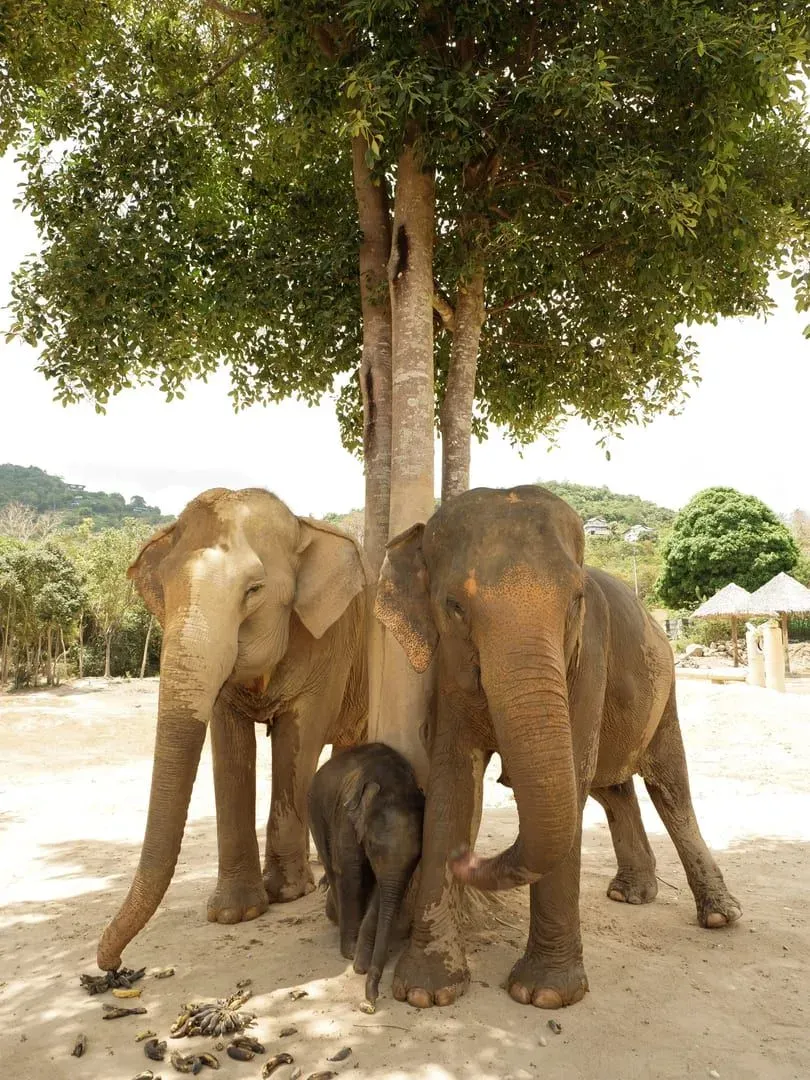
This table compares the four elephant venues on Koh Samui that we could independently verify were operating as no-riding sanctuaries as of September 2026. Prices and inclusions change without much notice at small tourism operators, so confirm details on the operator’s own site before paying a deposit.
| Sanctuary | Location | Programme Lengths | 2026 Price (Adult) | Group Size | Transfers | Riding / Bathing Policy |
|---|---|---|---|---|---|---|
| Samui Elephant Sanctuary | Bophut (15 rai) & Chaweng Noi (40 rai) | 1.5h or 3h | 2,000–2,900 THB (~57–83 USD) | Small groups; cap not published | Round-trip hotel transfer included | No riding, no bathing, no chains, no shows |
| Samui Elephant Haven | Bophut, north coast | 45 min or 3h | 1,000–3,000 THB (~29–86 USD) | Daily visitor cap; exact number not published | Included on the 3h tour; not on the 45-min feeding visit | No riding, no chains; elephants use their own pool and mud ponds rather than being bathed by visitors |
| Elephant Kingdom Samui | Lipa Noi | 3h (morning or afternoon) | ~3,000 THB (~86 USD) | Not published | Optional paid hotel pickup, or self-arrival | Strictly hands-off — no riding, no bathing |
| Elephant Jungle Sanctuary Samui | Maenam | 1h, 1.5h or 3h | ~900–3,000 THB (~26–86 USD) depending on program | ~20–25 people per group | Free transfer from most beach zones (Bophut, Maenam, Lamai, Nathon and more) | No riding; a “Feed & Shower” program with bathing/mud-bath is offered as one option |
Samui Elephant Sanctuary — Bophut and Chaweng Noi
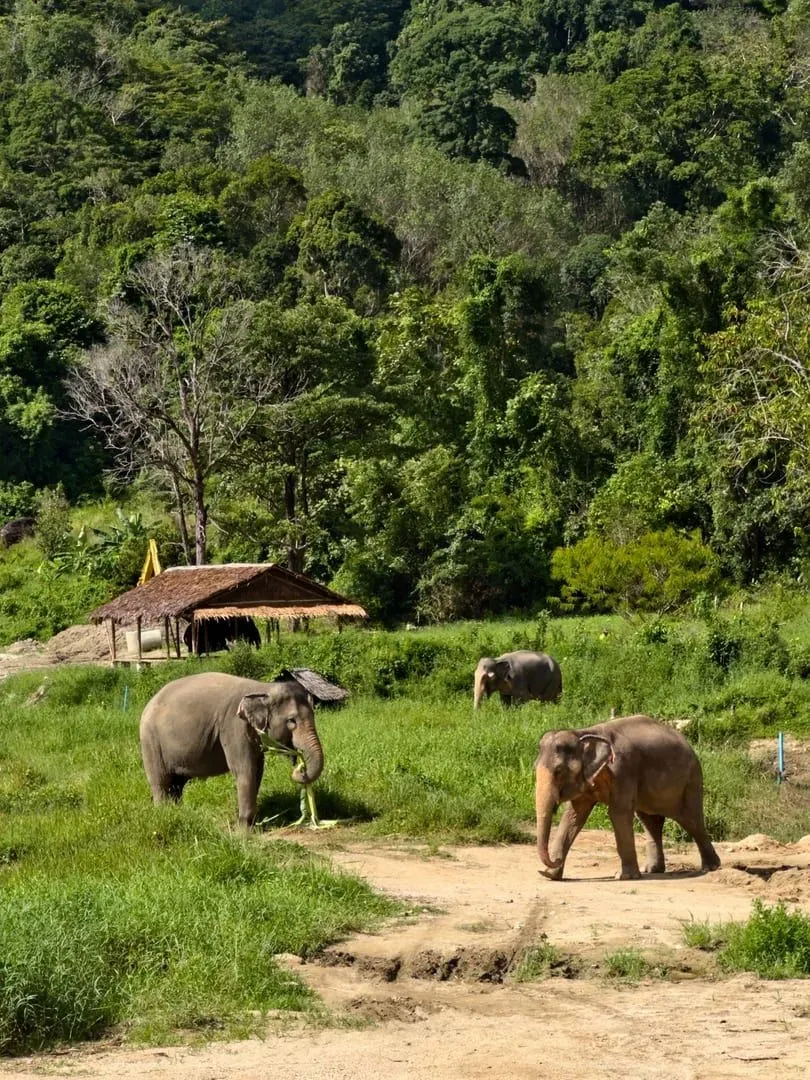
Samui Elephant Sanctuary is the island’s best-known no-contact operation, running two separate properties: a 15-rai site in Bophut with 7 rescued elephants, and a larger 40-rai site in Chaweng Noi with 8 elephants, opened in 2020 to give the herd more room to roam. The sanctuary states plainly that it does not allow “rides, shows, bathing, mud bathing, trunk hugging, elephant kisses, sitting on or lying on the elephants” — visitors watch, feed and walk alongside the herd instead.
Three facts worth knowing: the 3-hour morning or afternoon tour (9am–12pm or 2pm–5pm) costs 2,900 THB (~83 USD) for adults and 1,400 THB (~40 USD) for children aged 5–11, with under-4s free; a shorter 1.5-hour visit costs 2,000 THB (~57 USD) adult / 1,000 THB (~29 USD) child; and every package includes round-trip hotel transfer, a vegetarian meal or snacks, and insurance, with no deposit required (pay cash on arrival).
Pros: strict no-contact policy, transfer included, two locations to fit different hotel areas, English-speaking guides. Cons: popular with tour groups in high season, so book at least a few days ahead; observation-only means less hands-on interaction than bathing-style venues. Best for: visitors who want the most hands-off, welfare-first option and don’t mind watching rather than touching.
Samui Elephant Haven — Bophut Rescue Center
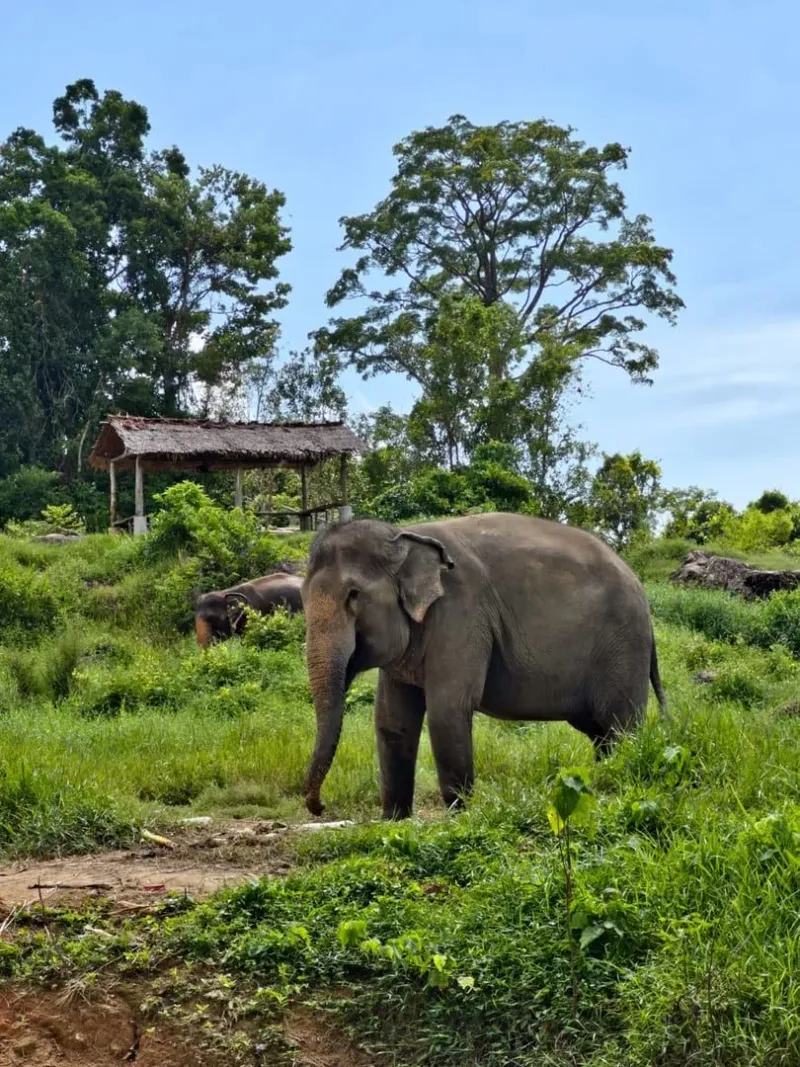
Samui Elephant Haven sits in Bophut on Koh Samui’s north coast, spread across roughly 60 rai of hillside and jungle, and is home to around 14 elephants previously used in logging, riding camps and street begging. Rather than being bathed by tourists, the elephants have their own pool and mud ponds to use, or not, on their own terms.
Three facts worth knowing: a 45-minute feeding visit costs 1,000 THB (~29 USD) for adults and 500 THB (~14 USD) for children aged 4–11 and does not include hotel transfer; the longer 3-hour tour costs 3,000 THB (~86 USD) adult / 1,500 THB (~43 USD) child and includes round-trip hotel transfer and a vegetarian meal; budget extra for a taxi or Grab on the feeding visit if your hotel isn’t on a pickup route.
Pros: cheapest short-visit option on the island, no forced bathing, daily visitor cap keeps groups small. Cons: transfer isn’t included on the cheaper feeding visit by default, so factor in taxi cost if it’s not arranged with the operator in advance. Best for: budget-conscious visitors and anyone already staying near Bophut or the north coast.
Elephant Kingdom Samui — Lipa Noi Skywalk
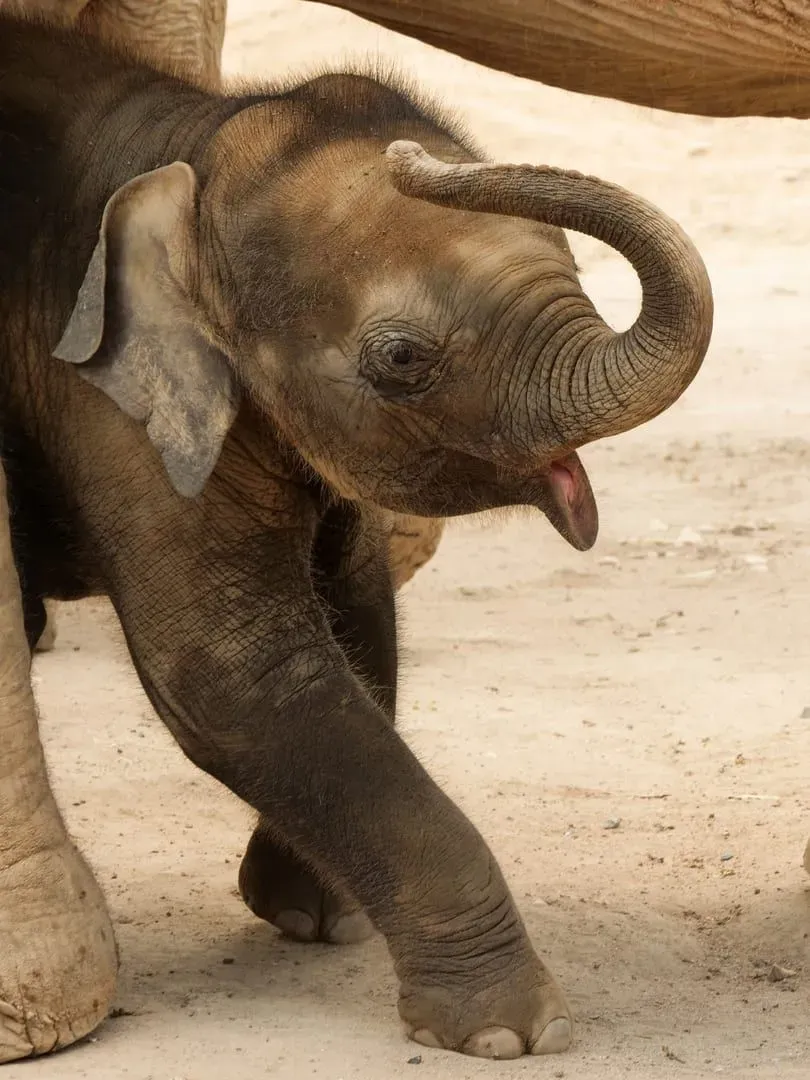
Elephant Kingdom Samui, also in Lipa Noi, takes a different approach to observation: a 400-meter elevated skywalk lets visitors watch the herd from above without entering their enclosure at all. The operator describes itself as “strictly hands-off” for both riding and bathing, with dedicated mahouts handling day-to-day care.
Three facts worth knowing: sessions run for 3 hours in the morning (9am–12pm) or afternoon (2pm–5pm); adult pricing runs around 3,000 THB (~86 USD), though exact 2026 child rates were not published at the time of writing and should be confirmed directly; and hotel pickup is offered as a paid add-on rather than a default inclusion, with a self-arrival option for anyone driving or renting a scooter.
Pros: elevated skywalk gives a genuinely different vantage point than ground-level sanctuaries; consistently high review scores. Cons: child pricing and group-size caps are not published online, so email or call ahead if you’re booking a family visit. Best for: visitors who want to observe elephants from a distance rather than get close, and anyone already exploring Lipa Noi’s beaches.
Elephant Jungle Sanctuary Samui — Maenam
Elephant Jungle Sanctuary Samui, based on Soi Maenam 1 in Maenam, is part of the long-running EJS network that operates similar venues across Thailand. It has dropped riding entirely, but unlike the other three venues on this list it still sells a “Feed & Shower” program where visitors walk elephants into a custom shower area, alongside pure observation options.
Three facts worth knowing: programs range from a 1-hour “Feed Me” visit up to a 3-hour half-day visit, priced roughly 900–3,000 THB (~26–86 USD) depending on length; free transfer is offered from most beach zones, including Bophut, Maenam, Bang Rak, Choeng Mon, Lamai, Nathon and Lipa Noi (Airbnbs and private rentals are usually excluded); and groups typically run 20–25 people, larger than the other three sanctuaries on this list.
Pros: widest range of program lengths and prices, broad free-transfer coverage, familiar international brand. Cons: the shower/mud-bath option involves more direct physical contact than fully hands-off sanctuaries, and group sizes are larger. Best for: visitors who want a lower-priced entry point or specifically want a supervised, no-riding bathing experience rather than pure observation.
How to Tell an Ethical Sanctuary from a Riding Camp
An ethical elephant venue never offers rides, never uses a bullhook or ankus in view of visitors, and never chains an elephant to a post between activities. Look for a clear statement on the operator’s own website — not just a marketing tagline — that spells out what visitors cannot do: no riding, no shows, no forced bathing, no chaining. All four sanctuaries above publish this kind of policy; a venue that only advertises “sanctuary” in its name without listing specific bans is worth a second look.
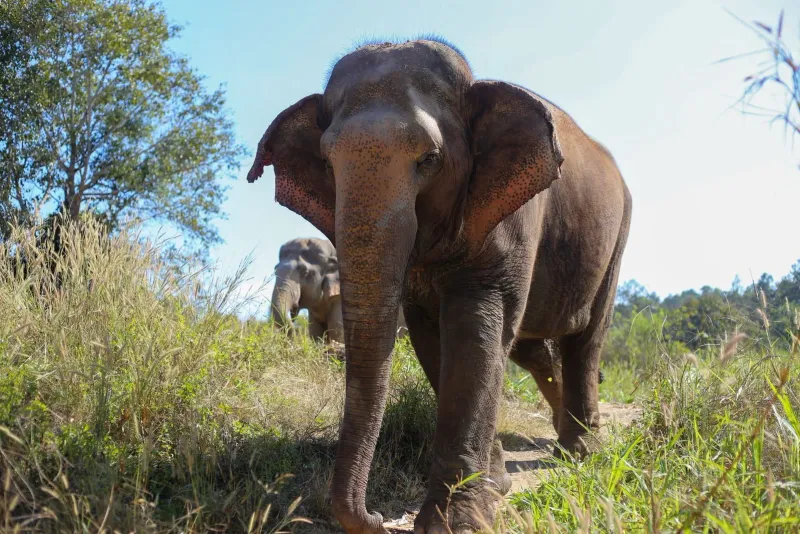
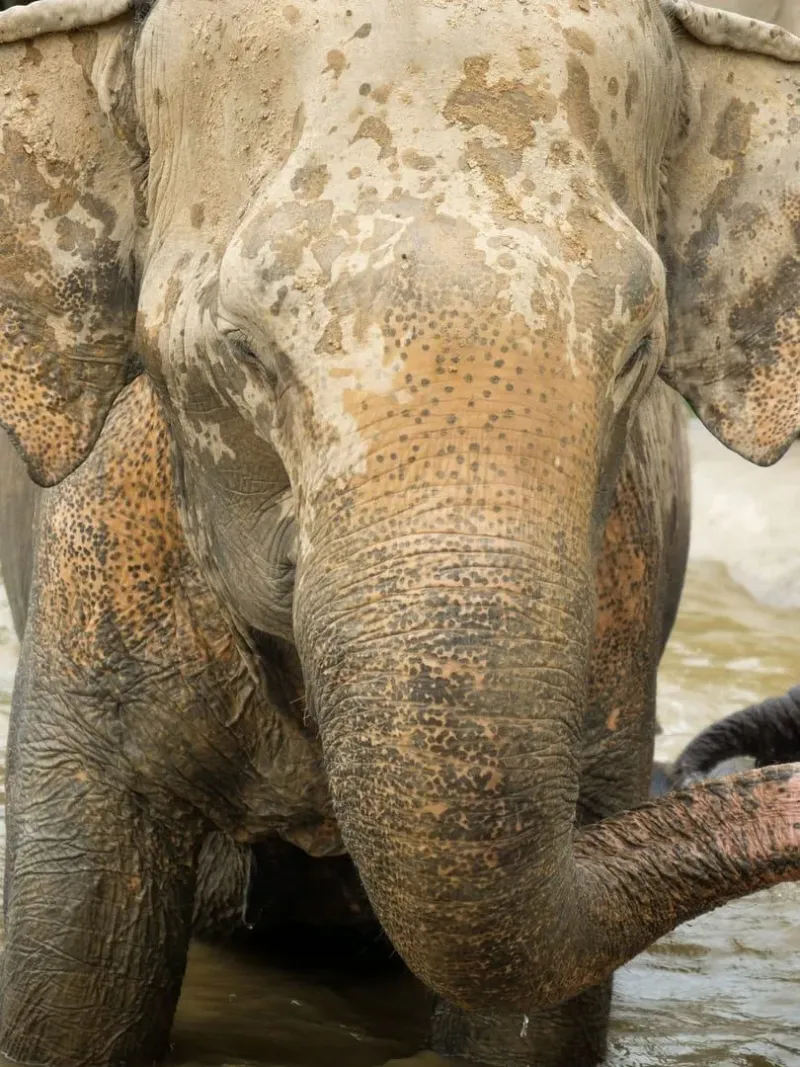
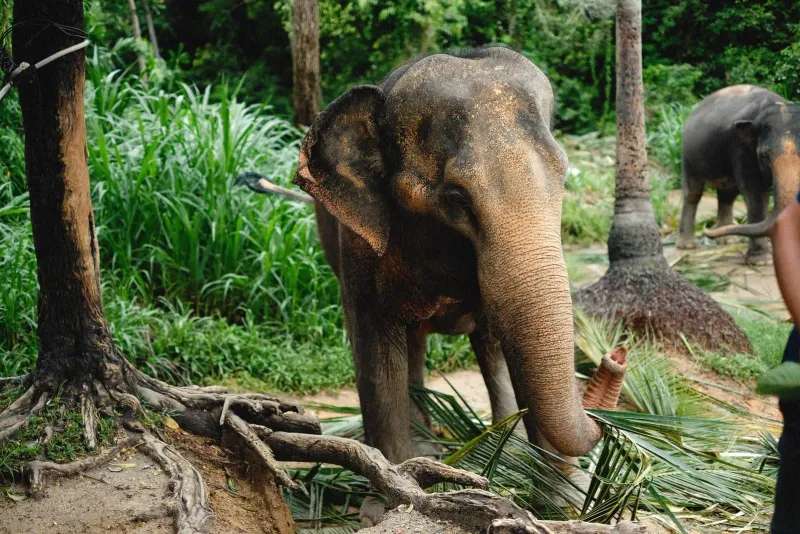
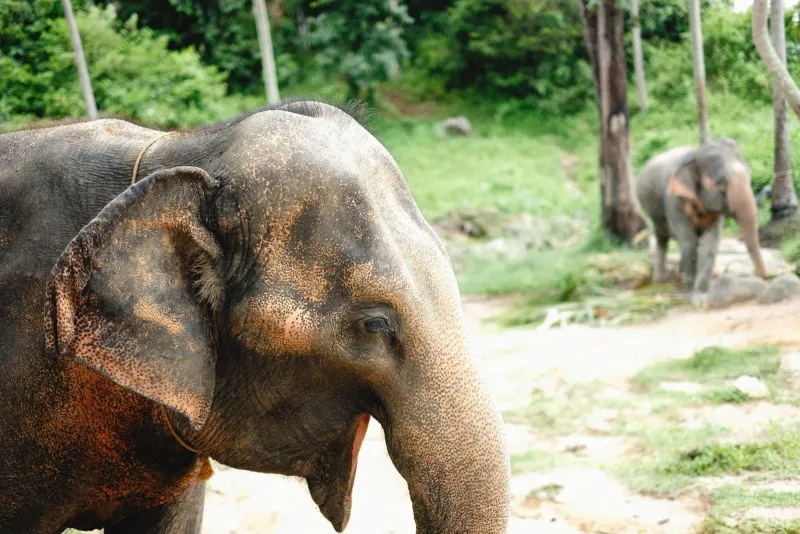
Photos are a reliable check before you book. Search the venue’s name on Google Images and recent TripAdvisor reviews rather than only its own marketing photos. Genuine sanctuaries show elephants in open enclosures moving freely, often with visible scars from their working past — proof of rescue, not concealment. A red flag is any elephant standing rigidly at a fixed photo spot with a mahout holding a hooked stick nearby, or ankle chains visible when no visitors are present. Pricing hints at intent too: a rescue-focused sanctuary sells time watching and feeding elephants, not “photo packages” or painting add-ons, and a listing that bundles elephants with ATV riding or a zipline “safari” is usually a trekking camp rather than a rescue center.
Riding Camps and Combo Tours to Avoid
Elephant riding has not disappeared from Koh Samui, it has mostly moved into multi-activity “island safari” day tours sold through hotel desks and booking platforms. Listings titled “Full Day Mountain Safari and Elephant Trek” or “Island Safari and Elephant Ride” — widely resold through OTAs like Viator — combine ATV driving, a viewpoint stop and an elephant ride on a wooden platform (a howdah) strapped to the animal’s back. Camp Chang Hinlad, near the Hin Lad area, is one long-running operator that markets elephant trekking rather than a no-contact visit; its own listings describe riding as the core activity, which is the plain fact that separates it from every sanctuary above.
None of this is a claim that any specific operator mistreats its animals behind the scenes — it is a description of what they publicly sell. Riding platforms put sustained weight on an elephant’s spine, a concern raised by veterinary groups regardless of how an individual animal is treated day to day, and trekking mahouts commonly carry a bullhook even when it isn’t used aggressively in front of guests. If a listing uses the word “trek,” “ride,” or “howdah,” or bundles elephants with jeep safaris and ziplines, treat it as a riding camp and choose one of the four venues above instead.
How We Chose These Sanctuaries
We included a venue only if its own website or booking page explicitly states it does not offer elephant riding, cross-checked against 2026 TripAdvisor and Google review activity to confirm it was still operating. We excluded any operator whose marketing describes trekking, riding platforms or shows, even where “sanctuary” appeared in the name. Prices and inclusions came from each operator’s official site or listed booking partner in September 2026 — confirm current rates before paying, since small operators revise pricing without notice.
FAQ
Is there an ethical, no-riding elephant sanctuary in Koh Samui?
Yes. Samui Elephant Sanctuary (Bophut and Chaweng Noi), Samui Elephant Haven (Bophut), Elephant Kingdom Samui (Lipa Noi) and Elephant Jungle Sanctuary Samui (Maenam) all publicly state they do not offer elephant riding as of 2026. Samui Elephant Sanctuary and Elephant Kingdom Samui go further and also skip visitor bathing, making them the most hands-off options on the island.
How much does the Samui Elephant Sanctuary cost in 2026?
A 3-hour visit costs 2,900 THB (~83 USD) for adults and 1,400 THB (~40 USD) for children aged 5–11, with children under 4 free. A shorter 1.5-hour visit costs 2,000 THB (~57 USD) adult and 1,000 THB (~29 USD) child. Round-trip hotel transfer and a vegetarian meal or snacks are included in every package.
Is Samui Elephant Haven part of Elephant Nature Park?
No formal affiliation is stated. Samui Elephant Haven’s founder has cited a visit to Elephant Nature Park and its founder Lek Chailert as an early inspiration for starting the sanctuary, but the Bophut site is independently run and is not part of that network. It follows a similar no-riding, no-chain welfare approach across roughly 60 rai of hillside.
Can children visit an elephant sanctuary on Koh Samui?
Yes, all four sanctuaries welcome children, and most offer reduced child pricing for ages 4–11, with under-4s usually free. The shorter 45-minute or 1.5-hour programs suit shorter attention spans better than a full 3-hour visit. Pair the visit with our Koh Samui with kids guide for a full family itinerary.
Should I book a sanctuary that offers elephant bathing?
It depends on your priorities. Fully hands-off sanctuaries like Samui Elephant Sanctuary and Elephant Kingdom Samui avoid any physical contact activity, including bathing, on welfare grounds. Elephant Jungle Sanctuary Samui still sells a supervised “Feed & Shower” option; it does not involve riding, but it does involve more direct contact than the other three venues.
Are there still elephant riding camps on Koh Samui?
Yes. Multi-activity “island safari” day tours combining ATV riding, viewpoints and an elephant ride on a wooden platform still operate and are sold through hotel desks and booking sites. Watch for the words “trek,” “ride” or “howdah” in a tour title — that language signals a riding camp rather than one of the sanctuaries in this guide.
Which Sanctuary Should You Choose?
For the strictest no-contact welfare standard and an included transfer, Samui Elephant Sanctuary is the safest default choice, with Bophut or Chaweng Noi depending on which side of the island you’re staying. Budget travelers or anyone based near Bophut should look at Samui Elephant Haven’s 1,000 THB feeding visit. If you’d rather watch from above than walk among the herd, Elephant Kingdom Samui’s skywalk is the most distinct option. And if a supervised shower experience matters more to you than strict hands-off rules, Elephant Jungle Sanctuary Samui is the only venue on this list that still offers it. Whichever you choose, pair the visit with a wider day trip around the island, and get around independently with our car rental guide if your hotel isn’t on a free transfer route.
For more welfare background before you book, see PETA’s guide to spotting a real elephant sanctuary and Samui Elephant Sanctuary’s own policy page.
Published on
About the author

Mike Brochlowski
Travel photographer & writer
Travel photographer and island explorer. Mike has spent years documenting Southeast Asia's hidden gems, from secluded beaches to jungle waterfalls.
Articles by Mike →More in Travel Guides
Also in 25 Best Things to Do in Koh Samui (2026)
18 Free Things to Do in Koh Samui (2026)
18 free things to do in Koh Samui — temples, beaches, waterfalls and viewpoints — plus the real costs some 'free' spots hide.
Also in 25 Best Things to Do in Koh Samui (2026)
Golf in Koh Samui — Santiburi Green Fees, Football Golf & Mini Golf
Golf in Koh Samui: Santiburi's hillside 18-hole course (3,550-5,800 THB green fee), Football Golf near Big Buddha, and what's confirmed f…
Also in 25 Best Things to Do in Koh Samui (2026)
Koh Samui Hidden Gems — 15 Places Most Tourists Miss
Koh Samui hidden gems: 15 quiet beaches, waterfalls, temples and viewpoints most tourists miss, with how to reach each one and the honest…