Contents
Koh Samui’s sea sits at 28–30°C year-round — no wetsuit, ever, but real heat and dehydration risk on anything past half an hour, the opposite problem a swimmer trained in colder water is used to solving. A loose crew of residents, triathletes and ex-competitive swimmers swims lines off half a dozen beaches; a tow float and a buddy are non-negotiable, because boats, not waves, do the damage here.
Key takeaways
- Water is 28–30°C (82–86°F) all year — the real risk is overheating and dehydration, not cold.
- Maenam, Bang Po and Bophut’s long shallow shelf are the easiest lines; Choeng Mon’s sheltered bay is the calmest.
- A tow float and a buddy are non-negotiable — boat, ferry and jet-ski traffic is the biggest single hazard, not currents or jellyfish.
- The northeast monsoon (roughly Nov–Jan) turns the east and north coasts choppy; box jellyfish season runs June–October, worst Aug–Sep.
- There’s no club to join — find the current crew by asking at a beachfront hotel or dive shop, not from a fixed schedule printed here.
What This Actually Is
This is swimming lines in open sea, not laps in a hotel pool — what a triathlete, an ex-club swimmer, or someone who just likes long water time does before breakfast. The fact that changes everything: the Gulf of Thailand runs 28–30°C (82–86°F) year-round, per the site’s own sea conditions by month breakdown. No wetsuit, no cold shock, no numb hands. What replaces cold as the danger is heat — a 30–60 minute swim in body-temperature water raises core temperature and drains fluid fast, the reverse of what a swimmer trained in the Baltic or the North Sea expects. Sunburn on an exposed back and shoulders is the other hazard nobody packs for. There’s no lifeguard rota and no swim club; it runs on word of mouth between a small number of regulars.
Who Is In It
The regulars are a mixed handful: long-term residents who swam competitively at home and kept the habit, a few training for one of the island’s open-water races, and hotel or dive-shop staff fitting in a session before a shift. Nobody runs a club, there’s no membership, and the group is small enough that people recognize each other by stroke before they recognize faces. The crossover with other water crews matters more here than anywhere else on the island: the SUP paddlers and freedivers out at the same dawn hours often double as safety escorts, watching a swimmer’s line from a board or on fins rather than swimming it themselves. A solo swimmer with nobody on the surface is the one setup every regular avoids.
How It Works
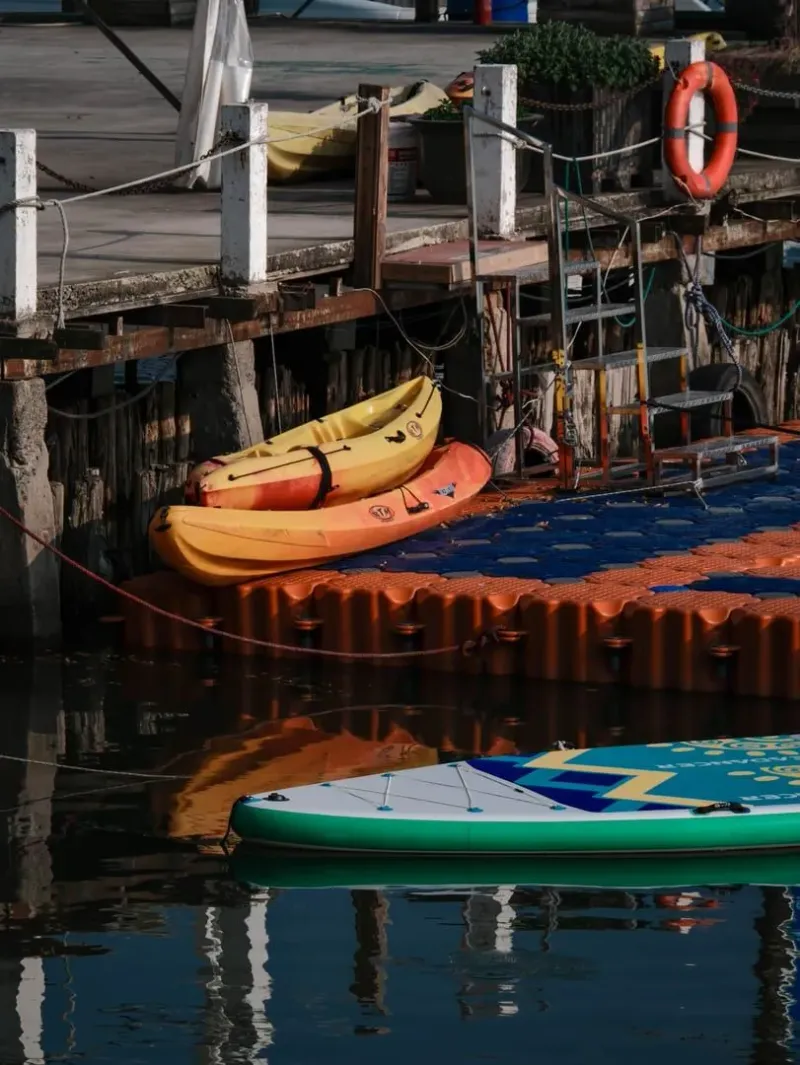
A typical session is a straight line parallel to shore, sighting off a fixed point on land every few strokes, done at dawn before the sea breeze and boat traffic both build — the same window the SUP crew works. Distance ranges from a 20-minute shakeout to an hour-plus point-to-point between two beaches, always with a support swimmer, paddler or small boat shadowing the traffic side. A tow float — an inflatable buoy clipped to a waist belt, bright enough to read from a longtail’s wheelhouse — is standard kit, not decoration; it doubles as a rest platform and a place to stash a phone. Tide matters on the shallow north coast: a falling tide can turn the first 50 meters into a wade instead of a swim.
What It Costs
Free, which is most of the point — no gym fee, no instructor, no rental. A tow float runs a few hundred to around 1,000 THB (~10–29 USD) from a dive shop or online, and pays for itself the first time a longtail passes closer than it should. For structured sets rather than open water, several beachfront hotels sell day access to their 25-meter pools, typically a few hundred THB, but nothing on the island approaches a proper 50-meter pool — anyone doing real training sets treats the 25-meter tank as a compromise, not a solution.
How to Join
There’s deliberately no fixed time published here — a dawn swim’s meeting point drifts with season and tide, and a schedule printed today would be wrong within a few months. The reliable way in: ask at a dive shop, a triathlon-minded gym, or a beachfront hotel on Maenam or Choeng Mon whether anyone’s swimming lines that week, or watch for a tow float bobbing offshore at first light and join once sighting and pacing for 30-plus minutes in warm water feels comfortable.
Where to Swim a Line: Maenam, Bang Po and Bophut’s Shelf
Maenam and Bang Po share the island’s longest, most swimmer-friendly shelf: a gently sloping, mostly sand seabed on the sheltered north coast, reaching comfortable depth within 5–10 meters of shore at Maenam’s center and staying wadeable through most tides along the central and eastern stretches. Both beaches carry wide sand-and-reef flats that dry out at low tide, so a swim planned for low water can start with 50 meters of wading — check a tide chart, not just a wind forecast. Boat traffic is light here, mostly moored longtails rather than a working lane, except close to the piers.
Bophut is calmer on the surface but busier underneath: the eastern end near the hotels reaches swimmable depth (roughly 2 meters) within 10–15 meters of shore, while moored longtails near the pier and the ferry route to Koh Phangan mean a swimmer has to actively look for traffic rather than assume there isn’t any. Bophut’s own western stretch, and Maenam’s, turn rocky and shallow — better for a paddle than a line.
Choeng Mon’s Sheltered Bay and the Swim to the Island
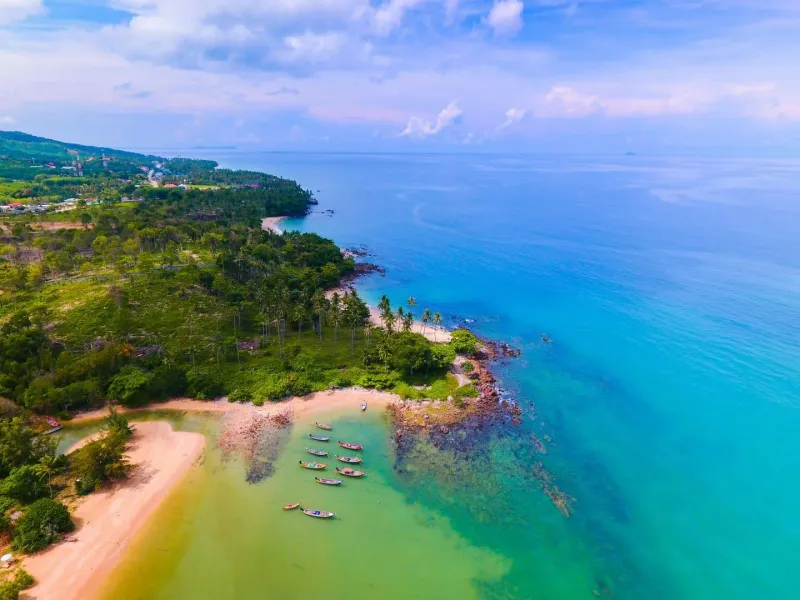
Choeng Mon is the calmest line on the island: a crescent bay shielded by the offshore islets of Koh Fan Noi and Koh Fan Yai, shallow for 20–30 meters from shore with almost no chop even when the rest of the coast has some.
At low tide, a sandbar toward Koh Fan Noi surfaces enough to walk. At higher tide, that same 10–15 minute distance becomes a genuine open-water swim across a channel that carries a real current between the tide states, plus the odd longtail circling the islets. Treat it as a crossing, not a paddling-pool extension: go with a buddy or a paddler shadowing, and never stand on the coral underneath. Koh Fan Yai, further out, adds distance and exposure and isn’t a beginner’s swim. Neither islet has facilities — the swim back is the only way back.
Chaweng, Lamai and the Watersports Traffic
Chaweng and Lamai have some of the island’s clearest water on a calm day — Lamai’s central strip in particular is documented as the calmest, clearest stretch on that coast — but both also carry the highest concentration of water-sports operators and jet skis on Samui, and neither runs an officially buoyed swim lane. The closest thing to a marked safer zone is the jellyfish netting installed at parts of both beaches (see jellyfish season below); staying inside a netted section also keeps a swimmer out of the open water the jet skis actually use.
Both beaches also carry seasonal rip currents, worst November through January — check the flag color before getting in, and if a current pulls sideways, swim parallel to shore rather than straight back in.
The West Coast’s Flat Mornings
Lipa Noi and Taling Ngam face west across the strait toward the mainland, which means glassy mornings for most of the year and a different problem from May to September: the southwest monsoon brings afternoon cross-shore chop that builds through the day, the mirror of the north coast’s own sea breeze, per the site’s sea conditions by month guide. Mornings are the swim window here for exactly that reason. Boat traffic is lighter than the east coast — far fewer tour operators work this side — but so is everything else: fewer people around if something goes wrong. It’s the last coast to attempt a long swim alone on.
Conditions by Season: Monsoon Swell and Jellyfish
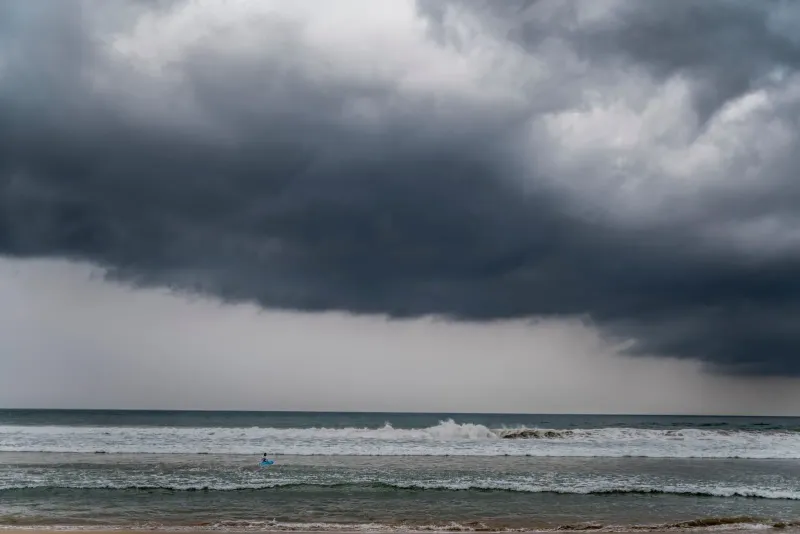
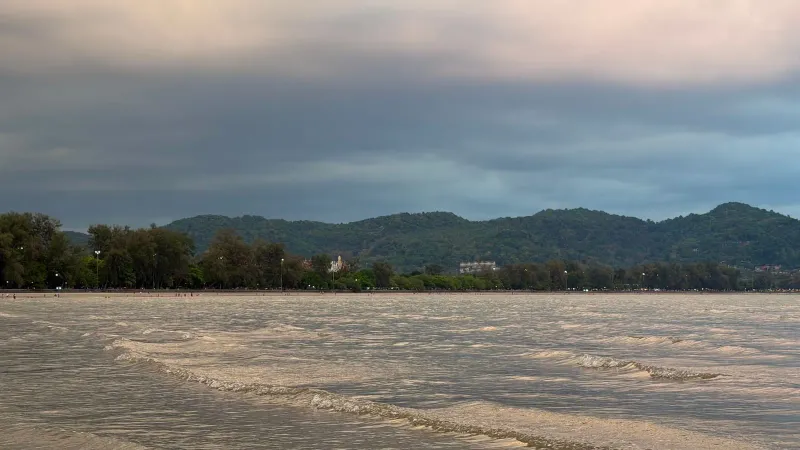
The northeast monsoon, roughly November through January and worst around November, turns the east coast rough and the north coast choppy — Chaweng and Lamai see their most frequent red flags in this window, while Maenam and Bophut stay the more swimmable option, per the site’s sea conditions by month guide. The southwest monsoon (May–September) does the same to the west coast in the afternoons. Outside those windows, especially December through April, the Gulf runs close to glass on most mornings, island-wide, with visibility dropping mainly during and just after the swell months as wave action stirs sediment.
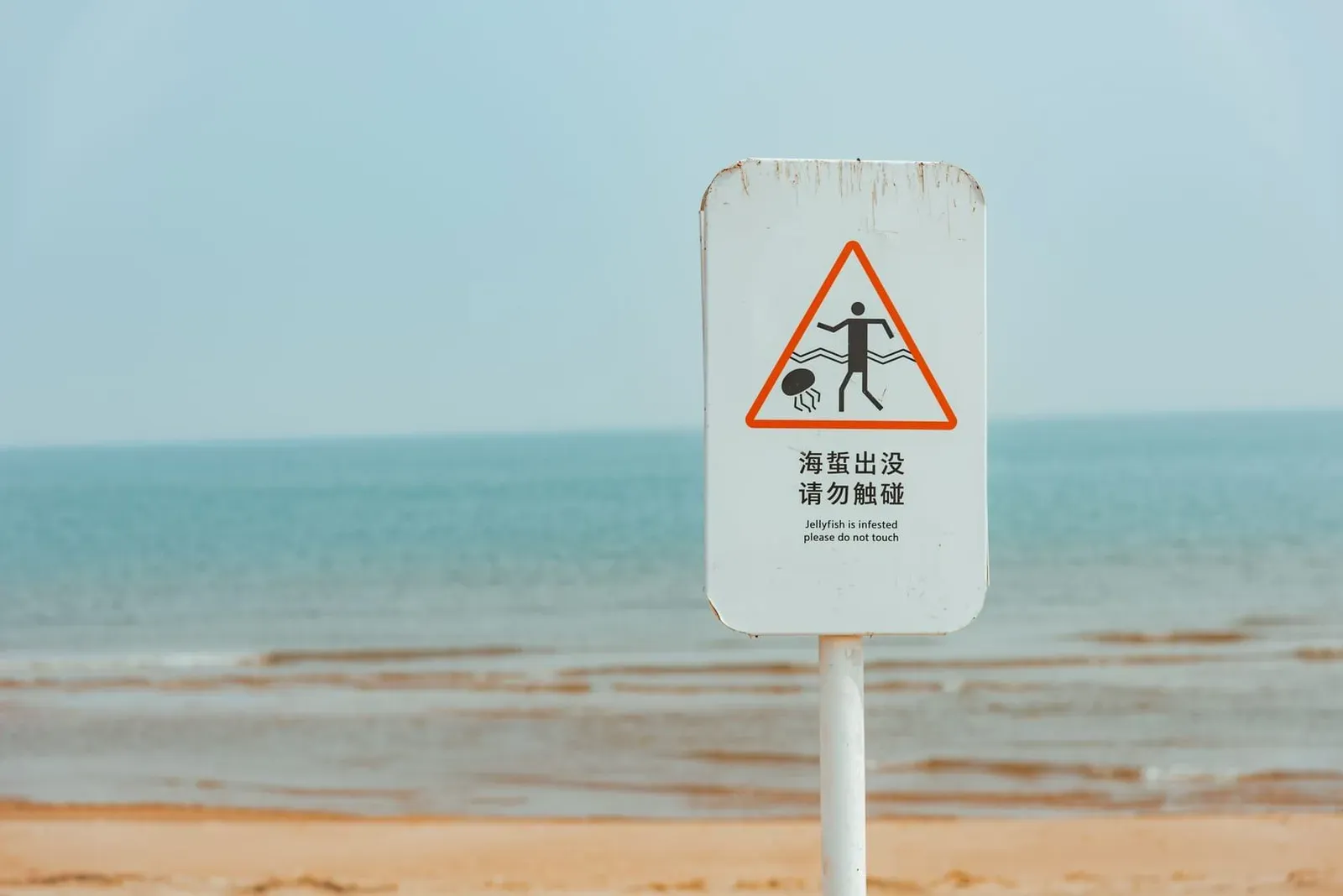
Box jellyfish (Chironex fleckeri) are the other seasonal factor: documented mainly June through October, peaking August–September, concentrated more at Chaweng and Lamai than elsewhere — the full picture, including first aid, is on the site’s jellyfish guide. True Irukandji syndrome is well documented in Australian waters; whether the same syndrome occurs from a Gulf of Thailand species isn’t clearly established in what’s publicly sourced for this page. Treat it as a real but poorly documented possibility, not a headline risk, and plan around the better-documented box jellyfish season instead. Sea temperature figures are cross-checked against seatemperature.info (accessed Sep 2026).
Safety: Boats, Currents, Heat and Stings
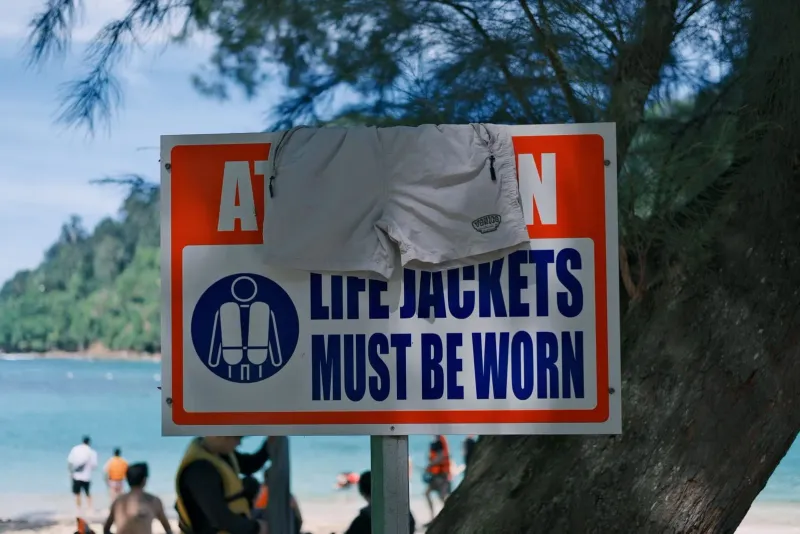
Boats are the real danger, not waves. The ferry lane off Bophut and Maenam, longtail traffic near every pier, and jet skis at Chaweng and Lamai all share water with swimmers who are low, slow and hard to see. Swim with a tow float — bright, visible from a wheelhouse — and never alone. A solo long swim off this coast with no float and nobody watching is how people get run over; that’s not an exaggeration, it’s the plain mechanism.
Currents build around headlands and in channels, including the Choeng Mon crossing to the islets — any point where a bay narrows can carry a swimmer sideways faster than they can correct. If caught, swim parallel to shore, not against it.
Heat and hydration matter more than the water temperature suggests. An hour in 28–30°C water plus tropical sun dehydrates a swimmer who still feels fine mid-swim. Drink before getting in, not just after, and treat anything past 45 minutes like a run for fluid planning.
Sun on back and shoulders during a long swim is a quiet hazard; reef-safe sunscreen plus a rash guard covers more than sunscreen alone.
Jellyfish stings: get out of the water, call 1669, douse a suspected box jellyfish sting with vinegar for at least 30 seconds — never fresh water, never rubbing — and get hospital assessment even if it eases. Hospitals near Chaweng and in Nathon handle marine stings. Full first-aid steps, including what changes for a non-box-jellyfish sting, are on the jellyfish guide.
FAQ
Is it safe to swim in open water on Koh Samui?
Reasonably, with precautions. The water is warm year-round, and boat traffic causes more harm here than marine life. Swim with a tow float and a buddy, avoid the ferry lane off Bophut and Maenam, and check rip-current flags at Chaweng and Lamai, worst November–January. A solo, unprotected long swim is the real risk, not the sea itself.
Do I need a wetsuit to swim on Koh Samui?
No. Sea temperature runs 28–30°C (82–86°F) year-round — warm enough that a wetsuit adds overheating risk rather than solving a cold problem. A rash guard for sun and jellyfish protection is more useful than neoprene on this coast.
Which beach is best for open-water swimming on Koh Samui?
Maenam and Bang Po’s long shallow shelf suit a straightforward line swim; Choeng Mon’s sheltered bay is calmest for a beginner; Chaweng and Lamai have clearer water but heavier boat traffic. Check tides at Maenam and Bang Po — a falling tide leaves long wading stretches before open water starts.
When is jellyfish season on Koh Samui?
Roughly June through October, peaking August–September, concentrated most at Chaweng and Lamai. See the site’s jellyfish guide for nets, first aid and incident history. Outside that window risk drops sharply but isn’t zero.
Is there a swimming club or group on Koh Samui?
No formal club — the open-water crew is a small, informal group of residents, triathletes and ex-competitive swimmers who meet by habit rather than schedule. Ask at a dive shop, gym or beachfront hotel on Maenam or Choeng Mon for who’s currently swimming; any fixed time published here would go stale within a season.
What’s the biggest danger swimming in the sea on Koh Samui?
Boat and ferry traffic, not currents or marine life — swimmers are hard to see from a longtail or jet ski, especially near piers and the ferry lane off Bophut and Maenam. A visible tow float and a buddy address this directly; swimming alone without one is how people get run over.
Turning Up
There’s no weekly slot to print here — this runs by informal arrangement, tide and season, and a fixed time would be wrong within a few months. The reliable move: turn up at a beachfront hotel or dive shop on Maenam or Choeng Mon shortly after sunrise, tow float in hand, and ask who’s swimming that morning. If nobody’s out, stay inside sight of the beach with the float visible and swim before the wind and boat traffic build — then come back tomorrow at the same hour.
Published on
About the author

Mike Brochlowski
Travel photographer & writer
Travel photographer and island explorer. Mike has spent years documenting Southeast Asia's hidden gems, from secluded beaches to jungle waterfalls.
Articles by Mike →More in Island Life
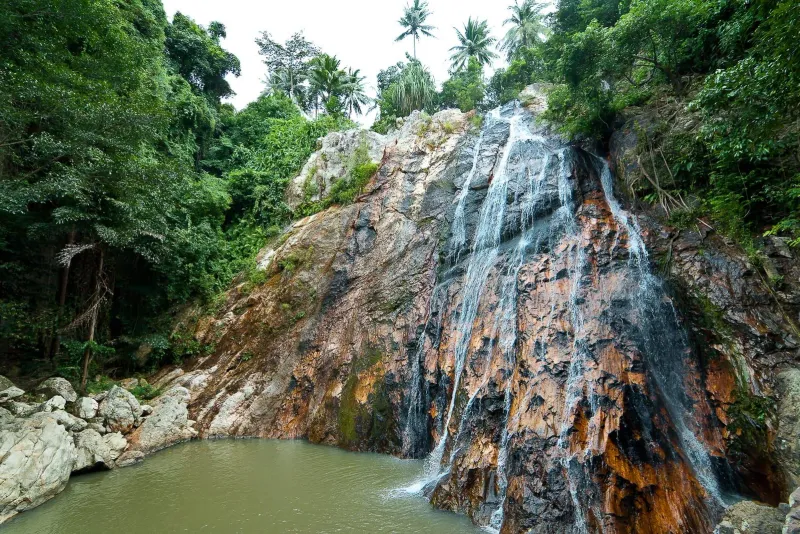
Na Muang Waterfalls — Samui's Purple Cascades and Jungle Pools
Explore Na Muang Waterfalls on Koh Samui — the accessible 18m Purple Waterfall with its swimming pool and the 80m jungle trek to the isla…
Wat Phra Yai — Big Buddha Temple on Koh Samui
Visit Wat Phra Yai (Big Buddha) on Koh Samui: a 12-meter golden Buddha, naga staircase, panoramic views, and market stalls.
Apirom Viewpoint — Koh Samui's Closed Hillside Lookout Above Ban Tai
Apirom Viewpoint: a ~304m hilltop lookout inland of Ban Tai, Koh Samui, its restaurant closed since the pandemic but the hillside track s…